
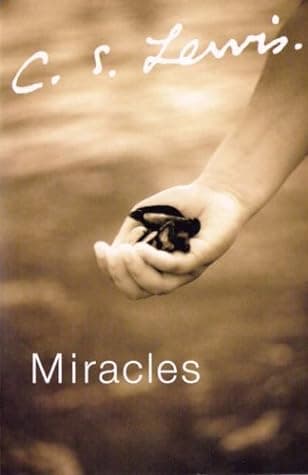
Core Idea
- Difficulty
- Hard
- Read it if
- You are interested in a rigorous philosophical defense of Christian miracles and a critique of naturalism, or if you appreciate C.S. Lewis's distinctive blend of logic and imaginative prose in exploring profound theological questions.
- Skip it if
- You are not open to theological or philosophical arguments for the supernatural, or if you prefer a less dense, more narrative approach to spirituality.
Key Takeaways from Miracles
Naturalism's Self-Refuting Flaw
If all thought is merely a byproduct of matter, then reason itself is undermined.
Lewis argues that Naturalism—the belief that only nature and physical forces exist—undermines itself. If our thoughts and reasoning come from material causes (like brain chemistry), then there is no reason to trust if those thoughts are valid or true. Our reasoning would be no more 'true' than a stomach ache. To say Naturalism is true requires using reason, which Naturalism itself treats as just a physical event. This creates a problem: if Naturalism is true, we have no basis to believe it, or anything else, through rational thought. This argument is basic to the possibility of miracles, as it shows the limits of a purely materialistic view.
“If naturalism is true, then all thoughts, including the thought of naturalism itself, are merely the results of physical causes. They are not 'about' anything in the sense of being true or false, but are simply events like digestion or a thunderstorm. Therefore, if naturalism were true, we could never know it to be true.”
In the book: Lewis's extended philosophical argument in Chapter 3, 'The Self-Contradiction of Naturalism,' where he meticulously dissects the implications of a universe without a transcendent mind.
Try this: Before dismissing the supernatural, rigorously examine the philosophical underpinnings of your own worldview. Does your framework allow for the possibility of genuine knowledge and rational thought, or does it inadvertently undermine them? Recognize that a consistent naturalism provides no ultimate basis for trusting reason itself.
Related ideas: naturalism, reason, materialism, epistemology
The Grand Miracle: Creation Itself
The existence of a coherent, law-abiding universe is the ultimate miracle, making lesser miracles plausible.
Lewis says the greatest miracle is not a specific event like water turning into wine, but the universe's existence and order. The fact that 'something' exists instead of 'nothing,' and that it follows consistent laws, points to a mind beyond nature. If a God is powerful enough to create the cosmos and its laws, then it does not make sense to say this God cannot sometimes act within or on those laws. Accepting the 'Grand Miracle' of creation makes 'particular miracles' not only possible but, in a way, expected as expressions of the Creator's ongoing link with creation. Denying smaller miracles while accepting creation is like saying an author can write a whole book but cannot change a single word in it.
“If we admit God, then to rule out miracles is to rule out knowledge of Him. It is to say that though He can create a universe, He cannot make a pebble move an inch outside the laws He has Himself made.”
In the book: Lewis's foundational argument in Chapter 8, 'Miracles and the Laws of Nature,' where he establishes that the laws of nature describe what usually happens, not what must happen, and are themselves dependent on a deeper reality.
Try this: Shift your perspective on miracles from isolated 'magic tricks' to extensions of the same divine power that sustains the universe. Recognize that the order and beauty of the natural world are themselves profound testimonies to the supernatural, making specific interventions less anomalous.
Related ideas: creation, laws-of-nature, theism, divine-intervention
Nature is Not Self-Explanatory
The universe cannot account for its own existence or its consistent laws.
Lewis argues that nature is an effect, not a cause. It follows laws, but it cannot explain where those laws came from or its own start. To assume nature is self-sufficient is a mistake, treating a created system as its own creator. Nature is like a machine that runs by a plan; the machine itself cannot explain who made the plan or built the machine. This dependence of nature suggests a 'Supernatural' realm—a reality beyond and before nature—from which nature gets its being and order. This 'Supernatural' is not random, but the ultimate basis of all being and the source of reason and order we see in nature. This difference is important for understanding how miracles, as actions from the Supernatural, are not breaks in nature but deeper, more direct expressions of its ultimate source.
“Nature is only a part of reality, not the whole of it. It is a created thing, not the Creator. It is dependent, not self-existent.”
In the book: Lewis's detailed exposition in Chapter 2, 'The Supernatural as Fact,' where he defines 'Supernatural' not as 'unnatural' but as 'above nature,' the ultimate cause and ground of nature itself.
Try this: When considering the universe, move beyond merely observing its operations to questioning its ultimate origin and sustained existence. Recognize that the very order and predictability of nature point to a reality beyond itself, a 'Supernatural' cause, rather than rendering it obsolete.
Related ideas: supernatural, first-cause, metaphysics, cosmology
The Incarnation: The Miracle of Miracles
God becoming Man is not just a miracle, but the central event that redefines reality and makes all other miracles coherent.
For Lewis, the Incarnation—God becoming human in Jesus Christ—is not just one miracle, but 'the Grand Miracle' that all others relate to. It is the ultimate act of the Supernatural entering and working with the natural. If God, the universe's creator, can enter His own creation as a creature, then all other miracles make sense within this idea. They are not random breaks but consistent expressions of a God who has personally invested in His creation. The Incarnation provides the reason for all other divine actions, making them purposeful parts of a larger plan of redemption and restoration. It is the central idea for the possibility of a personal, active God, and it explains why God would perform miracles at all.
“The central miracle asserted by Christians is the Incarnation. They claim that God became Man. Every other miracle prepares for this, or exhibits this, or results from this.”
In the book: Lewis dedicates Chapter 14, 'The Grand Miracle,' to this concept, arguing that the Incarnation isn't just a miracle but the ultimate 'invasion' that makes sense of all others.
Try this: Anchor your understanding of miracles in the Incarnation. See every reported miracle, especially those in the Gospels, as a reflection or foreshadowing of God's ultimate act of self-giving and involvement in the human story. This provides a coherent theological framework.
Related ideas: incarnation, christianity, theology, redemption
Miracles as 'New Creations'
Divine interventions are not breaking the rules, but adding new chapters to the story of creation.
Lewis redefines miracles not as random breaks in natural law, but as 'new creations' or 'additional operations' by the Creator within nature's existing structure. Imagine an author who has written a novel with consistent rules; a miracle is not the author suddenly making a character fly without explanation, but the author introducing a new character or plot twist that, while unexpected in the story, fits the author's overall goal and power. Miracles do not prove nature is chaotic; they prove nature is not all there is. They show that the universe is open to more acts from its Creator, revealing deeper levels of reality and purpose. This view removes the common objection that miracles are 'unscientific' or 'illogical,' instead presenting them as a deeper form of logic consistent with a transcendent God.
“A miracle is not simply an event which *does* not happen in the ordinary course of nature. It is an event which, if it really occurred, would prove that nature was not the only thing there is.”
In the book: Lewis's explanation in Chapter 8, 'Miracles and the Laws of Nature,' where he likens miracles to an author introducing a new character or sub-plot rather than breaking the established rules of the story.
Try this: When encountering claims of miracles, consider them not as disruptions of an otherwise perfect system, but as expansions or enrichments of creation by its ongoing Creator. This allows for a more open-minded and theologically robust understanding of divine action.
Related ideas: divine-action, creation-ex-nihilo, natural-law, teleology
Reason's Dependence on the Supernatural
Our ability to reason accurately presupposes a mind beyond the material.
Building on his critique of naturalism, Lewis argues that our ability for logical thought and understanding truth depends on a source of reason that goes beyond the purely physical. If our thoughts are just chemical reactions, then 'truth' and 'falsehood' lose meaning; they are just different patterns of brain activity. However, we trust our reason to find truths in math, science, or philosophy. This trust makes sense only if reason itself is not just a product of blind physical forces but reflects an objective, transcendent Reason (Logos) that underlies reality. A universe run by a rational God provides the necessary basis for our own rationality, making our search for knowledge meaningful. Without this, science and philosophy are built on shaky ground, as we have no reason to trust the tools we use.
“Unless human reasoning is valid, no science can be true. But if Naturalism is true, our reasoning cannot be valid.”
In the book: The core argument of Chapter 3, 'The Self-Contradiction of Naturalism,' which is further developed in subsequent chapters to demonstrate the necessity of a transcendent Rationality.
Try this: Reflect on the source of your own capacity for logical thought. If you value reason and the pursuit of truth, consider whether a purely materialistic worldview can adequately account for these capacities. This introspective step can open the door to considering a supernatural foundation for reality.
Related ideas: logos, reasoning, rationality, epistemological-foundation
The Absurdity of Deism
A God who creates but never acts is a contradiction in terms of ultimate involvement.
Lewis addresses Deism, the belief in a creator God who does not act in the universe. He finds this view unsatisfying and contradictory. If God is truly the ultimate, all-powerful Creator, then saying He is limited to just starting the universe and then leaving it is an arbitrary limit on His nature. Why would such a powerful and intelligent being create a universe and then become completely disengaged? Furthermore, if God is the source of all being and order, His ongoing support and occasional interaction fit His nature better than complete separation. A purely deistic God is a lesser God, one who is not the ultimate reality. Lewis argues that a God worthy of the name must be able to, and likely will, interact with creation, making miracles a natural part of His being, not an oddity.
“A Deist believes that God exists, but that He is an absentee landlord. He created the house and then went away, leaving it to run by its own laws.”
In the book: Lewis's discussion of Deism in various chapters, particularly when contrasting it with Christian theism and its implications for divine action.
Try this: Challenge any implicit deistic assumptions in your worldview. If you believe in a Creator, consider whether that Creator's nature necessitates ongoing involvement and interaction with creation, rather than mere initial instantiation. This opens the door to a more dynamic understanding of God.
Related ideas: deism, theism, divine-providence, absentee-god
The Miracles of the New Nature
Christ's miracles foreshadow a redeemed and glorified creation.
Lewis sees Christ's miracles—healing the sick, raising the dead, calming storms, multiplying food—not as random acts of magic, but as planned signs of a 'New Nature' that God plans to bring about. They are glimpses of a restored creation, where sickness, death, and natural chaos are overcome. When Jesus heals a blind man, it shows what humanity will be like in a perfect state. When he multiplies food, it is a glimpse of a world without lack. These miracles are not just about power; they are about purpose. They show God's ultimate goal to redeem and honor creation, not abandon it. This view gives deep meaning to the Gospel miracles, turning them into prophetic acts that point to future hope and a renewed cosmos.
“The miracles of Christ are not arbitrary displays of power, but anticipations of the new creation, glimpses of the world as it will be when God's original purpose is fully restored.”
In the book: Lewis's detailed analysis of specific Gospel miracles in Chapters 15-16, 'The Miracles of the Old Testament' and 'The Miracles of the New Testament,' where he categorizes and interprets them as signs of restoration.
Try this: When reading about Christ's miracles, look beyond the immediate event to its deeper theological significance. Ask what each miracle reveals about God's ultimate plan for humanity and creation. See them as promises of future glory and redemption.
Related ideas: new-creation, eschatology, redemption-of-nature, gospel-miracles
The Problem of Evil and Miracles
Miracles are acts of specific good, not a blanket eradication of evil, within a fallen world.
Lewis addresses the common question: if God can do miracles, why does He not stop all suffering and evil? He explains that miracles are not meant to instantly reverse the effects of a fallen world (which would mean creating a different world), but to offer specific, purposeful actions within it. They are acts of grace and revelation, not a constant override of natural law. God's choice to allow a world with free will and its results (including evil and suffering) is a separate theological question from His ability to act. Miracles, when they happen, are targeted acts of mercy, power, or teaching, showing God's presence and ultimate authority, even in a world still struggling with sin. They offer hope without denying the reality of suffering, showing God's active involvement without demanding constant divine interference.
“If God can suspend the laws for good, why does He not suspend them always? But this is to ask why He has not made a different world, or why He did not prevent the Fall.”
In the book: Lewis indirectly addresses this in Chapter 8 and 16, by emphasizing the specific nature and purpose of miracles rather than seeing them as a complete reordering of the world's natural processes.
Try this: Avoid expecting miracles to solve all the world's problems instantly. Understand them as focused expressions of divine will within a larger, complex narrative of creation, fall, and redemption. This helps manage expectations and understand the role of miracles within suffering.
Related ideas: problem-of-evil, suffering, divine-grace, free-will
The Personal God and His Story
Miracles attest to a God who is not just a force, but a character in His own unfolding drama.
Ultimately, Lewis argues that accepting miracles is tied to believing in a personal God—one who thinks, wills, acts, and relates to His creation. If God is just an abstract force or an impersonal idea, then miracles become impossible or meaningless. However, if God is a personal being, then His actions are not random but show His character, His love, and His ongoing story with humanity. Miracles are the 'punctuation marks' in this divine story, showing His presence, power, and purpose. They change God from a distant architect into an active character, making faith in Him not just an intellectual agreement but a relationship. This personal aspect sets Christian theology apart from deism or pantheism, offering a God who can be known and experienced.
“A God who is merely a law, or a force, or a first principle, is not a God who can be loved or worshipped. But the God of miracles is a personal God, one who acts and speaks.”
In the book: This theme pervades the entire book, particularly in the concluding chapters, where Lewis emphasizes the relational aspect of God revealed through His actions in the world.
Try this: Cultivate a view of God as a personal being who actively engages with His creation and with individuals. Allow the possibility of miracles to deepen your understanding of God's character and His ongoing story in the world and in your own life.
Related ideas: personal-god, divine-narrative, relationship-with-god, theistic-realism
Miracles Quotes
“I believe in Christianity as I believe that the sun has risen: not only because I see it, but because by it I see everything else.”
“Miracles are a retelling in small letters of the very same story which is written across the whole world in letters too large for some of us to see.”
“The central miracle asserted by Christians is the Incarnation. They say that God became Man.”
“If the universe is not ruled by an absolute goodness, then all our efforts are in the long run hopeless.”
“Nature is only the image, the symbol; but it is the symbol Scripture invites me to use.”
“The heart of Christianity is a myth which is also a fact.”
“In science we have been reading only the notes to a poem; in Christianity we find the poem itself.”
“The Naturalist and the Supernaturalist differ not about the existence of God but about His relation to nature.”
“If we admit God, must we admit Miracle? Indeed, indeed, you have no security against it.”
“Theology is practical: especially now.”
“The fitness of the Christian miracles, and their difference from these mythological miracles, lies in the fact that they show invasion by a Power which is not alien.”
“To be ignorant and simple now—not to be able to meet the enemies on their own ground—would be to throw down our weapons, and to betray our uneducated brethren.”
“The question whether miracles occur can never be answered simply by experience.”
“Every event which might claim to be a miracle is, in the last resort, something presented to our senses, something seen, heard, touched, smelled, or tasted.”
Quiz
10 questions on the main ideas. Each answer comes with a short explanation.
Question 1
According to Lewis in 'Miracles', what is the primary reason miracles are essential to Christianity?
- They prove the existence of God scientifically
- They demonstrate God's personal involvement in creation
- They provide entertainment and wonder for believers
- They are necessary for converting atheists
Show answer
B. They demonstrate God's personal involvement in creation Lewis argues that miracles are not just supernatural events but testimonies of God's personal engagement with His creation, which is central to Christian faith.
Question 2
What philosophical position does Lewis primarily challenge in 'Miracles'?
- Existentialism
- Naturalism
- Nihilism
- Postmodernism
Show answer
B. Naturalism Lewis targets naturalism, which denies the supernatural and views the universe as a closed system, arguing that this worldview cannot account for miracles or reason itself.
Question 3
In 'Miracles', Lewis uses which analogy to explain the relationship between nature and the supernatural?
- A clock and its maker
- A painting and its painter
- A novel and its author
- A machine and its operator
Show answer
C. A novel and its author Lewis compares nature to a novel and God to its author, suggesting that just as an author can intervene in the story, God can intervene in nature through miracles.
Question 4
According to Lewis, what is the 'cardinal difficulty' for naturalists when discussing miracles?
- They lack scientific evidence
- They cannot explain human consciousness
- They must deny the validity of reason
- They ignore historical accounts
Show answer
C. They must deny the validity of reason Lewis argues that naturalism, by reducing everything to material causes, undermines the very rationality needed to argue against miracles, creating a self-defeating position.
Question 5
How does Lewis define a 'miracle' in this book?
- An event that violates natural laws
- A divine intervention in the natural world
- A statistically improbable occurrence
- A psychological illusion of the divine
Show answer
B. A divine intervention in the natural world Lewis emphasizes that miracles are not mere violations but intentional acts by God that interact with nature, reflecting His personal care and purpose.
Question 6
What practical implication does Lewis suggest for Christians regarding miracles?
- They should seek miracles for personal gain
- They must scientifically verify all miracles
- They should rejoice in miracles as signs of God's involvement
- They should avoid discussing miracles with non-believers
Show answer
C. They should rejoice in miracles as signs of God's involvement Lewis argues that accepting and celebrating miracles strengthens faith by acknowledging God's active role in the world, rather than viewing them as anomalies.
Question 7
Which group does Lewis NOT explicitly target in his arguments against disbelief in miracles?
- Rationalists
- Agnostics
- Deists
- Atheistic existentialists
Show answer
D. Atheistic existentialists Lewis focuses on rationalists, agnostics, and deists who reject miracles on philosophical grounds, but does not specifically address atheistic existentialism in this context.
Question 8
According to Lewis, what is the relationship between reason and miracles?
- Reason disproves miracles
- Miracles are beyond reason and must be accepted on faith alone
- Reason can be used to defend the possibility of miracles
- Reason and miracles are completely unrelated
Show answer
C. Reason can be used to defend the possibility of miracles Lewis contends that reason, properly understood, supports the coherence of miracles by challenging naturalistic assumptions and affirming a supernatural framework.
Question 9
In 'Miracles', what does Lewis argue about the Incarnation in relation to other miracles?
- It is the least important miracle
- It is a myth similar to other religious stories
- It is the central miracle that gives meaning to all others
- It is a natural event misunderstood as supernatural
Show answer
C. It is the central miracle that gives meaning to all others Lewis posits that the Incarnation of Christ is the supreme miracle, foundational to Christianity, and that other miracles derive their significance from this event.
Question 10
How does Lewis address the objection that miracles are 'arbitrary' interruptions of nature?
- He denies that miracles ever occur
- He argues they are predictable based on natural laws
- He contends they are purposeful acts aligned with God's character
- He admits they are arbitrary but necessary for faith
Show answer
C. He contends they are purposeful acts aligned with God's character Lewis responds that miracles are not capricious but are intentional interventions by a rational and loving God, consistent with His nature and purposes for creation.
Miracles FAQ
What is the main argument of 'Miracles' by C.S. Lewis?
Lewis argues that miracles are not violations of natural law but rather divine interventions that reveal God's personal involvement in creation. He contends that accepting miracles is essential to Christian faith and challenges rationalist and deist objections on philosophical grounds.
Does C.S. Lewis believe miracles contradict science?
No, Lewis argues that miracles do not contradict science but operate at a different level—they are supernatural interventions in a natural world. He suggests natural laws describe regularities, while miracles represent unique acts of God that don't invalidate scientific observation.
How is 'Miracles' different from other apologetic works?
Unlike many apologetics that focus on historical evidence, 'Miracles' takes a philosophical approach, engaging directly with rationalist and deist arguments. Lewis builds a logical case for the possibility and reasonableness of miracles before discussing specific Christian miracles.
What is Lewis's view on naturalism in 'Miracles'?
Lewis critiques naturalism as self-defeating, arguing that if only natural causes exist, human reason itself becomes unreliable. He posits that supernaturalism provides a better foundation for trusting our rational faculties, making belief in miracles more coherent.
Does Lewis address the problem of evil in relation to miracles?
While not the central focus, Lewis touches on this by suggesting miracles like the Incarnation and Resurrection are God's response to evil. He views miracles as key moments where God intervenes to redeem a fallen world, not as arbitrary acts.
How does Lewis define a miracle?
Lewis defines a miracle as an event where God temporarily suspends or overrides natural laws to achieve a divine purpose. He emphasizes that miracles are rare, meaningful interventions that reveal God's character and intentions, not mere anomalies.
Is 'Miracles' accessible to non-Christians?
Yes, Lewis writes for a broad audience, using clear logic and avoiding specialized theological jargon. He addresses skeptics directly, making the book valuable for anyone interested in philosophy, religion, or the debate between naturalism and supernaturalism.
What is the significance of the Incarnation in 'Miracles'?
Lewis presents the Incarnation—God becoming human in Jesus—as the central miracle that makes sense of all others. He argues it demonstrates God's intimate involvement with creation and provides a framework for understanding other miraculous events in Christianity.
How does Lewis respond to deist objections about miracles?
Lewis counters deism by arguing that a God who creates but remains detached is less plausible than one who interacts personally. He suggests miracles like the Resurrection show God's ongoing commitment to creation, contrasting with deist views of an absent deity.
Does 'Miracles' work as a defense of Christian faith today?
Yes, its philosophical arguments remain relevant in debates about science, reason, and faith. While some examples may feel dated, Lewis's core case for the coherence of miracles continues to influence modern apologetics and appeal to thoughtful readers.
About the author
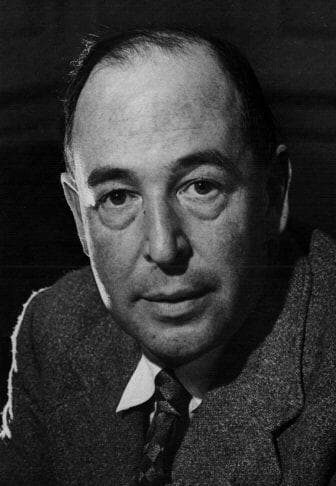
Clive Staples Lewis was a British writer, literary scholar, and Anglican lay theologian. He held academic positions in English literature at both Oxford University and Cambridge University. He is best known as the author of The Chronicles of Narnia, but he is also noted for his other works of fiction, such as The Screwtape Letters and The Space Trilogy, and for his non-fiction Christian apologetics, including Mere Christianity, Miracles, and The Problem of Pain.
Similar books
- Orthodoxy
G.K. Chesterton
4.2 (31k) average on GoodreadsSpiritualityExplores the rationality and wonder of Christian doctrine through paradox and profound insight.
- The God Delusion
Richard Dawkins
3.9 (231k) average on GoodreadsPsychologyDawkins's The God Delusion represents a stark contrast, arguing vehemently against the existence of God and, by extension, the possibility of miracles. Dawkins dismisses miracles as inherently improbable and incompatible with scientific understanding, often employing a positivist view of science. Lewis, conversely, argues that science describes nature but cannot fully explain it, leaving room for a supernatural cause and intervention. Dawkins would likely view Lewis's arguments as pre-scientific or fideistic, while Lewis would see Dawkins's naturalism as philosophically incomplete and self-contradictory.
- Eat, Pray, Love
Elizabeth Gilbert
3.6 (1.5M) average on GoodreadsLifestyleA heartbroken writer leaves her conventional life for a year-long global search for pleasure in Italy, spiritual devotion in India, and unexpected love and balance in Bali.
- Educated
Tara Westover
4.5 (796k) average on GoodreadsBiographyRaised in the Idaho mountains by fundamentalist survivalists, a young woman forges her own path to education, battling fierce family loyalty and personal demons to discover a world beyond her isolated upbringing.
- The Poisonwood Bible
Barbara Kingsolver
4.1 (659k) average on GoodreadsLiterary FictionA zealous missionary's rigid faith clashes with the Belgian Congo's wilderness and people, unraveling his family through the eyes of his five unforgettable women.
- Siddhartha
Hermann Hesse
4.0 (583k) average on GoodreadsHistorical FictionSiddhartha leaves a life of privilege and piety, embracing asceticism, wealth, and love to find enlightenment not in dogma, but in the whispers of a river and the unity of all existence.




Enjoyed the summary?
A summary gives you the shape of the book. The book itself has the detail, the examples and the voice.
Find Miracles on AmazonAs an Amazon Associate, BookBrief earns from qualifying purchases. How we're funded