
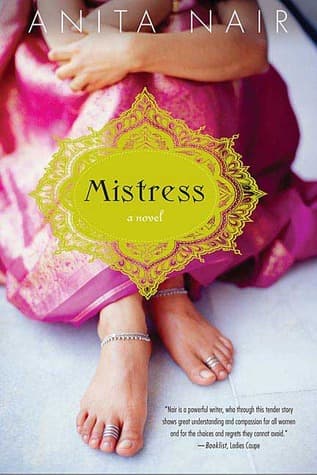
Synopsis
Covers the whole plot, including the ending.
- Difficulty
- Medium
- Pacing
- Moderate
- Mood
- Atmospheric, Melancholy, Sensual, Introspective
- Read it if
- You enjoy intricate literary fiction exploring forbidden love, cultural traditions, and the psychological depths of characters in an exotic setting.
- Skip it if
- You prefer fast-paced plots or straightforward romance without complex emotional introspection and cultural context.
Mistress Plot Summary
Covers the whole plot, including the ending.
Arrival at the Riverside Resort
Christopher Stewart, a travel writer and cellist, arrives in rural Kerala, India. His stated reason is to interview Koman, a famous Kathakali dancer and Radha's uncle, for an article. He checks into a riverside resort, drawn by the serene atmosphere. His first meeting with Radha, Koman's niece and Shyam's wife, has a subtle tension. Chris is captivated by Radha's beauty and reserved manner, while Radha is intrigued by his Western charm, his cello, and his intense interest in her family's history, especially Koman's past and local traditions. His presence immediately disturbs the quiet balance of Radha and Shyam's marriage.
The Unveiling of Koman's Past
As Christopher begins his interviews with Koman, the elderly dancer, initially hesitant, slowly starts to tell his life story. Koman's tales are not in order but rather woven through memories of his childhood, his strict Kathakali training, his often turbulent relationships, and the sacrifices he made for his art. These stories include his thoughts on love, desire, and the fleeting nature of performance. Christopher, a careful listener, uses his cello to interpret Koman's narratives, creating a unique bond between them. Radha often watches these sessions, finding herself increasingly drawn into her uncle's life.
Radha's Growing Discontent
Radha's marriage to Shyam is traditional but emotionally unfulfilling. Shyam, a kind but somewhat passive man, struggles to understand Radha's deeper desires. He is a practical man, focused on their resort business, and lacks the artistic sensitivity that Radha values. Christopher's arrival shows the emptiness in Radha's life, as his intellectual curiosity, artistic passion, and direct gaze awaken feelings within her. She feels increasingly drawn to his intensity and the way he seems to see beyond her reserved exterior, a contrast to Shyam's comfortable but uninspired affection.
The Kathakali Performance
A local Kathakali performance, with Koman in a main role, becomes important for the characters. Christopher is deeply moved by the artistry and emotion of the performance, especially Koman's portrayal of a mythological character dealing with love and betrayal. Radha, watching Chris watch her uncle, feels a strong connection to both men. Shyam, while appreciating the cultural aspect, remains somewhat distant from the emotional currents. The performance acts as a symbol for the masks people wear and the hidden desires they hold, mirroring the unfolding drama between Radha, Christopher, and Shyam, and hinting at future events.
Radha and Christopher's Affair Begins
The unspoken attraction between Radha and Christopher leads to an affair. Drawn together by shared intellectual curiosity, artistic feelings, and an emotional connection, they find comfort and excitement in each other's company. Their secret meetings, often by the riverside or in secluded parts of the resort, are filled with both thrill and guilt. Radha, for the first time, experiences a deep sensual and emotional awakening, feeling truly seen and desired. Christopher finds a muse and a lover, and his cello playing expresses their growing bond. Shyam remains unaware of their relationship, busy with his daily routines.
Koman's Revelations and Parallels
As Koman continues to tell Christopher his life story, his tales of past loves and relationships, especially with women who went against social norms, begin to connect deeply with Radha's situation. He speaks of his affair with a married woman, his unreturned love for another, and the sacrifices he made for his art. These stories, full of longing, betrayal, and the complexities of human desire, are not just historical accounts but subtle reflections and warnings, creating a strong parallel between Koman's youthful mistakes and Radha's current affair. He acts as both an observer and a silent commentator, understanding the nuances of forbidden love.
Shyam's Growing Suspicion
Shyam, initially trusting, slowly starts to notice changes in Radha's behavior—her new energy, her secret glances, and her increased distance from him. Christopher's frequent presence at their resort, along with Radha's unexplained absences, fuels his growing suspicion. Though he tries to ignore his unease, the emotional gap between him and Radha widens. His attempts to reconnect with her are met with a new kind of resistance, further increasing his feelings of inadequacy and betrayal. The home atmosphere becomes more strained, overshadowed by unspoken worries and the threat of discovery.
The Confrontation and Aftermath
The inevitable confrontation between Shyam and Radha happens, driven by Shyam's suspicions and Radha's guilt. The scene is emotionally intense, with Shyam expressing his pain and betrayal, and Radha struggling to explain her desires and reasons for her infidelity. The immediate aftermath is difficult for everyone. Radha is torn between her new passion for Christopher and the destruction of her family life. Shyam is heartbroken and humiliated, his world broken. Christopher, seeing the consequences, must face the results of his actions and the cultural complexities he has unintentionally disturbed. The resort, once peaceful, now feels like a place of raw emotions.
Christopher's Departure and Radha's Decision
Christopher, having finished his interviews and become caught in the emotional turmoil, decides to leave Kerala. His departure is bittersweet, leaving Radha to deal with the aftermath of their affair and her broken marriage. Radha is at a crossroads, forced to face her choices and decide her future. She must weigh the passionate but uncertain future with Christopher against the stability and social expectations tied to Shyam. Her decision is not easy, and the way forward is full of uncertainty.
Radha's New Path
After Christopher leaves and her marriage collapses, Radha begins to find a new, independent path. While the immediate future is unclear, she has changed greatly. The affair, combined with Koman's life lessons, has made her aware of her own desires and strength. She no longer wants to live a life of quiet acceptance but seeks authenticity and self-expression. The ending suggests Radha's journey toward self-discovery continues, marked by both pain and empowerment, as she navigates her choices and the social expectations of her world.
Principal Figures
Radha
Protagonist
A woman awakening to her suppressed desires and artistic sensibilities.
Radha is a beautiful and intelligent woman, married to Shyam and living a seemingly comfortable life running a resort in Kerala. Beneath her quiet, traditional exterior lies a deep well of unspoken desires and a yearning for intellectual and emotional connection that her marriage lacks. She is drawn to art, music, and the deeper philosophical questions of life, which Shyam cannot provide. Christopher's arrival acts as a catalyst, igniting a passion she didn't know she possessed and forcing her to confront the unfulfilled aspects of her existence.
Relationships: Christopher Stewart (Passionate lover, intellectual and emotional catalyst.); Shyam (Husband; their relationship is conventional but lacks emotional depth and passion.); Koman (Maternal uncle; mentor, confidant, and source of wisdom and family history.)
Christopher Stewart
Catalyst/Love Interest
A curious and artistic travel writer whose presence disrupts the lives of others.
Christopher is a young, enigmatic travel writer and cellist from the West. He arrives in Kerala ostensibly to interview Koman about Kathakali, but his true motivations are often shrouded in a desire for new experiences and understanding. He is intellectually curious, sensitive, and possesses an artistic soul that resonates deeply with Radha. His presence, while charming, is also disruptive, as he unwittingly (or perhaps knowingly) becomes involved in the emotional lives of Radha and Shyam. He is a seeker of stories and beauty, but also somewhat detached, capable of observing and participating without fully committing to the consequences.
Relationships: Radha (Passionate lover, intellectual and emotional muse.); Koman (Interviewer and student; develops a deep respect for Koman's artistry and life story.); Shyam (Rival for Radha's affection, creating an unspoken tension.)
Koman
Supporting/Mentor
A renowned Kathakali dancer and Radha's uncle, a repository of wisdom and life experience.
Koman is an elderly, revered Kathakali dancer, Radha's uncle, and the patriarch of their family. He is a man of immense artistic talent, philosophical depth, and a rich, complex past filled with passionate loves and sacrifices for his art. He serves as the primary storyteller, recounting his life experiences to Christopher, which often parallel and comment on the unfolding drama between Radha, Christopher, and Shyam. Koman is an observer and a silent, knowing presence, offering wisdom and perspective on human desire, societal constraints, and the pursuit of passion. He embodies the spirit of Kerala's cultural heritage.
Relationships: Radha (Uncle and confidant; offers subtle guidance and understanding.); Christopher Stewart (Subject of interview; develops a bond of mutual respect and understanding.); Shyam (Nephew-in-law; a more distant, formal relationship.)
Shyam
Supporting/Antagonist (in Radha's arc)
Radha's kind but conventional husband, unable to meet her deeper emotional needs.
Shyam is Radha's husband and co-owner of the riverside resort. He is a kind, practical, and hardworking man, devoted to his family and business. However, he lacks the emotional depth, artistic sensibility, and intellectual curiosity that Radha secretly yearns for. He represents stability and tradition, but also the emotional stagnation that Radha experiences in their marriage. Shyam is initially trusting but gradually becomes suspicious of Radha's infidelity, leading to heartbreak and anger. He is a sympathetic character, a victim of circumstances and the emotional distance within his marriage, rather than an overtly malicious figure.
Relationships: Radha (Husband; their marriage lacks passion and deep emotional connection.); Christopher Stewart (Unwitting rival for Radha's affection, leading to conflict.); Koman (Nephew-in-law; a respectful but less intimate relationship.)
Janaki
Mentioned
Koman's first great love, a married woman.
Janaki is a character from Koman's past, a married woman with whom he had a passionate and forbidden affair in his youth. Her story, recounted by Koman to Christopher, highlights the themes of illicit love, societal constraints, and the intense emotional sacrifices made for passion. She represents the 'mistress' archetype in Koman's life, echoing Radha's own journey. Her narrative serves as a parallel, demonstrating the timelessness of certain human desires and dilemmas.
Relationships: Koman (Passionate, forbidden lover from his youth.)
Devaki
Mentioned
Koman's second significant love, a fellow artist.
Devaki is another woman from Koman's past, a fellow artist or someone deeply connected to the arts. Her relationship with Koman is depicted as intellectually stimulating and artistically fulfilling, though perhaps less overtly passionate than his affair with Janaki. Her story, like Janaki's, adds layers to Koman's character, illustrating his capacity for different kinds of love and connection. She further emphasizes the sacrifices and choices made by artists in pursuit of their craft and personal happiness, providing another parallel for Radha's experiences.
Relationships: Koman (Significant artistic and emotional connection from his past.)
Themes & Insights
The Nature of Love and Desire
The novel explores different kinds of love—passionate, forbidden, traditional, and unreturned—and the complexities of human desire. Radha's longing for a deeper connection beyond her conventional marriage to Shyam shows the difference between comfortable companionship and deep passion. Koman's life stories, especially his affairs with Janaki and Devaki, act as strong historical comparisons, showing that pursuing desire often conflicts with social expectations and brings both joy and sadness. The book suggests that true love often defies boundaries and conventional morality, leading characters to make difficult, life-changing choices.
“What is love, if not a dance between two souls, sometimes in harmony, sometimes in discord?”
Tradition vs. Modernity/Individual Freedom
The conflict between deep-seated cultural traditions and the desire for individual freedom is a main theme. Radha is caught between the expectations of her conservative Kerala society, which dictates a wife's dutiful role, and her desire for personal fulfillment and passionate love. Christopher, representing a modern, Western view, helps Radha rebel against traditional norms. Koman's life also shows this tension, as his artistic pursuits and personal relationships often challenged the customs of his time. The novel asks if true happiness can be found within tradition or if it requires breaking free, even at great personal cost.
“A woman's heart is a cage, and sometimes, the bird within longs to fly.”
Art as Expression and Escape
Art, especially Kathakali and Christopher's cello music, is a strong way to express, understand, and even escape. Koman uses Kathakali not just as a performance art but as a way to show complex emotions and convey deep truths about life, love, and human nature. His stories are a form of art themselves. Christopher's cello playing often reflects the characters' emotional states, acting as a non-verbal language that crosses cultural barriers and allows a deeper connection with Radha and Koman. For Radha, art offers an intellectual and emotional escape from her daily life and a way to understand her own suppressed desires.
“The dancer tells a story not with words, but with the language of the soul, a language understood by all who dare to feel.”
The Power of Storytelling and Memory
The entire story structure is built around storytelling, mainly Koman's telling of his life to Christopher. These stories are not just biographical details; they are a way to preserve history, understand the present, and reflect on universal human experiences. Koman's memories, often mixed with myths and legends, provide context and depth to the contemporary drama between Radha, Christopher, and Shyam. Sharing and listening to these stories creates close bonds and allows characters to see similarities between past and present, showing how love, loss, and desire repeat across generations.
“Every life is a book, Christopher, waiting for someone to read its pages, to understand its hidden verses.”
Plot Devices & Literary Techniques
Framing Device: Koman's Narration
Koman's life story frames and parallels the contemporary plot.
The novel employs a framing device where Koman's recounting of his life to Christopher serves as the overarching narrative structure. These embedded stories, rich with details of Koman's past loves, artistic struggles, and philosophical reflections, are not mere digressions but deeply interconnected with the main plot. They provide historical context, foreshadow events, and create thematic parallels, allowing the reader to understand the cyclical nature of human desire and the enduring tension between tradition and individual freedom. Koman's narratives act as a wise commentary on Radha's unfolding affair.
Symbolism of Kathakali
The traditional dance form symbolizes masks, hidden emotions, and dramatic storytelling.
Kathakali, the classical dance-drama of Kerala, is a pervasive symbol throughout the novel. Its elaborate costumes and makeup (masks) symbolize the hidden desires and true identities that characters, particularly Radha, conceal beneath their societal roles. The dramatic narratives of Kathakali, often depicting gods and heroes grappling with love, betrayal, and destiny, mirror the emotional turmoil experienced by the characters in the present. Koman, as a master of Kathakali, embodies the art form's ability to express profound emotions without words, serving as a metaphor for the unspoken passions and conflicts within the story.
The Cello
Christopher's musical instrument symbolizes passion, communication, and emotional resonance.
Christopher's cello is more than just a musical instrument; it is a powerful symbol of his artistic soul, a means of non-verbal communication, and an embodiment of passion. Its music often reflects the emotional undercurrents of the story, particularly the burgeoning attraction between Christopher and Radha. When Christopher plays, he transcends language barriers, connecting with Koman's stories and Radha's unspoken desires on a deeper, more visceral level. The cello represents the universal language of emotion and art, capable of expressing what words cannot, and acts as a catalyst for emotional intimacy and awakening.
The Riverside Resort Setting
The resort location symbolizes a liminal space of transition and hidden depths.
The riverside resort in Kerala serves as a significant setting, symbolizing a liminal space where different worlds meet and transformations occur. The river itself often represents the flow of life, change, and the unconscious. The resort, a place of temporary stay for outsiders like Christopher, becomes a crucible for personal and emotional change for Radha. Its serene beauty belies the intense emotional drama unfolding within its confines. It is a place of both escape and confrontation, where traditional life intersects with modern desires, and secrets are gradually revealed, much like the hidden depths of the river itself.
Mistress Quotes
“The past is a country we can never truly leave, only visit from time to time.”
“Love, she thought, was not a grand gesture but a thousand small kindnesses woven together.”
“There are some silences that speak louder than any words, and carry more weight.”
“Music does not just fill the air; it fills the very spaces within us, shaping our memories and our dreams.”
“Every woman carries a secret garden within her, some tended, some wild, some long forgotten.”
“To be truly free, one must first be free of the expectations of others.”
“Grief is not a single wave, but an ocean with many currents, some gentle, some fierce.”
“The stories we tell ourselves are often the most powerful, and the most dangerous.”
“Sometimes, the only way to find your own path is to get lost first.”
“The greatest art is not in perfection, but in the raw honesty of expression.”
“Memory is a fickle thing, often rearranging the furniture of the past to suit the present.”
“It is in the quiet moments, the unspoken glances, that the truest connections are forged.”
“Regret is a heavy cloak, but sometimes, it is the warmth of its weight that reminds us we are still alive.”
“The scent of jasmine, she thought, was the perfume of unspoken desires.”
Quiz
10 questions on the plot and the characters. Each answer comes with a short explanation.
Question 1
What is Christopher Stewart's profession when he arrives in Kerala?
- Musician
- Travel writer
- Dancer
- Historian
Show answer
B. Travel writer Christopher Stewart is introduced as a travel writer who comes to Kerala to meet Koman.
Question 2
Who is Koman in relation to Radha?
- Her father
- Her husband
- Her uncle
- Her brother
Show answer
C. Her uncle The text explicitly states that Koman is Radha's uncle.
Question 3
What musical instrument does Christopher Stewart bring with him?
- Violin
- Guitar
- Cello
- Flute
Show answer
C. Cello Christopher is described as having his cello with him, which draws attention.
Question 4
What is Shyam's role in the developing relationship between Radha and Chris?
- He actively encourages it.
- He is Radha's brother and disapproves.
- He is Radha's husband and watches helplessly.
- He tries to win Radha back with grand gestures.
Show answer
C. He is Radha's husband and watches helplessly. Shyam is Radha's husband and is portrayed as a helpless observer as Radha's passion for Chris unfolds.
Question 5
What does Christopher Stewart's 'incessant questions about the past' suggest about his character or purpose?
- He is a historian researching local customs.
- He is trying to uncover hidden truths or connections.
- He is simply making small talk to be polite.
- He is writing a travel guide focused on historical sites.
Show answer
B. He is trying to uncover hidden truths or connections. His 'incessant questions about the past' hint at a deeper motive beyond simple tourism, suggesting he's probing for something specific or personal, aligning with the idea of uncovering hidden truths.
Question 6
The setting of the story is a riverside resort in which Indian state?
- Goa
- Tamil Nadu
- Kerala
- Karnataka
Show answer
C. Kerala The book is explicitly set in a riverside resort in Kerala, India.
Question 7
How does Radha's response to Chris differ from her relationship with Shyam?
- She is more reserved and hesitant with Chris.
- She embraces Chris with a passion she never showed Shyam.
- She treats both men with equal indifference.
- She is openly hostile towards Chris, unlike with Shyam.
Show answer
B. She embraces Chris with a passion she never showed Shyam. The description states Radha 'embraces Chris with a passion that he (Shyam) has never been able to draw from her,' highlighting a significant difference.
Question 8
The phrase 'world of masks and repressed emotions' primarily suggests which thematic element of the novel?
- The exotic nature of Indian culture.
- The superficiality of tourist resorts.
- Hidden identities, unspoken desires, and emotional concealment.
- A literal masquerade ball event in the plot.
Show answer
C. Hidden identities, unspoken desires, and emotional concealment. The 'masks and repressed emotions' directly point to themes of concealment, hidden feelings, and unspoken truths that are central to the characters' interactions and Koman's unfolding story.
Question 9
Koman's role is described as an 'observer-participant'. What does this imply about his involvement in the story?
- He only watches events unfold without any personal connection.
- He is a detached narrator who occasionally interacts with others.
- He witnesses the events but is also personally affected and involved in the unfolding drama.
- He is a minor character with no significant impact on the plot.
Show answer
C. He witnesses the events but is also personally affected and involved in the unfolding drama. An 'observer-participant' suggests he not only watches but is also intrinsically linked to the events, with his own life story mirroring or influencing the relationships he observes.
Question 10
How does Koman's life story relate to the relationships unfolding between Radha, Chris, and Shyam?
- It provides a stark contrast, showing a completely different type of relationship.
- It serves as a distraction from the main romantic plot.
- It captures the nuances and contradictions of the relationships being made and unmade, adding depth and context.
- It explains the history of the resort itself, unrelated to personal drama.
Show answer
C. It captures the nuances and contradictions of the relationships being made and unmade, adding depth and context. Koman's life story 'captures all the nuances and contradictions of the relationships being made—and unmade—in front of his eyes,' indicating it provides a parallel or deeper understanding of the central romantic triangle.
Mistress FAQ
What is the central premise of 'Mistress' and what kind of relationships does it explore?
'Mistress' centers on travel writer Christopher Stewart's arrival in Kerala, disrupting the lives of Radha and her uncle, Koman. It explores complex romantic triangles, familial bonds, and the interplay between past secrets and present desires, highlighting how external forces can unravel established relationships.
Who are the main characters and what are their initial roles in the story?
The main characters are Christopher Stewart, an enigmatic travel writer; Radha, a woman with suppressed passions; Koman, her uncle and a renowned dancer; and Shyam, Radha's largely overlooked husband. Christopher's arrival acts as a catalyst, drawing Radha and Koman into his orbit and exposing underlying tensions.
How does Christopher Stewart's presence affect Radha's marriage to Shyam?
Christopher's presence profoundly destabilizes Radha's marriage to Shyam. His ability to evoke a passion in Radha that Shyam never could quickly alienates Shyam, who is relegated to a helpless observer as Radha becomes deeply involved with Christopher.
What role does Koman, Radha's uncle, play in the unfolding drama?
Koman serves as both an observer and a participant. His own life story, recounted throughout the novel, mirrors and illuminates the complex relationships forming between Radha, Christopher, and Shyam, providing historical and emotional context to their current entanglements.
What is the significance of Christopher's cello in the narrative?
Christopher's cello is a symbol of his artistic nature, his depth, and his ability to evoke emotion. It acts as a tool for connection, particularly with Radha, and represents a different kind of expression and intimacy compared to the more conventional relationships in the novel.
Are there any subtle hints about Christopher's true intentions or background beyond his role as a travel writer?
The novel subtly hints that Christopher's 'incessant questions about the past' are not solely for his travel writing. His enigmatic nature and deep probing suggest a personal connection or a quest for understanding that goes beyond professional curiosity, possibly linked to Koman's history or local folklore.
How does Koman's past, particularly his experiences as a dancer, connect to the present-day relationships?
Koman's life story, filled with its own passions, betrayals, and artistic struggles, serves as a parallel narrative. His past relationships and the sacrifices he made for art reflect and foreshadow the emotional complexities and potential heartbreaks experienced by Radha, Christopher, and Shyam.
What is the symbolic meaning of 'masks' in the context of the story, especially given Koman's profession?
The 'masks' refer not only to the literal masks used in Koman's dance forms but also to the emotional facades and repressed feelings worn by the characters. They symbolize the hidden truths and unexpressed desires that Christopher's arrival gradually strips away, revealing the raw emotions beneath.
Is there a specific cultural or historical detail of Kerala that deeply influences the characters' actions or worldview?
The rich cultural heritage of Kerala, particularly its traditional performing arts like Kathakali (implied by Koman's dancing) and its lush, riverside setting, profoundly influences the characters. The sense of tradition, the dramatic storytelling inherent in the culture, and the slow, languid pace of life contribute to the atmosphere of repressed emotions and dramatic unfolding.
How does Radha's initial repression manifest, and what psychological factors contribute to it?
Radha's initial repression manifests as a quiet dutifulness in her marriage to Shyam, lacking overt passion. This likely stems from societal expectations, the comfort of routine, and perhaps an unfulfilled emotional void that she herself was unaware of until Christopher's arrival, which unlocks deeper desires.
Analyze Christopher's psychological role as a 'catalyst' rather than just a lover. What makes him so effective?
Christopher acts as a psychological catalyst due to his enigmatic nature, his probing questions, and his ability to see beyond surface appearances. He doesn't just offer love; he offers validation, intense curiosity, and a mirror that forces characters like Radha and Koman to confront their own hidden truths and desires, making him incredibly effective.
What is the psychological impact of Shyam's helplessness on his character arc?
Shyam's helplessness in the face of Radha's affair with Christopher is psychologically devastating. It strips him of agency and pride, forcing him to confront his own shortcomings as a husband and lover. This experience likely leads to a profound re-evaluation of his identity and his relationship with Radha.
How does Koman's dual role as observer-participant affect his own emotional state throughout the narrative?
Koman's dual role creates a complex emotional state. As an observer, he gains perspective and perhaps a sense of detachment, but as a participant, his own past resurfaces, evoking nostalgia, regret, and a vicarious experience of the passions playing out, making his emotional journey rich and multifaceted.
Is Radha's embrace of Christopher a genuine awakening or a temporary escape?
Radha's embrace of Christopher is presented as a profound awakening, tapping into a passion she never knew she possessed or was allowed to express. While it provides an escape from her unfulfilling marriage, its intensity and the deep emotional connection suggest it's more than fleeting, fundamentally altering her perception of herself and her desires.
Does the novel ultimately condemn or validate the pursuit of passionate, unconventional love?
The novel doesn't explicitly condemn or validate, but rather explores the complexities and consequences of passionate, unconventional love. It portrays both the exhilarating liberation and the destructive potential, leaving the reader to ponder the trade-offs involved in following one's heart against societal norms.
How does the ending suggest the long-term impact of Christopher's visit on the characters?
The ending suggests a permanent, irreversible shift in the characters' lives. Even if Christopher departs, the emotional landscapes of Radha, Shyam, and Koman have been irrevocably altered. New truths have been revealed, old patterns broken, and a new understanding of self and relationships forged, leaving lasting scars and perhaps new beginnings.
What is the significance of the title 'Mistress' and to whom does it primarily refer?
The title 'Mistress' has multiple layers of meaning. It primarily refers to Radha, who becomes Christopher's mistress, but it can also symbolically refer to Koman's devotion to his art (dance being his 'mistress'), or even the past itself, which holds sway over the characters' present, acting as a powerful, demanding 'mistress'.
Could Christopher be interpreted as a symbolic figure rather than a purely realistic character?
Christopher can certainly be interpreted symbolically. His mysterious background, his cello, and his uncanny ability to unlock hidden emotions make him almost an archetypal figure – perhaps representing fate, repressed desire, or the disruptive force of truth – rather than just a flesh-and-blood individual.
Is there a sense of fatalism or free will dominating the characters' choices in the story?
The novel presents a nuanced interplay between fatalism and free will. While Christopher's arrival feels fated, the characters' reactions and subsequent choices, particularly Radha's decision to embrace passion, reflect elements of free will within a seemingly predetermined disruption. Koman's recounting of his past also suggests a blend of destiny and personal agency.
About the author

Anita Nair is an acclaimed Indian author known for her evocative storytelling and exploration of complex human relationships. Her notable works include the bestseller 'Mistress,' which delves into themes of desire and societal constraints. Nair's writing is characterized by its psychological depth and lyrical prose, earning her a significant readership in contemporary Indian fiction.
Similar books
- The God of Small Things
Arundhati Roy
3.9 (244k) average on GoodreadsLiterary FictionExplores complex family dynamics, forbidden love, and cultural setting in Kerala, India.
- The Storyteller
Jodi Picoult
3.7 (4k) average on GoodreadsLiterary FictionFeatures a dual narrative structure intertwining past revelations with present-day dilemmas.
- The Palace of Illusions
Chitra Banerjee Divakaruni
4.2 (34k) average on GoodreadsFantasyWhile both novels explore Indian mythology and offer female perspectives, Nair's "Mistress" provides a more grounded and contemporary exploration of a specific Indian artistic tradition (Kathakali) rather than a direct retelling of an epic. Divakaruni's strength is in reinterpreting ancient tales, whereas Nair excels at bringing a specific cultural art form to life in a modern context.
- The Namesake
Jhumpa Lahiri
4.0 (234k) average on GoodreadsLiterary FictionBoth authors delve into Indian identity and familial relationships. However, Lahiri's "The Namesake" primarily focuses on the immigrant experience and cultural assimilation with a more understated narrative style. Nair's "Mistress" is more rooted in a specific region of India, offering a more sensory and culturally immersive experience with a flamboyant and detailed prose style, deeply integrating a traditional art form into its core.
- The Old Man and the Sea
Ernest Hemingway
3.8 (831k) average on GoodreadsLiterary FictionA Cuban fisherman's long struggle with a giant marlin becomes a story of endurance and dignity, now retold for young adults with illustrations, phonetic guides, and writing prompts in Traditional Chinese.
- One Hundred Years of Solitude
Gabriel García Márquez
4.1 (753k) average on GoodreadsLiterary FictionThrough the multi-generational story of the Buendía family, a mythical town deals with the repeating patterns of time, love, and solitude, as the extraordinary mixes with the ordinary.



Enjoyed the summary?
A summary gives you the shape of the book. The book itself has the detail, the examples and the voice.
Find Mistress on AmazonAs an Amazon Associate, BookBrief earns from qualifying purchases. How we're funded