

Synopsis
Covers the whole plot, including the ending.
- Difficulty
- Medium
- Pacing
- Variable
- Mood
- Somber, Thought-provoking, Emotional, Historical
- Read it if
- You enjoy thought-provoking literary fiction that delves into complex moral dilemmas and historical trauma, particularly the Holocaust.
- Skip it if
- You prefer lighthearted reads or are sensitive to graphic descriptions of historical atrocities and violence.
The Storyteller Plot Summary
Covers the whole plot, including the ending.
A Baker's Solitude and an Unlikely Friendship
Sage Singer, a young, introverted baker in a small New Hampshire town, works nights to avoid social interaction. She copes with her mother's death and a disfiguring facial scar. Her only social outlet is a grief support group, where she meets Josef Weber, a kind, elderly German man. Josef, a retired teacher, begins visiting Sage at her bakery, buying baked goods and talking. Despite their age difference and Sage's initial reluctance, they become friends. Josef often shares stories and appreciates her company, slowly breaking down Sage's emotional walls.
The Unthinkable Request
One day, Josef makes a shocking confession to Sage. He reveals he was a Nazi SS officer during World War II, responsible for the deaths of many Jewish people, including Sage's own grandmother, Minka. He admits to his horrific past, detailing his involvement in Auschwitz atrocities, and expresses deep guilt and a desire for atonement. Josef then makes an extraordinary request: he asks Sage, who is Jewish, to kill him. He wants to die by her hand, believing it would be justice and a way to pay for his sins. This revelation shatters Sage's view of him and causes a moral and emotional crisis.
Sage's Moral Dilemma and Family History
Sage is deeply conflicted by Josef's request. The idea of taking a life, even a former Nazi's, is terrible to her, yet she feels a strange pull towards justice. She confides in her sister, Darcy, and her grandmother, Minka, a Holocaust survivor, about Josef's confession, though she omits his request for her to kill him. This prompts Minka to begin sharing her own harrowing experiences in Auschwitz, a topic she had largely avoided for decades. As Minka recounts the horrors she endured, Sage begins to understand the profound impact of the Holocaust on her family and the broader Jewish community, making Josef's request even more complex.
Minka's Story: Life in the Ghetto and Auschwitz
Minka begins to tell Sage the full, agonizing story of her youth during the Holocaust. She describes her life in the Łódź Ghetto with her family, including her younger sister, Ania. They faced starvation, disease, and constant fear, witnessing terrible cruelty. Eventually, they were transported to Auschwitz. Minka recounts the brutal selection process, the loss of her parents, and the daily struggle for survival alongside Ania. She details the horrific conditions, the forced labor, the constant threat of death, and the psychological torment from SS guards, including a specific officer named Franz, whose cruelty left a lasting scar.
Minka's Story: Art and Survival
In Auschwitz, Minka's artistic talent becomes a means of survival. An SS officer, seeing her skill, forces her to create a fairytale book for his daughter. This terrifying task puts her in a dangerous position, but it also offers a temporary break from the hardest labor and the gas chambers. She secretly puts hidden messages and acts of defiance in her artwork, using her creativity to maintain humanity and resistance. Ania, her sister, also plays a crucial role in Minka's survival, offering emotional support and sharing meager resources, showing the enduring power of sisterly love amid unimaginable suffering.
Adam's Investigation
Adam, a federal agent from the Department of Justice's Office of Special Investigations (OSI), learns about Josef Weber and his suspected Nazi past. He begins a thorough investigation, driven by a personal commitment to bringing former Nazis to justice. Adam interviews Sage, who provides information about Josef's confession, though she remains vague about the details of his request. He meticulously gathers evidence, cross-referencing archives and survivor testimonies, determined to build an undeniable case against Josef. Adam represents the legal demand for accountability for Holocaust perpetrators, contrasting with Sage's more personal and moral dilemma.
Conflicting Perspectives on Justice
As Sage continues to hear Minka's harrowing stories, she grapples with the concept of justice. Is it through legal prosecution, as Adam pursues? Is it through personal vengeance, as Josef seems to seek? Or is it something else entirely? Sage feels the weight of history and her grandmother's suffering, making Josef's request even more compelling. She visits Josef multiple times, trying to understand his motives and her own feelings. The line between punishment, forgiveness, and mercy blurs for her, and she questions whether she has the right, or even the moral obligation, to fulfill his wish, knowing the legal and ethical repercussions.
The Weight of Forgiveness and Revenge
Sage thinks about the difference between forgiveness and revenge. Josef claims he seeks atonement, but is his request for death a form of twisted self-punishment, or a way to escape justice on his own terms? Sage worries about the spiritual and psychological toll it would take on her to kill another human being, regardless of their past. She reflects on the millions of lives lost in the Holocaust and whether her act would truly honor their memory or simply reduce her to the level of her grandmother's tormentors. The decision weighs heavily on her conscience, forcing her to confront her deepest beliefs about morality and humanity.
The Truth About Franz
Minka finally reveals the most painful and complex part of her story to Sage: her relationship with Franz, the SS officer who had her draw the fairytale book. She confesses that, despite the power imbalance and the horrific circumstances, she fell in love with him. This revelation deeply disturbs Sage, who struggles to reconcile her grandmother's love for a Nazi with the atrocities he committed. Minka explains the complexities of survival, the psychological manipulation, and the desperate search for humanity in an inhumane world. This admission challenges Sage's simple understanding of good and evil, victim and perpetrator.
The Final Act of Justice
After much internal struggle and processing Minka's full, complicated story, Sage makes her decision regarding Josef. She visits him, bringing a cake. While the exact details of her action are somewhat ambiguous, the implication is that she does fulfill his request, though in a way that allows her to maintain some of her own moral integrity. This act, while legally dangerous, is presented as Sage's complex form of justice, influenced by her understanding of her grandmother's suffering, the weight of history, and her own deeply personal interpretation of right and wrong. The narrative suggests she finds a way to deliver justice without descending into pure vengeance.
Aftermath and Resolution
In the aftermath, Adam continues his investigation into Josef Weber, eventually discovering evidence that confirms Josef's identity as a former SS officer. While the specific circumstances of Josef's death remain legally ambiguous, the community is left to grapple with the revelations about their beloved former teacher. Sage, having confronted the darkest parts of human history and her own family's past, begins to heal. Her scar, once a source of shame, now feels like a mark of resilience. She continues her baking, but with a renewed sense of purpose and connection, having navigated profound moral challenges and come to terms with the complex legacy of her heritage.
Principal Figures
Sage Singer
Protagonist
A baker grappling with personal scars and a profound moral dilemma.
Sage is a young woman who works as a baker, primarily at night, to avoid social interaction. She carries deep emotional scars from her mother's death and a physical scar on her face, which contributes to her introverted nature and feelings of isolation. Her journey is one of profound moral introspection, as she is forced to confront the darkest aspects of human history and her own family's legacy. She is initially passive but grows into a woman capable of making incredibly difficult, ethically ambiguous decisions.
Relationships: Josef Weber (Unlikely friend turned moral antagonist; his confession drives her dilemma.); Minka (Her grandmother, a Holocaust survivor whose stories are crucial to Sage's understanding.); Darcy Singer (Her sister, a source of support and occasional conflict.); Adam Goodman (Federal agent with whom she has a complex, professional-romantic tension.)
Josef Weber
Antagonist/Catalyst
An elderly, seemingly benevolent man who reveals himself to be a former Nazi SS officer.
Josef is initially presented as a kind, respected retired teacher and a member of Sage's grief support group. He forms a bond with Sage, appearing to be a lonely but gentle soul. His true identity as a former Nazi SS officer and his request for Sage to kill him serve as the central catalyst for the novel's plot. He expresses deep remorse and a desire for atonement, but his motives and the nature of his guilt are complex, forcing readers to question the nature of forgiveness and justice for perpetrators of horrific crimes.
Relationships: Sage Singer (Recipient of his confession and his request for death.); Minka (Indirectly responsible for her suffering and the deaths of her family.)
Minka
Supporting/Primary Storyteller
Sage's grandmother, a Holocaust survivor whose harrowing testimony forms a significant part of the narrative.
Minka is Sage's grandmother and a survivor of the Holocaust, specifically the Lódz Ghetto and Auschwitz. For decades, she has largely kept silent about her experiences. Her decision to finally share her story with Sage, prompted by Josef's confession, is central to the novel. Her narrative, presented as a story within a story, reveals the unimaginable horrors of the camps, the resilience of the human spirit, and the complex psychological toll of survival, including a shocking confession about an SS officer named Franz.
Relationships: Sage Singer (Her granddaughter, to whom she finally tells her life story.); Ania (Her younger sister, with whom she endured the Holocaust.); Franz (An SS officer in Auschwitz with whom she had a complex and disturbing relationship.)
Adam Goodman
Supporting
A federal agent from the Office of Special Investigations dedicated to prosecuting former Nazis.
Adam is a federal agent from the Office of Special Investigations (OSI) of the Department of Justice, whose mission is to track down and prosecute former Nazi war criminals. He is driven by a strong sense of justice and a personal connection to the Holocaust, as his own family suffered. He represents the legal framework of justice, contrasting with Sage's more personal and moral struggle. He is persistent, intelligent, and dedicated to holding perpetrators accountable, regardless of how much time has passed.
Relationships: Sage Singer (Initially professional, investigating Josef's past, with a developing personal connection.); Josef Weber (His target for prosecution.)
Ania
Supporting/Mentioned
Minka's younger sister, who endured the Holocaust alongside her.
Ania is Minka's younger sister, who shares the horrific experiences of the Lódz Ghetto and Auschwitz with her. She is portrayed as a source of strength, hope, and emotional support for Minka, helping her to survive the daily atrocities. Ania's fate and her bond with Minka highlight the profound impact of familial love and sacrifice in the face of unimaginable evil. Her memory deeply affects Minka and, by extension, Sage.
Relationships: Minka (Her older sister, with whom she shared a deep, life-affirming bond in the camps.)
Darcy Singer
Supporting
Sage's sister, a more conventional and outwardly adjusted individual.
Darcy is Sage's sister, who offers a contrast to Sage's introverted and troubled personality. She is more outwardly adjusted, with a family and a seemingly normal life. While she cares deeply for Sage, she struggles to fully understand the depth of Sage's internal struggles and the complexities of her moral dilemma. She provides a sounding board for Sage, often offering practical advice, but also represents a more conventional perspective on justice and morality.
Relationships: Sage Singer (Her sister, with whom she has a supportive but sometimes distant relationship.)
Franz
Mentioned/Antagonist
An SS officer at Auschwitz who forces Minka to draw for him.
Franz is an SS officer at Auschwitz who discovers Minka's artistic talent and forces her to create a fairytale book for his daughter. He is a complex figure, embodying the cruelty of the Nazi regime while also displaying a strange, disturbing 'humanity' in his appreciation for art and his relationship with Minka. His character challenges the simplistic view of evil, as Minka's confession of loving him complicates the narrative of victim and perpetrator.
Relationships: Minka (SS officer who exploited her, but with whom she developed a profoundly disturbing and complex emotional bond.)
Themes & Insights
Justice vs. Vengeance vs. Forgiveness
The novel deeply explores the complex interplay between justice, vengeance, and forgiveness in the context of historical atrocities. Sage grapples with Josef's request to kill him, questioning whether it's an act of justice for his crimes, a personal vengeance, or a form of atonement he seeks. Adam represents legal justice, while Minka's story complicates the notion, particularly with her confession about Franz. The book forces readers to consider if true justice can ever be achieved for such immense suffering, and where the line between punishment and mercy lies, especially decades after the fact.
“How do you mete out justice when the crime is a galaxy away?”
The Power of Storytelling and Memory
Storytelling is central to the narrative, particularly through Minka's vivid recounting of her Holocaust experiences. Her stories not only educate Sage but also serve as a means of bearing witness, preserving memory, and confronting trauma. The act of telling and listening allows Minka to process her past and Sage to understand her heritage. The book emphasizes that stories, both personal and historical, shape identity, transmit culture, and hold perpetrators accountable, ensuring that the past is not forgotten or repeated. The fairytale book Minka creates in Auschwitz also embodies this theme, carrying hidden messages and a testament to survival.
“A story is not a thing. A story is an act. It is a thing you do.”
The Nature of Evil and Humanity
The novel explores the nuanced and often uncomfortable nature of evil, challenging simple interpretations. Josef Weber, the seemingly kind elderly man, reveals himself to be a monstrous SS officer, forcing Sage and the reader to confront how evil can reside within seemingly ordinary individuals. Minka's confession about Franz further complicates this, showing that even in the most horrific circumstances, human emotions, including love, can manifest in unexpected and disturbing ways. The book suggests that evil is not always a clear entity but can be intertwined with human frailty, survival instincts, and psychological manipulation, making it all the more terrifying.
“How could a man who loved fairytales also be the monster who killed children?”
Identity and Inheritance of Trauma
Sage's journey is deeply tied to her Jewish identity and the inherited trauma of the Holocaust, even though she didn't experience it directly. Her mother's death and her facial scar are metaphors for the deeper, historical wounds she carries. Minka's stories force Sage to confront her heritage and the immense suffering of her people, shaping her understanding of herself and her place in the world. The novel explores how the past, particularly traumatic history, profoundly influences subsequent generations, affecting their sense of self, their moral compass, and their relationships.
“You don't have to be in a place to be affected by it.”
Plot Devices & Literary Techniques
Story-within-a-story
Minka's detailed recounting of her Holocaust experiences to Sage.
This device is central to the novel, as Minka's vivid and extensive narrative of her time in the Lódz Ghetto and Auschwitz forms a significant portion of the book. It serves multiple purposes: educating Sage (and the reader) about the atrocities, providing historical context for Josef's confession, and revealing the complex psychological and emotional impact of the Holocaust on survivors. Minka's storytelling is not just exposition; it's an act of remembrance and healing, gradually unburdening her and shaping Sage's moral decision-making. The structure allows for a deep dive into the past while grounding the present-day ethical dilemma.
Moral Dilemma
Sage's agonizing choice of whether to kill Josef Weber, a former Nazi.
The core of the novel's plot is the profound moral dilemma faced by Sage: whether to fulfill Josef Weber's request to kill him. This dilemma forces her to weigh personal ethics against historical justice, vengeance, and forgiveness. It's a no-win situation that challenges her deepest values and pushes her to confront the darkest aspects of human nature. This device engages the reader directly in the ethical complexities, preventing easy answers and highlighting the ambiguity inherent in profound moral choices. It's the engine that drives Sage's character development and her investigation into her family's past.
The Scar
Sage's facial scar, a physical manifestation of her emotional wounds and personal history.
Sage's facial scar, a result of an accident, serves as a powerful symbol throughout the novel. Initially, it represents her feelings of isolation, self-consciousness, and the lingering pain of her mother's death. It's a physical manifestation of her reluctance to engage with the world. As the narrative progresses and Sage confronts the historical scars of her family's past, the scar takes on new meaning. It becomes a testament to her resilience and a connection to the deeper, unseen wounds of her heritage, ultimately transforming from a source of shame to a mark of strength and identity.
The Fairytale Book
The book Minka is forced to draw for an SS officer's daughter in Auschwitz.
The fairytale book that Minka is compelled to illustrate for Franz, an SS officer, is a potent symbolic plot device. On one hand, it represents the perverse normalcy and twisted humanity of the perpetrators, who could demand art amidst genocide. On the other hand, it becomes a tool of survival and subtle resistance for Minka. She secretly embeds messages and a testament to her humanity within its pages. The book highlights the power of art to endure, to communicate, and to maintain a flicker of hope and defiance even in the most dehumanizing circumstances, contrasting innocence with unimaginable evil.
The Storyteller Quotes
“There are some things you can't outrun, no matter how fast you are.”
“Every life has a story, and every story has a truth, even if that truth is sometimes buried deep.”
“Forgiveness is a choice, but it's not always an easy one.”
“How do you tell someone that the person they love, the person who made them feel safe, was a monster?”
“The greatest evil is not done by evil men, but by men who believe they are doing good.”
“Sometimes the hardest stories to tell are the ones we tell ourselves.”
“Justice is not always about punishment. Sometimes it's about remembering.”
“Silence is not the absence of sound; it's the absence of truth.”
“You can't erase the past, but you can choose how you live with it.”
“A storyteller has a responsibility to the truth, even when the truth is ugly.”
“There are monsters in the world, yes. But there are also heroes. And sometimes, it's hard to tell the difference.”
“Grief is a landscape, and you have to learn to navigate it.”
“The hardest part of being human is learning to forgive yourself.”
“When you deny someone's story, you deny their existence.”
Quiz
10 questions on the plot and the characters. Each answer comes with a short explanation.
Question 1
What is Sage Singer's profession?
- Librarian
- Baker
- Teacher
- Nurse
Show answer
B. Baker The synopsis clearly states that Sage Singer is a baker, working through the night to prepare breads and pastries.
Question 2
What kind of group do Sage and Josef first meet in?
- A book club
- A cooking class
- A grief support group
- A senior citizens' social club
Show answer
C. A grief support group The synopsis mentions that Josef Weber begins stopping by the bakery after they meet in Sage's grief support group.
Question 3
What is the primary reason Sage finds herself questioning her assumptions and expectations about her life and family?
- She inherits a large sum of money.
- She decides to move to a new city.
- Josef confesses a long-buried and shameful secret.
- She falls in love with someone unexpected.
Show answer
C. Josef confesses a long-buried and shameful secret. The synopsis states that 'Everything changes on the day that Josef confesses a long-buried and shameful secret' which leads to Sage questioning her life and family.
Question 4
What kind of 'favor' does Josef ask of Sage, which has potential moral and legal repercussions?
- To help him write his memoirs.
- To hide him from the authorities.
- To help him end his life.
- To testify on his behalf in court.
Show answer
C. To help him end his life. While the synopsis doesn't explicitly state 'euthanasia,' the themes of 'moral imperative,' 'punishment and justice,' and the 'extraordinary favor' with 'moral repercussions' strongly hint at Josef asking Sage to help him die, given the context of his confession and the nature of Picoult's novels.
Question 5
What is Sage trying to escape through her night work at the bakery?
- Financial debt and poverty.
- A reality of loneliness, bad memories, and her mother's death.
- A difficult relationship with her siblings.
- The demands of a demanding boss.
Show answer
B. A reality of loneliness, bad memories, and her mother's death. The text states Sage 'works through the night, preparing the day’s breads and pastries, trying to escape a reality of loneliness, bad memories, and the shadow of her mother’s death.'
Question 6
What is a key shared characteristic that draws Sage and Josef together, despite their differences?
- A shared love for baking.
- They both have lived in the same town their whole lives.
- They both see in each other the hidden scars that others can’t.
- They are both avid readers of historical fiction.
Show answer
C. They both see in each other the hidden scars that others can’t. The synopsis notes, 'Despite their differences, they see in each other the hidden scars that others can’t, and they become companions.'
Question 7
The novel explores the lengths people will go to protect their families and keep the past from dictating the future. Which of the following best represents a central moral dilemma presented to Sage?
- Whether to pursue a new career opportunity or stay in her current job.
- The line between punishment and justice versus forgiveness and mercy.
- Choosing between living in the city or a rural town.
- Deciding whether to reveal a family secret that would only cause minor embarrassment.
Show answer
B. The line between punishment and justice versus forgiveness and mercy. The synopsis directly poses the questions: 'When does a moral choice become a moral imperative? And where does one draw the line between punishment and justice, forgiveness and mercy?'
Question 8
What makes Josef's confession particularly impactful on Sage's perception of him?
- It reveals he is much wealthier than he appeared.
- It is a secret that nobody else in town would ever suspect, challenging her understanding of his character.
- It implicates Sage's own mother in a past crime.
- It shows he plans to leave town suddenly.
Show answer
B. It is a secret that nobody else in town would ever suspect, challenging her understanding of his character. The synopsis states Josef confesses 'one that nobody else in town would ever suspect' and that Sage's 'integrity of the closest friend she’s ever had clouded,' indicating a profound shock to her perception of him.
Question 9
Beyond the immediate moral choice, what broader personal challenge does Sage face as a result of Josef's revelation and request?
- She has to decide whether to continue her baking career or pursue a different path.
- Her own identity is suddenly challenged, leading her to question assumptions about her life and family.
- She must choose between staying in her hometown or moving away.
- She struggles with the decision of whether to get married or remain single.
Show answer
B. Her own identity is suddenly challenged, leading her to question assumptions about her life and family. The synopsis explicitly states, 'With her own identity suddenly challenged, and the integrity of the closest friend she’s ever had clouded, Sage begins to question the assumptions and expectations she’s made about her life and her family.'
Question 10
What is the primary genre of 'The Storyteller' as indicated in the provided text?
- Mystery Thriller
- Romance
- Literary Fiction
- Fantasy
Show answer
C. Literary Fiction The prompt explicitly states 'Book: "The Storyteller" by Jodi Picoult. Literary Fiction.'
The Storyteller FAQ
What is the central ethical dilemma Josef Weber presents to Sage Singer?
Josef, an elderly man and seemingly kind member of Sage's grief support group, reveals that he was a Nazi SS officer during the Holocaust. He asks Sage, who is Jewish, to help him die, specifically to kill him, as he believes this is the only way he can atone for his horrific past actions and escape his guilt.
How does Sage's Jewish heritage complicate her decision regarding Josef's request?
Sage's grandmother, Minka, is a Holocaust survivor, making Josef's request deeply personal and emotionally charged. Sage grapples with the immense weight of her family's history and the historical trauma of her people, struggling to reconcile Josef's present persona with his monstrous past, which directly impacted her ancestors.
Who is Minka and what role does her story play in the novel?
Minka is Sage's grandmother and a survivor of Auschwitz. Her harrowing account of her experiences during the Holocaust, including her forced storytelling for Amon Goeth and her enduring love for her sister, is interwoven throughout the narrative. Her story provides crucial context and moral grounding for Sage's agonizing decision about Josef.
What is the significance of the title 'The Storyteller'?
The title refers to multiple characters and their roles in shaping narratives. Minka is a storyteller, forced to entertain a Nazi commander to survive, but also preserving the truth of the Holocaust. Sage, as a baker, creates stories through her craft, and also becomes the recipient and potential executor of Josef's final 'story,' his confession and request for death. The book itself is a story about the power and burden of narratives.
What is the ultimate decision Sage makes regarding Josef, and what are the immediate consequences?
Sage ultimately decides not to kill Josef herself. Instead, she arranges for her grandmother, Minka, to confront Josef. Minka, having survived his atrocities, ultimately decides to kill him herself, fulfilling his request for justice and atonement, and bringing a form of closure to her own trauma.
How is the character of Leo related to the central conflict?
Leo, an agent from the Department of Justice, tracks down Josef Weber, having been investigating him for years. He represents the legal and societal demand for justice against Nazi war criminals. His pursuit of Josef provides an external pressure and alternative path for accountability, running parallel to Sage's internal struggle.
What is the connection between Josef Weber and Amon Goeth, the commandant Minka encounters?
Josef Weber was a subordinate officer under Amon Goeth at Plaszow concentration camp. Minka's horrifying experiences, including witnessing the brutality of Goeth, are directly linked to the system Josef was a part of, making his confession even more impactful for her and Sage.
How does the 'golem' story Minka tells relate to her own experiences and the theme of justice?
Minka's golem story, about a creature brought to life to protect the Jewish people, mirrors her desire for justice and protection against evil. It reflects her internal struggle with powerlessness during the Holocaust and her eventual empowerment to act against Josef, metaphorically becoming a 'golem' of justice herself.
What is the significance of the scar on Josef's hand that Sage notices?
The scar on Josef's hand is a subtle but crucial detail. It matches a description Minka gives of a specific SS officer who committed an atrocity in her past. This physical detail helps Sage confirm the truth of Josef's confession and solidifies the link between the kind old man and the brutal Nazi.
How does Sage's past trauma, particularly her mother's death, influence her empathy for Josef initially?
Sage's profound grief and loneliness after her mother's death make her vulnerable and open to connection. She initially sees Josef as a fellow sufferer in their grief support group, creating a bond based on shared pain that momentarily blinds her to his potential for evil and makes his confession even more shocking.
Discuss Minka's psychological resilience and how storytelling contributes to it.
Minka displays incredible psychological resilience, enduring unimaginable horrors in the camps. Storytelling, both her forced narratives for Goeth and her personal recounting to Sage, becomes a coping mechanism and a way to maintain her identity and humanity. It allows her to process trauma, preserve memory, and ultimately reclaim agency.
How does Josef's 'confession' reflect a psychological need for absolution versus true remorse?
Josef's confession appears driven by a desire for a specific form of absolution and an end to his suffering, rather than a deep, active remorse for his victims. His request for Sage to kill him is a plea for release from his guilt, suggesting a self-centered focus on his own pain rather than the immense pain he inflicted.
Explore the psychological impact on Sage of being asked to commit murder by someone she initially trusted.
The request shatters Sage's perception of reality and her ability to trust. It forces her into an agonizing moral quandary, creating immense psychological distress as she grapples with the betrayal, the enormity of the request, and the implications for her own moral compass and identity, especially as a Jew.
To what extent does the novel suggest that forgiveness for such heinous crimes is possible or even desirable?
The novel strongly suggests that forgiveness for crimes like Josef's is not easily granted, nor is it necessarily desirable from the victims' perspective. While Josef seeks absolution, Minka's decision to enact justice herself indicates that true forgiveness, if it exists, must come from the wronged party, and sometimes justice takes precedence over mercy.
The book explores the line between punishment and justice. How does Minka's final act exemplify this distinction?
Minka's act of killing Josef can be seen as both punishment for his past crimes and a form of justice. It's not merely revenge, but a deliberate act by a survivor to reclaim agency and ensure accountability, providing a sense of closure that legal systems often fail to deliver for Holocaust victims. It's a personal, deeply symbolic justice.
In what ways does 'The Storyteller' challenge conventional notions of good and evil?
The novel challenges these notions by presenting Josef as a seemingly kind old man who harbors a monstrous past. It forces readers to confront the idea that evil isn't always overt, and that perpetrators can live seemingly normal lives. It also questions whether a person can truly change or be redeemed from such profound evil.
What is the novel's stance on the responsibility of future generations to remember and act upon historical atrocities?
The novel emphasizes the crucial responsibility of future generations, embodied by Sage, to remember and understand historical atrocities like the Holocaust. Sage's struggle and ultimate involvement highlight that the past is not merely history but a living legacy that demands engagement, ensuring that such horrors are never forgotten or repeated.
How does the author use the baking metaphor to reflect Sage's journey and the themes of the book?
Baking, for Sage, is a structured, solitary act of creation, much like her attempt to control her chaotic emotional life. The transformation of raw ingredients into something nourishing parallels her own journey of confronting painful truths and shaping a new understanding of justice, memory, and her own identity, often through difficult processes.
About the author
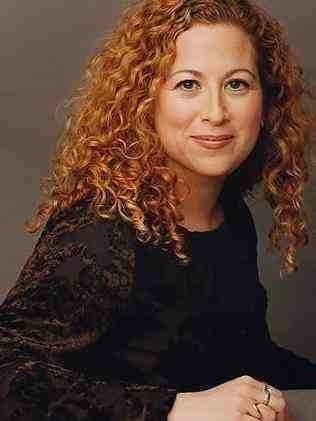
Jodi Picoult is an American author known for her thought-provoking fiction that often explores complex moral dilemmas. Her notable works include My Sister's Keeper, Nineteen Minutes, Small Great Things, Plain Truth, Leaving Time, and The Tenth Circle. Picoult's writing frequently delves into themes of family, justice, and the human experience.
Similar books
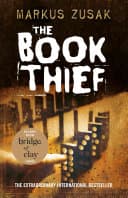
- The Book Thief
Markus Zusak
4.4 (1.8M) average on GoodreadsHistorical FictionExplores the human experience during WWII and the Holocaust from unique perspectives.
- Austerlitz
W.G. Sebald
4.0 (14k) average on GoodreadsHistorical FictionBoth novels confront the legacy of the Holocaust and the search for identity linked to traumatic pasts. However, Sebald's Austerlitz employs a fragmented, essayistic, and melancholic style, blurring the lines between fiction, history, and memoir, focusing on the elusive nature of memory and the weight of history on the landscape and psyche. Picoult's The Storyteller, in contrast, offers a more linear, plot-driven narrative with clear moral questions and resolutions, making it more accessible but perhaps less nuanced in its exploration of the psychological depths and existential uncertainties that Sebald masterfully navigates. Sebald's work often leaves more questions unanswered, reflecting the inherent unknowability of some historical truths.
- The Old Man and the Sea
Ernest Hemingway
3.8 (831k) average on GoodreadsLiterary FictionA Cuban fisherman's long struggle with a giant marlin becomes a story of endurance and dignity, now retold for young adults with illustrations, phonetic guides, and writing prompts in Traditional Chinese.
- One Hundred Years of Solitude
Gabriel García Márquez
4.1 (753k) average on GoodreadsLiterary FictionThrough the multi-generational story of the Buendía family, a mythical town deals with the repeating patterns of time, love, and solitude, as the extraordinary mixes with the ordinary.
- The Goldfinch
Donna Tartt
3.9 (720k) average on GoodreadsLiterary FictionHaunted by a tragic explosion and clutching a stolen Dutch masterpiece, a young orphan navigates the opulent drawing rooms of New York and the gritty underbelly of the art world, desperately seeking connection and redemption amidst a life spiraling into crime and obsession.
- Little Fires Everywhere
Celeste Ng
4.1 (713k) average on GoodreadsLiterary FictionIn Shaker Heights, an artist and her daughter move in, and their free-spirited lives clash with a rule-bound matriarch, revealing hidden conflicts beneath a perfect surface.




Enjoyed the summary?
A summary gives you the shape of the book. The book itself has the detail, the examples and the voice.
Find The Storyteller on AmazonAs an Amazon Associate, BookBrief earns from qualifying purchases. How we're funded