

Core Idea
- Difficulty
- Easy
- Read it if
- You are a skeptic or a seeker interested in the historical and evidential basis for Christianity, or a Christian looking to strengthen your understanding of your faith's foundations.
- Skip it if
- You are firmly convinced against the historicity of Jesus or are looking for a deep theological treatise rather than an evidential apologetic.
Key Takeaways from More Than a Carpenter
The Trilemma: Lord, Liar, or Lunatic
Jesus' claims demand a definitive, exclusive response regarding his identity.
McDowell argues that Jesus' claims to divinity, such as being one with the Father and forgiving sins, mean he cannot be just a 'good moral teacher.' If Jesus was not God, his claims would make him either a deceiver or deluded. This choice makes the reader consider Jesus' identity directly, instead of taking a neutral stance. The intellectual honesty this argument requires is central to McDowell's approach. It challenges the common idea that one can admire Jesus' ethics without accepting his divine status.
“Jesus left only three possibilities: He was a liar, a lunatic, or Lord. But He cannot be just a great moral teacher.”
In the book: McDowell cites numerous New Testament passages where Jesus makes implicit and explicit claims to deity, such as John 8:58 ('Before Abraham was born, I am!') and John 10:30 ('I and the Father are one.'), which led his contemporaries to accuse him of blasphemy.
Try this: When discussing Jesus, challenge the 'good moral teacher' assumption by presenting the trilemma. Encourage a deeper examination of his specific claims and the logical implications of those claims.
Related ideas: jesus-deity, historical-jesus, christian-apologetics
Eyewitness Testimony as Historical Proof
The New Testament accounts are rooted in reliable, firsthand observations.
McDowell stresses the historical truth of the New Testament by comparing its manuscript evidence and closeness to the original events with other old historical texts. He says the Gospels and Epistles were written by people who saw Jesus' life, death, and resurrection, or who carefully interviewed those witnesses. This focus on primary sources and their early spread in a difficult environment suggests they are very authentic. The number and consistency of New Testament manuscript evidence are much greater than for other old works generally accepted as historically sound. This supports its factual accuracy.
“The New Testament documents are reliable historical documents, and they are reliable in their witness to Jesus Christ.”
In the book: McDowell references the work of biblical scholars like F.F. Bruce, highlighting the vast number of ancient New Testament manuscripts (over 5,800 Greek manuscripts, plus thousands in other ancient languages) and their early dates, some fragments dating to within decades of the original writings.
Try this: When confronted with skepticism about biblical historicity, present the evidence for manuscript reliability and the eyewitness nature of the accounts, framing the New Testament as a credible historical source.
Related ideas: biblical-historicity, new-testament-manuscripts, eyewitness-accounts
The Resurrection: Cornerstone of Faith
The historical evidence for Jesus' resurrection provides compelling proof of his divine claims.
McDowell looks at theories that try to explain away the resurrection (like the swoon theory, theft theory, hallucination theory). He disproves them with historical and logical arguments. He says the empty tomb, the many appearances after the resurrection to different groups, and the disciples' change from fearful to brave cannot be explained without Jesus' physical resurrection. This event is not just a theological idea but a historical happening. It validates Jesus' claims and the entire Christian worldview. Without it, Christianity falls apart.
“The resurrection of Jesus Christ is either one of the most wicked, heartless hoaxes ever foisted upon the minds of men, or it is the most fantastic fact of history.”
In the book: McDowell cites the empty tomb, the numerous post-resurrection appearances (e.g., to Mary Magdalene, the disciples, and over 500 people as mentioned in 1 Corinthians 15), and the sudden boldness of the disciples, who died for their conviction that they had seen the risen Christ.
Try this: Focus discussions on the historical evidence for the resurrection, challenging alternative explanations and emphasizing its transformative power on the early believers and its logical necessity for Christian faith.
Related ideas: jesus-resurrection, empty-tomb, post-resurrection-appearances
The Power of Prophecy Fulfilled
Old Testament prophecies about Jesus provide strong evidence of his divine identity.
McDowell points out how accurate and specific Old Testament prophecies about the Messiah are. Many of these were fulfilled in Jesus Christ's life, death, and resurrection. These prophecies, written centuries before Jesus' birth, cover details from his birthplace and how he died to his betrayal and resurrection. The number and exactness of these fulfillments, far more than coincidence, suggest a supernatural plan. This prophetic evidence shows Jesus' divine nature and the Bible's trustworthiness, showing his arrival was planned.
“The Old Testament contains more than 300 prophecies that were fulfilled in Christ.”
In the book: McDowell lists prophecies such as Micah 5:2 (birthplace in Bethlehem), Isaiah 53 (suffering servant), Zechariah 11:12 (betrayal for 30 pieces of silver), and Psalm 22:16 (pierced hands and feet), all fulfilled in Jesus.
Try this: When presenting the case for Jesus' divinity, emphasize the statistical improbability of so many prophecies being fulfilled by chance. Use specific examples to illustrate the precision of these ancient predictions.
Related ideas: messianic-prophecy, old-testament-fulfillment, biblical-accuracy
The Impact of Personal Transformation
The changed lives of believers serve as ongoing evidence of Christ's power.
Beyond historical and logical arguments, McDowell emphasizes the changed lives of people who encounter Jesus. He shares his own conversion from skepticism to faith, showing how a real encounter with Christ leads to deep moral and spiritual change. This lasting, verifiable impact on countless lives, marked by new purpose, freedom from bad habits, and more love and compassion, is presented as strong evidence of Jesus Christ's reality and power. It goes past abstract debate to real, personal experience.
“No other leader, religious or otherwise, has ever affected so many people in so many ways for so long.”
In the book: McDowell shares his personal testimony of being a hostile skeptic who set out to disprove Christianity but was ultimately transformed by his investigation into Jesus' claims. He also alludes to countless other testimonies of changed lives.
Try this: Encourage individuals to consider the personal impact of Jesus on their own lives or the lives of others they know. Share testimonies of transformation as compelling, contemporary evidence.
Related ideas: christian-conversion, personal-testimony, spiritual-transformation
Manuscript Evidence: A Library of Proof
The textual abundance of the New Testament dwarfs other ancient works, ensuring its preservation.
McDowell says the many New Testament manuscripts and their early dates give an unmatched basis for its textual reliability compared to any other old document. While critics question the Bible's accuracy, the evidence supports its textual integrity. Thousands of Greek manuscripts, early translations, and church father citations let scholars reconstruct the original text with high certainty. This abundance reduces the impact of scribal errors and gives confidence that the New Testament we read today is largely the same as the original writings.
“There is more evidence for the reliability of the New Testament than for any other ten pieces of classical literature combined.”
In the book: McDowell cites the existence of over 5,800 Greek manuscripts, 10,000 Latin Vulgate manuscripts, and 9,300 other ancient versions, with fragments like the John Rylands Papyrus (P52) dating to the early 2nd century. This is contrasted with works like Plato (7 copies, 1200 years gap) or Caesar (10 copies, 1000 years gap).
Try this: When facing doubts about the Bible's textual accuracy, highlight the quantitative and temporal superiority of New Testament manuscript evidence over other ancient historical documents.
Related ideas: textual-criticism, manuscript-dating, biblical-preservation
Archaeological Corroboration
Archaeological discoveries consistently affirm the historical accuracy of biblical accounts.
McDowell points to archaeological finds as external proof of the historical settings, customs, and people mentioned in the Bible. He explains how many biblical accounts once dismissed as myths or inaccurate by skeptics have been confirmed by archaeological discoveries. This pattern of verification, not contradiction, strengthens the argument for the overall historical truth of the biblical story, especially the New Testament accounts of Jesus' life and the early church. It shows the Bible is not just a book of faith but a document rooted in historical reality.
“Archaeology has confirmed countless passages which had been rejected by critics as unhistorical.”
In the book: McDowell mentions discoveries like the Pontius Pilate inscription, the Nazareth Decree, and various ossuaries and city ruins that align with biblical descriptions, often silencing critics who previously doubted certain biblical figures or places.
Try this: Use specific archaeological examples to counter claims of biblical inaccuracy, illustrating how external evidence frequently supports the biblical record.
Related ideas: biblical-archaeology, historical-corroboration, ancient-near-east
The Unique Claim of Atonement
Jesus' death is presented not as martyrdom but as a unique sacrifice for humanity's sins.
McDowell highlights how Jesus' death differs from that of other religious or moral leaders. His death on the cross is not just the sad end of a good man. It is a purposeful atonement for humanity's sins. This idea, central to Christian theology, explains why Jesus' life and death are 'more than a carpenter' – they fulfill God's plan for reconciliation. This sacrificial aspect raises Jesus above any other figure, offering a solution to the universal problem of sin that no other philosophy or religion truly provides. This makes his mission unique and essential.
“Jesus came to be the unique God-man, to die for the sins of the world.”
In the book: McDowell refers to New Testament passages explaining the meaning of Jesus' death, such as Romans 5:8 ('while we were still sinners, Christ died for us') and 1 Peter 2:24 ('He himself bore our sins in his body on the cross').
Try this: When explaining the significance of Jesus, emphasize the concept of atonement and how his death offers a unique answer to the human condition of sin, distinguishing him from other historical figures.
Related ideas: atonement, jesus-crucifixion, sin-redemption
Addressing Skepticism and Doubt
Intellectual honesty is encouraged in examining evidence, rather than dismissing faith outright.
McDowell, who was once a skeptic, directly addresses common doubts and objections people have about Christianity. He asks readers to look at the evidence for Jesus carefully, not with blind faith or cynical dismissal. His personal journey from hostility to belief shows that honest inquiry can lead to conviction. The book is set up to anticipate and answer common criticisms. It invites skeptics to engage with the historical and logical arguments for Christ's deity and resurrection, rather than sticking to preconceived notions. This approach helps people explore and potentially overcome doubt.
“I was a skeptic who set out to disprove Christianity, but the evidence was too overwhelming.”
In the book: McDowell frames the entire book as his own journey of investigation, detailing the questions he sought to answer and the evidence that ultimately convinced him, providing a template for other skeptics.
Try this: When encountering skepticism, invite open dialogue and present the evidence in a respectful, logical manner, sharing McDowell's own journey as a model for honest inquiry.
Related ideas: skepticism-christianity, apologetics-doubt, intellectual-honesty
The Reliability of the Canon
The process of canonization ensured the inclusion of authentic, inspired writings.
McDowell discusses how the New Testament books were recognized as authoritative and collected into the canon. He explains that the early church did not randomly 'choose' books. Instead, they recognized writings that showed apostolic authority (written by an apostle or close associate), wide acceptance among churches, and consistency with orthodox Christian teaching. This natural, long process, guided by the Holy Spirit, ensured that the books preserved were indeed inspired by God. This provided a reliable and consistent message about Jesus Christ. This counters the idea that the canon was a politically motivated selection.
“The early church recognized the books that were truly inspired by God, rather than creating them.”
In the book: McDowell refers to the criteria used by the early church: apostolic authorship, internal evidence of inspiration, and widespread acceptance and use in the churches, citing figures like Athanasius and councils that formally affirmed what was already widely accepted.
Try this: When questions arise about why certain books are in the Bible and others are not, explain the historical process of canonization, emphasizing recognition rather than creation of inspired texts.
Related ideas: biblical-canon, new-testament-canonization, apostolic-authority
More Than a Carpenter Quotes
“I was not willing to accept a Jesus who was a liar, a lunatic, or a legend. The only other alternative was that he was the Lord.”
“The resurrection of Jesus Christ is either one of the most wicked, vicious, heartless hoaxes ever foisted upon the minds of men, or it is the most fantastic fact of history.”
“Christianity is not a religion; it is a relationship.”
“I have come to the conclusion that the resurrection of Jesus Christ is one of the most wicked, vicious, heartless hoaxes ever foisted upon the minds of men, or it is the most fantastic fact of history.”
“The evidence for the resurrection is not based on faith but on historical facts.”
“Jesus Christ is the only person in history who ever claimed to be God and then backed it up.”
“If Jesus was not God, then he was a liar or a lunatic.”
“The Bible is not a book of science, but when it speaks on scientific matters, it is accurate.”
“God loves you and wants you to know him personally.”
“The disciples were willing to die for their belief in the resurrection, which is strong evidence it happened.”
“Christianity is based on historical facts, not blind faith.”
“Jesus did not come to make bad people good; he came to make dead people alive.”
“The claims of Christ demand a verdict.”
“You can ignore the evidence, but you cannot deny it.”
Quiz
10 questions on the main ideas. Each answer comes with a short explanation.
Question 1
What was Josh McDowell's initial attitude toward Christianity before writing 'More Than a Carpenter'?
- He was a devout believer from childhood
- He was a skeptical agnostic who doubted Christianity
- He was a former pastor who lost his faith
- He was a neutral academic researcher
Show answer
B. He was a skeptical agnostic who doubted Christianity McDowell emphasizes his background as a skeptic who set out to disprove Christianity, which gives the book credibility as it addresses doubts from a former unbeliever's perspective.
Question 2
According to McDowell, what is the central claim about Jesus that skeptics must confront?
- That Jesus was a wise moral teacher
- That Jesus was a political revolutionary
- That Jesus is the divine Son of God
- That Jesus founded a new religion
Show answer
C. That Jesus is the divine Son of God McDowell argues that Jesus' claim to deity is the core issue, using the 'Lord, Liar, or Lunatic' trilemma to challenge readers to accept him as more than just a carpenter or teacher.
Question 3
What historical evidence does McDowell primarily use to support Jesus' resurrection?
- Archaeological artifacts from Jerusalem
- Eyewitness accounts and early Christian testimonies
- Scientific experiments on resurrection
- Comparisons with other religious figures
Show answer
B. Eyewitness accounts and early Christian testimonies McDowell focuses on the reliability of New Testament documents and the testimony of witnesses who claimed to see Jesus after his death, arguing this provides strong historical evidence for the resurrection.
Question 4
How does McDowell address the argument that Jesus was merely a good moral teacher?
- By citing Jesus' miracles as proof of divinity
- By using the 'Lord, Liar, or Lunatic' trilemma
- By comparing Jesus to other ethical leaders
- By dismissing moral teachings as irrelevant
Show answer
B. By using the 'Lord, Liar, or Lunatic' trilemma McDowell presents the trilemma: if Jesus claimed to be God, he must be either Lord (telling the truth), a liar, or a lunatic—he argues that the 'good teacher' option is logically inconsistent with such claims.
Question 5
What practical application does McDowell suggest for readers who accept Jesus' deity?
- To join a specific church denomination
- To make a personal commitment to follow Christ
- To study theology academically
- To debate skeptics aggressively
Show answer
B. To make a personal commitment to follow Christ The book is evangelistic in purpose, urging readers to move from intellectual assent to a personal relationship with Jesus, emphasizing faith and discipleship as the next step.
Question 6
Why does McDowell argue that the New Testament documents are reliable historical sources?
- Because they were written by Jesus himself
- Because of their early dating and manuscript evidence
- Because they align with modern scientific views
- Because they are universally accepted by all scholars
Show answer
B. Because of their early dating and manuscript evidence McDowell points to the proximity of the writings to Jesus' life and the abundance of manuscript copies as evidence for their historical credibility, countering claims of myth or fabrication.
Question 7
What does McDowell identify as a key impact of accepting Jesus as more than a carpenter?
- Improved social status in religious communities
- Transformation of personal life and purpose
- Guaranteed material prosperity
- Exemption from all suffering
Show answer
B. Transformation of personal life and purpose McDowell emphasizes that recognizing Jesus as Lord leads to a changed life, offering forgiveness, meaning, and a relationship with God, which is central to the book's message.
Question 8
How does McDowell counter the idea that Jesus' resurrection was a legend or myth?
- By arguing that myths take centuries to develop, but resurrection accounts appeared too early
- By claiming scientific proof of bodily resurrection
- By citing non-Christian sources that confirm the resurrection
- By dismissing all mythological comparisons as irrelevant
Show answer
A. By arguing that myths take centuries to develop, but resurrection accounts appeared too early McDowell uses historical criteria, noting that the resurrection narratives were circulated within decades of Jesus' death, making legendary development unlikely given eyewitnesses were still alive.
Question 9
What role does McDowell's personal journey play in the book's argument?
- It serves as an emotional appeal without logical basis
- It provides a case study of a skeptic convinced by evidence
- It is used to promote his academic credentials
- It distracts from the historical arguments
Show answer
B. It provides a case study of a skeptic convinced by evidence McDowell integrates his own story of moving from skepticism to faith to illustrate how the evidence for Jesus can rationally lead to belief, making the argument relatable and persuasive.
Question 10
According to McDowell, why is the claim of Jesus' deity uniquely challenging compared to other religious figures?
- Because it is supported by the most archaeological evidence
- Because Jesus' life and claims demand a personal response of faith or rejection
- Because it is the oldest religious claim in history
- Because it aligns with all scientific discoveries
Show answer
B. Because Jesus' life and claims demand a personal response of faith or rejection McDowell argues that Jesus' explicit claims to divinity, backed by his resurrection, force individuals to confront him as Lord, unlike figures who made lesser claims, making it a pivotal decision for every person.
More Than a Carpenter FAQ
What is 'More Than a Carpenter' about?
'More Than a Carpenter' is a Christian apologetics book by Josh McDowell that examines the evidence for Jesus Christ's deity and purpose. Written from the perspective of a former skeptic, it presents arguments for Christianity's truth claims and aims to address doubts about Jesus' nature and impact.
Does 'More Than a Carpenter' work as an evangelism tool?
Yes, with nearly ten million copies sold, it's considered one of the most powerful evangelism tools worldwide. Its approach from a former skeptic's viewpoint makes it particularly effective for engaging those questioning Christianity's claims about Jesus.
How is 'More Than a Carpenter' different from other Christian apologetics books?
Unlike many apologetics works written by lifelong believers, it's authored by a former skeptic who personally investigated Christianity's claims. This perspective creates a unique, hard-hitting approach that directly confronts doubts about Jesus' deity.
What is the main argument for Jesus' deity in the book?
McDowell presents historical and logical evidence supporting Jesus' claims to divinity, focusing on his resurrection, fulfilled prophecies, and transformative impact. The book argues these factors collectively demonstrate Jesus was more than just a human carpenter.
Does the book address historical evidence for Jesus?
Yes, it examines historical documentation and archaeological findings to support Jesus' existence and the reliability of biblical accounts. McDowell uses this evidence to counter claims that Jesus was merely a mythological figure.
How different is 'More Than a Carpenter' from C.S. Lewis's 'Mere Christianity'?
While both are Christian apologetics classics, 'More Than a Carpenter' focuses more on evidential arguments from a former skeptic's investigation, whereas 'Mere Christianity' emphasizes philosophical and moral reasoning from a literary scholar's perspective.
What is the significance of Josh McDowell being a former skeptic?
McDowell's background as someone who initially doubted Christianity lends credibility to his arguments, as he personally tested the evidence before becoming a believer. This makes the book particularly relatable to readers with similar doubts.
Does the book work for non-Christians?
Absolutely, it's specifically written for doubters and skeptics, using accessible language and logical arguments rather than assuming prior faith. Its widespread evangelistic use demonstrates effectiveness across diverse audiences.
What is the 'carpenter' reference in the title?
The title challenges the common perception of Jesus as merely a human carpenter from Nazareth, arguing instead that he was the divine Son of God. It symbolizes the book's core thesis that Jesus transcends ordinary human categories.
How does the book address Jesus' purpose?
It presents Jesus' purpose as both revealing God's nature and providing salvation through his death and resurrection. McDowell argues this purpose is supported by historical evidence and has transformative implications for individuals.
Similar books
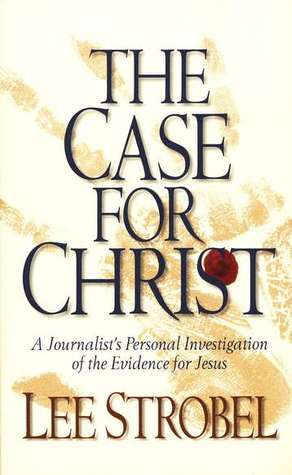
- The Case for Christ
Lee Strobel
4.2 (100k) average on GoodreadsHistoryInvestigates historical and scientific evidence for Christianity through a journalistic lens.
- The Diary of a Young Girl
Anne Frank
4.2 (2.7M) average on GoodreadsBiographyDuring the Nazi occupation, a teenage girl's diary, written from a secret annex, shares observations on humanity, hope, and the wait for freedom.
- Night
Elie Wiesel
4.3 (970k) average on GoodreadsBiographyIn the darkness of Auschwitz and Buchenwald, a teenage Elie Wiesel faces the extermination of his family, the loss of his faith, and the lasting scars of humanity's deepest cruelty.
- Steve Jobs
Walter Isaacson
4.1 (957k) average on GoodreadsBusinessSteve Jobs was a visionary who fused creativity and technology to revolutionize six industries and shape our digital world.
- Unbroken: A World War II Story of Survival, Resilience and Redemption
Laura Hillenbrand
4.4 (767k) average on GoodreadsBiographyLouis Zamperini's incredible World War II odyssey transforms him from a rebellious youth and Olympic runner into a survivor of a plane crash, shark-infested waters, and brutal Japanese POW camps, only to find redemption through forgiveness.
- The Immortal Life of Henrietta Lacks
Rebecca Skloot
4.1 (587k) average on GoodreadsBiographyA poor Southern tobacco farmer's unwitting contribution of 'immortal' cells starts a journey through scientific breakthroughs, medical ethics, and her family's decades-long fight for recognition and understanding.





Enjoyed the summary?
A summary gives you the shape of the book. The book itself has the detail, the examples and the voice.
Find More Than a Carpenter on AmazonAs an Amazon Associate, BookBrief earns from qualifying purchases. How we're funded