
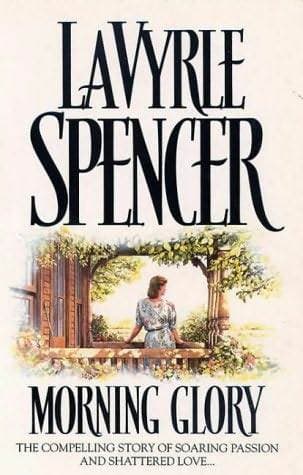
Synopsis
Covers the whole plot, including the ending.
- Difficulty
- Easy
- Pacing
- Moderate
- Mood
- Heartwarming, Emotional, Hopeful, Romantic
- Read it if
- You love classic, heartfelt historical romances with strong emotional arcs and themes of redemption and unconventional families.
- Skip it if
- You prefer fast-paced plots or dislike stories where characters face significant societal prejudice.
Morning Glory Plot Summary
Covers the whole plot, including the ending.
The Advertisement and the Arrival
In the summer of 1941, Elly Dinsmore, a reclusive and ostracized widow in Whitney, Georgia, is pregnant with her third child. She struggles to manage her rundown farm and two young sons, Robbie and Davy. Desperate and facing financial ruin, she places a classified advertisement in the local paper: 'WANTED—A husband. Must be willing to work. Room and board provided. Widow with two boys, expecting third. Serious inquiries only.' The day the ad runs, a quiet drifter named Will Parker steps off a bus in Whitney, seeking a fresh start and a place to belong. He sees Elly's ad and, despite its unusual nature, feels a pull toward it, recognizing a similar desire for connection.
The Interview and the Agreement
Will Parker, quiet and neatly dressed, arrives at Elly Dinsmore's farmhouse. Elly, at first cautious, is surprised by his respectful manner. She explains her difficult situation and the unusual nature of her proposal, saying she needs a partner to help with the farm and her children, not necessarily a romantic husband. Her sons, Robbie and Davy, observe the stranger with curiosity and suspicion. Despite the awkwardness and their individual hesitations, Will accepts her terms, seeing a chance for stability and a home. They agree to a trial period, understanding their arrangement is one of necessity, not love.
Establishing a Routine
Will immediately starts the demanding work on the Dinsmore farm. He repairs fences, cares for the animals, and tackles the overgrown fields, showing a strong work ethic and a natural skill for manual labor. He also begins to connect with Robbie and Davy, patiently teaching them skills and playing with them, something they haven't experienced much since their father's death. Elly, at first guarded, sees Will's kindness and dedication, especially with her sons, and slowly begins to trust him. His presence brings order and hope back into their chaotic lives, and the farm begins to improve under his care.
The Birth of the Baby
As Elly's due date nears, a strong storm hits Whitney, making travel impossible. When Elly goes into labor, Will is the only one there to help. Despite his lack of experience, he stays calm and supportive, guiding Elly through the difficult birth. He successfully delivers her baby, a healthy girl named Annie. This intense, shared experience creates a strong bond between Elly and Will, breaking down some of their emotional barriers. In the vulnerable aftermath, Elly sees Will not just as a hired hand, but as a compassionate and capable partner. Will feels a deep sense of responsibility and connection to this new family.
Growing Affection and Community Scrutiny
With Annie's arrival, the Dinsmore household becomes a more loving and functional home. Elly and Will's shared responsibilities and daily life lead to growing affection and respect. Will continues to mend not just the farm, but also Elly's wounded spirit, showing her a tenderness she'd never known. However, their unusual arrangement and Elly's long-standing reputation as 'Crazy Widow Dinsmore' make them the subject of intense gossip and scrutiny in Whitney. The townspeople, especially the more conservative ones, disapprove of their living situation and the perceived impropriety of Elly's advertisement, further isolating them.
Will's Past Revealed
A traveling salesman passing through Whitney recognizes Will Parker and, through veiled threats and questions, implies that Will is not who he claims to be. This encounter brings Will's guarded past to the surface. It turns out that Will is an escaped convict, having served time for a crime he committed in self-defense years ago. He fled prison after a brutal attack by another inmate, believing he would not receive justice. The fear of his past catching up to him has been a constant shadow over his new life with Elly and the children, and now that shadow is a real threat.
Confrontation and Betrayal
The truth about Will's criminal record spreads quickly through Whitney, fueled by the salesman and the already judgmental townsfolk. Elly is devastated and feels betrayed, struggling to reconcile the kind, loving man she knows with the image of an escaped convict. The community's condemnation grows, with many calling for Will's arrest and demanding Elly leave him. Despite her initial shock and hurt, Elly's love for Will and her understanding of his character begin to outweigh her fear. She faces immense pressure to turn him in, but her loyalty is tested as she tries to protect her family and the man she has come to love.
The Town's Ultimatum
Faced with the threat of arrest and the town's hostility, Will makes the difficult decision to leave Whitney to protect Elly and the children from further scandal and danger. He tells Elly his full story, detailing the circumstances of his conviction and escape, reinforcing his innocence in the original crime. Though heartbroken, Elly understands his reasoning. Will leaves under the cover of darkness, leaving Elly to face Whitney's anger and judgment alone. The town, now convinced of Will's guilt and Elly's involvement, ostracizes her even more severely, making her life and her children's lives incredibly difficult.
Elly's Struggle and Resilience
Left alone once more, Elly finds new strength. She refuses to let the town's judgment break her or let her children grow up believing their stepfather was a criminal. Driven by her love for Will and her belief in his innocence, she begins to gather information about his past, seeking old newspaper clippings and making discreet inquiries. She faces incredible hardship, both financial and social, but her resolve to clear Will's name and reunite her family grows with each obstacle. Her once timid nature is replaced by fierce determination, showing her resilience and loyalty.
Seeking Justice
With the help of a sympathetic lawyer she finds, Elly travels to the distant town where Will's original crime and conviction happened. She looks into old court records and tracks down witnesses, piecing together the true story of what happened. She discovers evidence that supports Will's account of self-defense and uncovers details about the corrupt system that led to his unjust conviction and harsh sentence. Her investigation reveals that Will was a victim of circumstances and an unfair trial, and she gathers the proof needed to support his appeal and clear his name.
Will's Return and Vindication
Armed with evidence, Elly presents her findings to the authorities, and through a legal process, Will's conviction is overturned. His name is cleared, and he is officially exonerated. Will returns to Whitney, no longer an escaped convict, but a free man. His return is met with a mix of awe and shame from the townspeople, who are forced to confront their prejudices and misjudgments. The Dinsmore family is reunited, and Will is able to claim his place as Elly's husband and the children's father, not just in their hearts, but legally and in the community.
A New Beginning
With Will's name cleared and their love affirmed, Elly and Will embrace their life together in Whitney. The farm thrives under their combined efforts, and their children, Robbie, Davy, and Annie, grow up in a stable and loving home. The community, having seen Elly's loyalty and Will's integrity, gradually accepts and respects them. Their story is about enduring love, second chances, and the triumph of truth over prejudice. Elly, once 'Crazy Widow Dinsmore,' finds her place, not as an outcast, but as a beloved wife and mother. Will finally finds the home and family he had always wanted.
Principal Figures
Elly Dinsmore
Protagonist
A reclusive, ostracized widow seeking a husband to help raise her children and save her farm.
Elly is a young widow living in isolation on a rundown farm in Whitney, Georgia, with her two young sons, Robbie and Davy, and pregnant with her third child. She has been an outsider her entire life, raised by eccentric grandparents, and is known in town as 'Crazy Widow Dinsmore.' She is initially timid, guarded, and deeply insecure due to years of social ridicule and neglect. Despite her vulnerability, she possesses an underlying strength, fierce maternal love, and a practical, determined spirit that emerges when her family is threatened.
Relationships: Will Parker (Husband, partner, and the love of her life; he brings her tenderness and stability.); Robbie Dinsmore (Her eldest son, whom she loves deeply and protects fiercely.); Davy Dinsmore (Her younger son, a source of joy and responsibility.); Annie Dinsmore (Her infant daughter, whose birth solidifies her bond with Will.)
Will Parker
Protagonist
A quiet, hardworking drifter with a hidden past, yearning for a home and family.
Will is a man of few words but deep integrity and kindness. He arrives in Whitney seeking a fresh start, carrying the burden of an unjust past as an escaped convict. He is exceptionally hardworking, patient, and possesses a gentle nature, especially with children. He longs for the warmth of a family and a place where he can belong and be accepted for who he truly is. He is driven by a desire for redemption and a quiet strength that allows him to endure hardship.
Relationships: Elly Dinsmore (Wife, partner, and the woman who believes in him and gives him a family.); Robbie Dinsmore (Stepfather figure, he patiently teaches and cares for Robbie.); Davy Dinsmore (Stepfather figure, he provides Davy with affection and guidance.); Annie Dinsmore (His infant daughter, whose birth solidifies his bond with Elly and the family.)
Robbie Dinsmore
Supporting
Elly's elder son, initially wary but eventually accepting of Will.
Robbie is Elly's eldest son, around seven or eight years old. He is initially reserved and suspicious of Will, still grieving his biological father and protective of his mother and younger brother. He is observant and intelligent, slowly warming to Will as he sees his kindness and dedication. Robbie represents the children's need for a stable male figure and the gradual acceptance of a new family member.
Relationships: Elly Dinsmore (Mother, whom he loves and tries to protect.); Davy Dinsmore (Younger brother, whom he looks after.); Will Parker (Stepfather, initially a stranger but becomes a beloved father figure.)
Davy Dinsmore
Supporting
Elly's younger son, more openly affectionate and quickly bonds with Will.
Davy is Elly's younger son, a cheerful and more outgoing child than Robbie. He is quicker to accept Will into their lives, responding positively to Will's gentle nature and playful interactions. Davy's innocent affection helps to bridge the initial gap between Will and the Dinsmore family, symbolizing the simple, uncomplicated love that Will brings into their home. He represents the immediate impact of Will's presence.
Relationships: Elly Dinsmore (Mother, whom he loves.); Robbie Dinsmore (Older brother.); Will Parker (Stepfather, with whom he forms an instant, loving bond.)
Annie Dinsmore
Supporting
Elly and Will's infant daughter, whose birth solidifies their family bond.
Annie is Elly's third child and Will's biological daughter, born during a dramatic storm with Will as the sole attendant. Her arrival marks a significant turning point in Elly and Will's relationship, deepening their connection and transforming their arrangement into a true family unit. She represents new life, hope, and the culmination of their growing love, symbolizing the complete family they become.
Relationships: Elly Dinsmore (Mother.); Will Parker (Father.); Robbie Dinsmore (Older half-brother.); Davy Dinsmore (Older half-brother.)
Mr. Henderson
Supporting
A kind and understanding store owner who offers Elly support.
Mr. Henderson is the sympathetic owner of the general store in Whitney. Unlike many of the other townspeople, he does not judge Elly for her circumstances or her advertisement. He shows her kindness, offers her credit when she is struggling, and provides a small measure of human connection in her isolated life. He represents the rare individual in the community who sees beyond appearances and offers genuine compassion.
Relationships: Elly Dinsmore (Customer and friend, he offers her kindness and practical help.)
The Townspeople of Whitney
Antagonist/Supporting
The judgmental and gossiping residents of Elly's small town.
The townspeople of Whitney, Georgia, collectively act as a significant antagonist. They are largely conservative, deeply rooted in their prejudices, and quick to judge Elly as 'Crazy Widow Dinsmore' due to her unconventional life and her grandparents' eccentricities. Their gossip, condemnation, and social ostracism create immense pressure and hardship for Elly and Will, highlighting the restrictive nature of small-town mentalities. They embody the societal forces that challenge the protagonists' pursuit of happiness.
Relationships: Elly Dinsmore (Subject of their gossip and ostracism.); Will Parker (Subject of their suspicion and condemnation.)
The Traveling Salesman
Mentioned
The catalyst who exposes Will's hidden past.
This unnamed character is a minor but pivotal figure. He is a shrewd and opportunistic individual who recognizes Will Parker from his past as an escaped convict. His arrival in Whitney and subsequent thinly veiled threats and inquiries are what ultimately expose Will's secret, setting in motion the major conflict of the story. He serves as the external force that shatters the fragile peace Elly and Will have built.
Relationships: Will Parker (Recognizes Will from his past, leading to his exposure.)
Themes & Insights
The Power of Unconventional Love and Family
The novel shows that love and family can be found in unexpected circumstances, beyond societal norms and initial plans. Elly and Will's relationship starts as a practical arrangement, an 'advertisement for a husband,' but becomes a deep, lasting love built on mutual respect, shared hardship, and genuine affection. Their bond, solidified by Annie's birth and their dedication to Robbie and Davy, shows that true family is defined by connection and commitment, not conventional beginnings. This is clear in how Will, an outsider, becomes the most loving and stable father figure the children have known, and how Elly, a social outcast, finds deep love with a man the world sees as a criminal.
“He yearned for the tenderness he had never known, the home he'd never had. All he needed was for someone to give him a chance.”
Redemption and Second Chances
A main theme is the possibility of redemption and the importance of second chances, especially for Will Parker. Burdened by an unjust past as an escaped convict, Will seeks only to live a quiet, honest life. Elly, despite her own initial fears and the town's judgment, chooses to believe in his goodness and fights to clear his name. This theme is powerfully shown by Will's change from a lonely drifter to a respected husband and father, and by Elly's strong commitment to uncovering the truth of his past. The story argues that past mistakes or injustices should not define a person's future, and that love and belief can lead to a new, meaningful life.
“When he stepped across Elly Dinsmore's cluttered yard, Will Parker knew he had come home at last...”
Overcoming Prejudice and Social Ostracism
Both Elly and Will face societal prejudice and judgment. Elly has been an outcast her whole life, labeled 'Crazy Widow Dinsmore' by the gossiping town of Whitney. Will carries the stigma of being an escaped convict, despite the circumstances of his crime. The novel explores the destructive power of small-town gossip and the difficulty of challenging old prejudices. However, it also highlights the strength of people who refuse to be defined by others' opinions. Elly's courage in standing by Will and fighting for his innocence, even when it means facing more ostracism, eventually forces the community to confront its own biases and accept them. Their journey shows individual integrity winning over collective judgment.
“In town, they called her 'Crazy Widow Dinsmore.' But Elly was no stranger to their ridicule—she had been an outsider all her life...”
The Definition of Home
The idea of 'home' goes beyond a physical house to include emotional security, belonging, and unconditional love. For Elly, her rundown farm is her only inheritance and a constant struggle, but it becomes a true home once Will's presence brings stability and warmth. For Will, a lifelong drifter, Elly's chaotic household, despite its imperfections, is the first real home he has known, a place where he is needed and loved. The story explores how home is built not with bricks and mortar, but with shared experiences, mutual support, and a loving family, turning a house into a sanctuary where one can truly belong.
“All he needed was for someone to give him a chance. Then he saw her classified ad: WANTED—A husband. When he stepped across Elly Dinsmore's cluttered yard, Will Parker knew he had come home at last...”
Plot Devices & Literary Techniques
The Classified Advertisement
The catalyst for Elly and Will's unconventional meeting and relationship.
Elly's desperate classified ad, 'WANTED—A husband,' is the primary plot device that sets the entire story in motion. It's an unconventional and bold move born out of necessity, immediately establishing Elly's dire circumstances and her pragmatic nature. For Will, it represents a beacon of hope for a new life. This device not only brings the two protagonists together but also highlights the societal judgment they face, as the ad itself becomes a source of scandal and gossip within the small town. It's a testament to the extraordinary measures people take when pushed to their limits.
Will's Hidden Past
The central conflict and source of external tension in the second half of the novel.
Will Parker's secret identity as an escaped convict, having served time for a crime committed in self-defense, serves as the major conflict device. This hidden past creates internal tension for Will, as he fears exposure, and external tension when it is inevitably revealed by the traveling salesman. It forces Elly to confront her deepest fears and societal pressures, and it drives the plot towards her quest for justice and Will's ultimate vindication. This device explores themes of justice, redemption, and the lasting impact of past events on present lives.
The Small Town Setting (Whitney, Georgia)
A microcosm of societal judgment and a backdrop for transformation.
The setting of Whitney, Georgia, a small, conservative Southern town in the 1940s, functions as a powerful plot device. It embodies the forces of social conformity, gossip, and prejudice that Elly and Will must overcome. The close-knit community, while offering some support, primarily acts as an antagonist through its relentless judgment and ostracism of Elly and later Will. The isolation of the Dinsmore farm, contrasted with the prying eyes of the town, highlights the struggle for personal freedom and acceptance against societal expectations. The town's eventual, grudging acceptance of Elly and Will signifies their ultimate triumph.
The Birth of Annie
A pivotal event that solidifies Elly and Will's bond and family unit.
The dramatic birth of Elly and Will's daughter, Annie, during a storm, is a crucial plot device. It creates an intensely intimate and vulnerable moment between Elly and Will, forcing them to rely completely on each other. Will's calm and capable delivery of the baby shatters Elly's remaining emotional barriers, transforming their practical arrangement into a deeply personal and loving bond. Annie's arrival symbolizes the creation of their true family and provides a tangible representation of their growing love, making their subsequent separation even more painful and their eventual reunion more meaningful.
Morning Glory Quotes
“She had wanted the world, but it had come to her in the guise of a small, demanding boy and a taciturn, unsettling man.”
“Love wasn't a choice; it was a surrender.”
“He had never known a woman could be both soft and strong, fragile and fiercely determined.”
“Sometimes the hardest thing to do was to let go of what you thought you wanted, for what you truly needed.”
“The past was a shadow, but the present was a sunrise.”
“He had thought himself content with his solitude, until she had shown him what he was missing.”
“A man’s heart could be as tangled and thorny as any wild rosebush, but given time and care, it could bloom.”
“It was a strange thing, this business of family, a messy, demanding, beautiful thing.”
“He didn't know how to give her the world, but he knew how to give her his heart.”
“Some hurts never fully healed, but they could be softened by kindness and time.”
“She was like the morning glory, fragile in appearance, but tenacious in her reach for the sun.”
“True strength wasn't in never falling, but in rising every time you fell.”
“He hadn't known he was lonely until he'd had her to fill the empty spaces.”
“The greatest adventures weren't always found on distant shores, but sometimes in the quiet unfolding of a shared life.”
Quiz
10 questions on the plot and the characters. Each answer comes with a short explanation.
Question 1
What year does Will Parker drift into Whitney, Georgia, according to the synopsis?
- 1939
- 1940
- 1941
- 1942
Show answer
C. 1941 The synopsis explicitly states that Will Parker arrived in Whitney, Georgia, in the summer of 1941.
Question 2
What is Elly Dinsmore's nickname in town?
- The Lonely Widow
- Crazy Widow Dinsmore
- The Outsider
- Widow Elly
Show answer
B. Crazy Widow Dinsmore The synopsis mentions that 'In town, they called her 'Crazy Widow Dinsmore.''
Question 3
How many children does Elly Dinsmore have at the beginning of the story, including the one on the way?
- Two
- Three
- Four
- One
Show answer
B. Three The synopsis states Elly has 'two little boys to raise, and a third child on the way,' totaling three children.
Question 4
What specific item did Elly Dinsmore use to advertise her need for a husband?
- A poster in the town square
- A personal letter
- A classified ad
- Word of mouth through friends
Show answer
C. A classified ad The synopsis clearly states, 'Then he saw her classified ad: WANTED--A husband.'
Question 5
What is Will Parker primarily seeking when he arrives in Whitney, Georgia?
- Wealth and prosperity
- A quiet place to retire
- Tenderness and a home
- Adventure and excitement
Show answer
C. Tenderness and a home The synopsis mentions Will 'yearned for the tenderness he had never known, the home he'd never had.'
Question 6
What was Elly's upbringing like, contributing to her being an 'outsider'?
- She was raised in an orphanage.
- She grew up in a boarded-up old house under strict grandparents.
- She traveled extensively with her parents.
- She lived in a bustling city before moving to Whitney.
Show answer
B. She grew up in a boarded-up old house under strict grandparents. The synopsis details, 'she had been an outsider all her life, growing up in a boarded-up old house under the strict eye of her eccentric grandparents.'
Question 7
What is the primary reason Elly places the classified ad for a husband?
- She is lonely and desires companionship.
- She needs financial support for her family.
- She is alone with two children and one on the way, indicating a need for a partner and provider.
- She wants to defy town gossip.
Show answer
C. She is alone with two children and one on the way, indicating a need for a partner and provider. While loneliness might be a factor, the synopsis emphasizes her situation: 'Now she was all alone, with two little boys to raise, and a third child on the way,' strongly implying practical needs for a husband.
Question 8
What is the overarching theme suggested by Will Parker's arrival and Elly's advertisement?
- The search for material wealth.
- The struggle against societal norms.
- The yearning for belonging, family, and a place to call home.
- The importance of independence.
Show answer
C. The yearning for belonging, family, and a place to call home. Will yearns for 'the home he'd never had,' and Elly, 'all alone' with children, seeks a husband. Both characters are seeking a sense of belonging and family, which is a central theme.
Question 9
How does Will Parker's internal state before meeting Elly contrast with his feeling upon arriving at her yard?
- He was excited before, but felt regret upon arrival.
- He was hopeful before, but felt fear upon arrival.
- He carried a lonely past, but felt he had 'come home at last' upon arrival.
- He was indifferent before, and remained so upon arrival.
Show answer
C. He carried a lonely past, but felt he had 'come home at last' upon arrival. Will hoped 'to put his lonely past behind him' and 'yearned for the tenderness he had never known.' Upon seeing Elly's yard, he 'knew he had come home at last,' showing a clear contrast from loneliness to belonging.
Question 10
The setting of Whitney, Georgia, in 1941, contributes to which aspect of the story's atmosphere?
- A bustling, modern urban environment.
- A sense of impending war and global conflict.
- A slower-paced, community-focused Southern town, where personal reputations and local gossip are significant.
- A remote, isolated wilderness.
Show answer
C. A slower-paced, community-focused Southern town, where personal reputations and local gossip are significant. The phrase 'lazy afternoon in the summer of 1941' and the mention of 'Crazy Widow Dinsmore' and local ridicule suggest a close-knit Southern town where community perception and gossip play a significant role, typical of the historical fiction romance genre set in that era.
Morning Glory FAQ
What is the central premise of 'Morning Glory'?
The story centers on Elly Dinsmore, a reclusive widow in 1941 rural Georgia, who places a newspaper ad seeking a husband to help raise her two young sons and unborn child. Will Parker, a drifter with a troubled past, answers the ad, leading to an unconventional marriage built on necessity and the slow development of love and trust.
Who is Elly Dinsmore and why is she called 'Crazy Widow Dinsmore'?
Elly Dinsmore is a young widow living in Whitney, Georgia, with two small sons, Judd and Leon, and pregnant with a third child. She's labeled 'Crazy Widow Dinsmore' by the town due to her eccentric upbringing by reclusive grandparents in a dilapidated house, making her an outsider unfamiliar with social norms.
Who is Will Parker and what brings him to Whitney, Georgia?
Will Parker is a quiet drifter with a difficult past who arrives in Whitney, Georgia, seeking a fresh start and a sense of belonging. He answers Elly's unusual advertisement for a husband, hoping to find the stability and connection he has always lacked.
What are the initial challenges Elly and Will face after their marriage?
Their initial challenges include Elly's deep-seated shyness and lack of social graces, Will's struggle to overcome his past trauma and believe in his own worth, and the town's skepticism and gossip about their unconventional union. They also navigate the practicalities of farm life and raising children together.
How do Elly's children, Judd and Leon, react to Will's arrival?
Judd, the older son, is initially wary and protective of his mother, having been the 'man of the house' after his father's death. Leon, the younger son, is more openly accepting and quickly forms an attachment to Will, seeing him as a much-needed paternal figure.
What specific details about Will's past are gradually revealed?
Will's past reveals he was an orphan, raised in an abusive and neglectful orphanage, leading to a deep-seated fear of abandonment and a belief that he is unworthy of love. He was also involved in a minor criminal act out of desperation, which he carries immense guilt over.
How does Elly's isolated upbringing manifest in her adult behavior and interactions?
Elly's isolated upbringing makes her socially awkward, extremely shy, and prone to misinterpreting social cues. She is uncomfortable with physical intimacy and struggles to express her emotions verbally, often retreating into herself when overwhelmed or criticized, making her appear aloof to others.
Are there any symbolic objects or places in the book that represent their journey?
The Dinsmore house itself is highly symbolic; initially dilapidated and reflecting Elly's isolation, its gradual repair and beautification under Will's care symbolizes their growing love, the mending of their individual brokenness, and the creation of a true home together. The 'morning glories' Elly tends also symbolize hope and new beginnings.
How does the community of Whitney, Georgia, influence Elly and Will's relationship?
The town's initial judgment and gossip about Elly and Will's unconventional marriage create external pressure, forcing them to rely on each other. However, as the town slowly witnesses Will's kindness and Elly's transformation, some individuals begin to offer support, subtly validating their union and helping them integrate.
Discuss Elly's psychological journey from 'Crazy Widow' to a confident woman.
Elly's journey involves overcoming deep-seated insecurities stemming from her isolated childhood and the town's ridicule. Will's unwavering acceptance, patience, and love gradually chip away at her shyness, allowing her to gain confidence, express her feelings, and embrace her role as a wife and mother, shedding the 'crazy widow' label.
How does Will's past trauma affect his ability to trust and form attachments?
Will's traumatic past in the orphanage instilled in him a profound fear of abandonment and a belief that he is unlovable, making him hesitant to trust Elly's affection or believe in his own worth. This manifests as a quiet guardedness and a tendency to prepare for rejection, even as he yearns for connection.
What role does vulnerability play in the development of Elly and Will's relationship?
Vulnerability is crucial; Elly's initial ad is an act of desperation and vulnerability, which Will answers with his own quiet hope. As they slowly reveal their past wounds and fears to each other, they build intimacy and trust, allowing their transactional marriage to evolve into genuine love.
How do Elly and Will each contribute to the other's healing process?
Elly's unconditional acceptance and quiet strength provide Will with the stability and love he never had, healing his sense of unworthiness. Will's patience, understanding, and unwavering belief in Elly's goodness help her overcome her shyness and insecurities, allowing her to blossom into a confident woman.
Is 'Morning Glory' primarily a romance, or does it delve into deeper social commentary?
While fundamentally a romance, 'Morning Glory' also offers social commentary on themes like community judgment, the plight of outsiders, the challenges faced by single mothers in the 1940s, and the healing power of acceptance and love. It explores how individuals can overcome adversity and societal expectations.
What is the significance of the 1941 setting, just before America's entry into WWII?
The 1941 setting adds a layer of poignancy and fragility to their new beginning. The looming threat of WWII creates an undercurrent of uncertainty, emphasizing the preciousness of the home and family they are building, and hinting at future challenges they might face together.
How does the book challenge traditional gender roles of its time?
The book subtly challenges gender roles by having Elly initiate the marriage, taking charge of her family's needs in an unconventional way. Will, while fulfilling traditional 'man of the house' duties, also embodies gentle emotional support and domestic partnership, valuing Elly's unique perspective and nurturing her growth.
What message does 'Morning Glory' convey about the nature of love and family?
'Morning Glory' suggests that love can be found in unexpected places and grow from necessity and mutual respect, not just passionate beginnings. It emphasizes that family is built on acceptance, commitment, and the willingness to heal and support one another, transcending biological ties or societal norms.
How does the ending of the book provide a sense of closure and hope for the characters?
The ending provides closure by showing Elly and Will as a fully integrated and loving family, accepted by their community. Their home is repaired, their children are thriving, and their love is undeniable. It offers hope by depicting them as resilient individuals who have found profound happiness and belonging, ready to face the future together.
About the author

LaVyrle Spencer is an American author known for her works of fiction, particularly in the romance genre. Her notable books include "Morning Glory," which explores themes of love and redemption, and "Hummingbird," a story about personal growth and connection. Spencer's writing often features strong character development and emotional depth.
Similar books
- Outlander
Diana Gabaldon
4.2 (824k) average on GoodreadsFantasyFeatures a strong female protagonist navigating a challenging historical setting and a deep, evolving romance.
- A Town Like Alice
Nevil Shute
4.1 (49k) average on GoodreadsHistorical FictionExplores a woman's resilience and journey to build a new life and find love in a post-war setting.
- To Kill a Mockingbird
Harper Lee
4.3 (4.5M) average on GoodreadsHistorical FictionIn the 1930s Jim Crow South, Harper Lee writes about racial injustice, moral growth, and the quiet courage of a lawyer father, Atticus Finch, as seen through his young daughter's eyes.
- The Great Gatsby
F. Scott Fitzgerald
3.9 (3.8M) average on GoodreadsHistorical FictionIn the opulent Roaring Twenties, a mysterious millionaire's lavish parties hide his desperate, tragic pursuit of a lost love, exposing the emptiness within the American Dream.
- Pride and Prejudice
Jane Austen
4.3 (3M) average on GoodreadsHistorical FictionIn a society focused on status and money, Elizabeth Bennet navigates love and pride, challenging Mr. Darcy and social expectations to find true affection.
- Angels & Demons
Dan Brown
3.9 (2.7M) average on GoodreadsThrillerA Harvard symbologist races through Rome's ancient sites, deciphering cryptic clues to unmask the Illuminati and stop a vengeful plot to destroy the Vatican with a stolen antimatter weapon.





Enjoyed the summary?
A summary gives you the shape of the book. The book itself has the detail, the examples and the voice.
Find Morning Glory on AmazonAs an Amazon Associate, BookBrief earns from qualifying purchases. How we're funded