
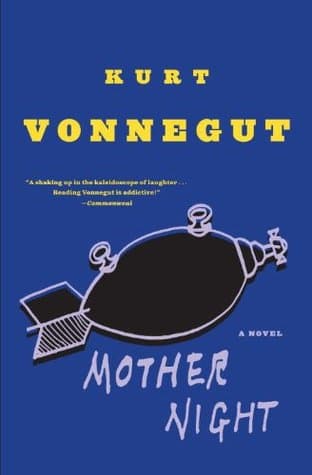
Synopsis
Covers the whole plot, including the ending.
- Difficulty
- Medium
- Pacing
- Moderate
- Mood
- Dark, Satirical, Reflective, Thought-provoking
- Read it if
- You enjoy morally complex characters, dark humor, and stories that challenge conventional notions of good and evil.
- Skip it if
- You prefer straightforward narratives with clear heroes and villains, or find themes of moral ambiguity and self-deception unsettling.
Mother Night Plot Summary
Covers the whole plot, including the ending.
The Prisoner of Jerusalem
Howard W. Campbell, Jr., an American writer and former Nazi propagandist, introduces himself from his Jerusalem cell, where he awaits trial for war crimes. He writes his memoirs on toilet paper, reflecting on his life and how he got there. Campbell claims innocence, stating he was a double agent for the U.S. during World War II, a fact known only to his handler, Frank Wirtanen. He describes his childhood in Schenectady, New York, and his early career as a playwright in pre-war Germany, where he met and married Helga Noth.
A Life in Berlin Before the Storm
Campbell details his life in Berlin, where he found success as a playwright and became an expatriate. He describes his deep love for Helga Noth, an actress, whom he married. Their life was filled with art, discussions, and an unawareness of the coming political unrest. This period contrasts sharply with the horrors that would soon engulf Europe and Campbell's life. He emphasizes his connection with Helga, calling her his 'nation of two,' a bond that would influence his later decisions.
The Recruitment by Frank Wirtanen
As war nears, Campbell is approached by Frank Wirtanen, an American intelligence officer, who recruits him as a spy. Wirtanen's plan is simple: Campbell is to become a prominent Nazi propagandist, his broadcasts filled with coded messages for the Allies. The more convincing his Nazi performance, the more valuable he would be. Campbell, initially hesitant, agrees, driven by a desire to protect Helga and a naive belief he could control the narrative. This decision begins his moral descent and the blurring of his true self and his created persona.
The Voice of Nazi Propaganda
Howard W. Campbell, Jr. becomes 'The Voice of the American Reich,' a powerful Nazi propagandist. His broadcasts, full of anti-Semitic and pro-Nazi messages, reach millions and are very persuasive. Unknown to the public, these broadcasts contain subtle coughs, stutters, and pauses that form a secret code for the Allies, sending vital intelligence. Campbell's public persona becomes so convincing that even he struggles to separate his true self from the monster he portrays, leading to deep psychological distress and growing isolation.
Post-War Disappearance and Reclusion
After Germany's defeat, Campbell is not publicly identified as an American agent. Instead, he disappears, living quietly in a small Greenwich Village apartment in New York City for nearly two decades. He becomes a ghost, known to few, haunted by his past and his role. During this time, he writes his memoirs, trying to understand his life and justify his actions. He lives alone, his only companion a parakeet named Polly, and the constant memory of Helga, whom he believes died during the war.
The Return of Helga and the Conspiracy
Campbell's solitude is broken by a woman claiming to be Helga Noth, his long-lost wife. This 'Helga' is with her supposed father, Krapptauer, and a young girl named Resi, who claims to be Helga's sister. Campbell is overjoyed, desperate to believe his love has returned. However, he soon suspects their motives and inconsistencies in their story. It is revealed that this 'Helga' is a Soviet agent named Resi Noth, who had plastic surgery to resemble the real Helga, as part of a plan to kidnap Campbell for Soviet propaganda.
The Gathering of 'Old Friends'
As the plot progresses, Campbell's apartment becomes a meeting place for various characters. Reverend Lionel J. D. Jones, an American Nazi sympathizer, seeks Campbell's endorsement for his new fascist movement. George Kraft, a fellow tenant and Soviet agent, tries to manipulate Campbell. Dr. Abraham Epstein, a Jewish Holocaust survivor, confronts Campbell about his wartime broadcasts. These figures, each with their own agenda, force Campbell to confront the moral complexities of his past and the present danger he faces, complicating his already difficult situation.
The Revelation of Resi's True Identity
The truth about 'Helga' is revealed: she is Resi Noth, the real Helga's younger sister. Resi was trained by the Soviets and had extensive plastic surgery to impersonate Helga. Her mission was to lure Campbell out of hiding and abduct him for Soviet propaganda. This revelation crushes Campbell, who had hoped for a reunion with his wife. The deception highlights the pervasive manipulation and deep loneliness that define Campbell's existence, showing he is a pawn in larger geopolitical games.
The Suicide of Resi Noth
Overwhelmed by guilt, the failure of her mission, and perhaps a genuine affection for Campbell, Resi Noth commits suicide by ingesting cyanide. Her death is a tragic and shocking event that deeply affects Campbell. It emphasizes the destructive power of deception and the human cost of political schemes. Resi's suicide also removes Campbell's last tangible link to his past and to the possibility of a renewed connection, leaving him even more isolated and resigned to his fate.
Arrest and Journey to Israel
After the chaos and revelations in his apartment, Howard W. Campbell, Jr. is apprehended by Israeli agents. His past as a Nazi propagandist, though secretly a double agent, has caught up with him. He is extradited to Jerusalem to stand trial for war crimes. This ends his long reclusion and begins his public reckoning. The journey to Israel is symbolic, taking him from the anonymity of his New York apartment to the global stage, where his life will be judged by a world that knows only his monstrous public persona.
The Trial and the Arrival of Wirtanen
Campbell's trial in Jerusalem begins, drawing international attention. He is accused of heinous war crimes, with his wartime broadcasts as damning evidence. The world sees him as a monster, a willing participant in the Nazi regime. Just as hope seems lost, Frank Wirtanen, his former handler from the Office of Strategic Services, arrives in Jerusalem. Wirtanen's appearance offers a glimmer of hope, as he is the only person who can confirm Campbell's story of being a double agent and clear his name. His testimony is essential to revealing the truth behind Campbell's actions.
Wirtanen's Revelation and Campbell's Realization
Frank Wirtanen testifies, confirming that Howard W. Campbell, Jr. was an American spy and his Nazi broadcasts contained coded information for the Allies. This testimony should clear Campbell, proving his innocence in the eyes of the law. However, Campbell has a personal realization: while innocent of war crimes, he was guilty of something worse—becoming the evil he pretended to be. He understands that his propaganda, regardless of its secret purpose, truly incited hatred and violence, and that 'we are what we pretend to be, so we must be careful what we pretend to be.'
The Irony of Exoneration
With Wirtanen's testimony, Campbell is legally cleared of war crimes. The court, and potentially the world, now understands his true role. However, Campbell cannot escape the moral implications of his actions. The realization that his pretense had real-world consequences, that his evil performance was indistinguishable from actual evil, weighs heavily on him. He feels inescapable guilt for the hatred he helped spread and the lives affected by his words, regardless of his intentions. The exoneration feels empty, a legal victory that does not morally absolve him.
Helga's Final Letter
In a cruel twist, Campbell receives a letter from the real Helga, written years ago and held by the Soviets. The letter reveals that Helga was alive for a time after the war but later died in a Soviet prison camp. This news shatters Campbell, confirming the complete loss of his 'nation of two' and the ultimate futility of his sacrifices. The letter highlights the tragic irony of his life: he endured years of moral compromise and isolation, believing he was protecting Helga, only to discover she suffered a terrible fate anyway. This final blow deepens his despair.
Suicide in the Cell
After reading Helga's letter and fully understanding the devastating impact of his dual life, Campbell makes a final, tragic decision. He uses a piece of baling wire, which he had been meticulously shaping into a miniature gallows, to hang himself in his prison cell. His suicide is not an act of cowardice but a profound statement about inescapable moral responsibility for one's actions, regardless of intentions. He cannot live with the knowledge of what he became, even if it was a pretense, and the ultimate loss of everything he held dear. His death seals the novel's dark message about identity and guilt.
Principal Figures
Howard W. Campbell, Jr.
Protagonist
An American playwright turned Nazi propagandist and secret Allied spy.
Howard W. Campbell, Jr. is a complex and morally ambiguous character. Born in America, he found success as a playwright in pre-war Germany and married Helga Noth, the love of his life. Recruited by Frank Wirtanen, he became a notorious Nazi propagandist, secretly embedding coded messages for the Allies in his broadcasts. He views himself as a man without a country, whose only true nation was his wife. After the war, he lives in reclusion, haunted by his past and the profound blurring of his true identity with his monstrous public persona. His primary drive is to justify his actions and reunite with Helga.
Relationships: Helga Noth (His beloved wife, his 'nation of two,' and the driving force behind many of his decisions.); Frank Wirtanen (His handler and the only person who knows his true identity as an Allied spy.); Resi Noth (Helga's sister and a Soviet agent who impersonates Helga, briefly rekindling Campbell's hope.)
Helga Noth
Supporting
Campbell's German wife, an actress, and the love of his life.
Helga Noth is Howard Campbell's deeply beloved wife, an actress who embodies beauty, art, and the innocence of their pre-war life in Berlin. She represents Campbell's 'nation of two,' his only true allegiance and the reason he initially agrees to become a spy. Though largely absent for most of the narrative (presumed dead), her memory is a constant presence, driving Campbell's actions and his desire for justification. Her eventual fate, revealed in a letter, is a final tragic blow to Campbell, symbolizing the ultimate loss of his personal world.
Relationships: Howard W. Campbell, Jr. (Her husband, with whom she shared a profound and all-consuming love.)
Frank Wirtanen
Supporting
Campbell's enigmatic American intelligence handler.
Frank Wirtanen is the cool, calculating, and morally detached American intelligence officer who recruits Howard Campbell to be a double agent. He is the only person who knows Campbell's true purpose during the war and serves as a crucial figure in potentially exonerating him. Wirtanen represents the shadowy world of espionage, where individuals are used as tools for larger political ends. His appearance at Campbell's trial is the turning point, providing the legal justification for Campbell's actions, yet highlighting the moral vacuum in which Campbell operated.
Relationships: Howard W. Campbell, Jr. (His operative, whom he recruited and later attempts to exonerate.)
Resi Noth
Supporting
Helga's younger sister and a Soviet agent who impersonates Helga.
Resi Noth is Helga's younger sister, who later becomes a Soviet agent. She undergoes plastic surgery to resemble Helga and is sent to America to abduct Campbell. Initially appearing as a miraculous return of Helga, her true identity as a manipulative spy is revealed. Resi embodies the pervasive deceit and moral corruption of the post-war world. Despite her mission, she develops a complex emotional connection with Campbell, leading to her eventual suicide out of guilt and despair. She represents a tragic figure caught in the web of espionage.
Relationships: Howard W. Campbell, Jr. (Her target, whom she impersonates her sister to deceive, and with whom she develops a complicated, tragic bond.); Helga Noth (Her older sister, whose identity she assumes.)
Reverend Lionel J. D. Jones
Supporting
An American Nazi sympathizer and aspiring fascist leader.
Reverend Lionel J. D. Jones is a fanatical American Nazi sympathizer who seeks out Campbell in New York, hoping to capitalize on his infamous past to revive a fascist movement. He is a caricature of blind ideology and unrepentant hatred, representing the enduring threat of fascism even after the war. Jones's interactions with Campbell highlight the real-world impact of Campbell's propaganda and the dangerous individuals who genuinely admired his wartime persona. He is a source of dark humor and a stark reminder of the evil Campbell pretended to be.
Relationships: Howard W. Campbell, Jr. (He reveres Campbell as a fellow ideologue, unaware of his true allegiances.)
George Kraft (Colonel Iona Potapov)
Supporting
Campbell's neighbor and a Soviet agent.
George Kraft is Campbell's seemingly innocuous neighbor in Greenwich Village, who is revealed to be Colonel Iona Potapov, a Soviet agent involved in the plot to abduct Campbell. He is a cynical and opportunistic character, representing the continuous Cold War machinations that ensnare individuals like Campbell. Kraft's casual deception and willingness to exploit others underscore the pervasive moral decay in the post-war world. He plays a role in orchestrating the 'Helga' deception and is ultimately responsible for bringing the various conspirators together.
Relationships: Howard W. Campbell, Jr. (His neighbor and target, whom he attempts to manipulate for Soviet ends.)
Dr. Abraham Epstein
Supporting
A Jewish Holocaust survivor who confronts Campbell.
Dr. Abraham Epstein is a Holocaust survivor who confronts Campbell in his New York apartment, accusing him of his wartime propaganda. He represents the victims of the atrocities Campbell seemingly supported and embodies the moral judgment Campbell faces. Epstein's presence forces Campbell to confront the tangible human cost of his actions, regardless of his intentions. His anger and pain are a powerful reminder of the real evil Campbell's words helped perpetuate, even if unknowingly. He is a symbol of justice and remembrance.
Relationships: Howard W. Campbell, Jr. (He confronts Campbell, holding him accountable for his wartime propaganda.)
Themes & Insights
The Nature of Identity and Pretence
The novel explores the idea that 'we are what we pretend to be, so we must be careful what we pretend to be.' Campbell's life shows this, as his long performance as a Nazi propagandist blurs the lines between his true self and his monstrous persona. Despite his secret intentions, his words had real-world consequences, inciting hatred and violence. This theme appears in his isolation, his inability to shed his past, and his realization that his pretense made him morally complicit, regardless of his internal justifications. The 'nation of two' he shared with Helga shows his desperate attempt to keep a core identity separate from his public role.
“'We are what we pretend to be, so we must be careful what we pretend to be.'”
Moral Ambiguity and Responsibility
Mother Night questions traditional ideas of good and evil, showing a world of moral ambiguity. Campbell is a spy for the Allies, yet his propaganda genuinely helps the Nazi cause. His intentions were 'good,' but his actions were 'evil.' The novel asks if intentions can excuse responsibility for the impact of one's actions. This ambiguity is clear in Campbell's trial, where legal exoneration does not ease his deep moral guilt. The characters around him, from the deceptive Resi to the fanatical Reverend Jones, further show the complex and often contradictory nature of human morality during war and political upheaval.
“'There are plenty of good reasons for fighting,'' I said, ''but no good reasons ever to hate.'”
The Absurdity and Cruelty of War
Vonnegut shows war not as a glorious struggle but as an absurd and cruel machine that destroys lives and distorts identities. Campbell's existence is a product of this absurdity, forced into a role that obliterates his sense of self and ultimately leads to his destruction. The characters, from the earnest spies to the unrepentant fascists, are all caught in the illogical and destructive currents of global conflict. The revelation of the real Helga's death in a Soviet prison camp, despite Campbell's efforts to protect her, highlights the senseless and indiscriminate nature of war's cruelty, where even 'good' intentions lead to tragic outcomes.
“'The world is full of things that are tragic, and things that are absurd. But I have never seen anything so tragically absurd as the world of Howard W. Campbell, Jr.'”
Love and Isolation
Campbell's love for Helga Noth is the novel's emotional core, representing his only true connection and a refuge from his life's moral chaos. He calls their bond his 'nation of two,' showing his extreme isolation from any other sense of belonging. This theme explores how love can be both a strong motivator and a source of deep vulnerability. His long separation from Helga, the deception involving Resi Noth, and the eventual revelation of Helga's death, strip Campbell of his last emotional anchor, leaving him utterly alone. His isolation is a direct result of his dual identity, a man without a country, without a true self, and ultimately, without love.
“'I had a country, and it was Helga.'”
The Power of Propaganda and Language
The novel shows the immense power of propaganda and language to shape perceptions, incite hatred, and manipulate populations. Campbell, as 'The Voice of the American Reich,' masters this, his words having a profound and devastating impact, regardless of his secret intentions. The story demonstrates how even coded messages, meant for a select few, contribute to a larger narrative that can be genuinely harmful. The lasting influence of Campbell's broadcasts, even decades later, shows how words, once spoken, take on a life of their own, independent of the speaker's true beliefs. This theme warns about the responsibility inherent in wielding such power.
“'A lot of people were helped by my being a Nazi. A lot of people were hurt by my being a Nazi. The good I did was a secret. The evil I did was a public scandal.'”
Plot Devices & Literary Techniques
First-Person Memoir
The entire story is told from Howard W. Campbell, Jr.'s perspective as he writes his memoirs in prison.
This device allows for deep immersion into Campbell's subjective experience, giving readers direct access to his thoughts, justifications, and moral struggles. It creates a sense of intimacy and challenges the reader to grapple with his version of events, forcing them to question the reliability of his narration. The memoir format also allows for nonlinear storytelling, with Campbell frequently reflecting on his past, providing context and deepening the moral ambiguities of his character.
Irony
The pervasive use of situational, dramatic, and verbal irony to highlight moral paradoxes.
Irony is central to the novel's dark humor and its exploration of moral ambiguity. Situational irony is evident in Campbell, a secret Allied spy, becoming a celebrated Nazi propagandist. Dramatic irony occurs as the reader knows Campbell's true role, while the world condemns him. Verbal irony is present in Campbell's cynical observations and the often absurd situations he finds himself in. This device underscores the novel's central theme that intentions do not always align with outcomes, and that life is often a series of tragic paradoxes.
The 'Nation of Two'
Campbell's symbolic term for his exclusive bond with his wife, Helga.
This metaphorical device emphasizes Campbell's profound isolation and his lack of allegiance to any actual country or ideology. His 'nation of two' represents his only true identity and loyalty, making his actions as a spy and propagandist feel like a betrayal of nothing but his own conscience. It highlights his desperate need for personal connection in a world of political deceit and ultimately underscores the tragedy of his life when this 'nation' is irrevocably lost.
The Gallows
A miniature gallows Campbell constructs throughout the novel, foreshadowing his end.
This recurring symbol serves as a constant, morbid reminder of Campbell's impending judgment and ultimate fate. He meticulously crafts it from baling wire, a seemingly innocuous act that takes on profound significance as the narrative progresses. The gallows represents both the legal justice he faces and the self-imposed moral reckoning that consumes him. Its final use in his suicide is a powerful, grim culmination of his journey, illustrating his inescapable guilt and the novel's dark resolution.
Mother Night Quotes
“We are what we pretend to be, so we must be careful about what we pretend to be.”
“Make love when you can. It's good for you.”
“There are too many of us, and we are all too far apart.”
“When you're dead, you're dead. No more, no less.”
“The only difference between a hero and a villain is that the hero is the one who wins.”
“I was a man who had given up on himself, so what did it matter if I fooled a few people?”
“It was a time when the world was full of monsters, and sometimes, I was one of them.”
“The greatest patriotic service you can render your country is to die for it.”
“There are no innocent bystanders.”
“I had hoped to be a great artist, but I settled for being a great liar.”
“A lot of people are going to think you're a monster, Howard. But you're not. You're just a man who did his job too well.”
“The only way to keep your sanity is to tell yourself that you are doing the right thing, even if you know you are not.”
“Every man has to decide for himself whether he's going to be a human being or a piece of garbage.”
“How many people do you think you can fool before you start fooling yourself?”
Quiz
10 questions on the plot and the characters. Each answer comes with a short explanation.
Question 1
What was Howard W. Campbell, Jr.'s primary role for the Americans during World War II?
- A saboteur of German infrastructure
- A propagandist broadcasting pro-Nazi messages that secretly contained coded information
- An assassin targeting high-ranking Nazi officials
- A double agent working for both the Americans and the Soviets
Show answer
B. A propagandist broadcasting pro-Nazi messages that secretly contained coded information Campbell's primary role was to broadcast pro-Nazi propaganda from Berlin, which the Americans used as a medium for coded messages embedded in his pauses and speech patterns.
Question 2
What is the name of Campbell's beloved wife, who he believes to be 'the only pure thing in his life'?
- Helga Noth
- Resi Noth
- Ilse Koch
- Lotte Noth
Show answer
A. Helga Noth Helga Noth is Campbell's wife, an actress with whom he shares a deep, almost childlike love, and whose memory he clings to throughout his ordeal.
Question 3
Where is Howard W. Campbell, Jr. awaiting trial at the beginning of the novel?
- Nuremberg, Germany
- Tel Aviv, Israel
- New York City, USA
- Moscow, Soviet Union
Show answer
B. Tel Aviv, Israel The novel opens with Campbell imprisoned in Tel Aviv, Israel, awaiting trial as a Nazi war criminal.
Question 4
What is the 'moral' that Campbell explicitly states at the end of the book regarding the nature of evil?
- Good always triumphs over evil.
- Those who do evil things are evil people.
- You are what you pretend to be, so be careful what you pretend to be.
- The end justifies the means.
Show answer
C. You are what you pretend to be, so be careful what you pretend to be. Campbell famously states, 'You are what you pretend to be, so be careful what you pretend to be,' encapsulating the central theme of the blurred lines between identity and action, and the responsibility for one's performed role, regardless of intent.
Question 5
Which historical figure does Campbell claim to have had a brief, unpleasant encounter with in a hotel lobby?
- Adolf Hitler
- Hermann Göring
- Joseph Goebbels
- Heinrich Himmler
Show answer
C. Joseph Goebbels Campbell recounts an awkward and rather unheroic encounter with Joseph Goebbels, where Goebbels dismisses him as a 'pissant,' highlighting the mundane and often absurd nature of evil.
Question 6
Who is Frank Wirtanen?
- Campbell's defense attorney
- The American agent who recruited Campbell to be a spy
- A fellow prisoner awaiting trial in Israel
- The prosecutor in Campbell's trial
Show answer
B. The American agent who recruited Campbell to be a spy Frank Wirtanen is the 'Blue Fairy' for the Americans, the intelligence officer who recruited Campbell and was the only person who knew the true nature of Campbell's broadcasts.
Question 7
What is the ultimate fate of Resi Noth, Helga's younger sister, after she reappears in Campbell's life?
- She marries Campbell and they live peacefully in America.
- She is revealed to be a Soviet agent and commits suicide.
- She testifies against Campbell at his trial.
- She helps Campbell escape to South America.
Show answer
B. She is revealed to be a Soviet agent and commits suicide. Resi Noth, who initially appears to be Helga, is later revealed to be a Soviet agent named Resi Noth, Helga's younger sister, and she commits suicide rather than be captured.
Question 8
What is the significance of the phrase 'Mother Night' in the context of the novel's themes?
- It refers to the darkness of war that consumed humanity.
- It symbolizes the moral ambiguity and concealment of truth, where intentions are hidden in darkness.
- It is a reference to Campbell's mother, who he deeply admired.
- It represents the solace and peace Campbell found in his isolation.
Show answer
B. It symbolizes the moral ambiguity and concealment of truth, where intentions are hidden in darkness. The title 'Mother Night' is a direct quote from Goethe's Faust, referring to the darkness that hides all, symbolizing the moral ambiguity, the hidden intentions, and the difficulty of discerning truth from performance that permeates Campbell's story.
Question 9
How does Campbell ultimately die at the very end of the novel?
- He is executed by the Israeli authorities.
- He commits suicide by hanging himself in his cell.
- He dies of natural causes while awaiting his trial.
- He is assassinated by a former Nazi sympathizer.
Show answer
B. He commits suicide by hanging himself in his cell. After receiving conclusive proof from Frank Wirtanen that his service was indeed valuable and his intentions pure, Campbell finds he has no further reason to live, and hangs himself in his cell, symbolizing his ultimate despair and the futility of his life's performance.
Question 10
What is the 'nation of one' concept that Campbell discusses, particularly in relation to his marriage to Helga?
- His belief that he was the only true patriot left in the world.
- The idea that he and Helga created a self-sufficient world unto themselves, detached from external morality or politics.
- His philosophical stance against all forms of nationalism.
- A secret code name for his intelligence operation.
Show answer
B. The idea that he and Helga created a self-sufficient world unto themselves, detached from external morality or politics. Campbell views his relationship with Helga as a 'nation of one' or 'two,' a private, perfect world that existed outside the moral and political chaos of the war, suggesting a form of solipsism and an attempt to escape responsibility through personal devotion.
Mother Night FAQ
What is the central premise of 'Mother Night' and who is Howard W. Campbell, Jr.?
'Mother Night' centers on Howard W. Campbell, Jr., an American writer living in Germany who becomes a Nazi propagandist during World War II. However, he is secretly working as a spy for the U.S. Office of Strategic Services, embedding coded messages within his broadcasts to aid the Allied war effort. The novel explores the moral ambiguities of his actions and identity.
Where and when does the main narrative of the book take place?
The main narrative unfolds in a prison cell in Israel in 1961, where Howard W. Campbell, Jr. awaits trial as a Nazi war criminal. He is writing his memoirs, which form the bulk of the book, reflecting on his life in Germany before and during World War II, and his post-war hiding in New York.
Who is Helga Noth and what is her significance to Campbell?
Helga Noth is Campbell's beloved wife, a German stage actress with whom he shared a deep, almost childlike, love. Her supposed death during the war deeply traumatizes him, and her memory is a driving force in his life, serving as his primary justification for his morally compromising actions.
What role does Frank Wirtanen play in Campbell's story?
Frank Wirtanen is Campbell's handler from the U.S. Office of Strategic Services (OSS). He is the only person who truly knows Campbell's secret identity as an American spy, and his testimony is crucial for Campbell's potential exoneration. Wirtanen's enigmatic nature and delayed appearance add to Campbell's isolation and moral dilemma.
What is the 'moral' of the story, as stated by Vonnegut himself?
Vonnegut famously states in the preface that the moral of the story is: 'We are what we pretend to be, so we must be careful about what we pretend to be.' This directly addresses Campbell's predicament, where his prolonged performance as a Nazi propagandist ultimately consumes his true identity and leads to his tragic fate.
How do the 'blue fairy tales' Campbell writes for children connect to his propaganda work?
The 'blue fairy tales' are a stark contrast to his Nazi propaganda, representing a pure, innocent side of Campbell's creative output. However, even these tales are tinged with his isolation, as he wrote them for his imagined children with Helga. They highlight the duality of his character, a man capable of both malicious rhetoric and gentle fantasy.
What is the significance of the character of George Kraft (also known as the 'Black Fuehrer')?
George Kraft is a Soviet spy who attempts to recruit Campbell after the war, believing him to be a genuine Nazi sympathizer. Kraft's confusion and manipulation of Campbell highlight the pervasive nature of espionage and the difficulty of discerning true allegiances in the post-war world. He further complicates Campbell's already convoluted identity.
How does the 'nation of two' concept between Campbell and Helga contribute to the narrative's themes?
The 'nation of two' symbolizes Campbell and Helga's insular, almost naive, love that existed independently of the horrific political landscape around them. This concept reinforces Campbell's claim that his only loyalty was to Helga, not to any ideology, and serves as a poignant, if ultimately insufficient, justification for his actions.
What is the underlying irony of Campbell's ultimate fate, given his secret mission?
The profound irony lies in Campbell being tried as a Nazi war criminal, despite having secretly worked against the Nazis for the Allies. His mission required such deep immersion in his role that he became indistinguishable from the very enemy he was supposed to undermine, leading to his condemnation by those he ostensibly served.
How does Campbell's isolation contribute to his psychological state throughout the novel?
Campbell's extreme isolation, knowing his true identity is a secret known only to Wirtanen, profoundly impacts his psychology. He experiences intense loneliness and a fragmented sense of self, living a lie for so long that he struggles to differentiate between his true self and his performed persona. This isolation ultimately leads to his despair.
Discuss the psychological impact of Campbell's prolonged performance as a Nazi propagandist.
Campbell's prolonged performance as a Nazi propagandist blurs the lines of his identity. Psychologically, he becomes deeply integrated into the role, internalizing aspects of the character he created. This leads to a profound identity crisis, where his original self is overshadowed by the hateful persona, making it impossible for him to truly return to who he once was.
How does the reappearance of 'Helga' affect Campbell's mental state?
The reappearance of a woman claiming to be Helga, his supposedly deceased wife, shatters Campbell's already fragile mental state. Initially, it offers a glimmer of hope and validation for his past actions, but the subsequent revelation that she is a Soviet agent and not the real Helga, plunges him into deeper despair and reinforces his sense of betrayal and meaninglessness.
What role does self-deception play in Campbell's narrative and justifications?
Self-deception is central to Campbell's character; he continually justifies his actions by claiming he only served Helga and not any ideology, and that his propaganda was merely a performance. While he was indeed a spy, his readiness to believe his own justifications for such heinous public acts reveals a deep-seated psychological need to absolve himself, even as he acknowledges his complicity.
Is Campbell truly guilty, or is he a victim of circumstances?
This is the central debate of the novel. While Campbell was a secret agent, his propaganda undeniably fueled hatred and contributed to the Nazi cause. He is a victim of circumstances in that he was compelled by his government, but also culpable because he willingly and effectively performed the role, making him morally ambiguous rather than purely innocent or guilty.
How does the novel challenge conventional notions of good and evil?
'Mother Night' challenges conventional morality by presenting a protagonist who committed heinous acts for a supposedly good cause. It blurs the lines between good and evil, suggesting that intentions don't always negate the impact of actions, and that a 'good' person can become an instrument of evil, even unknowingly.
What is the significance of Campbell's final act in the prison cell?
Campbell's final act of hanging himself, after receiving Wirtanen's affidavit that would clear him, is profoundly significant. It signifies his ultimate realization that even with legal exoneration, he cannot escape the moral weight of his past actions. He recognizes that his identity as a propagandist has become so ingrained that true redemption or a return to his former self is impossible.
How does Vonnegut use dark humor and satire in 'Mother Night' to convey its serious themes?
Vonnegut employs dark humor and satire to underscore the absurdity and horror of war, propaganda, and human nature. This includes the ridiculousness of some of the characters and situations, providing a counterpoint to the grim realities and allowing readers to confront uncomfortable truths without succumbing to complete despair. The humor often highlights the tragic irony of Campbell's life.
What message about identity does 'Mother Night' ultimately convey?
The novel powerfully conveys that identity is not merely an internal sense of self, but is profoundly shaped by the roles we play and how we are perceived by the world. Campbell's story argues that prolonged pretense can irrevocably alter one's true self, making it impossible to shed a fabricated identity without severe psychological consequences.
About the author
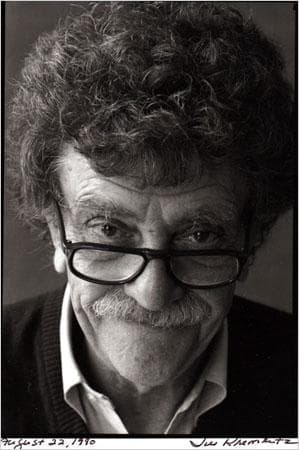
Kurt Vonnegut Jr. was an American author known for his satirical and often darkly humorous fiction. His notable works include "Breakfast of Champions," "Mother Night," "Player Piano," "A Man Without a Country," "Bluebeard," and "Timequake." Vonnegut's writing frequently explores themes of free will, technology, and the absurdity of human existence.
Similar books
- Catch-22
Joseph Heller
4.0 (723k) average on GoodreadsHistorical FictionFeatures satirical critique of war, absurd situations, and characters grappling with moral dilemmas in a military context.
- The Spy Who Came in from the Cold
John le Carré
4.1 (77k) average on GoodreadsThrillerBoth novels delve into the moral compromises and psychological toll of intelligence work during the Cold War era (though Mother Night is set slightly earlier). Le Carré's work is typically more focused on the procedural aspects and grim realism of espionage, with a more conventional thriller structure, whereas Vonnegut uses the spy narrative as a vehicle for broader philosophical and satirical commentary on identity and propaganda. Campbell's internal struggle mirrors Le Carré's disillusioned agents, but Vonnegut's tone is more absurdist.
- To Kill a Mockingbird
Harper Lee
4.3 (4.5M) average on GoodreadsHistorical FictionIn the 1930s Jim Crow South, Harper Lee writes about racial injustice, moral growth, and the quiet courage of a lawyer father, Atticus Finch, as seen through his young daughter's eyes.
- The Great Gatsby
F. Scott Fitzgerald
3.9 (3.8M) average on GoodreadsHistorical FictionIn the opulent Roaring Twenties, a mysterious millionaire's lavish parties hide his desperate, tragic pursuit of a lost love, exposing the emptiness within the American Dream.
- Pride and Prejudice
Jane Austen
4.3 (3M) average on GoodreadsHistorical FictionIn a society focused on status and money, Elizabeth Bennet navigates love and pride, challenging Mr. Darcy and social expectations to find true affection.
- Angels & Demons
Dan Brown
3.9 (2.7M) average on GoodreadsThrillerA Harvard symbologist races through Rome's ancient sites, deciphering cryptic clues to unmask the Illuminati and stop a vengeful plot to destroy the Vatican with a stolen antimatter weapon.






Enjoyed the summary?
A summary gives you the shape of the book. The book itself has the detail, the examples and the voice.
Find Mother Night on AmazonAs an Amazon Associate, BookBrief earns from qualifying purchases. How we're funded