
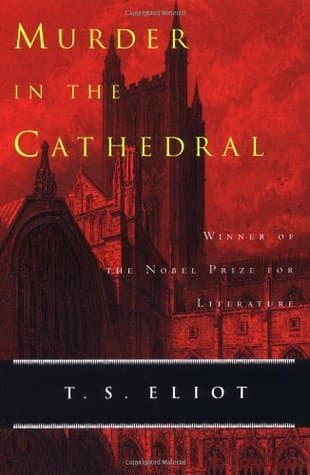
Synopsis
Covers the whole plot, including the ending.
- Difficulty
- Hard
- Pacing
- Slow
- Mood
- Contemplative, Solemn, Spiritual, Dramatic
- Read it if
- You appreciate poetic drama, historical retellings of pivotal religious events, and profound explorations of faith, power, and martyrdom.
- Skip it if
- You prefer fast-paced narratives, dislike verse plays, or are not interested in theological and philosophical themes.
Murder in the Cathedral Plot Summary
Covers the whole plot, including the ending.
The Chorus's Foreboding
The play starts with the Chorus, the Women of Canterbury, showing deep fear and resignation. They talk about a heavy quiet and a feeling of coming disaster, worried about the trouble Thomas Becket's return from exile will bring to their already hard lives. They are not happy about his return; instead, they see it causing suffering for Becket and themselves. They expect violent conflict between his spiritual power and King Henry II's worldly power. Their fear comes from wanting peace and avoiding the spiritual and political unrest Becket represents.
Becket's Return and the Priests' Concerns
Thomas Becket arrives back in Canterbury, met by three Priests who are relieved but also worried about the dangers he faces. They tell him about the political problems with King Henry II and the chance of more conflict. Becket, however, seems to accept his fate, seeing his return as part of a divine plan. He thinks about his past and what martyrdom means, acknowledging the risks but also the spiritual importance of his stand. The Chorus continues to voice their fear, seeing Becket's presence as attracting trouble and upsetting their fragile peace.
The Tempters' First Appearance
Four Tempters confront Thomas Becket, each offering a different temptation. The First Tempter reminds Becket of their old friendship and tempts him with worldly pleasures and old times. Becket dismisses this, having moved past such desires. The Second Tempter offers him political power and his old job as Chancellor, suggesting he make peace with the King and get back his worldly authority. Becket rejects this, as he has chosen his spiritual path. He easily overcomes these first temptations, having already given up these parts of his former life.
The Third and Fourth Tempters
The Third Tempter appeals to Becket's pride as a spiritual leader, suggesting he could join the barons against the King, gaining both political and religious power. Becket, seeing the trap of worldly ambition disguised as righteousness, rejects this. The Fourth Tempter presents the most subtle and dangerous temptation: wanting spiritual glory and martyrdom for its own sake, seeking fame as a saint rather than submitting to God's will. This temptation deeply bothers Becket, as it touches his spiritual honesty. He struggles with the idea of wanting to be a martyr, instead of simply accepting martyrdom as God's will.
Becket's Sermon
On Christmas Day, Thomas Becket preaches to the people of Canterbury. He talks about peace, not as a lack of conflict, but as the peace of God which 'passeth all understanding.' He links the joy of Christmas with the sadness of martyrdom, explaining that a Christian's joy is tied to suffering. He prepares his congregation, and himself, for his coming death, saying that a martyr does not seek death, but is chosen by God to bear witness. He emphasizes that true martyrdom is God's design, not human ambition, and asks for prayers for himself and his killers.
The Knights' Arrival
Four Knights, sent by King Henry II, burst into the Cathedral. They accuse Becket of treason, of undermining the King's power, and of excommunicating bishops who sided with the King. They demand that Becket forgive the excommunicated bishops and obey the King's will. Becket calmly and firmly refuses, stating the Church's independence and authority. He defends his actions as upholding divine law and the Church's rights, directly challenging the King's worldly power. The confrontation is tense and hostile, bringing the conflict to a head.
Becket's Steadfastness
As the Knights become more angry and threatening, Thomas Becket stays firm. He refuses to give in to their demands, knowing that doing so would compromise his spiritual beliefs and the Church's independence. The Priests urge him to run or hide, but Becket rejects their pleas, saying he must face his fate. He understands that his death is now certain and accepts it as his final witness to God's truth. He specifically forbids the Priests from locking the Cathedral doors, saying that the Church must always be open to its people, even in danger.
The Murder
The Knights, furious at Becket's defiance, return to the Cathedral, now armed. They chase Becket, who does not try to resist or escape. The Priests and the Chorus watch in horror as the Knights strike Becket down at the altar. Becket says his last words, giving his soul to God and the saints. His death is violent and brutal, fulfilling the Chorus's earlier fears and Becket's own acceptance of martyrdom. The act is a sacrilege, a violation of holy ground, and a deep shock to everyone present.
The Knights' Justification
Immediately after the murder, the four Knights turn to the audience and give a chilling speech. They offer a logical, worldly reason for their actions, arguing that Becket was a dangerous, arrogant, and disloyal man who threatened the kingdom's stability. They claim they acted out of duty to the King and the state, suggesting that Becket essentially caused his own death through his stubbornness. They try to frame the murder as a necessary political act, not a crime, and try to clear themselves of guilt by appealing to logic and the public good.
The Chorus's Lament and Acceptance
Following the murder and the Knights' speech, the Chorus, at first overwhelmed with terror and sadness, begins to understand the event. They mourn the innocent blood shed and the desecration of the Cathedral. However, as they reflect, their understanding changes. They move from passive fear to a deeper spiritual comprehension, seeing Becket's martyrdom as a divine act. They accept the suffering and the sacrifice as part of God's greater plan, finding peace in knowing that a saint has been made, and that spiritual order has been affirmed through the chaos.
The Priests' Benediction
The Priests, having seen the horrific murder, offer a final blessing. They speak of the sacredness of Becket's sacrifice and the spiritual triumph of his martyrdom. They acknowledge the pain and the loss but emphasize the glory and lasting meaning of his death. They call upon God to forgive the murderers and to bless the faithful. Their words turn the tragedy into a moment of spiritual victory and confirm the Church's lasting faith and the power of divine will, even when faced with extreme violence.
Murder in the Cathedral Characters
Thomas Becket
Protagonist
Archbishop of Canterbury, a man of faith destined for martyrdom.
Thomas Becket is the central figure, a former Chancellor to King Henry II who transformed into a devout Archbishop, prioritizing the Church's authority over secular power. He is portrayed as intelligent, articulate, and deeply spiritual, yet also aware of his own human frailties and the subtle traps of pride. His journey is one of increasing detachment from worldly concerns and a profound acceptance of his divine calling. He understands that his destiny is martyrdom and approaches it with a blend of resignation, courage, and spiritual clarity.
Relationships: King Henry II (Former friend, now political and religious adversary); The Priests (His loyal but often fearful subordinates); The Chorus (The people he serves, whose fears he must transcend)
The Chorus
Supporting
The Women of Canterbury, representing the common people's fear and eventual spiritual awakening.
The Chorus consists of the poor women of Canterbury. They represent the collective voice of humanity, initially driven by fear, passivity, and a desire for mundane peace. They dread any disruption to their lives, even if it is for a divine cause. Their role is to reflect the emotional and spiritual impact of the events on the common folk. They are not heroes but witnesses, whose spiritual understanding evolves from dread and suffering to a profound, if painful, acceptance of divine will and the glory of martyrdom.
Relationships: Thomas Becket (Their spiritual leader, whose fate they fear but eventually understand); The Priests (Their spiritual guides)
The Priests
Supporting
Becket's loyal but pragmatic and often fearful subordinates.
There are three Priests, identified by their order (First, Second, Third). They are loyal to Becket and the Church but are also practical, cautious, and afraid of the political repercussions of Becket's actions. They urge Becket to be more diplomatic, to flee, or to take protective measures. They represent the institutional aspect of the Church, concerned with its earthly survival and the safety of its members. Despite their fear, they ultimately stand with Becket and articulate the spiritual significance of his martyrdom after his death.
Relationships: Thomas Becket (Their Archbishop, whom they serve and try to protect); The Chorus (The congregation they minister to)
The Four Tempters
Antagonists
Manifestations of Becket's past and internal struggles.
The Four Tempters are spectral figures who appear to Becket, each representing a different form of worldly or spiritual temptation. They are not evil in a conventional sense but embody the internal battles Becket must overcome. The First offers pleasure, the Second political power, the Third an alliance with barons, and the Fourth (the most dangerous) the temptation of martyrdom for personal glory. They force Becket to confront and purify his motivations, ensuring his martyrdom is for God's will, not his own pride.
Relationships: Thomas Becket (Internal and external challengers to his spiritual purity)
The Four Knights
Antagonists
King Henry II's agents, driven by secular duty and violent impulses.
The Four Knights are King Henry II's emissaries, who arrive to confront and ultimately murder Becket. They represent the brutal, pragmatic, and often self-serving nature of secular power. They are driven by loyalty to the King and a desire to restore order as they perceive it, viewing Becket as a disruptive force. After the murder, they break the fourth wall to deliver a chillingly rational and bureaucratic justification for their actions, attempting to depersonalize the crime and present it as a necessary act of statecraft.
Relationships: Thomas Becket (His murderers, representing the King's opposition)
King Henry II
Mentioned
The absent monarch whose conflict with Becket drives the plot.
King Henry II is never seen on stage but is the unseen force behind the conflict. He is Thomas Becket's former friend and patron, who appointed Becket as Archbishop, expecting him to remain loyal to the crown. His conflict with Becket over the jurisdiction of Church and state fuels the entire plot. He represents the secular power that clashes with the spiritual authority of the Church. His perceived command, 'Will no one rid me of this turbulent priest?' directly leads to Becket's murder.
Relationships: Thomas Becket (Former friend and current political adversary)
Murder in the Cathedral Themes
Martyrdom and Divine Will
This theme explores what true martyrdom means, separating it from suicide or seeking glory. Becket's struggle with the Fourth Tempter shows the danger of wanting martyrdom for personal fame instead of accepting it as God's will. His Christmas Day sermon further clarifies this, explaining that a martyr is 'not one who desires to die, but one who is chosen to die.' Becket eventually accepts his death not as a personal win, but as a sacrifice for a greater divine plan, making his death a sign of faith and a spiritual victory.
“A martyrdom is never the design of man; for the true martyr is he who has become the instrument of God, who has lost his will in the will of God, and who no longer desires anything for himself, not even the glory of martyrdom.”
The Conflict Between Church and State
The play clearly shows the ongoing conflict between worldly and spiritual power. King Henry II, though unseen, represents the state's desire for total power, while Thomas Becket champions the Church's independence and divine authority. Becket's refusal to compromise on the Church's rights and his excommunication of bishops loyal to the King directly lead to his death. The Knights' explanations after the murder highlight this conflict, presenting their actions as a defense of the King's law and the kingdom's stability against an 'unruly' Churchman.
“For good or ill, let the wheel turn. The Archbishop must stand firm.”
Suffering and Redemption
The Chorus at first fears suffering and disruption, wanting simple peace. However, through Becket's martyrdom, they must face the reality of pain and sacrifice. Their journey shows a collective spiritual awakening, as they move from sadness and dread to a deeper understanding of suffering as a way to redemption and divine grace. Becket's own suffering is shown as a necessary cleansing, leading to his final spiritual triumph and the glorification of God. His death changes their passive fear into a deep, though painful, acceptance of divine order.
“We have not been happy, my Lord, we have not been too happy. We are not ignorant women, we know what we risk.”
Free Will vs. Predestination
Becket struggles with the idea of his coming death, asking if it is his choice or God's plan. The Tempters, especially the Fourth, challenge him to check his reasons, making sure his acceptance of martyrdom comes from genuine submission to divine will, not pride. Becket finally concludes that while he has free will, his true freedom lies in aligning his will with God's. His death becomes an act of acceptance rather than an active pursuit, showing the paradox of freely choosing a predetermined path.
“I have had my share of women, wine and laughter. I have had my share of power and of pride. I do not wish to multiply my sins, nor do I wish to die for a worldly cause.”
Plot Devices & Literary Techniques
The Chorus
A collective voice representing the common people and foreshadowing events.
The Chorus, composed of the Women of Canterbury, serves as a crucial dramatic device. They provide a collective emotional response to the unfolding events, expressing fear, anxiety, and eventually spiritual understanding. Their laments and premonitions heighten the sense of impending doom and create a palpable atmosphere of dread. They also function as a moral barometer, reflecting the impact of the spiritual and political conflicts on ordinary lives, and guiding the audience's emotional journey from fear to acceptance of divine will.
The Four Tempters
Personifications of internal and external temptations challenging the protagonist's resolve.
The Four Tempters are a classical dramatic device used to test the protagonist's moral and spiritual strength. They represent the various forms of temptation Becket faces: worldly pleasure, political power, secular alliance, and the subtle pride of seeking martyrdom for its own sake. Their appearance externalizes Becket's internal struggles, allowing the audience to witness his spiritual purification as he systematically rejects each offer, ensuring his eventual martyrdom is an act of pure faith rather than ambition or self-glorification.
Breaking the Fourth Wall
The Knights directly address the audience to justify their actions.
Immediately after the murder of Becket, the Four Knights turn to the audience and deliver a rationalized defense of their actions. This dramatic device is highly effective in disrupting the audience's emotional response and forcing them to engage intellectually with the conflict. By presenting a secular, almost bureaucratic, justification for their violence, the Knights challenge the audience to consider the differing perspectives on Becket's death, highlighting the clash between spiritual conviction and political expediency. It also underscores the play's historical context and the enduring debate around such events.
Symbolism of the Cathedral
The physical setting representing the Church, sanctuary, and a place of sacrifice.
The Canterbury Cathedral is more than just a setting; it is a powerful symbol. It represents the sanctity and authority of the Church, a refuge, and a place of divine presence. Its desecration by Becket's murder within its walls amplifies the horror and sacrilege of the act. The open doors of the Cathedral, insisted upon by Becket, symbolize the Church's openness to all, even its persecutors, and its vulnerability. Ultimately, it becomes the hallowed ground of martyrdom, transforming from a physical structure into a spiritual beacon of sacrifice and faith.
Murder in the Cathedral Quotes
“For ill-doing, the circle of our action is altered.”
“The last temptation is the greatest treason: To do the right deed for the wrong reason.”
“Seven years have passed, seven years since Thomas left England. Seven years of waiting, of knowing, not knowing, waiting for when the time should be.”
“I am not afraid, my Lord, I am not afraid. Only I have not understood.”
“Human kind cannot bear very much reality.”
“We are not here to worship God with words, but with suffering.”
“Peace, peace, peace, say the world. But I cannot find it. I cannot find it.”
“A martyrdom is never the design of man; for the true martyr is he who has become the instrument of God, who has lost his will in the will of God, and who no longer desires anything for himself, not even the glory of martyrdom.”
“For us, the poor, there is no action, but only to wait and to witness.”
“Is there no way, in my soul's sickness, to find release from the meaning of fate?”
“Living and partly living.”
“The pattern is the action of God, but the meaning is the meaning of men.”
“The Church must be for ever, and for ever, and for ever.”
“We have suffered and are suffering, And there is no end in sight.”
Quiz
10 questions on the plot and the characters. Each answer comes with a short explanation.
Question 1
Which historical figure is the central character of 'Murder in the Cathedral'?
- King Henry VIII
- Thomas Becket
- William the Conqueror
- Richard the Lionheart
Show answer
B. Thomas Becket The play dramatizes the murder of Thomas Becket, Archbishop of Canterbury, in 1170.
Question 2
What is the primary setting for the events of 'Murder in the Cathedral'?
- Westminster Abbey
- Canterbury Cathedral
- York Minster
- Winchester Cathedral
Show answer
B. Canterbury Cathedral The play is set in Canterbury Cathedral, leading up to and including Becket's martyrdom there.
Question 3
Who are the four Tempters that visit Thomas Becket in Part I of the play?
- Former friends offering political alliances
- Representations of past temptations: sensual pleasures, political power, alliance with the King, and spiritual pride
- Emissaries from the Pope urging him to flee
- His family members trying to dissuade him from his path
Show answer
B. Representations of past temptations: sensual pleasures, political power, alliance with the King, and spiritual pride The Tempters represent different facets of worldly and spiritual ambition that Becket previously faced or might still face, with the fourth being the most insidious, tempting him to seek martyrdom for glory.
Question 4
What is the specific 'fatal word' Becket utters before his martyrdom, as mentioned in the book description?
- He does not utter a single 'fatal word' but rather accepts his fate.
- He proclaims his defiance against the King's authority.
- He declares his willingness to die for Christ and the Church.
- He curses his assassins.
Show answer
C. He declares his willingness to die for Christ and the Church. While he does not utter a single 'fatal word' in the sense of a curse, the description refers to his acceptance of martyrdom as his chosen path, which ultimately leads to his death. He explicitly states his readiness to die for the Church.
Question 5
What role does the Chorus of Women of Canterbury play in the drama?
- They represent the King's loyal subjects.
- They act as messengers between Becket and the Pope.
- They voice the fears and anxieties of the common people, observing and commenting on the events.
- They are the direct perpetrators of Becket's murder.
Show answer
C. They voice the fears and anxieties of the common people, observing and commenting on the events. The Chorus serves as a collective voice for the ordinary people of Canterbury, expressing their dread, suffering, and spiritual uncertainty in response to Becket's return and impending doom.
Question 6
What is the ultimate temptation that Thomas Becket confronts and overcomes, as presented by the Fourth Tempter?
- To flee England and live a peaceful life in exile.
- To reclaim his former political power as Chancellor.
- To seek martyrdom for personal glory and to be remembered as a saint, rather than for the love of God.
- To reconcile fully with King Henry II for the sake of peace.
Show answer
C. To seek martyrdom for personal glory and to be remembered as a saint, rather than for the love of God. The Fourth Tempter offers Becket the temptation to desire martyrdom for his own pride and eternal fame, rather than as a humble act of God's will. Becket realizes this is the most dangerous temptation, as it subtly corrupts the spiritual act.
Question 7
What is the primary conflict presented in 'Murder in the Cathedral' regarding Becket's position?
- The conflict between Becket's desire for wealth and his vows of poverty.
- The conflict between the authority of the Church and the authority of the State (King Henry II).
- The conflict between Becket's English heritage and his Norman ancestry.
- The conflict between Becket's personal ambition and his duty to his family.
Show answer
B. The conflict between the authority of the Church and the authority of the State (King Henry II). The central conflict revolves around the historical struggle between the power of the English monarchy (King Henry II) and the spiritual authority of the Catholic Church, embodied by Archbishop Thomas Becket.
Question 8
After Becket's murder, what do the four Knights do that significantly breaks the dramatic fourth wall and alters audience perception?
- They immediately flee the scene in panic.
- They deliver a sermon justifying their actions directly to the audience.
- They beg for forgiveness from the Chorus and the audience.
- They engage in a philosophical debate about the nature of justice.
Show answer
B. They deliver a sermon justifying their actions directly to the audience. In a highly unconventional move, after the murder, the Knights turn to the audience and deliver individual speeches, attempting to rationalize and justify their killing of Becket, thereby implicating the audience in their moral dilemma.
Question 9
What is the significance of the phrase 'The last temptation is the greatest treason: To do the right deed for the wrong reason' in the context of the play?
- It refers to the King's treason against the Church.
- It highlights Becket's struggle against seeking martyrdom for personal glory instead of divine will.
- It is a general moral statement unrelated to Becket's specific dilemma.
- It refers to the Knights' betrayal of their king.
Show answer
B. It highlights Becket's struggle against seeking martyrdom for personal glory instead of divine will. This famous line, spoken by the Fourth Tempter and then echoed by Becket, encapsulates his ultimate spiritual challenge: ensuring that his acceptance of martyrdom is a pure act of service to God, not an act of self-aggrandizement.
Question 10
In the Christmas Morning Sermon, what does Becket emphasize about the nature of martyrdom?
- That martyrdom is a political act against the state.
- That martyrdom is a cause for sorrow and despair.
- That a true martyr is 'one who has become the instrument of God, of God's will' and that it is a cause for rejoicing, not for grief.
- That only those of noble birth can become martyrs.
Show answer
C. That a true martyr is 'one who has become the instrument of God, of God's will' and that it is a cause for rejoicing, not for grief. Becket's sermon prepares the audience and the Chorus for his impending death, reframing martyrdom not as a tragic end but as a glorious, willed participation in God's plan, a cause for spiritual joy.
Murder in the Cathedral FAQ
What is the central historical event depicted in 'Murder in the Cathedral'?
The play dramatizes the assassination of Thomas Becket, Archbishop of Canterbury, in Canterbury Cathedral on December 29, 1170. This event followed years of conflict between Becket and King Henry II over the rights and privileges of the Church versus the Crown.
Who are the primary characters, and what are their roles?
The main character is Thomas Becket, the Archbishop. Other key figures include the Chorus of Canterbury women, who represent the common people; the Three Priests, who offer counsel and lament; and the Four Tempters, who challenge Becket's resolve. Finally, the Four Knights are Becket's assassins.
What is the significance of the Four Tempters in Act I?
The Four Tempters represent different worldly temptations Becket faced throughout his life and in his final moments. They challenge his past political power, his chancellorship, his loyalty to the King, and ultimately, his desire for spiritual glory through martyrdom, which is the most insidious temptation.
How does the Chorus function within the play?
The Chorus of Canterbury women acts as a collective voice for the common people, expressing their fears, anxieties, and eventual understanding of the spiritual significance of Becket's martyrdom. They foreshadow events, lament suffering, and articulate the play's themes of spiritual burden and divine will.
What is the 'last temptation' Becket faces, and why is it the most dangerous?
The last temptation is the desire for martyrdom for self-glory, to be remembered as a saint, rather than for the glory of God. Becket recognizes this as the gravest sin because it perverts a holy act into an act of personal pride, making him a 'saint by accident' rather than by pure devotion.
How does Eliot use the concept of 'stillness' or 'pattern' throughout the play?
Eliot frequently employs imagery of stillness and an unchanging pattern, particularly in Becket's speeches, to suggest the predetermined nature of his fate and the eternal, divine order. This contrasts with the chaotic, temporal actions of the Knights and the Chorus's initial worldly concerns, highlighting the spiritual dimension.
What is the dramatic significance of the Knights directly addressing the audience after the murder?
The Knights' prose speeches directly to the audience break the fourth wall, shifting the play's tone from poetic drama to a cynical, rationalized defense of their actions. This device forces the audience to confront the 'reasons' for the murder and implicates them in the moral and political complexities, challenging easy condemnation.
Are there any subtle allusions to Eliot's own spiritual journey within Becket's character?
While not explicitly stated, many critics interpret Becket's struggle with spiritual pride and his eventual submission to divine will as reflecting Eliot's personal conversion to Anglicanism and his deepening faith. The play explores themes of spiritual discipline and the cost of religious conviction that resonated with Eliot's own experiences.
How does Becket's journey from Chancellor to Archbishop reflect a psychological transformation?
Becket's transition from a powerful political figure to a spiritual leader involves a profound psychological shift from worldly ambition to divine submission. He grapples with the allure of secular power and the temptation of glory, ultimately choosing a path of suffering for a higher, spiritual purpose, shedding his former identity.
What psychological insight does the play offer into the nature of martyrdom?
The play delves into the complex psychology of martyrdom, showing it not as a simple act of sacrifice, but as a profound internal struggle against pride and the desire for worldly recognition. Becket's internal conflict reveals that true martyrdom requires absolute surrender to God's will, free from personal ambition.
How do the Knights' justifications for the murder reveal their psychological state?
The Knights' post-murder rationalizations reveal a psychological state characterized by self-deception, political expediency, and a lack of moral introspection. They attempt to frame their heinous act as a public service, an act of loyalty to the King, and even a 'misunderstanding,' demonstrating a profound inability to confront their own guilt.
How does the Chorus's evolving emotional state contribute to the play's psychological depth?
The Chorus's journey from fear and worldly attachment to a deeper understanding of spiritual suffering and divine purpose provides significant psychological depth. Their initial terror and pleas for peace evolve into a realization of the 'pattern' of suffering and a more profound, albeit terrifying, acceptance of God's will.
Is Becket's martyrdom truly a selfless act, or is there an element of pride even in his acceptance?
This is a key interpretive question. While Becket explicitly rejects the 'last temptation' of martyrdom for personal glory, some interpretations argue that the very act of choosing such a path, even for God, contains a subtle, almost unavoidable, element of human pride in being chosen. However, Eliot aims to show Becket's ultimate submission.
How does Eliot's use of verse contribute to the play's themes, and is it always effective?
Eliot's poetic verse, characterized by its rhythm, alliteration, and biblical allusions, elevates the drama from a mere historical recounting to a profound spiritual meditation. It creates a sense of solemnity and timelessness, though some argue its density can sometimes make the text challenging for modern audiences.
What is the play's ultimate message regarding the conflict between temporal and spiritual power?
The play suggests that temporal power, represented by the King and his Knights, is inherently flawed and prone to violence, while spiritual power, though seemingly vulnerable, ultimately triumphs through sacrifice and divine will. It argues for the supremacy of God's law over man's law, even at the cost of life.
Can 'Murder in the Cathedral' be read as a political allegory for Eliot's contemporary society?
Yes, many interpret the play as an allegory reflecting the moral and spiritual crises of Eliot's time, particularly the rise of secularism and totalitarianism in the 1930s. Becket's stand against the King can be seen as a call for spiritual resistance against oppressive temporal powers and a reminder of ultimate divine authority.
How does the play challenge the audience's perception of 'justice'?
The play challenges conventional notions of justice by presenting a murder that the perpetrators attempt to justify through political expediency and 'reason.' It forces the audience to consider whether earthly justice aligns with divine justice, suggesting that true justice often involves sacrifice and suffering rather than worldly retribution.
What is the role of free will versus divine predestination in Becket's fate?
This is a central tension. While Becket clearly believes his fate is divinely ordained ('the pattern is fixed'), his internal struggle with the Tempters suggests an exercise of free will in choosing the right path to martyrdom. The play implies that divine will operates through human choices, making Becket's acceptance both fated and freely chosen.
About the author

T.S. Eliot was an American-British poet, essayist, and playwright, active primarily in the early to mid-20th century. He is best known for his influential works, including "The Waste Land," a landmark poem of modernist literature, and "Murder in the Cathedral," a verse drama exploring themes of faith and morality. Eliot received the Nobel Prize in Literature in 1948 for his contributions to poetry and drama.
Similar books
- A Man for All Seasons
Robert Bolt
3.9 (11k) average on GoodreadsHistorical FictionExplores a historical figure's conflict between conscience/faith and state power, leading to martyrdom.
- Saint Joan
George Bernard Shaw
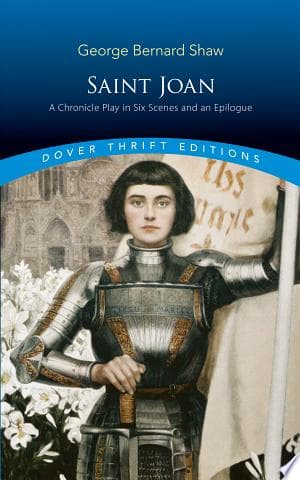
3.8 (7k) average on GoodreadsHistorical FictionShaw's 'Saint Joan' similarly dramatizes the trial and death of a historical religious figure. However, Shaw approaches the story with a characteristic intellectual rigor and ironic wit, dissecting the political, social, and religious forces at play with a more modern, rationalist perspective. While Eliot's play is steeped in a sense of divine mystery and ritual, Shaw's examines the 'miracle' of Joan through a lens of human psychology and institutional power, often satirizing the very structures Eliot treats with solemnity. Shaw's characters are more psychologically complex and verbally sparring, contrasting with Eliot's more archetypal and contemplative figures.
- To Kill a Mockingbird
Harper Lee
4.3 (4.5M) average on GoodreadsHistorical FictionIn the 1930s Jim Crow South, Harper Lee writes about racial injustice, moral growth, and the quiet courage of a lawyer father, Atticus Finch, as seen through his young daughter's eyes.
- The Great Gatsby
F. Scott Fitzgerald
3.9 (3.8M) average on GoodreadsHistorical FictionIn the opulent Roaring Twenties, a mysterious millionaire's lavish parties hide his desperate, tragic pursuit of a lost love, exposing the emptiness within the American Dream.
- Pride and Prejudice
Jane Austen
4.3 (3M) average on GoodreadsHistorical FictionIn a society focused on status and money, Elizabeth Bennet navigates love and pride, challenging Mr. Darcy and social expectations to find true affection.
- Angels & Demons
Dan Brown
3.9 (2.7M) average on GoodreadsThrillerA Harvard symbologist races through Rome's ancient sites, deciphering cryptic clues to unmask the Illuminati and stop a vengeful plot to destroy the Vatican with a stolen antimatter weapon.





Enjoyed the summary?
A summary gives you the shape of the book. The book itself has the detail, the examples and the voice.
Find Murder in the Cathedral on AmazonAs an Amazon Associate, BookBrief earns from qualifying purchases. How we're funded