
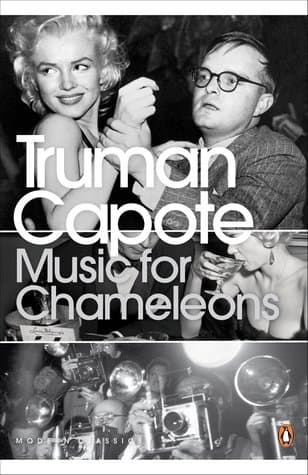
Synopsis
Covers the whole plot, including the ending.
- Difficulty
- Medium
- Pacing
- Moderate
- Mood
- Chilling, introspective, witty, poignant, diverse
Music for Chameleons Plot Summary
Covers the whole plot, including the ending.
A Day's Work
Truman Capote begins the collection by discussing his long struggle with writer's block and his wish for a new, more direct way to tell stories. He describes a dream where he is a prisoner, constantly writing and rewriting, which shows his artistic confinement. This leads him to talk about his interest in real events and the growing popularity of 'nonfiction novels,' specifically mentioning his book 'In Cold Blood.' He explains his detailed research and his belief that truth, when presented with the artistry of fiction, can be more engaging than pure invention. This introduction prepares the reader for 'Handcarved Coffins,' the main piece in the collection, by showing Capote's personal artistic journey and his view on storytelling.
Handcarved Coffins: The First Letter
The story of 'Handcarved Coffins' starts with Capote's involvement in investigating a series of strange deaths in a small Midwestern town. He first focuses on a rancher named Robert Morse. Each victim receives a small, handcarved coffin before they die, containing a picture of the victim and their death date. The local police, especially Sheriff Alvin Dewey (a character based on the detective from 'In Cold Blood'), are confused. The deaths look like accidents or suicides, but the advance delivery of the coffins strongly suggests a killer. Capote, drawn by the unusual nature of the crimes, joins the investigation, interviewing townspeople and trying to understand the pattern.
Handcarved Coffins: The Web of Suspicion
As more people die and the strange coffins keep appearing, the investigation grows more intense. Capote, with Sheriff Dewey, begins to focus on Quinn, a well-known and seemingly charming local who is wealthy and influential. Quinn at first seems innocent, known for his generosity and good standing. However, small inconsistencies in his alibis and his odd behavior during questioning start to raise concerns. The victims, though seemingly unrelated, had some past connection to Quinn, often through business or social interactions. This leads Dewey and Capote to consider a more complex motive than simple revenge or money.
Handcarved Coffins: The Obsession Deepens
The killer, called 'the Handcarved Coffin Killer,' shows an increasingly clever and taunting method, seeming to enjoy playing a game with the police. Sheriff Dewey becomes very stressed; he grows more and more obsessed with the case, sacrificing his personal life and mental health in his relentless pursuit. Capote, watching Dewey's obsession, becomes not just an investigator but also someone who records the detective's struggle. The lack of physical evidence and the killer's ability to arrange 'accidents' makes catching him almost impossible, increasing Dewey's frustration and the community's growing fear.
Handcarved Coffins: The Revelation and the Aftermath
Capote never directly names the killer in 'Handcarved Coffins' due to legal reasons (as it was presented as a 'nonfiction novel' based on real, unresolved events), but the story strongly suggests Quinn. Through carefully built circumstantial evidence and psychological profiles, Capote makes a strong case against him. However, despite the growing suspicion and Dewey's firm belief, the legal system cannot get a conviction. The story ends with the killer seemingly escaping justice, leaving a lasting feeling of unease and the impact of the unsolved crimes on the community and, especially, on Sheriff Dewey, who remains bothered by his failure to catch the person. This unclear ending shows the limits of justice when faced with clever evil.
Mojave
This short story introduces Walter and Elizabeth, a seemingly perfect couple living a privileged life in a beautiful home. Their relationship appears good, but a deep secret lies beneath the surface. Elizabeth finds a hidden compartment containing photographs of young boys. This discovery shatters her view of Walter, revealing a disturbing part of his character. The story explores hidden evil, the fragility of trust, and the devastating effect of confronting unpleasant truths about loved ones. Elizabeth's struggle to match the man she thought she knew with the predator shown in the photographs is the core of the story, leaving her with a sense of betrayal and a ruined life.
Dazzle
In 'Dazzle,' a young girl named Lily talks about her interest in an older, flashy woman named Mrs. Williams, who lives nearby. Mrs. Williams is mysterious and appealing, known for her extravagant clothes, exotic pets, and unusual life. Lily is drawn to Mrs. Williams's personality, which contrasts sharply with her own everyday life. The story captures the innocence of childhood wonder and the effect of meeting someone who does not follow social rules. It subtly explores beauty, eccentricity, and the power of imagination and unusual mentorship, as Lily sees a reflection of her own emerging individuality in Mrs. Williams.
Conversational Portrait: Marilyn Monroe
Capote offers a touching and personal description of Marilyn Monroe, whom he calls a 'beautiful child.' He recounts their conversations and his observations of her during a time when she struggled with her public image and personal problems. Capote highlights her fragility, deep insecurities, and her desire for real connection and respect beyond her fame. He shows her as a sensitive, intelligent woman trapped by the persona she had created and Hollywood's expectations. This portrait is full of empathy, showing a woman far more complex and vulnerable than her public image suggested, highlighting her inner conflict and her struggle for authenticity under immense pressure.
Conversational Portrait: The Dope-Smoking Cleaning Lady
This conversational portrait presents a funny and insightful meeting with a cleaning lady in New York City. Capote describes her as a sharp, no-nonsense woman who openly discusses her cannabis use as a way to cope with her demanding job and the drudgery of her life. Through their talk, Capote captures her unique view on life, her observations of the wealthy people whose homes she cleans, and her unpretentious philosophy. The portrait is rich with humor and vivid characterization, offering a glimpse into a rarely seen part of society and challenging common ideas about drug users. It shows Capote's ability to find compelling stories and complex people in unexpected places.
Music for Chameleons
The piece 'Music for Chameleons' is a reflective essay where Capote discusses his writing style and his interest in human stories. He recounts an experience in Martinique, where he watched a woman playing music for her pet chameleons, believing it calmed them. This image becomes a metaphor for his own work—creating stories that connect with and perhaps soothe the different 'chameleons' of human experience. He stresses the importance of deep listening, observation, and empathy in capturing the essence of individuals and their lives. The essay reinforces his commitment to combining journalistic accuracy with literary art, finding the profound in the ordinary, and the universal in the unique.
Music for Chameleons Characters
Truman Capote
Narrator/Investigator
The author and central figure, both observer and participant.
Capote serves as the overarching narrator and a character within his own stories, particularly in 'Handcarved Coffins' and the conversational portraits. He is portrayed as a meticulous observer, deeply empathetic, and intellectually curious, with a profound interest in human psychology and the darker facets of existence. He struggles with writer's block but eventually finds renewed purpose in the 'nonfiction novel' form, blending journalistic rigor with literary artistry. His presence is both intimate and detached, allowing him to delve into the lives of others while maintaining a distinctive authorial voice.
Relationships: Sheriff Alvin Dewey (Collaborator/Friend); Marilyn Monroe (Friend/Observer)
Sheriff Alvin Dewey
Supporting
The dedicated, haunted lawman of 'Handcarved Coffins'.
Based on the real-life detective, Dewey in 'Handcarved Coffins' is a dogged, morally upright lawman consumed by the pursuit of justice. He is meticulous in his investigation, but the elusive nature of the Handcarved Coffin Killer pushes him to the brink of obsession. His character embodies the profound psychological toll that unsolved crimes can take on those who dedicate their lives to law enforcement. Despite his unwavering commitment, the inability to definitively apprehend the killer leaves him with a lasting sense of failure and a deep-seated weariness.
Relationships: Truman Capote (Collaborator/Friend); The Handcarved Coffin Killer (Adversary)
Quinn
Antagonist
The charismatic, suspected killer in 'Handcarved Coffins'.
Quinn is the central suspect in 'Handcarved Coffins,' a wealthy and outwardly charming figure in the community. He maintains an air of respectability and influence, making it difficult for authorities to connect him directly to the murders. Beneath his polished exterior, Capote portrays him as a cunning and psychologically manipulative individual, seemingly deriving pleasure from the psychological torment of his victims and the authorities. His ability to orchestrate deaths that appear accidental makes him a truly chilling and elusive villain, embodying a sophisticated form of evil that challenges the traditional justice system.
Relationships: Sheriff Alvin Dewey (Adversary); Truman Capote (Subject of investigation)
Marilyn Monroe
Supporting
The vulnerable, iconic actress in a 'conversational portrait'.
In Capote's portrait, Marilyn Monroe is depicted not as the glamorous sex symbol, but as a deeply insecure and sensitive woman, often referred to as a 'beautiful child.' She yearns for intellectual respect and genuine connection, struggling with the immense pressure of her public persona and her own internal demons. Capote highlights her vulnerability, her intelligence, and her artistic aspirations, portraying her as a tragic figure trapped by her fame and the expectations placed upon her. Her conversations reveal a profound sadness and a search for authenticity in a world that often saw her only for her image.
Relationships: Truman Capote (Friend/Confidante)
Elizabeth
Protagonist
The wife who uncovers a horrifying secret in 'Mojave'.
Elizabeth is the protagonist of the short story 'Mojave.' Initially presented as a woman living a seemingly perfect, comfortable life, her world is shattered by the discovery of her husband Walter's dark secret. She is intelligent and perceptive, but also deeply shocked and betrayed by the revelation. Her character embodies the devastating impact of confronting an unimaginable evil within one's most intimate relationship. Her struggle to comprehend and cope with the truth about her husband forms the emotional core of the story, leaving her irrevocably changed and profoundly disillusioned.
Relationships: Walter (Husband (betrayer))
Walter
Antagonist
Elizabeth's husband, hiding a disturbing secret in 'Mojave'.
Walter, Elizabeth's husband in 'Mojave,' initially appears to be a loving and successful partner. However, he is revealed to be a pedophile, meticulously hiding his dark desires behind a facade of respectability and charm. His character represents the insidious nature of hidden evil and the capacity for individuals to maintain a double life. He is manipulative and secretive, embodying the idea that monstrousness can exist within seemingly normal and even admirable people, shattering the illusion of safety and trust for those closest to him.
Relationships: Elizabeth (Wife (victim of deception))
Lily
Protagonist
The curious young girl in 'Dazzle'.
Lily is the young, observant protagonist of 'Dazzle.' She is imaginative and drawn to the unusual, finding inspiration and fascination in the eccentric Mrs. Williams. Lily represents childhood innocence and the capacity for wonder, particularly when encountering individuals who defy societal norms. Her perspective allows Capote to explore themes of beauty, individuality, and the subtle ways in which unconventional figures can influence and inspire a young mind, broadening her understanding of the world beyond her immediate, conventional surroundings.
Relationships: Mrs. Williams (Mentor/Inspiration)
Mrs. Williams
Supporting
The eccentric, flamboyant neighbor in 'Dazzle'.
Mrs. Williams is a colorful and unconventional character in 'Dazzle,' known for her flamboyant style, exotic pets, and unique way of life. She serves as a source of fascination and inspiration for young Lily, embodying freedom from societal constraints and a vibrant individuality. She is not conventionally beautiful but possesses a captivating presence and a distinct personality. Mrs. Williams represents the allure of the eccentric and the power of living authentically, even if it means defying societal expectations, leaving a lasting impression on the impressionable Lily.
Relationships: Lily (Inspiration/Object of fascination)
The Dope-Smoking Cleaning Lady
Supporting
A humorous and philosophical New York cleaning lady.
This unnamed character from a conversational portrait is a no-nonsense, sharp-witted cleaning lady in New York City. She is refreshingly honest and unpretentious, openly discussing her cannabis use as a coping mechanism for her demanding life. Her observations about the wealthy people whose homes she cleans provide a unique, ground-level perspective on class and society. She embodies a certain resilience and practical philosophy, finding humor and solace in her daily routine despite its drudgery. Capote uses her to highlight the dignity and wisdom found in unexpected places.
Relationships: Truman Capote (Interviewer/Observer)
Music for Chameleons Themes
The Nature of Evil
This theme is most prominent in 'Handcarved Coffins' and 'Mojave,' exploring how evil can appear in subtle, sophisticated, and often unpunished ways. It examines the idea that monsters are not always obvious, but can hide behind charm and respectability, making them more terrifying. Capote looks at the psychological depth of malevolence, showing how it can be a calculated, almost artistic effort for some perpetrators, and its devastating impact on victims and those who seek justice. The elusiveness of the Handcarved Coffin Killer and Walter's hidden life highlight the chilling reality that evil often goes undetected or unpunished.
“It was like trying to catch smoke in a sieve. He was there, you knew he was there, but he left no trace.”
The Elusiveness of Truth and Justice
Throughout the collection, especially in 'Handcarved Coffins,' Capote struggles with the limits of the legal system and the difficulty of proving truth, particularly against cunning and manipulative evil. The story highlights how circumstantial evidence, though compelling, may not be enough for a conviction, leaving a deep sense of injustice. This theme also applies to the 'nonfiction novel' format itself, where Capote must balance reporting facts and creating a compelling narrative, acknowledging that truth can be subjective even in real events. The unresolved nature of the 'Handcarved Coffins' case leaves a lasting impression that truth is ultimately hard to reach.
“The truth is, you can't always get to the bottom of things. Some shadows just stay shadows.”
The Artist's Obsession and the Act of Storytelling
Capote often reflects on his own creative process, his struggles with writer's block, and his renewed dedication to storytelling through real-life events. This theme explores the artist's need to observe, document, and turn reality into narrative, often at a personal cost. His involvement in the 'Handcarved Coffins' investigation, similar to Sheriff Dewey's obsession, shows the intense dedication needed to uncover and express truth. The collection itself shows Capote's belief in the power of narrative to illuminate human experience, whether through true crime, personal portraits, or fictional tales, emphasizing the connection between the storyteller and their subject.
“I wanted to write something that was absolutely true, yet had the texture and tension of a novel.”
Hidden Lives and Secret Worlds
Many stories and portraits in the collection explore the hidden parts of individuals' lives, showing the stark contrast between public appearances and private realities. From Walter's secret life in 'Mojave' to Marilyn Monroe's inner struggles behind her glamorous image, Capote consistently peels back layers to expose the complexities and often unsettling truths beneath the surface. This theme also applies to the 'dope-smoking cleaning lady,' whose openness reveals a world rarely seen by the privileged, and Mrs. Williams, whose eccentricity marks her as an outsider. Capote's sharp observational skills allow him to enter these hidden worlds, offering personal glimpses into the secret lives people lead.
“We all carry secrets, some visible, some buried so deep they become part of the bone.”
Empathy and Human Connection
Despite the darker themes, Capote's work is filled with empathy for his subjects, even the flawed and tragic ones. His conversational portraits, especially of Marilyn Monroe and the cleaning lady, show his ability to connect with diverse individuals, understand their struggles, and present them with dignity and nuance. This theme highlights the importance of listening, observing, and trying to understand the inner lives of others. Even when facing profound evil, Capote seeks to understand the human element, building a connection between the reader and the often-complex characters he brings to life, emphasizing shared vulnerability and the search for understanding.
“To truly see someone, you have to listen, not just to their words, but to the silence around them.”
Plot Devices & Literary Techniques
Nonfiction Novel
Blending journalistic rigor with literary artistry.
This innovative genre, pioneered by Capote with 'In Cold Blood' and continued in 'Handcarved Coffins,' combines extensive journalistic research and factual reporting with the narrative techniques, character development, and evocative language typically found in fiction. It allows Capote to explore real-life events with the depth and psychological insight of a novel, blurring the lines between fact and art. This device provides a unique lens through which to examine true crime, making the events feel immediate and profoundly human, while also inviting reflection on the nature of truth in storytelling.
The Unreliable Narrator (Implicit)
The author's subjective lens shaping 'objective' reality.
While Capote presents himself as an objective reporter in 'Handcarved Coffins,' his personal involvement, emotional responses, and selective focus on certain details implicitly introduce an element of subjectivity. The 'nonfiction novel' format itself, by its very nature, involves authorial interpretation and shaping of events, meaning the reader experiences the 'truth' through Capote's specific lens. This device encourages readers to critically engage with the narrative, recognizing that even 'true' stories are filtered through a storyteller's perspective and artistic choices, adding a layer of complexity to the pursuit of truth.
Symbolism of the Handcarved Coffins
A chilling premonition of death and psychological terror.
The miniature handcarved coffins in the central narrative serve as a powerful and macabre symbol. They represent not just the impending death of the victims but also the killer's calculated cruelty, his psychological dominance, and his perverse artistry. The coffins transform the murders from random acts of violence into a deliberate, taunting game, intensifying the terror for both the victims and the investigators. This symbol elevates the crimes beyond mere physical acts, imbuing them with a deeper, more disturbing psychological dimension that haunts the community and the reader.
Conversational Portrait
Revealing character through intimate dialogue and observation.
This unique device allows Capote to capture the essence of individuals through direct conversation, personal anecdotes, and keen observation, rather than traditional plot-driven narratives. By focusing on dialogue and the nuances of human interaction, Capote reveals character, philosophy, and hidden depths. These portraits are often brief but incredibly insightful, showcasing his ability to distil a person's entire being into a few pages, highlighting their uniqueness and universal humanity. It's a testament to his belief that profound stories can be found in everyday encounters.
Quiz
10 questions on the plot and the characters. Each answer comes with a short explanation.
Question 1
What is the central 'nonfiction novel' within 'Music for Chameleons' about?
- The life of Marilyn Monroe.
- The crimes of a real-life murderer and the pursuit of justice.
- The experiences of a cleaning lady in New York.
- The author's childhood in a Midwestern town.
Show answer
B. The crimes of a real-life murderer and the pursuit of justice. 'Handcarved Coffins' is described as a 'nonfiction novel' based on the crimes of a real-life murderer and the man bringing him to justice.
Question 2
Where does the setting of 'Handcarved Coffins' primarily take place?
- New York City.
- Hollywood.
- A small Midwestern town in America.
- The author's imagination.
Show answer
C. A small Midwestern town in America. The text explicitly states that 'Handcarved Coffins' takes place 'in a small Midwestern town in America'.
Question 3
Besides the 'nonfiction novel', what other types of pieces are included in 'Music for Chameleons'?
- Poems and essays.
- Short stories and conversational portraits.
- Plays and screenplays.
- Biographies and historical accounts.
Show answer
B. Short stories and conversational portraits. The volume contains 'six short stories and seven ‘conversational portraits’'.
Question 4
Which of the following is NOT mentioned as a subject of a 'conversational portrait' in the book?
- Marilyn Monroe.
- A dope-smoking cleaning lady.
- The murderer from 'Handcarved Coffins'.
- A 'beautiful child'.
Show answer
C. The murderer from 'Handcarved Coffins'. While Marilyn Monroe, a cleaning lady, and a 'beautiful child' are mentioned as subjects of portraits, the murderer is the subject of the 'nonfiction novel', not a conversational portrait.
Question 5
The 'conversational portraits' are described as offering insights into the subjects' personalities and lives. What is the tone of the portrait of the cleaning lady?
- Tragic and somber.
- Hilarious and amusing.
- Informative and factual.
- Melancholy and reflective.
Show answer
B. Hilarious and amusing. The text describes the portrait of the cleaning lady as 'hilarious'.
Question 6
What does the phrase 'nonfiction novel' suggest about the style of 'Handcarved Coffins'?
- It is a work of pure fantasy.
- It blends factual reporting with narrative storytelling techniques.
- It is a collection of unrelated factual accounts.
- It is a fictionalized account of a real event with no factual basis.
Show answer
B. It blends factual reporting with narrative storytelling techniques. The term 'nonfiction novel' implies that the work is based on real events and people but is presented using the narrative devices and style typically found in fiction.
Question 7
The portrait of Marilyn Monroe is described using what phrase?
- The iconic star.
- The tragic beauty.
- The 'beautiful child'.
- The Hollywood legend.
Show answer
C. The 'beautiful child'. The text states that the portrait of Marilyn Monroe is of the 'beautiful child'.
Question 8
What kind of insights does 'Handcarved Coffins' claim to offer regarding the murderer?
- Psychological analysis of his motives and actions.
- A detailed account of his childhood upbringing.
- The legal proceedings and court testimonies.
- His eventual rehabilitation and life after prison.
Show answer
A. Psychological analysis of his motives and actions. The description mentions 'chilling insights into the mind of a killer'.
Question 9
The phrase 'the obsession of the man bringing him to justice' suggests a particular dynamic in 'Handcarved Coffins'. What might this imply?
- The investigator is also mentally unstable.
- The investigator is driven by an intense, perhaps all-consuming, focus on catching the killer.
- The investigator is merely performing his job duties.
- The investigator is motivated by financial gain.
Show answer
B. The investigator is driven by an intense, perhaps all-consuming, focus on catching the killer. The word 'obsession' implies a strong, possibly unhealthy, fixation or preoccupation with catching the murderer, suggesting a deep personal drive beyond simple duty.
Question 10
Considering the variety of pieces in 'Music for Chameleons' (nonfiction novel, short stories, conversational portraits), what can be inferred about Truman Capote's writing style or interests as presented in this volume?
- He exclusively focuses on dark and criminal subjects.
- He is interested in exploring the complexities of human nature across different formats and subjects.
- He primarily writes biographical accounts of famous people.
- His writing is limited to fictional narratives.
Show answer
B. He is interested in exploring the complexities of human nature across different formats and subjects. The collection includes a true crime element, fictional short stories, and character studies (portraits) of diverse individuals, indicating a broad interest in human behavior, psychology, and storytelling across genres.
Music for Chameleons FAQ
What is Music for Chameleons about?
Music for Chameleons is a collection of literary works by Truman Capote. It features a central 'nonfiction novel' called Handcarved Coffins, which details a real-life murder case, alongside several short stories and unique 'conversational portraits' of notable figures and everyday people.
What is 'Handcarved Coffins' in Music for Chameleons?
Handcarved Coffins is the centerpiece of Music for Chameleons, presented as a 'nonfiction novel.' It explores the chilling crimes of a real murderer in a Midwestern town and the intense pursuit of justice by the man hunting him.
What kind of short stories are included in Music for Chameleons?
The collection includes six short stories that showcase Capote's mastery of the form, offering diverse narratives and character studies within his distinctive literary style.
Who are the subjects of the 'conversational portraits'?
The 'conversational portraits' in Music for Chameleons are intimate and often striking sketches of real people. They include a touching portrayal of Marilyn Monroe, a humorous depiction of a New York cleaning lady, and other memorable individuals.
Is Music for Chameleons a novel or a collection?
Music for Chameleons is primarily a collection. While it contains a significant 'nonfiction novel' (Handcarved Coffins), it also includes multiple short stories and 'conversational portraits,' making it a varied anthology.
What is a 'nonfiction novel' as presented in this book?
A 'nonfiction novel' blends factual reporting with fictional narrative techniques. In Handcarved Coffins, Capote uses the structure and style of a novel to recount a true crime story, delving into the psychology of the perpetrator and the investigation.
Can I expect suspense in Music for Chameleons?
Yes, particularly within Handcarved Coffins, which deals with a brutal murder case and the suspenseful hunt for the killer. The other stories and portraits may offer their own forms of emotional or narrative tension.
What is the tone of the 'conversational portraits'?
The tone varies greatly, from touching and poignant, as seen in the portrait of Marilyn Monroe, to hilariously observational, like the depiction of the New York cleaning lady. Capote captures the essence of his subjects with sharp wit and empathy.
Who is Truman Capote?
Truman Capote was a renowned American novelist, screenwriter, and playwright. He is celebrated for his literary style, his ability to capture the nuances of American life, and works like 'In Cold Blood' and 'Breakfast at Tiffany's.'
Is Music for Chameleons suitable for readers interested in true crime?
Yes, the central 'nonfiction novel,' Handcarved Coffins, is based on a real murder case and offers a deep dive into the criminal mind and the investigation, making it compelling for true crime enthusiasts.
About the author
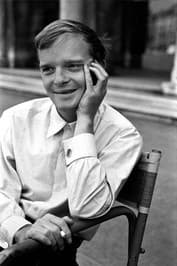
Truman Capote was an American author known for his distinctive narrative style and contributions to both fiction and non-fiction. His notable works include "In Cold Blood," a pioneering true crime novel, and "Breakfast at Tiffany's," a novella that explores themes of love and identity. Other significant writings include "A Christmas Memory," "Music for Chameleons," and "Summer Crossing."
Similar books
- Slouching Towards Bethlehem
Joan Didion
4.2 (37k) average on GoodreadsPoliticsWhile both Capote's "Music for Chameleons" and Didion's "Slouching Towards Bethlehem" are seminal collections of New Journalism, Capote's work often delves into more personal, almost gothic, psychological landscapes, with a stronger emphasis on individual eccentricities and the macabre. Didion, in contrast, offers a more detached, analytical, and culturally critical lens, dissecting the societal anxieties and disillusionment of the 1960s with a cool, intellectual precision. Capote's prose is more overtly lyrical and character-driven, whereas Didion's is known for its starkness and incisive observation of broader cultural phenomena, often with a journalistic rigor that Capote sometimes eschewed in favor of narrative flair.
- The White Album
Joan Didion
4.2 (17k) average on GoodreadsBiographySimilar to "Slouching Towards Bethlehem," Didion's "The White Album" continues her exploration of American society's fragmentation and moral decay, particularly in the late 1960s and early 1970s. While Capote in "Music for Chameleons" is often preoccupied with individual psychologies and the more intimate, often disturbing, facets of human nature, Didion's focus remains on the larger cultural malaise, the breakdown of narratives, and the elusive nature of truth in a chaotic era. Capote's pieces feel more like finely crafted short stories, even when based on 'fact,' whereas Didion's essays are more overtly intellectual and analytical, using personal experience as a springboard for broader cultural critique rather than as the primary subject itself.
- The Old Man and the Sea
Ernest Hemingway
3.8 (831k) average on GoodreadsLiterary FictionA Cuban fisherman's long struggle with a giant marlin becomes a story of endurance and dignity, now retold for young adults with illustrations, phonetic guides, and writing prompts in Traditional Chinese.
- One Hundred Years of Solitude
Gabriel García Márquez
4.1 (753k) average on GoodreadsLiterary FictionThrough the multi-generational story of the Buendía family, a mythical town deals with the repeating patterns of time, love, and solitude, as the extraordinary mixes with the ordinary.
- The Goldfinch
Donna Tartt
3.9 (720k) average on GoodreadsLiterary FictionHaunted by a tragic explosion and clutching a stolen Dutch masterpiece, a young orphan navigates the opulent drawing rooms of New York and the gritty underbelly of the art world, desperately seeking connection and redemption amidst a life spiraling into crime and obsession.
- Little Fires Everywhere
Celeste Ng
4.1 (713k) average on GoodreadsLiterary FictionIn Shaker Heights, an artist and her daughter move in, and their free-spirited lives clash with a rule-bound matriarch, revealing hidden conflicts beneath a perfect surface.



Enjoyed the summary?
A summary gives you the shape of the book. The book itself has the detail, the examples and the voice.
Find Music for Chameleons on AmazonAs an Amazon Associate, BookBrief earns from qualifying purchases. How we're funded