

Synopsis
Covers the whole plot, including the ending.
- Difficulty
- Medium
- Pacing
- Slow
- Mood
- Philosophical, contemplative, melancholic, spiritual, artistic, introspective
Narcissus and Goldmund Plot Summary
Covers the whole plot, including the ending.
The Monastery of Mariabronn
Goldmund, a young man, is sent by his father to the Mariabronn monastery, a place of learning and spiritual discipline. He is initially hesitant but quickly adapts to monastic life. There, he meets Narcissus, a brilliant and respected scholar and assistant abbot, who is a few years older. Narcissus has a sharp mind and understands philosophy and theology well. He takes an interest in Goldmund, seeing a similar spirit, but also a clear opposite. Their early talks show the basic tension between their natures: Narcissus, the intellectual ascetic, and Goldmund, the sensual, artistic soul.
The Awakening of Goldmund
Narcissus, using his sharp observation and deep understanding, realizes Goldmund is not truly suited for monastic life. He sees Goldmund's natural sensuality, his artistic leanings, and his desire for worldly experiences. Narcissus gently, but firmly, tells Goldmund this truth, encouraging him to accept his real self. He explains that Goldmund's path is outside the monastery, in pursuing beauty, love, and art, rather than in study or spiritual self-denial. This realization deeply affects Goldmund, who had, until then, hidden these urges, believing he was meant for a pious life.
Goldmund Leaves Mariabronn
Following Narcissus's advice and his own growing desires, Goldmund decides to leave the monastery. He begins a journey into the secular world, driven by a strong desire for experience and an undefined search for beauty. His first experiences are with nature and the simple life of peasants. He starts to wander, living a life of freedom and sensuality. This departure is the real start of Goldmund's artistic and romantic journey, as he tries to understand the world and himself through direct involvement with life, love, and suffering, leaving behind Mariabronn's structured, intellectual existence.
The Life of a Wanderer
Goldmund lives as a wanderer, having many romantic encounters and brief loves. He is drawn to women, and through these relationships, he explores human desire and the passing nature of beauty. He travels from village to village, seeing various social classes and ways of life. During this time, he lives without a fixed goal, guided by his senses and artistic impulses. Each encounter and love affair adds to his understanding of the world and himself, shaping his view of life's joys and sorrows, and fueling his internal search for meaning, often leaving him with a sense of sadness.
Apprenticeship with Master Niklaus
After years of wandering and several passionate but ultimately unfulfilling relationships, Goldmund becomes interested in sculpture. He apprentices himself to Master Niklaus, a famous woodcarver. Under Niklaus's teaching, Goldmund finds his true artistic calling. He learns the craft and commits himself to turning his worldly experiences and deep emotions into physical forms. This period marks a big change in Goldmund's journey, as his previously undirected sensuality begins to find a focused outlet in art. He tries to capture the essence of the divine mother, a repeated theme in his art, seeking to make the beauty he has seen permanent.
The Plague and Despair
Goldmund's journey takes a dark turn with the arrival of the Black Death. He sees widespread suffering, death, and social breakdown. This time of intense plague forces him to face the harsh realities of death and human weakness. The beauty and sensuality he once celebrated are overshadowed by decay and despair. He becomes a vagabond again, experiencing deep loneliness and a feeling of meaninglessness in the face of such widespread destruction. This experience deepens his understanding of how fleeting life is and the suffering inherent in existence, affecting his artistic vision and personal philosophy.
The Encounter with Robert
During his travels, Goldmund meets Robert, a knight, and his mistress, Lise. He becomes involved in a complicated and dangerous situation. Goldmund's charm and artistic sense attract Lise, leading to a secret affair. When Robert discovers their betrayal, Goldmund must flee for his life. This event shows the dangers in his unrestrained pursuit of pleasure and the uncertainty of his life as a wanderer. It reminds him of the consequences that can come from his passionate, often impulsive, nature, forcing him to again face the darker side of human relationships and social rules.
Imprisonment and Rescue
Goldmund's wanderings eventually lead him to a city where he is caught in a compromising situation with a duke's mistress. He is arrested, imprisoned, and sentenced to death for his offense. Facing execution, Goldmund feels deep despair and the finality of his adventurous life. However, by chance, he is recognized by someone who remembers his connection to the Mariabronn monastery. Through this recognition, word reaches Narcissus, who, now the Abbot of Mariabronn, intervenes on Goldmund's behalf, using his influence to get him released from prison. This event highlights the lasting bond between the two men.
Return to Mariabronn
After decades of wandering, Goldmund, now an older, tired, and very experienced man, returns to the Mariabronn monastery. He is welcomed by Narcissus, who is now the Abbot. Their reunion is a touching moment, showing the vast differences in their life paths and the lasting nature of their friendship. Goldmund tells of his adventures, his loves, his art, and his encounters with suffering and death. He is no longer the naive youth who left, but a man who has fully embraced the world, though with its accompanying sorrows. He seeks a final refuge and a renewed connection with the one person who truly understood him.
The Final Work
Upon his return to Mariabronn, Goldmund is given a workshop within the monastery. He begins his final artistic work: to sculpt the 'Primordial Mother,' an ultimate embodiment of the feminine, encompassing all the women he has loved and the concept of creation itself. This work is meant to be the culmination of his life's experiences and his artistic vision. However, he struggles to fully capture the elusive essence of this ideal. His body begins to fail him, and he realizes that the perfect representation of the 'Mother' will always be just beyond his reach, a reflection of life's inherent mystery and the limits of human art.
Goldmund's Last Moments
As Goldmund's health worsens, he has deep conversations with Narcissus. He reflects on his life, the beauty he pursued, the loves he experienced, and the suffering he endured. He expresses a deep understanding of the cycle of life and death, and the interaction between the spiritual and the sensual. In his final moments, Goldmund confesses to Narcissus that the most beautiful image he ever saw, the face of the 'Primordial Mother,' was ultimately Narcissus's own face, mixed with his mother's. He dies peacefully in Narcissus's arms, having found a final, deep connection and acceptance of his journey, bridging the gap between their two worlds.
Principal Figures
Goldmund
Protagonist
The wanderer and artist seeking meaning through worldly experience.
Goldmund is a young man sent to a monastery who later leaves to explore the secular world. He is highly sensual, artistic, and driven by a profound yearning for beauty, love, and experience. His journey is one of self-discovery through direct engagement with life, encompassing numerous romantic encounters, artistic pursuits as a sculptor, and encounters with suffering and death. He embodies the 'mother principle' or the life of the senses and the physical world, constantly seeking to understand and capture the essence of life's beauty and fleeting nature.
Relationships: Narcissus (profound intellectual and spiritual friendship, mentor/mentee, philosophical opposite); Master Niklaus (mentor and teacher in sculpture); Various women (Lise, Julia, Agnes, etc.) (romantic and sensual relationships, sources of inspiration); His Mother (early loss, idealized memory, artistic motif)
Narcissus
Protagonist
The ascetic monk and intellectual, embodying the life of the spirit.
Narcissus is a brilliant scholar, a monk, and later the Abbot of Mariabronn. He represents the 'father principle,' the life of the mind, intellect, and spiritual discipline. He is introspective, analytical, and possesses deep psychological insight, particularly into Goldmund's nature. He is Goldmund's intellectual and spiritual counterpart, guiding him towards his true path even as their lives diverge. Narcissus remains within the monastic walls, pursuing knowledge and spiritual understanding, yet he maintains a profound, lifelong connection with Goldmund, embodying a different but equally valid path to truth.
Relationships: Goldmund (profound intellectual and spiritual friendship, mentor/mentee, philosophical opposite); Abbot Daniel (mentor and predecessor)
Master Niklaus
Supporting
The master sculptor who teaches Goldmund his craft.
Master Niklaus is a skilled and respected woodcarver who takes Goldmund on as an apprentice. He is a pragmatic and dedicated artist who teaches Goldmund the technical skills and discipline required for sculpture. Niklaus represents the practical application of art and the importance of craft. He provides Goldmund with the structure and guidance necessary to channel his innate artistic impulses into tangible creations, helping him find purpose and meaning in his wandering life. He is a figure of stability and wisdom in Goldmund's often chaotic journey.
Relationships: Goldmund (mentor and master)
Lise
Supporting
One of Goldmund's many lovers, representing worldly passion and danger.
Lise is the mistress of a knight named Robert, with whom Goldmund has a passionate but dangerous affair. She embodies the allure and perils of unrestrained worldly passion and the fleeting nature of romantic love. Her relationship with Goldmund leads to a violent confrontation and forces him to flee for his life. Lise is one of many women who ignite Goldmund's senses and serve as muses for his art, but also as catalysts for experiences that teach him about the complexities and consequences of his sensual pursuits. She is a vivid, if brief, presence in his adventurous life.
Relationships: Goldmund (romantic and sexual affair); Robert (mistress to the knight)
Abbot Daniel
Supporting
The wise head of the Mariabronn monastery.
Abbot Daniel is the venerable and wise head of the Mariabronn monastery when Goldmund first arrives. He is a figure of spiritual authority and calm wisdom, embodying the traditional values of the monastic life. He initially welcomes Goldmund and later, recognizing Narcissus's exceptional intellect and character, appoints him as his successor. Abbot Daniel provides a stable and benevolent presence within the monastery, representing the established order and spiritual foundation from which both Narcissus and Goldmund emerge. His guidance and foresight contribute to the paths both protagonists take.
Relationships: Narcissus (mentor, superior, successor); Goldmund (initial guardian)
Robert
Supporting
The knight whose mistress Goldmund seduces.
Robert is a knight whose mistress, Lise, becomes involved with Goldmund. He represents the societal dangers and violent consequences that Goldmund's unrestrained sensual life can provoke. Robert's discovery of the affair leads to a pursuit and an attempted murder, forcing Goldmund to confront the harsh realities of the secular world and the possessive nature of human relationships. He is a brief but impactful character, serving as a catalyst for a dramatic episode that underscores the risks Goldmund takes in his pursuit of pleasure and freedom.
Relationships: Lise (her lover/master); Goldmund (rival, attempted murderer)
Julia
Supporting
A young woman Goldmund encounters during his travels.
Julia is one of the many young women Goldmund encounters during his wanderings. She represents the innocent and fleeting nature of youthful love and desire. Their brief affair is marked by tenderness and a sense of immediate connection, but like many of Goldmund's relationships, it is ultimately temporary. Julia contributes to Goldmund's understanding of the diverse forms of human love and the beauty found in simple, unadorned affection. She is a reminder of the countless faces Goldmund encounters and loves, each leaving a subtle imprint on his artistic and emotional development.
Relationships: Goldmund (romantic affair)
Themes & Insights
The Duality of Spirit and Nature (Logos and Eros)
The novel's main theme explores the basic conflict and eventual blending of two opposing forces in human life: the spiritual life (Logos), shown by Narcissus's intellectual, ascetic, and contemplative path, and the natural/physical life (Eros), shown by Goldmund's sensual, artistic, and worldly journey. The novel questions if one path is better or if true fulfillment comes from combining both, suggesting that neither is complete alone. Goldmund's final realization that the 'Primordial Mother's' face is also Narcissus's face symbolizes this ultimate unity.
“Goldmund, it is not for you to be a monk. Your path is a different one. You are a wanderer, a lover, an artist.”
The Search for Self and Identity
Both Narcissus and Goldmund go on journeys of self-discovery, though their methods and goals differ greatly. Goldmund's search is external, trying to define himself through experience, love, art, and suffering in the world. He tries many identities and roles before finding his true calling as a sculptor. Narcissus's search is internal, through intellectual discipline, self-reflection, and spiritual practice within the monastery. The novel suggests that identity is not fixed but is constantly shaped by one's chosen path and the experiences encountered, leading to a deeper understanding of one's unique nature.
“For Goldmund, the world was a mother, and himself a child. For Narcissus, the world was a sister, and he himself a brother.”
Art as a Bridge Between Worlds
Art, especially sculpture, is Goldmund's main way of connecting his sensual experiences with a deeper, more spiritual understanding of life. His artworks are attempts to make fleeting beauty permanent, to give form to the divine feminine, and to capture the essence of his worldly loves and losses. Through art, Goldmund tries to bridge the gap between the material world of the senses and the abstract ideals of beauty and meaning. His struggle to sculpt the 'Primordial Mother' reflects the ultimate impossibility, yet deep necessity, of this artistic effort to unify different experiences into a coherent, beautiful whole.
“He wanted to create a face that contained all faces, and a love that contained all loves.”
Love, Eros, and the Feminine Principle
Goldmund's journey is heavily shaped by his relationships with women, who are muses, lovers, and examples of the feminine principle. His encounters with various women, from innocent to seductive, are central to his understanding of love, desire, and life's creative force. The repeated image of the 'Primordial Mother' in his art signifies his longing for a complete, all-encompassing feminine archetype that represents both creation and destruction, life and death. This theme highlights the power of Eros not just as sexual desire, but as a fundamental life force driving creativity and connection.
“What Goldmund loved was the mother, the origin, the primeval earth, the source of all life and all death.”
Mortality and the Transience of Life
The novel faces the unavoidable reality of death and the temporary nature of human existence. Goldmund's experiences with the Black Death deeply affect him, forcing him to see widespread suffering and life's fragility. This experience deepens his understanding of how precious life is and its inevitable end. His artistic efforts, especially his desire to make beauty permanent, are partly a response to this fleetingness. Ultimately, Goldmund accepts his own death, finding peace in his final moments, recognizing that life and death are intertwined parts of the same journey.
“He had seen too much death, too much suffering, to be able to live as if life were eternal.”
Plot Devices & Literary Techniques
Foil Characters
Narcissus and Goldmund as perfect opposites.
Narcissus and Goldmund serve as classic foil characters, each highlighting the other's distinct qualities and philosophical stance. Narcissus embodies the Logos, the intellectual, spiritual, and ascetic path, while Goldmund represents Eros, the sensual, artistic, and worldly path. Their diametrically opposed natures create the central tension of the novel and allow Hesse to explore the duality of human experience. Their enduring friendship, despite their differences, ultimately suggests a necessary integration of these two principles for a complete understanding of life.
The Journey Motif
Goldmund's physical and spiritual wanderings.
Goldmund's life is defined by a continuous journey or 'wanderjahre' (years of wandering). This motif is both literal, as he travels through various towns and landscapes, and metaphorical, representing his spiritual and artistic quest for self-discovery. Each stop, each encounter, and each love affair contributes to his evolving understanding of the world and himself. The journey allows him to gather experiences that later fuel his art and shape his philosophy, contrasting sharply with Narcissus's stationary, internal journey within the monastery walls.
Symbolism of the Mother
The 'Primordial Mother' as an artistic and spiritual ideal.
The 'Primordial Mother' is a powerful symbolic motif throughout the novel, particularly for Goldmund. She represents the source of all life, beauty, sensuality, and creation, but also death and decay. Goldmund's lost mother is his earliest connection to this archetype, and his artistic attempts to sculpt the 'Mother' are a lifelong endeavor to grasp and immortalize this elusive, all-encompassing feminine principle. In his final moments, his realization that the 'Mother's' face is intertwined with Narcissus's face symbolizes the ultimate unity of the sensual and spiritual, the feminine and masculine, the world and the intellect.
The Monastery as a Microcosm
Mariabronn as a confined world of spiritual and intellectual pursuit.
The monastery of Mariabronn functions as a microcosm, a self-contained world representing the life of the spirit, intellect, and structured discipline. It is the initial setting from which Goldmund departs and to which he eventually returns. Its rules, rituals, and scholarly pursuits stand in stark contrast to the chaotic, sensual, and unpredictable secular world Goldmund experiences. The monastery provides a stable anchor for Narcissus's journey and a point of reference for Goldmund's wanderings, highlighting the fundamental tension between confinement and freedom, order and chaos, that defines their respective paths.
Quiz
10 questions on the plot and the characters. Each answer comes with a short explanation.
Question 1
What is the central conflict explored in Hermann Hesse's 'Narcissus and Goldmund'?
- The struggle between artistic creation and commercial success.
- The tension between the life of the spirit and the life of the flesh.
- The challenges of navigating political power in medieval times.
- The search for a lost family inheritance.
Show answer
B. The tension between the life of the spirit and the life of the flesh. The novel contrasts Narcissus, the ascetic monk, with Goldmund, the worldly youth, embodying the conflict between spiritual devotion and carnal desires.
Question 2
Which character in 'Narcissus and Goldmund' represents the ascetic and religious path?
- Goldmund
- The Abbot
- Narcissus
- The Bishop
Show answer
C. Narcissus Narcissus is depicted as an ascetic monk, dedicated to his religious commitment and spiritual pursuits.
Question 3
What is Goldmund's primary driving force throughout the novel?
- The pursuit of academic knowledge and scholarly debate.
- A deep desire for worldly experiences and sensory pleasures.
- The ambition to become a respected leader in the Church.
- The longing for a quiet life of contemplation.
Show answer
B. A deep desire for worldly experiences and sensory pleasures. Goldmund is characterized as a romantic youth who craves knowledge and diverse worldly experiences, often described as the 'life of the flesh'.
Question 4
The theme of 'Narcissus and Goldmund' is described as transcending all time. What does this imply about the novel's relevance?
- The specific historical setting is crucial to understanding the message.
- The novel's exploration of fundamental human dilemmas makes it universally relatable.
- The book is primarily of interest to scholars of medieval history.
- Its philosophical ideas were only relevant in the early 20th century.
Show answer
B. The novel's exploration of fundamental human dilemmas makes it universally relatable. When a theme 'transcends all time,' it means the issues it addresses are timeless and relevant to people across different eras.
Question 5
In what year was 'Narcissus and Goldmund' first published?
- 1913
- 1930
- 1945
- 1922
Show answer
B. 1930 The provided text explicitly states that the novel was first published in 1930.
Question 6
The description of Narcissus and Goldmund as 'diametrically opposite' suggests what about their relationship?
- They are bitter rivals with no mutual respect.
- Their contrasting natures create a dynamic and complex bond.
- They represent two sides of the same coin, often agreeing on fundamental issues.
- One character is purely good and the other purely evil.
Show answer
B. Their contrasting natures create a dynamic and complex bond. Being 'diametrically opposite' means they are fundamentally different, which often leads to a compelling dynamic in relationships, where they might complement or challenge each other.
Question 7
Which literary genre best fits 'Narcissus and Goldmund' based on the description?
- Science Fiction
- Gothic Romance
- Historical Fiction
- Mystery Thriller
Show answer
C. Historical Fiction The description explicitly mentions 'Historical Fiction' as a genre for the book, alongside Spirituality and Philosophy.
Question 8
Hesse's novel is described as a 'pointed exploration'. What does 'pointed' suggest about the novel's approach?
- It is rambling and lacks a clear focus.
- It is direct, precise, and insightful in its examination of themes.
- It is overly complicated and difficult to understand.
- It is gentle and avoids confronting difficult truths.
Show answer
B. It is direct, precise, and insightful in its examination of themes. 'Pointed' in this context implies that the exploration is sharp, direct, and effectively targets the core issues being discussed.
Question 9
The contrast between Narcissus and Goldmund can be interpreted as a representation of which philosophical dichotomy?
- Rationalism vs. Empiricism
- Idealism vs. Materialism
- Asceticism vs. Hedonism
- Determinism vs. Free Will
Show answer
C. Asceticism vs. Hedonism Narcissus embodies asceticism (self-denial, spiritual focus), while Goldmund embodies hedonism (pursuit of pleasure and worldly experience).
Question 10
Considering the themes of 'spirit' versus 'flesh', how might a reader interpret the 'moving' quality of the novel mentioned in the description?
- The historical accuracy of the narrative evokes strong emotions.
- The profound exploration of universal human struggles resonates emotionally with the reader.
- The intricate plot twists create a sense of suspense and excitement.
- The lyrical prose style is aesthetically pleasing but emotionally distant.
Show answer
B. The profound exploration of universal human struggles resonates emotionally with the reader. A 'moving' exploration typically suggests that the subject matter evokes deep emotions, which in this case stems from the relatable and profound conflict between spiritual aspirations and earthly desires.
Narcissus and Goldmund FAQ
What is Narcissus and Goldmund about?
The novel tells the story of two medieval men, Narcissus and Goldmund, who represent opposing life philosophies. Narcissus is a devout ascetic monk, while Goldmund is a passionate individual seeking worldly experiences and knowledge.
What are the main themes in Narcissus and Goldmund?
The central themes explore the conflict between the spiritual life and the sensual or worldly life. It delves into the nature of art, love, death, and the search for meaning and self-discovery.
Who are Narcissus and Goldmund?
Narcissus is an intellectual and spiritual monk, dedicated to asceticism and theological study. Goldmund is his friend, a more sensual and artistic soul who yearns for experience, travel, and love.
Is Narcissus and Goldmund a philosophical book?
Yes, it is deeply philosophical, exploring existential questions about the duality of human nature, the pursuit of knowledge versus spiritual enlightenment, and the meaning of life.
What is the historical setting of Narcissus and Goldmund?
The novel is set in the Middle Ages, providing a backdrop for the characters' journeys and the societal and religious structures of the time.
What is the relationship between Narcissus and Goldmund?
They are close friends who meet in a monastery. Their relationship is central to the novel, highlighting their contrasting paths and mutual influence despite their different life choices.
What does Narcissus represent?
Narcissus symbolizes the life of the spirit, intellect, and religious devotion. He embodies self-denial and the pursuit of higher, abstract truths.
What does Goldmund represent?
Goldmund represents the life of the senses, emotions, and worldly experience. He seeks beauty, love, art, and adventure, embracing the full spectrum of human existence.
Is Narcissus and Goldmund a religious book?
While set in a monastery and featuring a monk as a central character, the book is more of a philosophical exploration of spirituality and the human condition than a strictly religious text.
Who should read Narcissus and Goldmund?
Readers interested in philosophical novels, explorations of duality, coming-of-age stories, and the works of Hermann Hesse will likely enjoy this book.
About the author
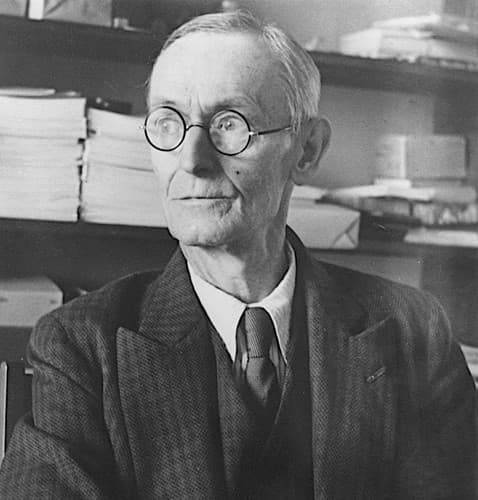
Hermann Karl Hesse was a German-Swiss poet, novelist, and painter. His best-known works include Demian, Steppenwolf, Siddhartha, and The Glass Bead Game, each of which explores an individual's search for authenticity, self-knowledge and spirituality. In 1946, he received the Nobel Prize in Literature.
Similar books
- The Name of the Rose
Umberto Eco
4.1 (301k) average on GoodreadsHistorical FictionWhile both "Narcissus and Goldmund" and "The Name of the Rose" are set in medieval monasteries and involve profound intellectual discourse, Eco's novel is primarily a historical mystery with a strong emphasis on semiotics, logic, and a detailed, often bleak, depiction of medieval life. Hesse's work, by contrast, is far more focused on the internal spiritual and philosophical journey of its protagonists, using the medieval setting as a backdrop for timeless human questions rather than a meticulously researched historical puzzle. Hesse's tone is more poetic and introspective, whereas Eco's is more analytical and historically grounded, even cynical at times.
- Siddhartha
Hermann Hesse
4.0 (583k) average on GoodreadsHistorical FictionBoth "Narcissus and Goldmund" and "Siddhartha" are quintessential Hesse, exploring the individual's quest for enlightenment and self-discovery through divergent paths. "Siddhartha" focuses on a single protagonist's journey through various spiritual and worldly experiences to achieve inner peace, often through renunciation and detachment. "Narcissus and Goldmund," however, uses two distinct characters to represent the duality of human existence – the intellectual/spiritual versus the sensual/artistic – and argues for the integration of both. While Siddhartha's journey is one of singular pursuit, Goldmund's is one of passionate engagement with the world, ultimately finding meaning through creation and suffering, a slightly different philosophical emphasis than Siddhartha's path to unity through observation.
- To Kill a Mockingbird
Harper Lee
4.3 (4.5M) average on GoodreadsHistorical FictionIn the 1930s Jim Crow South, Harper Lee writes about racial injustice, moral growth, and the quiet courage of a lawyer father, Atticus Finch, as seen through his young daughter's eyes.
- The Great Gatsby
F. Scott Fitzgerald
3.9 (3.8M) average on GoodreadsHistorical FictionIn the opulent Roaring Twenties, a mysterious millionaire's lavish parties hide his desperate, tragic pursuit of a lost love, exposing the emptiness within the American Dream.
- Pride and Prejudice
Jane Austen
4.3 (3M) average on GoodreadsHistorical FictionIn a society focused on status and money, Elizabeth Bennet navigates love and pride, challenging Mr. Darcy and social expectations to find true affection.
- Angels & Demons
Dan Brown
3.9 (2.7M) average on GoodreadsThrillerA Harvard symbologist races through Rome's ancient sites, deciphering cryptic clues to unmask the Illuminati and stop a vengeful plot to destroy the Vatican with a stolen antimatter weapon.






Enjoyed the summary?
A summary gives you the shape of the book. The book itself has the detail, the examples and the voice.
Find Narcissus and Goldmund on AmazonAs an Amazon Associate, BookBrief earns from qualifying purchases. How we're funded