

Synopsis
Covers the whole plot, including the ending.
- Difficulty
- Medium
- Pacing
- Moderate
- Mood
- Thought-provoking, Reflective, Somber, Challenging
- Read it if
- You are interested in post-colonial literature, coming-of-age stories, or explorations of feminism and identity in an African context.
- Skip it if
- You prefer fast-paced plots with clear-cut resolutions or shy away from emotionally heavy themes.
Nervous Conditions Plot Summary
Covers the whole plot, including the ending.
The Death of Nhamo
The story begins with Tambudzai (Tambu) thinking about her brother Nhamo's death. Nhamo was the favored son in their rural family, set to get a mission school education paid for by their rich uncle, Babamukuru. Tambu, smart and ambitious, expects a life of domestic work and limited chances, common for girls in her village. Nhamo's sudden death from mumps, however, creates an open spot. Tambu, who had already shown her drive by growing and selling maize to pay for her own schooling, sees a chance to attend the mission school in his place. Her mother, Ma'Shingayi, strongly opposes this, fearing education will separate Tambu from her family and traditions, as it has done to others.
A New Life at the Mission
After Nhamo's death, Babamukuru, the respected headmaster of the mission school, offers to pay for Tambu's education. This decision gets mixed reactions from her family; her father, Jeremiah, sees the benefits, but Ma'Shingayi stays worried. Tambu is happy to leave her poor home, though she feels a bit guilty leaving her mother and younger siblings. At the mission, she is struck by the difference between her old life and this new one. The mission house, with its running water, electricity, and plenty of food, seems like a dream. She meets her aunt, Maiguru, and her cousins, Nyasha and Chido, who recently returned from five years in England. Tambu wants to experience everything mission life offers, believing it is her future.
Culture Clash and Rebellion
Tambu quickly notices the tension in Babamukuru's home. Nyasha, her cousin, is very independent and openly challenges her father, a behavior considered shocking in Shona culture. Having lived in England for five years, Nyasha struggles to fit back into Zimbabwean society and resents her father's strict, patriarchal rules. She often argues with Babamukuru, questioning his choices and expressing frustration with the submissive role expected of women. These arguments disturb Tambu, who was taught to respect elders without question. Tambu initially criticizes Nyasha, seeing her as disrespectful, but also finds herself interested in Nyasha's bravery and curiosity. Nyasha's rebellions often end with Babamukuru physically punishing her, showing the deep cultural divide.
Maiguru's Silent Suffering
Tambu starts to see her Aunt Maiguru's quiet unhappiness. Despite having a Master's degree and working as a teacher, Maiguru has little financial freedom, as Babamukuru controls all the family's money. She often defers to her husband, even when she disagrees with him, and silently endures his emotional abuse and infidelity. In one incident, Maiguru briefly leaves the mission after a humiliating argument with Babamukuru, only to return a few days later, seemingly defeated. This event deeply affects Tambu, who starts to question the real value of education for women if it does not give them independence and respect. She begins to see that even in the 'modern' mission, traditional patriarchal structures oppress women, regardless of their education.
The Wedding and Its Aftermath
Babamukuru insists that Tambu's parents, Jeremiah and Ma'Shingayi, have a Christian wedding, despite having been traditionally married for decades. This event is meant to legitimize their union to the church and 'civilize' them. Tambu finds the preparations and ceremony humiliating and fake. Her parents are uncomfortable and awkward, dressed in ill-fitting Western clothes, and treated as charity cases by the mission community. Ma'Shingayi is especially upset, feeling her traditional marriage and identity are being invalidated. Tambu, watching, feels a deep shame for her parents and growing disappointment with Westernization, seeing how it takes away their dignity instead of improving it. The wedding symbolizes colonial values replacing indigenous ones.
Tambu's Academic Success and Isolation
Tambu does well academically at the mission school, proving to be a diligent and smart student. Her success pleases Babamukuru, who sees her as a model student, unlike his own daughter, Nyasha. However, her academic achievements come with a price. The more she fits into the mission's educated world, the more she feels separate from her original family and their rural life. Visits home become harder, as she finds their poverty and traditional ways foreign and even embarrassing. Her mother, Ma'Shingayi, resents Tambu's growing distance and the subtle ways Tambu now judges their life. Tambu's success creates a gap between her and her past, leaving her caught between two worlds, belonging to neither.
Nyasha's Deterioration
Nyasha's internal conflict and rebellion grow, showing up as a severe eating disorder and mental distress. She withdraws more, suffering from insomnia, nightmares, and extreme mood swings. Her arguments with Babamukuru become more frequent and violent, often ending in physical fights. Tambu, initially cautious, grows closer to Nyasha, seeing her cousin's deep suffering and understanding the source of her pain: the struggle to balance her Western upbringing with the expectations of her Shona culture and her father's control. Nyasha's body becomes a battleground for these conflicting forces, as she starves herself, showing the destructive effect of cultural separation and patriarchal oppression on young African women.
Tambu's Scholarship and Nyasha's Breakdown
Tambu's academic success earns her a scholarship to the Sacred Heart convent school, an even more elite place than the mission. This chance excites her, promising more advancement. However, this time also sees a severe decline in Nyasha's health. Nyasha's eating disorder and mental pain reach a breaking point, resulting in a complete breakdown. She is hospitalized, suffering from severe malnutrition and psychological trauma. Tambu is deeply affected by Nyasha's suffering, realizing the heavy cost of cultural displacement and the pressures on women. Nyasha's illness is a warning to Tambu about the dangers of seeking Western education and assimilation without a strong sense of self and cultural identity.
Sacred Heart and New Perspectives
Tambu goes to Sacred Heart, initially feeling free. The convent school is mostly white, and Tambu finds herself in an environment where the traditional gender roles and expectations of her Shona culture are less openly enforced. She experiences a different kind of freedom, especially intellectual freedom, and begins to question many of her assumptions about her family and society. She thinks about Nyasha's suffering and her own journey, starting to understand the complexities of colonialism, patriarchy, and the search for identity. While still seeking education, Tambu begins to see the limits and biases within the Western education system itself. She starts to find her own path, seeking to combine her past and future, her African heritage and her intellectual goals.
Awakening and Self-Realization
At Sacred Heart, Tambu's critical awareness fully forms. She begins to analyze the 'nervous conditions' that have affected her family and community: the psychological and cultural harm from colonialism and patriarchy. She thinks about her mother's resignation, Maiguru's silent pain, and Nyasha's tragic breakdown. She recognizes them as different results of the same systemic oppression. Tambu realizes that simply getting an education is not enough; she must also understand and challenge the systems that limit women's lives. The novel ends with Tambu on the edge of adulthood, having gained a deep understanding of herself and her world. She is determined to create an identity that is both educated and authentically African, refusing to give in to the 'nervous conditions' that have harmed the women before her.
Nervous Conditions Characters
Tambudzai (Tambu)
Protagonist
An ambitious and intelligent young Shona girl striving for education and self-definition.
Tambu is the narrator and protagonist of the novel, an intelligent and determined young girl from a poor rural family in Rhodesia (Zimbabwe). She yearns for education as a means to escape poverty and the traditional subservient role expected of women. She is initially deeply respectful of authority, particularly her uncle Babamukuru, and eager to assimilate into the educated, Westernized world of the mission school. Throughout the story, she is an observer, learning from the experiences of the women around her, particularly her cousin Nyasha and her aunt Maiguru.
Relationships: Nhamo (Older brother, whose death opens her path to education.); Babamukuru (Uncle and benefactor, initially revered, later critically examined.); Ma'Shingayi (Mother, whose traditional views Tambu struggles to reconcile with her own aspirations.); Nyasha (Cousin and friend, whose struggles profoundly influence Tambu's understanding of identity and oppression.); Maiguru (Aunt, whose quiet suffering teaches Tambu about the limitations of female education under patriarchy.)
Nyasha
Supporting/Tragic Figure
Tambu's cousin, a bright but deeply troubled girl caught between Western and African cultures.
Nyasha is Babamukuru's daughter, who has spent five formative years in England. Upon returning to Rhodesia, she struggles immensely to reconcile her Westernized independence and intellectual curiosity with the patriarchal expectations of her Shona culture and her father's authoritarian rule. She is rebellious, outspoken, and fiercely intelligent, but also deeply vulnerable. Her internal conflict manifests as an eating disorder and mental health issues, making her a tragic figure who embodies the 'nervous conditions' of cultural alienation and oppression.
Relationships: Tambu (Cousin and close friend, who observes and learns from Nyasha's struggles.); Babamukuru (Father, with whom she has a deeply conflicted and often violent relationship.); Maiguru (Mother, whom she loves but also resents for her perceived submission to Babamukuru.)
Babamukuru
Antagonist/Head of Family
Tambu's revered uncle, an educated and authoritarian patriarch who embodies both progress and oppression.
Babamukuru is Tambu's uncle, the eldest son of his generation, and the highly respected headmaster of the mission school. He is the family's benefactor, having achieved significant success through Western education. He embodies the aspirations of progress and modernization but is also deeply traditional in his patriarchal views, wielding absolute authority over his family. He believes in the importance of education but also imposes strict control, particularly over the women in his household. His actions, though often well-intentioned, contribute to the 'nervous conditions' experienced by his wife and daughter.
Relationships: Tambu (Niece and protégé, whom he sponsors for education.); Nyasha (Daughter, with whom he has a deeply adversarial relationship rooted in cultural clash and control.); Maiguru (Wife, whom he dominates and controls both financially and emotionally.); Jeremiah (Younger brother, whom he supports but also condescends to.)
Maiguru
Supporting
Tambu's aunt, an educated woman who silently endures her husband's patriarchal control.
Maiguru is Babamukuru's wife and Tambu's aunt. She is an educated woman, holding a Master's degree and working as a teacher, yet she has little financial independence and is subject to her husband's control and emotional abuse. She represents the paradox of educated African women who still find themselves trapped by patriarchal traditions. Her quiet suffering and brief, unsuccessful attempt to assert her independence highlight the systemic nature of female oppression, even within 'modern' contexts. She is kind to Tambu but unable to fully protect her own daughter, Nyasha.
Relationships: Babamukuru (Husband, who controls her life and finances.); Nyasha (Daughter, whom she loves but often fails to protect from her father's wrath.); Tambu (Niece, to whom she offers quiet kindness and serves as a subtle warning.)
Ma'Shingayi
Supporting
Tambu's mother, a traditional rural woman who views Western education with suspicion and fear.
Ma'Shingayi is Tambu's mother, a woman deeply rooted in traditional Shona culture and rural life. She is suspicious of Western education, viewing it as a force that alienates children from their families and heritage. Her experiences, particularly the loss of her first son Nhamo and the increasing distance from Tambu, reinforce her belief that education brings more pain than benefit. She embodies the struggles of traditional women trying to preserve their way of life against the encroaching influences of colonialism and modernity.
Relationships: Tambu (Daughter, whom she loves but resents for her pursuit of education and subsequent alienation.); Jeremiah (Husband, with whom she shares a traditional, albeit sometimes strained, marriage.); Nhamo (Deceased eldest son, whose death and prior favoritism deeply impacted her.)
Jeremiah
Supporting
Tambu's father, a simple rural man who relies heavily on his wealthier brother, Babamukuru.
Jeremiah is Tambu's father, a largely passive and ineffectual man who struggles to provide for his family in their rural homestead. He is dependent on his brother, Babamukuru, for financial support and the education of his children. He readily accepts Babamukuru's decisions, including the 'Christian' wedding, without much resistance, highlighting his lack of agency. He embodies the impoverished and disempowered rural African man, caught between traditional life and the allure of Western progress, often at the expense of his own dignity.
Relationships: Ma'Shingayi (Wife, with whom he has a traditional marriage.); Tambu (Daughter, whose education he supports for practical reasons.); Babamukuru (Elder brother and benefactor, whom he respects and relies upon.)
Nhamo
Mentioned
Tambu's older brother, whose death creates an opportunity for Tambu's education.
Nhamo is Tambu's older brother, who dies early in the novel. He was the favored son, destined for Western education sponsored by Babamukuru. His death, while tragic for the family, inadvertently opens the door for Tambu to attend school. He represents the traditional preference for male education and the often-unseen sacrifices made by girls in favor of their brothers.
Relationships: Tambu (Sister, whose future is dramatically altered by his death.); Ma'Shingayi (Mother, who deeply grieves his loss and the favoritism shown to him.); Babamukuru (Uncle, who was his initial benefactor.)
Nervous Conditions Themes
Colonialism and its Aftermath
The novel explores how colonialism affects Zimbabwean society, especially identity and gender roles. The 'nervous conditions' refer to the mental and emotional distress caused by Western values and the resulting separation from indigenous culture. Babamukuru and his family, living at the mission, are a colonized elite who have adopted Western ways, often losing their true African identities. Nyasha's breakdown results from being caught between two cultures, unable to fully belong to either. Tambu's journey reflects the struggle to navigate this post-colonial world without losing oneself.
“The story I have told here, is of the women and men who became what they were and who are what they are in the context of the colonisation of their minds and persons, by the colonial experience.”
Patriarchy and Female Oppression
A main theme is the widespread nature of patriarchy in both traditional Shona society and the 'modern' mission. Women, regardless of education or status, are subject to male authority. Ma'Shingayi faces poverty and lack of power in the rural home, while Maiguru, despite her education, depends financially on Babamukuru and suffers his emotional abuse silently. Nyasha's rebellion against her father's authority leads to her breakdown. Tambu's initial desire for education is mainly to escape these gender roles, and her eventual awakening involves seeing the systemic nature of female subjugation.
“I was not sorry when my brother Nhamo died. Nor am I apologising for my lack of feeling.”
The Promise and Perils of Western Education
Education is shown as having both good and bad sides. For Tambu, it offers a way out of poverty and traditional limits, symbolizing progress and chance. However, the novel also critiques Western education as a tool for cultural assimilation and separation. Nhamo's education makes him arrogant and scornful of his family's traditions. Nyasha's English education makes her an outsider in her own country, leading to her internal conflict and breakdown. Even Maiguru's advanced degrees do not give her true independence. Tambu's journey shows the challenge of gaining Western knowledge without losing one's cultural identity.
“The educated Africans were the ones who had been thoroughly colonised. It was a condition of their minds.”
Identity and Self-Discovery
The characters deal with complex questions of identity, especially as they balance African tradition and Western modernity. Tambu's search for education is a search for self-definition, as she tries to reconcile her rural Shona roots with her hopes for a different future. Nyasha's struggle is a clear picture of a fragmented identity, unable to combine her two cultural experiences. The novel explores how people, especially women, try to build a clear sense of self amid conflicting cultural expectations, family pressures, and the legacy of colonialism.
“It was difficult to decide whether I was a victim of the system or a beneficiary of it.”
The Power of Narrative and Voice
The novel itself, narrated by Tambu looking back, highlights the importance of voice and storytelling as a way to understand and challenge oppressive systems. Tambu's ability to express her experiences and analyze the 'nervous conditions' shows the freeing power of self-expression. By giving voice to the often-silenced experiences of African women, the story reclaims agency and offers a path to healing and empowerment. This contrasts with the silence often forced on characters like Maiguru or Nyasha's destructive internal turmoil.
“I was at the beginning of my story, not at the end.”
Plot Devices & Literary Techniques
First-Person Retrospective Narration
Tambu narrates her story as an adult looking back on her youth.
The entire novel is narrated by Tambu from an adult perspective, reflecting on her childhood and adolescent experiences. This allows for a mature, analytical voice that can interpret events with greater insight and critical distance than her younger self possessed. It enables her to comment on the 'nervous conditions' and the broader societal forces at play, providing thematic depth and allowing the reader to understand the long-term impact of the events on her and other characters. The retrospective voice also lends authority to Tambu's eventual self-realization.
Symbolism of the Mission School
The mission school represents both opportunity and the corrupting influence of Westernization.
The mission school serves as a central symbol, embodying the complex impact of Western education and colonialism. For Tambu, it initially represents a gateway to a better life, knowledge, and escape from poverty. However, it also symbolizes the imposition of foreign values, the erosion of traditional culture, and the creation of a 'colonized' elite. The mission house, with its amenities, highlights the material benefits, while the psychological struggles of characters like Nyasha and Maiguru reveal the spiritual and cultural costs. It is a place of aspiration but also alienation.
The 'Nervous Condition' Metaphor
A metaphor for the psychological and cultural damage inflicted by colonialism and patriarchy.
The title itself refers to the psychological and emotional distress, anxiety, and alienation experienced by the characters, particularly women, as a result of colonialism and patriarchal oppression. It manifests in various ways: Nyasha's eating disorder and mental breakdown, Maiguru's quiet resignation, Ma'Shingayi's bitterness, and Tambu's initial internal conflict. This metaphor underscores the pervasive, insidious nature of these systemic forces, which do not just affect political structures but deeply wound the individual psyche, creating a state of perpetual unease and internal conflict.
Contrast (Rural vs. Mission/Western)
The juxtaposition of traditional rural life with Westernized mission life highlights cultural clashes.
The novel consistently uses contrast to highlight the cultural, social, and economic disparities between Tambu's rural homestead and the mission school. This contrast is evident in living conditions (poverty vs. relative luxury), gender roles (traditional subservience vs. a different, but still present, form of female subjugation), and values (communal vs. individualistic). This device allows Dangarembga to explore the tensions between tradition and modernity, and to critique the idea that Westernization is always a path to unequivocal progress, often revealing its damaging effects on indigenous culture and identity.
Nervous Conditions Quotes
“I was not sorry when my brother Nhamo died. Perhaps I was insensitive, but I was not sorry.”
“My father's sister, Maiguru, was a much more important person in my life than my mother.”
“The women at the mission were not like the women in the kraal. They had their own ideas.”
“It was impossible to ignore the fact that my uncle was rich. His riches were real, tangible, and they were everywhere.”
“For me, at fifteen, there was no other ambition than to be a successful student.”
“But the truth was that I was not a person who was able to be comfortable with rebellion. I was too afraid.”
“They were all in the grip of the same disease, the disease of 'not enough'.”
“It was a rebellion, a revolution, to be a woman who spoke her mind.”
“I was at the mission, true, but I was still my mother's daughter.”
“What it was, I think, was the nervous condition of the native.”
“My mother said that it was a good thing to be educated, but that it was not a good thing to be too educated.”
“The problem was not simply that I had to go to school; it was that I had to make myself into a different person to do it.”
“Nyasha was not a person who was afraid to know. And she was not afraid to say what she knew.”
“It was as if there were two of me: the one who was going to school, and the one who was staying at home.”
Quiz
10 questions on the plot and the characters. Each answer comes with a short explanation.
Question 1
What is the name of Tambudzai's older brother whose death creates the opportunity for her to attend mission school?
- Nhamo
- Jeremiah
- Babamukuru
- Chido
Show answer
A. Nhamo Nhamo is Tambudzai's older brother whose death from mumps leads to Babamukuru offering to educate Tambudzai in his place.
Question 2
Which character struggles with an eating disorder and mental health issues, largely attributed to the clash between her Western upbringing and traditional Shona culture?
- Tambudzai
- Maiguru
- Nyasha
- Lucia
Show answer
C. Nyasha Nyasha, Babamukuru's daughter, struggles significantly with anorexia and mental health problems, reflecting her internal conflict and alienation.
Question 3
What is the primary reason Babamukuru is considered the 'head' of the family and wields significant influence over his relatives?
- He is the eldest son and has inherited the family land.
- He is the only one who has received a Western education and holds a high-paying job.
- He is a respected traditional healer in the village.
- He has a large family and many children.
Show answer
B. He is the only one who has received a Western education and holds a high-paying job. Babamukuru's education and subsequent professional success (headmaster of the mission school) grant him immense power and respect within his family.
Question 4
How does Tambudzai's mother, Ma'Shingayi, initially react to the idea of Tambudzai going to school, especially after Nhamo's death?
- She is overjoyed and immediately supportive.
- She is indifferent, seeing no benefit in educating girls.
- She is resistant and resentful, fearing it will make Tambudzai 'too much' like her aunt and cousin.
- She encourages Tambudzai but expresses concern about the cost.
Show answer
C. She is resistant and resentful, fearing it will make Tambudzai 'too much' like her aunt and cousin. Ma'Shingayi views education for girls with suspicion and resentment, fearing it will alienate them from their traditional roles and family, as she believes happened with Maiguru and Nyasha.
Question 5
What significant event causes Maiguru to temporarily leave her husband, Babamukuru, challenging his authority and revealing her own frustrations?
- Babamukuru's refusal to send Nyasha to university.
- His decision to marry another wife without consulting her.
- His complete control over her salary and lack of recognition for her own education.
- A physical altercation between Babamukuru and Nyasha.
Show answer
C. His complete control over her salary and lack of recognition for her own education. Maiguru leaves after realizing that despite her own education and job, Babamukuru controls all her earnings and treats her as subservient, highlighting the theme of economic dependence and gender inequality.
Question 6
Which of the following best describes the 'nervous condition' referred to in the title, as exemplified by Nyasha?
- A fear of public speaking developed from attending a foreign school.
- The psychological and physical toll of cultural displacement and patriarchal oppression.
- A general anxiety about academic performance and future prospects.
- A literal medical condition caused by poor nutrition at the mission school.
Show answer
B. The psychological and physical toll of cultural displacement and patriarchal oppression. The 'nervous condition' represents the mental and physical breakdown (like Nyasha's anorexia) resulting from the immense pressure, alienation, and conflicting cultural expectations imposed on women, particularly those navigating colonialism and patriarchy.
Question 7
What is Tambudzai's initial ambition regarding her education, before she fully grasps its complexities?
- To become a doctor and work in England.
- To escape the poverty of her rural home and achieve economic independence.
- To marry a wealthy man and live a comfortable life.
- To become a teacher at the mission school.
Show answer
B. To escape the poverty of her rural home and achieve economic independence. Tambudzai's initial motivation for education is primarily pragmatic: to escape the destitution of her parents' homestead and secure a better, more comfortable life for herself, free from the traditional constraints placed on women.
Question 8
How does the character of Lucia, Ma'Shingayi's sister, challenge traditional gender roles and expectations in the novel?
- She marries a white missionary and moves to the city.
- She becomes a successful businesswoman and supports her family financially.
- She is sexually liberated, refuses to be controlled by men, and actively pursues her own desires, eventually gaining economic independence through education.
- She advocates for women's suffrage and political rights.
Show answer
C. She is sexually liberated, refuses to be controlled by men, and actively pursues her own desires, eventually gaining economic independence through education. Lucia is portrayed as a strong, independent woman who defies societal norms. She is openly sexual, challenges male authority, and ultimately secures her own education and a respected position as a teacher, showcasing agency outside traditional structures.
Question 9
The novel is largely a critique of which two intertwined systems of oppression that affect the lives of Zimbabwean women?
- Communism and economic globalization.
- Colonialism and patriarchy.
- Feudalism and religious fundamentalism.
- Capitalism and environmental degradation.
Show answer
B. Colonialism and patriarchy. Nervous Conditions critically examines how both British colonialism (introducing Western education and values) and entrenched Shona patriarchy combine to limit and oppress women, creating internal and external conflicts for characters like Tambudzai and Nyasha.
Question 10
By the end of the novel, what does Tambudzai come to realize about the 'emancipation' offered by Western education, particularly for women?
- It is a complete and unambiguous path to freedom and happiness.
- It is a complex and often contradictory process that can lead to new forms of alienation and internal conflict.
- It is only valuable if it is used to directly challenge colonial rule.
- It always leads to a rejection of one's cultural heritage.
Show answer
B. It is a complex and often contradictory process that can lead to new forms of alienation and internal conflict. Tambudzai, through her own experiences and observing Nyasha and Maiguru, realizes that Western education, while offering opportunities, also brings alienation, internal turmoil, and does not automatically free women from patriarchal constraints or cultural expectations; it's a 'nervous condition' of navigating conflicting worlds.
Nervous Conditions FAQ
What is the central conflict Tambudzai faces at the beginning of the novel, even before leaving her village?
Tambudzai initially struggles against the societal and familial expectation that her brother, Nhamo, will receive an education while she is relegated to domestic duties. Her deep desire for schooling is thwarted by the patriarchal system, creating a profound sense of injustice and limiting her future prospects in rural Rhodesia.
How does Nhamo's death impact Tambudzai's life and education?
Nhamo's unexpected death is the pivotal event that opens the door for Tambudzai to receive an education at the mission school, as her uncle Babamukuru then sponsors her. While tragic, it ironically fulfills her long-held dream, fundamentally altering her trajectory from a life of rural labor to one of intellectual pursuit and exposure to a different world.
Describe the main differences between Tambudzai and Nyasha when they first meet at the mission.
Tambudzai is initially naive, rural, and eager to conform to the mission's expectations, viewing education as pure liberation. Nyasha, in contrast, is sophisticated, rebellious, and deeply conflicted due to her English upbringing, openly questioning authority and struggling with her identity, making her an outsider even within her own family.
What role does Maiguru play in the family dynamics and the lives of the children?
Maiguru, Babamukuru's wife, is an educated woman with her own master's degree, yet she remains largely subservient to her husband and family expectations. She provides emotional support and a degree of understanding to Nyasha and Tambudzai, but her own suppressed ambitions and quiet suffering highlight the limitations placed on even educated African women.
What is the significance of the title 'Nervous Conditions'?
The title refers to the psychological and emotional distress experienced by the characters, particularly Nyasha, due to the clash of cultures, colonialism, and patriarchal oppression. It encapsulates the 'nervousness' or mental illness caused by the societal pressures, identity crises, and the impossible expectations placed upon individuals navigating a post-colonial world.
How does the family's move to England subtly shape Babamukuru's character and his interactions upon returning?
Babamukuru's time in England grants him immense prestige and a sense of superiority, reinforcing his patriarchal authority within the family and community. While he gains education, he also internalizes some colonial attitudes, becoming more rigid and demanding, particularly towards Nyasha, as he struggles to reassert control after their exposure to Western freedoms.
What is the symbolic significance of the mission school environment for Tambudzai?
For Tambudzai, the mission school initially symbolizes escape, enlightenment, and a path to a better life, representing a break from the poverty and limited opportunities of her village. However, it gradually reveals its own limitations, rigidities, and the subtle ways it reinforces colonial values, becoming a place of both opportunity and subtle indoctrination.
How does Tambudzai's relationship with Lucia, her aunt, evolve and what does it reveal about societal norms?
Tambudzai initially views Lucia with disdain due to her 'loose' reputation and independent spirit. However, as Tambudzai matures, she begins to admire Lucia's resilience, outspokenness, and refusal to be confined by patriarchal expectations, recognizing Lucia's strength in navigating a restrictive society, which challenges Tambudzai's earlier judgments.
What underlying factors contribute to Nyasha's eventual breakdown, beyond just her parents' strictness?
Nyasha's breakdown is a complex culmination of her identity crisis, caught between Shona and English cultures, her intellectual frustration with patriarchal limitations, the trauma of her parents' arguments, and the internalized racism and sexism of her environment. Her anorexia is a desperate attempt to exert control over her own body and life when external control is denied.
Analyze Tambudzai's emotional journey from admiration to disillusionment regarding her uncle, Babamukuru.
Tambudzai initially idolizes Babamukuru as a benevolent savior who provides her education, seeing him as the epitome of success and wisdom. Her disillusionment grows as she witnesses his rigid patriarchy, his abuse of power, his insensitivity towards Nyasha, and his hypocrisy, leading her to question the very systems he represents and to ultimately reject his authority.
How does the novel explore the concept of internalized colonialism through characters like Babamukuru and Tambudzai?
Babamukuru embodies internalized colonialism by adopting European values and a sense of superiority, often denigrating his own culture and asserting his authority in ways that mirror colonial power structures. Tambudzai initially desires to emulate this 'progress,' but later recognizes the psychological damage and identity loss inherent in fully embracing colonial ideals, leading to her eventual rebellion.
What psychological impact does the 'double-bind' of being an educated African woman have on Maiguru?
Maiguru experiences significant psychological distress from the 'double-bind' of being an educated woman who is still expected to conform to traditional subservient roles. Her education gives her an awareness of her potential and rights, but societal and familial pressures, particularly from Babamukuru, force her to suppress her own ambitions, leading to quiet resentment and a sense of unfulfilled potential.
Is Nyasha's rebellion a constructive act of resistance or a self-destructive consequence of her environment?
Nyasha's rebellion is a complex mix of both. While self-destructive in its manifestation (anorexia), it is also a powerful and articulate resistance against patriarchal oppression, colonial influence, and the silencing of women's voices. Her intellectual questioning and refusal to conform, though painful, expose the deep flaws in her society and family structure, making her a tragic but significant figure of resistance.
The novel ends with Tambudzai reflecting on her own 'nervous conditions.' What does this suggest about her future and the cycle of oppression?
Tambudzai's realization that she too harbors 'nervous conditions' suggests that the psychological impact of colonialism and patriarchy is pervasive, affecting even those who seemingly escape its direct grip. It implies that while she has gained awareness, the struggle for true liberation and self-definition is ongoing and complex, hinting that breaking the cycle requires sustained effort and vigilance.
How does the narrative perspective, told through an adult Tambudzai reflecting on her youth, shape our understanding of the events?
The adult Tambudzai's reflective narrative provides a critical, retrospective lens on her youthful experiences, infusing the story with maturity, nuanced understanding, and a clear anti-colonial and feminist stance. This allows her to analyze the characters' motivations and societal structures with a depth that her younger self could not, guiding the reader towards a particular interpretation of the events and their broader implications.
Discuss the ambiguity of 'freedom' as presented in the novel, particularly concerning education and Western influence.
The novel portrays 'freedom' as ambiguous; while education and Western influence offer avenues for escape from traditional oppression, they also introduce new forms of control, identity crises, and cultural alienation. Tambudzai's pursuit of education is liberating, but Nyasha's experience shows how Westernization can lead to a different kind of 'nervous condition,' highlighting that true freedom is complex and not simply found in adopting foreign ideals.
To what extent does the novel suggest that women's liberation is intertwined with decolonization in Rhodesia?
The novel strongly suggests that women's liberation is deeply intertwined with decolonization. It portrays how both traditional Shona patriarchy and colonial structures oppress women, limiting their education, voices, and autonomy. Characters like Nyasha and Tambudzai cannot achieve full personal freedom without challenging both indigenous patriarchal norms and the lingering effects of colonialism, making the two struggles inseparable.
What is the significance of Tambudzai's choice to return to her village after her experience at the mission school?
Tambudzai's return to her village signifies a deliberate attempt to reconnect with her roots and reconcile her education with her cultural identity, rather than fully assimilate into the colonial-influenced mission life. It represents her desire to find a path that integrates her newfound knowledge with her heritage, suggesting a future where she can contribute to her community while challenging its oppressive aspects, rather than abandoning it entirely.
About the author

Tsitsi Dangarembga is a Zimbabwean novelist, playwright and filmmaker. Her debut novel, Nervous Conditions (1988), which was the first to be published in English by a Black woman from Zimbabwe, was named by the BBC in 2018 as one of the top 100 books that have shaped the world. She has won other literary honours, including the Commonwealth Writers' Prize and the PEN Pinter Prize. In 2020, her novel This Mournable Body was shortlisted for the Booker Prize. In 2022, Dangarembga was convicted in a Zimbabwe court of inciting public violence, by displaying, on a public road, a placard asking for reform.
Similar books
- The House of the Spirits
Isabel Allende
4.2 (190k) average on GoodreadsFantasyA multi-generational saga focusing on strong female characters navigating political and social upheaval, with elements of magical realism.
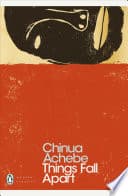
- Things Fall Apart
Chinua Achebe
3.7 (288k) average on GoodreadsHistorical FictionDepicts the devastating impact of colonialism on traditional African society and culture, though from a male perspective.
- Half of a Yellow Sun
Chimamanda Ngozi Adichie
4.3 (103k) average on GoodreadsLiterary FictionAdichie's novel provides a sweeping historical account of the Biafran War and its human cost, offering a broader political and social canvas. Dangarembga's Nervous Conditions, while historically situated, is more intensely focused on the micro-level psychological and personal struggles of individuals grappling with identity, education, and cultural clash under colonial influence, preceding and influencing the feminist postcolonial tradition Adichie also engages with.
- To Kill a Mockingbird
Harper Lee
4.3 (4.5M) average on GoodreadsHistorical FictionIn the 1930s Jim Crow South, Harper Lee writes about racial injustice, moral growth, and the quiet courage of a lawyer father, Atticus Finch, as seen through his young daughter's eyes.
- The Great Gatsby
F. Scott Fitzgerald
3.9 (3.8M) average on GoodreadsHistorical FictionIn the opulent Roaring Twenties, a mysterious millionaire's lavish parties hide his desperate, tragic pursuit of a lost love, exposing the emptiness within the American Dream.
- Pride and Prejudice
Jane Austen
4.3 (3M) average on GoodreadsHistorical FictionIn a society focused on status and money, Elizabeth Bennet navigates love and pride, challenging Mr. Darcy and social expectations to find true affection.





Enjoyed the summary?
A summary gives you the shape of the book. The book itself has the detail, the examples and the voice.
Find Nervous Conditions on AmazonAs an Amazon Associate, BookBrief earns from qualifying purchases. How we're funded