
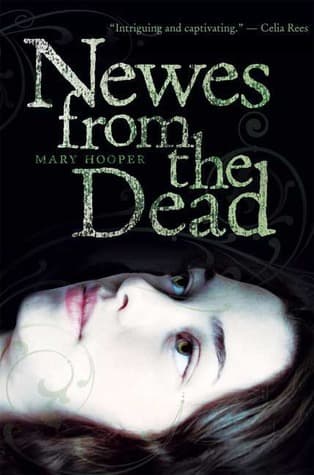
Synopsis
Covers the whole plot, including the ending.
- Difficulty
- Medium
- Pacing
- Moderate
- Mood
- Historical, Suspenseful, Resilient, Reflective, Hopeful
- Read it if
- You enjoy historical fiction based on astonishing true events, particularly stories of survival against immense odds and medical curiosities.
- Skip it if
- You are sensitive to themes of injustice, execution, or medical procedures, or prefer fast-paced thrillers over character-driven historical narratives.
Newes from the Dead Plot Summary
Covers the whole plot, including the ending.
The Darkness and the Memory of the Rope
Anne Green, a young maidservant, awakens in darkness, unable to move, speak, or open her eyes. Her last conscious memory is the rope around her neck and the jostling of the cart. She believes she is dead, possibly buried alive, and is overcome by terror and confusion. Her mind replays the events that led her to this fate: her employment at Sir Thomas Read's household, the secret birth of her child, and the accusation of infanticide. She recalls the harsh judgment and her public execution, feeling phantom pains from the gallows. This disoriented state forces her to confront the injustice of her situation and the desperate circumstances that led to her downfall.
The Student and the Corpse
Meanwhile, in Oxford, 18-year-old Robert Plot, a shy, studious medical student, attends his first human dissection at the Anatomy School. The atmosphere is solemn but charged with scientific curiosity. The corpse, a woman executed for infanticide, is laid out on the table, awaiting the anatomists' knives. As the physicians and surgeons prepare their instruments and discuss the procedure, Robert, despite his initial apprehension, observes the body with intense attention. He notices a subtle, almost imperceptible movement, a flicker in the woman's eyelids. This small detail, easily missed by others, sparks his scientific curiosity and raises doubt about the 'corpse,' setting the stage for an extraordinary discovery.
A Glimmer of Life
Robert Plot's keen observation of the 'corpse' is important. He draws the attention of Dr. William Petty and Dr. Thomas Willis, the prominent anatomists present, to the subtle signs of life he believes he saw. Initially skeptical, the doctors examine the woman more closely. To their astonishment, they confirm that the woman, Anne Green, is indeed still alive. Her breathing is shallow, her pulse faint, but present. The dissection is immediately halted, and a frantic effort begins to revive her. This turn of events shocks the Anatomy School, transforming a routine dissection into an unprecedented medical phenomenon and a test of their combined medical knowledge.
Recuperation and Recollection
Anne Green is nursed back to health by the doctors and their assistants. Her recovery is slow and painful, both physically and mentally. As her strength returns, her memories become clearer. She recalls her secret relationship with Geoffrey Read, Sir Thomas's grandson, and the shame and fear that led her to conceal her pregnancy. The birth of her stillborn child in the privy, her attempts to hide the body, and its subsequent discovery by other servants and her mistress, Mrs. Read, all resurface. She remembers the accusations of murder, the swift trial, and the lack of anyone to defend her, leading to her unjust conviction and execution. Her mind struggles with the trauma of these events and the bewildering reality of her survival.
The Betrayal of Geoffrey Read
As Anne recovers, her thoughts often return to Geoffrey Read, the father of her child. She recalls their secret meetings, his whispered promises, and the initial tenderness of their relationship. However, she also remembers his abandonment and cowardice when her pregnancy became undeniable. Geoffrey, fearing social ruin and disinheritance, denied involvement and offered no support or defense during her trial. His betrayal left Anne isolated and vulnerable, directly contributing to her conviction for infanticide. She feels a mix of lingering affection, bitter resentment, and a deep sense of injustice toward the man who fathered her child yet condemned her to the gallows through his inaction.
Public Outcry and Divine Intervention
News of Anne Green's survival spreads quickly throughout Oxford and beyond, becoming a sensation. People flock to see the 'miracle woman,' some out of curiosity, others believing it to be a sign of divine intervention. Religious figures interpret her survival as God's judgment, a clear indication of her innocence, as God would not allow an innocent woman to be hanged only to be resurrected without purpose. This public and religious fervor puts immense pressure on the legal system to reconsider her case. The story of her survival shifts from a medical curiosity to a spiritual event, sparking widespread debate about justice, mercy, and God's role in human affairs.
The Legal Battle for Freedom
Spurred by the public outcry and their own belief in her innocence, Dr. Petty, Dr. Willis, and other influential figures, including local gentry and clergy, begin to advocate for Anne's pardon. They argue that her survival is proof of her innocence and a divine mandate for her release. The legal system, initially resistant, cannot ignore the overwhelming evidence and public sentiment. Petitions are drawn up and presented to the authorities, detailing the extraordinary circumstances of her case. The legal and medical communities find themselves intertwined, with scientific observation reinforcing a moral need for justice, ultimately leading to a re-evaluation of her conviction.
A New Life and a New Perspective
After much deliberation and public pressure, Anne Green is officially pardoned. She is released from legal custody, her conviction for infanticide overturned. The ordeal has changed her, leaving her with physical scars and deep psychological trauma, but also a renewed sense of purpose and an appreciation for life. She no longer fears the gallows, having faced death and returned. She is a living example of injustice and miraculous survival. Anne begins the difficult process of rebuilding her life, finding new employment and seeking a quiet existence away from the intense public scrutiny. Her experience gives her a unique perspective on life, death, and the fragile nature of justice.
Robert's Scientific Legacy
Robert Plot, the shy medical student, is deeply affected by his role in Anne Green's survival. The experience solidifies his dedication to careful observation and scientific inquiry. He realizes the impact that attention to detail can have, not just in academic pursuit but in matters of life and death. This event fuels his ambition and shapes his future career, setting him on a path to become a respected natural historian and antiquarian. The 'Anne Green case' becomes a foundational experience, demonstrating the importance of questioning assumptions and trusting one's observations, even when they defy conventional wisdom.
The Lingering Mystery and the Unanswered Questions
While Anne Green is pardoned and free, she is not entirely unburdened. The trauma of the hanging, the false accusations, and the loss of her child leave a lasting mark. The exact circumstances of her child's death remain somewhat mysterious — was it truly stillborn, or did something else occur in her desperate state? Anne carries the weight of these unanswered questions and societal stigma, even after her survival. She must navigate a world that views her as both a miracle and a woman once condemned, forever marked by her extraordinary and tragic past. Her story becomes a legend, but for Anne, it is a lived, painful reality.
Newes from the Dead Characters
Anne Green
Protagonist
A young maidservant falsely accused of infanticide who miraculously survives her hanging.
Anne is initially portrayed as a naive and vulnerable young woman, caught in the rigid social structures of 17th-century England. Her desperation to conceal her pregnancy and the stillbirth of her child leads to her unjust conviction. Despite her quiet demeanor, she possesses an inner resilience that allows her to endure the trauma of the gallows and her subsequent revival. She is driven by a desire for justice and to understand the events that led to her near-death experience, carrying the emotional scars of betrayal and public humiliation.
Relationships: Geoffrey Read (Lover and father of her child; he betrays her by denying paternity and offering no support.); Dr. William Petty (One of the physicians who revives and cares for her, becoming her advocate.); Dr. Thomas Willis (Another physician involved in her revival and care, part of her medical saviors.); Robert Plot (The medical student whose keen observation ultimately saves her life.)
Robert Plot
Supporting
A shy, observant medical student who notices the first signs of life in Anne's 'corpse'.
Robert is an eighteen-year-old Oxford medical student, characterized by his shyness and meticulous attention to detail. He possesses an innate scientific curiosity and a keen eye, which allows him to perceive the subtle, almost imperceptible signs of life in Anne Green's body. Despite his youth and inexperience, he has the courage to voice his observations to more senior and respected physicians. His role in Anne's survival is pivotal, marking him as an individual with a nascent talent for scientific discovery and a strong sense of ethical responsibility.
Relationships: Anne Green (The subject of his life-saving observation.); Dr. William Petty (His mentor/professor figure whom he informs of his discovery.); Dr. Thomas Willis (Another mentor/professor figure present at the dissection.)
Dr. William Petty
Supporting
A prominent and respected physician involved in Anne's revival and subsequent care.
Dr. Petty is a leading anatomist and physician at Oxford, known for his intellect and innovative thinking. Initially skeptical of Robert Plot's claims, he quickly accepts the evidence and takes charge of Anne's resuscitation and long-term care. He represents the scientific community's blend of rational inquiry and humanitarian concern. Dr. Petty plays a crucial role not only in Anne's physical recovery but also in advocating for her pardon, using his influence and scientific authority to argue for her innocence and secure her freedom. He embodies the Enlightenment ideals of reason and compassion.
Relationships: Anne Green (Her primary physician and advocate.); Robert Plot (His student, whose observation he validates.); Dr. Thomas Willis (His colleague in the medical faculty.)
Dr. Thomas Willis
Supporting
Another esteemed physician who assists in Anne's revival and care.
Dr. Willis is a respected physician and anatomist, a colleague of Dr. Petty, and equally involved in the extraordinary case of Anne Green. He brings his medical expertise to the efforts to revive Anne and monitor her recovery. Like Dr. Petty, he represents the scientific community, committed to understanding and documenting this unprecedented medical phenomenon. His involvement underscores the gravity and scientific interest in Anne's survival, and he contributes to the collective effort to ensure her well-being and eventual legal freedom. He is a pragmatic and skilled medical professional.
Relationships: Anne Green (Her physician.); Dr. William Petty (His colleague.); Robert Plot (Student present at the discovery.)
Geoffrey Read
Antagonist/Mentioned
Sir Thomas's grandson and the father of Anne's child, who abandons her.
Geoffrey Read is presented as a weak and self-serving character. He is the grandson of Anne's employer, Sir Thomas Read, and the father of her child. His privileged position and fear of social disgrace lead him to deny his involvement with Anne and abandon her when she most needs support. His cowardice and lack of moral courage directly contribute to Anne's desperate situation and subsequent false accusation. He remains largely off-page after the initial events, a constant source of Anne's bitterness and a symbol of the societal hypocrisy of the time.
Relationships: Anne Green (Lover and father of her child; he betrays her.)
Mrs. Read
Supporting/Antagonist
Anne's mistress, who discovers the stillborn child and initiates the accusation.
Mrs. Read is Anne's mistress and the wife of Sir Thomas Read. She is a stern and unforgiving woman, deeply concerned with appearances and the social standing of her family. Upon discovering Anne's stillborn child, she immediately assumes the worst and is quick to accuse Anne of infanticide, driven by a rigid moral code and a desire to maintain order and reputation within her household. She embodies the harsh judgment and lack of empathy prevalent in society towards women in Anne's predicament, acting as a primary antagonist in Anne's initial downfall.
Relationships: Anne Green (Mistress to her servant; she accuses Anne of murder.)
Sir Thomas Read
Mentioned
Anne's employer and Geoffrey Read's grandfather.
Sir Thomas Read is the head of the household where Anne works. While not a direct participant in the day-to-day events of Anne's pregnancy and trial, his authority and standing in the community are significant. His family's reputation is a key factor in Geoffrey's betrayal and Mrs. Read's harsh reaction. Sir Thomas represents the patriarchal power structure and the gentry class that holds sway over the lives of servants like Anne. His influence indirectly contributes to the swift and unforgiving legal process Anne faces.
Relationships: Anne Green (Her employer.); Geoffrey Read (His grandson.)
Newes from the Dead Themes
Justice vs. Injustice
The novel explores the theme of justice, or rather, its absence for individuals like Anne Green in 17th-century society. Anne is convicted of infanticide based on circumstantial evidence, societal prejudice, and a lack of proper defense, highlighting the arbitrary and often cruel nature of the legal system. Her miraculous survival, interpreted by many as divine intervention, forces a reconsideration of her case, leading to her pardon. This theme appears in the initial rush to judgment against Anne, Geoffrey Read's betrayal, and the eventual, hard-won legal battle for her freedom, suggesting that true justice sometimes requires extraordinary circumstances to prevail.
“How could they judge me so? How could they know what happened, when even I did not?”
The Power of Observation and Science
This theme is central to Anne's survival, emphasizing the role of careful observation and early scientific inquiry. Robert Plot's keen eye, noticing the subtle flicker of Anne's eyelids, is the catalyst for her rescue. The physicians, Dr. Petty and Dr. Willis, initially skeptical, quickly apply their medical knowledge and scientific method to confirm her life and aid her recovery. The story celebrates the emerging scientific mindset of the 17th century, where empirical evidence begins to challenge superstition and established beliefs. Anne's case shows the life-saving potential of scientific curiosity and careful examination, contrasting sharply with the unscientific prejudices that condemned her.
“A good physician must see what others miss, and believe what others doubt, if the evidence is before his eyes.”
Resilience and Survival
Anne Green's story shows human resilience in the face of unimaginable trauma. She endures public humiliation, the terror of execution, and the disorienting experience of awakening in a coffin, yet she fights for her life. Her physical recovery is mirrored by her mental struggle to process the injustice and betrayal she suffered. This theme highlights Anne's inner strength, her will to live, and her capacity to adapt and rebuild her life after a near-death experience. Her survival is not just a physical act but a psychological triumph over despair and the societal forces that sought to erase her.
“I had faced death and returned. What more could life throw at me that I could not bear?”
Social Class and Gender Inequality
The novel portrays the severe social and gender inequalities in 17th-century England. Anne, as a maidservant, is vulnerable and lacks power. Her secret pregnancy, from a relationship with a higher-status man, Geoffrey Read, places her in an impossible situation. Geoffrey's ability to deny paternity and escape consequences, while Anne faces the gallows, exemplifies the double standards and lack of justice for lower-class women. The swiftness of her trial and conviction, compared to the protection given to the gentry, shows how social standing dictated one's fate, making Anne a victim of both her gender and her class.
“A gentlewoman's indiscretion might be whispered, but a servant's was shouted from the gallows.”
Miracle vs. Natural Phenomenon
Anne's survival sparks a debate between religious interpretation and scientific explanation. For many common people and clergy, her revival is a miracle, a sign of God's hand intervening to prove her innocence. This interpretation provides comfort and a moral framework for her pardon. However, for the physicians, while acknowledging its extraordinary nature, they seek to understand it through the lens of emerging medical science, exploring the physiological reasons for her survival. The novel navigates this tension, showing how an event can be perceived as both divine intervention and a rare natural phenomenon, reflecting the intellectual shifts of the era.
“Some called it a miracle, others, a most singular case for the anatomists. Perhaps it was both.”
Plot Devices & Literary Techniques
First-Person Internal Monologue
Anne's story is told primarily through her internal thoughts and memories.
The novel heavily utilizes Anne Green's first-person internal monologue, especially during her initial state of suspended animation in the coffin and throughout her recovery. This device allows the reader direct access to her terror, confusion, and the detailed, fragmented memories of the events leading to her execution. It creates a deep sense of empathy and urgency, as the reader experiences her disorientation and gradual recollection alongside her. This personal perspective is crucial for understanding the emotional weight of her ordeal and the profound injustice she faces, making her story deeply intimate and compelling.
Dual Perspective (Alternating Chapters)
The narrative alternates between Anne's internal experience and Robert Plot's external observations.
The story employs a dual perspective, alternating between Anne Green's internal thoughts and the external observations of Robert Plot and the medical community. This device allows for a comprehensive view of the central event: Anne's survival. Anne's perspective provides the emotional core and the historical context of her injustice, while Robert's perspective offers the scientific, objective viewpoint of the discovery of her life. This contrast heightens the dramatic tension, as the reader knows Anne is alive while those around her believe her dead, building suspense towards her miraculous revival and highlighting the different ways the event is perceived and understood.
Historical Document Integration
The novel is framed by and concludes with references to real historical accounts.
The novel is based on a true historical event and integrates references to actual 17th-century documents and accounts, even concluding with scans of original texts. This device lends significant authenticity and gravitas to the story. By grounding the fictionalized narrative in historical fact, it elevates the 'impossible' events to a credible, researched account. It emphasizes the meticulous research undertaken by the author and reminds the reader that Anne Green's extraordinary survival was a documented phenomenon, blurring the lines between fiction and history and reinforcing the novel's 'true story' premise.
Foreshadowing (Subtle)
Hints of Anne's survival are subtly placed before her revival.
Subtle foreshadowing is used, particularly through Robert Plot's observations. His initial unease, the fleeting 'flutter' of Anne's eyelids, and his persistent feeling that 'something is not right' with the 'corpse' all serve as gentle hints that Anne is not truly dead. This device builds anticipation and suspense, preparing the reader for the extraordinary revelation without giving it away too soon. It rewards careful reading and underscores Robert's unique observational skills, making his eventual discovery feel earned rather than completely out of the blue, despite its miraculous nature.
Newes from the Dead Quotes
“The dead tell no tales, but the living, ah, they tell a thousand.”
“London is a city of ghosts, not just in its graveyards, but in its very stones and alleys.”
“A woman's wit is her sharpest weapon, sharper than any blade a man might carry.”
“Fear is a contagion, more potent than any plague, for it infects the mind before the body.”
“Even in the darkest times, there are always those who seek to profit from sorrow.”
“The truth is a stubborn beast; you can bury it, but it always finds a way to claw its way out.”
“To be forgotten is a second death, and often, a more cruel one.”
“Hope is a fragile thing, easily crushed, but without it, we are truly lost.”
“The scent of lavender and rosemary cannot mask the stench of corruption, no matter how much you try.”
“Every person carries a story within them, a book waiting to be read, if only one takes the time.”
“Sometimes, the only way to find your way is to admit you are lost.”
“The world keeps turning, even when your own feels as if it has stopped.”
“Justice is not always swift, nor is it always kind, but it is a path worth walking.”
Quiz
10 questions on the plot and the characters. Each answer comes with a short explanation.
Question 1
What is Anne Green falsely accused of in 1650 England?
- Theft
- Witchcraft
- Infanticide
- Treason
Show answer
C. Infanticide Anne Green is a maidservant falsely accused of infanticide, which leads to her being sentenced to hang.
Question 2
What is Anne's terrifying initial realization after the hanging?
- She is in a hospital bed.
- She is buried alive.
- She has been rescued by her family.
- She is in purgatory.
Show answer
B. She is buried alive. After the hanging, Anne lies immobile in darkness, terrified she's buried alive, unsure if she's dead.
Question 3
Who notices something strange about Anne's 'corpse' during the dissection preparations?
- A seasoned doctor
- The executioner
- A shy 18-year-old medical student
- A nun
Show answer
C. A shy 18-year-old medical student A shy 18-year-old medical student attends his first dissection and notices something strange, specifically Anne's eyelids fluttering.
Question 4
What specific physical sign indicates Anne might still be alive on the dissection table?
- Her hand twitched.
- Her eyelids fluttered.
- She coughed.
- Her chest rose slightly.
Show answer
B. Her eyelids fluttered. The medical student notices her eyelids flutter, which is the first sign that the 'corpse' might be alive.
Question 5
The book is based on the true story of the real Anne Green. What historical document is included at the end of the book?
- Anne's birth certificate
- The original 1651 document recounting her survival
- The court transcripts of her trial
- A medical journal entry from the time
Show answer
B. The original 1651 document recounting her survival The book concludes with scans of the original 1651 document that recounts this chilling medical phenomenon, confirming the true story.
Question 6
What is Anne's primary internal struggle while trapped in darkness after the hanging?
- Planning her revenge against her accusers.
- Recalling the events and the man that led her to the gallows.
- Praying for salvation.
- Wondering about the afterlife.
Show answer
B. Recalling the events and the man that led her to the gallows. Haunted by her final memory, Anne has a burning need to revisit the events—and the man—that led her to the gallows.
Question 7
The setting for the story is 1650 England. What broader historical context does this imply for Anne's situation?
- A period of scientific enlightenment where medical practices were highly advanced.
- A time when legal proceedings were often swift and harsh, especially for the lower classes.
- An era of widespread public empathy for accused criminals.
- A society where women had significant legal protections against false accusations.
Show answer
B. A time when legal proceedings were often swift and harsh, especially for the lower classes. The 17th century in England was a period where justice was often severe, and individuals, particularly maidservants, could be quickly condemned with little recourse, as seen in Anne's false accusation and swift execution.
Question 8
What major theme is explored through Anne's survival on the dissection table?
- The triumph of love over adversity.
- The fallibility of justice and the limits of medical knowledge.
- The importance of social class in determining one's fate.
- The inevitability of death.
Show answer
B. The fallibility of justice and the limits of medical knowledge. Anne's survival highlights the severe flaws in the justice system that condemned her and the nascent, sometimes uncertain, state of medical science at the time.
Question 9
Given the historical context, what does Anne's experience as a maidservant falsely accused of infanticide imply about the social standing and vulnerability of women in her position?
- Maidservants held significant social power and were rarely accused of crimes.
- Women in domestic service were highly protected by their employers from legal issues.
- Maidservants were often in precarious positions, vulnerable to accusations and with limited means to defend themselves.
- Accusations against maidservants were always thoroughly investigated with due process.
Show answer
C. Maidservants were often in precarious positions, vulnerable to accusations and with limited means to defend themselves. The ease with which Anne, a maidservant, is falsely accused and condemned for infanticide underscores the extreme vulnerability and lack of social standing for women in her position in 17th-century England.
Question 10
The phrase 'Newes from the Dead' itself suggests what about the story's nature and reception at the time?
- It was a common, everyday occurrence.
- It was considered a miraculous or sensational event, worthy of public dissemination.
- It was a private family matter not intended for public knowledge.
- It was a fictional tale designed purely for entertainment.
Show answer
B. It was considered a miraculous or sensational event, worthy of public dissemination. The title 'Newes from the Dead' implies that Anne's survival was a remarkable and newsworthy event, reflecting the public's fascination with such 'chilling medical phenomena' and the supernatural implications of someone returning from the gallows.
Newes from the Dead FAQ
What is the central premise of 'Newes from the Dead'?
The book centers on Anne Green, a maidservant in 1650 England who is falsely accused of infanticide and subsequently hanged. The core mystery and drama stem from her awakening on a dissection table, having miraculously survived the execution, leading to a scramble by doctors and authorities.
Who is Anne Green and what is her background before the accusation?
Anne Green is a young maidservant from a modest background, working in a gentry household. She is an ordinary girl, navigating the rigid social structures and expectations of 17th-century England, making her sudden and brutal accusation particularly harrowing.
What crime is Anne accused of, and what evidence is presented against her?
Anne is accused of infanticide, specifically for concealing a pregnancy and murdering her newborn child. The 'evidence' largely consists of the discovery of a stillborn or premature infant and Anne's initial denial of pregnancy, fueled by societal prejudice and the lack of proper medical understanding at the time.
Who is the medical student mentioned in the synopsis, and what role does he play?
The shy 18-year-old medical student is an unnamed character who attends his first dissection where Anne's body is presented. He is crucial to the plot as he is the first to notice signs of life, such as her eyelids fluttering, prompting further investigation by the attending doctors and preventing the dissection from proceeding.
How does Anne survive the hanging, and what are the immediate reactions to her revival?
Anne's survival is a miraculous medical phenomenon, attributed in part to the circumstances of her hanging and perhaps her physical resilience. Upon her revival, there is widespread astonishment and debate among the doctors and the public, with some viewing it as divine intervention and others as a medical marvel.
What specific historical context is crucial to understanding Anne's predicament?
The book is set in 1650 England, during the Interregnum period after the English Civil War, a time of significant social and political upheaval. This era's harsh laws, particularly concerning unmarried mothers and infanticide, and the nascent state of medical science, are vital to understanding Anne's wrongful conviction and the subsequent medical fascination.
Are there any subtle clues foreshadowing Anne's survival before she is brought to the dissection table?
While the book focuses on Anne's internal experience of darkness and confusion, some subtle physiological hints, like a lingering warmth or a faint pulse not immediately detected, might be implied by the doctors' initial reluctance or the medical student's acute observation, suggesting she wasn't fully deceased from the start.
How does the author use Anne's internal monologue to reveal hidden aspects of her character and the events leading to her hanging?
Anne's internal monologue, while she is 'dead' but aware, allows her to revisit memories and analyze her past actions and relationships, particularly with the man who led to her pregnancy. This introspection reveals her innocence, her naiveté, and the societal pressures she faced, offering a more nuanced understanding of her character.
What is the psychological impact of Anne's 'death' and revival on her sense of identity?
Anne experiences a profound psychological shift, grappling with the trauma of execution and the bizarre reality of awakening from death. This ordeal likely leaves her with a fragmented sense of self, having literally crossed the threshold of life and death, forcing her to redefine who she is in a world that had condemned her.
How does fear manifest in different characters throughout the story, particularly Anne and the medical student?
Fear manifests as terror and confusion for Anne during her 'death' and awakening, and as social anxiety and professional apprehension for the shy medical student. For the doctors, fear might be of professional embarrassment or challenging established medical beliefs, highlighting different facets of human response to extreme situations.
Discuss the psychological dynamics between Anne and the man responsible for her pregnancy.
The psychological dynamics between Anne and the man are rooted in power imbalance and manipulation. He likely exploited her vulnerability and social position, leading to her pregnancy and subsequent abandonment. Anne's internal reflections reveal her feelings of betrayal, shame, and perhaps lingering affection or confusion.
How does the book explore the psychological concept of justice versus vengeance?
The book explores justice through Anne's wrongful conviction and the public's reaction to her survival, debating whether she was 'justly' condemned or if her survival is a sign of divine justice. Vengeance might be a subtle undercurrent, as Anne reflects on those who wronged her, though her primary focus is on survival and understanding.
To what extent does 'Newes from the Dead' challenge or reinforce contemporary beliefs about women and crime in the 17th century?
The book strongly challenges contemporary beliefs by showing Anne's innocence and the injustice of her conviction, highlighting the patriarchal biases and lack of understanding that led to such accusations. It exposes the vulnerability of women, particularly servants, to accusations of infanticide, thereby critiquing the era's harsh legal system.
Is Anne's survival presented as a miracle, a medical anomaly, or both?
The book presents Anne's survival as both a medical anomaly—a rare physiological event that doctors struggle to explain—and, for many characters and the public, a divine miracle. The ambiguity allows for a nuanced exploration of faith versus science in a historical context where these two realms were often intertwined.
How does the author use the framing device of Anne's internal experience while 'dead' to enhance the narrative's themes?
The framing device allows for a unique perspective on Anne's past, as she relives and re-evaluates her life from a liminal state. This enhances themes of memory, regret, and the search for truth, giving readers intimate access to her thoughts and feelings without external distractions, making her eventual physical awakening even more impactful.
What larger societal commentary does the book offer through Anne's story?
The book offers a powerful commentary on social injustice, the precarious position of women in historical societies, the fallibility of legal systems, and the evolving understanding of medicine. Anne's story becomes a microcosm for exploring the broader societal issues of prejudice, power, and the search for truth.
How does the inclusion of scans of the original 1651 document impact the reader's experience?
The inclusion of the original document scans at the end grounds the fantastical element of Anne's survival in historical reality. It adds a layer of authenticity and awe, reminding readers that this extraordinary tale is based on a true event, making the narrative even more compelling and thought-provoking.
About the author

Mary Hooper is a British author known for her works of fiction, particularly aimed at young readers. One of her notable books is "Newes from the Dead," which explores themes of life and death through a historical lens. Her writing often combines elements of history and imagination, appealing to a diverse audience.
Similar books
- The Book Thief
Markus Zusak
4.4 (1.8M) average on GoodreadsHistorical FictionFeatures a strong female protagonist facing hardship in a historical setting, with themes of survival and humanity.
- A Great and Terrible Beauty
Libba Bray
3.8 (208k) average on GoodreadsFantasyYoung adult historical fiction with elements of mystery and a unique female perspective.
- The Physician
Noah Gordon
4.4 (39k) average on GoodreadsHistorical FictionExplores historical medical practices and the challenges of scientific discovery in past eras.
- To Kill a Mockingbird
Harper Lee
4.3 (4.5M) average on GoodreadsHistorical FictionIn the 1930s Jim Crow South, Harper Lee writes about racial injustice, moral growth, and the quiet courage of a lawyer father, Atticus Finch, as seen through his young daughter's eyes.
- The Great Gatsby
F. Scott Fitzgerald
3.9 (3.8M) average on GoodreadsHistorical FictionIn the opulent Roaring Twenties, a mysterious millionaire's lavish parties hide his desperate, tragic pursuit of a lost love, exposing the emptiness within the American Dream.
- Pride and Prejudice
Jane Austen
4.3 (3M) average on GoodreadsHistorical FictionIn a society focused on status and money, Elizabeth Bennet navigates love and pride, challenging Mr. Darcy and social expectations to find true affection.





Enjoyed the summary?
A summary gives you the shape of the book. The book itself has the detail, the examples and the voice.
Find Newes from the Dead on AmazonAs an Amazon Associate, BookBrief earns from qualifying purchases. How we're funded