
Synopsis
Covers the whole plot, including the ending.
- Difficulty
- Medium
- Read it if
- You are interested in the psychological impact of mental illness on families, the complexities of grief, the ethics and effectiveness of psychiatric treatment, or the societal pressure to appear 'normal' in the face of profound personal struggle.
- Skip it if
- You are seeking a light-hearted read, a prescriptive self-help guide with simple solutions, or a book that avoids the darker aspects of mental health and family dysfunction.
Next to Normal Quotes
“The only thing I ever wanted was to be happy. Not this.”
“I'm the one who's broken. I'm the one who's crazy.”
“They say the crazy, it's hereditary. Maybe I'm just like my mother.”
“My son is not a delusion. He is my son.”
“I miss the bright, the vivid, the clear. I miss the music.”
“It's not a question of love, it's a question of what's real.”
“Every day is just a little bit brighter. Every day is just a little bit less dark.”
“I don't need a cure. I just need a sign that I'm not alone.”
“The only way to get through this is together.”
“Sometimes I think I'm the only sane one in this house.”
“What if I can't feel anything anymore? What if I'm just numb?”
“The price of sanity is too high.”
“I love you too much to let you go, but I love you too much to stay.”
“You don't have to be happy to be good.”
Quiz
10 questions on the plot and the characters. Each answer comes with a short explanation.
Question 1
Which mental health disorder is Diana Goodman primarily diagnosed with in 'Next to Normal'?
- Major Depressive Disorder
- Bipolar I Disorder
- Generalized Anxiety Disorder
- Schizophrenia
Show answer
B. Bipolar I Disorder Diana Goodman's primary diagnosis throughout the musical is Bipolar I Disorder, characterized by extreme mood swings including manic and depressive episodes.
Question 2
What significant traumatic event is at the heart of the Goodman family's struggles?
- Gabe's disappearance
- Natalie's car accident
- Gabe's death as an infant
- Diana's infidelity
Show answer
C. Gabe's death as an infant The core trauma impacting the family is the death of their infant son, Gabe, which Diana never fully processed and which manifests as a persistent hallucination.
Question 3
Which of the following treatments does Diana undergo in the musical?
- Cognitive Behavioral Therapy (CBT)
- Electroconvulsive Therapy (ECT)
- Eye Movement Desensitization and Reprocessing (EMDR)
- Psychoanalysis
Show answer
B. Electroconvulsive Therapy (ECT) After various medication regimens fail, Diana undergoes Electroconvulsive Therapy (ECT) to manage her severe depressive episodes, leading to memory loss.
Question 4
What is the primary psychological function of Gabe in Diana's narrative?
- He represents Diana's unfulfilled ambitions.
- He is a manifestation of Diana's unresolved grief and illness.
- He symbolizes Diana's desire for a different life.
- He acts as a moral compass for the family.
Show answer
B. He is a manifestation of Diana's unresolved grief and illness. Gabe is a complex psychological construct; for Diana, he represents her grief, her struggle with mental illness, and the idealized son she lost, often appearing during her manic or depressive states.
Question 5
How does Natalie cope with her mother's mental illness and the family dynamics?
- She confronts Diana directly and frequently.
- She immerses herself in music, particularly classical piano, and seeks independence.
- She attempts to take on a caretaker role for Diana.
- She ignores the situation and pretends everything is normal.
Show answer
B. She immerses herself in music, particularly classical piano, and seeks independence. Natalie often retreats into her music, excelling at piano, and seeks to distance herself from the family's chaos, especially through her relationship with Henry.
Question 6
What is the central ethical dilemma presented by Diana's doctors regarding her treatment?
- Whether to prioritize her physical health over her mental health.
- The trade-off between alleviating symptoms and the potential side effects, particularly memory loss, from treatments like ECT.
- If Diana should be institutionalized against her will.
- The cost-effectiveness of different treatment options.
Show answer
B. The trade-off between alleviating symptoms and the potential side effects, particularly memory loss, from treatments like ECT. The musical highlights the difficult choice between effective but potentially damaging treatments (like ECT causing memory loss) and Diana's desire to retain her sense of self and memories, even painful ones.
Question 7
How does Dan Goodman's coping mechanism primarily manifest throughout the musical?
- He actively seeks out new therapies for Diana and himself.
- He attempts to maintain an illusion of normalcy and stability, often suppressing his own grief and pain.
- He becomes increasingly detached and neglects his family responsibilities.
- He blames Diana for the family's problems and considers leaving her.
Show answer
B. He attempts to maintain an illusion of normalcy and stability, often suppressing his own grief and pain. Dan constantly strives to keep the family 'next to normal,' often at the expense of acknowledging the depth of their collective pain and his own, leading to isolation and frustration.
Question 8
The musical explores the concept of 'ambiguous loss.' How does this concept apply most strongly to the Goodman family?
- The family is uncertain about their financial future.
- They experience the physical absence of Gabe, but Diana's mental illness keeps his psychological presence very much alive, making closure difficult.
- They are unsure if Diana will ever fully recover from her illness.
- Natalie is unsure whether Henry truly loves her.
Show answer
B. They experience the physical absence of Gabe, but Diana's mental illness keeps his psychological presence very much alive, making closure difficult. Ambiguous loss perfectly describes the situation with Gabe: he is physically gone, but Diana's hallucinations and the family's unresolved grief keep him psychologically present, preventing a clear grieving process.
Question 9
After Diana's memory loss from ECT, what is the most significant challenge she faces regarding her identity?
- She struggles to remember basic facts about her daily routine.
- She loses her ability to play the piano, a skill she previously enjoyed.
- She loses significant memories of her past, including her son Gabe, making it difficult to reconcile her current self with her past experiences and relationships.
- She forgets her husband's name and her daughter's identity.
Show answer
C. She loses significant memories of her past, including her son Gabe, making it difficult to reconcile her current self with her past experiences and relationships. The most profound impact of ECT-induced memory loss for Diana is the erasure of her connection to Gabe and the events surrounding his death, which, while painful, were integral to her identity and understanding of her illness.
Question 10
What message about mental illness and family support does the ending of 'Next to Normal' primarily convey?
- Mental illness can be fully cured with the right treatment and family support.
- Families should always prioritize the needs of the mentally ill individual above all else.
- While there may not be a 'cure' for severe mental illness, open communication, understanding, and continued support (even if imperfect) are crucial for navigating its challenges.
- Individuals with mental illness are better off seeking treatment alone to avoid burdening their families.
Show answer
C. While there may not be a 'cure' for severe mental illness, open communication, understanding, and continued support (even if imperfect) are crucial for navigating its challenges. The ending emphasizes that there's no easy fix for Diana's condition, but by finally being honest and facing the reality of their situation, the family can begin a more authentic, if still challenging, path forward, highlighting the importance of presence and acceptance over a perfect cure.
Next to Normal FAQ
What is 'Next to Normal' about?
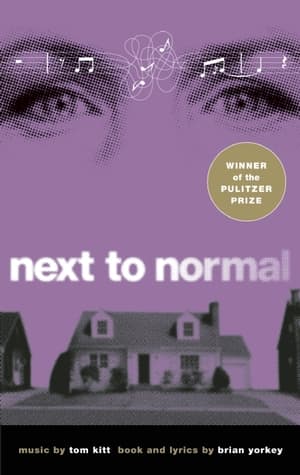
'Next to Normal' is a Pulitzer Prize-winning rock musical that explores the complexities of mental illness and its impact on a suburban family. It delves into themes of grief, trauma, and the often-challenging journey toward healing and acceptance.
Does 'Next to Normal' accurately portray mental illness?
Many mental health professionals and individuals with lived experience praise 'Next to Normal' for its raw and honest depiction of mental illness, particularly bipolar disorder and depression. It showcases the emotional toll on both the individual and their family, including the struggles with diagnosis, medication, and therapy.
What is the central conflict in 'Next to Normal'?
The central conflict revolves around Diana Goodman's struggle with bipolar disorder and the family's attempts to cope with her illness and the underlying grief that fuels it. It also explores the tension between conventional treatments and the desire for a 'normal' life.
How does 'Next to Normal' differ from other musicals about mental health?
'Next to Normal' stands out for its rock score, its unflinching portrayal of difficult subject matter without sugarcoating, and its focus on the ripple effect of mental illness throughout an entire family unit. It avoids simplistic answers, instead presenting a nuanced and often ambiguous path to recovery.
What kind of psychological concepts are explored in 'Next to Normal'?
The musical explores concepts such as grief and loss, trauma, the impact of mental illness on family dynamics, the efficacy and challenges of various psychiatric treatments (medication, electroconvulsive therapy), and the nature of memory and perception.
Is 'Next to Normal' suitable for all audiences?
'Next to Normal' deals with mature themes including mental illness, suicide ideation, and strong language. While critically acclaimed, its intense subject matter may not be appropriate for very young audiences or those sensitive to these topics.
What role does music play in 'Next to Normal'?
The rock-infused score is integral to 'Next to Normal,' serving not just to advance the plot but also to convey the characters' inner turmoil and emotional states. The music often mirrors Diana's fluctuating mental state and the family's escalating tension.
Does 'Next to Normal' offer hope for individuals dealing with mental illness?
While 'Next to Normal' doesn't offer a simple happy ending, it does suggest a path toward acceptance, understanding, and the possibility of living with mental illness. It emphasizes the importance of communication, support, and finding one's own version of 'normal,' even if it looks different than expected.
About the author

Brian Yorkey is an American playwright and lyricist, best known for the Pulitzer Prize-winning musical "Next to Normal." His work often explores complex family dynamics and mental health challenges with a blend of emotional depth and contemporary musicality. He has also penned lyrics for other notable stage productions.
Similar books
- A Grief Observed
C.S. Lewis
4.2 (58k) average on GoodreadsBiographyOffers a raw, introspective look at the disorienting and multifaceted experience of grief.
- The Glass Castle
Jeannette Walls
4.3 (903k) average on GoodreadsBiographyWalls' memoir, like 'Next to Normal,' explores family dysfunction and the impact of parental mental illness (specifically, the mother's undiagnosed bipolar disorder and the father's alcoholism). However, Walls' narrative focuses more on resilience and survival in the face of extreme poverty and neglect, with the mental illness serving as a backdrop to the family's unconventional lifestyle. 'Next to Normal' places mental illness and its treatment at the absolute forefront, delving deeply into the internal psychological conflicts and the direct, often devastating, consequences within a middle-class setting, offering a more focused examination of the illness itself rather than broader themes of social adversity and unconventional upbringing.
- The Perks of Being a Wallflower
Stephen Chbosky
4.2 (1.3M) average on GoodreadsPsychologyThrough letters, a shy high school freshman learns to navigate first love, trauma, and self-discovery, stepping off the sidelines and into life.
- Eleanor Oliphant Is Completely Fine
Gail Honeyman
4.3 (708k) average on GoodreadsLiterary FictionA lonely woman's structured life changes when an IT guy and an elderly man help her learn to open her heart.
- One Flew Over the Cuckoo's Nest
Ken Kesey
4.2 (631k) average on GoodreadsPsychologyIn a mind-bending asylum, the boisterous Randle McMurphy wages a defiant war against the tyrannical Nurse Ratched, inspiring his fellow inmates, including the seemingly catatonic Chief Bromden, to reclaim their lost humanity.
- The Bell Jar
Sylvia Plath
4.0 (591k) average on GoodreadsPsychologyIn the suffocating grip of 1950s expectations, a brilliant young woman's descent into mental illness is painted with such vivid, internal clarity that her 'insanity' feels terrifyingly rational and inevitable.





Enjoyed the summary?
A summary gives you the shape of the book. The book itself has the detail, the examples and the voice.
Find Next to Normal on AmazonAs an Amazon Associate, BookBrief earns from qualifying purchases. How we're funded