
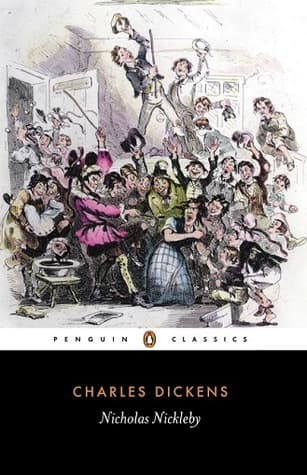
Synopsis
Covers the whole plot, including the ending.
- Difficulty
- Medium
- Pacing
- Variable
- Mood
- Outraged, Exuberant, Melancholy, Hopeful, Comic
- Read it if
- You love classic Dickensian tales of social injustice, good triumphing over evil, and a rich cast of memorable, often eccentric characters. Perfect for those who enjoy a sprawling narrative with both heartwarming moments and sharp social commentary.
- Skip it if
- You dislike lengthy 19th-century prose, stories with a large number of subplots, or explicit descriptions of cruelty and hardship, particularly involving children.
Nicholas Nickleby Plot Summary
Covers the whole plot, including the ending.
Nicholas's Family Ruined and Ralph's Cruelty
When his father dies, Nicholas Nickleby, his gentle mother, and his beautiful sister Kate become poor. With no other choice, they go to London to ask their uncle, Ralph Nickleby, a rich but known greedy and uncaring moneylender, for help. Ralph, wanting to avoid public shame and keep his social standing, reluctantly agrees to give minimal help. He gets Nicholas a job as an usher at a Yorkshire boarding school called Dotheboys Hall, run by the cruel Wackford Squeers. He also finds Mrs. Nickleby and Kate lodging in a run-down house. Ralph's true nature is clear right away as he treats his relatives with disrespect and plans to use Kate's beauty for his own social and financial gain, introducing her to his bad friends.
Dotheboys Hall and Smike's Plight
Nicholas travels to Dotheboys Hall, a lonely and dirty institution in Yorkshire. He is shocked by the brutal and uncaring treatment of the boys by the one-eyed headmaster, Wackford Squeers, and his equally cruel wife and children. The boys are starved, beaten, and not given any real education; they are basically slave labor. Among them is Smike, a sick, simple-minded, and always abused boy who has been at the school for years and seems to have no family. Nicholas feels sorry for Smike, offering him kindness and protection. He sees Squeers's cruelty directly and tries to help, but his efforts are met with anger and more abuse towards the boys, especially Smike. Nicholas's anger grows each day as he puts up with the bad conditions.
Nicholas Defies Squeers and Escapes with Smike
Nicholas reaches his limit when he finds Squeers savagely beating Smike for something he didn't do. Unable to stand the unfairness any longer, Nicholas bravely steps in, grabs Squeers, and gives him a severe beating, much to the other boys' joy. This act of defiance makes it impossible for him to stay working at Dotheboys Hall. Nicholas, with no money or clear place to go, decides to leave the school. Smike, who has become very devoted to Nicholas as his only protector, begs to go with him. Nicholas, moved by Smike's desperate plea and seeing his great need, agrees to take the boy with him, starting their journey as poor wanderers. They set off walking towards London, unsure of what their future holds.
Kate's Ordeals and Sir Mulberry Hawk's Harassment
Meanwhile, in London, Kate Nickleby finds herself more and more open to the advances of her uncle Ralph's bad friends. Ralph, using Kate to help his social goals, often puts her in the company of men like the wasteful Lord Frederick Verisopht and his bad friend, Sir Mulberry Hawk. Sir Mulberry becomes obsessed with Kate, harassing her constantly and shaming her in public. Despite Kate's distress and her mother's requests, Ralph does not care, even encouraging these men's attention for his own benefit. Kate's attempts to resist are met with scorn from Ralph, making her feel alone and unprotected in the corrupt society her uncle has introduced her to. She endures public insults and constant fear.
The Crummles Troupe and Theatrical Life
As Nicholas and Smike travel towards London, they meet Vincent Crummles, the manager of a country theater company. Crummles, impressed by Nicholas's looks and spirit, offers him a job as an actor and playwright. Nicholas, needing work and a safe place for Smike, accepts. They join the Crummles group, finding a lively, if strange, community. Nicholas quickly gets used to theater life, writing plays and acting with the Crummles family, including the 'Infant Phenomenon' Miss Ninetta Crummles. Smike also finds a small role and does well in the supportive environment; his health and spirits get better with Nicholas's care and the company's kindness. This time gives them a much-needed break from their problems and lets Nicholas see a different side of life.
Nicholas Returns to London and Confronts Hawk
News of Kate's suffering from Sir Mulberry Hawk eventually reaches Nicholas through letters from Newman Noggs, Ralph's clerk, who secretly feels for the Nicklebys. Angry about his sister's situation and his uncle's uncaring attitude, Nicholas immediately leaves the Crummles group and returns to London with Smike. He confronts Sir Mulberry Hawk in a public place, demanding that he stop harassing Kate. When Hawk responds with arrogance and insult, Nicholas publicly beats him, breaking his arm and completely humiliating him. This act of righteous anger makes Nicholas Kate's protector and earns him the respect of many, while making the bad feelings between him and his uncle, Ralph, even stronger, as Ralph sees Nicholas's actions as a challenge to his power.
The Cheerybles' Benevolence and New Opportunities
After confronting Sir Mulberry Hawk, Nicholas finds himself without a job but with a renewed resolve to support his family. By chance, he meets the kind Cheeryble brothers, Charles and Ned, rich and giving merchants. Impressed by Nicholas's honesty, good character, and his defense of his sister, the Cheerybles offer him a job in their office. They also extend their generosity to Smike, giving him a comfortable home and chances for education. This is a big change for Nicholas, offering him stability, respect, and the chance to build a new life for himself and his loved ones, free from Ralph Nickleby's plots and his past difficulties.
Smike's Identity and His Tragic Decline
As Smike settles into his new life with the Cheerybles, his past starts to appear. It is slowly revealed that he is the lost son of an unknown gentleman, left at Dotheboys Hall years ago. However, Smike's weak health, made worse by years of abuse and neglect, begins to decline quickly. Despite the loving care of Nicholas and the Cheerybles, he dies from consumption. Before his death, Smike admits his unreturned love for Kate Nickleby, a sad moment that shows his gentle nature and his deep connection to the family. His death is a deep sorrow for Nicholas, who had come to see Smike as a beloved brother, and a clear reminder of the cruelty he suffered at Dotheboys Hall.
The Discovery of Smike's Parentage and Ralph's Downfall
The full sadness of Smike's life is revealed soon after his death. Through the work of the Cheeryble brothers and their clerk, Tim Linkinwater, it is discovered that Smike was, in fact, Ralph Nickleby's son born outside of marriage, left at Dotheboys Hall by Ralph years ago to avoid public shame. This revelation is planned by Ralph's old friend, Gride, and the bad Arthur Gride, who had planned to get money from Ralph. The news upsets Ralph, not from fatherly grief, but because it shows his deep hypocrisy and cruelty to his own child. Facing financial ruin, public disgrace, and the heavy weight of his wrongdoings, Ralph Nickleby takes his own life, hanging himself in his lonely house. His death is the final result of his greed and heartlessness.
Happy Endings and Justice Served
With Ralph Nickleby's death and the truth about his badness revealed, the way is clear for the Nickleby family's happiness. Nicholas, having shown his worth and good character, marries the beautiful and good Madeline Bray, a young woman he had earlier helped save from an unwanted marriage to the old Arthur Gride, arranged by Ralph. Kate Nickleby, after going through her own difficulties, finds love and marries Frank Cheeryble, the nephew of the kind brothers who had helped her family so much. Wackford Squeers is eventually punished for his cruelty and fraud, and other smaller bad guys meet various bad ends. The novel ends with the Nickleby family settled in good fortune and happiness, showing their strength and goodness winning over trouble and evil.
Nicholas Nickleby Characters
Nicholas Nickleby
Protagonist
A virtuous young man who stands up against injustice and protects his family.
Nicholas is the embodiment of youthful idealism, courage, and moral integrity. After his father's death, he is thrust into the role of family protector, fiercely defending his mother and sister, Kate, against his cruel uncle, Ralph. His journey takes him from the horrific Dotheboys Hall, where he bravely confronts the villainous Squeers, to the theatrical world of the Crummles, and finally to a respectable position with the benevolent Cheeryble brothers. Nicholas is driven by a strong sense of justice and a deep love for his family, always prioritizing others' well-being over his own comfort or gain. He is quick to anger when witnessing injustice, but equally quick to show compassion and loyalty.
Relationships: Kate Nickleby (Devoted brother and protector); Smike (Caretaker, protector, and brother figure); Ralph Nickleby (Antagonistic uncle, source of much suffering); Madeline Bray (Wife and true love)
Ralph Nickleby
Antagonist
Nicholas's wealthy, avaricious, and cruel uncle who schemes against his family.
Ralph Nickleby is the central antagonist, a cold, calculating, and utterly heartless moneylender. His sole motivations are wealth accumulation and maintaining a veneer of respectability, which he uses to justify his abhorrent treatment of his family. He despises Nicholas and actively schemes to exploit Kate for social gain, showing no empathy for their suffering. Ralph is driven by pride and greed, viewing human relationships only in terms of financial advantage. His past secrets, particularly his abandonment of his illegitimate son, Smike, ultimately lead to his downfall. He represents the corrupting influence of unchecked avarice and social climbing.
Relationships: Nicholas Nickleby (Nephew, object of his hatred and schemes); Kate Nickleby (Niece, whom he attempts to exploit); Smike (Unrecognized and abandoned son); Newman Noggs (Disgruntled clerk, secretly working against him)
Kate Nickleby
Supporting
Nicholas's beautiful and virtuous sister, who endures harassment and hardship.
Kate is Nicholas's younger sister, gentle, beautiful, and possessing a strong sense of propriety. She suffers greatly under her uncle Ralph's 'protection,' enduring the unwanted advances and harassment of his dissolute acquaintances, particularly Sir Mulberry Hawk. Despite her vulnerability and the emotional toll of her experiences, Kate maintains her dignity and virtue. She is deeply loyal to her family and finds strength in her brother's love and protection. Her trials highlight the precarious position of women in 19th-century society, especially those without male protectors, and her resilience serves as a testament to her character.
Relationships: Nicholas Nickleby (Beloved and protective brother); Mrs. Nickleby (Daughter, often her only confidante); Frank Cheeryble (Husband and true love); Sir Mulberry Hawk (Tormentor)
Smike
Supporting
A simple-minded, abused orphan rescued by Nicholas, who is later revealed to be Ralph's son.
Smike is a pathetic, simple-minded, and sickly boy, the longest-suffering victim of Wackford Squeers's brutality at Dotheboys Hall. His years of neglect and abuse have left him emotionally and physically scarred, but he possesses a deep capacity for loyalty and affection. He idolizes Nicholas, who becomes his only friend and protector. Smike's tragic life and eventual death are central to the novel's critique of social injustice and highlight the devastating effects of cruelty. His unrequited love for Kate adds a layer of pathos to his character, and his true identity as Ralph Nickleby's abandoned son provides a crucial plot twist.
Relationships: Nicholas Nickleby (Protector, friend, and brother figure); Kate Nickleby (Object of his unrequited love); Ralph Nickleby (Unrecognized father and tormentor (through Squeers))
Wackford Squeers
Antagonist
The cruel, one-eyed headmaster of Dotheboys Hall, who starves and abuses his pupils.
Wackford Squeers is one of Dickens's most memorable villains, a grotesque and tyrannical figure who runs Dotheboys Hall, a school that is little more than a prison. He is characterized by his one eye, his brutal ignorance, and his insatiable greed. Squeers starves, beats, and exploits the boys entrusted to his care, using their fees for his own lavish lifestyle while denying them education and sustenance. His cruelty is systematic and chilling, representing the worst abuses of the unregulated boarding school system of the time. He is a foil to Nicholas's compassion and justice, and his eventual downfall brings a satisfying sense of poetic justice.
Relationships: Nicholas Nickleby (Employee turned adversary); Smike (Primary victim of his cruelty); Mrs. Squeers (Equally cruel wife and accomplice)
Mrs. Nickleby
Supporting
Nicholas and Kate's well-meaning but often oblivious and verbose mother.
Mrs. Nickleby is a character of comic relief, often lost in rambling, irrelevant anecdotes and self-pity. Despite her good intentions and love for her children, she is largely ineffectual and oblivious to the true dangers they face, particularly Kate's harassment. Her constant stream of consciousness and inability to grasp serious situations often exasperates Nicholas and Kate. While she is a source of frustration, she also provides moments of lightheartedness and demonstrates the resilience of a woman struggling to cope with poverty and social upheaval, albeit through a haze of self-absorption.
Relationships: Nicholas Nickleby (Son, whom she relies on); Kate Nickleby (Daughter, whom she often burdens with her anxieties)
Charles and Ned Cheeryble
Supporting
Benevolent and wealthy twin brothers who serve as Nicholas's benefactors.
The Cheeryble brothers are the epitome of Dickensian benevolence and philanthropy. These identical twin merchants are wealthy, kind-hearted, and genuinely dedicated to helping those in need. They provide Nicholas with employment, a home, and mentorship, acting as surrogate fathers. Their generosity extends to Smike and later to Madeline Bray, demonstrating their unwavering commitment to doing good. They represent the ideal of responsible wealth and active charity, contrasting sharply with Ralph Nickleby's avarice. Their jovial and optimistic nature brings warmth and hope to the narrative.
Relationships: Nicholas Nickleby (Employer and benefactor); Smike (Benefactor); Tim Linkinwater (Loyal and long-serving clerk); Frank Cheeryble (Nephew)
Sir Mulberry Hawk
Antagonist
A dissolute and arrogant rake who relentlessly harasses Kate Nickleby.
Sir Mulberry Hawk is a villainous aristocrat, a prime example of the corrupt and immoral upper class. He is a friend of Lord Frederick Verisopht and Ralph Nickleby's associate, known for his debauchery, arrogance, and cruelty. Hawk becomes obsessed with Kate Nickleby, relentlessly harassing her and attempting to ruin her reputation for his own amusement. He represents the social dangers faced by vulnerable women in society and the moral decay of certain segments of the aristocracy. His confrontation with Nicholas is a pivotal moment, showcasing Nicholas's courage and righteous anger against injustice.
Relationships: Kate Nickleby (Object of his harassment); Nicholas Nickleby (Adversary, who publicly thrashes him); Ralph Nickleby (Associate, who implicitly condones his actions)
Madeline Bray
Supporting
A beautiful and virtuous young woman, forced into an unwanted marriage, who becomes Nicholas's wife.
Madeline Bray is a beautiful, gentle, and artistically talented young woman who lives in poverty with her invalid father. She is forced by circumstances and Ralph Nickleby's machinations to consider marrying the wealthy but repulsive Arthur Gride to save her father from debtor's prison and secure their financial future. Madeline embodies quiet suffering and noble self-sacrifice. Her plight mirrors Kate's in some ways, highlighting the vulnerability of women. Nicholas is deeply drawn to her virtue and beauty, and his efforts to rescue her from her predicament solidify their bond, leading to their eventual marriage.
Relationships: Nicholas Nickleby (Husband and rescuer); Walter Bray (Devoted daughter to her invalid father); Arthur Gride (Unwanted suitor)
Newman Noggs
Supporting
Ralph Nickleby's eccentric and secretly compassionate clerk.
Newman Noggs is Ralph Nickleby's gaunt, eccentric, and perpetually disheveled clerk. Though outwardly subservient to Ralph, Noggs harbors a deep dislike for his master and a secret sympathy for the Nickleby family. He was once a gentleman who fell on hard times, and his past gives him a unique perspective on Ralph's villainy. Noggs acts as a crucial informant for Nicholas and Kate, providing them with warnings and information about Ralph's schemes. His erratic behavior and cryptic pronouncements often mask his genuine kindness and astute observations.
Relationships: Ralph Nickleby (Clerk, secretly antagonistic); Nicholas Nickleby (Secret ally and informant); Kate Nickleby (Secret ally and informant)
Nicholas Nickleby Themes
Social Injustice and Cruelty
This theme is present throughout, especially through the picture of Dotheboys Hall, where Wackford Squeers's brutal treatment of children, including starvation, beatings, and neglect, shows the terrible abuses in unregulated schools. Ralph Nickleby's greed and use of his own family, and the harassment Kate endures from bad rich men like Sir Mulberry Hawk, further show the widespread cruelty and lack of protection for the weak in society. Dickens uses these examples to criticize the system's failures and moral decay that let such unfairness happen.
“'We live and learn, but by no means do we learn that it is right to be cruel.”
Benevolence and Compassion
In strong contrast to the cruelty, the novel supports the power of kindness and caring. The Cheeryble brothers show this theme, offering unconditional kindness, jobs, and support to Nicholas and Smike, showing how wealth can be used for good. Nicholas himself, by protecting Smike and defending Kate, shows active compassion. These acts of kindness provide hope and in the end lead to good winning over evil, suggesting that individual acts of generosity can fight against social unfairness and bring back faith in people.
“The brothers Cheeryble were an estimable pair... whose hearts were as open as their purses.”
Family Bonds and Loyalty
The lasting strength of family ties, especially between Nicholas and Kate, is a main theme. Despite poverty, being separated, and their uncle Ralph's plots, their mutual love and loyalty stay strong. Nicholas's fierce protection of Kate and Smike (whom he treats as a brother) drives much of the story. Ralph's complete lack of family feeling, ending in the sad truth of his abandonment of his own son, acts as a dark opposite, showing the destructive results when these ties are missing or purposely broken. The novel in the end celebrates the healing power of true family connection.
“I shall never regret doing as I have—never, if I starve or beg in consequence”
Identity and Self-Discovery
Nicholas's journey is about finding himself, as he learns about the world's harsh realities and his own ability for courage and leadership. Smike's search for who he is and the eventual revealing of his parents are important to the story, showing how important it is to know where one comes from, even if sad. Ralph Nickleby's identity as a respectable man is in the end destroyed by the revealing of his true character and his past actions. The characters' true selves are shown through their actions under pressure, leading to either being saved or ruined.
“There is a world of agony in every thought of the past.”
Hypocrisy and Appearance vs. Reality
Many characters in the novel show a front that hides their true nature. Ralph Nickleby keeps an outward show of respectability and wealth while doing morally wrong things. Wackford Squeers presents Dotheboys Hall as a school, when in reality it is a place of torture and neglect. The 'fashionable' society Ralph introduces Kate to, with figures like Sir Mulberry Hawk, looks refined but is morally corrupt. Dickens consistently shows the emptiness and danger of valuing appearances over real goodness and honesty.
“He was a man of business, and nothing more.”
Plot Devices & Literary Techniques
The Journey as a Bildungsroman
Nicholas's travels serve as a journey of moral and personal development.
Nicholas's physical journey from London to Yorkshire, then back to London with the Crummles troupe, and finally settling with the Cheerybles, mirrors his moral and personal growth. Each location exposes him to different facets of society and forces him to confront injustice, develop resilience, and discover his own strength of character. This narrative structure allows Dickens to explore various social strata and allows Nicholas to mature from a naive youth into a responsible and virtuous man, ready for marriage and a stable life. The journey is not just geographical but an internal transformation.
The Doomed Orphan (Smike)
A recurring Dickensian archetype representing innocent suffering and social neglect.
Smike embodies the classic Dickensian 'doomed orphan' trope. His character serves to highlight the extreme cruelty and neglect prevalent in certain institutions and society's failure to protect its most vulnerable. His pathetic state, deep loyalty to Nicholas, and tragic decline evoke immense sympathy from the reader. Furthermore, the revelation of his true parentage as Ralph Nickleby's son adds a powerful layer of dramatic irony and moral condemnation to Ralph's character, making Smike's suffering even more poignant and impactful on the narrative's themes of justice and retribution.
Comic Relief Characters
Eccentric figures providing humor and social commentary amidst the melodrama.
Dickens masterfully intersperses the novel's serious themes and melodramatic plot with a range of eccentric and often verbose characters who provide significant comic relief. Mrs. Nickleby's rambling monologues, Newman Noggs's odd habits and cryptic pronouncements, and the entire Crummles theatrical troupe with their exaggerated theatricality, all serve to lighten the tone. These characters not only offer humor but also often subtly comment on social foibles or, in Noggs's case, provide crucial insights and aid to the protagonists, demonstrating Dickens's ability to blend humor with purpose.
Symbolism of Names
Character names often reflect their personality or role.
Dickens frequently uses symbolic names to provide immediate insight into his characters. 'Ralph Nickleby' suggests a 'niggardly' or miserly nature. 'Wackford Squeers' evokes the idea of 'squeezing' or exploiting the boys under his charge, and the 'wack' implies a brutal beating. The 'Cheeryble' brothers are explicitly named to reflect their cheerful and benevolent dispositions. This device allows Dickens to quickly establish character traits and reinforce thematic elements, guiding the reader's perception of good and evil within the narrative.
Nicholas Nickleby Quotes
“The world is a lively place, where much goes on, and where people of all sorts are to be met with.”
“There are no such things as small acts of kindness. Every act of kindness is a giant.”
“It is an old saying, and a true one, that a living dog is better than a dead lion.”
“Subdue your appetites, my dears, and you've conquered human nature.”
“Poverty and such misfortunes as these, are not new to me; and I can bear them, and bear up against them, as I have borne them many a time before.”
“But it is the way of the world, that when a man has got a good name, he may be as bad as he likes, and nobody will believe it.”
“The greatest pleasure I know, is to do a good action by stealth, and to have it found out by accident.”
“There are some men who are never merry when they are sober, and who are never sober when they are merry.”
“The course of true love never did run smooth.”
“He was a man who, if he had a good thought, was sure to keep it to himself.”
“A man who had been soaked in water, and powdered with flour, and covered with soot, and whitewashed with lime, would have looked like a bride by comparison.”
“Money makes the man, and want of it the fellow.”
“The law is a ass—a idiot.”
“He was a creature of habit, and of the worst habits.”
Quiz
10 questions on the plot and the characters. Each answer comes with a short explanation.
Question 1
What is the primary reason Nicholas Nickleby seeks help from his uncle Ralph after his father's death?
- To inherit a portion of his father's estate held by Ralph.
- To find work for himself and secure protection for his mother and sister.
- To borrow a large sum of money to start a new business.
- To seek revenge on those who wronged his family.
Show answer
B. To find work for himself and secure protection for his mother and sister. After his father's death, Nicholas, left penniless, appeals to his wealthy uncle Ralph to help him find work and to protect his mother and sister, as stated in the book's description.
Question 2
Which of the following characters is described as the 'tyrannical headmaster of Dotheboys Hall'?
- Mr. Crummles
- Ralph Nickleby
- Wackford Squeers
- Smike
Show answer
C. Wackford Squeers The book description explicitly names Wackford Squeers as 'the tyrannical headmaster of Dotheboys Hall, a school for unwanted boys'.
Question 3
What is Dotheboys Hall primarily known for?
- A prestigious boarding school for the gentry.
- A school for unwanted boys run by a tyrannical headmaster.
- A charitable institution providing free education to orphans.
- A training academy for aspiring actors.
Show answer
B. A school for unwanted boys run by a tyrannical headmaster. The text states that Dotheboys Hall is 'a school for unwanted boys' overseen by the tyrannical Wackford Squeers, highlighting its negative nature.
Question 4
How does Nicholas Nickleby's uncle, Ralph Nickleby, treat Nicholas and his family?
- He offers them generous financial support and a comfortable home.
- He proves hard-hearted and unscrupulous, forcing Nicholas to make his own way.
- He helps Nicholas find a respectable position in his own business.
- He arranges for Nicholas's sister to marry into a wealthy family.
Show answer
B. He proves hard-hearted and unscrupulous, forcing Nicholas to make his own way. The description clearly states that Ralph Nickleby 'proves both hard-hearted and unscrupulous, and Nicholas finds himself forced to make his own way in the world'.
Question 5
Who is Smike, and what is his relationship with Nicholas?
- Smike is a wealthy benefactor who helps Nicholas financially.
- Smike is a fellow actor in Mr. Crummles's troupe, a rival to Nicholas.
- Smike is a slow-witted orphan rescued by Nicholas from Dotheboys Hall.
- Smike is Nicholas's long-lost brother who appears later in the story.
Show answer
C. Smike is a slow-witted orphan rescued by Nicholas from Dotheboys Hall. The summary identifies Smike as 'the slow-witted orphan, rescued by Nicholas', indicating a relationship of protector and protected.
Question 6
What kind of individuals do Mr and Mrs Crummles represent in Nicholas's adventures?
- Strict moral guardians who guide Nicholas.
- Gloriously theatrical figures, including their 'infant phenomenon' daughter.
- Ruthless businessmen who exploit Nicholas's talents.
- Scholarly academics who offer Nicholas a teaching position.
Show answer
B. Gloriously theatrical figures, including their 'infant phenomenon' daughter. Mr and Mrs Crummles are described as representing 'the gloriously theatrical Mr and Mrs Crummles and their daughter, the 'infant phenomenon'' within the gallery of rogues and eccentrics.
Question 7
Which of the following themes is explicitly highlighted as characteristic of 'Nicholas Nickleby' and many of Dickens's novels?
- The triumph of industrial innovation over tradition.
- Outrage at cruelty and social injustice.
- The pursuit of romantic love above all else.
- The importance of class distinctions in society.
Show answer
B. Outrage at cruelty and social injustice. The text states, 'Like many of Dickens's novels, Nicholas Nickleby is characterised by his outrage at cruelty and social injustice'.
Question 8
The quote 'I shall never regret doing as I have—never, if I starve or beg in consequence' likely reflects Nicholas's determination after which event?
- His initial appeal to Ralph Nickleby for assistance.
- His decision to rescue Smike and leave Dotheboys Hall.
- His first successful performance with the Crummles's troupe.
- His father's death, leaving him penniless.
Show answer
B. His decision to rescue Smike and leave Dotheboys Hall. The quote emphasizes a choice made with strong moral conviction despite potential hardship. Rescuing Smike from the cruel Dotheboys Hall, defying the established (though corrupt) system, is a key moment of moral action for Nicholas, aligning with the spirit of the quote.
Question 9
What aspect of Dickens's writing genius is highlighted in 'Nicholas Nickleby' alongside his social commentary?
- His meticulous historical research and factual accuracy.
- His use of experimental narrative structures.
- His flamboyantly exuberant work and comic genius.
- His focus on psychological realism and internal monologues.
Show answer
C. His flamboyantly exuberant work and comic genius. The description notes that while characterized by outrage at injustice, the novel 'is also a flamboyantly exuberant work, revealing his comic genius at its most unerring'.
Question 10
The phrase 'gallery of rogues and eccentrics' primarily refers to which group of characters Nicholas encounters?
- Only the members of Nicholas's immediate family.
- The various individuals Nicholas meets throughout his adventures, such as Squeers and the Crummles.
- The wealthy elite of London society that Nicholas aspires to join.
- The corrupt politicians and lawyers Nicholas battles in court.
Show answer
B. The various individuals Nicholas meets throughout his adventures, such as Squeers and the Crummles. The text states that Nicholas's 'adventures gave Dickens the opportunity to portray an extraordinary gallery of rogues and eccentrics: Wackford Squeers... and the gloriously theatrical Mr and Mrs Crummles', indicating this refers to the diverse characters he meets on his journey.
Nicholas Nickleby FAQ
What is Nicholas Nickleby about?
Nicholas Nickleby follows the titular young man who, after his father's death, must find work to support his mother and sister, Kate. He encounters his cruel uncle, Ralph Nickleby, who exploits his family, leading Nicholas on a journey through various challenging employments and meeting a memorable cast of characters, from tyrannical schoolmasters to theatrical performers, all while striving to protect his loved ones and uphold his moral integrity.
Why should I read Nicholas Nickleby?
You should read Nicholas Nickleby for its vibrant portrayal of Victorian society, its scathing critique of social injustice and cruelty, particularly in the education system, and its rich tapestry of unforgettable characters. Dickens's 'comic genius at its most unerring' shines through, offering both outrage and exuberant humor, making for a deeply engaging and emotionally resonant read.
What is the background/setting of Nicholas Nickleby?
The novel is set in 1830s England, primarily London, but also takes Nicholas to Yorkshire where he works at Dotheboys Hall. It vividly depicts the stark contrasts of the era, from the poverty and exploitation faced by vulnerable individuals to the burgeoning theatrical world and the dark underbelly of usury and social climbing among the wealthy.
What are the most memorable quotes?
One memorable quote is Nicholas's declaration: 'I shall never regret doing as I have—never, if I starve or beg in consequence,' encapsulating his unwavering moral compass. Another is Wackford Squeers's cynical 'We go upon the practical mode of teaching, Nickleby; the regular mode. C-l-e-a-n, clean, verb active, to make clean. To make a boy clean. If he'd been a common boy, I'd have pegged him and made him clean himself.'
What writing style does the author use?
Dickens employs a rich, descriptive, and often satirical writing style, characterized by long, intricate sentences and a wide vocabulary. He masterfully blends dramatic narrative with vivid character sketches, social commentary, and moments of profound pathos and exuberant comedy. His use of hyperbolic description and distinctive speech patterns for each character is a hallmark.
What minor details add significant meaning?
The repeated motif of characters being 'driven' or 'broken' by circumstances, like Smike's physical and emotional state at Dotheboys Hall, subtly highlights the pervasive social cruelty. Also, the seemingly minor business dealings of Ralph Nickleby, initially appearing just as financial machinations, are crucial to the eventual unraveling of his dark secrets and connections.
What are some subtle foreshadowing moments?
The early, almost casual mentions of Ralph Nickleby's past and his general disdain for family connections subtly foreshadow his deeper, more sinister secrets regarding Smike's parentage. Similarly, the lingering sense of unease whenever Kate Nickleby is in Ralph's company hints at the severe dangers and exploitation she will face under his 'protection.'
What unexpected character connections exist?
One of the most significant unexpected connections is the revelation that Smike, the abused orphan rescued by Nicholas, is actually Ralph Nickleby's estranged son. This twist profoundly impacts the narrative, providing a tragic dimension to Ralph's villainy and a poignant link between Nicholas's two primary antagonists.
What are unspoken character motivations?
Ralph Nickleby's unspoken motivation, beyond simple greed, appears to be a deep-seated bitterness and resentment stemming from his own past, which manifests as a desire to control and inflict misery on others, particularly those he perceives as weak or dependent. His actions toward Nicholas and Kate are driven by a need to assert power and a perverse satisfaction in others' suffering.
What psychological complexities do characters exhibit?
Nicholas exhibits a complex blend of youthful idealism and a strong sense of justice, tempered by moments of despair and frustration when faced with overwhelming evil. Ralph Nickleby is a study in destructive pride and self-loathing, projecting his internal misery outwards, while Smike grapples with trauma and a profound yearning for belonging and kindness.
What are the major emotional turning points?
A major emotional turning point is Nicholas's confrontation with Wackford Squeers at Dotheboys Hall, leading to Squeers's thrashing and Nicholas's subsequent departure, marking his definitive break from exploitative employment. Another is the tragic death of Smike, which deeply affects Nicholas and brings to light the full extent of Ralph's inhumanity, solidifying Nicholas's resolve to fight for justice.
How do relationship dynamics evolve?
The relationship between Nicholas and his uncle Ralph deteriorates from hopeful dependency to bitter antagonism as Nicholas realizes Ralph's true, malicious nature. Conversely, Nicholas's bond with Smike transforms from a compassionate rescue to a deep, brotherly affection and loyalty. The family dynamic between Nicholas, Kate, and their mother strengthens through shared hardship and mutual support.
Which parts remain ambiguous or open-ended?
While the main plotlines are resolved, some readers might debate the ultimate efficacy of the social reforms implied by the novel's ending. Though Dotheboys Hall is shut down, the broader systems that allowed such cruelty to flourish are only partially addressed, leaving questions about the enduring nature of social injustice in England.
What are controversial scenes or decisions?
Nicholas's decision to physically assault Wackford Squeers, while satisfying to readers, could be seen as controversial for its depiction of vigilantism, even against a truly wicked character. Also, the rapid fall and demise of Ralph Nickleby, though deserved, might be debated as a somewhat melodramatic resolution to his complex villainy.
Nicholas Nickleby ending explained: how it ends & what it means
The novel concludes with justice prevailing: Ralph Nickleby's villainy is exposed, particularly his cruel abandonment of his son Smike, leading to his suicide. Nicholas marries Madeline Bray, Kate marries Frank Cheeryble, and the Nickleby family finds happiness and prosperity, living by their moral principles. The ending signifies the triumph of virtue, kindness, and communal support over greed and malice, showcasing Dickens's belief in human goodness and the power of love and family.
About the author
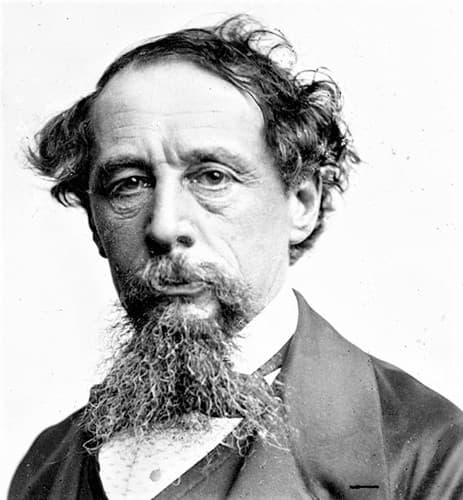
Charles John Huffam Dickens was an English writer and social critic who created some of the world's best-known fictional characters and is regarded by many as the greatest novelist of the Victorian era. His works enjoyed unprecedented popularity during his lifetime and, by the 20th century, critics and scholars had recognised him as a literary genius. His novels and short stories are widely read today.
Similar books
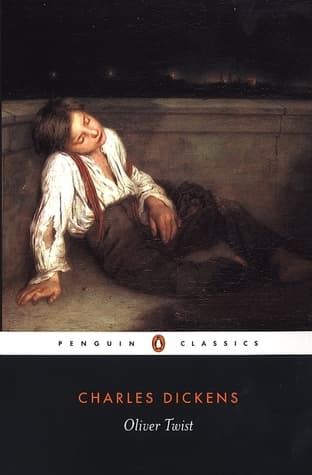
- Oliver Twist
Charles Dickens
3.9 (319k) average on GoodreadsHistorical FictionExplores similar themes of orphanhood, social injustice, and the struggle of good against a corrupt world.
- David Copperfield
Charles Dickens
4.0 (199k) average on GoodreadsHistorical FictionA bildungsroman featuring a young protagonist navigating hardships and encountering a wide array of distinctive characters.
- Vanity Fair
William Makepeace Thackeray
3.8 (118k) average on GoodreadsHistorical FictionA sprawling social satire with a large cast, exposing the hypocrisies and cruelties of society.
- Jane Eyre
Charlotte Brontë
4.1 (1.6M) average on GoodreadsHistorical FictionBoth feature orphaned protagonists facing adversity in cruel institutions. However, Jane Eyre offers deeper psychological interiority and feminist consciousness, focusing on individual agency, whereas Nicholas Nickleby is more outwardly focused on exposing systemic social ills through a broader cast and more overt moral lessons.
- To Kill a Mockingbird
Harper Lee
4.3 (4.5M) average on GoodreadsHistorical FictionIn the 1930s Jim Crow South, Harper Lee writes about racial injustice, moral growth, and the quiet courage of a lawyer father, Atticus Finch, as seen through his young daughter's eyes.
- The Great Gatsby
F. Scott Fitzgerald
3.9 (3.8M) average on GoodreadsHistorical FictionIn the opulent Roaring Twenties, a mysterious millionaire's lavish parties hide his desperate, tragic pursuit of a lost love, exposing the emptiness within the American Dream.


Enjoyed the summary?
A summary gives you the shape of the book. The book itself has the detail, the examples and the voice.
Find Nicholas Nickleby on AmazonAs an Amazon Associate, BookBrief earns from qualifying purchases. How we're funded