
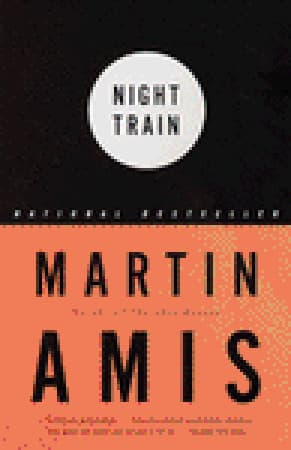
Synopsis
Covers the whole plot, including the ending.
- Difficulty
- Medium
- Pacing
- Moderate
- Mood
- Dark, Philosophical, Existential, Cynical
- Read it if
- You enjoy literary fiction with a strong philosophical bent, disguised as a detective novel.
- Skip it if
- You prefer straightforward mystery plots with clear-cut resolutions and traditional happy endings.
Night Train Plot Summary
Covers the whole plot, including the ending.
The Call and the Scene
The novel begins with Detective Mike Hoolihan, a homicide detective, receiving a call about a presumed suicide. The victim is Jennifer Rockwell, the accomplished daughter of Colonel Tom Rockwell, Mike's former boss and friend. Mike arrives at Jennifer's apartment, which is neat and shows no sign of struggle. Jennifer is dead in her bed, with a single gunshot wound and a .38 revolver in her hand. The scene points to suicide, a conclusion Mike is ready to accept.
Colonel Tom's Plea
Despite the clear scene, Colonel Tom Rockwell insists his daughter, Jennifer, would not kill herself. He is a man of strong beliefs, and his grief comes with fierce denial. He asks Mike, as a trusted friend, to investigate thoroughly, to look beyond the obvious, and to prove Jennifer was murdered. Mike, out of loyalty to Colonel Tom, reluctantly agrees to look closer at Jennifer's death, even though she first believed it was suicide.
Jennifer's Perfect Life
Mike starts by looking into Jennifer Rockwell's life. Jennifer was a brilliant astrophysicist, an author, a musician, and a beautiful, smart woman. Her life seemed to be a perfect collection of achievements and good relationships. Everyone admired her, and there were no obvious signs of depression, money problems, or relationship issues that might lead to suicide. This 'perfect' image starts to bother Mike, as it offers no reason for ending such an ideal life. This makes Colonel Tom's suspicions seem more reasonable.
Interrogating the Inner Circle
Mike interviews Jennifer's closest contacts: her boyfriend, Brad; her best friend, Carol; and her university colleagues. Brad, a seemingly devoted partner, is upset but gives no information that changes the suicide theory. Carol describes Jennifer as happy. The interviews consistently show Jennifer as a well-adjusted, successful woman, making it hard for Mike to find any flaws in the perfect image that might suggest foul play or hidden despair.
The Missing Piece
As Mike looks deeper, she finds small inconsistencies. While Jennifer was known for her astrophysics work, Mike uncovers hints of a secret, theoretical project Jennifer was working on, separate from her public research. This project, involving complex math and philosophical ideas, seemed to consume her in her final weeks. Details are few and hard to understand, but they suggest a hidden intellectual struggle or discovery that might have played a role in her death. This moves the investigation beyond simple personal motives.
The Philosophical Undercurrent
Mike, a practical detective, deals with the increasingly abstract nature of Jennifer's research. Jennifer's secret work explored the basic nature of reality, perception, and the universe—topics far from typical homicide cases. Mike begins to wonder if Jennifer's deep intellectual pursuits led her to a revelation so disturbing or profound that it drove her to take her own life. The investigation changes from looking for a killer or motive to exploring existential despair and the limits of human understanding.
The Letter
During her continued search of Jennifer's apartment, Mike finds a hidden document. It is not a traditional suicide note, but a series of philosophical thoughts and mathematical equations. This 'letter' is personal and abstract, showing Jennifer's intellectual obsessions. It mentions 'darkness at the heart of things' and 'the unbearable lightness of being,' hinting at a deep disappointment or a terrifying discovery. The document does not explicitly state suicide or murder, but it reveals a mind struggling with large, perhaps overwhelming, ideas.
The Revelation of Meaninglessness
By carefully analyzing Jennifer's notes and talking to her academic peers, Mike starts to understand Jennifer's secret project. Jennifer had reached a profound, yet bleak, scientific and philosophical conclusion: the ultimate meaninglessness of the universe and human existence. Her work had removed all comforting illusions, leaving her with an unbearable void. This discovery, rather than an outside threat, becomes the most likely explanation for her death—a 'suicide of the intellect' rather than a crime of passion.
Confronting Colonel Tom
With her understanding of Jennifer's final intellectual journey, Mike returns to Colonel Tom Rockwell. She explains that Jennifer was not murdered by someone else. Instead, she succumbed to the weight of her own groundbreaking, yet devastating, philosophical conclusions. Mike explains how Jennifer's genius led her to a truth so stark and meaningless that she could no longer live. Colonel Tom, a man who believes in clear answers and justice, struggles with this abstract, personal explanation. He finds it almost as hard to accept as the idea of murder.
The Burden of Knowledge
The case deeply affects Mike Hoolihan. She grapples with the idea that the deepest mysteries are not always crimes, but existential questions. Jennifer Rockwell's death forces Mike to examine her own understanding of life, death, and purpose. The 'night train' becomes a symbol for the steady march of time and the unavoidable encounter with difficult truths. Mike, a tough detective, is left with a sense of how fragile human meaning is and the destructive power of absolute knowledge, a burden she must now carry.
Night Train Characters
Mike Hoolihan
Protagonist
A pragmatic, world-weary homicide detective investigating Jennifer Rockwell's death.
Mike Hoolihan is a fifteen-year veteran of the police force, having worked her way up from walking a beat to homicide. She is cynical and tough, with a no-nonsense approach to her work, accustomed to the gritty realities of crime. Despite her hardened exterior, she possesses a deep sense of loyalty and a keen intellect, allowing her to delve into the complex philosophical underpinnings of Jennifer Rockwell's case. She is a solitary figure, often reflecting on the nature of her job and the darkness she encounters.
Relationships: Colonel Tom Rockwell (Former superior, long-time friend, and grieving father who requests her help.)
Jennifer Rockwell
Victim/Central Figure
A brilliant astrophysicist whose apparent suicide drives the plot.
Jennifer Rockwell is the deceased daughter of Colonel Tom Rockwell. She is portrayed as exceptionally beautiful, intelligent, and accomplished, a 'darling of the community' with a stellar career as an astrophysicist, a published author, and a talented musician. Her life appears perfect, devoid of any obvious troubles. However, beneath this flawless surface lies a profound intellectual journey that leads her to devastating philosophical conclusions, ultimately culminating in her death. She is the enigma Mike Hoolihan must unravel.
Relationships: Colonel Tom Rockwell (Her father, who refuses to believe she committed suicide.); Brad (Her boyfriend, distraught by her death.); Carol (Her best friend.)
Colonel Tom Rockwell
Supporting
Jennifer's proud father and Mike's former superior, who insists his daughter was murdered.
Colonel Tom Rockwell is a respected career police officer, now holding a top brass position. He is a man of immense pride, conviction, and deep paternal love for his daughter, Jennifer. His grief over her death is compounded by a fierce denial of suicide, which he views as an affront to Jennifer's character and his family's honor. He trusts Mike Hoolihan implicitly, relying on her to prove his daughter was murdered, unable to fathom a more abstract, internal reason for her demise. He represents the human need for concrete answers and justice.
Relationships: Jennifer Rockwell (His deceased daughter, whom he fiercely believes was murdered.); Mike Hoolihan (Former subordinate and trusted friend, whom he tasks with finding the 'killer'.)
Brad
Supporting
Jennifer Rockwell's distraught boyfriend, initially a person of interest.
Brad is Jennifer Rockwell's boyfriend, appearing genuinely distraught and grief-stricken by her death. He provides Mike Hoolihan with information about Jennifer's routine and character, largely reinforcing the image of a happy, successful woman. He is cooperative with the investigation but offers no clues that point towards foul play or deep-seated unhappiness in Jennifer, further complicating Mike's initial assumptions. His role is primarily to provide context to Jennifer's personal life from an intimate perspective.
Relationships: Jennifer Rockwell (Her boyfriend.)
Carol
Supporting
Jennifer Rockwell's best friend, who describes her as vibrant and happy.
Carol is Jennifer Rockwell's closest friend, providing another perspective on Jennifer's character. Like Brad, she describes Jennifer as a vibrant, intelligent, and content individual, completely dispelling any notions of depression or hidden turmoil. Her testimony further solidifies the public perception of Jennifer's flawless life, making the idea of suicide even more perplexing. Carol's interactions with Mike help to build the initial portrait of Jennifer as someone with no apparent reason to end her life.
Relationships: Jennifer Rockwell (Her best friend.)
Night Train Themes
The Nature of Truth and Reality
The novel explores how truth is subjective, hard to find, and sometimes too much to bear. Mike Hoolihan, a detective used to facts, must face a truth about Jennifer Rockwell's death that goes beyond the physical into the philosophical. Jennifer's scientific research into the universe's basic nature leads her to a truth about existence that is so deep and bleak it destroys her. The story suggests some truths, once found, cannot be forgotten and can have terrible results, challenging what we call 'reality.'
“The truth is, some things are too terrible to know. And once you know them, you can't unknow them.”
Existential Despair and Meaninglessness
A main theme is the heavy burden of existential despair that comes from facing life's perceived lack of meaning. Jennifer Rockwell's journey as an astrophysicist leads her to a scientific and philosophical conclusion that removes all comforting ideas of purpose. Her suicide is not from outside pressures or personal failures, but a direct result of her intellectual discovery of a universe without inherent meaning. This theme shows the human struggle to find purpose in a vast, uncaring cosmos and how smart people can be broken by such discoveries.
“She had found the darkness at the heart of things, and it had swallowed her whole.”
The Limits of Human Understanding
The story questions the limits of human understanding and the dangers of seeking knowledge to its absolute end. Jennifer Rockwell's genius goes beyond normal scientific study into areas that touch on the metaphysical. This ultimately leads her to a truth her mind cannot handle. Mike Hoolihan, despite her street smarts and detective skills, feels out of her depth in the abstract world of astrophysics and philosophy. The theme suggests some knowledge is too vast or too bleak for the human mind to process without breaking, implying a natural limit to what we can truly understand.
“Some truths are not meant for human eyes, not meant for human minds.”
Appearance vs. Reality
The novel skillfully contrasts outward appearances with hidden realities. Jennifer Rockwell's life seems perfect: beautiful, smart, successful, and admired. This perfect image at first misleads Mike Hoolihan, suggesting no reason for suicide. But as the investigation deepens, Mike uncovers a deep inner world of intellectual struggle and existential crisis hidden beneath the polished surface. The theme highlights how external perfection can hide deep internal trouble, and how easily appearances can trick us, making the true nature of a person or situation hard to see.
“The perfect surface often hides the deepest cracks.”
Plot Devices & Literary Techniques
The Unreliable Narrative Voice (of Mike Hoolihan's initial assumptions)
Mike's early conclusions about suicide are challenged and subverted.
Mike Hoolihan, a seasoned detective, initially approaches Jennifer Rockwell's death as a straightforward suicide, based on her experience and the immediate evidence. Her internal monologue and initial assessments guide the reader towards this conclusion. However, as the investigation progresses, these initial assumptions are systematically dismantled by the emerging evidence of Jennifer's intellectual journey. This device creates suspense and forces the reader to question their own preconceived notions about what constitutes a 'case,' mirroring Mike's own evolving understanding.
The Perfect Victim/Life
Jennifer Rockwell's seemingly flawless existence creates an immediate mystery.
Jennifer Rockwell is presented as an almost impossibly perfect individual: brilliant, beautiful, successful, and universally admired, with no apparent enemies or personal troubles. This 'perfect' life functions as a significant plot device because it immediately contradicts the idea of suicide and makes a conventional murder motive nearly impossible to find. Her perfection forces Mike Hoolihan and the reader to look beyond typical criminal motives and delve into more abstract, philosophical explanations for her death, thereby elevating the mystery beyond a simple whodunit.
Philosophical Detective Work
The investigation shifts from criminal forensics to abstract intellectual inquiry.
This device involves Mike Hoolihan, a pragmatic police detective, having to engage with complex philosophical and scientific concepts to solve the case. Instead of tracking down physical clues or interviewing suspects about tangible motives, Mike must decipher Jennifer Rockwell's abstruse academic notes and understand the existential implications of her research. This shift transforms the mystery from a conventional crime procedural into an intellectual puzzle, where the 'weapon' is knowledge itself and the 'motive' is a profound, unbearable truth about existence, rather than a human perpetrator.
The 'Night Train' Metaphor
Symbolizes the relentless progression of time and the journey towards inevitable, often dark, truths.
The recurring motif of the 'night train' serves as a powerful metaphor throughout the novel. It represents the relentless, unstoppable march of time, the inevitable journey towards discovery, and the often-dark, uncomfortable truths that one must confront. For Mike Hoolihan, it symbolizes her solitary pursuit of truth, pushing forward into the unknown. For Jennifer Rockwell, it can be seen as her intellectual journey into the void of meaninglessness. The train’s constant motion evokes a sense of fate and predestination, as if the characters are being carried towards an inescapable destination.
Night Train Quotes
“The past is a foreign country; they do things differently there.”
“I was born on a train, and I expect to die on a train.”
“The world is full of people who are not what they seem.”
“Every secret comes to light, eventually.”
“There's a kind of peace in knowing the worst.”
“Love is a battlefield, and I'm losing the war.”
“The city never sleeps, and neither do its problems.”
“Sometimes the most obvious explanation is the right one, and sometimes it's a clever misdirection.”
“We are all just trying to make sense of the chaos.”
“The silence can be louder than any scream.”
“Beauty is a curse when it's all you have.”
“You can't outrun your past, no matter how fast you go.”
“Every lie leaves a trail, if you know where to look.”
“The night train carries more than just passengers; it carries their stories.”
Quiz
10 questions on the plot and the characters. Each answer comes with a short explanation.
Question 1
What is the primary initial assumption about Jennifer Rockwell's death?
- She was murdered by an unknown assailant.
- She died from a tragic accident.
- She committed suicide.
- She was killed by her father, Colonel Tom.
Show answer
C. She committed suicide. The initial assessment by Detective Mike Hoolihan and the general belief is that Jennifer Rockwell took her own life, leading Mike to be ready to 'put the case down' as suicide.
Question 2
Who requests Detective Mike Hoolihan to 'take a second look' at Jennifer Rockwell's case?
- Jennifer's mother
- A district attorney
- Colonel Tom, Jennifer's father
- Mike's superior officer
Show answer
C. Colonel Tom, Jennifer's father Colonel Tom, Jennifer's father and a respected career cop, asks his longtime colleague and friend, Mike Hoolihan, to re-examine the case because he doesn't believe his daughter committed suicide.
Question 3
What is Detective Mike Hoolihan's professional background before the Rockwell case?
- She only worked in homicide.
- She started as a beat cop, moved to robbery, and then homicide.
- She was primarily an internal affairs investigator.
- She worked exclusively in forensics.
Show answer
B. She started as a beat cop, moved to robbery, and then homicide. The description states that Mike Hoolihan, a fifteen-year veteran, 'has gone from walking a beat, to robbery, to homicide,' indicating her varied experience.
Question 4
Which of the following literary techniques is highlighted as a key element of Martin Amis's style in 'Night Train'?
- Extensive use of stream-of-consciousness narrative.
- Fusing brilliant wordplay with classic whodunit elements.
- Minimalist prose and stark realism.
- Frequent breaking of the fourth wall.
Show answer
B. Fusing brilliant wordplay with classic whodunit elements. The synopsis explicitly mentions Amis 'fusing brilliant wordplay with all the elements of the classic whodunit,' making this a defining characteristic.
Question 5
What is the central theme that Amis explores regarding 'surfaces' in the novel?
- The beauty of superficial appearances.
- That surfaces are always trustworthy, regardless of perfection.
- Surfaces are suspect, no matter how perfect they appear.
- The importance of maintaining perfect public images.
Show answer
C. Surfaces are suspect, no matter how perfect they appear. The summary states Amis 'exposes a world where surfaces are suspect (no matter how perfect),' indicating a theme of distrust in appearances.
Question 6
How does the novel portray the concept of 'paranoia'?
- As an irrational and baseless fear.
- As a justified response, no matter how pervasive.
- As a minor character flaw that is easily overcome.
- As a symptom of a weak mind.
Show answer
B. As a justified response, no matter how pervasive. The text explicitly states that Amis exposes a world 'where paranoia is justified (no matter how pervasive),' suggesting that suspicion and distrust are often warranted.
Question 7
What is Jennifer Rockwell's social standing or reputation within the community?
- She was an outcast and troublemaker.
- She was known as the 'darling of the community'.
- She was a reclusive artist.
- She was an ordinary, unremarkable citizen.
Show answer
B. She was known as the 'darling of the community'. Jennifer Rockwell is described as the 'darling of the community,' highlighting her respected and beloved status, which makes her presumed suicide even more shocking.
Question 8
What is the implied consequence for 'power and pride' in the world Amis portrays?
- They are ultimately rewarded and celebrated.
- They are brought low by the hidden recesses of our humanity.
- They are irrelevant to the outcome of events.
- They are the only things that truly matter.
Show answer
B. They are brought low by the hidden recesses of our humanity. The summary indicates that 'power and pride are brought low by the hidden recesses of our humanity,' suggesting that deeper, darker aspects of human nature ultimately undermine these traits.
Question 9
How does Martin Amis's focus on America in 'Night Train' compare to his other works?
- It is his first novel ever set in America.
- His focus on America is compared to his celebrated novel 'Money'.
- He rarely writes about America, making this an anomaly.
- His American focus is consistently present in all his novels.
Show answer
B. His focus on America is compared to his celebrated novel 'Money'. The description states, 'Not since his celebrated novel Money has Amis turned his focus on America to such remarkable effect,' highlighting a significant return to an American setting and theme.
Question 10
What is the relationship between Detective Mike Hoolihan and Colonel Tom prior to the investigation?
- They are complete strangers.
- They are professional rivals.
- They are longtime colleagues and friends.
- Mike is Tom's direct subordinate.
Show answer
C. They are longtime colleagues and friends. The text describes Mike Hoolihan as a 'longtime colleague and friend of Colonel Tom,' which is why he feels comfortable asking her to re-examine the case.
Night Train FAQ
What is the central mystery Mike Hoolihan investigates in 'Night Train'?
Detective Mike Hoolihan investigates the apparent suicide of Jennifer Rockwell, the daughter of her colleague and friend, Colonel Tom. Initially inclined to close the case as a suicide, Mike reopens it at Colonel Tom's insistence, delving into the perplexing circumstances surrounding Jennifer's death.
Who is Jennifer Rockwell and why is her death so impactful?
Jennifer Rockwell is the seemingly perfect daughter of Colonel Tom, a respected figure in the police force. Her death is impactful not only due to her father's prominence but also because it challenges the community's perception of her and the stability of their world, raising questions about hidden truths beneath pristine surfaces.
Describe Mike Hoolihan's background and her initial reaction to Jennifer's case.
Mike Hoolihan is a fifteen-year veteran detective, having worked beats, robbery, and homicide. Her initial reaction to Jennifer's death is to classify it as a suicide and close the case, viewing it as a straightforward, albeit tragic, conclusion, until Colonel Tom's plea changes her approach.
What role does Colonel Tom play in the narrative?
Colonel Tom is Jennifer's grieving father and a high-ranking police official. He acts as the catalyst for Mike's deeper investigation, refusing to accept the suicide verdict and using his personal connection to Mike to compel her to uncover the truth, whatever it may be.
How does 'Night Train' subvert the typical 'whodunit' genre?
'Night Train' subverts the typical 'whodunit' by focusing less on a clear perpetrator and more on the psychological landscape, the ambiguity of truth, and the pervasive paranoia within the characters and the setting. It uses the mystery as a vehicle to explore deeper themes of human nature and societal decay.
Are there any subtle clues early in the investigation that hint at deeper complexities beyond a simple suicide?
Yes, subtle clues emerge, such as the meticulous staging of the scene, the lack of a clear motive for suicide in Jennifer's seemingly perfect life, and the conflicting accounts from those who knew her. These details, initially dismissed, begin to accumulate, suggesting a more elaborate scenario.
Does the book establish any significant connections between Mike Hoolihan's past and the current investigation?
While not explicitly stated as a direct plot link, Mike's extensive experience with the darker aspects of humanity from her years on the force subtly informs her perspective. Her jaded view allows her to see through superficial appearances, connecting her past observations to the current case's underlying deceit.
How does Amis use language to create a sense of unease or hidden meaning in the text?
Amis uses brilliant wordplay and a distinctive authorial voice, often employing irony, cynicism, and a sharp, observational tone. This linguistic style creates a pervasive sense of unease, making even seemingly innocuous descriptions feel loaded with hidden meaning and suspicion, reflecting the novel's thematic paranoia.
What psychological impact does the investigation have on Mike Hoolihan?
The investigation deeply unsettles Mike, eroding her initial cynicism and forcing her to confront the fragility of truth and the capacity for deception in people she knows. It challenges her professional detachment, making the case 'get under her skin' more than any before, leading to a profound psychological shift.
How does the novel explore the psychology of grief, particularly through Colonel Tom?
The novel explores Colonel Tom's grief as a complex mix of denial, pride, and a desperate need for control. His inability to accept Jennifer's suicide stems from both paternal love and a deep-seated professional need for order and accountability, driving his relentless pursuit of a different truth.
To what extent does 'Night Train' delve into the psychology of the 'perfect' facade often presented in society?
'Night Train' extensively delves into the psychology of the 'perfect' facade, using Jennifer Rockwell's seemingly ideal life as a prime example. It suggests that such perfection often conceals deep-seated anxieties, secrets, and an internal struggle, demonstrating how societal expectations can lead to profound internal conflict and deception.
What is the significance of the title 'Night Train' in the context of the book's themes?
The title 'Night Train' can be interpreted as a metaphor for the journey into the dark, hidden aspects of human nature and society. It suggests an unstoppable, often unsettling progression into the unknown, mirroring Mike's relentless descent into the murky truths surrounding Jennifer's death.
How does the novel critique or comment on American society?
Through its focus on surfaces being suspect and pervasive paranoia, 'Night Train' offers a biting critique of American society. It exposes the corruption beneath polished exteriors, the fragility of community ideals, and the corrosive effects of power and pride within seemingly stable institutions like the police force.
Is the ending of 'Night Train' definitive, or does it leave room for ambiguity and debate?
The ending of 'Night Train' is intentionally ambiguous, leaving considerable room for debate and interpretation. It provides a resolution but one that is unsettling and leaves the reader questioning the absolute truth, aligning with the novel's overarching theme that definitive answers are often elusive in a world of deception.
How does Amis's use of a female protagonist, Mike Hoolihan, influence the narrative's perspective?
Amis's choice of Mike Hoolihan as a female protagonist provides a unique perspective, allowing for a nuanced exploration of gender dynamics within a male-dominated police force. Her experiences as a veteran detective offer a jaded yet perceptive lens through which to view the moral complexities and hidden corruptions of the world she navigates.
What is the novel's ultimate message about truth and justice?
The novel suggests that absolute truth is often elusive and subjective, particularly when obscured by pride, power, and personal agendas. Justice, therefore, becomes a complex and often compromised pursuit, with the 'truth' revealed being less about clear-cut answers and more about confronting uncomfortable realities and the dark recesses of humanity.
Are there any characters besides Jennifer Rockwell and Colonel Tom who prove crucial to Mike's understanding of the case?
Yes, various peripheral characters, including Jennifer's friends, colleagues, and other police personnel, provide fragmented pieces of information and conflicting perspectives. These individuals, through their biases and hidden motives, become crucial in building a complex mosaic that challenges Mike's initial assumptions and deepens the mystery.
How does the novel explore themes of control and loss of control?
The novel explores themes of control through Colonel Tom's desperate attempts to manage the narrative of his daughter's death and Mike's professional need for order. Conversely, the loss of control is evident in Jennifer's fate, the unraveling of the 'perfect' life, and Mike's growing realization that some truths are beyond simple categorization or resolution.
About the author
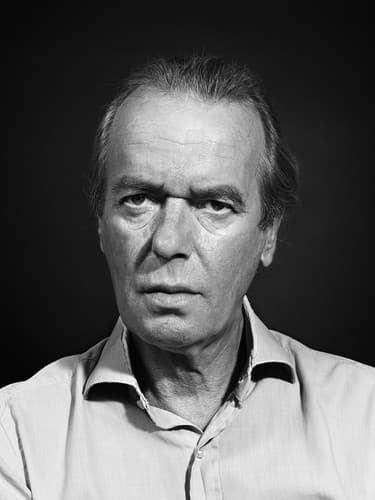
Sir Martin Louis Amis was an English novelist, essayist, memoirist, and screenwriter. He is best known for his novels Money (1984) and London Fields (1989). He received the James Tait Black Memorial Prize for his memoir Experience and was twice listed for the Booker Prize. Amis served as Professor of Creative Writing at the University of Manchester's Centre for New Writing from 2007 until 2011. In 2008, The Times named him one of the fifty greatest British writers since 1945.
Similar books
- The Big Sleep
Raymond Chandler
4.0 (126k) average on GoodreadsThrillerClassic hard-boiled detective style with complex characters and moral ambiguity.
- The Stranger
Albert Camus
4.1 (3k) average on GoodreadsFantasyExploration of existentialism and the absurd, though in a different genre.
- Money
Martin Amis
3.7 (23k) average on GoodreadsThrillerShares Amis's distinctive prose, dark humor, and focus on modern society's anxieties.
- The Old Man and the Sea
Ernest Hemingway
3.8 (831k) average on GoodreadsLiterary FictionA Cuban fisherman's long struggle with a giant marlin becomes a story of endurance and dignity, now retold for young adults with illustrations, phonetic guides, and writing prompts in Traditional Chinese.
- One Hundred Years of Solitude
Gabriel García Márquez
4.1 (753k) average on GoodreadsLiterary FictionThrough the multi-generational story of the Buendía family, a mythical town deals with the repeating patterns of time, love, and solitude, as the extraordinary mixes with the ordinary.
- The Goldfinch
Donna Tartt
3.9 (720k) average on GoodreadsLiterary FictionHaunted by a tragic explosion and clutching a stolen Dutch masterpiece, a young orphan navigates the opulent drawing rooms of New York and the gritty underbelly of the art world, desperately seeking connection and redemption amidst a life spiraling into crime and obsession.






Enjoyed the summary?
A summary gives you the shape of the book. The book itself has the detail, the examples and the voice.
Find Night Train on AmazonAs an Amazon Associate, BookBrief earns from qualifying purchases. How we're funded