
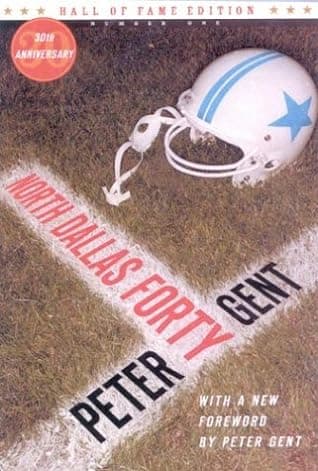
Synopsis
Covers the whole plot, including the ending.
- Difficulty
- Medium
- Pacing
- Moderate
- Mood
- Gritty, Cynical, Disillusioned, Raw
- Read it if
- You're interested in a gritty, unvarnished look at the dark underbelly of professional sports in the 1970s, exploring themes of exploitation, addiction, and rebellion.
- Skip it if
- You prefer sanitized, heroic sports narratives or are sensitive to explicit language, drug use, and cynical portrayals of athletes.
North Dallas Forty Plot Summary
Covers the whole plot, including the ending.
The Morning After
The novel opens with Phil Elliott, a wide receiver for the North Dallas Bulls, waking up in a haze after a night of heavy drinking and drug use. His body is a wreck, full of injuries from years of professional football – a broken nose, bad knees, and general soreness that never truly goes away. He thinks about the superficiality of his life and the lives of his teammates, many of whom also rely on pills and alcohol to cope with the pain and pressure of their careers. Phil’s girlfriend, Charlotte, is tired of his self-destructive habits and the constant presence of football in their lives. He struggles to get out of bed, the physical toll of the game always with him.
Practice and Performance
Phil goes to practice, a routine of pain and forced friendship. Coach Johnson, a quiet and demanding figure, pushes the players hard, caring about winning above all else, often at the expense of their long-term health. Phil watches how his teammates cope: some, like Seth Maxwell, the star quarterback, are charming but also depend on substances; others are quiet, their suffering kept inside. During drills, Phil is very aware of the risk of more injury, but the competitive drive and the habit of playing through pain override his concerns. Practice is a small example of their lives: intense, physically punishing, and lacking real emotional connection.
The Team Doctor and the Pill Mill
After practice, Phil visits the team doctor, a man who easily gives out painkillers, muscle relaxers, and stimulants without much concern for the players' health. This scene shows the drug culture built into professional football. Phil, like many of his teammates, has become dependent on these medications to function, both on and off the field. The doctor's office is full of injured players, all seeking temporary relief from their physical pain. Phil thinks about the irony of being paid well to destroy his body while being given the tools to numb the consequences, further blurring the lines between treatment and addiction.
Life Off the Field
Phil attends a team party, a social event meant to show success and glamour, but which quickly becomes a wild display of excess. He watches the wives and girlfriends, many of whom are as lost and dependent as the players themselves. Conversations are superficial, full of locker-room talk and hidden worries. Phil feels detached, an observer in his own life. He sees Seth Maxwell's easy charm and magnetic personality, but also the underlying emptiness that drives his pleasure-seeking life. The party is a clear reminder that even off the field, the players are still performing, keeping up a facade for themselves and the public.
Charlotte's Ultimatum
Charlotte, fed up with Phil's self-destructive behavior and the all-consuming nature of his football career, gives him an ultimatum. She tells him she loves him deeply but cannot keep watching him destroy himself. She wants a life with him that goes beyond football, a future free from constant pain, pills, and superficiality. This confrontation makes Phil seriously consider his choices and their effect on those he cares about. He knows her concerns are valid but feels trapped by his profession's demands and the identity he has built around it. The conversation leaves him torn between his love for Charlotte and his ingrained commitment to the game.
The Game Day Ritual
Game day arrives, a mix of nervous energy and practiced routine. Phil goes through his pre-game rituals, which include a careful regimen of painkillers and injections to numb his various injuries. He thinks about the physical and psychological toll of each game, knowing that every play could be his last. The locker room is tense, filled with a mix of bravado and quiet worry. Coach Johnson gives a rousing, though clichéd, speech, reinforcing the team's win-at-all-costs mentality. Phil puts on his pads, his body protesting, but his mind focused on the task ahead, on the temporary escape the game itself provides.
On the Field
The game itself is a blur of intense physicality, strategic plays, and moments of both pain and excitement. Phil makes important catches, takes brutal hits, and experiences the brief high of success. He watches his teammates' ferocity, the opposition's cunning, and the raw, animalistic nature of professional football. Despite the pain, there are moments of pure athletic grace and teamwork that remind him why he plays. However, these moments are mixed with the constant awareness of his body breaking down, the knowledge that each collision takes a toll. The crowd's roar, the pressure to perform, and the sheer violence of the sport combine into an overwhelming sensory experience.
Post-Game Reckoning
After the game, win or lose, the immediate aftermath is a mixture of exhaustion and pain. Phil's body aches in new places, and old injuries flare up. The locker room shows both celebration and quiet suffering. The team management, represented by the general manager and owner, offers pleasantries and empty promises, showing little real concern for the players' long-term health. Phil overhears discussions about player trades and contract negotiations, reinforcing the idea that players are ultimately disposable. He begins to question the value of sacrificing his body for a system that seems to care so little about the individuals involved.
A Glimmer of Hope
In the quiet moments after the game, Phil thinks about Charlotte's ultimatum and his growing disappointment with the football lifestyle. He realizes that his identity has become tied to the game, but that this identity is slowly destroying him. The thought of a life free from pain, constant pressure, and the superficiality of the football world begins to take hold. He imagines a future with Charlotte, one where he can pursue other interests and live a more authentic life. This contemplation is not easy, as leaving football means abandoning everything he has known, but the desire for a healthier, more meaningful existence starts to outweigh the fear of the unknown.
The End of the Season
As the season ends, the North Dallas Bulls' performance, while not disastrous, disappoints the demanding management. Phil continues to play through pain, his body showing his resilience and the sport's brutality. He observes the fate of other players – some are cut, others face uncertain futures. The final game is played, and post-season discussions begin. Phil receives a contract offer, but also the clear reality of what another year of football would mean for his deteriorating body and his relationship with Charlotte. The decision weighs heavily on him, representing a choice between a familiar, painful path and an uncertain, but potentially healthier, future.
A New Path
After much internal struggle and a deep conversation with Charlotte, Phil makes the important decision to retire from professional football. This choice is not made lightly; it means walking away from the only life he has ever truly known, the fame, the friendship, and the adrenaline. However, the prospect of a future free from chronic pain, drug dependency, and the dehumanizing aspects of the sport ultimately wins. He tells the team management of his decision; they react with a mix of pretended disappointment and practical indifference. Phil steps away from the game, ready to start a new chapter with Charlotte, uncertain of what lies ahead but hopeful for a life of real connection and well-being.
North Dallas Forty Characters
Phil Elliott
Protagonist
A cynical but introspective wide receiver for the North Dallas Bulls.
Phil Elliott is a veteran wide receiver whose body is a testament to the brutal demands of professional football. He is intelligent and observant, keenly aware of the superficiality and self-destruction rampant among his teammates and within the sport's culture. Despite his cynicism, he possesses a deep capacity for love, particularly for Charlotte, which ultimately drives his desire for a better life. He struggles with addiction to painkillers and alcohol, using them to cope with constant physical pain and the existential emptiness of his career. His internal monologues reveal a thoughtful man trapped in a physically demanding, emotionally stunted world.
Relationships: Charlotte (Long-term girlfriend, his moral compass and reason for change.); Seth Maxwell (Teammate and star quarterback, a charismatic but equally self-destructive friend.); Coach Johnson (Head coach, a demanding and emotionally distant authority figure.)
Charlotte
Supporting
Phil's strong-willed and loving girlfriend, who pushes him towards a healthier life.
Charlotte is Phil's anchor to reality and his moral compass. She is intelligent, independent, and deeply in love with Phil, but she refuses to enable his self-destructive behavior. She represents a life outside of football's suffocating grip, offering Phil a vision of genuine connection and well-being. Her frustration with his lifestyle is born out of love and a desire for him to live a full, healthy life. She is not afraid to confront him, making it clear that she will not stand by and watch him destroy himself for a game that gives him little in return.
Relationships: Phil Elliott (Long-term girlfriend, his primary emotional support.)
Seth Maxwell
Supporting
The charismatic star quarterback of the North Dallas Bulls, equally prone to excess.
Seth Maxwell is the quintessential football hero – talented, charming, and a magnetic personality both on and off the field. He is the star quarterback, admired by fans and teammates alike. However, beneath the veneer of success, Seth is as lost and self-destructive as Phil, relying heavily on alcohol, drugs, and women to fill an emotional void. He embodies the glamorous yet ultimately empty lifestyle of many professional athletes, demonstrating that even at the top, the pressures and temptations can be overwhelming. He is a friend to Phil, but their bond is often superficial, built around shared experiences of excess.
Relationships: Phil Elliott (Teammate and friend, sharing a bond through the football lifestyle.)
Coach Johnson
Antagonist
The demanding and unyielding head coach of the North Dallas Bulls.
Coach Johnson is a stern, authoritarian figure who embodies the ruthless, win-at-all-costs mentality of professional football. He is emotionally detached from his players, viewing them as cogs in a machine designed to win. His speeches are often clichés, focused solely on victory and discipline, with little regard for the players' long-term health or well-being. He represents the institutional indifference to player welfare, prioritizing team success over individual suffering. His presence reinforces the oppressive environment in which Phil and his teammates operate, making his character a symbolic representation of the system.
Relationships: Phil Elliott (Coach-player relationship, characterized by professional demands and emotional distance.)
Jo Bob
Supporting
A tough and loyal lineman, a close friend and confidant to Phil.
Jo Bob is a formidable offensive lineman, known for his toughness and unwavering loyalty. He is one of Phil's closest friends on the team, and they share a bond forged in the trenches of professional football. Like Phil, Jo Bob is aware of the sport's toll on their bodies and minds, but he approaches it with a more stoic, resigned acceptance. He provides a grounded perspective, often offering quiet support and understanding to Phil. He represents the hardworking, often overlooked players who endure immense physical sacrifice without the same glamour as the star players.
Relationships: Phil Elliott (Close teammate and friend.)
O.W. Shaddock
Supporting
The team owner, a shrewd businessman who views players as assets.
O.W. Shaddock is the wealthy and powerful owner of the North Dallas Bulls. He embodies the corporate, profit-driven aspect of professional sports. Shaddock views his players as investments and commodities, with their health and well-being secondary to the team's financial success and public image. He is detached and manipulative, often making decisions that benefit the organization financially, even if it means sacrificing player welfare. His interactions highlight the power imbalance between players and ownership, reinforcing the theme of exploitation.
Relationships: Phil Elliott (Owner-player relationship, defined by power dynamics and economic interests.)
The Team Doctor
Mentioned
The physician who readily dispenses painkillers to players.
The unnamed team doctor represents the complicity of the medical establishment in enabling the drug culture within professional football. He is portrayed as someone who prioritizes keeping players on the field over their long-term health, freely prescribing painkillers, muscle relaxants, and other medications. His role highlights the systemic issue of over-medication and the pressure placed on medical staff to facilitate player performance, regardless of the consequences.
Relationships: Phil Elliott (Doctor-patient relationship, characterized by the doctor's readiness to prescribe drugs.)
North Dallas Forty Themes
The Dehumanizing Nature of Professional Sports
The novel clearly shows how professional football treats players as disposable goods. Phil and his teammates are valued only for their physical performance, with their long-term health, emotional well-being, and personal lives largely ignored by management and coaches. The constant pressure to play through pain, the systemic over-medication, and the indifference of the owners (like O.W. Shaddock) all contribute to players feeling used up and discarded. This is seen in scenes where players easily receive painkillers from the team doctor, or when Phil overhears discussions about trades, reinforcing the idea that they are merely assets.
“They bought your body and they owned your mind.”
Addiction and Self-Destruction
A common theme is the widespread use of drugs and alcohol among players to cope with physical pain, emotional emptiness, and career pressures. Phil's reliance on painkillers and his heavy drinking, mirrored by Seth Maxwell's pleasure-seeking, illustrate the destructive cycle. The team doctor's easy dispensing of pills highlights how the system itself encourages this addiction. The characters are caught in a spiral of seeking temporary relief, which only worsens their long-term problems, blurring the lines between treatment and abuse. This struggle is central to Phil's internal conflict and his eventual decision to leave the game.
“The pills were a crutch, a way to make it through the day, through the game, through the pain.”
The Illusion of Glamour vs. Harsh Reality
The novel contrasts the public view of professional football as glamorous and heroic with the harsh, often brutal reality players experience. While there are moments of athletic glory and cheering crowds, these are overshadowed by constant physical pain, emotional isolation, and the superficiality of their lives off the field. Team parties, for instance, are shown as empty displays of excess rather than real social connection. This theme is explored through Phil's cynical observations and his growing disappointment with the 'dream' of professional sports.
“It was a pretty picture, a beautiful lie, and everybody bought it.”
The Search for Authenticity and Identity
Phil's journey is a search for his true self beyond his identity as a football player. He realizes that the game has defined him, but also that it is slowly consuming him. His relationship with Charlotte offers a glimpse of a more authentic life, built on real connection and personal well-being rather than physical performance and fleeting fame. His internal struggles involve letting go of the identity imposed by the sport and finding a purpose not tied to physical ability or others' approval. His decision to retire is the ultimate act of reclaiming his identity.
“He wanted to be more than just a body, more than just a number.”
Plot Devices & Literary Techniques
Internal Monologue
Phil Elliott's thoughts and reflections provide deep insight into his struggles.
Phil Elliott's extensive internal monologues are a primary narrative device. They allow the reader to delve into his cynical observations, his physical and emotional pain, his reflections on the football world, and his growing disillusionment. These monologues reveal his intelligence, his awareness of the system's flaws, and his struggle with self-destruction. They are crucial for understanding his motivations and the emotional weight of his eventual decision to leave football, providing depth beyond the surface-level action.
Foil Characters
Characters like Seth Maxwell highlight Phil's internal conflict and choices.
Seth Maxwell serves as a significant foil to Phil Elliott. While both are talented athletes deeply embedded in the destructive football culture, Seth embraces the hedonistic lifestyle without Phil's same level of introspection or desire for change. Seth's effortless charm and continued descent into excess highlight Phil's growing awareness and his eventual choice to seek a different path. By presenting a character who remains unchanged, the novel emphasizes the significance of Phil's personal evolution and the difficult nature of breaking free from the system.
Symbolism of Physical Pain and Injury
Player injuries symbolize the dehumanizing cost of professional football.
The constant physical pain and numerous injuries suffered by Phil and his teammates serve as a powerful symbol throughout the novel. Each ache, bruise, and broken bone represents the literal and metaphorical cost of playing professional football. It highlights the dehumanizing aspect of the sport, where players' bodies are sacrificed for entertainment and profit. The reliance on painkillers to mask this pain further underscores the theme of self-destruction and the systemic disregard for player welfare, making the body a direct metaphor for the damaged lives of the athletes.
The Game Itself as a Metaphor
The football game symbolizes the larger struggles of life and the human condition.
Beyond being a literal event, the football game itself functions as a metaphor for the larger struggles and absurdities of life. The brutal collisions, strategic maneuvers, and fleeting moments of success and failure mirror the characters' personal battles. The win-at-all-costs mentality of the game reflects the ruthless competition and exploitation present in the wider world. It represents a confined, intense environment where individuals push their limits, often at great personal cost, for a reward that may ultimately prove hollow, echoing the existential crises faced by the players.
North Dallas Forty Quotes
“Every time you run out there, it's like going to war. You get beaten, battered, and bruised, and then you get up and do it again next Sunday.”
“The game was the only thing that mattered, and it was a game that destroyed you, piece by piece, until there was nothing left but a memory of what you once were.”
“We were gladiators, but our arena was made of plastic grass and our lions were other men, just as damaged and desperate as we were.”
“Winning was everything, but what did you win when you lost yourself in the process?”
“They owned us, body and soul. We were commodities, to be used up and discarded when our usefulness ran out.”
“The pain was a constant companion, a dull ache that never truly went away, only faded enough to let you forget it for a while.”
“We lived in a world of artificial turf and synthetic smiles, where the truth was as rare as a clean hit.”
“There was a certain beauty in the violence, a brutal ballet of colliding bodies and shattered dreams.”
“Every Sunday was a test of will, a battle against your own body and the men trying to break it.”
“The money was good, but it didn't buy you back the parts of yourself you left on the field.”
“We were heroes on Sunday and forgotten men by Monday, until the next game, the next chance to prove ourselves.”
“The locker room was a sanctuary and a cage, a place where you could be yourself and where you were constantly judged.”
“It wasn't just a game; it was a way of life, a brutal, beautiful, self-destructive way of life.”
“You learned to live with the fear, to embrace it, to let it drive you, because the alternative was to quit, and quitting wasn't an option.”
Quiz
10 questions on the plot and the characters. Each answer comes with a short explanation.
Question 1
What is the name of the protagonist and starting wide receiver for the North Dallas Bulls?
- Jo Bob Williams
- Seth Maxwell
- Phil Elliott
- O.W. Shaddock
Show answer
C. Phil Elliott Phil Elliott is the central character, a wide receiver struggling with injuries and disillusionment.
Question 2
What is Phil Elliott's primary physical complaint throughout the eight days depicted in the novel?
- A chronic shoulder injury
- Constant knee pain
- Migraine headaches
- A broken hand
Show answer
B. Constant knee pain Phil's knee pain is a recurring issue, highlighting the physical toll of professional football.
Question 3
Which player is characterized by his heavy reliance on painkillers and his 'controlled' wildness on the field?
- Jo Bob Williams
- Seth Maxwell
- O.W. Shaddock
- Phil Elliott
Show answer
D. Phil Elliott Phil Elliott himself is heavily reliant on various medications to manage his pain and keep playing, embodying the theme of athletes pushing through injury.
Question 4
What is the general attitude of the coaching staff and management towards the players' well-being in the novel?
- Highly supportive and concerned for long-term health
- Indifferent, viewing players as expendable commodities
- Focused on holistic player development
- Actively involved in player rehabilitation and therapy
Show answer
B. Indifferent, viewing players as expendable commodities The management and coaching staff are largely depicted as uncaring, prioritizing wins over player health, viewing them as disposable assets.
Question 5
What significant event occurs during the team's stay at the hotel before the big game that highlights their hedonistic lifestyle?
- A team-wide prayer meeting
- A raucous party involving drugs and women
- A serious tactical meeting with the coaches
- An intensive film study session
Show answer
B. A raucous party involving drugs and women The hotel party before the game is a key plot point illustrating the players' off-field excesses and the team's lax discipline.
Question 6
Which character is the talented, charismatic quarterback who often feels disconnected from the more 'blue-collar' players?
- Jo Bob Williams
- Phil Elliott
- Seth Maxwell
- O.W. Shaddock
Show answer
C. Seth Maxwell Seth Maxwell is the star quarterback, often portrayed as a more aloof and intellectual figure compared to his teammates, despite their close bond.
Question 7
What is the underlying theme regarding masculinity and vulnerability among the football players in the novel?
- That true masculinity requires suppressing all emotional and physical pain.
- That vulnerability is openly accepted and discussed within the team.
- That emotional expression is encouraged as a sign of strength.
- That seeking help for mental health issues is a common practice.
Show answer
A. That true masculinity requires suppressing all emotional and physical pain. The book heavily emphasizes the societal and team pressure on players to hide pain and emotion, equating vulnerability with weakness, a core theme of toxic masculinity in sports.
Question 8
What is the team owner's primary motivation, as depicted in the novel?
- Player welfare and community engagement
- Winning at all costs, regardless of player sacrifice
- Promoting sportsmanship and fair play
- Developing new football strategies
Show answer
B. Winning at all costs, regardless of player sacrifice The owner is portrayed as solely focused on winning and profit, viewing players as interchangeable parts in his business, reflecting the harsh realities of professional sports.
Question 9
How does the novel portray the relationship between the players and their wives/girlfriends?
- As universally stable and supportive partnerships.
- As often strained, with women feeling neglected or used.
- As completely separate from their football lives.
- As a source of constant encouragement and understanding.
Show answer
B. As often strained, with women feeling neglected or used. The relationships are often depicted as fraught with tension, as the women struggle with the players' lifestyle, injuries, and emotional unavailability.
Question 10
What is the ultimate fate of Phil Elliott by the end of the eight days?
- He signs a lucrative new contract and feels rejuvenated.
- He makes a full recovery from his injuries and continues playing without pain.
- He is effectively 'used up' by the system, facing an uncertain and likely painful future.
- He decides to become a coach and mentor new players.
Show answer
C. He is effectively 'used up' by the system, facing an uncertain and likely painful future. By the end, Phil Elliott is portrayed as a player whose body is broken and whose spirit is weary, facing the harsh reality of being discarded by the system once his usefulness wanes.
North Dallas Forty FAQ
What is the central premise of 'North Dallas Forty'?
'North Dallas Forty' follows the grueling eight-day stretch in the life of Phil Elliott, a veteran wide receiver for the North Dallas Bulls. The book delves into the physical and emotional toll of professional football, exposing the rampant drug use, casual sex, and general disillusionment that permeate the team's culture, particularly as they prepare for a crucial upcoming game.
Who is Phil Elliott and what is his role in the story?
Phil Elliott is the protagonist, a cynical yet intelligent wide receiver who is increasingly alienated by the commercialism and brutal physicality of the game. He serves as the primary lens through which the reader experiences the team's decadent lifestyle, his internal monologues often providing sharp critiques of the system and the people within it.
What kind of team are the North Dallas Bulls portrayed as?
The North Dallas Bulls are depicted as a highly successful but morally bankrupt organization, driven by winning at all costs, regardless of the players' well-being. They are a microcosm of the ruthlessness in professional sports, where players are seen as commodities and loyalty is fleeting, especially from the coaching staff and ownership.
What major themes does the novel explore?
The novel explores themes of disillusionment with the American Dream, the destructive nature of hyper-masculinity, the commodification of athletes, and the search for meaning in a brutal, hedonistic environment. It also tackles the pervasive use of painkillers and other drugs as a coping mechanism for the physical demands of the sport.
How does the book's setting in the 1970s influence its portrayal of football?
The 1970s setting is crucial, reflecting an era before widespread player unions and increased awareness of long-term health consequences. This allows for a raw, unfiltered depiction of players' vulnerability to team owners and coaches, and the casual acceptance of drug use and injuries as part of the game's culture.
What is the significance of the character Seth Maxwell?
Seth Maxwell, the star quarterback, embodies the charismatic yet self-destructive alpha male within the team. His seemingly effortless success on the field contrasts with his personal recklessness and detachment, serving as a foil to Phil's more introspective and critical perspective.
Are there any subtle critiques of military culture embedded in the football narrative?
The book subtly draws parallels between football and military culture, particularly in its emphasis on rigid hierarchy, unquestioning obedience, and the dehumanization of individuals for the sake of the collective goal. The language used by coaches often mirrors military rhetoric, reinforcing the idea of players as soldiers in a brutal war.
What role do the female characters, like Charlotte, play in the story?
Female characters, particularly Charlotte, often serve as glimpses into a potential life outside the brutal world of football, offering Phil moments of genuine connection and intellectual stimulation. However, they also highlight the difficulty of sustaining relationships amidst the players' transient, hedonistic lifestyles and emotional unavailability.
How does Phil Elliott's intelligence and cynicism manifest throughout the narrative?
Phil's intelligence is evident in his sharp, often sarcastic internal monologues and his ability to articulate the absurdities and injustices of the football world. His cynicism is a defense mechanism, protecting him from the emotional toll of the game and the superficiality of many of his teammates and superiors.
Discuss the psychological impact of constant physical pain on the players.
The constant physical pain forces players into a cycle of drug dependency and emotional numbness. Psychologically, it blurs the line between playing through injury and self-destruction, leading to a diminished sense of self-worth outside their athletic performance and a profound fear of obsolescence.
How does the pressure to perform affect the players' mental state?
The relentless pressure to perform, coupled with the constant threat of career-ending injury or being cut, creates immense psychological stress. This manifests in anxiety, paranoia, and a desperate need for escape, often sought through partying, sex, and drugs, further exacerbating their mental health issues.
What is the psychological significance of the locker room environment?
The locker room is a crucible of hyper-masculinity, where vulnerability is suppressed and conformity is enforced. It's a place of both camaraderie and intense competition, where identities are forged and broken, and individual pain is often dismissed in favor of team unity, leading to psychological isolation for many.
Is 'North Dallas Forty' ultimately a condemnation of professional football or a nuanced critique?
While the book harshly exposes the dark underbelly of professional football, it's more of a nuanced critique than a wholesale condemnation. It acknowledges the allure and the genuine camaraderie while simultaneously dissecting the systemic issues that corrupt the sport and its participants, offering a complex view of both its appeal and its destructiveness.
How does the novel challenge traditional notions of masculinity?
The novel challenges traditional masculinity by showing its destructive side: the suppression of emotion, the reliance on aggression, and the pressure to conform to a 'tough guy' image. Phil Elliott, despite being a football player, often subverts these norms with his introspection and vulnerability, questioning the very ideals his profession embodies.
What is the intended message about the 'American Dream' as presented in the book?
The book suggests that the 'American Dream,' when pursued through the lens of professional sports, can become a nightmare of exploitation and disillusionment. It critiques the idea that success and wealth inherently lead to happiness, instead showing how the pursuit of these can lead to physical and moral decay, questioning the true cost of 'making it.'
Could Phil Elliott be considered an anti-hero?
Yes, Phil Elliott fits the mold of an anti-hero. He is cynical, often self-destructive, and critical of the world around him, yet he possesses a moral compass and a capacity for introspection that makes him relatable. He is not conventionally heroic, but his struggle for authenticity in a corrupt world makes him a compelling protagonist.
How does the ending of the book contribute to its overall message?
The ending, with Phil's uncertain future and his continued struggle with his place in the world, reinforces the novel's message of disillusionment and the difficulty of escaping a destructive system. It avoids a neat resolution, suggesting that the cycle of exploitation and personal struggle in professional sports is ongoing and deeply entrenched.
What is the legacy or lasting impact of 'North Dallas Forty' on sports literature?
'North Dallas Forty' is considered a groundbreaking work in sports literature for its unflinching, gritty realism and its willingness to expose the dark side of professional football. It paved the way for more critical and nuanced portrayals of athletes and the sports industry, challenging idealized narratives and influencing subsequent works in the genre.
About the author

Peter Gent was an American author known for his work in fiction, particularly in the realm of sports literature. His notable book, North Dallas Forty, explores the life of professional football players and their experiences off the field. Gent's writing often reflects his own experiences as a former NFL player.
Similar books
- Ball Four
Jim Bouton
4.0 (17k) average on GoodreadsBiographyA groundbreaking tell-all from an athlete that exposes the less glamorous realities of professional sports.
- Shoeless Joe
W.P. Kinsella
4.0 (13k) average on GoodreadsFantasyKinsella's novel romanticizes baseball, portraying it as a magical, redemptive force that connects past and present. In stark contrast, "North Dallas Forty" demystifies football, revealing its gritty, often exploitative reality, devoid of romanticism.
- The Natural
Bernard Malamud
3.6 (10k) average on GoodreadsLiterary FictionMalamud's work imbues baseball with mythical and allegorical significance, exploring themes of destiny, failure, and redemption through a larger-than-life protagonist. Gent's novel grounds football in harsh realism, focusing on the human cost and the mundane, yet brutal, struggles of ordinary, flawed athletes rather than mythical figures.
- The Old Man and the Sea
Ernest Hemingway
3.8 (831k) average on GoodreadsLiterary FictionA Cuban fisherman's long struggle with a giant marlin becomes a story of endurance and dignity, now retold for young adults with illustrations, phonetic guides, and writing prompts in Traditional Chinese.
- One Hundred Years of Solitude
Gabriel García Márquez
4.1 (753k) average on GoodreadsLiterary FictionThrough the multi-generational story of the Buendía family, a mythical town deals with the repeating patterns of time, love, and solitude, as the extraordinary mixes with the ordinary.
- The Goldfinch
Donna Tartt
3.9 (720k) average on GoodreadsLiterary FictionHaunted by a tragic explosion and clutching a stolen Dutch masterpiece, a young orphan navigates the opulent drawing rooms of New York and the gritty underbelly of the art world, desperately seeking connection and redemption amidst a life spiraling into crime and obsession.



Enjoyed the summary?
A summary gives you the shape of the book. The book itself has the detail, the examples and the voice.
Find North Dallas Forty on AmazonAs an Amazon Associate, BookBrief earns from qualifying purchases. How we're funded