
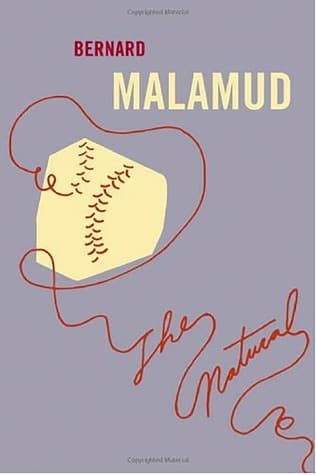
Synopsis
Covers the whole plot, including the ending.
- Difficulty
- Medium
- Pacing
- Moderate
- Mood
- Mythic, Melancholy, Reflective, Poetic
The Natural Plot Summary
Covers the whole plot, including the ending.
The Fateful Journey
Seventeen-year-old baseball talent Roy Hobbs travels by train with his mentor and scout, Sam Simpson, to try out for the Chicago Cubs. On the train, Roy meets Harriet Bird, a beautiful but mysterious woman who seems drawn to him. Sam warns Roy to stay away from her, but Roy is infatuated. After a stop in Chicago, Harriet invites Roy to her hotel room. There, as Roy stands before her, confident in his future, she shoots him in the stomach with a silver bullet. This ends his career and leaves him for dead. Earlier, Sam Simpson is found dead, having choked on a chicken bone, adding to the tragedy around Roy.
The Return of the Prodigal
Fifteen years after the shooting, Roy Hobbs, now in his early thirties, returns to professional baseball. He joins the struggling New York Knights as a rookie, despite his age and mysterious past. He carries 'Wonderboy,' a baseball bat he carved himself from a tree struck by lightning. The team's manager, Pop Fisher, is initially hesitant to play Roy, preferring to keep him on the bench. However, after the team performs poorly, Pop gives Roy a chance. Roy immediately shows his extraordinary hitting ability, revitalizing the team and exciting the public.
Iris Lemon and the Past
Roy's incredible performance with the Knights starts a winning streak, changing them from last place to pennant contenders. During this time, Roy meets Iris Lemon, an ordinary woman who attends his games. Unlike other women who pursue him, Iris seems genuine and supportive. She reminds him of past innocence and decency. The press notices their connection, and Iris eventually reveals a secret that complicates Roy's public image. This forces him to face the results of his past actions and choices, especially his first meeting with Harriet Bird.
The Siren's Call: Memo Paris
Despite his success and connection with Iris, Roy is drawn to Memo Paris, Pop Fisher's niece and the former girlfriend of Bump Bailey, the Knights' star player who died mysteriously. Memo is beautiful, alluring, and seems out of reach, representing the glamorous and materialistic side of fame. Roy's desire for Memo distracts him, affecting his performance on the field. She manipulates his emotions, playing on his insecurities and ambitions, often causing him to make bad choices and neglect his team responsibilities. His pursuit of Memo threatens to ruin his second chance at glory.
The Betrayal of the Judge
The Knights' owner, 'The Judge,' is a shadowy, manipulative figure who secretly profits from the team's losses through a gambling scheme. He sees Roy's success as a threat to his financial interests. The Judge, with Gus Sands, a notorious gambler, tries to bribe Roy to lose the final game of the season, which will decide the pennant winner. They use Roy's past weaknesses and his desire for money and fame, especially to impress Memo. Roy faces a moral problem, torn between his love for the game and the appeal of wealth and an easier path.
A Crisis of Confidence
Under the immense pressure of the pennant race and the internal conflict from the bribe, Roy's performance suffers. His hitting slumps, and he makes unusual errors on the field. The 'Wonderboy' bat breaks during a crucial game, symbolizing his breaking confidence and the possible collapse of his second chance. His continued involvement with Memo, who subtly weakens his resolve, and the constant presence of the Judge and Gus Sands, who keep pressuring him to accept their offer, worsen this period of struggle. Roy feels the weight of his past mistakes and the moral compromises he is considering.
The Truth Revealed
During his struggles, Iris Lemon tells Roy that she is pregnant with his child, a child he fathered during a brief encounter. This revelation forces Roy to confront the responsibilities of fatherhood and the possibility of a different, more stable future. At the same time, the full details of Roy's past with Harriet Bird are uncovered and made public. The press, fueled by the Judge's schemes, exposes the shooting incident, painting Roy as a scandalous figure. This dual revelation of impending fatherhood and criminal past puts Roy in a moral and public spotlight, forcing him to choose between his personal integrity and the temptations of corruption.
The Final Game
In the deciding pennant game, with the Knights needing a win to secure the championship, Roy steps up to the plate. He battles not only the opposing pitcher but also his conscience and physical pain from an old wound that has returned. The Judge's offer looms large, and Roy's integrity is at stake. Despite the pressure and his internal struggle, Roy chooses to try and win the game fairly. He hits a powerful foul ball that strikes the Judge, symbolically asserting his defiance against corruption. With a new bat, he steps up again, aiming to win the pennant for the team and for himself.
The Unattainable Victory
In the climax, Roy, despite his determination to win, strikes out, losing the game and the pennant for the Knights. The Judge's scheme succeeds, as the team fails to win the championship. After the game, Roy's past is fully exposed in the newspapers, detailing the Harriet Bird incident and his association with Gus Sands and the Judge. His career is over, marked by scandal and unresolved questions of his integrity. He is left with the knowledge of his impending fatherhood but without the glory he sought, a tragic figure whose immense talent was undone by his flaws and the corrupting forces around him.
A Fading Legend
The novel ends with Roy Hobbs facing the consequences of his choices. Without his baseball career and public adoration, he feels a deep sense of loss and regret. The final image of Roy is of a man who had everything but lost it due to his own weaknesses and the predatory nature of the world around him. He sees his son, a symbol of hope and a new beginning, but his own future remains uncertain and tainted by the scandal. The promise of his 'natural' talent is unfulfilled, leaving a bittersweet legacy of what might have been, a legend that shone brightly but burned out too soon.
The Natural Characters
Roy Hobbs
Protagonist
A baseball prodigy whose talent is matched only by his tragic flaws.
Roy Hobbs is a 'natural' at baseball, possessing extraordinary, almost mythical, talent. He is driven by a deep desire for greatness and recognition, viewing baseball as his destiny. However, he is also naive, impulsive, and susceptible to the temptations of fame, money, and beautiful women. His journey is a classic hero's quest, but one marred by repeated falls from grace. He is a man of immense physical prowess but internal vulnerability, constantly battling his own weaknesses and the corrupting influences of the world. He seeks redemption but often succumbs to the same patterns that led to his initial downfall.
Relationships: Harriet Bird (fatal seductress); Sam Simpson (mentor/scout); Pop Fisher (manager/father figure); Iris Lemon (moral compass/lover); Memo Paris (seductive temptation); The Judge (antagonistic owner/corruptor); Gus Sands (gambler/corruptor)
Harriet Bird
Antagonist
The mysterious woman who shoots Roy, symbolizing a destructive fate.
Harriet Bird is an enigmatic and beautiful woman who appears early in Roy's life and dramatically alters his trajectory. She is presented as a 'femme fatale,' a mysterious and dangerous figure who targets exceptional athletes. Her motives are never fully explained, adding to her mythical quality. She represents the sudden, inexplicable forces that can derail a promising life, and perhaps the destructive side of ambition itself. Her act of shooting Roy with a silver bullet is a pivotal moment, casting a long shadow over his future and symbolizing the fragility of greatness.
Relationships: Roy Hobbs (victim/assailant)
Iris Lemon
Supporting
A virtuous woman who offers Roy a path to redemption and integrity.
Iris Lemon is a kind, intelligent, and morally upright woman who serves as a foil to the other women in Roy's life. She represents purity, stability, and genuine love. She sees beyond Roy's baseball persona and recognizes his deeper potential for goodness. Her presence encourages Roy to consider a life of integrity and responsibility. She is a symbol of hope and a moral compass for Roy, offering him a chance at a different kind of fulfillment, one rooted in family and genuine connection rather than fleeting fame. Her own past, revealed later, adds depth to her character.
Relationships: Roy Hobbs (lover/mother of his child)
Memo Paris
Supporting
A beautiful, manipulative woman who represents Roy's materialistic desires.
Memo Paris is Pop Fisher's niece and a beautiful, alluring, but ultimately superficial and manipulative woman. She is a symbol of the superficial glamour and materialistic temptations that constantly pull Roy away from his true self and his moral obligations. She is self-absorbed and uses her beauty to get what she wants, often leading Roy into bad decisions. Memo represents the corrupting influence of the 'real world' outside the purity of the game, and her presence is a constant test of Roy's character and his commitment to his sport. Her desire for money makes her a pawn in the Judge's schemes.
Relationships: Roy Hobbs (object of desire/distraction); Pop Fisher (niece); Bump Bailey (former lover)
Pop Fisher
Supporting
The aging, beleaguered manager of the Knights, seeking one last championship.
Pop Fisher is the long-suffering manager of the New York Knights, a man burdened by years of losing and a deep desire for a championship. He is a figure of traditional baseball values, dedicated to the game and his team. He initially distrusts Roy but eventually recognizes and relies on his talent. Pop serves as a surrogate father figure for Roy, offering guidance and a sense of belonging. His own struggles and his fervent wish for a pennant mirror some of Roy's ambitions, making their relationship complex and emotionally charged. He represents the fading glory of baseball's past.
Relationships: Roy Hobbs (manager/father figure); Memo Paris (uncle)
The Judge
Antagonist
The corrupt, shadowy owner of the Knights, who profits from losing.
The Judge is the sinister and manipulative owner of the New York Knights. He represents the ultimate corruption in the world of baseball, caring only for profit and willing to sabotage his own team for financial gain. He is a shadowy figure who operates behind the scenes, pulling strings and manipulating events. His character embodies the destructive power of greed and the commercialization of a beloved sport. He is the primary antagonist, constantly tempting Roy with bribes and seeking to undermine his success to ensure the team loses, thereby securing his gambling profits.
Relationships: Roy Hobbs (corruptor/adversary); Gus Sands (accomplice)
Gus Sands
Supporting
A notorious gambler and associate of the Judge, facilitating corruption.
Gus Sands is a shady figure, a notorious gambler with connections to the underworld. He works in league with the Judge to orchestrate the team's losses and manipulate games for their financial benefit. Gus is a smooth talker, charming but ultimately untrustworthy, representing the insidious nature of corruption that infiltrates even the purest of games. He acts as an intermediary, delivering the Judge's offers to Roy and further entangling him in the web of deceit and temptation. His presence highlights the external pressures that threaten Roy's integrity.
Relationships: Roy Hobbs (tempter/associate in corruption); The Judge (accomplice); Memo Paris (associate/lover)
Sam Simpson
Supporting
Roy's first mentor and scout, whose early death foreshadows tragedy.
Sam Simpson is the scout who discovers Roy Hobbs's exceptional talent and becomes his initial mentor. He is a gruff but well-meaning figure who believes in Roy's potential. Sam's early death on the train, just before Roy's fateful encounter with Harriet Bird, is a significant moment. It removes Roy's protective figure and leaves him vulnerable to the dangers that follow. Sam represents the initial, pure hope for Roy's career, and his demise foreshadows the tragic path that Roy's life will take, emphasizing the loss of innocence and guidance.
Relationships: Roy Hobbs (mentor/scout)
Bump Bailey
Supporting
The Knights' star player whose death creates an opening for Roy.
Bump Bailey is the New York Knights' star player before Roy Hobbs joins the team. He is depicted as arrogant, self-centered, and somewhat reckless. His mysterious death early in the novel creates the opportunity for Roy to join the team and step into the spotlight. Bump serves as a precursor to Roy, a talented player who also had his flaws. His death, possibly a suicide or an accident due to his recklessness, foreshadows the dangers of fame and the fragility of a baseball career, and his lingering presence (through Memo) continues to affect Roy.
Relationships: Memo Paris (former lover); Roy Hobbs (predecessor)
The Natural Themes
The Corruption of Innocence and Talent
This theme explores how Roy Hobbs's 'natural' talent and inherent goodness are constantly attacked and ultimately corrupted by outside influences. From the first meeting with Harriet Bird to later manipulations by the Judge and Gus Sands, Roy's journey is a repeated struggle against forces that seek to exploit, diminish, or destroy his purity. The novel suggests that even the most extraordinary gifts are vulnerable to human greed, ambition, and moral weakness, leading to a tragic loss of potential and a tarnished legacy.
“He thought he had learned a lesson but he had learned nothing.”
The Nature of Heroism and Myth
The novel examines the creation and destruction of heroic myths, especially in American baseball. Roy Hobbs is a larger-than-life figure, almost a demigod, whose feats on the field inspire awe. However, Malamud always grounds this myth in human weakness and moral uncertainty. Roy is a hero with tragic flaws, and his story questions whether true heroism is in extraordinary achievement or moral integrity. The narrative draws parallels to Arthurian legends, suggesting that even the most fabled heroes are subject to human weaknesses and a flawed world.
“He was a man, but also a myth, a legend, a god.”
Redemption and Second Chances
A central theme is Roy's search for redemption and a second chance at the life and glory he lost. After his initial downfall, his return to baseball is an attempt to reclaim his destiny and prove his worth. However, the novel explores the difficulty of truly escaping one's past and the repeating nature of human flaws. Roy is offered chances for redemption through figures like Iris Lemon, but his constant susceptibility to temptation and his own ambition often lead him back down familiar destructive paths. The narrative suggests that while second chances are possible, true redemption requires deep self-awareness and moral strength.
“He had a second chance, but he didn't know what to do with it.”
Fate vs. Free Will
The novel constantly plays with the tension between predetermined fate and individual choice. Roy often feels destined for greatness, but also seems a victim of circumstances and others' whims. The recurring motifs of the 'silver bullet' and the 'Wonderboy' bat, along with the mythical quality of his talent, suggest a preordained path. Yet, Roy's repeated moral failings and his choices regarding Memo, Iris, and the Judge's bribe highlight his agency. The story leaves the reader to ponder whether Roy's tragic end was inevitable due to his character flaws or if he ultimately chose his own downfall.
“Some men are born to be great, others have greatness thrust upon them, and still others are just plain unlucky.”
The Allure and Danger of Fame and Success
Malamud examines the intoxicating power of fame and the dangers it poses, especially for someone as naive and driven as Roy Hobbs. Success brings adoration, wealth, and the attention of glamorous figures like Memo Paris, but it also attracts predators like the Judge and Gus Sands, who seek to exploit Roy's talent for their own gain. The novel shows how the pursuit of external validation and the trappings of celebrity can blind individuals to their true values and lead them down a destructive path, ultimately costing them their integrity and genuine happiness.
“Fame is a powerful intoxicant, but it can also be a poison.”
Plot Devices & Literary Techniques
The 'Wonderboy' Bat
Roy's self-carved bat, symbolizing his natural talent and mythical power.
'Wonderboy' is a baseball bat Roy carves from a tree struck by lightning, imbuing it with almost magical properties. It symbolizes Roy's innate, raw talent and his connection to a primal, natural force. When Roy uses Wonderboy, he achieves extraordinary feats, reinforcing his mythical status. The bat's eventual breaking at a crucial moment symbolizes Roy's own fracturing integrity and the vulnerability of even the most powerful gifts. It serves as a physical manifestation of his destiny and his ultimate downfall, representing both his potential and his tragic limitations.
The Silver Bullet
The instrument of Roy's first downfall, a recurring symbol of fate and vulnerability.
The silver bullet is the weapon Harriet Bird uses to shoot Roy, effectively ending his first chance at a baseball career. It is a highly symbolic object, traditionally associated with killing supernatural beings (like werewolves), suggesting that Roy, despite his 'natural' talent, is not invincible and is susceptible to forces beyond the ordinary. The memory of the silver bullet, and the physical wound it leaves, resurfaces throughout the novel, representing Roy's past trauma, his vulnerability, and the lingering threat of fate or destructive forces that can strike him down at any moment. It foreshadows his susceptibility to external harm and internal corruption.
Arthurian Legend Parallels
The novel's structure and characters echo the legend of King Arthur and the Holy Grail.
Malamud subtly weaves parallels to Arthurian legends throughout 'The Natural.' Roy Hobbs can be seen as a modern-day knight, perhaps Percival, on a quest for greatness (the 'Holy Grail' of the pennant). Characters like Pop Fisher (the Fisher King, suffering and seeking renewal), Iris Lemon (a virtuous Lady of the Lake or Guinevere figure), and Memo Paris (a manipulative Morgan le Fay) reinforce this mythical framework. The 'Wonderboy' bat functions as an Excalibur. This device elevates the story beyond a mere baseball narrative, imbuing it with timeless themes of heroism, quest, betrayal, and the search for redemption in a fallen world.
The Femme Fatale Figures
Harriet Bird and Memo Paris, women who represent destructive temptation.
The novel employs the classic literary device of the femme fatale through the characters of Harriet Bird and Memo Paris. Harriet Bird is the mysterious, deadly woman who shoots Roy, abruptly ending his initial career. Memo Paris, while not physically violent, is equally destructive, using her beauty and manipulative charm to distract Roy, exploit his weaknesses, and lead him towards moral compromise and financial ruin. Both women symbolize the seductive and dangerous aspects of the world outside of the purity of the game, representing the temptations that consistently derail Roy's path to true greatness and happiness.
Quiz
10 questions on the plot and the characters. Each answer comes with a short explanation.
Question 1
What is the title of the novel discussed in the provided text?
- The Rabbi
- The Natural
- The Fixer
- A New Life
Show answer
B. The Natural The text explicitly states, 'The Natural, Bernard Malamud's first novel...'
Question 2
Who is the author of the novel 'The Natural'?
- Kevin Baker
- Alfred Kazin
- Bernard Malamud
- Philip Roth
Show answer
C. Bernard Malamud The text mentions, 'The Natural, Bernard Malamud's first novel...'
Question 3
In what year was 'The Natural' first published?
- 1942
- 1952
- 1962
- 1972
Show answer
B. 1952 The text states, 'The Natural, Bernard Malamud's first novel, published in 1952...'
Question 4
According to the text, what subject matter did Malamud typically explore before 'The Natural'?
- The Civil Rights Movement
- Postwar Jewish life
- The American West
- World War II
Show answer
B. Postwar Jewish life The text mentions, 'In it Malamud, usually appreciated for his unerring portrayals of postwar Jewish life, took on very different material...'
Question 5
The text describes the protagonist of 'The Natural' as a 'natural' at what?
- Boxing
- Baseball
- Football
- Professional Wrestling
Show answer
B. Baseball The text refers to the protagonist as 'a superbly gifted "natural" at play in the fields of the old daylight baseball era...'
Question 6
Who wrote the introduction for the new edition of 'The Natural' mentioned in the text?
- Bernard Malamud
- Alfred Kazin
- The author of the text
- Kevin Baker
Show answer
D. Kevin Baker The text states, 'Introduction by Kevin Baker'.
Question 7
Alfred Kazin's comment suggests that Malamud's novel elevated baseball to what status?
- A historical record
- A scientific study
- Mythology
- A theatrical performance
Show answer
C. Mythology Kazin is quoted as saying, 'He has really raised the whole passion and craziness and fanaticism of baseball as a popular spectacle to its ordained place in mythology.'
Question 8
The text describes Malamud's writing in 'The Natural' as possessing 'hardscrabble poetry, at once grand and altogether believable.' This suggests a blend of:
- Realism and fantasy
- Gritty realism and elevated artistry
- Humor and tragedy
- Historical accuracy and fictional embellishment
Show answer
B. Gritty realism and elevated artistry The phrase 'hardscrabble poetry' implies a combination of difficult, realistic elements ('hardscrabble') with poetic, elevated language and themes ('poetry'). The further description 'grand and altogether believable' reinforces this blend.
Question 9
The phrase 'the old daylight baseball era' implies that the novel is set in a time period that is:
- The distant future
- Contemporary to the author's present
- A past era, likely before modern stadium lighting
- An alternate reality where baseball evolved differently
Show answer
C. A past era, likely before modern stadium lighting 'Daylight baseball' specifically refers to games played without artificial lights, which was common in earlier eras of baseball. The term 'old' further suggests a historical setting.
Question 10
Considering Kazin's quote about baseball's 'passion and craziness and fanaticism' being raised to 'mythology,' what literary technique or effect is Malamud primarily achieving in 'The Natural'?
- Satire of sports culture
- A strictly documentary account of baseball history
- Transforming a popular sport into an epic or legendary narrative
- A critical analysis of the business of professional sports
Show answer
C. Transforming a popular sport into an epic or legendary narrative Kazin's words indicate that Malamud is taking the intense emotions and fervent devotion associated with baseball and elevating them to the level of myth or legend, suggesting a transformation of the sport into something with epic, almost divine, significance.
The Natural FAQ
What is Bernard Malamud's novel 'The Natural' about?
'The Natural' tells the story of Roy Hobbs, a gifted baseball player with an almost mythical talent. The novel explores his journey through the world of professional baseball, touching on themes of destiny, ambition, and the corrupting influences within the sport.
When was 'The Natural' published?
Bernard Malamud's novel 'The Natural' was first published in 1952.
Is 'The Natural' based on a true story?
No, 'The Natural' is a work of fiction. While it captures the spirit and mythology of baseball, the character of Roy Hobbs and his story are entirely Malamud's creation.
What are the main themes in 'The Natural'?
Key themes in 'The Natural' include the nature of talent and destiny, the allure and corruption of fame, the search for redemption, and the mythic quality of baseball in American culture.
How does 'The Natural' relate to baseball mythology?
The novel elevates baseball to the level of mythology, imbuing the sport and its players with epic qualities. It explores the passion, craziness, and fanaticism surrounding baseball as a popular spectacle.
Is the book 'The Natural' different from the movie?
Yes, while the film is based on the novel, there are differences in plot details, character development, and thematic emphasis. The book offers a more complex and nuanced exploration of Roy Hobbs's character and the novel's themes.
What is Bernard Malamud known for besides 'The Natural'?
Bernard Malamud is also celebrated for his insightful portrayals of postwar Jewish life, often exploring themes of alienation, identity, and the human condition in works like 'The Assistant' and 'The Fixer'.
Who is the protagonist of 'The Natural'?
The protagonist of 'The Natural' is Roy Hobbs, a baseball player of extraordinary, almost supernatural, talent.
What historical period does 'The Natural' depict?
The novel is set in the 'daylight baseball era' of professional baseball, which generally refers to the earlier decades of the 20th century before widespread night games became common.
Is 'The Natural' considered a classic of baseball literature?
Yes, 'The Natural' is widely regarded as a classic and one of the first, if not the best, novels ever written about baseball, praised for its poetic prose and mythic scope.
About the author
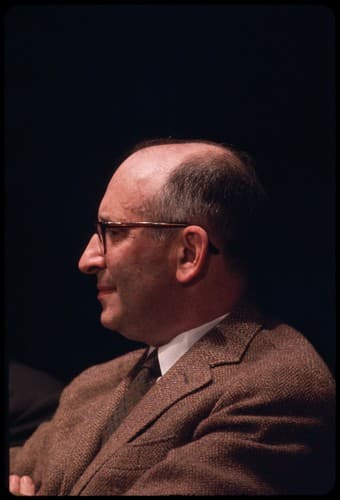
Bernard Malamud was an American novelist and short story writer. Along with Saul Bellow, Joseph Heller, Norman Mailer and Philip Roth, he was one of the best known American Jewish authors of the 20th century. His baseball novel, The Natural, was adapted into a 1984 film starring Robert Redford. His 1966 novel The Fixer, about antisemitism in the Russian Empire, won both the National Book Award and the Pulitzer Prize.
Similar books
- The Old Man and the Sea
Ernest Hemingway
3.8 (831k) average on GoodreadsLiterary FictionBoth "The Natural" and "The Old Man and the Sea" feature a solitary male protagonist engaged in a heroic struggle against overwhelming forces, testing their physical and spiritual limits. Santiago's fight with the marlin mirrors Roy's battle on the baseball field and against his inner demons. Both novels explore themes of perseverance, dignity in defeat, and the elusive nature of victory. However, Hemingway's prose is famously sparse and direct, focusing on external action and stoicism, while Malamud's is more lyrical, internal, and overtly symbolic, drawing heavily on myth to imbue Roy's struggle with deeper meaning. Hemingway's hero finds a measure of peace in his struggle, even in loss, whereas Roy's journey is marked by a more profound and tragic sense of unfulfilled potential and moral corruption.
- A Separate Peace
John Knowles
3.6 (191k) average on GoodreadsHistorical FictionWhile seemingly disparate, both novels delve into the destructive power of envy and hero-worship, and the loss of innocence. Finny in "A Separate Peace" possesses a natural, almost god-like athletic ability and charisma, much like Roy Hobbs. Both characters inspire awe and admiration, but also jealousy and ultimately contribute to their own downfalls. Gene's internal conflict and ultimately destructive actions towards Finny parallel the various temptations and moral failings that plague Roy. However, "A Separate Peace" is a coming-of-age story focused on the psychological intricacies of adolescent friendship and betrayal within a specific historical context (WWII), whereas "The Natural" operates on a much grander, mythic scale, using baseball as a canvas for a broader American tragedy and a more direct exploration of archetypal heroism and hubris.
- One Hundred Years of Solitude
Gabriel García Márquez
4.1 (753k) average on GoodreadsLiterary FictionThrough the multi-generational story of the Buendía family, a mythical town deals with the repeating patterns of time, love, and solitude, as the extraordinary mixes with the ordinary.
- The Goldfinch
Donna Tartt
3.9 (720k) average on GoodreadsLiterary FictionHaunted by a tragic explosion and clutching a stolen Dutch masterpiece, a young orphan navigates the opulent drawing rooms of New York and the gritty underbelly of the art world, desperately seeking connection and redemption amidst a life spiraling into crime and obsession.
- Little Fires Everywhere
Celeste Ng
4.1 (713k) average on GoodreadsLiterary FictionIn Shaker Heights, an artist and her daughter move in, and their free-spirited lives clash with a rule-bound matriarch, revealing hidden conflicts beneath a perfect surface.
- Eleanor Oliphant Is Completely Fine
Gail Honeyman
4.3 (708k) average on GoodreadsLiterary FictionA lonely woman's structured life changes when an IT guy and an elderly man help her learn to open her heart.





Enjoyed the summary?
A summary gives you the shape of the book. The book itself has the detail, the examples and the voice.
Find The Natural on AmazonAs an Amazon Associate, BookBrief earns from qualifying purchases. How we're funded