

Synopsis
Covers the whole plot, including the ending.
- Difficulty
- Easy
- Pacing
- Moderate
- Mood
- Quirky, Flirty, Humorous, Romantic, Angsty
Not Exactly a Love Story Plot Summary
Covers the whole plot, including the ending.
A New Beginning, Sort Of
In 1977, fifteen-year-old Vinnie is having a hard time. He has bad acne, his girlfriend moved away without a word, and his parents just divorced. To make things worse, his mom decides they are moving from Queens to Long Island. Vinnie feels alone in his new suburban home. His only comfort is the brief, awkward talks with his new next-door neighbor, Patsy. She seems perfect, but out of his league. He struggles to get used to the new school and social scene, feeling like an outsider. The move is a forced fresh start, but Vinnie is not ready for it.
The First Call
One night, feeling lonely and bold, Vinnie dials Patsy's number. When she answers, he panics and, without thinking, uses a fake, deeper voice, calling himself 'Vincenzo.' To his surprise, Patsy does not hang up. She is curious about the anonymous caller. This accidental lie becomes the start of their secret late-night calls. Vinnie, as Vincenzo, feels confident and can express himself in ways he never could as Vinnie. Patsy, in turn, talks openly to Vincenzo, sharing her thoughts and feelings with an honesty she only has for this mysterious voice.
Midnight Confessions
The anonymous phone calls become a nightly routine. As Vincenzo, Vinnie forgets his worries and shows a clever, thoughtful, and sensitive side that Patsy finds appealing. They talk about everything from their dreams and fears to their daily lives, building a close connection based on shared openness. Patsy tells Vincenzo about her own struggles and hopes, unknowingly developing strong feelings for this stranger. Vinnie, meanwhile, falls more in love with Patsy, getting to know her true self through these talks, a self he finds even more charming than her looks suggest. The phone becomes a way for true emotional closeness.
Daylight Encounters
While their nighttime connection grows, Vinnie's interactions with Patsy during the day remain awkward. He is still the unsure Vinnie, unable to link his two roles. He watches Patsy's daily life, her friends, and her casual talks, learning things he sometimes hints at during their 'Vincenzo' calls, making his anonymous identity seem even more perceptive. The big difference between the confident Vincenzo and the shy Vinnie causes him inner conflict. He feels guilty about his lie, but he is afraid of losing his connection with Patsy if he tells the truth, fearing she will be disappointed by the real him.
Jealousy and Observation
Vinnie's closeness to Patsy means he knows about her daily life, including her talks with other boys. He sees her with a popular, athletic guy named Mark, and feels a pang of jealousy. This makes him want to win her over as Vinnie, but his lack of confidence stops him. He uses what he observes about Mark and Patsy's interactions during his Vincenzo calls, offering advice or thoughts that make Vincenzo seem even more understanding. This careful balance of observation and anonymous connection increases Vinnie's inner struggle, making him question if his double life can last and if it is right.
The Dance of Deception
As Patsy's feelings for Vincenzo grow, she wants to meet him. This puts great pressure on Vinnie, who constantly invents excuses and elaborate stories to avoid a real-life meeting. He feels trapped by his own lie, realizing that the longer the deception continues, the harder it will be to confess. Meanwhile, Patsy starts sharing more details about her life and her growing affection for Vincenzo, making Vinnie's guilt even stronger. He begins to see that heartbreak could happen not just for him, but for Patsy, if the truth comes out. The act becomes harder to keep up.
A Glimpse of the Real Vinnie
Despite his shyness, Vinnie sometimes manages to have real, though brief, talks with Patsy in person. These few moments allow Patsy to see glimpses of the thoughtful and smart person Vinnie truly is, beyond his awkward outside. She does not connect him to Vincenzo, but she starts to appreciate his subtle kindness and quiet humor. Vinnie, in these moments, feels a bit of hope that he might win her over as himself. However, the shadow of Vincenzo is large, and he fears that any progress he makes as Vinnie will be undone by the truth of his lie.
The Threat of Exposure
Several close calls and accidents begin to threaten Vinnie's carefully built deception. A close friend of Patsy's, or even Vinnie's own family, almost overhears a conversation, or makes a comment that could expose him. Vinnie becomes more paranoid, constantly on edge, fearing that one wrong move will ruin everything. The pressure to maintain the two identities affects his sleep and focus. He realizes the situation cannot continue and that he must face the truth, but he is still unsure how to do it without losing Patsy completely.
Patsy's Dilemma
Patsy is in a confusing emotional state. She is deeply connected to Vincenzo, cherishing their late-night calls and the closeness they share. At the same time, she is starting to develop a growing appreciation for Vinnie, her next-door neighbor. She likes his quiet manner and the subtle kindness he shows. She feels drawn to both, unaware they are the same person. This inner conflict makes her question her own feelings and desires, and she tells Vincenzo about her confusion, unknowingly adding to Vinnie's pain and the urgency of his coming confession.
The Confrontation
Driven by guilt, fear, and the realization that he cannot continue living a lie, Vinnie decides to confess. He plans how to tell Patsy who he is, knowing it could either destroy their connection or lead to a more honest one. The moment of truth is full of worry. He prepares himself for her anger, disappointment, and possible rejection. This decision marks a big change for Vinnie, as he chooses honesty over the comfort of his anonymous role, showing new maturity and courage, even if the result is uncertain.
The Fallout
When Vinnie finally reveals that he is Vincenzo, Patsy's reaction is a mix of shock, hurt, and confusion. She feels betrayed by the deception, struggling with the fact that the person she shared her heart with was her awkward neighbor. The initial anger and disappointment are clear, and Vinnie must face the direct results of his actions. Patsy needs time to process this news, and the immediate aftermath is tense and uncertain. The close bond they built through their calls is now broken by the lies, leaving their future together in question.
Rebuilding Trust
After his confession, Vinnie does not give up. He understands Patsy's hurt and is determined to earn back her trust. He apologizes sincerely and often, explaining his insecurities and why he lied. He shows her that the qualities she admired in Vincenzo are truly his own. Patsy, though at first cautious, slowly begins to see Vinnie for who he really is—a complex, sensitive, and ultimately good-hearted person who made a mistake. The process is slow and requires patience and honesty from both sides as they navigate their new, real connection.
A New Chapter
Through his persistent efforts and true regret, Vinnie gradually begins to fix the break with Patsy. She starts to accept the real Vinnie, seeing that the emotional connection they shared as Vincenzo and Patsy was real, despite the initial lie. They begin to spend time together as Vinnie and Patsy, without the anonymity of the phone, building a new kind of relationship based on honesty and mutual understanding. This marks a big growth for Vinnie, who has learned how important self-acceptance and honesty are, and for Patsy, who learns to look past outward appearances.
Stepping into the Daylight
By the end of the story, Vinnie has not only gained Patsy's forgiveness and affection but has also found new self-confidence. He no longer needs to pretend to be Vincenzo to express himself or connect with others. He has learned to accept his own identity, flaws and all, and is ready to face the world as Vinnie. The 'not exactly a love story' becomes a real connection, built on the difficult but necessary foundation of truth. Vinnie and Patsy's relationship, though complicated, promises a real and honest future, leaving Vinnie with hope and personal growth.
Principal Figures
Vinnie
Protagonist
The insecure, acne-ridden teenager who finds his voice through deception.
Fifteen-year-old Vinnie is the quintessential awkward teenager, grappling with severe acne, a recent move, and his parents' divorce in 1977. He's self-conscious, shy, and deeply insecure, especially around girls. However, beneath his hesitant exterior lies a witty, intelligent, and sensitive young man. He yearns for connection but lacks the confidence to express his true self. His transformation into 'Vincenzo' allows him to explore and develop these hidden qualities, making him more articulate and charming than he believes himself to be in real life.
Relationships: Patsy (Love interest (both as Vinnie and Vincenzo)); Vinnie's Mom (Parental)
Patsy
Supporting
Vinnie's dream girl, who forms a deep bond with his alter ego.
Patsy is the beautiful, popular, and seemingly perfect girl next door, the object of Vinnie's affection. She is kind, thoughtful, and possesses a hidden depth that Vinnie discovers through their anonymous phone calls. She's intelligent and observant, but also vulnerable, seeking genuine connection and understanding. Patsy is initially drawn to the confident and articulate 'Vincenzo,' unaware that he is the shy boy living next door. Her journey involves grappling with betrayal and learning to see beyond initial impressions to the true character of Vinnie.
Relationships: Vinnie (Love interest (as Vincenzo, then Vinnie)); Mark (Casual acquaintance/potential suitor)
Vincenzo
Supporting
Vinnie's confident and charming anonymous alter ego.
Vincenzo is the persona Vinnie adopts during his late-night calls with Patsy. He is everything Vinnie wishes he could be in person: smooth-talking, witty, confident, and deeply empathetic. This identity allows Vinnie to shed his insecurities and express his true thoughts and feelings, creating a profound emotional connection with Patsy. Vincenzo is a vehicle for Vinnie's hidden potential, a romantic and articulate figure who captivates Patsy, but ultimately a fabrication that cannot sustain a real relationship. He represents the ideal version of Vinnie, untainted by visible flaws or social anxieties.
Relationships: Patsy (Anonymous romantic interest); Vinnie (Secret identity of)
Vinnie's Mom
Supporting
The recently divorced mother trying to start anew.
Vinnie's mom is a recently divorced woman who makes the decision to move from Queens to Long Island, seeking a fresh start for herself and Vinnie. She is trying her best to navigate the challenges of single parenthood and new beginnings, often preoccupied with her own adjustments. While she cares deeply for Vinnie, she is sometimes a bit oblivious to the extent of his struggles and internal world. Her decisions, though made with good intentions, significantly impact Vinnie's life and contribute to his feeling of displacement.
Relationships: Vinnie (Mother-son)
Mark
Supporting
Patsy's popular, athletic suitor.
Mark is a popular and athletic boy who is also interested in Patsy. He represents the kind of guy Vinnie perceives as his rival – confident, socially adept, and seemingly effortless. Mark serves as a foil to Vinnie's insecurity, highlighting Vinnie's own self-consciousness and fueling his desire to win Patsy over. While not malicious, Mark's presence adds a layer of romantic tension and urgency to Vinnie's secret pursuit of Patsy, making Vinnie feel the pressure to act before he loses his chance.
Relationships: Patsy (Potential romantic interest); Vinnie (Romantic rival)
Dr. Miller
Supporting
Vinnie's dermatologist.
Dr. Miller is Vinnie's dermatologist, who is treating his severe acne. While a minor character, he represents Vinnie's physical insecurities and the source of some of his self-consciousness. His presence underscores Vinnie's struggles with his appearance, which is a significant factor in his lack of confidence and his reliance on the anonymous 'Vincenzo' persona. He is a professional figure, offering medical solutions to Vinnie's physical problems, but cannot address the deeper emotional and social anxieties that plague the teenager.
Relationships: Vinnie (Doctor-patient)
Themes & Insights
Identity and Authenticity
The novel explores the struggle of forming one's identity, especially during adolescence, and the importance of being true to oneself. Vinnie creates 'Vincenzo' as an ideal version of himself, allowing him to show qualities he is too insecure to show as Vinnie. This duality highlights the gap between how we see ourselves and how we want to be seen, and the eventual need to bring these two together. The theme emphasizes that true connection can only be built on honesty, even if the truth is at first painful or imperfect, and that self-acceptance is key for real relationships.
“It's not exactly a love story... but it's pretty close.”
The Power of Communication (and Miscommunication)
Communication, especially through the telephone, is central to the story. The anonymous calls allow Vinnie and Patsy to connect deeply on an emotional and intellectual level, showing that words can create strong bonds. However, the deception in Vinnie's communication as 'Vincenzo' also highlights the dangers of misunderstanding and the eventual loss of trust when truth is hidden. The theme examines how technology can both help intimacy and create barriers, and how true connection ultimately requires transparency beyond just words.
“Under the cover of darkness, Vinnie became Vincenzo, Patsy's mystery caller, and the two share a side of themselves they would never reveal in daylight.”
Insecurity and Self-Acceptance
Vinnie's deep insecurity, made worse by his acne, new surroundings, and recent family changes, drives much of the plot. He believes he is not good enough as himself to attract Patsy, leading him to create an alter ego. The story looks at the pain of adolescent self-consciousness and the journey toward accepting one's flaws. Vinnie's story shows that true confidence comes not from hiding behind a facade, but from accepting who you are, understanding that vulnerability is a strength, and that others can love you for your true self.
“He'd never been Vincenzo in the daylight, only in the dark, where his face didn't matter, where his acne didn't show.”
Love and Deception
The novel explores the complicated relationship between love and deception. Vinnie's initial act of deception, born from insecurity, leads to a real emotional connection with Patsy. However, this connection is built on a lie, creating an ethical problem and inevitable heartbreak. The theme questions whether love can truly grow when based on falsehoods, and whether the end justifies the means. It ultimately argues that while initial sparks can come from illusion, lasting love requires honesty, trust, and the courage to be open.
“Despite the lies it's built on, they develop a surprisingly real connection.”
Plot Devices & Literary Techniques
The Anonymous Phone Call
A classic device enabling hidden identities and intimate revelations.
The anonymous phone call is the central plot device, directly inspired by 'Cyrano de Bergerac.' It allows Vinnie to create 'Vincenzo,' a confident alter ego, and engage in deeply personal conversations with Patsy without the pressure of his physical appearance or social awkwardness. This device facilitates the rapid development of emotional intimacy between the characters, but also creates the core conflict: the deception. It highlights the power of voice and words to forge connection, while simultaneously underscoring the dangers of hidden identities and the inevitable need for truth in relationships.
The Next-Door Neighbor Trope
Proximity fostering both observation and romantic tension.
The fact that Vinnie and Patsy are next-door neighbors is a crucial plot device. This proximity allows Vinnie to observe Patsy's daily life, her interactions with others, and her routines, providing him with insider information that he can then subtly weave into his 'Vincenzo' calls. This constant, albeit often unacknowledged, physical presence creates a unique tension, as Vinnie sees the real Patsy while simultaneously building an idealized connection with her. It heightens his internal conflict, making the gap between his two identities even more pronounced and the eventual reveal more impactful.
1977 Setting
The historical context shaping communication and social dynamics.
The 1977 setting is more than just a backdrop; it's a plot device that enables the central premise. In an era before widespread internet and mobile phones, the landline telephone was a primary mode of private communication, making the anonymous call a plausible and effective romantic vehicle. The cultural context also influences the social dynamics, Vinnie's struggles with acne (less advanced treatments), and the general sense of adolescent angst. The time period grounds the story in a specific reality where such a deception could thrive for an extended period, adding to the novel's charm and authenticity.
Quiz
10 questions on the plot and the characters. Each answer comes with a short explanation.
Question 1
What year is the story set in?
- 1975
- 1976
- 1977
- 1978
Show answer
C. 1977 The story is explicitly set in 1977.
Question 2
What is the protagonist's name?
- Patsy
- Vinnie
- Vincenzo
- Audrey
Show answer
B. Vinnie The protagonist's name is Vinnie.
Question 3
What major personal problem is Vinnie dealing with at the beginning of the story?
- A broken leg
- Severe acne
- A new job he hates
- Trouble with the law
Show answer
B. Severe acne Vinnie is recovering from a severe case of acne.
Question 4
Why does Vinnie's life change significantly at the start of the book?
- He wins the lottery.
- His parents get divorced and his mom moves them.
- He gets accepted into a prestigious school.
- He decides to join the military.
Show answer
B. His parents get divorced and his mom moves them. Vinnie's parents divorce, and his mother moves them to Long Island.
Question 5
Who is Patsy to Vinnie?
- His cousin
- His new teacher
- His new neighbor
- His boss
Show answer
C. His new neighbor Patsy moves in next door to Vinnie.
Question 6
What pseudonym does Vinnie use when talking to Patsy on the phone at night?
- Romeo
- Max
- Vincenzo
- Mystery Man
Show answer
C. Vincenzo Vinnie calls himself Vincenzo when he talks to Patsy anonymously.
Question 7
What is the core conflict Vinnie faces regarding his relationship with Patsy?
- His parents forbid him from seeing her.
- She likes another boy named Vincenzo.
- He must reconcile his fake identity with his real self.
- She is moving away again.
Show answer
C. He must reconcile his fake identity with his real self. Vinnie's secret identity as Vincenzo creates a conflict with his real-life identity as Vinnie, and he must choose how to proceed.
Question 8
The book is compared to 'The Perks of Being a Wallflower' and 'King Dork'. What genre elements do these books share with 'Not Exactly a Love Story'?
- Epic fantasy and adventure
- Science fiction and mystery
- Coming-of-age, angst, and witty dialogue
- Historical epics and political intrigue
Show answer
C. Coming-of-age, angst, and witty dialogue The comparison suggests shared themes of adolescent struggles, humor, and emotional depth typical of Young Adult fiction.
Question 9
What does the phrase 'Cyrano meets Saturday Night Fever' suggest about the book's themes?
- It's a historical drama about a dancer.
- It involves a love triangle and a disco setting.
- It features a character using wit/deception for love, set against a backdrop of youth culture.
- It's a story about forbidden love and social climbing.
Show answer
C. It features a character using wit/deception for love, set against a backdrop of youth culture. Cyrano de Bergerac is known for using wit to help another woo a love interest, and Saturday Night Fever represents a specific cultural era and youthful energy.
Question 10
What is the central irony of Vinnie's situation?
- He is popular in real life but anonymous online.
- He is trying to avoid his parents but lives next door to Patsy.
- He develops a real connection with Patsy through lies.
- He hates his acne but wants Patsy to notice him.
Show answer
C. He develops a real connection with Patsy through lies. The relationship with Patsy, which Vinnie desires, is built on a foundation of deception, creating a significant ironic tension.
Not Exactly a Love Story FAQ
What is the plot of 'Not Exactly a Love Story'?
The book follows fifteen-year-old Vinnie in 1977 as he deals with personal setbacks. He finds a connection with his new neighbor, Patsy, through anonymous late-night phone calls, adopting the persona of 'Vincenzo'. The story explores their developing relationship built on secrets and the challenges Vinnie faces in reconciling his true self with his invented one.
Who are the main characters in 'Not Exactly a Love Story'?
The main characters are Vinnie, a teenage boy navigating personal difficulties, and Patsy, his neighbor. Vinnie creates an alter ego named Vincenzo to communicate with Patsy anonymously.
What historical period is 'Not Exactly a Love Story' set in?
The novel is set in 1977, during a time of significant cultural shifts and before the widespread use of the internet and mobile phones, which influences the way Vinnie and Patsy connect.
What kind of themes are explored in the book?
The book explores themes of identity, deception, connection, young love, insecurity, and the transition from adolescence to young adulthood. It also touches upon the challenges of family changes like divorce.
Is 'Not Exactly a Love Story' a typical romance novel?
While there is a strong romantic element, the book is described as 'not exactly a love story.' It delves into the complexities and deceptions that can accompany budding relationships, making it a more nuanced take on romance.
What makes Vinnie's connection with Patsy unique?
Their connection is unique because it develops through anonymous late-night phone calls. Vinnie uses a different persona, 'Vincenzo,' to reveal a side of himself he wouldn't in person, leading to a deep, albeit secret, bond.
What are some of the challenges Vinnie faces in the story?
Vinnie faces several challenges, including severe acne, a breakup, his parents' divorce, and moving to a new town. He also grapples with the lies he tells Patsy and the difficulty of being authentic.
What is the significance of the phone calls in the book?
The phone calls are central to the plot, serving as the primary means for Vinnie and Patsy to develop a connection. They represent a safe space for Vinnie to be himself (as Vincenzo) and explore intimacy without the pressures of real-life interaction.
What other books are similar to 'Not Exactly a Love Story'?
The book is compared to works like 'The Perks of Being a Wallflower' by Stephen Chbosky, 'King Dork' by Frank Portman, 'How to Say Goodbye in Robot' by Natalie Standiford, and 'An Abundance of Katherines' by John Green, suggesting a similar tone and target audience.
What is the overall tone of the book?
The book has a tone that is described as quirky, flirty, and smart, filled with witty dialogue and the angst and electricity of young romance. It balances humor with the emotional challenges faced by the characters.
Similar books
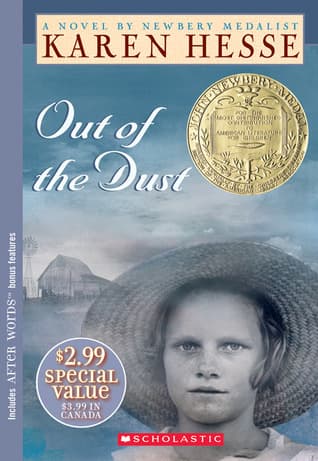
- Out of the Dust
Karen Hesse
3.8 (69k) average on GoodreadsChildren'sBoth "Not Exactly a Love Story" and Karen Hesse's "Out of the Dust" are historical fiction YA novels set during the Great Depression, focusing on the resilience of young girls. However, Hesse's novel is written in free verse, offering a more immediate and poetic, albeit stark, emotional landscape of the Dust Bowl. Couloumbis's prose is more traditional, allowing for a broader scope of character interaction and a more nuanced exploration of class dynamics within a household setting, whereas Hesse focuses intensely on one family's struggle with environmental disaster.
- A Tree Grows in Brooklyn
Betty Smith
4.3 (388k) average on GoodreadsHistorical FictionWhile Betty Smith's "A Tree Grows in Brooklyn" is a classic coming-of-age novel set earlier in the 20th century, it shares with Couloumbis's book a focus on a young girl's experiences with poverty and hardship, and her gradual understanding of the complex adult world. Both Francie Nolan and Verna navigate difficult circumstances with an observant eye and an inner strength. However, Smith's novel is much grander in scope, covering a longer period and a wider cast of characters, delving deeper into the social fabric of an entire neighborhood, while Couloumbis maintains a tighter focus on Verna's personal journey and her immediate environment.
- To Kill a Mockingbird
Harper Lee
4.3 (4.5M) average on GoodreadsHistorical FictionIn the 1930s Jim Crow South, Harper Lee writes about racial injustice, moral growth, and the quiet courage of a lawyer father, Atticus Finch, as seen through his young daughter's eyes.
- The Great Gatsby
F. Scott Fitzgerald
3.9 (3.8M) average on GoodreadsHistorical FictionIn the opulent Roaring Twenties, a mysterious millionaire's lavish parties hide his desperate, tragic pursuit of a lost love, exposing the emptiness within the American Dream.
- Pride and Prejudice
Jane Austen
4.3 (3M) average on GoodreadsHistorical FictionIn a society focused on status and money, Elizabeth Bennet navigates love and pride, challenging Mr. Darcy and social expectations to find true affection.
- Angels & Demons
Dan Brown
3.9 (2.7M) average on GoodreadsThrillerA Harvard symbologist races through Rome's ancient sites, deciphering cryptic clues to unmask the Illuminati and stop a vengeful plot to destroy the Vatican with a stolen antimatter weapon.





Enjoyed the summary?
A summary gives you the shape of the book. The book itself has the detail, the examples and the voice.
Find Not Exactly a Love Story on AmazonAs an Amazon Associate, BookBrief earns from qualifying purchases. How we're funded