

Synopsis
Covers the whole plot, including the ending.
- Difficulty
- Medium
- Pacing
- Moderate
- Mood
- Atmospheric, Melancholic, Romantic, Haunting, Tragic
- Read it if
- You enjoy magical realism, tragic romance, and historical settings with a focus on human passion and societal hypocrisy.
- Skip it if
- You prefer fast-paced plots or are uncomfortable with themes of forbidden love and the exploitation of innocence.
Of Love and Other Demons Plot Summary
Covers the whole plot, including the ending.
The Rabid Dog's Bite
On her twelfth birthday, Sierva María de Todos los Ángeles, the neglected daughter of the Marquis de Casalduero and Bernarda Cabrera, goes to the market in an eighteenth-century South American seaport with her enslaved nurse, Dominga de Adviento. There, a rabid dog, recently escaped from a nearby meat market, bites Sierva María on the ankle. Dominga and the market vendors see the incident but downplay its seriousness, treating it with traditional remedies. Her parents, largely absent from her life, initially ignore the bite, leading to a period of uncertainty and the slow appearance of symptoms that will eventually cause widespread panic and accusations of demonic possession.
Growing Suspicions and Superstitions
After the dog bite, Sierva María shows increasingly wild behavior. She develops a fever, avoids water, and feels generally unwell, all classic signs of rabies. However, in the superstitious setting of the time, her symptoms are misunderstood. Her parents, especially her mother Bernarda, who is consumed by her own addictions and failing health, blame her illness on various folk ailments or even a curse. The enslaved people in the household, who raised Sierva María and are close to her, perform their own rituals and prayers, further confusing the diagnosis and feeding the belief that something supernatural is happening, rather than a medical condition.
The Bishop's Intervention
As Sierva María's condition worsens, marked by fits, strange noises, and growing aggression, the local community and her family become convinced she is demonically possessed. The Marquis, desperate and swayed by public opinion, asks for help from the Bishop, Don Toribio de Cáceres y Virtudes. The Bishop, a firm believer in the literal meaning of religious rules and an authority in both spiritual and worldly matters, quickly decides that Sierva María is indeed possessed by demons. He orders her to be kept in the Convent of Santa Clara for observation and exorcism, an act that seals her fate and removes any chance of medical treatment.
Convent Life and Father Delaura's Arrival
Sierva María arrives at the Convent of Santa Clara, a place of strict discipline and the home of the stern Abbess, Mother Josefa Miranda. Her arrival causes a stir among the nuns, many of whom are scared by her supposed possession. She is confined to a cell, often chained, and subjected to various religious rituals. Soon after her arrival, Father Cayetano Delaura, a young, intelligent, and scholarly priest, is appointed by the Bishop to help with her exorcism. Delaura is known for his progressive views and intellectual curiosity, making him an unusual choice for such a task, and he is immediately drawn to Sierva María's unusual beauty and fierce spirit.
The Unconventional Exorcist
Father Delaura approaches Sierva María's supposed possession with a mix of theological duty and intellectual doubt. Unlike the other priests and nuns, he first tries to talk to her, to understand her, rather than immediately using harsh exorcism rites. He reads to her, tries to engage her in conversation, and watches her behavior closely. He begins to suspect that her condition might be more complex than simple demonic possession, perhaps a form of madness or even the lingering effects of rabies. This kind and rational approach sets him apart and hints at the emotional connection that will soon grow between them.
Forbidden Love Blooms
As Father Delaura continues his daily visits and ministrations, a deep and forbidden love grows between him and Sierva María. He is drawn to her wildness, her intelligence, and her vulnerability, while she, neglected and alone, finds comfort and connection in his presence. Their sessions change from attempts at exorcism into intimate conversations and shared moments. Delaura, struggling with his vows and his own spiritual beliefs, finds himself deeply conflicted. Sierva María, despite her illness and confinement, returns his affection, leading to a passionate, though mostly unfulfilled, emotional and spiritual bond that goes beyond their roles and society's expectations.
The Discovery and Its Consequences
The strong bond between Father Delaura and Sierva María does not go unnoticed. Servants, other nuns, and eventually the Abbess, Mother Josefa Miranda, grow suspicious of their unusual interactions. When the affair is finally discovered, the scandal is huge. Delaura is immediately removed from his duties and confined, facing severe church punishment for breaking his vows of celibacy and having a relationship with a supposedly possessed girl. Sierva María faces even harsher treatment, including more brutal and frequent exorcisms, as the Church sees her as both a victim and a tool of the devil, further isolating her and increasing her suffering.
Delaura's Punishment and Despair
After his forbidden love is discovered, Father Delaura is stripped of his priestly duties and sent away from the city, to a remote mission or a distant monastery. His intellectual and spiritual world is shattered, and he is consumed by despair and longing for Sierva María. Despite the Church's attempts to erase the memory of his wrongdoing, he cannot forget her. He carries the weight of his love and the guilt of his actions, forever marked by their intense, brief connection. His future is one of penance and solitude, haunted by the image of the girl with the flowing hair.
Sierva María's Final Decline
Deprived of Father Delaura's presence and subjected to increasingly violent and ineffective exorcisms, Sierva María's physical and mental health quickly declines. The nuns, convinced she is still fighting demons, increase their efforts to 'save' her soul, often mistaking her rabies symptoms for signs of continued possession. Isolated, tormented, and without the one person who offered her genuine care and understanding, she dies from her illness. Her death is a tragic result of neglect, superstition, and the Church's strict rules, leaving unanswered questions about her true illness and the great injustice she suffered.
The Unending Hair
After Sierva María's death, her body is buried in the convent's cemetery. Years later, during a routine exhumation, her grave is opened. To the surprise of those present, her famously long, copper-colored hair has continued growing, reaching an extraordinary length, trailing out of her coffin like a bridal train. This miraculous, unsettling phenomenon is the novel's poignant final image. It symbolizes Sierva María's wild spirit, her lasting presence, and the unresolved mystery surrounding her life and death, suggesting that some forces, like love and nature, go beyond human understanding and control.
Principal Figures
Sierva María de Todos los Ángeles
Protagonist
A neglected noble girl believed to be demonically possessed.
Sierva María is the twelve-year-old daughter of the Marquis de Casalduero and Bernarda Cabrera. She is a pale, ethereal girl with exceptionally long, copper-colored hair. Largely ignored by her parents, she was raised by the enslaved people in the household, absorbing their African customs, language, and spiritual beliefs. This upbringing makes her an outsider in her own aristocratic family and in the Spanish colonial society. Despite her delicate appearance, she possesses a fierce spirit, resilience, and a deep capacity for love, which emerges during her confinement and her relationship with Father Delaura.
Relationships: Marquis de Casalduero (neglected daughter); Bernarda Cabrera (neglected daughter); Dominga de Adviento (surrogate mother/nurse); Father Cayetano Delaura (forbidden lover/confidant)
Father Cayetano Delaura
Protagonist
A young, intellectual priest who falls in love with Sierva María.
Father Cayetano Delaura is a scholarly and relatively progressive priest, assigned by the Bishop to exorcise Sierva María. He is a man of intellect and reason, initially approaching the case with a degree of skepticism towards extreme superstition. Despite his vows of celibacy and his commitment to the Church, he possesses a deep capacity for empathy and compassion. He is drawn to Sierva María's innocence and suffering, which eventually leads him to question his faith and succumb to a forbidden, passionate love that challenges all his beliefs and obligations.
Relationships: Sierva María (forbidden lover/confidant); Bishop Don Toribio (subordinate/confidant (initially))
Marquis de Casalduero
Supporting
Sierva María's distant and decaying noble father.
Don Ygnacio de Alfaro y Dueñas, the Marquis de Casalduero, is Sierva María's father. He is a man in decline, both physically and financially, representing the fading aristocracy. He is largely detached from his daughter's life, more concerned with his own melancholia and the crumbling fortunes of his estate. He makes attempts to fulfill his paternal duties but is often weak-willed and easily swayed by societal pressures and the opinions of others, especially when it comes to the belief in Sierva María's possession. His actions, or lack thereof, contribute significantly to his daughter's tragic fate.
Relationships: Sierva María (neglectful father); Bernarda Cabrera (unhappy husband)
Bernarda Cabrera
Supporting
Sierva María's volatile, addicted mother.
Bernarda Cabrera is the Marquis's wife and Sierva María's mother. She is depicted as a deeply unhappy and volatile woman, addicted to coca leaves and consumed by her own physical and emotional ailments. Her past is marked by a life of excess and scandal, and she resents Sierva María, often treating her with indifference or cruelty. Her self-absorption prevents her from recognizing or addressing her daughter's true needs, contributing to Sierva María's neglect and ultimately her demise. She is a tragic figure, trapped by her own vices and unhappiness.
Relationships: Sierva María (neglectful/abusive mother); Marquis de Casalduero (unhappy wife)
Dominga de Adviento
Supporting
Sierva María's loyal enslaved nurse and surrogate mother.
Dominga de Adviento is an enslaved African woman who served as Sierva María's nurse and effectively raised her. She embodies the rich African cultural and spiritual traditions that Sierva María internalizes. Dominga is fiercely loyal and loving towards Sierva María, acting as a true mother figure. She is the first to witness the dog bite and attempts to treat Sierva María with traditional remedies, but her efforts are ultimately dismissed by the colonial society. Her influence on Sierva María is profound, shaping her worldview and providing her with the only genuine affection she knows.
Relationships: Sierva María (surrogate mother/nurse)
Bishop Don Toribio de Cáceres y Virtudes
Antagonist
The rigid, dogmatic Bishop who condemns Sierva María.
Bishop Don Toribio is a stern and unyielding figure of religious authority. He represents the rigid, dogmatic interpretation of Catholic doctrine prevalent in the colonial era. He is quick to diagnose Sierva María's condition as demonic possession, driven by fear, superstition, and a desire to assert the Church's power. His unwavering belief in the literal presence of evil leads him to order Sierva María's confinement and the subsequent exorcisms, ultimately sealing her tragic fate. He is a symbol of institutional power overriding individual compassion and reason.
Relationships: Sierva María (judge/condemner); Father Cayetano Delaura (superior/punisher)
Mother Josefa Miranda
Supporting
The stern Abbess of the Convent of Santa Clara.
Mother Josefa Miranda is the Abbess of the Convent of Santa Clara, a strict and austere nun devoted to the Church's teachings. She is responsible for Sierva María's care and confinement within the convent walls. While not overtly cruel, she is unyielding in her belief in Sierva María's possession and enforces the harsh discipline and exorcism rites prescribed by the Bishop. She embodies the rigid, often uncompassionate, institutional aspect of the Church, prioritizing spiritual conformity over individual well-being.
Relationships: Sierva María (jailer/overseer); Father Cayetano Delaura (supervisor (of his actions within the convent))
Abrenuncio
Mentioned
A Jewish doctor who offers a rational medical explanation.
Abrenuncio is a Jewish doctor whose expertise is sought by the Marquis. He is depicted as a man of science and reason, offering a medical diagnosis of rabies for Sierva María's condition, directly contradicting the Church's belief in demonic possession. His rational approach and medical knowledge represent an alternative worldview to the pervasive superstition of the era. However, his advice is ultimately rejected, highlighting the dominance of religious dogma over scientific understanding in the colonial society.
Relationships: Marquis de Casalduero (medical advisor (rejected))
Themes & Insights
The Conflict Between Faith and Reason
This theme is central to the novel, appearing in the conflict between the Church's strict belief in demonic possession and the growing scientific understanding of rabies. Father Delaura initially represents a more reasoned approach, trying to understand Sierva María's condition through intellect before falling in love, while Dr. Abrenuncio offers a purely medical diagnosis that is ignored. Sierva María's tragedy comes directly from superstitious faith winning over rational inquiry, leading to her unjust confinement and death. The entire story questions the dangers of unquestioning belief versus seeking truth.
“The devil is not what he used to be,”
Forbidden Love and Sacrifice
The passionate and ultimately tragic love affair between Father Delaura and Sierva María is the emotional heart of the story. Their love defies societal rules, religious vows, and the perceived lines between the sacred and the profane. Delaura's sacrifice of his priestly life and Sierva María's complete devotion to him highlight the intensity and destructive power of such a bond. Their love is pure and transcendent, yet it is doomed by the rigid structures of the Church and the common superstitions of the time, leading to their separation and her ultimate death.
“He had never understood that the most perilous temptation is that of good sense, which does not require a choice.”
Colonialism and Cultural Clash
The novel is set in an 18th-century South American colonial port, where Spanish Catholic culture is dominant, but African traditions remain, especially among the enslaved population. Sierva María, raised by her African nurses, shows this conflict; her 'otherness' is partly due to her immersion in these indigenous and African beliefs. The Church's response to her illness reflects the colonial power structure's suppression of non-European cultures and beliefs, labeling them as demonic or superstitious. This cultural tension highlights the systemic injustices and misunderstandings in the colonial system.
“Her only language was the dialects of the Mandinga, and the tongue of the Yoruba, and the Carabalí and the Congo.”
The Power of Superstition and Ignorance
Superstition and ignorance are strong forces that drive the plot and dictate the characters' actions. The belief in demonic possession, fueled by fear and a lack of scientific knowledge, leads to Sierva María's tragic fate. The colonial society, from the highest religious authorities to the common people, readily accepts supernatural explanations for illness, dismissing rational medical diagnoses. This theme shows how deeply held beliefs, especially in a pre-Enlightenment era, can override logic and compassion, leading to severe consequences for the innocent.
“The Bishop was a man of fierce faith, not given to the subtleties of reason.”
Neglect and Isolation
Sierva María's life is marked by deep neglect and isolation, even before her supposed possession. Her aristocratic parents are emotionally distant and physically absent, leaving her to be raised by the enslaved staff. This early neglect makes her vulnerable and emotionally starved, drawing her towards the unexpected affection offered by Father Delaura. Her later confinement in the convent further isolates her, worsening her condition and taking away any chance of recovery. Her isolation is both physical and emotional, greatly contributing to her tragic end.
“She had been born to an absent father and a mother who was dead from her own life.”
Plot Devices & Literary Techniques
Sierva María's Hair
A symbol of untamed nature, beauty, and enduring mystery.
Sierva María's extraordinarily long, copper-colored hair is a recurring motif and powerful symbol throughout the novel. It represents her wild, untamed nature, her connection to the earth and to African spiritual traditions, and her unique beauty. Its continued growth after death signifies her enduring spirit, a miraculous defiance of decay and a final, enigmatic statement against the attempts to control and categorize her. It embodies the novel's blend of magical realism and serves as a lasting image of her transcendent love and tragic fate.
The Rabid Dog Bite
The inciting incident that sets the tragedy in motion.
The bite from the rabid dog is the catalyst for the entire plot. It is a seemingly mundane event that, in the superstitious context of the 18th-century colonial society, is misinterpreted as a demonic affliction. This incident highlights the stark contrast between medical reality (rabies) and societal belief (possession). It is the 'original sin' that condemns Sierva María, forcing her into a situation where her true illness is ignored, and her fate is sealed by religious dogma rather than scientific understanding. It acts as a perfect example of a MacGuffin, driving the plot while its true nature is misunderstood.
The Convent of Santa Clara
A symbol of confinement, religious authority, and societal repression.
The Convent of Santa Clara serves as more than just a setting; it is a powerful symbol. It represents the oppressive authority of the Church and the societal forces that seek to control and repress anything deemed outside of conventional norms. For Sierva María, it is a place of imprisonment, suffering, and ultimately death, rather than salvation. It is within its walls that the forbidden love between her and Father Delaura blossoms, highlighting the irony of finding profound human connection in a place meant for spiritual austerity and isolation. It embodies the clash between institutional power and individual spirit.
Dreams and Premonitions
Foreshadowing and mystical elements that blur reality.
Dreams and premonitions are used to foreshadow events and introduce elements of magical realism. Father Delaura's recurring dream of a girl with long, flowing hair before he even meets Sierva María hints at their destined connection. These mystical elements blur the line between reality and the supernatural, aligning with the novel's exploration of faith and superstition. They suggest that some forces, perhaps spiritual or fated, are at play beyond purely rational explanation, adding depth to the narrative and reinforcing the idea of a love that transcends the ordinary.
Of Love and Other Demons Quotes
“The problem with reality is that it is so often an obstacle to truth.”
“He knew that the most difficult thing was not to love, but to admit it.”
“Human beings are not born once and for all on the day their mothers give birth to them, but… life forces them over and over again to give birth to themselves.”
“She had the serene beauty of a wild animal, and the innocence of a child.”
“Love is a disease, and its only cure is more love.”
“The world was so recent that many things lacked names, and in order to indicate them it was necessary to point.”
“He had never felt so alone, not even when he was truly alone.”
“There is no greater solitude than that of a man who believes in nothing.”
“What mattered was not the truth, but the appearance of truth.”
“Fear was the only thing that could make him forget his hunger.”
“Madness was not a disease, but a choice.”
“The only difference between a madman and a saint is that the saint is a madman who has found his way.”
“Death was not the end, but a return to the true beginning.”
“He discovered that love was more a state of grace than a feeling, and that it could even be the origin of demons.”
Quiz
10 questions on the plot and the characters. Each answer comes with a short explanation.
Question 1
On what significant occasion does Sierva María get bitten by a rabid dog?
- Her first communion
- Her twelfth birthday
- The day she enters the convent
- A local market festival
Show answer
B. Her twelfth birthday Sierva María is bitten by a rabid dog on her twelfth birthday, an event that sets in motion the central conflict of the story.
Question 2
What is the primary reason Sierva María is sent to the convent?
- To receive a proper education
- To escape a forced marriage
- She is believed to be possessed due to the dog bite
- Her parents want her to become a nun
Show answer
C. She is believed to be possessed due to the dog bite After being bitten by the rabid dog, Sierva María's strange behavior is interpreted as demonic possession, leading to her confinement in the convent.
Question 3
What physical characteristic of Sierva María is repeatedly emphasized and even appears in Father Delaura's dream?
- Her striking blue eyes
- Her exceptionally long hair
- A distinctive birthmark
- Her small, delicate hands
Show answer
B. Her exceptionally long hair Sierva María's extraordinarily long hair, which trails after her 'like a bridal train,' is a significant and symbolic detail, even appearing in Father Delaura's premonitory dream.
Question 4
What is the social standing of Sierva María's family?
- Newly rich merchants
- A prosperous farming family
- A decaying noble family
- Impoverished commoners
Show answer
C. A decaying noble family The book describes Sierva María as the only child of a 'decaying noble family,' highlighting their declining status despite their aristocratic background.
Question 5
Who is Father Cayetano Delaura?
- The Bishop of the diocese
- A young priest assigned to exorcise Sierva María
- Sierva María's estranged uncle
- The doctor who initially examines Sierva María
Show answer
B. A young priest assigned to exorcise Sierva María Father Cayetano Delaura is the priest tasked with attending to Sierva María, initially with the intention of exorcism, but he ultimately falls in love with her.
Question 6
What is the setting of the story?
- A bustling European capital in the 19th century
- An isolated Amazonian village in the 17th century
- An 18th-century South American seaport
- A colonial Mexican hacienda in the 16th century
Show answer
C. An 18th-century South American seaport The story takes place in an 'eighteenth-century South American seaport,' providing a specific historical and geographical context for the events.
Question 7
What significant internal conflict does Father Delaura experience?
- His desire to leave the priesthood for a secular life
- His struggle between his priestly vows and his love for Sierva María
- His doubt in God's existence
- His ambition to become a bishop
Show answer
B. His struggle between his priestly vows and his love for Sierva María Father Delaura's central conflict arises from his forbidden love for Sierva María, which directly clashes with his sacred vows as a priest.
Question 8
How does the novel explore the theme of belief vs. superstition?
- By contrasting scientific medical practices with traditional healing methods
- By depicting the church's struggle to differentiate between medical illness and demonic possession
- By showing how indigenous spiritual beliefs are proven superior to Christian doctrine
- By highlighting the importance of personal faith over institutional religion
Show answer
B. By depicting the church's struggle to differentiate between medical illness and demonic possession The novel critically examines the blurred lines between medical reality (rabies) and religious interpretation (demonic possession), showcasing the church's struggle with these concepts.
Question 9
What is the ultimate fate of Sierva María, implied by the narrative's focus on her perceived possession and confinement?
- She is eventually cured and leaves the convent to marry
- She escapes the convent with Father Delaura
- She remains isolated in the convent, subjected to continuous exorcism attempts until her death
- She embraces a life of religious devotion and becomes a nun
Show answer
C. She remains isolated in the convent, subjected to continuous exorcism attempts until her death Sierva María's story is one of tragic confinement and misunderstanding. Despite Delaura's love, she remains trapped by the belief in her possession, leading to her demise within the convent's walls.
Question 10
Which of the following literary devices is most prominent in describing Sierva María's hair and its symbolic significance?
- Irony
- Foreshadowing
- Understatement
- Allegory
Show answer
B. Foreshadowing Sierva María's hair appearing in Delaura's dream 'trailing after her like a bridal train' before he even meets her serves as a strong instance of foreshadowing, hinting at their fated connection and the romantic tragedy to unfold.
Of Love and Other Demons FAQ
What is the central conflict driving the plot of 'Of Love and Other Demons'?
The central conflict revolves around Sierva María, a twelve-year-old girl believed to be possessed after a rabid dog bite, and the forbidden love that develops between her and Father Cayetano Delaura, the priest assigned to perform her exorcism. This love clashes with the rigid religious dogma and societal norms of 18th-century colonial South America, leading to tragic consequences for both.
Who are Sierva María's parents and what is their relationship like with her?
Sierva María's parents are the Marquis de Casalduero, Don Ygnacio, and Doña Olalla de Todos los Santos. They are largely neglectful and emotionally distant, having handed Sierva María's upbringing over to enslaved people, particularly Dominga de Adviento. Their relationship with her is characterized by indifference and a lack of genuine affection, only showing concern when her supposed possession becomes a public issue.
How does the rabid dog bite incident escalate into a belief of demonic possession?
Initially, the bite is dismissed, but as Sierva María exhibits unusual behavior – a fever, aversion to sunlight, and perceived 'fits' – the superstitious beliefs of the time, coupled with the lack of medical understanding, lead the community and her parents to conclude she is possessed. The local bishop, Don Toribio de Cáceres y Virtudes, reinforces this belief, ordering her confinement and exorcism.
What role does Father Cayetano Delaura play in Sierva María's life?
Father Cayetano Delaura is a scholarly and initially skeptical priest assigned by the bishop to exorcise Sierva María. However, as he spends time with her, he becomes captivated by her and eventually falls deeply in love, abandoning his religious vows and duties to pursue this forbidden affection. He acts as both her spiritual guide and her lover, blurring the lines between salvation and sin.
What is the ultimate fate of Sierva María and Father Delaura?
Sierva María ultimately dies in the convent, seemingly from a combination of the 'exorcisms' and a broken heart, with her hair continuing to grow after death. Father Delaura is excommunicated, disgraced, and sent to work in a leper colony, forever separated from Sierva María and haunted by their love. Their story ends in tragedy, with neither finding peace or conventional happiness.
What is the significance of Sierva María's extraordinarily long hair?
Sierva María's hair is a powerful symbol throughout the novel, representing her wild, untamed nature, her beauty, and her connection to pre-Christian, possibly African, spiritual traditions. It is also a physical manifestation of her vitality and innocence, growing even after her death, suggesting an enduring spirit or a lingering natural force that transcends religious dogma and physical demise.
Are there any subtle indications that Sierva María might not actually be possessed?
Yes, the narrative strongly suggests her 'possession' is a misinterpretation of rabies symptoms, the effects of neglect, and the psychological impact of her confinement. Her aversion to water, fear of light, and 'fits' align with rabies, while her 'demonic' outbursts often stem from fear, confusion, or a childlike defiance against her harsh treatment, rather than supernatural influence.
What historical event or belief system is subtly referenced by the indigenous practices mentioned in the book?
The book subtly references the syncretism of indigenous and African spiritual beliefs with Catholicism in colonial South America. Dominga de Adviento's practices, such as her knowledge of remedies and her role in Sierva María's early life, hint at a rich, non-European spiritual heritage that exists alongside, and sometimes in defiance of, the dominant Christian dogma.
How does the setting of an 18th-century South American seaport influence the novel's themes?
The 18th-century South American seaport setting is crucial, highlighting the clash between European colonial power, its rigid Catholicism, and the vibrant, often superstitious, local culture. It emphasizes the social hierarchy, the prevalence of slavery, and the limited understanding of disease, all of which contribute to Sierva María's tragic fate and the societal condemnation of Delaura's love.
How does Sierva María's upbringing by enslaved people influence her personality and worldview?
Sierva María's upbringing by enslaved people, particularly Dominga de Adviento, gives her a unique perspective, fostering a sense of freedom, a connection to nature, and an immunity to the strictures of colonial high society. She is less inhibited, more intuitive, and possesses a resilience that allows her to endure her confinement, contrasting sharply with her 'civilized' but emotionally stunted parents.
Analyze Father Delaura's psychological transformation from a devout priest to a passionate lover.
Father Delaura's transformation is driven by a profound spiritual and emotional awakening. Initially intellectual and disciplined, his encounter with Sierva María's raw innocence and perceived vulnerability shatters his ascetic resolve. His initial pity evolves into a powerful, almost mystical love, compelling him to abandon his vows and embrace a passion that he rationalizes as a higher form of spiritual connection, despite its forbidden nature.
What psychological impact does the belief in possession have on Sierva María?
The belief in possession deeply traumatizes Sierva María. Isolated, subjected to terrifying rituals, and constantly told she is inhabited by evil, she internalizes this narrative to some extent, leading to fear, confusion, and a sense of being an outcast. Her 'demonic' behavior can be seen as a coping mechanism or a desperate cry for attention and understanding in a hostile environment.
How does the novel explore the psychology of religious fanaticism through characters like the Bishop?
The novel explores religious fanaticism through characters like Bishop Don Toribio, who prioritizes dogma and ritual over compassion and reason. His unwavering belief in demonic possession, his insistence on brutal exorcisms, and his inability to consider alternative explanations highlight how rigid faith can lead to cruelty, fear-mongering, and a dangerous dismissal of human suffering.
Is the love between Sierva María and Father Delaura depicted as pure or problematic, and why?
The love is depicted as both pure in its intensity and sincerity, yet deeply problematic due to the vast age difference, power imbalance (priest/exorcist and confined child), and its forbidden nature within the religious context. While portrayed as a profound, almost fated connection, the circumstances surrounding it make it inherently controversial and contribute to the tragedy, rather than a blissful union.
How can the ending, particularly Sierva María's continued hair growth, be interpreted?
The ending, with Sierva María's hair continuing to grow after death, can be interpreted as a symbol of enduring life, untamed nature, or even a form of spiritual defiance against the attempts to 'tame' or 'exorcise' her. It suggests that her essence, her wild spirit, transcends physical death and the rigid confines of religious dogma, leaving a lasting, mysterious legacy.
Does the novel criticize or affirm religious faith, or both?
The novel primarily criticizes the rigid, dogmatic, and often cruel aspects of institutionalized religion, particularly its intolerance and superstition, as seen in the exorcism attempts and the treatment of Sierva María. However, it also subtly affirms a more spiritual, personal, and compassionate form of faith through Delaura's initial devotion and his later, unconventional understanding of love as a divine force.
What is the novel's stance on the conflict between reason and superstition?
The novel firmly positions itself against superstition, depicting it as a destructive force that leads to ignorance, fear, and brutality. While reason, embodied by Delaura's initial skepticism, offers a potential path to understanding, it is ultimately overwhelmed and silenced by the pervasive superstitious beliefs of the era and the power of the Church. It highlights the dangers when superstition trumps critical thought.
How does the book use magical realism, if at all, beyond the 'possession' narrative?
While the 'possession' can be seen as a misinterpretation of reality, the book employs magical realism through elements like Sierva María's impossibly long, perpetually growing hair, Delaura's prophetic dreams, and the heightened, almost mythical atmosphere surrounding certain events. These elements blur the line between the natural and supernatural, creating a world where extraordinary occurrences are accepted as part of reality.
What broader societal issues does 'Of Love and Other Demons' comment on?
'Of Love and Other Demons' comments on societal issues such as the abuses of power by institutions (religious and aristocratic), the oppression and dehumanization inherent in slavery, the marginalization of women and children, and the dangerous consequences of ignorance and superstition. It critiques a society where dogma and social status often take precedence over human compassion and individual freedom.
About the author
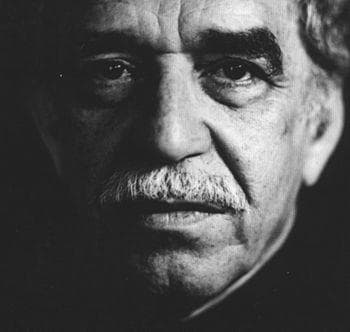
Gabriel José de la Concordia García Márquez was a Colombian novelist, short-story writer, screenwriter, and journalist, known affectionately as Gabo or Gabito throughout Latin America. Considered one of the most significant authors of the 20th century, particularly in the Spanish language, he was awarded the 1972 Neustadt International Prize for Literature and the 1982 Nobel Prize in Literature. He pursued a self-directed education that resulted in leaving law school for a career in journalism. From early on he showed no inhibitions in his criticism of Colombian and foreign politics. In 1958, he married Mercedes Barcha Pardo; they had two sons, Rodrigo and Gonzalo.
Similar books
- One Hundred Years of Solitude
Gabriel García Márquez
4.1 (753k) average on GoodreadsLiterary FictionShares the author's distinctive magical realism and evocative prose, exploring themes of love, fate, and time.
- The House of the Spirits
Isabel Allende
4.2 (190k) average on GoodreadsFantasyFeatures multi-generational sagas, historical Latin American settings, and elements of magical realism.
- Love in the Time of Cholera
Gabriel García Márquez
3.9 (412k) average on GoodreadsLiterary FictionExplores the complexities and enduring nature of love in a Latin American historical context with rich prose.
- Like Water for Chocolate
Laura Esquivel
4.0 (324k) average on GoodreadsFantasyBoth novels integrate magical realism and romance within a historical context. However, Like Water for Chocolate uses magical realism to empower its female protagonist through culinary expression and offers a more overtly romantic and ultimately triumphant narrative. Of Love and Other Demons depicts a more tragic and disempowering love story, with the protagonist's agency constantly undermined by external forces.
- To Kill a Mockingbird
Harper Lee
4.3 (4.5M) average on GoodreadsHistorical FictionIn the 1930s Jim Crow South, Harper Lee writes about racial injustice, moral growth, and the quiet courage of a lawyer father, Atticus Finch, as seen through his young daughter's eyes.
- The Great Gatsby
F. Scott Fitzgerald
3.9 (3.8M) average on GoodreadsHistorical FictionIn the opulent Roaring Twenties, a mysterious millionaire's lavish parties hide his desperate, tragic pursuit of a lost love, exposing the emptiness within the American Dream.


Enjoyed the summary?
A summary gives you the shape of the book. The book itself has the detail, the examples and the voice.
Find Of Love and Other Demons on AmazonAs an Amazon Associate, BookBrief earns from qualifying purchases. How we're funded