

Synopsis
Covers the whole plot, including the ending.
- Difficulty
- Easy
- Pacing
- Moderate
- Mood
- Whimsical, Romantic, Sweet, Fantastical
- Read it if
- You enjoy whimsical, magical realism with a focus on first love and the power of stories.
- Skip it if
- You prefer gritty realism or find the 'character comes to life' trope too fantastical.
Off the Page Plot Summary
Covers the whole plot, including the ending.
A Royal Encounter
Delilah, a high school student, feels like an outsider and finds comfort in reading. Her favorite book is a classic fairy tale about Prince Oliver, a charming royal cursed to live within its pages. Delilah often sketches Oliver in her notebook, imagining him outside his fictional world. One day, while drawing, she experiences a strange sensation, and Oliver speaks to her from the pages. This initial interaction leaves Delilah thrilled and confused, questioning her sanity and reality. She tries to keep this a secret, but talking to her dream prince is too strong to resist.
The Leap of Faith
After several secret conversations with Delilah, Prince Oliver reveals his desire to experience the real world. Delilah, initially hesitant because his request seems impossible, eventually finds a way. Through her drawings, a shared wish, and a magical kiss through the page, Oliver steps out of the book and into Delilah's bedroom. He is disoriented by the new environment and the lack of magic he is used to. Delilah is overwhelmed by his physical presence and the immediate responsibility of hiding a fictional prince from her family and friends.
Adjusting to Reality
Oliver's transition into the real world is difficult. He is unfamiliar with modern conveniences like cars, electricity, and even casual clothing. His formal speech and chivalrous manner stand out dramatically in Delilah's high school. Delilah tries to teach him about contemporary culture, often with comical results. He struggles with understanding technology and social norms, leading to several embarrassing moments for Delilah. Despite these challenges, their bond deepens as Delilah tries to protect him and help him blend in, while Oliver is fascinated by the complexities of her world.
A Love Story Unfolds
As Oliver spends more time in Delilah's world, their initial friendship grows into a deep and undeniable romance. They share tender moments, exploring their feelings for each other despite the impossibility of their situation. Delilah's best friend, Jasmine, becomes suspicious of Delilah's secret behavior and the mysterious new boy in her life. Oliver, meanwhile, starts to experience the real world's emotions and challenges, including jealousy and insecurity. Their love story, while magical, is constantly shadowed by the knowledge that Oliver does not truly belong in this world.
The Author's Intervention
Delilah becomes increasingly concerned about Oliver's presence. She researches the author of the fairy tale, a reclusive and elderly woman named Althea, hoping to find answers or a solution. Delilah manages to contact Althea, who is shocked and angry to learn that her character has left the book. Althea reveals that she has been aware of Oliver's growing awareness within the story and disapproves of Delilah's actions, believing it will disrupt the balance of both worlds. She warns Delilah of dire consequences if Oliver remains in the real world.
The Fading World
As Althea warned, Oliver's absence from his story begins to have catastrophic effects. Delilah notices that the pages of her fairy tale book are becoming blank, and the characters within it are fading away. Oliver himself starts to experience strange symptoms — moments of pixelation, temporary disappearances, and a weakening connection to the real world. This physical manifestation of his fading existence creates a sense of urgency for Delilah and Oliver, forcing them to confront the reality that their love may be jeopardizing Oliver's entire existence and the world he came from.
A Difficult Choice
Faced with the undeniable evidence of his fairy tale world's collapse, Oliver makes the painful decision that he must return. He understands that his personal happiness cannot come at the cost of his entire world and the lives of the characters within it. Delilah is heartbroken but recognizes the necessity of his choice. They share a poignant conversation about their love and the impossibility of their situation, acknowledging the deep connection they have formed despite the magical barriers between them. The weight of this decision hangs heavily over both of them.
The Quest for a New Ending
Despite Oliver's decision to return, Delilah is unwilling to give up completely. She believes there must be a way for them to be together without sacrificing his world. Together, they revisit Althea, hoping the author can provide a solution. Althea, initially resistant, is moved by their genuine love and Delilah's determination. She reveals a hidden possibility: if the story is rewritten to include Oliver's departure and return, and if a new ending can be crafted that allows for their connection, it might work. This sparks a glimmer of hope for the couple.
Rewriting the Narrative
Delilah and Althea begin the difficult task of rewriting the fairy tale. Delilah, using her artistic talent and deep understanding of Oliver's character, helps Althea craft a new narrative that explains Oliver's absence and allows for his return, while also subtly incorporating the possibility of his continued connection to Delilah. This process is emotionally taxing, as they must carefully balance the original story's integrity with their desire for a happy ending for Oliver and Delilah. Oliver watches, hopeful yet anxious, as his destiny is literally rewritten before his eyes.
The Sacrifice and the Promise
With the rewritten ending complete, the time comes for Oliver to return to his story. It is a tearful farewell between him and Delilah, filled with promises of finding each other again. Oliver steps back into the pages, and the book's world slowly restores itself. Delilah is left with a profound sense of loss but also a renewed hope. The story now concludes with Oliver's return, hinting at a future where he might, eventually, find a way to bridge the gap between their worlds permanently, or at least visit Delilah. The ending is bittersweet, leaving room for a potential reunion.
A New Chapter for Delilah
After Oliver's departure, Delilah is changed. She no longer feels like an outsider and has found confidence in her ability to shape her own destiny. She continues to draw and write, now with a deeper understanding of storytelling's power. While Oliver is physically gone, their connection remains, sustained by the rewritten narrative and their shared love. Delilah finds new purpose in her art, believing that her creativity can keep the magic alive and, perhaps, eventually bring Oliver back to her, or allow her to visit him. She embraces her unique experience and the enduring hope for their future.
Principal Figures
Delilah
Protagonist
A creative and imaginative high school student who falls in love with a fictional character.
Delilah is a quiet, artistic teenager who often feels like an outsider in her mundane high school life. She finds solace and escape in books, particularly in her favorite fairy tale about Prince Oliver. She possesses a vivid imagination, a strong sense of empathy, and an unwavering belief in magic. Her artistic talent is not just a hobby but a conduit for her connection to Oliver. Despite her initial shyness, she demonstrates immense courage and determination when it comes to protecting Oliver and fighting for their love.
Relationships: Oliver (Deep romantic love, initially a fan-to-character admiration); Jasmine (Best friend, supportive but also a source of realistic questioning); Althea (Initially adversarial, then collaborative mentor/author)
Prince Oliver
Protagonist
A chivalrous fairy tale prince who escapes his book into the real world.
Prince Oliver is the quintessential fairy tale hero: noble, courageous, and charming. He is initially unaware of his fictional nature, believing his story to be his entire reality. Upon entering Delilah's world, he is both overwhelmed and fascinated by its complexities and lack of magic. He possesses an earnest curiosity and a strong moral compass. Despite his princely upbringing, he adapts surprisingly well to the real world, driven by his love for Delilah and his desire for a life beyond his predetermined narrative. He grapples with the existential implications of his existence.
Relationships: Delilah (Deep romantic love, his guide to the real world); Althea (His creator, initially an unknown force, later a collaborator)
Althea
Supporting
The reclusive original author of Oliver's fairy tale.
Althea is the elderly, reclusive author of Delilah's favorite fairy tale. She is initially portrayed as protective of her creation and angered by Oliver's escape, viewing it as a disruption to the narrative she meticulously crafted. She holds a deep understanding of the delicate balance between fictional worlds and reality. Despite her initial sternness, she is ultimately a compassionate artist who, when confronted with the genuine love between Delilah and Oliver, is moved to help them find a solution. She represents the power and responsibility of a storyteller.
Relationships: Delilah (Initially an antagonist, later a mentor and collaborator); Oliver (His creator, a distant but powerful figure)
Jasmine
Supporting
Delilah's practical and supportive best friend.
Jasmine is Delilah's best friend, a grounded and pragmatic teenager who serves as a foil to Delilah's imaginative nature. She is loyal and caring, but also skeptical of Delilah's increasingly strange behavior. She tries to offer rational explanations for the inexplicable events surrounding Delilah, often questioning her friend's sanity. Despite her inability to fully grasp the magical reality, she remains a supportive presence, offering a touchstone to the mundane world and a necessary dose of realism. She represents the average person's reaction to the fantastical.
Relationships: Delilah (Best friend, confidante (to a limited extent))
King Theodore
Mentioned
Oliver's father in the fairy tale, a wise but traditional ruler.
King Theodore is Prince Oliver's father within the fairy tale. He represents the established order and the expectations placed upon Oliver as a royal heir. He is a wise and benevolent ruler, but his role within the story is to guide Oliver towards his destiny within the confines of their fictional world. His primary concern is the well-being of his kingdom and his son's fulfillment of his royal duties. He is a symbol of the world Oliver leaves behind and eventually returns to.
Relationships: Oliver (Father-son relationship, traditional royal expectations)
Themes & Insights
The Power of Storytelling and Imagination
The novel explores how stories shape our lives and how imagination can go beyond reality. Delilah's deep connection to Oliver's fairy tale allows her to literally bring him to life, showing how a reader's engagement with a narrative can transform. The act of drawing and rewriting the story by Delilah and Althea highlights the creative agency involved in crafting and reimagining narratives, suggesting that stories are not static but living entities that can evolve with belief and intent. This theme is central to Oliver's existence and the solution to their predicament.
“Sometimes, the only way to get your happy ending is to write it yourself.”
Love Transcending Boundaries
At its core, the book is a romance about a love that defies the most impossible boundaries: those between fiction and reality. Delilah and Oliver's relationship challenges the idea that love must adhere to conventional limits. Their love is not just a feeling but a force capable of altering worlds and destinies. Their struggle to be together, despite the dangers and sacrifices, emphasizes that true love can bridge any divide, even when faced with the literal disintegration of an entire fictional world, as seen when Oliver's world begins to fade.
“Maybe the greatest adventures happen off the page.”
Identity and Self-Discovery
Both Delilah and Oliver go through journeys of self-discovery. Oliver, a fictional character, gains awareness and grapples with the question of his own reality and purpose outside his predetermined narrative. He learns what it means to be 'real' and to make choices. Delilah, initially an insecure outsider, finds her voice and strength through her love for Oliver and her active role in rewriting their story. She discovers her own agency and the power of her creativity, transforming from a passive reader into an active participant in her own life's narrative.
“He was only a story, but he felt more real than anyone I had ever met.”
The Consequences of Choice
The narrative shows the weight of choices, particularly Oliver's decision to leave his world and the effects that follow. His absence causes his fairy tale to unravel, illustrating that every action, especially one that defies established order, has consequences. Delilah also faces difficult choices, such as whether to protect Oliver or risk his existence. The book explores the ethical implications of altering a narrative and the responsibility that comes with such power, culminating in their ultimate decision to rewrite the story to lessen the negative repercussions.
“Every choice has a ripple effect, sometimes across entire worlds.”
Plot Devices & Literary Techniques
Metafiction
A story that self-referentially draws attention to its own status as a fictional construct.
The novel heavily uses metafiction by having a character, Prince Oliver, literally step out of his book and into the 'real' world. This device blurs the lines between author, reader, and character, making the audience question the nature of reality and storytelling itself. The existence of Althea, the original author, further emphasizes this, as she becomes a character within the narrative, directly influencing the fate of her own creations. It allows the story to comment on its own genre and the conventions of fairy tales.
Magical Realism
The integration of magical or fantastical elements into a realistic setting.
While leaning into fantasy, 'Off the Page' employs magical realism by presenting the extraordinary event of a fictional character coming to life within an otherwise contemporary, realistic high school setting. Oliver's struggle to adapt to modern technology and social norms highlights the contrast between his magical origin and the mundane world. This device makes the fantastical elements feel more grounded and emphasizes the disruptive nature of magic in a non-magical world, making Oliver's presence both wondrous and challenging.
The 'Fading World' Trope
A fictional world or character deteriorating due to a disruption in its narrative or existence.
This device is crucial to the plot, as Oliver's absence from his fairy tale causes his world to literally begin to disappear, with pages turning blank and characters fading. This creates immense stakes and urgency for Delilah and Oliver, forcing them to confront the dire consequences of their love. It serves as a powerful visual metaphor for the delicate balance of fictional universes and the responsibility of characters to their stories, ultimately driving the plot towards the necessity of rewriting the narrative to restore balance.
The Chosen One/Destiny Trope (Subverted)
A character destined for a specific role, often challenged or redefined.
Prince Oliver is initially presented as a classic 'chosen one' within his fairy tale, destined to marry his princess and rule. However, his escape from the book subverts this trope. He actively chooses to defy his predetermined destiny for love, and his 'destiny' then becomes a collaborative effort between himself, Delilah, and Althea to rewrite his future. This subversion highlights the theme of free will versus fate and the idea that one can forge their own path, even if they originated from a fixed narrative.
Off the Page Quotes
“Happy ever after, it turns out, isn't a destination at all. It's a journey, and you have to keep moving.”
“Sometimes, the only way to get your story to a happy ending is to rewrite it yourself.”
“He was a prince, and I was just a girl. But in the space between the words, we were just two people.”
“The thing about fairy tales is that they make you believe in magic, even when the real world tries to tell you it doesn't exist.”
“You can't live your life waiting for someone else to write your story. You have to pick up the pen yourself.”
“Every story needs a villain, but sometimes the villain is just a hero in a different story.”
“Love isn't about finding a perfect person. It's about seeing an imperfect person perfectly.”
“Some books you read. Some books you enjoy. But some books just swallow you whole.”
“The hardest part of any fairy tale is when you realize you're not the princess, or the prince, but just a supporting character.”
“Even in the happiest of endings, there's always a whisper of what might have been.”
“Magic isn't about wands and spells. It's about seeing the extraordinary in the ordinary.”
“Sometimes the greatest adventures are the ones you never planned for.”
“A story isn't just words on a page. It's a living, breathing thing that changes with every reader.”
Quiz
10 questions on the plot and the characters. Each answer comes with a short explanation.
Question 1
What is unique about Oliver's existence at the beginning of the story?
- He is a ghost haunting Delilah's house.
- He is a character from a fairytale book.
- He is Delilah's imaginary friend.
- He is an alien from another planet.
Show answer
B. He is a character from a fairytale book. Oliver is initially a character from Delilah's favorite fairytale book, making his existence unique as he is not a real person in the 'real world'.
Question 2
What is the primary conflict that arises once Oliver comes 'off the page'?
- Oliver struggles to adapt to modern technology.
- The characters in Oliver's book are disappearing.
- Delilah's parents disapprove of Oliver.
- Oliver becomes famous as a real-life fairytale prince.
Show answer
B. The characters in Oliver's book are disappearing. A major conflict is that when Oliver leaves the book, the other characters within the fairytale begin to disappear, threatening the story's existence.
Question 3
Who is the author of the fairytale book from which Oliver originates?
- Delilah's grandmother
- A mysterious old librarian
- Seraphima
- A famous children's author
Show answer
C. Seraphima The author of the fairytale book is revealed to be Seraphima, who plays a crucial role in the magical elements of the story.
Question 4
What is Delilah's initial reaction when she first realizes Oliver is real?
- Fear and disbelief.
- Excitement and immediate acceptance.
- Anger at him for messing up her life.
- Confusion about her own sanity.
Show answer
A. Fear and disbelief. Delilah's initial reaction to Oliver's appearance is one of profound shock, disbelief, and a touch of fear, as it defies logic.
Question 5
What metaphorical theme does Oliver's transition from book to reality represent?
- The power of imagination over reality.
- The dangers of reading too much.
- The importance of historical accuracy.
- The evolution of literature.
Show answer
A. The power of imagination over reality. Oliver coming off the page symbolizes the power of imagination and how stories can transcend their written form to impact the real world.
Question 6
What is the ultimate consequence if Oliver remains in the 'real world' permanently?
- The fairytale book will be lost forever.
- The fairytale story will unravel and cease to exist.
- Oliver will lose all his memories.
- Delilah will become a character in the book.
Show answer
B. The fairytale story will unravel and cease to exist. The stakes are high; if Oliver stays in the real world, the integrity of his original story is compromised, leading to its complete unravelling and disappearance.
Question 7
What object is crucial for Oliver to travel between his world and Delilah's?
- A magic mirror
- The fairytale book itself
- A special locket
- A secret portal in Delilah's closet
Show answer
B. The fairytale book itself The fairytale book is the direct conduit through which Oliver can enter and exit Delilah's world, making it a critical magical object.
Question 8
What major decision must Delilah and Oliver make regarding their relationship by the end of the book?
- Whether to move to a new city together.
- If they are willing to risk everything for a love that defies their origins.
- How to hide Oliver from the rest of the world.
- Which of them should become a writer.
Show answer
B. If they are willing to risk everything for a love that defies their origins. The central decision for Delilah and Oliver is whether their love is strong enough to overcome the fundamental barriers of their different realities and the consequences of their choices.
Question 9
How does the 'universe' or the rules of their world try to prevent Delilah and Oliver from being together?
- By causing natural disasters whenever they meet.
- By making characters from the book disappear, signaling the story's collapse.
- By giving Oliver a magical curse.
- By causing Delilah to forget Oliver exists.
Show answer
B. By making characters from the book disappear, signaling the story's collapse. The 'universe' enforces its rules by having the fairytale characters vanish when Oliver is not in the book, indicating that their story is being 'rewritten' against the established order.
Question 10
What is the significance of the ending, where Delilah and Oliver must 'decide how much they’re willing to risk for love'?
- It emphasizes the importance of making practical life choices.
- It highlights the theme that true love often requires sacrifice and defying expectations.
- It suggests that they might break up and find other partners.
- It implies they need to consult with their parents for advice.
Show answer
B. It highlights the theme that true love often requires sacrifice and defying expectations. The ending reinforces the central theme of enduring love, suggesting that for their unique relationship to work, they must be prepared to make significant sacrifices and challenge the boundaries of their respective worlds.
Off the Page FAQ
What is the central premise of 'Off the Page'?
The novel centers on Delilah, a real-world teenager, who falls in love with Oliver, a prince from her favorite fairytale book. Their romance transcends the boundaries of fiction and reality when Oliver magically appears in Delilah's world, leading to extraordinary complications.
Who are the main protagonists and what are their initial circumstances?
Delilah is a high school student dealing with typical teenage life, including a crush on a real boy named Edgar. Oliver is a two-dimensional prince living within the pages of a fairytale, destined to repeat the same story day after day, until Delilah's attention gives him a unique awareness.
How does Oliver manage to leave the book and enter Delilah's world?
Oliver's escape is facilitated by Delilah's deep emotional connection to his story and a touch of magic, possibly fueled by her belief and the unique properties of the book itself. His transition is depicted as a sudden, bewildering event for both characters.
What are some of the initial challenges Oliver faces in the real world?
Oliver struggles significantly with the sensory overload and complexities of the real world, such as understanding technology, navigating social norms, and even basic concepts like money and three-dimensional space. His fairytale innocence clashes starkly with modern reality.
What is the primary conflict that arises once Oliver is in Delilah's world?
The main conflict is the universe's attempt to 'correct' their impossible relationship. As Oliver's absence disrupts the fairytale, the book itself begins to decay, threatening Oliver's existence and the fabric of both worlds, forcing them to find a way to maintain their love.
What happens to the fairytale book as Oliver remains in the real world?
As Oliver stays in Delilah's world, the physical book begins to literally fall apart, with pages blurring, illustrations fading, and the story becoming nonsensical. This serves as a tangible manifestation of the disruption their cross-world love is causing.
Are there any other characters from the fairytale who also experience changes?
Yes, other characters within Oliver's fairytale, like his parents the King and Queen, and the villainous sorceress, are also affected by his absence. Their roles become confused or they disappear entirely, indicating the story's unraveling.
How does Edgar, Delilah's real-world crush, fit into the story's hidden details?
Edgar initially represents a 'normal' romantic option for Delilah, a contrast to the fantastical Oliver. However, his presence also highlights Delilah's choice between a conventional life and an extraordinary, yet complicated, love.
Is there a specific magical element or rule that dictates Oliver's ability to exist outside the book?
The book hints that Delilah's intense belief and love, combined with Oliver's own nascent sentience, are the catalysts. It's not a rigid set of rules, but more of an emotional and magical resonance that allows the impossible to happen.
How does Delilah's attachment to Oliver reflect a common psychological need?
Delilah's deep connection to Oliver reflects a common human desire for escapism and the allure of idealized romance found in fiction. She projects her hopes and dreams onto him, finding comfort and excitement beyond her everyday life.
What psychological impact does Oliver's transition have on him, moving from a two-dimensional world to a three-dimensional one?
Oliver experiences profound sensory and existential shock. He grapples with the concept of free will, the vastness of human emotion, and the overwhelming complexity of a world where his actions have real, permanent consequences, a stark contrast to his pre-programmed existence.
How does the book explore the psychological themes of sacrifice and selflessness in love?
The narrative explores these themes as Delilah and Oliver must consider profound sacrifices to save their love, or even each other. They confront whether true love means holding on at all costs, or letting go for the beloved's greater good.
What psychological journey does Delilah undertake as she navigates her impossible relationship?
Delilah undergoes a journey of maturity, learning about the complexities of love beyond fairytale ideals. She confronts fear, doubt, and the responsibility of her choices, ultimately growing more resilient and understanding of real-world relationships.
Does the ending of 'Off the Page' offer a definitive 'happily ever after' or something more ambiguous?
The ending provides a nuanced resolution, challenging the traditional fairytale 'happily ever after.' It suggests that true happiness might involve compromise and unconventional solutions rather than a perfect, problem-free existence, leaving some room for interpretation.
What is the thematic significance of the 'page' in the title 'Off the Page'?
The 'page' symbolizes the boundaries between fiction and reality, the constraints of a pre-written destiny, and the comfort of an imagined world. Going 'off the page' represents breaking free, embracing the unknown, and defining one's own story.
How does the book comment on the nature of storytelling and the power of imagination?
The novel highlights how stories can shape our perceptions of love and reality, and how imagination can make the impossible seem real. It suggests that our belief in a story can give it a life beyond its written words, influencing our own lives.
Could Oliver's existence be interpreted as a metaphor for a reader's deep immersion in a book?
Yes, Oliver's sudden sentience and emergence from the book can be seen as a metaphor for how deeply a reader can connect with fictional characters, making them feel real and impactful in their own lives, blurring the lines between fiction and personal experience.
What message does the book convey about the nature of true love?
The book suggests that true love transcends superficial appearances and even reality itself. It requires sacrifice, understanding, and the willingness to fight for a connection, even when faced with insurmountable obstacles, challenging conventional notions of romance.
How does the book utilize the 'meta-fiction' aspect of a character coming out of a book?
The meta-fictional element allows the authors to explore themes of authorship, destiny, and the power of narrative. It playfully questions the boundaries of fiction, making readers consider the 'reality' of the characters they love.
About the author
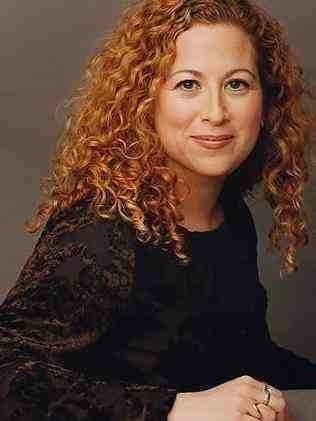
Jodi Picoult is an American author known for her thought-provoking fiction that often explores complex moral dilemmas. Her notable works include My Sister's Keeper, Nineteen Minutes, Small Great Things, Plain Truth, Leaving Time, and The Tenth Circle. Picoult's writing frequently delves into themes of family, justice, and the human experience.
Similar books
- Inkheart
Cornelia Funke
3.9 (369k) average on GoodreadsFantasyFeatures characters literally coming out of books and explores the magic of storytelling.
- Fairest
Gail Carson Levine
4.1 (19k) average on GoodreadsFantasyA modern fairy tale retelling with a strong, romantic young adult voice.
- Ella Enchanted
Gail Carson Levine
4.0 (387k) average on GoodreadsFantasyElla Enchanted offers a more robust exploration of character agency and internal struggle within a fairytale framework. Levine's protagonist, Ella, actively fights against her magical curse and societal expectations, demonstrating a deeper resilience and self-discovery than Delilah, whose journey in "Off the Page" is heavily tied to her romantic interest. Levine delves into the psychological impact of being forced to obey, creating a more complex and empowering narrative of overcoming adversity.
- Harry Potter and the Sorcerer's Stone
J.K. Rowling
4.5 (7M) average on GoodreadsFantasyRescued from a miserable life under the stairs, an orphaned boy discovers he's a wizard destined for a magical school, where he uncovers a dangerous secret tied to the dark wizard who murdered his parents.
- The Hunger Games
Suzanne Collins
4.3 (6.4M) average on GoodreadsFantasyIn a future where children fight to the death on live television, Katniss Everdeen volunteers for the arena, turning a death sentence into a fight for survival and a spark of rebellion.
- 1984
George Orwell
4.2 (3.1M) average on GoodreadsPoliticsIn a future where surveillance and thought control are absolute, a man's search for truth clashes with the Party, showing that hope can be a form of rebellion.





Enjoyed the summary?
A summary gives you the shape of the book. The book itself has the detail, the examples and the voice.
Find Off the Page on AmazonAs an Amazon Associate, BookBrief earns from qualifying purchases. How we're funded