
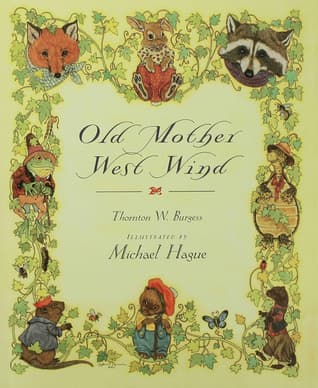
Synopsis
Covers the whole plot, including the ending.
- Difficulty
- Easy
- Pacing
- Slow
- Mood
- Whimsical, Gentle, Instructive, Nostalgic
- Read it if
- You enjoy classic children's fables with gentle moral lessons and anthropomorphic animals.
- Skip it if
- You prefer complex plots, deep character development, or modern fantasy narratives.
Old Mother West Wind Plot Summary
Covers the whole plot, including the ending.
Old Mother West Wind and Her Children
The story begins with Old Mother West Wind, a strong yet gentle figure, who lives in the sky. She decides it is time to bring her children down to the Green Meadows for a visit. These children are the Merry Little Breezes, personified winds, who want to play and explore the world below. Old Mother West Wind carefully guides them, explaining the rules of the Green Meadows and reminding them to be gentle with the creatures living there. This first arrival sets the scene for the Breezes' adventures and interactions with the animals.
Peter Rabbit Learns a Lesson
One day, Peter Rabbit, known for being mischievous and curious, decides to explore beyond the safe Briar-patch. He goes into Farmer Brown's garden, a place he knows he should avoid. While eating some crisp lettuce, he is surprised by Bowser the Hound, Farmer Brown's dog. Peter is terrified and barely escapes, using all his speed and cleverness to get back to the Briar-patch. This incident teaches Peter a valuable, though scary, lesson about the dangers of not following rules and going into forbidden places.
Jimmy Skunk's Unpleasant Predicament
Jimmy Skunk, proud of his strong defense, finds himself in a difficult situation. He meets Reddy Fox, who is always looking for food. Jimmy, sure he can scare away any predator, uses his spray. However, the wind, one of Old Mother West Wind's Merry Little Breezes, changes direction unexpectedly, carrying the scent back toward Jimmy himself. He ends up smelling as bad as, if not worse than, Reddy Fox. This incident, while funny, shows the two-sided nature of Jimmy's defense and the unpredictable parts of nature.
Grandfather Frog's Tall Tales
Grandfather Frog, a wise and old resident of the Smiling Pool, is known for his loud voice and his love of storytelling. He often gathers the younger animals around him, including Jerry Muskrat and Bobby Coon, to tell stories of his youth and old times. These stories are often exaggerated, full of grand adventures and close calls, to the delight and occasional doubt of his audience. He uses his experiences to share lessons, though sometimes indirectly, about the ways of the Green Meadows and its inhabitants.
Paddy the Beaver's Dam
Paddy the Beaver is a hardworking and busy creature, always at work. He is shown carefully building and keeping up his dam and lodge in the Laughing Brook. The other animals, like Sammy Jay and Reddy Fox, often watch his tireless efforts, sometimes with admiration, sometimes with a bit of confusion at his constant work. Paddy's dedication to his home and his beaver community shows an example of hard work and the importance of creating a safe environment, showing the natural order and the different roles animals play.
Reddy Fox's Clever Hunt
Reddy Fox, always a clever hunter, is constantly looking for food. He uses various strategies to try and catch his prey, often focusing on Peter Rabbit or Jerry Muskrat. He shows his intelligence by trying to guess their movements, set traps, or use disguises. While he does not always succeed, his persistent efforts show the predator-prey dynamics of the Green Meadows. His attempts often lead to close escapes for the smaller animals, adding suspense and excitement to the story.
Bobby Coon's Fishing Trip
Bobby Coon, a clever and resourceful raccoon, is often found by the water's edge, especially the Laughing Brook. He is shown as a skilled fisherman, patiently waiting and using his nimble paws to catch fish and other water creatures. His fishing trips are usually peaceful, reflecting his calm and observant nature. He often shares his catches with his friends or simply enjoys the quiet of the brook, showing a different side of the animal world where food is found through skill and patience rather than aggressive hunting.
Danny Meadow Mouse's Escape
Danny Meadow Mouse, a small and often shy creature, often finds himself in dangerous situations because of his size. One such time involves a close call with Hooty the Owl, a silent and powerful night predator. Danny's quick reflexes and ability to hide in the thick grass of the Green Meadows allow him to narrowly escape Hooty's talons. This episode highlights the constant danger faced by smaller animals and their need to rely on their natural instincts and environment for survival, emphasizing how fragile life is in the wild.
The Merry Little Breezes at Play
Throughout the stories, Old Mother West Wind's Merry Little Breezes are shown playing and interacting with the environment. They rustle leaves, whisper through trees, and playfully tug at the animals' tails. Sometimes their play causes minor disruptions, like scattering Jimmy Skunk's scent or making Peter Rabbit's fur stand up. However, they also bring refreshing coolness on a hot day and help spread seeds, showing their vital role in the ecosystem and their generally kind, if sometimes mischievous, nature under their mother's watchful eye.
Sammy Jay's Gossip
Sammy Jay, the noisy and observant blue jay, acts as the unofficial news-spreader of the Green Meadows. He is always the first to know what is happening and is not afraid to share his observations, often loudly. He reports on Reddy Fox's latest hunting attempts, Peter Rabbit's close calls, and Grandfather Frog's statements. While his gossip can sometimes be annoying, he also provides important information for the other animals, showing how the community is connected and the role of communication, even if it is a bit gossipy.
Old Mother West Wind's Wisdom
From time to time, Old Mother West Wind steps in or offers advice, either directly to her children, the Merry Little Breezes, or indirectly through her influence on the weather. She makes sure her children learn to be gentle and responsible, guiding them in their interactions with the animals. She is a kind, overseeing force, reminding everyone of nature's balance and the importance of kindness. Her quiet presence and occasional direct advice serve as a moral guide for the Green Meadows, ensuring that lessons are learned and harmony is kept.
The Circle of Life in the Green Meadows
As the stories continue, a repeated theme is the natural order and cycle of life in the Green Meadows. Predator and prey live together, though with natural tension. Animals like Peter Rabbit learn caution, while Reddy Fox continues his hunts. The Merry Little Breezes play their part in shaping the environment. The book ends with a sense of continuous flow, where each animal has its place and purpose, and life goes on, guided by nature's rhythms and the watchful eye of Old Mother West Wind, ensuring the ecosystem's ongoing balance.
Principal Figures
Old Mother West Wind
Protagonist/Guiding Force
The benevolent spirit of the wind who oversees the Green Meadows.
Old Mother West Wind is a powerful, maternal figure who lives in the sky and brings her children, the Merry Little Breezes, to the Green Meadows. She embodies the forces of nature, specifically the wind, and acts as a benevolent overseer for all the animals. She is wise, patient, and gentle, but also firm when guiding her children and ensuring they respect the creatures of the earth. Her presence is a constant, reassuring force, symbolizing the natural order and the protective aspects of nature.
Relationships: The Merry Little Breezes (Mother to her mischievous children); All Green Meadows animals (Benevolent overseer and protector)
Peter Rabbit
Supporting/Protagonist in his own stories
A curious and often mischievous rabbit who learns through experience.
Peter Rabbit is a lively and curious resident of the Green Meadows, known for his adventurous spirit which often leads him into trouble. He is not malicious but rather prone to mischief and a lack of caution, especially when his curiosity gets the better of him. He frequently finds himself in dangerous situations, often involving Reddy Fox or Farmer Brown's garden, but always manages to escape through his quick wits and speed. His experiences serve as cautionary tales for young readers about listening to advice and understanding boundaries.
Relationships: Reddy Fox (Prey, often pursued by); Farmer Brown (Owner of the forbidden garden Peter frequents); Jimmy Skunk (Fellow resident, sometimes involved in shared adventures)
Reddy Fox
Antagonist
A cunning and persistent predator of the Green Meadows.
Reddy Fox is the primary antagonist in many of the Green Meadows' adventures. He is cunning, sly, and perpetually hungry, always on the lookout for a meal, often targeting Peter Rabbit or Jerry Muskrat. Reddy embodies the predatory side of nature, constantly devising schemes to catch his prey. While he is a threat, he is also depicted as a natural part of the ecosystem, fulfilling his role as a hunter. His intelligence and persistence make him a formidable, though often foiled, character.
Relationships: Peter Rabbit (Prey, constantly hunts); Jerry Muskrat (Prey, attempts to hunt); Jimmy Skunk (Avoids due to his spray)
Jimmy Skunk
Supporting
A proud skunk with a potent defense mechanism.
Jimmy Skunk is a confident and somewhat boastful resident of the Green Meadows, known for his powerful and unmistakable defense mechanism. He is generally peace-loving but will not hesitate to use his spray when threatened, which often deters even the most determined predators like Reddy Fox. Jimmy's character highlights the unique adaptations of animals and the respect they command in the wild. He is often involved in humorous situations where his spray is either a blessing or, occasionally, a curse.
Relationships: Reddy Fox (Deters with his spray); Peter Rabbit (Fellow resident, sometimes interacts with)
Grandfather Frog
Supporting
An ancient and wise frog who shares stories and observations.
Grandfather Frog is one of the oldest and wisest inhabitants of the Smiling Pool. He is known for his booming voice, his love of storytelling, and his vast knowledge of the Green Meadows' history and inhabitants. He often gathers younger animals to recount tales of his youth, which are usually embellished and full of exaggeration, but always carry a kernel of truth or a lesson. He represents the oral tradition and the passing down of wisdom, albeit in a colorful and entertaining manner.
Relationships: Jerry Muskrat (Listener to his stories); Bobby Coon (Listener to his stories)
The Merry Little Breezes
Supporting/Protagonists in their own stories
Old Mother West Wind's playful and sometimes mischievous children.
The Merry Little Breezes are the personified winds, Old Mother West Wind's children, who descend to the Green Meadows to play. They are curious, energetic, and sometimes a bit mischievous, causing leaves to rustle, hats to fly off, or even making the animals' fur stand on end. However, they are generally benevolent, bringing coolness on hot days and helping to spread seeds. Under their mother's guidance, they learn to be gentle and responsible, representing the lighthearted and vital elements of nature.
Relationships: Old Mother West Wind (Their mother and guide); All Green Meadows animals (Playful interactors, sometimes causing minor mischief)
Jerry Muskrat
Supporting
A hardworking and cautious resident of the Laughing Brook.
Jerry Muskrat is a diligent and generally peace-loving resident of the Laughing Brook. He is often depicted working on his home or foraging for food, but he is also a frequent target of Reddy Fox. Jerry is cautious and quick-witted, often relying on his aquatic environment to escape danger. He represents the industrious and somewhat wary nature of many small animals in the wild, always aware of potential threats while going about his daily life. He is a good friend to other peaceful animals.
Relationships: Reddy Fox (Prey, constantly hunted by); Grandfather Frog (Friend and listener to his stories)
Bobby Coon
Supporting
A clever and resourceful raccoon, skilled at fishing.
Bobby Coon is a clever and observant raccoon who often spends his time by the water, especially the Laughing Brook. He is known for his dexterity and skill in catching fish and other aquatic creatures. Bobby is generally calm and thoughtful, often observing the world around him. He represents the resourceful and intelligent aspects of woodland creatures, using his natural abilities to thrive. He is also a good listener to Grandfather Frog's tales.
Relationships: Grandfather Frog (Friend and listener to his stories); Jerry Muskrat (Fellow resident of the water areas)
Themes & Insights
The Balance of Nature
The book consistently shows the balance within the Green Meadows ecosystem. Predators like Reddy Fox chase prey like Peter Rabbit, but the smaller animals often escape due to their cleverness or speed, keeping a natural balance. Old Mother West Wind, as a higher power, ensures this balance is not overly disturbed. The Merry Little Breezes, while sometimes mischievous, also play a vital role in the environment, showing how all elements, big and small, help the natural world stay in harmony. This theme is clear in Reddy Fox's constant hunts and Peter Rabbit's narrow escapes.
“For even in the Green Meadows, where all seemed peaceful, there was always the game of hide-and-seek between those who hunted and those who were hunted.”
Learning and Consequences
Many stories teach about listening to advice and understanding the results of one's actions. Peter Rabbit, for example, repeatedly gets into trouble by going into Farmer Brown's garden, learning about danger through scary experiences. Jimmy Skunk's incident with his own spray teaches him about the unpredictable nature of the wind. These episodes show how characters, especially the younger or more impulsive ones, grow by facing the direct outcomes of their choices, often guided by the indirect wisdom of elders like Old Mother West Wind or Grandfather Frog.
“A lesson learned in fright is a lesson not easily forgotten.”
Community and Interconnectedness
The Green Meadows is shown as a community where all animals, despite their different roles (predator, prey, observer), are connected. Sammy Jay spreads news, Grandfather Frog tells stories, and Old Mother West Wind oversees them all. One character's actions often affect others, whether it is Reddy Fox's hunting attempts creating tension or the Merry Little Breezes influencing the environment. This theme highlights that no creature lives alone and that the community's well-being depends on the interactions and behaviors of its individual members, creating a sense of shared existence.
“Every little breeze, every tiny creature, had its part to play in the big, beautiful story of the Green Meadows.”
The Beauty and Wonder of Nature
Throughout the book, Burgess celebrates the simple beauty of the natural world. Descriptions of the Green Meadows, the Smiling Pool, and the Laughing Brook create a sense of wonder. The personification of natural elements like the wind (the Merry Little Breezes) and the detailed observations of animal behaviors encourage readers to appreciate the magic and complexity of their surroundings. The author's gentle storytelling creates a sense of respect for nature, showing it as a place of adventure, learning, and inherent charm, making the reader feel part of its peaceful scenes.
“The Green Meadows stretched out, a carpet of emerald, dotted with flowers of every hue, beneath the watchful eye of Old Mother West Wind.”
Plot Devices & Literary Techniques
Personification
Giving human qualities to animals and natural elements.
The primary plot device is the extensive use of personification. Animals like Peter Rabbit, Reddy Fox, and Jimmy Skunk think, speak, and behave with human-like motivations, emotions, and dialogues. Old Mother West Wind and her Merry Little Breezes are personified natural forces. This device makes the natural world relatable and accessible to young readers, allowing complex ecological interactions and moral lessons to be conveyed through engaging character narratives. It transforms the Green Meadows into a lively, character-driven world.
Fables and Moral Lessons
Stories that convey ethical teachings or practical wisdom.
Many of the individual tales within the book function as fables. Each episode, such as Peter Rabbit's adventures in Farmer Brown's garden or Jimmy Skunk's self-inflicted predicament, contains a clear moral lesson about caution, consequences, or understanding one's place in the world. These lessons are gently woven into the narrative, making them digestible for children without being overly didactic. The stories subtly guide readers towards an understanding of responsible behavior and the natural order of things.
Recurring Characters and Setting
The consistent use of the same characters and locations.
The book utilizes a consistent cast of characters (Peter Rabbit, Reddy Fox, Grandfather Frog, etc.) and a fixed setting (the Green Meadows, Smiling Pool, Laughing Brook). This creates a cohesive and familiar world for the reader, allowing for deeper character development and a stronger sense of community. The recurring nature of the characters and their interactions reinforces the themes of balance and interconnectedness within the ecosystem, building a rich, continuous narrative tapestry across different stories.
Anthropomorphism
Attributing human characteristics to animals.
Similar to personification, anthropomorphism is central to the narrative. The animals not only speak but also exhibit human-like reasoning, social structures, and emotional responses. They worry, scheme, boast, and learn, making their experiences directly comparable to human life. This device allows the author to explore complex themes like curiosity, fear, cunning, and wisdom through the actions of the animals, making the stories resonate deeply with children and helping them understand human nature through an animal lens.
Old Mother West Wind Quotes
“Old Mother West Wind came down from the Purple Hills in the rollicking, frolicking way she has.”
“The Merry Little Breezes were her children, and they were the dearest, sweetest, funniest little people that ever were.”
“Why, if it wasn't for the sun, there wouldn't be any day, and if there wasn't any day, how could the little birds sing?”
“Never mind, little friend, there are plenty of berries for all if only you are patient.”
“You see, when you stop to think about it, there are a great many things in this world that are much more important than just having a good time.”
“He was a very busy little fellow, and he always had something to do.”
“It is always best to be polite, even to those who may not be polite to you.”
“The best way to make friends is to be one.”
“There are always new things to learn, if only we keep our eyes and ears open.”
“A good laugh is sunshine in a house.”
“It is not always the biggest and strongest who are the wisest.”
“Every little thing has its place and its purpose in the great big world.”
“And so, with a skip and a hop and a jump, away he went, as happy as could be.”
“For you see, kindness is like a little seed; if you plant it, it will surely grow.”
Quiz
10 questions on the plot and the characters. Each answer comes with a short explanation.
Question 1
What is the primary role of Old Mother West Wind in the stories?
- She teaches the animals how to find food.
- She brings the changing weather and listens to the animals' tales.
- She builds homes for all the woodland creatures.
- She collects the lost items of the forest.
Show answer
B. She brings the changing weather and listens to the animals' tales. Old Mother West Wind is depicted as the bringer of weather, such as the breezes, and often sits on her Purple Hill listening to the stories of the various animals.
Question 2
Which animal character is known for being very curious and often getting into mischief?
- Grandfather Frog
- Peter Rabbit
- Jerry Muskrat
- Reddy Fox
Show answer
B. Peter Rabbit Peter Rabbit is frequently portrayed as a curious and sometimes mischievous character in the Green Forest stories, often learning lessons from his adventures.
Question 3
Where does Old Mother West Wind typically reside and listen to the animals' stories?
- In a hollow tree in the Green Forest.
- On the top of Purple Hill.
- Beside the Laughing Brook.
- Inside a cloud in the sky.
Show answer
B. On the top of Purple Hill. Old Mother West Wind is consistently depicted as sitting on her Purple Hill, from where she observes and listens to the happenings of the Green Forest.
Question 4
What common theme is present in many of the stories featuring the Green Forest animals?
- The importance of hoarding food for winter.
- Lessons about nature, behavior, and consequences.
- The struggle for dominance among different species.
- The search for a mythical hidden treasure.
Show answer
B. Lessons about nature, behavior, and consequences. Thornton W. Burgess's stories often serve as fables, teaching young readers about animal behavior, the natural world, and moral lessons through the characters' experiences.
Question 5
Which of the following characters is known for his loud voice and often sharing news from the Smiling Pool?
- Sammy Jay
- Jimmy Skunk
- Grandfather Frog
- Paddy the Beaver
Show answer
C. Grandfather Frog Grandfather Frog is a prominent character who lives in the Smiling Pool and is known for his booming voice and often commenting on the happenings around him.
Question 6
What natural feature is often mentioned as the source of water for many of the animals in the Green Forest?
- The Great Lake
- The Whispering Falls
- The Laughing Brook
- The Misty Swamp
Show answer
C. The Laughing Brook The Laughing Brook is a recurring and important setting in the stories, providing water and a place for many animals to gather.
Question 7
How does Old Mother West Wind typically travel from place to place?
- She walks through the forest.
- She rides on the back of a cloud.
- She floats on the breeze carried by the wind.
- She uses a magical broomstick.
Show answer
C. She floats on the breeze carried by the wind. As her name suggests, Old Mother West Wind is intrinsically linked with the wind and travels by being carried on the breezes.
Question 8
What is the primary characteristic that distinguishes Reddy Fox from other characters in the stories?
- His exceptional singing voice.
- His cleverness and cunning nature, often trying to catch other animals.
- His ability to predict the weather.
- His shyness and desire to be left alone.
Show answer
B. His cleverness and cunning nature, often trying to catch other animals. Reddy Fox is consistently portrayed as a cunning and often hungry predator, whose attempts to catch other animals drive many of the plotlines.
Question 9
The stories often feature the animals learning about the 'Great Law of the Green Forest.' What does this law primarily emphasize?
- That the strongest animal always rules.
- The importance of respecting nature's balance and each other's roles.
- That animals should only eat berries and leaves.
- The necessity of building large homes.
Show answer
B. The importance of respecting nature's balance and each other's roles. The 'Great Law of the Green Forest' is an overarching theme, teaching the animals (and readers) about the natural order, respect for life, and the consequences of breaking these unwritten rules.
Question 10
Which of the following is NOT a typical characteristic of the narrative style in 'Old Mother West Wind' stories?
- Anthropomorphic animal characters.
- Repetitive phrases and gentle humor.
- Complex subplots and ambiguous endings.
- Didactic elements, teaching simple moral lessons.
Show answer
C. Complex subplots and ambiguous endings. The stories are known for their straightforward plots, clear moral lessons, and happy or resolved endings, suitable for young children, rather than complex subplots or ambiguous conclusions.
Old Mother West Wind FAQ
What is the central premise of 'Old Mother West Wind'?
The book introduces Old Mother West Wind, a kindly figure who lives in the Merry Little Breezes, and her 'children' – a group of animal characters like Peter Rabbit, Sammy Jay, and Reddy Fox. Each chapter typically features a short, simple story about these animals learning a lesson or experiencing an adventure in the Green Forest or Smiling Pool, often with Mother West Wind's gentle guidance or observation.
Who are some of the main animal characters introduced in the book?
Key characters include Peter Rabbit, who is often mischievous; Sammy Jay, known for his tattling; Reddy Fox, who is usually hungry and wily; Jerry Muskrat, who loves the water; and Jimmy Skunk, who has a distinctive defense mechanism. Other recurring characters are Billy Mink, Bobby Coon, and Grandfather Frog, each contributing unique personalities to the Green Forest community.
What role does Old Mother West Wind play in the stories?
Old Mother West Wind acts as a benevolent, supervisory figure, akin to a gentle nature spirit. She doesn't directly intervene in every animal's dilemma but often sets the scene, observes their actions, or carries the 'merry little breezes' that influence the animals' daily lives. Her presence provides a sense of order and natural justice within the Green Forest.
What kind of lessons do the animal characters typically learn?
The stories often impart simple moral lessons suitable for young children. These include the importance of being kind, the dangers of being greedy or boastful, the consequences of mischief, and the value of friendship and cooperation. For instance, Peter Rabbit often learns about the perils of curiosity, while Sammy Jay might learn about the downsides of gossiping.
How does Thornton Burgess use personification in the book?
Burgess extensively uses personification by giving human-like qualities, thoughts, and speech to all the animal characters. They wear clothes, have homes, engage in conversations, and express emotions like joy, fear, and frustration, making them relatable and their adventures engaging for young readers. Even natural elements like the wind and sun are given a gentle personality.
Are there any subtle indications of a larger, interconnected natural world beyond the Green Forest?
While the focus is on the immediate Green Forest and Smiling Pool, Old Mother West Wind's ability to travel far and wide with her breezes subtly hints at a larger world. The changing seasons, the mention of distant mountains, and the occasional arrival of new characters or news from 'beyond' suggest a vast, interconnected natural environment where the animals' experiences are just a small part.
Does the book contain any foreshadowing or recurring motifs that add depth?
The book primarily focuses on episodic tales, but a recurring motif is the delicate balance of nature and the food chain, often simplified for children. Reddy Fox's constant hunger for Peter Rabbit, though never fulfilled in a grim way, subtly reminds readers of the natural order. The changing seasons also serve as a recurring motif, subtly influencing the animals' activities and moods.
Are there any hidden references to environmental conservation or appreciation for nature?
Though not explicitly stated as 'conservation,' the entire book implicitly promotes an appreciation for nature. By making the animals relatable and their habitats vibrant, Burgess encourages children to love and respect the natural world. The gentle lessons about living in harmony, even among predator and prey, foster an early understanding of ecological balance without being didactic.
How does the character of Peter Rabbit evolve throughout the stories?
Peter Rabbit often starts as a curious and sometimes disobedient character, frequently getting into scrapes due to his impulsiveness. While he remains a spirited character, through his experiences—like narrowly escaping Reddy Fox or getting stuck in Farmer Brown's garden—he gradually learns to be a bit more cautious and to listen to the advice of older, wiser characters, showing a subtle growth in prudence.
What psychological archetypes do characters like Reddy Fox and Sammy Jay represent?
Reddy Fox embodies the archetype of the cunning trickster and the ever-present threat of hunger, representing the basic survival instincts of nature. Sammy Jay, with his loud squawking and tendency to report on others, represents the neighborhood gossip or tattletale, highlighting the social dynamics and occasional annoyances within a community.
How do the animal characters cope with fear and danger, particularly from predators?
The animals frequently encounter fear, especially when Reddy Fox or Shadow the Weasel are nearby. They cope by relying on their natural instincts—running, hiding, or climbing. They also learn from experience and from each other, developing strategies and sometimes even working together to avoid danger, demonstrating resilience and adaptation in the face of threats.
What is the psychological impact of Old Mother West Wind's benevolent oversight on the animal characters?
Old Mother West Wind's constant, gentle presence provides a sense of security and order for the animal characters. Knowing that a benevolent force is observing them, even if not always directly intervening, likely fosters a feeling of safety within their world, allowing them to explore and learn lessons without overwhelming fear, and reinforcing the idea of a just and watchful universe.
Is Old Mother West Wind a literal character or a symbolic representation?
Old Mother West Wind functions as both. She is presented as a literal character who speaks and interacts with her 'children,' but she also clearly symbolizes the gentle, guiding, and ever-present force of nature itself. Her actions and observations often reflect the natural rhythms and lessons that the environment imparts, making her a personification of the natural world's wisdom.
How does the book's depiction of predator and prey differ from more realistic nature stories?
'Old Mother West Wind' softens the harsh realities of the food chain significantly. While Reddy Fox is always hungry for Peter Rabbit, and Shadow the Weasel is a threat, the stories never depict actual violence or death. The prey animals always escape, and the predators are often outsmarted or simply go hungry, allowing for moral lessons without disturbing young readers with the darker aspects of nature.
What is the significance of the 'Merry Little Breezes' in the narrative?
The 'Merry Little Breezes' are portrayed as Old Mother West Wind's playful children, who carry her voice, spread news, and sometimes even physically interact with the animals (like ruffling fur or pushing leaves). They symbolize the subtle, pervasive influence of the wind and natural forces, connecting different parts of the Green Forest and acting as gentle messengers and observers.
How does the book balance entertainment with its educational or moral objectives?
The book masterfully balances entertainment with its moral lessons by embedding them within engaging, character-driven narratives. The animals' adventures are inherently fun and relatable, drawing children in with their mischief and escapades. The lessons are then gently woven into the plot, emerging naturally from the characters' experiences rather than being delivered as overt sermons, making them easily digestible and impactful.
Could the Green Forest and Smiling Pool be interpreted as a microcosm of human society?
Yes, the Green Forest and Smiling Pool can certainly be seen as a microcosm. The diverse animal characters, with their distinct personalities, social interactions, squabbles, and eventual resolutions, mirror the dynamics found in human communities. The lessons learned—about sharing, consequences, and coexistence—are universal, reflecting basic societal values in a simplified, accessible form.
What message does the book convey about the role of wisdom and experience?
The book consistently highlights the value of wisdom and experience through characters like Grandfather Frog or Old Mother West Wind herself. Younger, more impulsive characters often learn from their mistakes or by heeding the advice of older, wiser figures. This subtly teaches children to respect experience and to think before acting, emphasizing the importance of learning from those who have lived longer.
About the author
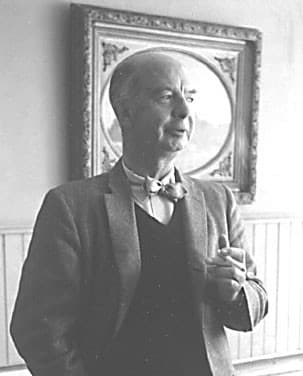
Thornton W. Burgess was an American author known for his children's literature, particularly his stories featuring animal characters. His notable work, "Old Mother West Wind," introduces readers to a variety of woodland creatures and their adventures. Burgess's writing often emphasizes themes of nature and conservation.
Similar books
- Winnie-the-Pooh
A.A. Milne
4.3 (270k) average on GoodreadsFantasyClassic children's stories with simple plots, moral undertones, and beloved animal characters.
- The Tale of Peter Rabbit
Beatrix Potter
4.2 (207k) average on GoodreadsFantasyWhile both Burgess and Potter utilize anthropomorphic animals, Potter's narratives often possess a darker, more intricate charm and a greater sense of peril. Peter Rabbit's adventures, though cautionary, feel more genuinely dangerous and less overtly didactic than those of Burgess's characters. Potter's illustrations are integral to her storytelling, conveying mood and detail that Burgess's prose, while clear, often leaves to the imagination. Potter's work generally exhibits a more sophisticated narrative structure and a less explicit moralizing tone, allowing children to infer lessons more subtly. As argued by researchers like Perry Nodelman (1990) in 'The Hidden Meaning of Children's Literature,' Potter's tales often explore deeper psychological anxieties and consequences, whereas Burgess's remain largely on the surface of behavioral instruction.
- Harry Potter and the Sorcerer's Stone
J.K. Rowling
4.5 (7M) average on GoodreadsFantasyRescued from a miserable life under the stairs, an orphaned boy discovers he's a wizard destined for a magical school, where he uncovers a dangerous secret tied to the dark wizard who murdered his parents.
- The Hunger Games
Suzanne Collins
4.3 (6.4M) average on GoodreadsFantasyIn a future where children fight to the death on live television, Katniss Everdeen volunteers for the arena, turning a death sentence into a fight for survival and a spark of rebellion.
- 1984
George Orwell
4.2 (3.1M) average on GoodreadsPoliticsIn a future where surveillance and thought control are absolute, a man's search for truth clashes with the Party, showing that hope can be a form of rebellion.
- Divergent
Veronica Roth
4.2 (2.9M) average on GoodreadsFantasyIn a society divided by virtues, a sixteen-year-old's difference from the norm starts a rebellion that threatens her world.




Enjoyed the summary?
A summary gives you the shape of the book. The book itself has the detail, the examples and the voice.
Find Old Mother West Wind on AmazonAs an Amazon Associate, BookBrief earns from qualifying purchases. How we're funded