
Synopsis
Covers the whole plot, including the ending.
- Difficulty
- Easy
- Pacing
- Slow
- Mood
- Nostalgic, Heartwarming, Peaceful, Observational
- Read it if
- You enjoy classic, gentle children's stories about everyday adventures and small childhood milestones, set against a beautiful natural backdrop.
- Skip it if
- You prefer fast-paced, high-stakes plots or stories with complex characters and intricate world-building.
One Morning in Maine Plot Summary
Covers the whole plot, including the ending.
A Loose Tooth and Morning Chores
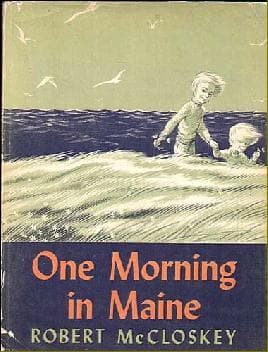
One morning in Maine, Sal wakes up excited for a trip to Buck's Harbour with her father. As she and her younger sister, Jane, brush their teeth, Sal finds her first loose tooth. She wiggles it and shows it to Jane, who is too young to understand. Sal then runs to tell her mother, who is making breakfast. Her mother confirms it is a loose tooth and says it will soon come out. Sal's father also sees the wiggling tooth and assures her it is a natural part of growing up. The family continues their morning routine, with Sal checking her tooth often.
Breakfast and a Plan
Over breakfast, Sal keeps fussing over her loose tooth, wiggling it with her tongue and finger. Her father suggests that when the tooth comes out, they can throw it into the ocean for a new one to grow, a tradition he followed as a boy. Sal likes this idea. They also confirm their plans for the day: Sal will go with her father to Buck's Harbour to get a new outboard motor for their boat, while her mother and Jane stay home. Sal is happy about both her loose tooth and the upcoming adventure.
Rowing to Buck's Harbour
After breakfast, Sal and her father get ready for their trip. They get into their small rowboat, Sal sitting in the front and her father rowing. As they cross the calm bay, Sal sees various sea creatures, including a loon, a porpoise, and a seal. She points them out to her father, who acknowledges her observations while rowing steadily toward their destination. Sal keeps feeling her loose tooth, thinking about throwing it into the ocean. The journey is peaceful and full of the simple beauty of the Maine coast.
Arrival in Buck's Harbour
Sal and her father reach Buck's Harbour. Her father guides the rowboat to the dock, where they tie it up. The harbour is busy: larger boats are coming and going, fishermen are fixing nets, and people are moving about the docks. Sal looks around, taking in all the sights and sounds of the busy port. They get out of their boat, and Sal walks beside her father, ready to help him with his errands. The first stop is the general store, where her father plans to ask about the new outboard motor.
The General Store and the Loose Tooth Falls Out
Inside the general store, Sal's father talks with the storekeeper about the outboard motor. Sal, meanwhile, is distracted by items on the shelves. As she waits, she keeps wiggling her loose tooth. Suddenly, with a final wiggle, the tooth pops out! Sal is surprised and happy, holding the tiny tooth. She immediately shows it to her father, interrupting his conversation. Her father smiles, congratulates her, and reminds her of their plan to throw it into the ocean. The storekeeper also shares in her excitement.
A Soda and a Lost Tooth
After her tooth comes out, Sal's father buys her a strawberry soda as a treat. Sal carefully places her tooth on the counter beside her while she sips her drink. However, in her eagerness to drink the soda and watch the harbour activity through the window, she accidentally knocks the tooth off the counter. It falls to the floor and rolls away, out of sight. Sal is upset, searching frantically for her lost tooth. Her father and the storekeeper help her look, but the tooth is nowhere to be found.
Searching for the Tooth
Sal, her father, and the storekeeper search the general store. They look under shelves, behind barrels, and sweep the floor, but the tiny tooth is gone. Sal's excitement about her tooth has turned into disappointment and sadness. Her father tries to comfort her, explaining that it is just a tooth and a new one will grow. But Sal is heartbroken, especially because she wanted to throw it into the ocean as planned. After a long but unsuccessful search, they give up.
A New Outboard Motor and a Thoughtful Gesture
Despite the sadness over the lost tooth, Sal's father buys the new outboard motor. It is a shiny, powerful-looking engine. As they leave the store, Sal is still sad. Seeing her distress, her father has an idea. He leads her to a nearby tide pool. He searches among the rocks and seaweed until he finds a small, perfect white mussel shell. He gives it to Sal, suggesting she can throw this into the ocean instead, representing her lost tooth and wish for a new one.
Throwing the Shell into the Ocean
Sal, holding the smooth, white mussel shell, feels a bit of hope and comfort. She understands her father's thoughtful gesture. They walk to the edge of the dock, and Sal holds the shell over the water. With a deep breath, she wishes for a new tooth to grow and tosses the shell into the sparkling blue ocean. The shell disappears into the waves. She feels peaceful, and her sadness begins to lift. The ritual, even with a substitute, brings her closure and new optimism.
The Journey Home
With the new outboard motor in their rowboat and the mussel shell thrown into the sea, Sal and her father begin their journey home across the bay. Sal's spirits are much lighter now. She still has a gap where her tooth used to be, but the sadness has been replaced by satisfaction and the hope of a new tooth. She talks with her father about the day's events, pointing out familiar landmarks and enjoying the peaceful row back to their island home. The day ends, full of discoveries and small adventures.
One Morning in Maine Characters
Sal
Protagonist
A curious and spirited young girl experiencing a significant childhood milestone.
Sal is a young girl, perhaps five or six years old, full of curiosity and enthusiasm. She is observant, noticing details in her natural surroundings and in the bustling harbour. Her emotional range is shown through her excitement about her loose tooth, her joy during the trip, her deep distress when the tooth is lost, and her eventual comfort and renewed optimism. She is close to her family, especially her father, and is eager to participate in adult activities.
Relationships: Sal's Father (Loving, patient, and guiding parent.); Sal's Mother (Supportive and nurturing parent.); Jane (Younger sister, an innocent companion.)
Sal's Father
Supporting
A calm, practical, and loving father who guides Sal through her day.
Sal's father is a patient and resourceful man, grounded in the traditions of coastal Maine life. He is a steady presence for Sal, explaining things simply and offering comfort when she is upset. He is practical, focused on getting the new outboard motor, but also sensitive to Sal's emotional needs, demonstrating his love through thoughtful actions like finding the mussel shell. He represents a stable, nurturing figure who allows Sal to experience the world while providing a safety net.
Relationships: Sal (Daughter, whom he guides and comforts.); Sal's Mother (Wife, with whom he shares family responsibilities.); Jane (Younger daughter.)
Sal's Mother
Supporting
A nurturing and busy mother who prepares the family for the day.
Sal's mother is a warm and reassuring figure, primarily seen in the domestic setting of their home. She is busy with morning chores, making breakfast, but always takes the time to listen to Sal and offer gentle explanations about her loose tooth. She provides a sense of security and routine at the start of Sal's day, allowing Sal to confidently embark on her adventure with her father. Her role emphasizes the stable home environment that supports Sal's explorations.
Relationships: Sal (Daughter, whom she nurtures and prepares for the day.); Sal's Father (Husband, with whom she shares family life.); Jane (Younger daughter.)
Jane
Supporting
Sal's younger sister, an innocent and observant toddler.
Jane is Sal's baby sister, too young to fully understand the significance of a loose tooth or the day's adventures. She is depicted as an observant toddler, mirroring Sal's actions like brushing her teeth and watching the family. Her presence highlights Sal's slightly older, more independent status and provides a contrast to Sal's developing understanding of the world. She represents the innocence of early childhood, a constant companion in Sal's home life.
Relationships: Sal (Older sister, whom she observes and imitates.); Sal's Mother (Mother.); Sal's Father (Father.)
Storekeeper
Mentioned
The friendly proprietor of the general store in Buck's Harbour.
The storekeeper is a minor but kind character who interacts with Sal and her father in Buck's Harbour. He is helpful to Sal's father regarding the outboard motor and shows genuine interest and sympathy when Sal's tooth falls out and is subsequently lost. He represents the friendly, supportive community presence typical of small coastal towns, adding to the warm atmosphere of the story.
One Morning in Maine Themes
Growing Up and Milestones
The main theme is Sal's experience of losing her first tooth, a common childhood event. This event shows a step toward maturity and change. The story captures the mix of excitement, anticipation, and a bit of worry that comes with such a transition. Sal's journey from discovery to the eventual loss and acceptance shows the process of growing up, both physically and emotionally. Her father's explanation that 'new teeth will grow' reinforces the natural cycle of development.
“A loose tooth!" said Sal. "My first one!”
The Beauty and Rhythm of Nature
The natural environment of coastal Maine is a strong theme, shown through McCloskey's detailed illustrations and descriptions. The story highlights the simple beauty of the bay, the sea creatures Sal observes (loon, porpoise, seal), and the tide pool where her father finds the mussel shell. This connection to nature provides a calm background to Sal's personal story and offers comfort and tradition, as seen in the ritual of throwing the tooth (or shell) into the ocean. Nature is both a place of adventure and peace.
“They rowed across the bay where the loons dive and the porpoises play and the seals sun themselves on the rocks.”
Parental Love and Guidance
The strong love and patient guidance of Sal's father are central to the story. He is a calm and reassuring presence, explaining the process of losing a tooth, taking Sal on a special trip, and comforting her when her tooth is lost. His thoughtful act of finding the mussel shell to replace the lost tooth shows his empathy and ability to help Sal deal with disappointment. This theme highlights how important parental support is in helping children handle life's small challenges and build emotional strength.
“Don't worry, Sal," said her father. "A new one will grow in its place. And we can throw this shell in the ocean for a new tooth to grow.”
Coping with Disappointment and Resilience
Sal feels sad when she accidentally loses her tooth after it finally comes out. Her initial joy quickly turns to distress and sadness. But with her father's understanding and his idea of the mussel shell, Sal learns to cope with this loss and finds a way to complete her desired ritual. This journey from heartbreak to acceptance, helped by a loving adult, teaches a subtle lesson about resilience and adapting to unexpected events, showing that even when things do not go as planned, comfort and new solutions can be found.
“Sal was sad. She wanted to throw her tooth in the ocean.”
Plot Devices & Literary Techniques
Symbolism of the Loose Tooth
Represents growth, change, and the transition of childhood.
Sal's loose tooth is the primary symbol in the story, directly representing the universal childhood experience of growing up and the physical changes that come with it. Its eventual loss and the anticipation of a new tooth symbolize the cycle of life, renewal, and the passage of time. The tooth also becomes a symbol of Sal's personal journey and her emotional development as she learns to cope with its unexpected disappearance.
The Journey to Buck's Harbour
A physical journey that parallels Sal's emotional and developmental journey.
The trip from Sal's island home to Buck's Harbour serves as a classic journey motif. This physical journey allows Sal to experience new sights and sounds, but more importantly, it provides the setting for her significant personal milestone – the loss of her tooth and the subsequent emotional arc. The journey home, with the new outboard motor and the sense of peace, signifies the completion of both the errand and Sal's internal processing of her experience.
Foreshadowing (of the tooth coming out)
Repeated mention and wiggling of the tooth builds anticipation.
From the very first scene, Sal's loose tooth is highlighted. Her constant wiggling and checking of the tooth, and the family's discussion about it, create a clear sense of anticipation that the tooth will eventually come out. This consistent focus builds excitement for the reader and makes the moment the tooth finally pops out feel like a significant, awaited event, even if the subsequent loss is unexpected.
The Mussel Shell
A substitute object that provides emotional closure and comfort.
When Sal's original tooth is lost, her father's quick thinking in finding a white mussel shell serves as a crucial plot device. The shell acts as a symbolic replacement, allowing Sal to complete the ritual of throwing 'her tooth' into the ocean. This substitute provides her with emotional closure, transforms her sadness into acceptance, and demonstrates the power of imaginative solutions and loving gestures in overcoming minor setbacks.
One Morning in Maine Quotes
“When Sal got to the shore, she found her father putting their boat into the water. 'Can I go?' she asked. 'Yes,' said her father. 'But first you must dig some clams for supper.'”
“He handed her a pail and a clam hoe. 'And don't forget your toothbrush,' he said.”
“Sal loved to dig clams. She knew just where to find them.”
“She dug and dug until her pail was full.”
“Then Sal remembered her toothbrush. She put the pail of clams down and felt in her pocket. Her toothbrush wasn't there.”
“Sal looked at the clams. She looked at her mouth. She looked at the clams again.”
“I'll have to find it,' she said to herself. 'Because if I don't, I won't be able to brush my new loose tooth.”
“She walked along the shore, looking for her toothbrush.”
“She looked under rocks and in tide pools. She looked behind a big piece of driftwood.”
“Suddenly, she stopped. She put her hand in her mouth. Her tooth was loose!”
“She wiggled it. She pushed it. She pulled it. It was very loose.”
“I'll show it to my mother,' she thought. 'She'll be surprised.”
“When Sal and her father got home, her mother was waiting for them. 'Look, Mother!' said Sal. 'My tooth is loose!'”
“Her mother smiled. 'Well, I'll be,' she said. 'A new loose tooth. What a morning!'”
Quiz
10 questions on the plot and the characters. Each answer comes with a short explanation.
Question 1
What exciting event is Sal looking forward to doing with her father at the beginning of the story?
- Going fishing for scallops
- Going to Buck's Harbor
- Visiting her grandmother
- Picking blueberries on the island
Show answer
B. Going to Buck's Harbor Sal is excited to go to Buck's Harbor with her father, a special trip they had planned.
Question 2
What surprising discovery does Sal make about herself when she wakes up and brushes her teeth?
- She has a new tooth growing in.
- Her favorite toothbrush is missing.
- One of her front teeth is loose.
- She has a cavity that needs filling.
Show answer
C. One of her front teeth is loose. While brushing her teeth with her baby sister, Sal discovers that one of her front teeth is loose.
Question 3
What is the name of Sal's baby sister?
- Jane
- Kate
- Baby
- Daisy
Show answer
C. Baby Sal's baby sister is consistently referred to simply as 'Baby' throughout the story.
Question 4
What does Sal's father suggest she do with her loose tooth to try and get it out?
- Pull it with a string tied to a doorknob.
- Eat a very crunchy apple.
- Wiggle it with her tongue.
- Let the dentist take it out.
Show answer
C. Wiggle it with her tongue. Sal's father tells her to wiggle her tooth with her tongue to help it come out.
Question 5
What happens to Sal's ice cream cone after she gets it at the store in Buck's Harbor?
- She drops it on the ground.
- Her baby sister takes a bite.
- A seagull snatches it away.
- It melts completely before she can eat it.
Show answer
A. She drops it on the ground. After getting her ice cream, Sal accidentally drops it on the ground, much to her disappointment.
Question 6
What does Sal's father do with the clams they dig up on the beach?
- He releases them back into the ocean.
- He puts them in a bucket to take home for supper.
- He uses them as bait for fishing.
- He gives them to a hungry seagull.
Show answer
B. He puts them in a bucket to take home for supper. Sal's father puts the clams they dig into a bucket to bring home for their supper.
Question 7
What does Sal do with her lost tooth after she finally pulls it out?
- She puts it under her pillow for the tooth fairy.
- She throws it into the water at Buck's Harbor.
- She gives it to her baby sister to play with.
- She keeps it in her pocket as a souvenir.
Show answer
B. She throws it into the water at Buck's Harbor. Sal throws her tooth into the water, wishing for a new one to grow in, a common tradition in some cultures.
Question 8
What is the primary mode of transportation Sal and her family use to travel to Buck's Harbor?
- A car
- A sailboat
- A motorboat
- A rowboat
Show answer
C. A motorboat They travel from their island home to Buck's Harbor in a motorboat.
Question 9
What is a recurring theme illustrated by Sal's experiences throughout the day, particularly with her tooth and the ice cream?
- The importance of being careful with one's belongings.
- The challenges and joys of growing up and experiencing new things.
- The necessity of always listening to parental advice.
- The simple pleasures of living by the sea.
Show answer
B. The challenges and joys of growing up and experiencing new things. Sal's loose tooth signifies a milestone in growing up, and her emotional responses to both the tooth and the dropped ice cream illustrate the small challenges and triumphs that come with childhood experiences.
Question 10
What specific item does Sal buy at the store in Buck's Harbor, besides her ice cream?
- A new toy boat
- A box of crackers for her father.
- A small seashell souvenir.
- A new pair of shoes.
Show answer
B. A box of crackers for her father. While Sal gets ice cream, she also helps her father by getting a box of crackers at the store.
One Morning in Maine FAQ
What is the central event that kicks off Sal's big day in 'One Morning in Maine'?
Sal's day begins with an exciting discovery: while brushing her teeth with her baby sister, Jane, she realizes that one of her front teeth is loose. This unexpected development immediately becomes the focus of her morning and the catalyst for many of the day's events, especially her desire to show her father.
Where do Sal and her father plan to go, and what is the significance of this trip?
Sal and her father are planning to go to Buck's Harbor, a trip that is presented as a special treat for Sal. This journey is significant because it's an opportunity for Sal to spend one-on-one time with her dad, and it's also where many of the day's adventures and observations take place, including her eventual wish at the harbor.
Who is Jane, and what is her role in the story?
Jane is Sal's younger sister, and she plays the role of a typical toddler, often mimicking Sal's actions and being an observer to Sal's excitement. Her presence highlights Sal's slightly older, more independent stage of childhood, and their shared morning routine of brushing teeth establishes their sisterly bond.
What specific activities do Sal and her father engage in during their trip to Buck's Harbor?
During their trip, Sal and her father visit a general store to buy groceries, including a can of clams, and they also get ice cream cones. They then go down to the harbor itself, where they see boats, seagulls, and eventually Sal makes her wish and loses her tooth.
How does Sal eventually lose her loose tooth?
Sal loses her tooth at the very end of their trip to Buck's Harbor. While she is making a wish and blowing on a dandelion puff, her tooth finally comes out, landing among the dandelion seeds. Her father then helps her search for it.
Are there any subtle visual cues about Sal's tooth before she discovers it's loose?
While there are no explicit visual cues showing the tooth loose before Sal's discovery, the illustrations often depict her with her mouth slightly open or focused on her teeth during the brushing scene, subtly foreshadowing the impending revelation. The narrative focuses on her internal realization rather than an external sign.
What is the significance of Sal's wish on the dandelion puff?
Sal's wish on the dandelion puff is a classic childhood ritual symbolizing hope and anticipation. It's a moment of pure innocent belief, and it's poignantly timed with the actual loss of her tooth, creating a magical convergence of expectation and reality, even if the wish wasn't directly for the tooth to come out.
Are there any details in the background illustrations that connect to other McCloskey books set in Maine?
Yes, keen observers might notice that the setting, particularly the landscape and the type of boat Sal and her father use, strongly evokes the world of 'Blueberries for Sal' and 'Burt Dow, Deep-Water Man.' The illustrations maintain a consistent aesthetic of coastal Maine, linking these stories through their shared environment and lifestyle.
What does Sal's immediate desire to show her father her loose tooth reveal about their relationship?
Sal's eagerness to show her father her loose tooth highlights a close, trusting, and affectionate relationship. It shows that her father is her primary confidant and source of comfort and excitement, suggesting a strong bond where she feels safe to share her important discoveries and experiences with him.
How does Sal's emotional state evolve throughout the day, from discovery to the tooth's loss?
Sal's emotional state transitions from initial shock and excitement at discovering the loose tooth, to a persistent preoccupation and anticipation throughout the trip, and finally to a mix of momentary disappointment at not finding the tooth, but ultimately satisfaction and a sense of accomplishment once it's out. Her focus remains singular on the tooth.
What psychological aspect of childhood does the 'loose tooth' experience represent?
The 'loose tooth' experience in childhood often represents a significant developmental milestone, symbolizing growth, change, and the transition from babyhood to 'big kid' status. It's a tangible sign of growing up, often accompanied by a mix of apprehension, excitement, and pride, as seen in Sal's journey.
How does the book subtly teach children about patience and the natural process of change?
The book subtly teaches patience by showing Sal's anticipation and the natural progression of her loose tooth over the course of the day. Despite her eagerness, the tooth doesn't fall out immediately, illustrating that some things happen in their own time, and that waiting is part of the process of natural change and growth.
Is the loss of the tooth truly 'shocking' for Sal, or is it more a source of wonder and excitement?
For Sal, the loss of the tooth is presented more as a source of wonder and excitement rather than true shock. While the initial discovery might be surprising, her subsequent actions and expressions throughout the day convey a sense of fascination and pride, eager to share this milestone with her father and the world.
What is the implied message about the simplicity and magic of everyday life in the book?
The book implies that there is profound magic and significance to be found in the simple, everyday moments of life, especially through a child's eyes. A trip to the harbor, buying groceries, and even a loose tooth become extraordinary adventures when experienced with wonder and shared with a loved one, emphasizing the richness of ordinary experiences.
Does the book emphasize the father-daughter bond more than other family relationships?
Yes, the book distinctly emphasizes the father-daughter bond, as Sal's entire special day is spent with her dad, from the initial discovery of her tooth to its eventual loss. While Jane and Sal's mother are present at the beginning, the narrative deliberately focuses on the unique shared experience between Sal and her father.
Why does Sal's father make such an effort to search for the lost tooth, even though he knows it's small?
Sal's father makes an effort to search for the lost tooth not because of its material value, but to validate Sal's experience and emotions. It's an act of loving parental engagement, showing that he respects her significant milestone and shares in her wonder, even if the tooth is ultimately unrecoverable.
Could the 'huge day' Sal experiences be interpreted as a metaphor for a child's rapid growth and development?
Yes, Sal's 'huge day' can certainly be interpreted as a metaphor for a child's rapid growth and development. The loss of a baby tooth is a tangible sign of this progression, and the accumulation of small, seemingly ordinary events throughout the day contributes to a sense of significant personal change and a step forward in her young life.
About the author

Robert McCloskey was an American author and illustrator known for his children's books. His notable works include "Make Way for Ducklings," "Blueberries for Sal," "Homer Price," and "One Morning in Maine," which often feature themes of nature and childhood adventures. McCloskey's storytelling and illustrations have made a lasting impact on children's literature.
Similar books
- Blueberries for Sal
Robert McCloskey
4.2 (69k) average on GoodreadsChildren'sFeatures the same beloved character Sal and a similar gentle, observational tone.
- Make Way for Ducklings
Robert McCloskey
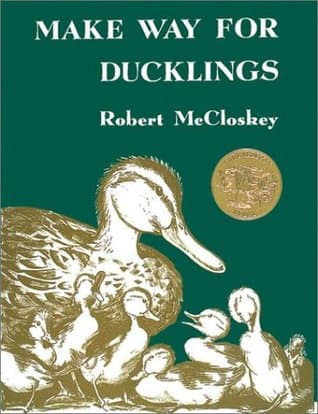
4.2 (84k) average on GoodreadsChildren'sShares McCloskey's iconic illustrations and a calm, narrative style.
- Mike Mulligan and His Steam Shovel
Virginia Lee Burton
4.2 (50k) average on GoodreadsFantasyBurton's book offers a more fantastical and action-driven narrative, celebrating ingenuity and perseverance through an anthropomorphic machine. McCloskey grounds the extraordinary in the ordinary, while Burton embraces overt wonder and spectacle.
- The Snowy Day
Ezra Jack Keats
4.2 (104k) average on GoodreadsChildren'sKeats's book, while also focusing on a child's everyday experience, is notable for its vibrant use of color and pioneering representation of diversity. McCloskey maintains a monochrome palette and explores subtle anxieties and triumphs within a familiar world, contrasting with Keats's focus on discovery in a new environment.
- Harry Potter and the Sorcerer's Stone
J.K. Rowling
4.5 (7M) average on GoodreadsFantasyRescued from a miserable life under the stairs, an orphaned boy discovers he's a wizard destined for a magical school, where he uncovers a dangerous secret tied to the dark wizard who murdered his parents.
- The Hobbit, or There and Back Again
J.R.R. Tolkien
4.3 (2.9M) average on GoodreadsFantasyA comfort-loving hobbit named Bilbo Baggins is whisked away by a mischievous wizard and a band of dwarves on an unexpected journey to reclaim stolen treasure from a fearsome dragon, discovering courage and a magical ring along the way.





Enjoyed the summary?
A summary gives you the shape of the book. The book itself has the detail, the examples and the voice.
Find One Morning in Maine on AmazonAs an Amazon Associate, BookBrief earns from qualifying purchases. How we're funded