
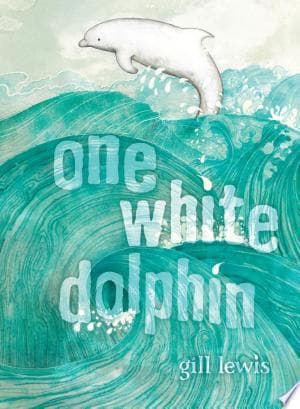
Core Idea
- Difficulty
- Easy
Key Takeaways from One White Dolphin
The Symbiotic Relationship Between Human and Marine Health
The book illustrates how the well-being of a coastal community is inextricably linked to the health of its surrounding marine ecosystem.
Gill Lewis shows that environmental damage directly affects people, not just nature. The plan to dredge the reef might offer quick money for fishermen, but it threatens the community's future. Kara's family, who works in marine conservation, knows a healthy reef supports sea life, which in turn helps the local economy through fishing and tourism. The conflict between Jake's family, focused on immediate money, and Kara's, looking at long-term ecological health, reflects a common problem in environmental protection. The book argues that harming the environment for short-term gain eventually hurts human prosperity.
“What happens to the reef, happens to us.”
In the book: The conflict surrounding the dredging of the reef and its implications for both the fishing industry and the overall health of the marine ecosystem, directly impacting the livelihoods and futures of the town's residents.
Try this: Communities should prioritize long-term ecological sustainability when making economic development decisions, fostering dialogue between different stakeholders to find solutions that benefit both people and the environment.
The Power of Unexpected Alliances
Friendship transcends initial antagonism and physical limitations to achieve a common, vital goal.
This book shows that a shared goal can bring people together. Kara is angry at Jake at first, because of family feuds and her grief. But then Felix arrives, a Paralympics sailing hopeful, changing things. Felix faces his own challenges, and his calm nature helps him connect with Kara. They bond over their shared concern for the albino dolphin, not their families' disagreements. Their work, with vets and specialists, to save the dolphin mirrors the wider community effort needed to save the reef, proving that different skills and views are valuable in conservation.
“Sometimes, the people you least expect are the ones who help you the most.”
In the book: The partnership between Kara and Felix, despite their different backgrounds and initial personal struggles, to rescue and rehabilitate the albino dolphin.
Try this: Seek common ground and build alliances with diverse individuals, even those with whom you initially disagree, when working towards a shared environmental or social goal.
Vulnerability as a Catalyst for Empathy and Action
The plight of a single, unique creature can galvanize an entire community.
The albino dolphin calf, Snowdrop, is more than a plot point; she symbolizes nature's delicate balance and strength. Her unique look and extreme vulnerability, caught in a fishing net and washed ashore, draw immediate sympathy. The book uses Snowdrop's fight for survival to make the environmental issue personal. Her rescue becomes a rallying point, bringing together people who might otherwise not care about conservation. This shows how a clear, relatable example of suffering can cut through political and economic arguments, creating a shared desire to protect.
“She was so small, so perfect, and so utterly helpless. We had to save her.”
In the book: The concerted effort by Kara, Felix, veterinarians, and local community members to rescue, treat, and reunite the albino dolphin calf with its mother.
Try this: When advocating for environmental causes, focus on specific, compelling stories of vulnerable species or ecosystems to evoke empathy and inspire broader community engagement and action.
The Intergenerational Burden of Environmental Neglect
Children often bear the emotional and physical consequences of adult decisions regarding the environment.
The story quietly shows how environmental problems affect young people more. Kara's mother is missing because of her activism, and her father is jobless; both are consequences of the environmental struggle. Kara herself is bullied because of her family's conservation work. The children—Kara, Felix, and even Jake—must face the direct effects of human actions on their environment, whether by seeing distressed marine life or experiencing community division. This highlights why adults must make responsible environmental choices, as their decisions shape the world their children will inherit.
“My mother always said the reef was our future. What future do we have if it's gone?”
In the book: Kara's personal struggles, including her mother's disappearance and her father's unemployment, which are linked to their family's environmental activism and the community's resistance to it.
Try this: Adults should recognize their responsibility to future generations when making environmental policy and economic decisions, actively involving young people in discussions about their shared future.
Overcoming Personal Adversity Through Purpose
Engaging in a meaningful cause can provide a powerful path to healing and self-discovery.
Kara and Felix both face big personal problems. Kara deals with grief, anger, and being an outcast, while Felix handles his disability and Paralympic dreams. The shared task of saving the albino dolphin gives them a strong sense of purpose beyond their individual troubles. For Kara, it's a way to honor her mother and turn her anger into action. For Felix, it's a chance to use his skills and show what he can do beyond sailing. This shows how helping something bigger than oneself can be healing and empowering.
“It wasn't just the dolphin we were saving. It felt like we were saving ourselves, too.”
In the book: Kara's transformation from an angry, isolated girl to a proactive conservationist, and Felix's demonstration of his strength and resourcefulness beyond his Paralympic dreams through their joint effort to save the dolphin.
Try this: When facing personal difficulties, consider engaging in community service or environmental activism as a way to find purpose, build resilience, and connect with others.
The Limitations of Individual Heroism
While individual acts are crucial, systemic change requires collective community effort and shifts in perspective.
While Kara and Felix's courage in saving the albino dolphin is key, the book acknowledges this is only one step. The bigger challenge of saving the entire reef from dredging needs a wider change in community thinking and policy. The story shows that individual heroism, though inspiring, cannot solve deep environmental problems driven by economic needs. It requires talking, finding common ground, and a collective realization of the long-term effects of harmful practices. This argument has limits because the book is fiction and can resolve complex issues neatly, but it still emphasizes the need for systemic change.
“Saving one dolphin was a start, but the real work was saving the whole reef, for everyone.”
In the book: The initial success in saving the dolphin, followed by the ongoing struggle to convince the community and authorities to halt the reef dredging project, indicating a need for broader action.
Try this: Recognize that individual actions, while important, must be amplified by collective advocacy and systemic changes in policy and community behavior to achieve lasting environmental impact.
The Ethical Dilemma of Human Intervention
Saving a wild animal often involves difficult decisions and careful consideration of its natural place.
As a veterinarian, Gill Lewis brings an authentic view to wildlife rescue. The book doesn't romanticize saving a wild animal; it details the careful work of vets and specialists, showing the ethical considerations. The goal is not just to keep the dolphin alive, but to ensure it can return to its natural home and family. This involves careful medical care, minimal human contact, and understanding dolphin social structures. This insight is important because it teaches readers about responsible wildlife conservation, stressing that human help should aim for minimal disturbance and maximum natural integration.
“We can help her, but we can't make her human. She belongs to the ocean.”
In the book: The detailed descriptions of the veterinary care for Snowdrop, including efforts to prevent human imprinting and ensure her ability to survive independently in the wild.
Try this: When assisting injured wildlife, always seek professional guidance and prioritize actions that support the animal's eventual return to its natural environment with minimal human dependency.
The Power of Narrative in Environmental Advocacy
Stories, especially those involving charismatic megafauna, can effectively communicate the urgency of conservation.
The story of the albino dolphin, Snowdrop, becomes a powerful narrative within the book, reflecting how real environmental movements often use compelling stories to gain support. Snowdrop's unique beauty and vulnerability make her an ideal 'spokes-animal' for the reef's problems. Her rescue and journey capture the community's imagination and emotions, making the abstract idea of 'saving the reef' much more real and urgent. This shows how effective storytelling is in environmental advocacy, especially with iconic or visually striking species that can create strong emotional responses and broad public interest, turning a local incident into a universal call to action.
“Everyone knew about Snowdrop. Her story was helping to change minds.”
In the book: How the community's awareness and concern about the reef's health grew significantly after the story of Snowdrop's rescue spread, influencing public opinion and action.
Try this: When advocating for environmental issues, craft compelling narratives that highlight the personal impact or the plight of specific, relatable species to engage a wider audience and inspire action.
Community Division and the Path to Reconciliation
Environmental conflicts often expose deep community rifts, but shared purpose can foster reconciliation.
The book clearly shows the deep divisions in the coastal town, especially between families like Kara's, focused on conservation, and Jake's, representing the fishing industry's economic concerns. These divisions are not just about environmental policy; they are personal, generational, and rooted in different ideas for the community's future. The initial hostility between Kara and Jake directly reflects this wider conflict. However, as the crisis with Snowdrop and the reef grows, the shared threat and goal of protecting their home begin to break down these barriers. The gradual shift from animosity to a fragile understanding and cooperation suggests that reconciliation is possible when a community unites against a common enemy (environmental destruction).
“We'd been fighting each other, while the real fight was for the ocean.”
In the book: The evolving relationship between Kara and Jake, moving from direct conflict to reluctant cooperation, spurred by the urgent need to save Snowdrop and the reef.
Try this: In communities facing environmental disputes, actively seek opportunities for dialogue and shared projects that can bridge divides and foster understanding between different stakeholder groups.
The Role of Hope and Resilience in Conservation
Despite overwhelming challenges, maintaining hope and demonstrating resilience are crucial for environmental success.
The conservation battle in 'One White Dolphin' has many setbacks, political resistance, and moments of despair. Kara's family has already lost much, and the community is slow to accept change. However, the book emphasizes hope and resilience—the ability to recover from hardship and keep fighting for what is right. Felix's journey as a Paralympics hopeful mirrors this, showing that even with big challenges, determination can lead to unexpected victories. This is the book's strongest message: even small acts of bravery and persistence can start bigger movements and lead to positive change, creating lasting optimism when facing tough environmental threats.
“It felt like a small victory, but sometimes, small victories were all you had to keep going.”
In the book: The characters' continued efforts to protect the reef despite initial failures and community opposition, and the eventual positive shift in public sentiment and action.
Try this: Cultivate a mindset of resilience and hope in environmental advocacy, celebrating small victories and using them as fuel to sustain long-term efforts for change.
Quiz
10 questions on the main ideas. Each answer comes with a short explanation.
Question 1
What is the name of the albino dolphin calf in the story?
- Kara
- Felix
- The story does not name the calf.
- Luna
Show answer
C. The story does not name the calf. The provided text refers to the calf as 'a baby albino dolphin' but does not give it a specific name.
Question 2
Why did Kara punch Jake?
- He was bullying Felix.
- He was insulting her family and her.
- He tried to steal the albino dolphin.
- He was damaging the reef.
Show answer
B. He was insulting her family and her. Kara punched Jake because she couldn't stand him saying 'nasty things about her missing mother, or her out-of-work father…or her.'
Question 3
What is the main conflict between Kara's family and Jake's family regarding the reef?
- Kara's family wants to build on the reef, while Jake's family wants to preserve it.
- Jake's family wants to dredge the reef for fishing, while Kara's family wants to protect marine life.
- Both families want to develop the reef for tourism.
- Jake's family wants to sell the reef, while Kara's family wants to keep it a secret.
Show answer
B. Jake's family wants to dredge the reef for fishing, while Kara's family wants to protect marine life. The text states, 'They’ve had it with Kara’s family and their devotion to protecting marine life and saving the reef. Dredging the reef will mean fisherman can reel in more money.' This highlights the opposing views.
Question 4
Who is Felix and what is his background?
- A local fisherman who wants to dredge the reef.
- A marine biologist studying dolphins.
- A new kid in town and a Paralympics sailing hopeful.
- A veterinarian working to save the albino dolphin.
Show answer
C. A new kid in town and a Paralympics sailing hopeful. The text introduces Felix as 'an unexpected new kid, a Paralympics sailing hopeful named Felix.'
Question 5
What event sets off a chain of events that might save the reef?
- Kara punching Jake.
- Felix winning a sailing competition.
- The albino dolphin washing ashore, and Felix and Kara working to save it.
- The town council voting to protect the reef.
Show answer
C. The albino dolphin washing ashore, and Felix and Kara working to save it. The text states, 'When a baby albino dolphin caught in old fishing netting washes ashore, Felix and Kara work with vets and specialists to save her and reunite her with her mother, setting off a chain of events that might just save the reef.'
Question 6
What important, timely issue does the story address?
- The challenges of teenage friendships.
- The economic impact of fishing.
- Environmental protection and ecology.
- The benefits of competitive sports.
Show answer
C. Environmental protection and ecology. The description explicitly mentions that the story 'dives into the important, timely issue of environmental protection and ecology.'
Question 7
What does the description imply about the author's background?
- She is a former fisherman.
- She is an experienced sailor.
- She is a veterinarian.
- She is a marine biologist.
Show answer
C. She is a veterinarian. The text states, 'Written by a veterinarian and brimming with bravery and beauty...'
Question 8
The core motivation for Jake's family wanting to dredge the reef is:
- To create a new harbor for boats.
- To discover new marine species.
- To increase fishing yields and economic income.
- To build tourist resorts along the coast.
Show answer
C. To increase fishing yields and economic income. The text clearly states that dredging the reef 'will mean fisherman can reel in more money,' indicating their economic motivation.
Question 9
Which of the following is NOT a theme explicitly mentioned in the book's description?
- Friendship
- Family
- Community
- Social media influence
Show answer
D. Social media influence The description highlights friendship, family, and community as themes. Social media influence is not mentioned.
Question 10
The phrase 'heart-pounding adventure' and the mention of 'bravery' suggest the book's tone is likely:
- Melancholy and reflective
- Humorous and light-hearted
- Suspenseful and exciting
- Educational and dry
Show answer
C. Suspenseful and exciting Words like 'heart-pounding' and 'bravery' directly imply a tone of suspense and excitement, characteristic of an adventure story.
One White Dolphin FAQ
What is the main plot of "One White Dolphin"?
The story follows Kara, who is dealing with family issues and community conflict over protecting a coral reef. When an albino dolphin calf is found injured, Kara teams up with a new character, Felix, to save it, leading to events that could impact the reef's future.
Who are the main characters in "One White Dolphin"?
The main characters are Kara, a girl struggling with her family's situation and community pressures, and Felix, a talented young sailor with a connection to marine conservation. They work together to save a baby albino dolphin.
What is the central conflict in the book?
The central conflict revolves around the community's differing views on the coral reef. Some, like Kara's family, want to protect it for its marine life, while others, like Jake's family, want to dredge it for economic gain through fishing.
What environmental issues does "One White Dolphin" address?
The book addresses critical environmental issues such as marine conservation, the impact of pollution and fishing practices on marine life, and the importance of protecting coral reefs.
What is the significance of the albino dolphin in the story?
The albino dolphin calf serves as a catalyst for change. Its rescue brings Kara and Felix together and highlights the vulnerability of marine life, ultimately driving the narrative towards environmental protection.
How does the book explore themes of friendship and community?
The book shows how unlikely friendships can form and how a shared goal, like saving the dolphin and the reef, can bring a divided community together to work towards a common good.
Is "One White Dolphin" suitable for young readers?
Yes, the book is suitable for young readers and deals with important themes in an engaging and accessible way. It's written by a veterinarian, adding authenticity to the nature aspects.
What is the author's background, and how does it influence the book?
The author, Gill Lewis, is a veterinarian. This background provides her with expertise and passion for marine life and conservation, which is vividly reflected in the detailed and authentic portrayal of animals and environmental issues in the book.
What message does "One White Dolphin" convey about conservation?
The book conveys a powerful message about the interconnectedness of nature and human communities, emphasizing the urgency of environmental protection and the positive impact that individual actions and collective efforts can have.
Similar books
- Hoot
Carl Hiaasen
3.8 (97k) average on GoodreadsChildren'sWhile both "One White Dolphin" and "Hoot" feature young protagonists fighting to protect local wildlife from human development, Lewis's book has a more pronounced emotional depth tied to personal loss. Hiaasen's novel, while equally passionate about environmentalism, leans more heavily into humor and quirky characters to drive its narrative. Lewis's approach is more introspective and focuses on the internal journey of grief and finding purpose, whereas Hiaasen's is more outwardly focused on the capers and collective action of the children.
- Flush
Carl Hiaasen
3.9 (27k) average on GoodreadsChildren's"Flush" also shares the theme of environmental protection, specifically against water pollution, with "One White Dolphin." Both books feature children taking direct action against those harming the environment. However, Lewis's narrative in "One White Dolphin" is arguably more focused on the single issue of a specific animal's survival and the protagonist's personal healing, while "Flush" involves a broader, more comedic, and often mischievous, approach to exposing environmental wrongdoing. Lewis's tone is generally more serious and reflective, whereas Hiaasen injects more slapstick and larger-than-life villains.
- The Diary of a Young Girl
Anne Frank
4.2 (2.7M) average on GoodreadsBiographyDuring the Nazi occupation, a teenage girl's diary, written from a secret annex, shares observations on humanity, hope, and the wait for freedom.
- Twisted 1. Twisted love
Ana Huang
3.7 (1.7M) average on GoodreadsA quiet billionaire with a difficult past finds his guarded heart opening to the woman he must protect, but their growing passion uncovers dangerous secrets and a shared, traumatic history.
- Eat, Pray, Love
Elizabeth Gilbert
3.6 (1.5M) average on GoodreadsLifestyleA heartbroken writer leaves her conventional life for a year-long global search for pleasure in Italy, spiritual devotion in India, and unexpected love and balance in Bali.
- Night
Elie Wiesel
4.3 (970k) average on GoodreadsBiographyIn the darkness of Auschwitz and Buchenwald, a teenage Elie Wiesel faces the extermination of his family, the loss of his faith, and the lasting scars of humanity's deepest cruelty.




Enjoyed the summary?
A summary gives you the shape of the book. The book itself has the detail, the examples and the voice.
Find One White Dolphin on AmazonAs an Amazon Associate, BookBrief earns from qualifying purchases. How we're funded