

Core Idea
- Difficulty
- Medium
- Read it if
- You are interested in a firsthand account of life in a women's federal prison, want to understand the human impact of the American justice system, or enjoy memoirs that blend personal experience with social commentary.
- Skip it if
- You are looking for a purely legal analysis of prison reform, prefer fictional narratives over memoirs, or are sensitive to detailed descriptions of institutional life and some mature themes.
Key Takeaways from Orange Is the New Black
The Arbitrary Nature of Justice
A single past mistake can lead to disproportionate and unpredictable consequences.
Kerman's memoir shows how the American justice system can feel less like a precise instrument of fairness and more like a bureaucratic lottery. Her decade-old, minor involvement in a drug trafficking scheme reappears years later, disrupting a stable, law-abiding life. The delay in prosecution, the plea bargain, and the sentencing show the system's often arbitrary timeline and the wide discretion prosecutors have. Her experience shows how people, especially those from privileged backgrounds, are often unprepared for the complexities and unpredictability of legal proceedings. The system can be slow and suddenly swift in its punishment.
“The past is a foreign country; they do things differently there. But the past still collects its debts.”
In the book: Kerman's own conviction for a crime committed a decade prior, long after she had moved on and established a new life, serves as the primary evidence. The specific details of her plea bargain and the unexpected delay in her sentencing illustrate the system's procedural opaqueness.
Try this: Understand that past actions, however distant, can have unforeseen legal repercussions. For anyone involved in the justice system, seeking expert legal counsel immediately and understanding the full implications of plea bargains and sentencing guidelines is crucial, as the system's 'justice' can be highly individualized and capricious.
Related ideas: criminal-justice-system, sentencing-disparity, plea-bargain
The Unseen World Within
Prisons are complex micro-societies with their own rules, hierarchies, and unexpected humanity.
Behind the walls, Kerman finds a dynamic, though often harsh, society. The book breaks down the idea of 'inmate' and reveals a diverse community of women, each with her own story, struggles, and surprising acts of kindness. From the 'prison wives' system to the bartering for commissary goods, the facility operates on an unofficial code that often overrides official rules. This hidden world shows the human ability to adapt and create order and connection even in restrictive environments. It challenges outside perceptions of incarcerated individuals as just numbers or stereotypes.
“I was about to learn that prison is a place where you can find humanity in the most unexpected corners.”
In the book: The intricate social dynamics within the prison, such as the formation of 'families' or 'crews,' the detailed descriptions of commissary trading, and the unofficial 'rules' of interaction among inmates, all serve as evidence.
Try this: Challenge preconceived notions about incarcerated individuals and prison life. Recognize that behind the walls exist complex social structures and individual stories, fostering empathy and a more nuanced understanding of the prison population.
Related ideas: prison-culture, social-dynamics-incarceration, dehumanization
The Indignity of Incarceration
Life in prison is defined by a constant erosion of dignity, privacy, and personal agency.
Kerman describes the daily indignities that define prison life: routine strip searches, lack of privacy in communal living, arbitrary rules, and constant surveillance. These elements reduce a person's self-worth and autonomy. From bland food to limited access to basic needs and medical care, the system controls and standardizes, often at the expense of human dignity. This constant removal of personal agency shows the psychological toll of incarceration, beyond physical confinement.
“The goal of prison, it seemed, was to strip you of everything that made you 'you,' and then rebuild you into something manageable.”
In the book: Specific examples include the mandatory strip searches, the communal showers and toilets, the arbitrary nature of disciplinary actions by guards, and the monotonous, low-quality food. Kerman's frustration with the lack of personal space and control over her own body and schedule is a recurring theme.
Try this: Advocate for prison reform that prioritizes human dignity and rehabilitation over punitive measures. Support initiatives that seek to improve living conditions, access to healthcare, and educational opportunities within correctional facilities, recognizing the importance of maintaining a sense of self for successful reintegration.
Related ideas: prison-reform, human-rights-incarceration, psychological-effects-imprisonment
Friendship Across Divides
Unexpected bonds form in adversity, transcending race, class, and background.
Despite stark differences in background, Kerman formed deep and meaningful connections with women she would not have met outside prison. These friendships, often from shared hardship and mutual support, crossed racial, socioeconomic, and educational lines. The women formed makeshift families, offering emotional support, practical advice, and protection. These relationships show the human need for connection and community, especially when outside support is cut off. They demonstrate that empathy and solidarity can grow even in unlikely and challenging environments.
“In prison, your 'people' become everything. They are your family, your protectors, your entertainment.”
In the book: Kerman's close relationships with characters like Red, Miss Claudette, Taystee, and Crazy Eyes illustrate the formation of these diverse bonds. The specific acts of kindness, advice, and shared experiences among these women serve as evidence.
Try this: Seek out connections with people from different walks of life, recognizing that shared human experiences can bridge seemingly insurmountable divides. Cultivate empathy and understanding for those whose life stories differ vastly from your own, appreciating the richness that diverse relationships bring.
Related ideas: interpersonal-relationships, empathy, community-building
The Privilege Paradox
Even in prison, socioeconomic privilege provides a different, albeit still harsh, experience.
Kerman, a white, educated woman from a middle-class background, admits that her experience in prison, though difficult, was different from many other inmates'. Her supportive family, access to better legal representation, and existing social capital gave her advantages, like regular visits and commissary funds, that others did not have. This 'privilege paradox' shows how systemic inequalities continue even within prison, affecting everything from access to resources to post-release opportunities. It shows that while prison is universally dehumanizing, the degree and nature of that dehumanization can vary based on one's background.
“My privilege did not protect me from prison, but it certainly shaped my experience of it.”
In the book: Kerman's consistent receipt of mail, visits, and commissary funds from her family stands in contrast to other inmates who had no such support. Her ability to articulate her experiences and navigate bureaucratic hurdles also points to her educational privilege.
Try this: Recognize and acknowledge the role of privilege in all aspects of society, including the justice system. Advocate for policies that address systemic inequalities and ensure equitable treatment and resources for all individuals, regardless of their socioeconomic background, both within and outside of correctional facilities.
Related ideas: socioeconomic-inequality, privilege-awareness, systemic-bias
The Cycle of Recidivism
The penal system often fails to rehabilitate, perpetuating a cycle of incarceration.
Kerman observes that many women in prison return repeatedly because they lack adequate support, job opportunities, and mental health services after release. The system, focused on punishment and control, often does little to address the causes of criminal behavior or prepare inmates for successful re-entry into society. This creates a cycle of repeat offenses, where individuals are released only to face the same barriers and temptations that led to their initial incarceration. The book criticizes a system that 'warehouses' people rather than rehabilitates them.
“For so many women, prison was just a stop along the way, not an end point. The system wasn't fixing anything; it was just holding them.”
In the book: The stories of several inmates who have been incarcerated multiple times, or who express deep anxieties about their ability to find work and housing after release, highlight the systemic failures leading to recidivism.
Try this: Support initiatives focused on rehabilitation, education, job training, and mental health services within prisons and for ex-offenders. Advocate for policy changes that provide better reentry programs and reduce barriers to employment and housing for individuals with criminal records.
Related ideas: recidivism, rehabilitation, reentry-programs
The Power of Storytelling
Sharing personal narratives humanizes the incarcerated and challenges societal stereotypes.
Kerman's memoir itself shows the power of storytelling. By sharing her own experience and the stories of the women she met, she humanizes a population often reduced to statistics or caricatures. Each inmate, regardless of her crime, is presented as a complex individual with a past, present, and future. This narrative approach allows readers to connect emotionally with incarcerated people, encouraging empathy and challenging stereotypes that often justify punitive policies. The book shows that individual stories are important for changing public perception and driving social change.
“Each woman had a story, and each story was a universe. To listen was to understand a little more about the world.”
In the book: The entire memoir serves as evidence, particularly Kerman's detailed and empathetic descriptions of specific inmates and their life stories, such as Red's entrepreneurial spirit or Taystee's struggle with addiction and poverty.
Try this: Actively seek out and engage with diverse narratives, especially those from marginalized or stigmatized communities. Support platforms and voices that share personal stories to promote understanding, empathy, and social justice. Recognize that every individual has a valuable story to tell.
Related ideas: narrative-power, humanization, social-justice-advocacy
The Emotional Toll on Loved Ones
Incarceration extends its pain and disruption far beyond the individual inmate.
Kerman describes the impact of her incarceration on her family, partner, and friends. The emotional strain, the financial burden of legal fees and travel for visits, and the constant worry about her well-being are clear. Her boyfriend, Larry, especially bears the weight of maintaining their relationship across prison walls, navigating visitation bureaucracy, and dealing with emotional distance. This shows that incarceration affects families, disrupting lives and causing suffering for those outside who cope with the absence and stigma.
“Prison doesn't just happen to the person inside; it happens to everyone who loves them.”
In the book: The detailed accounts of Larry's struggles, the emotional conversations during visits, the letters exchanged, and Kerman's reflections on her parents' pain all serve as evidence of the ripple effect of incarceration on loved ones.
Try this: Support families of incarcerated individuals through community programs and advocacy. Recognize the often-overlooked emotional and financial burdens faced by these families, and work towards policies that facilitate family contact and provide resources for maintaining these crucial connections.
Related ideas: family-impact-incarceration, caregiver-burden, emotional-support
The Bureaucracy of Confinement
Prisons are defined by an often-absurd and dehumanizing bureaucratic maze.
From requesting basic supplies to accessing medical care or communicating with the outside world, Kerman constantly deals with an unclear and frustrating bureaucracy. The prison system operates on a logic that often defies common sense, with arbitrary rules, endless forms, and a general indifference to individual needs. This bureaucratic overload further disempowers inmates, making even simple tasks monumental challenges. It shows how institutional systems, even powerful ones, can become self-serving and disconnected from the people they manage.
“The rules were often arbitrary, illogical, and designed to confuse as much as they were to control.”
In the book: Kerman's repeated struggles with the 'kite' system for requests, the convoluted process for obtaining basic hygiene products, the arbitrary nature of guard decisions, and the difficulty in accessing timely medical care exemplify the bureaucratic maze.
Try this: Advocate for greater transparency and accountability within correctional facilities. Support efforts to streamline processes, ensure clear communication of rules, and establish accessible grievance mechanisms for inmates. Recognize the dehumanizing effect of excessive, illogical bureaucracy.
Related ideas: prison-bureaucracy, institutional-inefficiency, dehumanizing-systems
Redemption and Reintegration
The journey back to society is fraught with challenges, but also potential for growth.
Kerman's release is not an end to her struggles, but the start of a new phase of re-entry. She faces the challenges of adjusting to freedom, rebuilding her life, and dealing with the stigma of a criminal record. While her privilege eases some aspects of this transition, the emotional and psychological scars remain. The book suggests that true redemption is not just serving time, but in the difficult process of reclaiming one's identity and contributing positively to society after release. It shows the ongoing need for support and understanding for former inmates as they rebuild their lives.
“Coming home is not the end of the story, but the beginning of a whole new chapter of adjustments and challenges.”
In the book: Kerman's reflections on her post-release adjustment, her continued connections with women from prison, and her eventual advocacy work highlight the ongoing journey of reintegration and the potential for positive transformation.
Try this: Support organizations that assist ex-offenders with housing, employment, and social reintegration. Challenge the societal stigma associated with a criminal record and advocate for policies that provide opportunities for former inmates to contribute to their communities, fostering a path towards true rehabilitation.
Related ideas: reentry-challenges, post-incarceration-adjustment, stigma-of-conviction
Orange Is the New Black Quotes
“I learned that the world is not divided into good people and bad people. We are all capable of both good and evil.”
“Prison is a world of its own, and you have to learn its rules to survive.”
“The most important thing I learned in prison was how to find strength in vulnerability.”
“In prison, you quickly realize that everyone has a story, and most of them are heartbreaking.”
“Freedom is not just about being out of prison; it's about reclaiming your life and your identity.”
“The system is designed to break you, but it can also teach you how to rebuild yourself.”
“Sometimes the smallest acts of kindness can mean the world in a place like this.”
“I went in as a privileged white woman and came out with a deeper understanding of inequality.”
“Prison strips you of everything, but it can also reveal who you truly are.”
“The friendships I made in prison were some of the most genuine I've ever had.”
“You learn to appreciate the simplest things: a good book, a sunny day, a letter from home.”
“The justice system is flawed, but it's the people within it who can make a difference.”
“Fear is a constant companion in prison, but so is hope.”
“I realized that my crime was not just a mistake; it was a choice that affected many lives.”
“Prison taught me that redemption is possible, but it requires hard work and humility.”
Quiz
10 questions on the main ideas. Each answer comes with a short explanation.
Question 1
What was Piper Kerman's specific crime that led to her imprisonment?
- Possession of cocaine for personal use
- Money laundering for a drug cartel
- Delivering a suitcase of drug money
- Smuggling heroin across international borders
Show answer
C. Delivering a suitcase of drug money Kerman was convicted for her involvement in a drug trafficking operation where she transported a suitcase containing drug money, an act she committed ten years before her sentencing. This past caught up with her despite her reformed life.
Question 2
How long was Piper Kerman's sentence at the federal correctional facility in Danbury?
- 6 months
- 12 months
- 15 months
- 24 months
Show answer
C. 15 months Kerman was sentenced to fifteen months in prison, as described in the book's summary, highlighting the disconnect between her past actions and her current life.
Question 3
What is the inmate number assigned to Piper Kerman in the book?
- #11187–424
- #424–11187
- #11187–425
- #42487–111
Show answer
A. #11187–424 Kerman's inmate number is #11187–424, symbolizing her loss of identity and reduction to a number in the penal system, as mentioned in the book's description.
Question 4
According to the book, what does Kerman learn to navigate in prison that includes strictly enforced codes and arbitrary rules?
- The prison's educational programs
- The prison's work assignments
- The strange world of the penal system
- The legal appeals process
Show answer
C. The strange world of the penal system Kerman describes adapting to the 'strange world' of prison with its unique social norms and inconsistent regulations, which is a central theme in her memoir.
Question 5
What key insight does Kerman gain about the women she meets in prison, as highlighted in the book's summary?
- They are all hardened criminals beyond redemption
- They surprise her with generosity, wisdom, and acceptance
- They are mostly from similar socioeconomic backgrounds as her
- They are indifferent to her presence and story
Show answer
B. They surprise her with generosity, wisdom, and acceptance The book emphasizes that Kerman encounters women from diverse backgrounds who offer kindness and support, challenging stereotypes and humanizing the prison experience.
Question 6
What metaphor does the book use to describe entering the American penal system?
- Falling into a black hole
- Going down the rabbit hole
- Crossing a point of no return
- Entering a parallel universe
Show answer
B. Going down the rabbit hole The summary states that inmates disappear 'down the rabbit hole' of the penal system, evoking Alice in Wonderland to illustrate the surreal and disorienting nature of prison life.
Question 7
Which of the following is a central question the book aims to address about women in prison?
- How to reform the prison system through policy changes
- Why so many women are locked away and what happens to them there
- The best methods for prisoner rehabilitation
- The history of women's prisons in America
Show answer
B. Why so many women are locked away and what happens to them there Kerman's memoir provides a rare look into the lives of incarcerated women, exploring both the reasons for high incarceration rates and the realities of prison life, as stated in the summary.
Question 8
What aspect of Kerman's background is highlighted as contrasting with her inmate status?
- She was a high school dropout
- She was a well-heeled Smith College alumna
- She came from a low-income family
- She had no prior work experience
Show answer
B. She was a well-heeled Smith College alumna The book notes Kerman's privileged education at Smith College, emphasizing the irony and disparity of her situation compared to typical inmate profiles, which adds depth to her narrative.
Question 9
In the context of the book, what does the 'first strip search' symbolize for Kerman?
- The beginning of her physical fitness routine in prison
- Her initiation into the loss of privacy and dignity in prison
- A routine medical examination required for all inmates
- A bonding experience with other inmates
Show answer
B. Her initiation into the loss of privacy and dignity in prison The strip search marks Kerman's entry into the dehumanizing processes of prison, setting the tone for her journey and the book's critique of the penal system's impact on individuals.
Question 10
What overarching tone does the book's summary attribute to Kerman's story?
- Solely humorous and light-hearted
- Exclusively tragic and depressing
- Heartbreaking, hilarious, and at times enraging
- Neutral and detached
Show answer
C. Heartbreaking, hilarious, and at times enraging The summary describes the memoir as 'heartbreaking, hilarious, and at times enraging,' reflecting the complex emotional range of Kerman's experiences and observations in prison.
Orange Is the New Black FAQ
What is 'Orange Is the New Black' about?
'Orange Is the New Black' is Piper Kerman's memoir about her 15-month sentence in a federal women's prison for a decade-old drug money delivery crime. The book chronicles her journey from a privileged Smith College graduate to inmate #11187–424, offering a raw look at the realities of the American penal system through her personal experiences and interactions with fellow inmates.
Is 'Orange Is the New Black' based on a true story?
Yes, 'Orange Is the New Black' is a non-fiction memoir based on Piper Kerman's real-life experiences. She served 15 months in the Federal Correctional Institution in Danbury, Connecticut, for her involvement in a drug money operation years earlier, and the book recounts her actual time in prison.
How does 'Orange Is the New Black' differ from the Netflix series?
While the Netflix series is inspired by Piper Kerman's memoir, it is a fictionalized drama that expands beyond her personal story to include diverse characters and plotlines. The book focuses solely on Kerman's real experiences and observations in prison, offering a more personal and factual account of the penal system.
What is the 'rabbit hole' metaphor in the book?
The 'rabbit hole' metaphor refers to the American penal system, where millions of people, like Kerman, disappear into a strange, often arbitrary world with its own rules and codes. It symbolizes the disorienting and isolating experience of incarceration, where inmates must navigate a hidden society separate from the outside world.
Does 'Orange Is the New Black' work as a critique of the prison system?
Yes, the book serves as a powerful critique by highlighting systemic issues like overcrowding, arbitrary rules, and the human impact of incarceration. Through personal anecdotes, Kerman reveals how the prison system often fails to rehabilitate, instead fostering a harsh environment that affects women from diverse backgrounds.
What lessons does Piper Kerman learn in prison?
Kerman learns to navigate prison life through strict codes of behavior, finds resilience in small acts of generosity from other inmates, and gains wisdom about acceptance and humanity. Her experiences challenge her preconceptions and highlight the shared struggles of women in prison, regardless of their backgrounds.
How is 'Orange Is the New Black' different from other prison memoirs?
Unlike many prison memoirs that focus on violent or male-dominated settings, this book offers a unique perspective on women's incarceration, blending humor, heartbreak, and social commentary. Kerman's privileged background contrasts with her fellow inmates' diverse lives, providing insights into class and gender within the penal system.
What is the significance of the strip search scene in the book?
The strip search scene marks Kerman's entry into prison life, symbolizing the loss of privacy, dignity, and identity that inmates face. It sets the tone for the dehumanizing aspects of incarceration and her journey of adapting to a world where personal boundaries are constantly violated.
Does 'Orange Is the New Black' address rehabilitation in prison?
The book indirectly addresses rehabilitation by showing how the prison environment often hinders personal growth, with arbitrary rules and a lack of support. However, Kerman's interactions with other inmates suggest that small acts of community and empathy can foster resilience, hinting at alternative paths to healing.
Why do we lock so many people away according to the book?
Kerman suggests that societal factors like harsh drug laws and systemic inequalities lead to mass incarceration, often without addressing root causes. The book questions the effectiveness of this approach, showing how it impacts diverse women and calling for a reevaluation of punitive justice systems.
About the author

Piper Kerman is an American author known for her memoir, "Orange Is the New Black," which recounts her experiences in a women's prison. The book gained significant attention and was adapted into a popular television series. Kerman's work primarily focuses on themes of incarceration and the criminal justice system.
Similar books
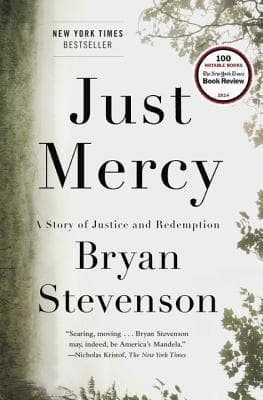
- Just Mercy: A Story of Justice and Redemption
Bryan Stevenson
4.6 (143k) average on GoodreadsPoliticsOffers powerful true stories of injustice and the fight for reform, focusing on the legal and ethical dimensions of the justice system.
- The Diary of a Young Girl
Anne Frank
4.2 (2.7M) average on GoodreadsBiographyDuring the Nazi occupation, a teenage girl's diary, written from a secret annex, shares observations on humanity, hope, and the wait for freedom.
- Eat, Pray, Love
Elizabeth Gilbert
3.6 (1.5M) average on GoodreadsLifestyleA heartbroken writer leaves her conventional life for a year-long global search for pleasure in Italy, spiritual devotion in India, and unexpected love and balance in Bali.
- Night
Elie Wiesel
4.3 (970k) average on GoodreadsBiographyIn the darkness of Auschwitz and Buchenwald, a teenage Elie Wiesel faces the extermination of his family, the loss of his faith, and the lasting scars of humanity's deepest cruelty.
- Steve Jobs
Walter Isaacson
4.1 (957k) average on GoodreadsBusinessSteve Jobs was a visionary who fused creativity and technology to revolutionize six industries and shape our digital world.
- The Glass Castle
Jeannette Walls
4.3 (903k) average on GoodreadsBiographyJeannette Walls's memoir describes her unusual childhood with brilliant, free-spirited parents whose poverty-stricken life shaped her independence and love despite family problems.





Enjoyed the summary?
A summary gives you the shape of the book. The book itself has the detail, the examples and the voice.
Find Orange Is the New Black on AmazonAs an Amazon Associate, BookBrief earns from qualifying purchases. How we're funded