
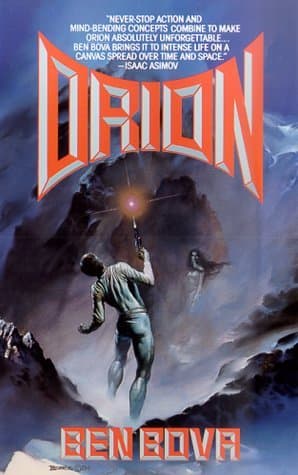
Synopsis
Covers the whole plot, including the ending.
- Difficulty
- Medium
- Pacing
- Fast
- Mood
- Epic, Mythic, Action-packed, Grand Scale
- Read it if
- You enjoy epic tales of immortal heroes battling cosmic evil across vast spans of human history, with a blend of mythological and scientific elements.
- Skip it if
- You prefer hard science fiction without fantasy elements or are looking for a story with a more grounded, less high-stakes premise.
Orion Plot Summary
Covers the whole plot, including the ending.
The First Hunt
In the prehistoric past, a powerful hunter named Orion leads his tribe. During a hunt, he encounters a mysterious woman named Anya, who reveals herself to be a servant of the Creators. She informs Orion that he is destined to become their champion against the malevolent Dark Lord, a cosmic entity who seeks to dominate all life. Orion, initially skeptical, witnesses the Dark Lord's destructive power firsthand when it threatens his tribe. He accepts Anya's offer, undergoing a transformation that grants him immense strength, near-immortality, and cosmic awareness. His first task is to protect humanity's nascent spark from the Dark Lord's influence.
The Egyptian Pharaoh
Millennia later, Orion is reborn as a pharaoh in ancient Egypt, ruling over a flourishing civilization. He struggles to maintain order and guide humanity's progress while subtly combating the Dark Lord's insidious presence. The Dark Lord, often manifesting through corrupt priests or rival kingdoms, attempts to sow discord, incite wars, and spread ignorance, aiming to stunt humanity's development. Orion, aided by Anya, works to establish stable societies and promote knowledge. During this era, he learns more about the cyclical nature of his existence and the endless conflict, experiencing both triumphs and the bitter taste of human fallibility.
The Trojan War
Orion next finds himself reincarnated as Achilles, the legendary Greek warrior during the Trojan War. He is a formidable fighter, but also struggles with the human emotions of pride, rage, and grief, which are amplified by his underlying cosmic awareness. The Dark Lord, through various guises and manipulations, fuels the conflict, delighting in the suffering and destruction. Orion, guided by Anya, tries to mitigate the war's devastation, but is often caught in the tide of human passions. He experiences the pain of losing loved ones and questions the Creators' distant oversight, feeling the burden of his eternal fight in a world consumed by mortal struggles.
The Roman Empire
In the Roman Empire, Orion is a respected general, striving to bring order and civilization to a vast, sprawling world. He works to establish laws, infrastructure, and a stable society, believing that a strong, unified humanity is the best defense against the Dark Lord. However, the Dark Lord's influence manifests through political corruption, imperial ambition, and the brutal realities of conquest. Orion witnesses the rise and fall of empires, the cyclical nature of human power, and the constant struggle between order and chaos. He fights not just on battlefields, but also against the internal decay that threatens to unravel everything he builds.
The Age of Exploration
During the Age of Exploration, Orion is a daring sea captain, venturing into unknown waters and discovering new lands. He sees this era as a chance for humanity to expand its horizons and embrace new knowledge, a direct counter to the Dark Lord's desire for ignorance and control. The Dark Lord, however, manipulates rulers and religious figures to suppress scientific inquiry, spread fear of the unknown, and instigate conflicts over newly found territories. Orion protects explorers, navigators, and scientists, ensuring that their discoveries are shared and not hoarded or destroyed. He fights against superstition and fanaticism, championing reason and progress.
The Industrial Revolution
As the Industrial Revolution takes hold, Orion is reborn as an inventor and industrialist, witnessing humanity's rapid technological advancement. He understands the immense potential for progress and betterment, but also sees the new avenues for exploitation and suffering that arise. The Dark Lord seizes upon the environmental destruction, social inequality, and dehumanization caused by unchecked industrialism, using it to foster despair and division. Orion works to improve working conditions, promote sustainable practices, and ensure that technology serves humanity rather than enslaving it. He grapples with the ethical dilemmas of progress and the unintended consequences of human ingenuity.
World War II
In the crucible of World War II, Orion is a soldier on the front lines, directly confronting the most devastating conflict humanity has ever known. The Dark Lord's influence is strong, manifesting in the ideologies of hatred, genocide, and total war. Orion experiences the horrors of combat, the profound loss of life, and the moral compromises forced upon individuals. He fights not just against enemy soldiers, but against the despair and nihilism that the Dark Lord seeks to instill in humanity. Anya's guidance becomes more urgent, as the stakes are higher than ever, and the very survival of civilization hangs in the balance.
The Space Age
With humanity venturing into space, Orion finds himself as an astronaut and scientist, leading humanity's push beyond Earth. He views space exploration as the ultimate expression of human curiosity and potential, a way to transcend earthly limitations and escape the Dark Lord's grip. The Dark Lord, however, attempts to sabotage space programs, create international rivalries, and instill fear of the unknown cosmos, trying to keep humanity confined and vulnerable. Orion works to foster international cooperation, overcome technological challenges, and protect humanity's nascent steps into the galaxy, recognizing that this new frontier offers both immense hope and new dangers.
The Near Future
In a near-future setting, Orion navigates a world dominated by advanced technology, artificial intelligence, and global interconnectedness. He sees the potential for a utopian society, but also the dangers of surveillance, misinformation, and technological control. The Dark Lord exploits these vulnerabilities, using information warfare, digital manipulation, and the erosion of privacy to further enslave humanity's minds and spirits. Orion works as a hacker and freedom fighter, battling against oppressive regimes and corporate monopolies that are secretly controlled by the Dark Lord. He struggles to protect individual liberty and the truth in an age where reality itself can be manufactured.
The Final Confrontation
The narrative culminates in a future ravaged by nuclear war, a desolate landscape that is the stage for Orion's final confrontation with the Dark Lord. Humanity is on the brink of extinction, reduced to scattered, desperate survivors. The Dark Lord, now manifesting with immense, almost physical power, reveals his true cosmic form and his ultimate goal: the complete annihilation of all life and consciousness. Orion, having accumulated the wisdom and experience of countless lifetimes, gathers the last vestiges of human hope and prepares for a climactic battle that will determine the fate of not just Earth, but potentially all creation. Anya stands by him, offering her final support and guidance.
The Ultimate Sacrifice
In the devastating final battle, Orion confronts the Dark Lord directly. The conflict is cataclysmic, tearing apart the very fabric of reality. Orion utilizes all the knowledge, skills, and cosmic power he has gained throughout his many lives. He understands that simply defeating the Dark Lord is not enough; he must sever its connection to humanity and ensure it can never return. With Anya's final, heart-wrenching guidance, Orion makes a profound sacrifice, merging his essence with the very fabric of time and space, becoming a guardian presence that forever holds the Dark Lord at bay. His act ensures humanity's survival and a chance to rebuild, free from the cosmic entity's direct influence.
Orion Characters
Orion/John O'Ryan
Protagonist
The eternal warrior chosen by the Creators to defend humanity.
Orion is an ancient, powerful being, reborn across countless human lifetimes, always with the core purpose of combating the Dark Lord. He begins as a primitive hunter but evolves into a figure of immense wisdom, strength, and cosmic awareness. Despite his superhuman abilities and eternal mission, he retains a deep connection to humanity, experiencing joy, sorrow, love, and loss in each incarnation. He is driven by a profound sense of duty and a love for the potential of human civilization, even as he grapples with the Creators' distant oversight and the seemingly endless nature of his struggle.
Relationships: Anya (Guide, confidante, spiritual partner, and fellow servant of the Creators.); The Dark Lord (Eternal cosmic enemy, antithesis of Orion's mission.)
Anya
Supporting
Orion's ethereal guide and a servant of the Creators.
Anya is an enigmatic, ethereal being who serves as Orion's primary guide and spiritual companion throughout his many lives. She is a direct emissary of the Creators, providing Orion with information, counsel, and sometimes direct intervention when needed. While she appears human in form, her true nature is cosmic and ancient. She embodies wisdom, patience, and unwavering loyalty to the Creators' plan, even when it demands great sacrifice from Orion. Her role is to keep Orion focused on his mission and remind him of the larger cosmic struggle.
Relationships: Orion (Guide, confidante, spiritual partner, and fellow servant of the Creators.); The Creators (Master/servant relationship; Anya is their direct agent.)
The Dark Lord
Antagonist
The malevolent cosmic entity seeking to dominate and destroy humanity.
The Dark Lord is the primary antagonist, a cosmic force of chaos, destruction, and stagnation. It is a being of immense power, antithetical to creation and progress. Its methods are insidious, often working through manipulation, corruption, and the amplification of humanity's worst traits – fear, hatred, greed, and ignorance. It seeks to prevent humanity's evolution and ultimately bring about its annihilation, or at least its complete subjugation. The Dark Lord represents the forces that seek to extinguish the spark of life and consciousness, and its influence is felt throughout all of human history.
Relationships: Orion (Eternal cosmic enemy, antithesis of Orion's mission.); Humanity (Seeks to dominate, corrupt, and ultimately destroy.)
The Creators
Mentioned
The mysterious, god-like beings who initiated the cosmic conflict.
The Creators are the unseen, god-like entities who brought life and consciousness into the universe and set the stage for the conflict between Orion and the Dark Lord. They are distant and enigmatic, rarely interfering directly but working through their agents like Anya and Orion. Their motivations are grand and cosmic, focused on the ultimate evolution and survival of intelligent life. Their methods are often mysterious and their interventions subtle, relying on Orion to execute their will through human history. They represent a higher order of existence and purpose.
Relationships: Orion (Champion, instrument of their will.); Anya (Direct servant, intermediary.)
Various Human Incarnations
Supporting
The diverse characters Orion interacts with in his many lives.
Throughout history, Orion interacts with countless human characters, some of whom are prominent figures like pharaohs, generals, or scientists, while others are ordinary people. These characters represent the spectrum of human experience, displaying courage, cowardice, love, hatred, wisdom, and folly. They serve to ground Orion's cosmic struggle in the human condition, providing him with both allies and adversaries, and allowing him to experience the full breadth of human potential and fallibility. Their lives and stories are interwoven with Orion's mission, often unknowingly playing a part in the larger cosmic conflict.
Relationships: Orion (Mentor, leader, comrade, lover, or adversary depending on the incarnation.)
Orion Themes
The Eternal Struggle Between Good and Evil
This is the central theme, manifested through Orion's endless battle against the Dark Lord across all epochs. It explores how this cosmic conflict reflects and influences human history, with the Dark Lord preying on humanity's weaknesses and Orion championing its potential. The theme suggests that while the forms of evil may change (war, ignorance, corruption, technological dystopia), the underlying struggle against malevolent forces is constant. It is seen in Orion's fight against the Dark Lord's influence in the Trojan War, driving human conflict, and in the final confrontation amidst nuclear desolation, where the Dark Lord represents ultimate annihilation.
“For as long as there is light, there will be shadow. And I am the sword that cuts the darkness.”
The Nature of Humanity and Progress
The novel deeply examines humanity's capacity for both incredible progress and devastating self-destruction. Orion witnesses humanity's triumphs in art, science, and social organization, but also its recurring failures in war, prejudice, and environmental degradation. The theme questions whether humanity can truly overcome its darker impulses and reach its full potential, especially when guided or misled by cosmic forces. This is evident in Orion's attempts to guide civilizations in ancient Egypt and Rome, only to see them eventually fall, or his efforts to harness the Industrial Revolution's power for good while battling its exploitative side.
“They rise, they fall, they dream, they destroy. But always, they reach for the stars.”
Reincarnation and Immortality's Burden
Orion's constant rebirths and his near-immortality are central to the narrative, exploring the psychological and emotional toll of living countless lives. He experiences profound love and loss repeatedly, carrying the memories and wisdom of millennia, which can be both a strength and a heavy burden. The theme explores how an eternal being maintains purpose and connection to fleeting mortal lives, and the loneliness that comes with such a fate. His struggles as Achilles, grappling with human emotions despite his cosmic awareness, exemplify this burden, as does his long vigil across the centuries.
“Each life a memory, each death a scar. And the mission, eternal.”
Free Will vs. Destiny
The story explores the tension between Orion's predetermined destiny as the Creators' champion and the free will of humanity. While Orion is bound to his mission, he often grapples with how much he can truly influence human choices and whether humanity's fate is truly in its own hands or part of a larger cosmic design. The Dark Lord's manipulations also highlight how external forces try to sway free will. This is seen in Orion's frustration when humanity chooses war or ignorance despite his efforts, questioning if his interventions truly change the fundamental course of history or merely guide it.
“We set the stage, Orion. But the actors, they must choose their own lines.”
Plot Devices & Literary Techniques
Cyclical Reincarnation
Orion's continuous rebirth into new bodies across different historical eras.
This device allows the narrative to span vast stretches of human history, from prehistory to a distant future. It enables Orion to be a direct participant and observer in key historical moments, showcasing the evolution of humanity and the persistent nature of the cosmic conflict. Each reincarnation provides a new perspective and set of challenges, preventing the story from being confined to a single time period and emphasizing the 'eternal' aspect of Orion's struggle. It also serves as a mechanism for Orion to accumulate wisdom and experience, informing his actions in later lives.
Cosmic Guides/Mentors (Anya)
Ethereal beings who provide guidance and context to the protagonist.
Anya functions as Orion's consistent link to the Creators and the broader cosmic struggle. She provides exposition, explains the rules of their conflict, and offers moral and strategic guidance. This device ensures that Orion (and the reader) understands the stakes beyond his immediate human experience. Her presence grounds Orion's often solitary existence and provides a sounding board for his doubts and frustrations, acting as a reminder of his overarching mission when he gets caught up in human affairs.
Anthropomorphic Personification of Evil (The Dark Lord)
A cosmic entity embodying malevolent forces, often taking various forms.
The Dark Lord serves as a tangible, albeit multifaceted, representation of evil, chaos, and stagnation. By personifying these abstract concepts into a conscious, intelligent antagonist, the story provides a clear opposing force for Orion. The Dark Lord's ability to manifest in different ways – from inciting human conflict to directly possessing individuals – allows it to remain a constant, adaptable threat throughout history, demonstrating how evil adapts and persists across different eras and societal structures, culminating in a final, ultimate form.
Historical Allusions and Settings
The use of real historical periods and events as backdrops for the cosmic conflict.
The novel leverages iconic historical periods (ancient Egypt, Trojan War, Roman Empire, World War II, etc.) to ground the fantastical cosmic struggle in a recognizable human context. This device allows the author to explore the themes of human progress, conflict, and morality through the lens of specific historical events, showing how the cosmic battle influences and is influenced by human choices. It also adds a layer of epic scope and realism to Orion's journey, making the eternal struggle feel deeply interwoven with humanity's actual story.
Orion Quotes
“The stars are not for Man.”
“You are a weapon, Orion. A tool. Nothing more.”
“There is no freedom for a god, only endless responsibility.”
“He was a being forged for war, yet he yearned for peace.”
“The past is never truly dead; it merely sleeps, waiting to be awakened.”
“Even a god can bleed.”
“Love is the greatest weapon, and the greatest weakness.”
“He had walked among the stars, and touched the face of eternity.”
“The universe cares nothing for your grand plans, only for its own inexorable flow.”
“To create life is to embrace chaos.”
“There are some battles that even a god cannot win alone.”
“The ultimate truth is that there are no ultimate truths, only perspectives.”
“He was a god in chains, yearning for the freedom of a mortal.”
Quiz
10 questions on the plot and the characters. Each answer comes with a short explanation.
Question 1
What is John O'Ryan's primary role, as established early in the novel 'Orion'?
- A scientist attempting to prevent an asteroid collision.
- An eternal warrior destined to fight the Dark Lord.
- A time traveler from the future observing humanity's past.
- A god who created the Earth and its inhabitants.
Show answer
B. An eternal warrior destined to fight the Dark Lord. John O'Ryan is explicitly introduced as an eternal warrior whose purpose is to combat the Dark Lord throughout history for control of Earth.
Question 2
What entity does Orion serve, giving him his powers and guiding his mission?
- The collective consciousness of humanity.
- A council of ancient Earth spirits.
- A great, advanced alien race.
- His own unwavering sense of justice.
Show answer
C. A great, advanced alien race. Orion is clearly stated to be a servant of a great, advanced alien race, often referred to as 'the Creators' or 'the Masters', who endowed him with his abilities and directed his mission.
Question 3
In what historical period does Orion's journey begin in the novel?
- Ancient Rome, during the reign of Caesar.
- The Ice Age, among early hominids.
- Feudal Japan, during the samurai era.
- Biblical times, in the Fertile Crescent.
Show answer
B. The Ice Age, among early hominids. The narrative begins in the distant past, specifically during the Ice Age, where Orion first battles the Dark Lord among prehistoric humans in their caves.
Question 4
What is the primary motivation of the Dark Lord in his perpetual conflict with Orion?
- To achieve eternal peace and harmony on Earth.
- To gain complete dominion and control over humanity and Earth.
- To prove his intellectual superiority over Orion.
- To undo the creations of the great alien race.
Show answer
B. To gain complete dominion and control over humanity and Earth. The Dark Lord's consistent goal throughout the ages is to seize absolute power and dominion over Earth and its inhabitants, often by manipulating humanity towards conflict and destruction.
Question 5
How does Orion typically regain his memories and identity when he is 'reborn' into a new era?
- He consults ancient texts and prophecies.
- He receives direct mental commands from his alien masters.
- He gradually remembers through dreams and flashbacks.
- He finds a specific artifact that triggers his past.
Show answer
B. He receives direct mental commands from his alien masters. Orion's alien masters often directly intervene, communicating with him telepathically or through other means to awaken his memories and remind him of his mission in each new incarnation.
Question 6
What recurring theme is explored through Orion's long struggle across different historical periods?
- The inevitable triumph of technology over magic.
- The unchanging nature of human conflict and the struggle between good and evil.
- The cyclical rise and fall of great empires.
- The evolution of alien life forms on Earth.
Show answer
B. The unchanging nature of human conflict and the struggle between good and evil. A central theme is the constant recurrence of human conflict, ambition, and the eternal battle between destructive and constructive forces, personified by the Dark Lord and Orion.
Question 7
What is the ultimate 'weapon' or destructive force that Orion must confront in the final confrontation described in the book's synopsis?
- A cosmic plague designed to wipe out all life.
- A global environmental catastrophe.
- Nuclear annihilation.
- A super-intelligent AI taking over the world.
Show answer
C. Nuclear annihilation. The synopsis specifically mentions the 'final confrontation under the hammer of nuclear annihilation,' indicating that a nuclear war is the ultimate threat Orion must face.
Question 8
Beyond physical combat, what primary method does the Dark Lord often use to exert his influence over humanity?
- Directly possessing human leaders.
- Appearing as a divine prophet to inspire devotion.
- Manipulating human ambition, fear, and conflict through whispers and suggestions.
- Unleashing ancient magical curses.
Show answer
C. Manipulating human ambition, fear, and conflict through whispers and suggestions. The Dark Lord rarely engages in direct physical combat himself but rather subtly influences humanity, exploiting their weaknesses, fears, and desires for power to incite wars and destruction.
Question 9
What significant moral dilemma does Orion frequently face regarding his mission and humanity?
- Whether to reveal his true identity to humanity.
- Whether humanity is truly worth saving given its propensity for destruction.
- Whether to betray his alien masters for personal gain.
- Whether he should interfere with natural disasters.
Show answer
B. Whether humanity is truly worth saving given its propensity for destruction. Throughout his long existence, Orion often grapples with the question of humanity's inherent worth and whether his endless struggle to save them from themselves (and the Dark Lord) is ultimately futile, given their repeated cycles of violence and folly.
Question 10
What is the fundamental difference in the 'nature' or origin between Orion and the Dark Lord, as revealed in the narrative?
- Orion is a human chosen by aliens, while the Dark Lord is an alien invader.
- Orion is a creation of the benevolent alien race, while the Dark Lord is a rogue creation or entity from the same race.
- Orion is a divine being, and the Dark Lord is a demon from another dimension.
- Orion is from the future, and the Dark Lord is from the distant past.
Show answer
B. Orion is a creation of the benevolent alien race, while the Dark Lord is a rogue creation or entity from the same race. It is revealed that both Orion and the Dark Lord (often called Apollo or similar names) are creations of the same advanced alien race, with the Dark Lord being a renegade or 'failed' project designed to test or guide humanity, who instead chose to dominate.
Orion FAQ
What is the core premise of 'Orion'?
The book follows John O'Ryan, an immortal warrior who believes himself to be the mythological Orion. He is a servant of a powerful, ancient race, tasked with battling the enigmatic 'Dark Lord' across various historical eras and into the future to determine the fate of humanity and Earth itself.
Who is John O'Ryan, and what is his true nature?
John O'Ryan is a genetically engineered being, a creation of the 'Creators' or 'First Ones,' designed for the specific purpose of combating the Dark Lord. He possesses enhanced strength, healing, and longevity, making him an eternal warrior, though he often struggles with his identity and purpose beyond this eternal conflict.
Who is the Dark Lord, and what are his motivations?
The Dark Lord is O'Ryan's eternal adversary, a being of immense power and malevolence who seeks to dominate or destroy humanity. His true origins and ultimate goals are shrouded in mystery throughout much of the narrative, often appearing as a force of chaos and destruction across different historical periods.
What role do the 'Creators' or 'First Ones' play in the story?
The Creators are an ancient, powerful, and technologically advanced alien race responsible for engineering O'Ryan and orchestrating the conflict between him and the Dark Lord. They represent a higher power, manipulating events from behind the scenes, often communicating with O'Ryan through enigmatic visions or direct instructions, guiding his destiny.
Which historical periods does O'Ryan visit throughout his journey?
O'Ryan's battles span vast stretches of human history. He fights in the Stone Age among early hominids, in ancient Greece as a legendary hero, in the Roman Empire, and during World War II, culminating in a future setting under the threat of nuclear war. Each era presents a unique backdrop for his eternal struggle.
How does O'Ryan's understanding of his own identity evolve over millennia?
Initially, O'Ryan believes himself to be the mythical hunter Orion, a demigod. As millennia pass and he faces repeated deaths and resurrections, he begins to question his divine nature, eventually realizing he is a created being, a tool in a larger, cosmic game, leading to profound existential crises.
What is the significance of the recurring character Anya?
Anya represents humanity's enduring spirit and O'Ryan's connection to the people he protects. She appears in various incarnations across different eras—as a primitive woman, a Greek oracle, a Roman empress, or a modern scientist—always serving as a love interest, a guiding force, or a catalyst for O'Ryan's actions and emotional development.
How does the story comment on the nature of good and evil?
The narrative suggests that good and evil are not absolute but rather two sides of a cosmic balance, or perhaps even two different approaches to achieving a similar end. O'Ryan's struggle blurs the lines, as both he and the Dark Lord are manipulated, implying that their conflict is less about morality and more about control or evolution.
What is the ultimate purpose of the Creators' grand scheme?
The Creators' ultimate purpose is revealed to be the guidance and evolution of humanity. They engineered O'Ryan and the Dark Lord to act as opposing forces, catalysts for human development, pushing humanity to adapt, innovate, and ultimately reach a higher state of being, even if through conflict and suffering.
How does technology and science intersect with mythology in 'Orion'?
The book brilliantly blends science fiction with mythology. O'Ryan's 'divine' abilities are revealed to be advanced genetic engineering, and the 'gods' are actually highly evolved alien beings. This fusion demystifies ancient legends, providing scientific explanations for what was once considered supernatural.
What psychological impact does eternal life and constant warfare have on O'Ryan?
O'Ryan experiences immense psychological strain from his immortality and endless conflict. He suffers from loneliness, existential dread, and the burden of witnessing humanity's repetitive cycles of progress and destruction. Despite his enhanced nature, he grapples with profound weariness and a longing for peace.
Is the Dark Lord truly evil, or is there a deeper explanation for his actions?
The Dark Lord is ultimately revealed to be another creation of the First Ones, an antagonist designed to provide the necessary opposition for humanity's growth. While his methods are destructive, his purpose is not purely malicious; he serves as a brutal but effective catalyst for evolution, pushing humanity to overcome challenges.
How does O'Ryan's relationship with Anya change his perspective?
Anya's recurring presence grounds O'Ryan, providing him with a sense of connection and purpose beyond his warrior duties. Her love and humanity remind him of what he is fighting for, often softening his hardened warrior exterior and inspiring him to seek a resolution that benefits humanity.
What is the significance of the final confrontation under nuclear annihilation?
The nuclear apocalypse setting represents the ultimate test for humanity and O'Ryan. It signifies humanity's self-destructive potential and the peak of the Creators' 'experiment.' O'Ryan's final battle against the Dark Lord amidst this destruction is a desperate attempt to save a remnant of humanity and determine its future path.
Does O'Ryan ever achieve a true sense of freedom or agency?
O'Ryan's journey is a struggle for agency. While he is initially a programmed tool, his experiences and growing self-awareness lead him to question his creators and ultimately make choices that deviate from his programmed path. He earns a form of freedom by understanding his purpose and choosing his own destiny in the final chapters.
How does the book explore themes of free will versus destiny?
The novel deeply explores the conflict between free will and destiny, as O'Ryan is seemingly fated to an eternal struggle. However, his growing awareness and emotional attachments lead him to question his predetermined role, ultimately suggesting that even within a grand design, individual choices and the will to defy destiny can shape outcomes.
What is the broader message about humanity's place in the cosmos?
The book suggests that humanity is not alone but is part of a larger cosmic experiment or evolutionary process orchestrated by advanced beings. It implies that humanity's struggles and triumphs are observed and guided, and that our potential for both creation and destruction is a key factor in our ultimate destiny.
Are there any clues early on that O'Ryan is not truly a god?
Early clues include his recurring injuries and need for 'healing' by mysterious forces, his vague memories of his 'creation,' and the way he is often directed by unseen powers rather than acting purely on divine will. These hints subtly foreshadow his true, engineered nature.
About the author
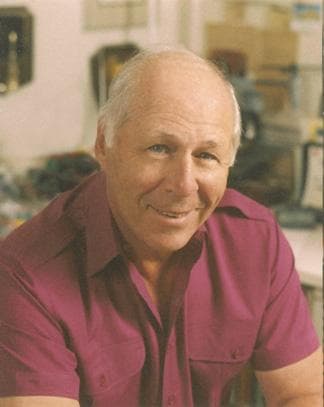
Ben Bova was a prolific American author of science fiction, known for his "Grand Tour" series, including "Orion" and "Jupiter." A recipient of the Hugo Award, Bova was also a respected editor and educator, dedicated to promoting scientific literacy through his engaging and often epic space-exploration-focused narratives.
Similar books
- The Mists of Avalon
Marion Zimmer Bradley
4.1 (192k) average on GoodreadsFantasyWhile both 'Orion' and 'The Mists of Avalon' reimagine historical/mythological periods, Bradley's work offers a far more character-driven and internally focused narrative, particularly from the perspective of its female protagonists. 'Orion' uses history as a backdrop for a cosmic battle, whereas 'The Mists of Avalon' delves deeply into the personal and political struggles within a specific historical context (Arthurian legend), with rich psychological depth and nuanced character motivations. Bova's focus is on the grand sweep of events and a singular hero's external actions, while Bradley prioritizes the emotional and social tapestry of her world.
- American Gods
Neil Gaiman
4.1 (758k) average on GoodreadsFantasyBoth 'Orion' and 'American Gods' explore the presence of ancient deities and their interaction with the modern world. However, Gaiman's approach is significantly more metaphorical, surreal, and satirical, using the gods as personifications of belief and cultural shifts within America. 'Orion' presents a more direct, action-oriented, and often literal interpretation of divine intervention and historical influence. Gaiman excels in character eccentricity and thematic ambiguity, while Bova provides a more straightforward heroic narrative with a clear distinction between good and evil, albeit with complex historical manifestations.
- Harry Potter and the Sorcerer's Stone
J.K. Rowling
4.5 (7M) average on GoodreadsFantasyRescued from a miserable life under the stairs, an orphaned boy discovers he's a wizard destined for a magical school, where he uncovers a dangerous secret tied to the dark wizard who murdered his parents.
- The Hunger Games
Suzanne Collins
4.3 (6.4M) average on GoodreadsFantasyIn a future where children fight to the death on live television, Katniss Everdeen volunteers for the arena, turning a death sentence into a fight for survival and a spark of rebellion.
- 1984
George Orwell
4.2 (3.1M) average on GoodreadsPoliticsIn a future where surveillance and thought control are absolute, a man's search for truth clashes with the Party, showing that hope can be a form of rebellion.
- Divergent
Veronica Roth
4.2 (2.9M) average on GoodreadsFantasyIn a society divided by virtues, a sixteen-year-old's difference from the norm starts a rebellion that threatens her world.






Enjoyed the summary?
A summary gives you the shape of the book. The book itself has the detail, the examples and the voice.
Find Orion on AmazonAs an Amazon Associate, BookBrief earns from qualifying purchases. How we're funded