
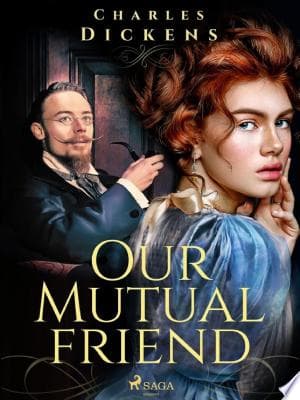
Synopsis
Covers the whole plot, including the ending.
- Difficulty
- Hard
- Pacing
- Variable
- Mood
- Satirical, Melancholy, Romantic, Suspenseful, Humorous
- Read it if
- You enjoy sprawling Victorian sagas with intricate plots, a large cast of memorable characters, social commentary, and a blend of mystery, romance, and moral lessons. Perfect for fans of classic literature who appreciate rich language and detailed character development.
- Skip it if
- You prefer fast-paced narratives, simple plots, or contemporary prose. The length and detailed descriptions might be overwhelming for those new to Dickens or classic fiction.
Our Mutual Friend Plot Summary
Covers the whole plot, including the ending.
The Discovery on the Thames
The novel starts with Gaffer Hexam, a Thames scavenger, and his daughter Lizzie, searching the river for bodies and valuables. They find a corpse, identified by papers as John Harmon, a young man returning to London from South Africa to claim a large inheritance. The will states he must marry Bella Wilfer, a woman he has never met. News of Harmon's death spreads, making his identity a public mystery and freeing Bella from the arranged marriage. This discovery starts a series of events, drawing various characters into the Harmon fortune and the secrets around the supposed death.
Mr. Boffin and the Golden Dustman
With John Harmon presumed dead, the large fortune, made from trash heaps, goes to the Harmon family's loyal servants, the kind Noddy Boffin and his wife, Henrietta. The Boffins, now very rich, are overwhelmed. Following a part of Harmon's will, they take Bella Wilfer into their home, giving her comfort and luxury, hoping to change her desire for money. They also hire Silas Wegg, a one-legged street vendor, to read to Mr. Boffin. This unknowingly gives Wegg access to the Harmon house and its secrets, which he starts to use.
The Appearance of John Rokesmith
A man calling himself John Rokesmith applies for and gets the job of secretary to Mr. Boffin. Rokesmith is smart, observant, and somewhat quiet, quickly becoming an important part of the Boffin household. He takes a special interest in Bella Wilfer, watching her interactions with the Boffins and her continued focus on wealth. Unbeknownst to everyone, Rokesmith is the real John Harmon, who survived an attack and switched identities with his attacker. He returned in disguise to investigate his supposed death and to observe Bella and his inheritance from a distance.
Eugene Wrayburn and Lizzie Hexam
The lawyer Eugene Wrayburn, a cynical and aimless gentleman, and his friend Mortimer Lightwood, handle the Harmon estate. Eugene, despite his social standing, is drawn to the good and beautiful Lizzie Hexam, who is trying to leave her father's bad profession. He starts to visit her neighborhood, giving her informal lessons and developing a strong, though unacknowledged, affection for her. This growing relationship angers Bradley Headstone, a passionate and obsessed schoolmaster who also loves Lizzie. Headstone's jealousy quickly becomes a dangerous obsession, hinting at future conflict.
The Rise of Silas Wegg and Mr. Venus
Silas Wegg, employed by Mr. Boffin to read to him, finds a hidden compartment in a desk with documents about the Harmon will. He asks Mr. Venus, a taxidermist, to help him understand the papers. Wegg believes they contain a later will that would disinherit the Boffins and make him rich. Their secret meetings and efforts to understand the legal puzzle become a source of dark humor and tension. They start to subtly threaten Mr. Boffin, hinting at their discovery and planning to get money from him, not knowing that Boffin knows about their plans.
Mr. Boffin's Transformation
Under the guidance of John Rokesmith (John Harmon), Mr. Boffin begins to pretend to change dramatically. He seems to become more miserly, grasping, and cruel, obsessed with money and treating those around him, especially Bella Wilfer, harshly. This elaborate trick aims to test Bella's character, to see if she can overcome her desire for money and appreciate love and kindness over wealth. Bella, at first sad and disgusted by Boffin's perceived change, struggles with her own values, feeling real distress as she sees his supposed moral decline.
Bella's Choice and Revelation
Disturbed by Mr. Boffin's apparent greed and her own growing feelings for John Rokesmith, Bella Wilfer reaches a turning point. She publicly rejects the Boffin fortune and her desire for money, choosing Rokesmith's genuine affection over wealth. She declares her love for him, even though he is a poor secretary. This selfless act shows her worth. Right after her declaration, Rokesmith reveals his true identity as John Harmon, to Bella's surprise and joy. The Boffins, happy, also reveal that their 'transformation' was a trick, planned to bring Bella to this realization.
Bradley Headstone's Descent
Bradley Headstone's jealousy over Eugene Wrayburn's interest in Lizzie Hexam turns into dangerous madness. He stalks Eugene and Lizzie, consumed by rage and a desire for revenge. After Lizzie repeatedly rejects him, Headstone's anger grows. He ambushes Eugene Wrayburn by the river, brutally attacking him and leaving him for dead. Headstone then tries to create an alibi, changing his clothes and pretending to be sick, but his strange behavior and the evidence of his clothes start to draw suspicion, especially from his former student, Charley Hexam, and the smart Inspector Riderhood.
Lizzie's Rescue and Eugene's Recovery
Lizzie Hexam, led by a feeling, finds the badly injured Eugene Wrayburn by the river and saves him, nursing him back to health. During his slow recovery, Eugene, deeply moved by Lizzie's devotion and his near-death experience, proposes marriage. Lizzie, despite the social difference and disapproval from some, accepts. Their quiet marriage shows Eugene's change and Lizzie's steady love, bringing them together against challenges and questioning social expectations about class and status.
The Unmasking of Wegg and Venus
Silas Wegg and Mr. Venus, confident they have the key to the Harmon fortune, approach Mr. Boffin with their supposed discovery of a later will. However, Mr. Boffin, who knew about their plans all along thanks to John Harmon's warning, calmly reveals that the 'later will' is fake and that he has been playing along. The Boffins, with John Harmon (now married to Bella) by their side, expose Wegg and Venus's greed and attempted blackmail. The two conspirators are humiliated and their plans stopped, ending their small-time villainy.
The Fate of Bradley Headstone and Riderhood
Inspector Riderhood, a former partner of Gaffer Hexam and a bad character, has been increasingly suspicious of Bradley Headstone. He pursues Headstone, eventually cornering him and trying to blackmail him over Eugene's attack. In a desperate fight on a lock weir, Headstone, consumed by his madness and unwilling to be exposed, struggles with Riderhood. Both men fall into the water and drown, their bodies tangled. This dramatic and tragic end concludes the story of Headstone's obsessive jealousy and Riderhood's opportunistic villainy, bringing a violent end to their connected fates.
Happily Ever After for the Harmon-Boffin Families
With all the plots resolved, John Harmon and Bella (now Harmon) live a happy life, managing the Harmon fortune with generosity and wisdom. The Boffins, having been guardians and mentors, return to their kind and simple ways, enjoying their wealth responsibly. Eugene Wrayburn, now married to Lizzie, has found purpose and happiness, becoming a more responsible and caring person. The novel ends with the various parts of the story connected, showing the triumph of love, goodness, and honesty over greed and malice, leaving the main characters in a state of well-deserved domestic happiness.
Principal Figures
John Harmon (John Rokesmith)
Protagonist
Heir to the Harmon fortune, presumed dead, returns in disguise to observe his inheritance and intended bride.
John Harmon is the central protagonist, whose supposed death initiates the entire plot. He is initially a somewhat passive figure, returning from South Africa to claim an inheritance tied to a marriage he dreads. After surviving an attack and swapping identities with his assailant, he adopts the name John Rokesmith and becomes Mr. Boffin's secretary. This disguise allows him to observe the true natures of those around the Harmon fortune, particularly Bella Wilfer. He is intelligent, moral, and determined to understand the truth, even if it means enduring hardship and keeping his identity secret. His journey is one of observation, testing, and ultimately, finding love.
Relationships: Bella Wilfer (intended bride, then wife, whom he tests and eventually marries); Mr. and Mrs. Boffin (his father's loyal servants and guardians of his inheritance, who become his allies); George Radfoot (his would-be murderer, whose body he swaps identities with)
Bella Wilfer
Protagonist
A beautiful young woman initially obsessed with wealth, who learns to value love and kindness.
Bella Wilfer is introduced as a beautiful but openly materialistic young woman, eager to marry for money. After John Harmon's supposed death, she is taken in by the Boffins and lives a life of luxury. Her character arc is one of the most significant in the novel, as she grapples with her desire for wealth versus her growing affection for John Rokesmith (unbeknownst to her, John Harmon). She is initially spoiled and self-centered but possesses an underlying capacity for love and goodness. Her journey involves resisting the allure of riches and ultimately choosing genuine affection over financial gain, proving her worthiness.
Relationships: John Harmon (her intended husband, whom she falls in love with as Rokesmith); Mr. and Mrs. Boffin (her benevolent guardians who test her character); The Wilfer Family (her eccentric, less fortunate family)
Mr. Noddy Boffin
Supporting
The kind-hearted 'Golden Dustman' who inherits the Harmon fortune and orchestrates a benevolent deception.
Mr. Boffin is a simple, good-natured man, formerly a dustman, who unexpectedly inherits the vast Harmon fortune. He and his wife are overwhelmed by their new wealth but remain fundamentally kind and generous. Under John Harmon's guidance, Mr. Boffin undertakes an elaborate charade, pretending to become a miserly, cruel man to test Bella Wilfer's true character. This 'Golden Dustman' is a symbol of honest labor and innate goodness, proving that wealth does not have to corrupt. His feigned transformation is a central plot device, showcasing his dedication to John Harmon's legacy and Bella's moral development.
Relationships: Mrs. Boffin (his devoted wife and partner in their charade); John Harmon (his trusted advisor and the true heir he helps); Bella Wilfer (his ward, whom he tests and mentors); Silas Wegg (his employee and would-be blackmailer)
Lizzie Hexam
Supporting
The virtuous and self-sacrificing daughter of a Thames scavenger, who seeks to escape her past.
Lizzie Hexam is a beautiful, intelligent, and morally upright young woman, burdened by her father's disreputable profession of body-snatching on the Thames. She possesses a deep sense of loyalty, particularly to her brother Charley, and yearns for an honest life and education. She captivates both Eugene Wrayburn and Bradley Headstone, becoming the object of their conflicting affections. Her purity and resilience stand in stark contrast to the corrupting influences around her. She consistently makes self-sacrificing choices, ultimately saving Eugene's life and marrying him, transcending her humble origins through her virtue and love.
Relationships: Gaffer Hexam (her father, whom she loves but whose profession she despises); Charley Hexam (her ambitious brother); Eugene Wrayburn (the man she loves and marries); Bradley Headstone (her obsessive suitor)
Eugene Wrayburn
Supporting
A cynical, indolent lawyer who finds redemption and purpose through his love for Lizzie Hexam.
Eugene Wrayburn is a well-born but aimless and cynical lawyer, initially bored with life and his profession. He is a friend of Mortimer Lightwood and, through the Harmon case, becomes involved with Lizzie Hexam. His initial interest in Lizzie is that of a detached observer, but it gradually develops into genuine love. His character undergoes a significant transformation, spurred by Lizzie's virtue and a near-fatal attack orchestrated by Bradley Headstone. His brush with death and Lizzie's selfless care lead him to abandon his cynicism and embrace a life of purpose and love, culminating in their marriage.
Relationships: Mortimer Lightwood (his closest friend); Lizzie Hexam (the woman he loves and marries); Bradley Headstone (his jealous rival who attempts to murder him)
Bradley Headstone
Antagonist
An obsessive schoolmaster driven to madness and violence by his unrequited love for Lizzie Hexam.
Bradley Headstone is a dedicated but intensely repressed schoolmaster who becomes pathologically obsessed with Lizzie Hexam. His love for her is possessive and destructive, fueled by a deep-seated insecurity about his social standing and a lack of emotional control. He sees Eugene Wrayburn as his rival and becomes consumed by jealousy, leading to a terrifying descent into madness and violence. Headstone embodies the destructive power of unrequited love and social ambition when combined with a volatile temperament. His character arc is one of increasing psychological unraveling, culminating in murder and his own violent end.
Relationships: Lizzie Hexam (the object of his obsessive love); Eugene Wrayburn (his hated rival); Charley Hexam (his former pupil, whom he initially mentors); Rogue Riderhood (his eventual blackmailer and fellow victim)
Silas Wegg
Antagonist
A scheming, one-legged street vendor who attempts to blackmail Mr. Boffin.
Silas Wegg is a grotesque and cunning street vendor, hired by Mr. Boffin to read to him. He is greedy, self-serving, and disingenuous, constantly looking for ways to exploit others. Upon discovering documents hidden in a desk, he conspires with Mr. Venus to concoct a scheme to blackmail Mr. Boffin, believing he has found a later will that disinherits the Boffins. Wegg represents the lower-class villainy driven purely by avarice and a sense of entitlement. His elaborate but ultimately foolish plot provides much of the novel's dark humor and is eventually thwarted by the Boffins and John Harmon.
Relationships: Mr. Boffin (his employer and target of his blackmail); Mr. Venus (his reluctant accomplice); Pleasant Riderhood (his landlord and unwilling participant in his schemes)
Mr. Venus
Supporting
A melancholic taxidermist and articulator of bones, who reluctantly aids Silas Wegg.
Mr. Venus is a peculiar but fundamentally decent taxidermist and articulator of bones. He is a melancholic character, often lamenting his profession and his unrequited love for Pleasant Riderhood. He is drawn into Silas Wegg's scheme to blackmail Mr. Boffin, largely out of a desire for companionship and perhaps a misguided hope for financial stability. Despite his involvement, Venus possesses a moral compass and eventually feels remorse for his actions, leading him to distance himself from Wegg. He serves as a foil to Wegg's pure villainy, demonstrating that even those in questionable professions can have a sense of right and wrong.
Relationships: Silas Wegg (his co-conspirator); Pleasant Riderhood (the object of his affection); Mr. Boffin (the target of their scheme)
Rogue Riderhood
Antagonist
A treacherous and opportunistic waterman, father of Pleasant Riderhood and a former associate of Gaffer Hexam.
Rogue Riderhood is a thoroughly despicable character, a waterman known for his dishonesty, violence, and treacherous nature. He is a former partner of Gaffer Hexam and constantly seeks to profit from the misfortunes of others, particularly by blackmail. He is initially involved in identifying the supposed John Harmon body and later attempts to extort money from Bradley Headstone, whom he suspects of attacking Eugene Wrayburn. Riderhood embodies pure villainy and opportunism, with no redeeming qualities. His relentless pursuit of Headstone ultimately leads to both their deaths, a fitting end for his malevolent character.
Relationships: Pleasant Riderhood (his daughter); Gaffer Hexam (his former partner); Bradley Headstone (his final victim and killer)
Mortimer Lightwood
Supporting
A cynical but good-hearted lawyer, friend to Eugene Wrayburn and handler of the Harmon estate.
Mortimer Lightwood is a young, somewhat cynical but ultimately good-hearted lawyer, initially handling the Harmon estate alongside his friend Eugene Wrayburn. He is more grounded and responsible than Eugene, often acting as a voice of reason. Though not central to the main romantic plots, he serves as an important narrator and observer, providing insights into the characters and events. He is loyal to Eugene and a witness to his transformation, representing a more stable, albeit still somewhat world-weary, perspective on the unfolding drama. He is a keen observer of human nature and a reliable friend.
Relationships: Eugene Wrayburn (his best friend); John Harmon (the subject of his legal work)
Themes & Insights
The Corrupting Influence of Wealth vs. True Value
This theme is important to 'Our Mutual Friend,' shown mainly through the Harmon inheritance and Bella Wilfer's journey. The large 'dust heap' fortune attracts greed and deceit, as seen in Silas Wegg's plans and Bella's initial desire for money. However, the Boffins, despite their wealth, remain kind, showing that true value is not in money but in character and love. Bella's eventual rejection of wealth for John Harmon (as Rokesmith) shows love winning over greed, suggesting that money, though powerful, cannot buy happiness or goodness. The novel constantly asks what 'true riches' are.
“'As I have made my way, so I must keep my way. It is not for me to be soft. I am not soft. I am a man of property. I am a Golden Dustman.”
Identity, Disguise, and Social Perception
The novel focuses on identity, especially through John Harmon's disguise as John Rokesmith. His assumed identity allows him to observe others without their preconceived notions, showing their true characters. This also shows how easily appearances can be changed and how social status affects perception. Lizzie Hexam's struggle to escape her family's bad 'water-side' identity, and Bradley Headstone's desperate attempts to keep a respectable image despite his inner turmoil, further explore this theme. The novel suggests that true identity is in one's actions and moral compass, not in names or social standing.
“'What is a name? Let us say, for the sake of argument, that I am a man of no name. I have neither father nor mother, nor any relation in the world. What then?”
Love, Obsession, and Redemption
Different kinds of love and its opposite, obsession, drive much of the plot. Bella Wilfer's journey from valuing money to valuing love is a key part of the story. The contrasting relationships between Lizzie Hexam and her two suitors, Eugene Wrayburn and Bradley Headstone, clearly show this theme. Eugene's initial cynical interest in Lizzie changes into genuine, redeeming love after his near-fatal attack. In contrast, Headstone's unrequited love for Lizzie turns into a destructive, murderous obsession. The novel contrasts selfless, changing love with possessive, destructive obsession, ultimately affirming love's power to redeem and improve.
“'I am not rich in worldly goods, but I am rich in you.”
Social Class and Mobility
Dickens carefully shows Victorian London's strict class system and the difficulties of moving up in society. Characters like Lizzie Hexam struggle to escape the negative view of their lower-class origins, while Eugene Wrayburn, born into a higher class, at first wastes his opportunities. The Boffins' sudden wealth highlights how random fortune can be, yet they keep their working-class virtues. Bradley Headstone's strong insecurity comes from his humble background and desperate desire for social acceptance. The novel criticizes the superficiality of class differences, suggesting that true worth goes beyond social standing, as seen in the marriages across class lines (Eugene and Lizzie, John and Bella).
“'In this world, with this name, I am a man to be despised. I am a man to be shunned. I am a man to be forgotten.”
The River Thames as a Symbol of Life and Death
The River Thames is more than just a setting; it is an important symbol throughout the novel. It is the source of Gaffer Hexam's grim work, providing both bodies and treasure, representing both death and potential fortune. The river is where John Harmon is thought to have died, where Eugene Wrayburn is almost murdered, and where Bradley Headstone and Rogue Riderhood die. It symbolizes the flow of fate, the hidden depths of human nature, and the constant presence of danger and mystery in London. It connects the characters' different lives, acting as a silent, ever-present force.
“'As if the river had been a living creature with a will of its own, and had been striving with him.”
Plot Devices & Literary Techniques
The Presumed Death and Disguise of John Harmon
A classic Dickensian device to allow a protagonist to observe and test others.
This device is the engine of the entire plot. John Harmon's presumed death and his subsequent return under the alias John Rokesmith allow him to move through society largely unnoticed, observing the true characters of those affected by his inheritance. It enables the Boffins' benevolent deception and facilitates Bella Wilfer's moral growth, as she falls in love with the 'poor' secretary rather than the wealthy heir. This allows Dickens to explore themes of identity, the corrupting influence of wealth, and the distinction between appearance and reality.
The Boffin's Benevolent Deception
Mr. Boffin's feigned transformation into a miser to test Bella Wilfer.
Mr. Boffin, advised by John Harmon, pretends to become a grasping, miserly old man, consumed by his new wealth. This elaborate ruse is designed to test Bella Wilfer's character, pushing her to choose between her materialistic desires and genuine affection. It is a 'noble lie' that, while causing temporary distress, ultimately leads to Bella's redemption and the revelation of her true, loving nature. This device allows Dickens to explore the transformative power of love and the dangers of avarice, while also providing dramatic irony as the reader is aware of the deception.
The Dust Heaps and the River Thames
Symbolic settings representing wealth, death, and social strata.
The dust heaps, the literal source of the Harmon fortune, symbolize the unexpected origins of wealth and the often-unseen value in discarded things. They represent the accumulation of material possessions and the potential for both good and ill that comes with them. The River Thames, on the other hand, is a constant presence, embodying both life (as a source of livelihood) and death (as a resting place for bodies). It connects disparate characters and events, serving as a powerful, ever-present backdrop that reflects the novel's themes of fate, mystery, and the interconnectedness of human lives, often in a grim and symbolic way.
The Parallel Love Triangles
Contrasting romantic entanglements to highlight different aspects of love and obsession.
The novel features two distinct but parallel love triangles: Bella Wilfer, John Harmon (as Rokesmith), and the Boffin wealth; and Lizzie Hexam, Eugene Wrayburn, and Bradley Headstone. The first explores the triumph of selfless love over materialism, with Bella choosing the man over the money. The second contrasts redemptive love (Eugene and Lizzie) with destructive obsession (Headstone and Lizzie). These parallel narratives allow Dickens to explore the multifaceted nature of love, its capacity for both creation and destruction, and its role in character development and moral transformation across different social classes.
The Hidden Will and Conspiracy
A classic mystery element driving the villainous subplot.
The discovery of a hidden compartment and the supposed 'later will' by Silas Wegg and Mr. Venus provides the central mystery and driver for the novel's villainous subplot. This device creates suspense and allows for the exploration of greed, manipulation, and blackmail. It is a classic Dickensian element, where a seemingly insignificant detail (the hidden papers) becomes the focus of a grand scheme, ultimately leading to the exposure and downfall of the antagonists, while reinforcing the integrity of the protagonists and the true intentions behind the Harmon inheritance.
Our Mutual Friend Quotes
“I have made up my mind that I must have money, Pa. I feel that I can't beg it, borrow it, or steal it; and so I have resolved that I must marry it.”
“My dear child, the poor in this world, and the rich in this world, and the people who are neither poor nor rich in this world, are all very much alike in one particular. They are all equally fond of money.”
“No one is useless in this world who lightens the burden of it for anyone else.”
“We must scrunch or be scrunched.”
“I hope I never may be the means of injuring your daughter, but if I should be, I hope I may drop dead at the moment.”
“It is a melancholy truth that even great men have their poor relations.”
“A man who can't get on without a watch, is a man who would be a slave to anything.”
“Love, though said to be afflicted with blindness, is a vigilant watchman.”
“I have been so used to the river, that I can't well get on without it.”
“The wind is blowing, the dust is flying, I can't see whether I look respectable or not.”
“It is a hopeless endeavour to attract people to a theatre unless they can be first brought to believe that they will never get in.”
“I want to be something so much worthier than the doll in the doll's house.”
“The question about everything was, would it bring in money?”
“A heart well worth winning, and well won. A heart that, once won, goes through fire and water for the winner, and never changes, and is never daunted.”
Quiz
10 questions on the plot and the characters. Each answer comes with a short explanation.
Question 1
What is the central plot device that drives the story in 'Our Mutual Friend'?
- A stolen diamond necklace
- A contested will and inheritance
- A political conspiracy in Parliament
- A shipwreck on the Thames
Show answer
B. A contested will and inheritance The novel revolves around the inheritance of John Harmon, who is presumed dead, and the conditions of his father's will, which require him to marry Bella Wilfer to claim his fortune. This sets off a chain of events involving deception, identity, and social climbing.
Question 2
Who is the 'mutual friend' referred to in the title of the book?
- John Harmon
- Noddy Boffin
- Mortimer Lightwood
- John Rokesmith
Show answer
D. John Rokesmith John Rokesmith, who is actually John Harmon in disguise, is described as the 'mutual friend' because he connects various characters in the story, particularly through his relationships with the Boffins and Bella Wilfer.
Question 3
What occupation does Silas Wegg take up after being hired by Noddy Boffin?
- A street sweeper
- A ballad seller and reader
- A lawyer's clerk
- A dustman
Show answer
B. A ballad seller and reader Silas Wegg is a one-legged ballad seller who is hired by Noddy Boffin to read to him, but Wegg becomes greedy and schemes to exploit Boffin's wealth, highlighting themes of avarice and social manipulation.
Question 4
Why does John Harmon assume the identity of John Rokesmith?
- To escape creditors from a failed business
- To investigate the circumstances of his supposed death and test Bella Wilfer's character
- To join a secret society in London
- To avoid military conscription
Show answer
B. To investigate the circumstances of his supposed death and test Bella Wilfer's character After faking his death, John Harmon becomes John Rokesmith to observe how others react to his inheritance and to see if Bella Wilfer would marry him for love rather than money, reflecting themes of identity and moral integrity.
Question 5
What role does the Thames River play symbolically in the novel?
- It represents the flow of time and history
- It symbolizes death, rebirth, and the hidden depths of society
- It serves as a metaphor for economic trade and prosperity
- It illustrates the beauty of nature in contrast to urban life
Show answer
B. It symbolizes death, rebirth, and the hidden depths of society The Thames is central to the plot, with bodies recovered from it and characters like Gaffer Hexam making a living from it. It symbolizes the murky, often deadly undercurrents of Victorian society, as well as themes of resurrection and secrecy.
Question 6
How does Bella Wilfer's character develop over the course of the story?
- She becomes increasingly materialistic and selfish
- She transforms from a money-obsessed girl to a loving and selfless woman
- She remains unchanged, steadfast in her values
- She descends into madness after losing her inheritance
Show answer
B. She transforms from a money-obsessed girl to a loving and selfless woman Initially focused on wealth and status, Bella's experiences, particularly her relationship with John Rokesmith and the influence of the Boffins, lead her to reject materialism and embrace love and humility, showcasing Dickens' theme of moral redemption.
Question 7
What is the significance of the 'dust mounds' owned by the Boffins?
- They are a source of artistic inspiration for characters
- They symbolize the waste and decay of industrial society, as well as sudden wealth
- They are used as a hiding place for stolen goods
- They represent a failed agricultural project
Show answer
B. They symbolize the waste and decay of industrial society, as well as sudden wealth The dust mounds, heaps of refuse that contain valuable materials, make the Boffins wealthy overnight. They critique Victorian capitalism by showing how fortune can arise from society's trash, tying into themes of greed and social mobility.
Question 8
Which character is a ruthless moneylender who preys on the vulnerable, such as Bradley Headstone?
- Fascination Fledgeby
- Eugene Wrayburn
- Mr. Venus
- Rogue Riderhood
Show answer
A. Fascination Fledgeby Fascination Fledgeby operates under the alias 'Mr. Riah' to hide his exploitative lending practices, targeting characters like Bradley Headstone. He embodies the corruption and hypocrisy in the financial systems of the time.
Question 9
In what way does the subplot involving Lizzie Hexam and Eugene Wrayburn critique social class barriers?
- It shows how love can easily overcome class differences without conflict
- It highlights the violence and obsession that arise from class tensions, as seen in Bradley Headstone's actions
- It demonstrates that lower-class characters always aspire to marry up for financial gain
- It argues that class distinctions are irrelevant in Victorian society
Show answer
B. It highlights the violence and obsession that arise from class tensions, as seen in Bradley Headstone's actions The relationship between the poor Lizzie Hexam and the wealthy Eugene Wrayburn triggers jealousy and rage in Bradley Headstone, a schoolmaster from a modest background, leading to attempted murder. This subplot exposes the destructive effects of class envy and rigid social hierarchies.
Question 10
What is the outcome of the scheme by Silas Wegg and Mr. Venus to blackmail Noddy Boffin?
- They succeed and become wealthy
- Boffin outsmarts them by revealing he was pretending to be a miser to test others
- They are arrested and imprisoned for fraud
- They abandon the plan after a change of heart
Show answer
B. Boffin outsmarts them by revealing he was pretending to be a miser to test others Noddy Boffin's apparent transformation into a miser is a ruse to educate Bella Wilfer about the evils of greed. When Wegg and Venus try to blackmail him with a second will, Boffin exposes their plot and his own deception, reinforcing themes of honesty and moral lesson.
Our Mutual Friend FAQ
What is 'Our Mutual Friend' about?
'Our Mutual Friend' follows multiple interconnected stories in 1860s London, centered on the inheritance of a fortune from a deceased dust contractor, John Harmon. The plot involves mistaken identities, social climbing, and moral corruption, with key characters like the kind-hearted Lizzie Hexam, the scheming Silas Wegg, and the mysterious John Rokesmith navigating love, greed, and redemption.
Why should I read 'Our Mutual Friend'?
You should read 'Our Mutual Friend' for its rich social satire, complex plot twists, and vivid portrayal of Victorian society's class divisions and moral decay. Dickens masterfully weaves together themes of money, identity, and humanity, with memorable characters and biting commentary that remain relevant today.
What is the background/setting of 'Our Mutual Friend'?
The novel is set in mid-1860s London, primarily in the gritty, industrial areas along the River Thames, such as the dust heaps and docks. This setting highlights the stark contrast between the wealthy upper class and the impoverished working poor, reflecting Dickens's critique of Victorian capitalism and social inequality.
What are the most memorable quotes from 'Our Mutual Friend'?
Memorable quotes include 'Money and goods are certainly the best of references,' spoken by the mercenary Mr. Boffin, and 'I have been bent and broken, but—I hope—into a better shape,' reflecting the resilience of characters like Lizzie Hexam. These lines encapsulate the novel's themes of materialism and personal transformation.
What writing style does Charles Dickens use in 'Our Mutual Friend'?
Dickens employs a dense, satirical prose style with vivid descriptions, sharp dialogue, and intricate plotting. He uses irony and caricature to critique social issues, such as in the portrayal of the Veneerings' shallow nouveau riche lifestyle, blending dark humor with moral seriousness.
What minor details add significant meaning in 'Our Mutual Friend'?
Minor details like the recurring motif of dust and waste symbolize the moral decay and hidden value in society. For example, the dust heaps, where Harmon's fortune originates, represent both literal garbage and metaphorical wealth, highlighting how money can corrupt or redeem characters.
What are some subtle foreshadowing moments in 'Our Mutual Friend'?
Subtle foreshadowing includes early hints about John Rokesmith's true identity as John Harmon, such as his mysterious arrival and protective interest in Bella Wilfer. Similarly, Silas Wegg's discovery of a hidden will in the dust heaps foreshadows the later legal conflicts over the inheritance.
What unexpected character connections exist in 'Our Mutual Friend'?
Unexpected connections include the link between the impoverished Lizzie Hexam and the wealthy Eugene Wrayburn, whose cross-class romance defies social norms. Another is the revelation that the seemingly villainous Rogue Riderhood is connected to multiple crimes, tying together disparate plotlines like Bradley Headstone's downfall.
What are unspoken character motivations in 'Our Mutual Friend'?
Unspoken motivations include Bella Wilfer's initial desire for wealth and social status, which masks her deeper need for love and self-worth. Similarly, Bradley Headstone's obsessive jealousy over Lizzie Hexam drives his violent actions, rooted in repressed emotions and social insecurity rather than overt malice.
What psychological complexities do characters exhibit in 'Our Mutual Friend'?
Characters show psychological depth, such as John Harmon's identity crisis after faking his death to test others' motives, leading to guilt and redemption. Lizzie Hexam embodies resilience and moral integrity despite poverty, while Silas Wegg's greed and manipulation reveal a petty, vindictive psyche.
What are the major emotional turning points in 'Our Mutual Friend'?
Major emotional turning points include Bella Wilfer's rejection of Mr. Boffin's corrupting wealth, which marks her moral growth and love for John Harmon. Another is Lizzie Hexam saving Eugene Wrayburn from drowning, a moment of sacrifice that deepens their bond and leads to his transformation.
How do relationship dynamics evolve in 'Our Mutual Friend'?
Relationship dynamics evolve significantly, such as the Boffins' shift from naive kindness to calculated manipulation under wealth's influence, before redeeming themselves. The romance between Lizzie Hexam and Eugene Wrayburn progresses from casual attraction to a life-saving commitment, challenging class barriers.
Which parts of 'Our Mutual Friend' remain ambiguous or open-ended?
Ambiguous elements include the ultimate fate of some minor characters, like Rogue Riderhood's death, which is left somewhat vague. The moral consequences for characters like the Veneerings are not fully resolved, leaving readers to ponder whether society's superficiality will ever change.
What are controversial scenes or decisions in 'Our Mutual Friend'?
Controversial scenes include Bradley Headstone's attempted murder of Eugene Wrayburn, which sparks debate over whether his obsessive love justifies violence. Another is John Harmon's decision to fake his death, criticized by some as manipulative, though it serves to test characters' true natures.
'Our Mutual Friend' ending explained: how it ends & what it means
The ending resolves with John Harmon revealing his identity and marrying Bella Wilfer, who has renounced greed, while Lizzie Hexam and Eugene Wrayburn unite despite class differences. It signifies redemption through love and moral choice, with the dust heaps symbolizing the cleansing of societal corruption, though some characters like the Veneerings remain unchanged, hinting at ongoing social issues.
About the author
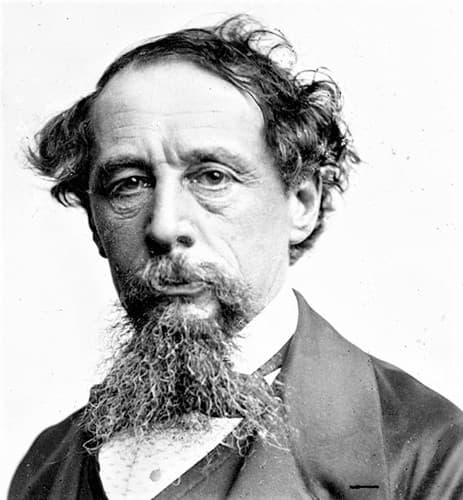
Charles John Huffam Dickens was an English writer and social critic who created some of the world's best-known fictional characters and is regarded by many as the greatest novelist of the Victorian era. His works enjoyed unprecedented popularity during his lifetime and, by the 20th century, critics and scholars had recognised him as a literary genius. His novels and short stories are widely read today.
Similar books
- Bleak House
Charles Dickens
4.0 (97k) average on GoodreadsHistorical FictionShares a similar sprawling plot, large cast, and critical social commentary on Victorian society and legal systems.
- Middlemarch
George Eliot
4.0 (136k) average on GoodreadsHistorical FictionAnother lengthy Victorian novel exploring complex social structures, moral dilemmas, and character development in a provincial setting.
- Vanity Fair
William Makepeace Thackeray
3.8 (118k) average on GoodreadsHistorical FictionOffers a satirical look at social climbing and human folly in 19th-century England, with a wide array of interconnected characters.
- To Kill a Mockingbird
Harper Lee
4.3 (4.5M) average on GoodreadsHistorical FictionIn the 1930s Jim Crow South, Harper Lee writes about racial injustice, moral growth, and the quiet courage of a lawyer father, Atticus Finch, as seen through his young daughter's eyes.
- The Great Gatsby
F. Scott Fitzgerald
3.9 (3.8M) average on GoodreadsHistorical FictionIn the opulent Roaring Twenties, a mysterious millionaire's lavish parties hide his desperate, tragic pursuit of a lost love, exposing the emptiness within the American Dream.
- Pride and Prejudice
Jane Austen
4.3 (3M) average on GoodreadsHistorical FictionIn a society focused on status and money, Elizabeth Bennet navigates love and pride, challenging Mr. Darcy and social expectations to find true affection.



Enjoyed the summary?
A summary gives you the shape of the book. The book itself has the detail, the examples and the voice.
Find Our Mutual Friend on AmazonAs an Amazon Associate, BookBrief earns from qualifying purchases. How we're funded