
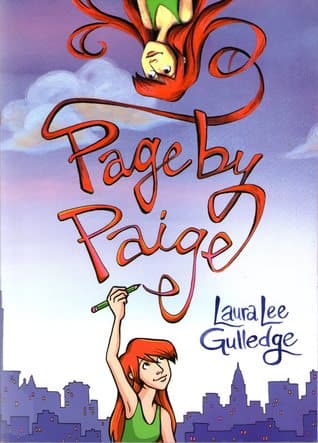
Synopsis
Covers the whole plot, including the ending.
- Difficulty
- Easy
- Pacing
- Moderate
- Mood
- Introspective, Heartwarming, Creative, Authentic
- Read it if
- You enjoy graphic novels about self-discovery, the creative process, and navigating new environments as a teenager.
- Skip it if
- You prefer fast-paced plots with high stakes and minimal internal reflection.
Page by Paige Plot Summary
Covers the whole plot, including the ending.
A New Beginning in New York
Paige and her family, including her parents and younger brother, move from Virginia to an apartment in New York City. This sudden change leaves Paige feeling lost and alone. She struggles with the busy city and misses her old friends and routines. To handle her worries, Paige draws in her sketchbook, a private world where she expresses her feelings and tries out her artistic ideas. This notebook becomes her most trusted friend, holding her secret thoughts and drawings, helping her deal with the big change and the initial loneliness of her new home.
The Art of Observation
Feeling like an outsider, Paige finds comfort and purpose in her sketchbook. She carefully draws everything she sees and feels, from people on the subway to her own worries about fitting in. Her drawings are more than just observations; they help her understand her new surroundings and her place in them. The sketchbook becomes a safe place where she can secretly explore her true self, a new artist. This creative outlet lets her express emotions she cannot say out loud, and through her art, she begins to find a voice and a sense of who she is, separate from her family's expectations.
First Connections: Gabby and Caleb
Paige's loneliness lessens when she meets Gabby, an outgoing and artistic girl who also loves to draw. Gabby's lively personality balances Paige's quiet nature, and their shared interest in art quickly leads to friendship. Through Gabby, Paige also meets Caleb, a shy but kind boy who works at a local coffee shop. Caleb's gentle manner and thoughtful nature appeal to Paige, and she feels drawn to his quiet strength. These new friendships mark a turning point, giving Paige a sense of belonging and encouraging her to step out of her comfort zone and show more of herself.
The Art Club and Self-Expression
Gabby encourages Paige, and Paige decides to join an art club at school. This is a big step for her, as it means moving beyond her private sketchbook and sharing her work with others. At first, she is nervous about showing her inner world. However, the supportive environment of the club, led by a kind art teacher, helps Paige slowly gain confidence in her art skills. She starts trying different styles and techniques, finding inspiration in the group setting. This experience helps her grow as an artist and realize that her art can connect people, not just be for personal thought.
A Budding Romance
As Paige spends more time with Caleb, a quiet but deep connection forms between them. She feels increasingly drawn to his sensitive nature and their shared moments of understanding. Paige starts to feel the new and exciting emotions of a first crush, which she carefully records and explores in her sketchbook. These feelings add another layer to her developing identity, making her face vulnerability and the possibility of intimacy. The budding romance with Caleb becomes a significant source of both excitement and worry, pushing her further out of her shell and into the challenging but rewarding world of relationships.
Family Dynamics and Expectations
Paige's parents, though loving, have certain hopes for her, often guiding her toward traditional academic paths rather than fully supporting her art. Her father, especially, seems to have trouble understanding her deep passion for art, sometimes seeing it as a hobby rather than a possible career. This creates an inner conflict for Paige, as she wants their approval but also feels a strong pull toward her true calling. She manages the delicate balance between respecting her family and asserting her own desires, using her art as a quiet way to define herself apart from their influence.
The Conflict with Gabby
As Paige gains confidence and explores her own art style and relationships, a subtle tension appears between her and Gabby. Gabby might feel left behind or misunderstood as Paige develops new interests, or there might be a miscommunication about priorities. This conflict, though not overly dramatic, shows the complexities of young friendships and the challenges of individual growth within a group. Paige must deal with the pain of a strained friendship and learn to communicate her feelings, even when it is hard, understanding that true connection needs honesty and vulnerability, even with her closest friends.
The Art Show Challenge
With growing confidence and encouragement from her art teacher, Paige decides to take part in the school's annual art show. This decision is a big leap of faith, as it means publicly showing her most personal work to a larger audience, including her family, friends, and classmates. Preparing for the show is both exciting and scary, pushing Paige to improve her skills and express her artistic vision. It is a moment of truth, where she must fully accept her identity as an artist and stand by her creations, regardless of potential judgment. The art show symbolizes her journey of self-discovery and acceptance.
The Revelation of Her Art
The art show arrives, and Paige's work is displayed. Each piece, once private in her sketchbook, is now open, showing her deepest thoughts and emotions. Her family, friends, and the school community see her art, and through it, they get a glimpse of the 'real' Paige – the artist, the observer, the dreamer. This public display is a moment of vulnerability and success. It allows others to understand her in a new way, and for Paige, it confirms her secret identity, proving that the person she draws in her notebook is indeed who she truly is, and that this self is worth seeing and appreciating.
Reconciliation and Understanding
The art show helps people understand each other better. Her parents, seeing the depth and talent in her work, begin to truly appreciate her art, moving past their initial doubts. The art display also helps mend the rift with Gabby, as Gabby sees the real expression and growth in Paige's work, leading to a heartfelt reconciliation. Caleb also expresses his admiration, deepening their connection. This public sharing of her art allows Paige to be fully seen and understood by those closest to her, creating acceptance and strengthening her relationships.
Embracing the Artist Within
By the end of the story, Paige has changed greatly. She no longer feels like just a quiet redhead who draws; she is an artist. She has handled the challenges of a new city, made meaningful friendships, experienced first love, and faced her family's expectations. Her sketchbook, once a private space, is now a way to connect and achieve her goals. Paige has successfully brought her inner, artistic self together with her outer identity, confidently accepting who she is. She has found her voice, her community, and her place in New York City, ready for the next part of her life as the person she draws in her notebook.
Principal Figures
Paige
Protagonist
A quiet, introverted teenager who finds her voice through art.
Paige is a thoughtful and sensitive redhead who initially struggles with shyness and insecurity after moving to New York City. She observes the world around her with a keen eye, meticulously documenting her experiences and emotions in her private sketchbook. Her art is her sanctuary and her secret identity, where she feels most authentic and powerful. She is driven by a deep need for self-expression and validation, constantly seeking to reconcile her inner artistic self with the expectations of her family and the demands of her new environment. She is initially hesitant but possesses an underlying strength and determination.
Relationships: Gabby (Best friend, fellow artist, initially a source of encouragement, later some conflict); Caleb (Love interest, a quiet and supportive friend); Paige's Parents (Loving but sometimes uncomprehending of her artistic passion); Paige's Brother (Younger sibling, a minor source of family interaction)
Gabby
Supporting
Paige's outgoing and artistic best friend.
Gabby is a vibrant, energetic, and confident girl who quickly befriends Paige. She is also passionate about art and provides Paige with much-needed encouragement and social connection in her new city. Gabby is more outwardly expressive than Paige, often pushing her friend to step out of her comfort zone, like joining the art club. While generally supportive, Gabby can sometimes be a bit headstrong or focused on her own artistic vision, leading to minor conflicts with Paige as they both grow and develop their individual styles. She represents the social and collaborative aspects of the artistic journey.
Relationships: Paige (Best friend, artistic collaborator and confidante)
Caleb
Supporting
Paige's quiet and supportive love interest.
Caleb is a gentle, observant, and kind-hearted boy whom Paige meets through Gabby and at his job at a coffee shop. He is somewhat shy, mirroring Paige's own introverted nature, which allows for a deep, unspoken understanding between them. Caleb is supportive of Paige's artistic endeavors and offers a calming presence in her life. He doesn't overtly push her but provides a steady and reassuring connection. His quiet strength and genuine interest in Paige's true self make him an important figure in her journey of self-acceptance and first love.
Relationships: Paige (Love interest, supportive friend)
Paige's Mother
Supporting
A loving parent who eventually understands Paige's artistic passion.
Paige's mother is a caring and supportive parent, though initially, she, like her husband, may not fully grasp the depth of Paige's artistic ambition. She is concerned with Paige's well-being and adjustment to the new city, and her intentions are always good. As Paige's art becomes more central to her identity, her mother's understanding and appreciation for her daughter's talent grow. She represents the parental desire for their child's happiness and success, and her journey involves learning to accept and celebrate Paige's unique path.
Relationships: Paige (Mother-daughter relationship, initially some misunderstanding, later acceptance); Paige's Father (Married couple, co-parents)
Paige's Father
Supporting
A parent who struggles to understand Paige's artistic aspirations.
Paige's father is a well-meaning but somewhat traditional parent who initially struggles to see art as a viable or serious path for his daughter. He likely wishes for Paige to pursue more conventional avenues, driven by a desire for her stability and success. His occasional skepticism or lack of understanding creates some internal conflict for Paige, as she seeks his approval. However, he is ultimately loving and, through witnessing Paige's dedication and talent, comes to accept and even admire her artistic passion. He embodies the challenge of generational differences in understanding career paths.
Relationships: Paige (Father-daughter relationship, initial disconnect over career, later understanding); Paige's Mother (Married couple, co-parents)
Art Teacher
Supporting
A mentor figure who encourages Paige's artistic development.
The art teacher is a supportive and insightful mentor who recognizes Paige's talent and helps her build confidence. This character provides a safe and encouraging environment in the art club, fostering creativity and self-expression among students. The teacher offers guidance without imposing strict rules, allowing Paige to explore her unique style. This mentorship is crucial in helping Paige transition from a private artist to one who is willing to share her work and embrace her identity publicly. The art teacher serves as an external validation for Paige's artistic aspirations.
Relationships: Paige (Mentor-student relationship)
Paige's Brother
Mentioned
Paige's younger sibling.
Paige's younger brother is a minor character who primarily serves to round out the family dynamic. He is depicted as a typical younger sibling, occasionally a source of mild annoyance or distraction, but generally a background presence in Paige's life. He doesn't play a significant role in Paige's artistic or emotional journey but reinforces the family setting.
Relationships: Paige (Sibling relationship)
Themes & Insights
The Power of Self-Expression Through Art
This is the main theme, showing how art helps Paige express her inner world. Her sketchbook starts as a private place where she explores her fears, observations, and desires without judgment. As she gains confidence, her art connects her with others, letting her share complex emotions and eventually show her true self. The art show, where her once-secret work is publicly displayed, represents her full acceptance of this theme, showing that art is not just a hobby but a key part of who she is and a strong tool for connection and understanding.
“When I close my eyes, I'm laughing and screaming and scheming and daydreaming.”
Identity and Self-Discovery
The story carefully follows Paige's journey of finding and accepting who she truly is. Moving from her familiar life, she struggles with her identity in a new, overwhelming place. Her art is tied to this theme, as she 'draws' the person she wants to become. The conflict between her quiet outside and her lively inner world, shown through her art, drives her growth. By the end, Paige learns that her 'secret identity' as an artist is not something to hide but to celebrate, leading to a deep sense of self-acceptance and belonging.
“But she is ready to become the person she draws in her notebook?”
Navigating New Environments and Belonging
The move from Virginia to New York City starts Paige's entire journey. This theme explores the challenges and chances that come with a big change in environment. At first, New York feels isolating and overwhelming, making Paige feel alone. However, through her art and the friendships she makes, she slowly learns to navigate the city, finding her own place within its busy energy. The city changes from a source of worry to a source of inspiration and a setting for her personal growth, symbolizing her ability to adapt and succeed.
“New city. New friends. New Paige?”
The Complexity of Relationships
The story looks at various relationships, including friendships, family dynamics, and first love. Paige's interactions with Gabby show the difficulties of changing friendships as people grow. Her relationship with Caleb explores the tenderness and vulnerability of young romance. Also, the story examines the complexities of parental hopes versus personal goals, as Paige seeks understanding and acceptance from her parents about her art. These relationships help Paige grow, teaching her about communication, empathy, and being true to herself while connecting with others.
“At first, the only thing keeping her company is her notebook, where she pours her worries and observations and experiments with her secret identity: ARTIST.”
Plot Devices & Literary Techniques
The Sketchbook/Journal
A physical manifestation of Paige's inner world and artistic identity.
Paige's sketchbook is the most prominent plot device, serving as a visual diary of her thoughts, feelings, and observations. It is her safe space, a repository for her secret identity as an artist, and a tool for processing her new environment. The sketchbook allows the reader direct access to Paige's internal monologue through her drawings and occasional written notes, providing insight into her emotional state and artistic development. Its eventual public display at the art show symbolizes Paige's transition from private introspection to public self-acceptance and expression.
New York City Setting
A vibrant and overwhelming backdrop that acts as a character in itself.
New York City is more than just a location; it's a dynamic force that influences Paige's journey. Its overwhelming nature initially contributes to her isolation, but its diverse culture and artistic energy eventually become a source of inspiration. The city challenges Paige to adapt, to observe, and to find her own niche amidst its vastness. The constant sensory input and the presence of diverse individuals push her out of her comfort zone, forcing her to engage with the world and ultimately find her place within it, reflecting her internal transformation from a shy observer to a confident participant.
The Art Club
A catalyst for social interaction and artistic growth.
The art club serves as a crucial plot device that pushes Paige out of her comfort zone and into a collaborative, supportive environment. It's where she hones her skills, receives mentorship, and, most importantly, starts to share her art with others. The club facilitates her friendships with Gabby and helps her gain confidence in her artistic voice. It acts as a stepping stone from the privacy of her sketchbook to the public display of her art, demonstrating the power of community in fostering personal and creative development.
Page by Paige Quotes
“It's like I'm a superhero, and my art is my superpower. I just need to figure out how to use it.”
“Every line, every shade, every brushstroke… it's all a piece of me.”
“Sometimes the hardest part about creating something is letting it go out into the world.”
“Maybe being an artist isn't about being perfect, but about being brave.”
“You can't wait for inspiration. You have to go out and find it, or make it.”
“Love is messy, just like art. But that's what makes it beautiful.”
“The world is full of stories, and it's our job as artists to tell them.”
“Sometimes you have to break the rules to find your own style.”
“It's scary to put your heart on a page, but it's even scarier not to.”
“Being seen for who you truly are, flaws and all, that's real connection.”
“Every blank page is a new beginning, a chance to create something amazing.”
“The best art comes from the deepest parts of you, even the parts you try to hide.”
“You don't just draw what you see; you draw what you feel.”
“Finding your voice is a journey, not a destination.”
Quiz
10 questions on the plot and the characters. Each answer comes with a short explanation.
Question 1
What is the primary medium Paige uses to express her 'secret identity' and cope with her new life in New York City?
- Playing a musical instrument
- Writing poetry
- Drawing and journaling in her notebook
- Photography
Show answer
C. Drawing and journaling in her notebook Paige's notebook is where she draws, writes, and experiments with her secret identity as an artist, which is central to her journey.
Question 2
Where does Paige's family move from before settling in New York City?
- California
- Virginia
- Florida
- Texas
Show answer
B. Virginia The book states that Paige's parents move her family from Virginia to New York City.
Question 3
What is the main internal conflict Paige faces throughout the story regarding her artistic pursuits?
- Deciding between art and a career in science
- Struggling to find inspiration for her drawings
- The gap between her inner artistic identity and her outward shy persona
- Dealing with criticism from her art teacher
Show answer
C. The gap between her inner artistic identity and her outward shy persona A core theme is Paige's struggle to reconcile the confident artist she is in her notebook with the quiet, uncertain girl everyone else sees.
Question 4
How does Paige initially use her notebook in her new environment?
- To plan social events with new friends immediately
- As a tool for school assignments only
- As a private space to pour her worries, observations, and experiment with her identity
- To write letters back to her old friends in Virginia
Show answer
C. As a private space to pour her worries, observations, and experiment with her identity Her notebook is initially her only companion, a private sanctuary for her thoughts and artistic exploration.
Question 5
What effect does the confidence gained from her notebook have on Paige's social life?
- It makes her even more withdrawn and isolated.
- It helps her to start making friends and engaging with her new surroundings.
- It causes her to abandon her family's expectations entirely.
- It leads to her becoming overly confident and arrogant.
Show answer
B. It helps her to start making friends and engaging with her new surroundings. The text states that 'With the confidence the book brings her, she starts to make friends and shake up her family's expectations.'
Question 6
The book explores the 'ups, downs, and sideways feelings' of being a young adult. Which of the following best represents a 'sideways feeling' as depicted in Paige's journey?
- The clear joy of making a new friend.
- The direct sadness of missing her old home.
- The complex, often confusing blend of excitement and anxiety about self-discovery and new experiences.
- The straightforward anger towards her parents for moving.
Show answer
C. The complex, often confusing blend of excitement and anxiety about self-discovery and new experiences. A 'sideways feeling' refers to the ambiguous, non-linear, and often contradictory emotions common in adolescence, such as the mix of anticipation and fear when facing new opportunities for self-expression.
Question 7
What does the phrase 'shake up her family's expectations' imply about Paige's development?
- She starts to rebel against all family rules and traditions.
- She begins to assert her individuality and pursue paths different from what her family might have envisioned for her.
- She convinces her family to move back to Virginia.
- She becomes a burden to her family due to her artistic pursuits.
Show answer
B. She begins to assert her individuality and pursue paths different from what her family might have envisioned for her. This phrase suggests Paige is growing into her own person, possibly challenging or expanding her family's understanding of who she is and what she will become, especially through her art.
Question 8
The description mentions Paige's 'secret identity: ARTIST.' What does 'secret' primarily convey about her artistic self at the beginning of the story?
- She is hiding her art because it is illegal.
- She is not yet confident enough to openly share or claim this identity publicly.
- Her art is only for a select, small group of friends.
- She believes her art is not good enough for anyone to see.
Show answer
B. She is not yet confident enough to openly share or claim this identity publicly. The 'secret' aspect highlights her shyness and lack of confidence in her artistic identity, keeping it confined to her private notebook until she gains more assurance.
Question 9
The central question posed by the book is: 'But she is ready to become the person she draws in her notebook?' What does this question specifically challenge Paige to do?
- To physically transform herself to look like her drawings.
- To bridge the gap between her internal artistic identity and her external reality, embracing her true self publicly.
- To stop drawing in her notebook and find a new hobby.
- To only draw self-portraits from that point forward.
Show answer
B. To bridge the gap between her internal artistic identity and her external reality, embracing her true self publicly. This question gets to the core theme of self-acceptance and authenticity—whether Paige is prepared to let her inner, confident artist manifest in her outward life.
Question 10
Laura Lee Gulledge's 'stunning art digs deep into the soul.' How does this artistic style likely contribute to the storytelling in 'Page by Paige'?
- By providing photorealistic depictions of New York City landmarks.
- By visually representing Paige's complex internal emotional landscape and her journey of self-discovery.
- By focusing primarily on abstract, non-representational forms.
- By using very bright, vibrant colors to create an overwhelmingly cheerful tone.
Show answer
B. By visually representing Paige's complex internal emotional landscape and her journey of self-discovery. The art style is described as 'digging deep into the soul,' suggesting it is integral to conveying the internal struggles, emotions, and personal growth that Paige experiences, making her inner world visible to the reader.
Page by Paige FAQ
What is the central conflict Paige faces at the beginning of 'Page by Paige'?
Paige's central conflict stems from her family's move from Virginia to New York City, leaving her feeling displaced and struggling to find her identity in a new environment. She grapples with social anxiety and the challenge of expressing her true self beyond her quiet facade, finding solace primarily in her private sketchbook.
How does Paige's sketchbook function as more than just a place for drawings?
Paige's sketchbook serves as a crucial emotional outlet and a sanctuary where she can explore her secret identity as an artist. It's a space for her unfiltered thoughts, feelings, and creative experiments, allowing her to process her anxieties and imagine a more confident version of herself before she's ready to present it to the world.
Who are Paige's key friends in New York, and how do they influence her?
Paige befriends Gabriella, a vibrant and outgoing girl who encourages her to step out of her comfort zone, and the more enigmatic and artistically inclined Evan. Gabriella pushes Paige socially, while Evan understands and validates Paige's artistic aspirations, providing both inspiration and a romantic interest.
What role do Paige's parents play in her journey of self-discovery?
Paige's parents, particularly her mother, initially have certain expectations for her that don't align with her artistic inclinations, such as wanting her to be more social or pursue traditional paths. Their move to NYC, while initially destabilizing, ultimately provides the new environment necessary for Paige to challenge these expectations and redefine herself.
What is the significance of the 'new Paige' that the book's title alludes to?
The 'new Paige' refers to the more confident, artistically expressive, and socially engaged version of herself that Paige aspires to become and gradually embodies throughout the story. It represents her evolution from a shy, internal observer to someone who actively participates in her life and shares her authentic self with others.
Are there recurring visual motifs in Paige's artwork that symbolize her internal state?
Yes, Paige's artwork often features motifs like intricate patterns, fantastical creatures, or exaggerated expressions that externalize her internal anxieties, dreams, and observations. For instance, her early drawings might be more confined or reflect a sense of being overwhelmed, while later ones become more expansive and confident.
How does the author use the graphic novel format to convey Paige's internal monologue and artistic process?
Laura Lee Gulledge masterfully uses the graphic novel format by integrating Paige's actual sketchbook pages and drawings directly into the narrative. This allows readers direct access to Paige's inner world, showing her thoughts, fears, and creative breakthroughs visually, often contrasting with her external quietness.
Is there a subtle connection between the 'Virginia' Paige and the 'New York' Paige beyond just location?
The 'Virginia' Paige is a foundation of quiet introspection and artistic inclination that the 'New York' Paige builds upon, rather than abandons. The move acts as a catalyst, forcing the 'Virginia' Paige's nascent artistic self to confront external challenges and ultimately blossom in the more diverse and stimulating environment of NYC.
How does the depiction of New York City itself contribute to Paige's character development?
New York City is not just a backdrop but an active force in Paige's development. Its bustling energy, diverse art scene, and array of unique individuals provide both overwhelming sensory input and endless inspiration, pushing her to adapt, observe, and find her unique voice within its vibrant chaos.
How does Paige's social anxiety manifest, and what strategies does she use to cope?
Paige's social anxiety manifests as shyness, difficulty initiating conversations, and a tendency to retreat into her observations and sketchbook. She copes by drawing, using her art as a safe space to process her feelings, and gradually gains confidence by translating her inner world into tangible art, which then helps her connect with others.
What psychological journey does Paige undergo regarding her 'secret identity' as an artist?
Paige undertakes a journey from viewing her artistry as a 'secret identity' born of insecurity to embracing it as an integral part of her public self. This involves overcoming imposter syndrome, finding validation not just from within but also from supportive friends, and ultimately owning her creative voice without apology.
How does the book explore the concept of vulnerability through Paige's art?
The book explores vulnerability by showing Paige's struggle to share her deeply personal art, which is a direct extension of her inner self. Each drawing she shares, whether with Evan or Gabriella, represents a step towards emotional exposure, highlighting the courage required to be seen and understood through one's creative work.
In what ways does 'Page by Paige' address the common teenage struggle of self-acceptance?
'Page by Paige' addresses self-acceptance by illustrating Paige's journey from conforming to external expectations to embracing her unique artistic identity. It shows that true self-acceptance comes from within, by valuing one's passions and authentic self, rather than seeking approval from others.
What is the significance of the title 'Page by Paige'?
The title 'Page by Paige' holds dual meaning: it literally refers to the pages of Paige's sketchbook where she develops her art and identity, and metaphorically to her personal growth 'page by page' or step by step. It emphasizes the gradual, iterative process of self-discovery and artistic development.
Does the book suggest that creativity is inherently linked to social anxiety, or can it be a tool to overcome it?
The book suggests that while creativity can initially be a refuge for those with social anxiety, it ultimately becomes a powerful tool to overcome it. Paige's art, initially a private solace, transforms into a bridge that allows her to connect with others, express herself, and build confidence in social settings.
How does the romance element with Evan contribute to Paige's overall arc, beyond just being a love interest?
Evan is more than just a love interest; he serves as a significant catalyst for Paige's artistic and personal growth. His understanding and appreciation of her art validate her passion, encouraging her to be more open about her creative pursuits and helping her see her own worth as an artist.
What message does the book convey about the importance of finding your 'people'?
The book powerfully conveys the message that finding your 'people' – those who understand and support your true self, like Gabriella and Evan – is crucial for personal growth and self-acceptance. These connections provide the encouragement and validation needed to step out of your comfort zone and fully embrace who you are.
Could Paige's experiences be interpreted as a metaphor for the creative process itself?
Yes, Paige's journey strongly parallels the creative process. Her initial struggles with self-doubt and isolation, her reliance on a private space (the sketchbook), her gradual experimentation, and finally her courage to share her work with the world can all be seen as a metaphor for the artist's path from inception to exhibition.
Similar books
- Smile
Raina Telgemeier
4.3 (183k) average on GoodreadsChildren'sExplores the challenges of adolescence and self-identity through a relatable graphic novel format.
- American Born Chinese
Gene Luen Yang
3.9 (73k) average on GoodreadsFantasyUses graphic novel storytelling to delve into themes of identity, belonging, and self-acceptance.
- Blankets
Craig Thompson
4.0 (95k) average on GoodreadsSpiritualityA coming-of-age graphic novel with a strong focus on introspection, relationships, and artistic expression.
- This One Summer
Mariko Tamaki
3.7 (59k) average on GoodreadsYoung AdultBoth Page by Paige and This One Summer depict young girls experiencing significant summer changes and navigating complex friendships and family dynamics. However, This One Summer delves into more mature and somber themes of sexuality, loss, and the bittersweet end of childhood innocence with a more ambiguous and nuanced resolution. Page by Paige maintains a more hopeful and generally lighter tone, focusing on creative blossoming rather than the darker aspects of coming-of-age, making it suitable for a slightly younger YA audience.
- The Goldfinch
Donna Tartt
3.9 (720k) average on GoodreadsLiterary FictionHaunted by a tragic explosion and clutching a stolen Dutch masterpiece, a young orphan navigates the opulent drawing rooms of New York and the gritty underbelly of the art world, desperately seeking connection and redemption amidst a life spiraling into crime and obsession.
- Girl with a Pearl Earring
Tracy Chevalier
3.9 (627k) average on GoodreadsHistorical FictionA young servant in 17th-century Delft finds her quiet world intertwined with the painter Johannes Vermeer as she becomes his muse, blurring the lines of class, art, and forbidden desire.





Enjoyed the summary?
A summary gives you the shape of the book. The book itself has the detail, the examples and the voice.
Find Page by Paige on AmazonAs an Amazon Associate, BookBrief earns from qualifying purchases. How we're funded