
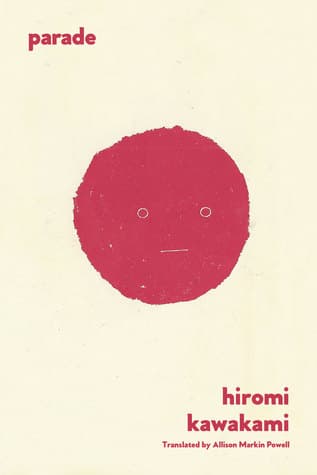
Synopsis
Covers the whole plot, including the ending.
- Difficulty
- Easy
- Pacing
- Slow
- Mood
- Dreamlike, Whimsical, Disquieting, Introspective
- Read it if
- You enjoy subtle magical realism, quiet introspection, and short, evocative tales that blur the lines between reality and imagination, especially if you liked 'Strange Weather in Tokyo'.
- Skip it if
- You prefer fast-paced plots, clear explanations for fantastical elements, or stories with explicit character development and dramatic conflict.
Parade Plot Summary
Covers the whole plot, including the ending.
A Summer Afternoon and a Request for a Story
The novella starts with Tsukiko and her former high school teacher, Sensei, eating somen noodles on a summer afternoon. Their conversation is relaxed, showing their comfortable relationship. Sensei asks Tsukiko to tell him a story from 'long ago.' Tsukiko agrees to tell about an unusual childhood experience. This sets the narrative's intimate, reflective tone, presenting the fantastical events as a memory shared between two people with a deep bond.
The Appearance of the Tengu
Tsukiko begins her story, describing how, as a young girl, she woke to find two strange creatures in her room. These beings had human bodies, long noses, and wings, identifying them as tengu from Japanese folklore. One had a pale red face, the other a dark red face, and they were arguing quietly. Their sudden appearance changed the ordinary feel of Tsukiko's childhood home, adding a fantastical element. Tsukiko, surprised, accepted their presence with a child's curiosity.
The Tengu's Persistent Presence
After first appearing, the tengu stayed. They followed young Tsukiko everywhere – to school, the park, even the bathroom. Others mostly did not see or hear them; they existed only in Tsukiko's mind. Their constant presence annoyed her but also gave her a strange companionship. They continued their quiet arguments, and their long noses sometimes appeared from behind corners, a subtle reminder of them. Tsukiko's family, however, never noticed these companions.
The Tengu's Mundane and Mischievous Habits
Tsukiko tells about the tengu's odd habits. They ate a lot, especially unattended food, often stealing from her plate or the kitchen. They also played tricks, sometimes hiding Tsukiko's things or causing small disturbances that she alone blamed on them. Despite being supernatural, their actions were often ordinary, making them part of Tsukiko's daily life. The pale red tengu was usually calmer, while the dark red tengu was more prone to mischief and louder arguments, showing their different personalities.
Tsukiko's Growing Acceptance and Communication
Tsukiko eventually found a unique way to interact with the tengu. She learned to understand their gestures, murmurs, and even their 'scents' as ways of communicating. She sometimes talked to them, though they rarely responded in a way others would understand. This unspoken understanding deepened her connection to them, making them more than just strange apparitions; they became active, if unusual, participants in her solitary world. Her acceptance of them grew, moving from surprise to a quiet, almost family-like, coexistence.
The Tengu and Tsukiko's Social Life
The tengu's presence subtly affected Tsukiko's social interactions. Her friends did not know about the creatures, but Tsukiko's unique perspective, shaped by her constant companions, sometimes made her seem distracted or odd to others. The tengu occasionally offered silent 'advice' or reactions to her friends' conversations, influencing Tsukiko's thoughts. Their influence changed her view of the world, making her more aware of unseen forces and unspoken parts of human interaction. This made her feel both part of and slightly outside of ordinary life.
The Tengu's Disappearance and Return
One day, the two tengu disappeared from Tsukiko's life without warning. This absence was unsettling, leaving a void where their constant presence had been. Tsukiko felt a sense of loss. However, they reappeared later, as mysteriously as they had vanished. This pattern of disappearance and reappearance added to their mysterious nature, showing their temporary and unpredictable connection to Tsukiko's reality and that they existed on their own terms.
The Parade of Unseen Beings
Tsukiko, with the tengu, saw a 'parade' of other mythical creatures – kappa, oni, and other yokai – marching through the streets, completely unseen by humans. This vision confirmed that the tengu were not alone but part of a larger, hidden world of supernatural beings living alongside human society. The parade was a spectacle visible only to Tsukiko, further showing her unique perception and her role as a link between the ordinary and the fantastic.
Sensei's Reaction and the Nature of Memory
Tsukiko finished her childhood story, leaving Sensei to think about her words. Sensei listened closely, sometimes asking thoughtful questions that aimed to understand her story's depth. He did not question the literal truth of her account but its meaning. His reaction highlights the novella's look at memory, perception, and the subjective nature of reality. The story is presented not just as a childhood fantasy, but as a personal experience that shaped Tsukiko, regardless of whether the tengu were 'real' in a conventional way.
The Lingering Presence and Unspoken Understanding
The novella ends returning to the present, with Tsukiko and Sensei finishing their somen. While the tengu are part of Tsukiko's past, the story suggests that the unseen world, or at least the ability to see it, still subtly affects Tsukiko. Sensei's quiet understanding and their closeness imply that he, too, is open to such possibilities, or at least to Tsukiko's rich inner life. The story ends with quiet thought, hinting at the lasting presence of mystery and the subjective nature of truth in their shared lives.
Principal Figures
Tsukiko
Protagonist
A woman who recounts her childhood experiences with mythical creatures.
Tsukiko is the central character, both as an adult narrating her past and as a child experiencing the fantastical. As a child, she is observant, quiet, and remarkably accepting of the unusual. She doesn't question the tengu's existence but rather integrates them into her daily life, developing a unique, almost symbiotic relationship with them. As an adult, she is reflective and open, sharing her deeply personal and strange memories with Sensei without apology or embellishment. Her capacity for wonder and her unique perception of reality are defining traits, making her a bridge between the mundane and the supernatural.
Relationships: Sensei (former student, close friend, confidante); Pale Red Tengu (constant, mostly placid, companion); Dark Red Tengu (constant, mischievous, companion)
Sensei
Supporting
Tsukiko's former high school teacher and trusted confidante.
Sensei is Tsukiko's much older former teacher, with whom she maintains a deep and unconventional friendship. He is a thoughtful, contemplative man who listens to Tsukiko's strange childhood story with genuine interest and an open mind, never dismissing her experiences. His role is primarily that of a listener and a catalyst for Tsukiko's storytelling, but his presence also provides a grounding, empathetic counterpoint to the fantastical elements. He represents a form of acceptance and understanding that allows Tsukiko to fully explore and share her unique past.
Relationships: Tsukiko (former teacher, close friend, confidante)
Pale Red Tengu
Supporting
One of two mythical creatures who attach themselves to young Tsukiko.
The Pale Red Tengu is one of the two tengu who appear in young Tsukiko's room. It has a pale red face, a long nose, and wings, consistent with Japanese folklore. This tengu is generally depicted as less mischievous and more placid than its dark red counterpart. It often engages in quiet arguments with the other tengu and shares a constant, if largely unseen, presence in Tsukiko's life. Its role is to embody the subtle, persistent intrusion of the supernatural into the mundane.
Relationships: Tsukiko (uninvited, constant companion); Dark Red Tengu (constant companion, argumentative partner)
Dark Red Tengu
Supporting
The more mischievous of the two tengu who follow young Tsukiko.
The Dark Red Tengu is the second of the two tengu, characterized by its dark red face and a more mischievous, sometimes louder, personality. It is more prone to causing minor disturbances, like hiding Tsukiko's belongings, and its arguments with the Pale Red Tengu are often more boisterous. Like its companion, it remains largely invisible to others but is a constant presence in Tsukiko's childhood. It represents the more active and sometimes disruptive aspect of the unseen world.
Relationships: Tsukiko (uninvited, constant companion); Pale Red Tengu (constant companion, argumentative partner)
Tsukiko's Mother
Mentioned
A background figure, unaware of the tengu's presence.
Tsukiko's mother appears briefly in the childhood narrative, primarily as a figure who prepares meals and maintains the household. She is completely oblivious to the presence of the tengu, highlighting the subjective nature of Tsukiko's experiences. Her role is to represent the 'normal' adult world that exists alongside, and often in ignorance of, the fantastical elements Tsukiko perceives.
Relationships: Tsukiko (mother-daughter relationship)
Tsukiko's Father
Mentioned
A background figure, unaware of the tengu's presence.
Tsukiko's father is a minor background figure in the childhood narrative, like her mother, completely unaware of the tengu. His presence, though minimal, reinforces the idea that the supernatural world Tsukiko experiences is hidden from ordinary adult perception. He represents the mundane, unquestioning reality that Tsukiko navigates while harboring her secret companions.
Relationships: Tsukiko (father-daughter relationship)
School Friends
Mentioned
Tsukiko's peers who remain unaware of the tengu.
Tsukiko's school friends are mentioned as part of her daily life, but they serve primarily to emphasize her unique position. They are completely oblivious to the tengu, and Tsukiko's interactions with them are sometimes subtly affected by her unseen companions. They represent the conventional social world that Tsukiko inhabits while simultaneously existing in a private, fantastical reality.
Relationships: Tsukiko (childhood friends)
Kappa
Mentioned
Mythical water imps seen in the 'parade'.
Kappa are mythical water imps from Japanese folklore, briefly seen by young Tsukiko during the 'parade' of yokai. Their appearance, along with other creatures, confirms the existence of a broader, hidden supernatural world that Tsukiko is privy to. They are part of the collective representation of the unseen forces at play.
Relationships: Tsukiko (observer of their brief appearance)
Oni
Mentioned
Demonic figures seen in the 'parade'.
Oni are demonic figures from Japanese folklore, also observed by young Tsukiko in the 'parade.' Their presence contributes to the rich tapestry of mythical beings that populate the hidden world Tsukiko perceives, reinforcing the idea that the tengu are not isolated anomalies but part of a vibrant, unseen supernatural community.
Relationships: Tsukiko (observer of their brief appearance)
Themes & Insights
Perception and Reality
The novella explores the subjective nature of reality through Tsukiko's perception. No one else sees the tengu or the parade, but they are real to her, shaping her childhood and worldview. The story asks what 'truth' means – is it only what everyone agrees on, or can individual experiences be valid? Sensei's non-judgmental listening shows that reality can be personal and not always provable by external standards, making Tsukiko's story valid regardless of its fantastical elements.
““I wasn’t alive long ago,” Tsukiko says, “but should I tell you a story from when I was little?” “Please do,” Sensei replies.”
The Unseen and the Supernatural
A main theme is the coexistence of the ordinary and the supernatural. The tengu and the parade of other yokai represent a hidden world that exists alongside human society, mostly unseen. This theme suggests there are forces and beings beyond human perception, subtly influencing or simply sharing space with us. Kawakami presents these supernatural elements not as scary or overtly magical, but as an integrated, if unusual, part of life, accessible to those with a particular sensitivity, like young Tsukiko. It gives everyday life a quiet sense of wonder and mystery.
“One day, when I was little, I awakened to find something with a pale red face and something with a dark red face in my room, arguing with each other.”
Memory and Storytelling
The entire story is Tsukiko telling a childhood memory to Sensei. This shows how memory shapes identity and how storytelling processes and shares personal history. The 'truth' of her memory is less important than its impact and the act of sharing it. Sensei's request for 'a story from long ago' highlights the value of narrative, whether fantastical or factual, as a way to connect and understand each other. The novella suggests that our past, especially our unique experiences, defines who we become and how we relate to the world.
““Tell me a story from long ago,” Sensei says.”
Solitude and Companionship
Tsukiko's childhood, while not explicitly lonely, includes the private companionship of the tengu. These unseen beings become her constant companions, influencing her perceptions and providing a unique interaction others cannot access. This theme explores solitude – not necessarily loneliness, but a state where one's inner world can be filled with unique figures and experiences. The tengu offer a peculiar companionship that shapes Tsukiko's inner world, making her experiences different from those of her peers and family.
“They attached themselves to me and began to follow me everywhere.”
Plot Devices & Literary Techniques
Frame Narrative
The adult Tsukiko's conversation with Sensei frames the childhood story.
The novella employs a frame narrative, where the present-day interaction between adult Tsukiko and Sensei sharing somen serves as the outer frame for Tsukiko's recounted childhood story about the tengu. This device allows for a reflective tone, as the adult Tsukiko processes her past experiences through the act of narration. It also emphasizes the theme of memory and storytelling, as the 'story from long ago' is given weight and context by the intimate, understanding audience of Sensei.
Unreliable/Subjective Narration
Tsukiko's childhood experiences are presented as her unique, unverified reality.
Tsukiko's narration, particularly of her childhood encounters with the tengu, can be considered subjective or 'unreliable' in the sense that her experiences are not corroborated by any other character. The reader is entirely dependent on Tsukiko's perspective, which is presented as deeply personal and unverified by external reality. This device brilliantly reinforces the theme of perception and reality, forcing the reader to accept Tsukiko's truth on its own terms, rather than questioning the literal existence of the tengu. It highlights the power of individual experience and internal reality.
Mythological Creatures (Tengu, Yokai)
Traditional Japanese folklore elements are integrated into a contemporary setting.
The direct inclusion of tengu and other yokai (kappa, oni) from Japanese folklore serves as a primary plot device. These mythical creatures are not merely decorative but are integral to Tsukiko's lived experience. By integrating these fantastical beings into a seemingly ordinary childhood, Kawakami blurs the lines between myth and reality, suggesting that the ancient spirits of folklore still exist, perhaps just beyond the veil of everyday perception. Their presence anchors the story in a rich cultural tradition while simultaneously making the fantastic feel oddly mundane.
Symbolism of Food (Somen)
The sharing of simple food symbolizes intimacy and shared experience.
The act of Tsukiko and Sensei preparing and eating somen noodles together is a subtle but significant symbolic device. Somen, a light, summery dish, represents simplicity, comfort, and the quiet intimacy of their relationship. The shared meal creates a setting of domestic peace and trust, making it a safe space for Tsukiko to recount her extraordinary childhood memories. Food, in this context, facilitates connection and provides a grounding, sensory anchor for the fantastical narrative that unfolds.
Parade Quotes
“The parade is not a line of people moving forward; it is a circle, always returning to where it began.”
“In this town, the extraordinary walks hand in hand with the ordinary, and no one finds it strange.”
“We are all just passing through, like clouds in the sky, leaving only shadows behind.”
“The river does not ask why it flows; it simply moves, and in moving, it finds its purpose.”
“Sometimes, the most profound truths are hidden in the silence between words.”
“To remember is to weave a tapestry of moments, each thread a fragment of what once was.”
“In the parade, everyone wears a mask, but beneath it, we are all searching for the same thing: connection.”
“The moon does not shine for us; it simply is, and in its being, it illuminates our darkness.”
“A single step can change the course of the parade, yet no one notices until the pattern shifts.”
“We are all stories waiting to be told, and in the telling, we become real.”
“The wind carries whispers of the past, but only those who listen can hear them.”
“In the heart of the parade, there is a stillness that speaks louder than any drum.”
“To lose oneself in the crowd is to find a different kind of solitude.”
“The colors of the parade fade with time, but the emotions they evoke remain vivid.”
Quiz
10 questions on the plot and the characters. Each answer comes with a short explanation.
Question 1
What food do Tsukiko and Sensei prepare and eat together at the beginning of the story?
- Sushi
- Soba noodles
- Somen noodles
- Tempura
Show answer
C. Somen noodles The story opens with Tsukiko and her former high school teacher preparing and eating somen noodles together on a summer afternoon, setting the scene for their conversation.
Question 2
What does Sensei ask Tsukiko to do after they eat?
- Help clean up
- Tell him a story from long ago
- Go for a walk
- Describe her current life
Show answer
B. Tell him a story from long ago Sensei requests, "Tell me a story from long ago," which prompts Tsukiko to share her childhood encounter with the tengu.
Question 3
What type of creatures does Tsukiko encounter in her childhood story?
- Kitsune (fox spirits)
- Kappa (water imps)
- Tengu
- Yokai (general spirits)
Show answer
C. Tengu Tsukiko describes finding tengu in her room as a child. Tengu are mythical creatures from Japanese folklore with human bodies, long noses, and wings.
Question 4
How do the tengu appear when Tsukiko first sees them as a child?
- Floating peacefully above her bed
- Arguing with each other
- Singing a lullaby
- Hiding in the shadows
Show answer
B. Arguing with each other Tsukiko awakens to find the tengu arguing with each other in her room, indicating their mischievous and disruptive nature from the start.
Question 5
What physical features do the tengu possess according to Tsukiko's description?
- Human bodies, long noses, and wings
- Animal bodies, short tails, and horns
- Transparent forms with glowing eyes
- Feathered bodies and beaks
Show answer
A. Human bodies, long noses, and wings Tsukiko specifies that the tengu have human bodies, long noses, and wings, aligning with traditional depictions of these creatures in Japanese tales.
Question 6
What do the tengu do after Tsukiko encounters them as a child?
- They disappear forever
- They attach themselves to her and follow her everywhere
- They become her protectors
- They only appear in her dreams
Show answer
B. They attach themselves to her and follow her everywhere The tengu attach themselves to Tsukiko and begin to follow her everywhere, suggesting an ongoing, intrusive presence in her life.
Question 7
What key question does the story raise about Tsukiko's world?
- How she will advance in her career
- What other invisible and unacknowledged forces are acting upon her seemingly peaceful world
- Whether she will marry Sensei
- Why she dislikes summer afternoons
Show answer
B. What other invisible and unacknowledged forces are acting upon her seemingly peaceful world The narrative prompts reflection on unseen influences, asking, "And what other invisible and unacknowledged forces are acting upon Tsukiko’s seemingly peaceful world?"
Question 8
How does Tsukiko respond when Sensei asks for a story from "long ago"?
- She refuses, saying she has no stories
- She tells a fictional tale about a princess
- She says she wasn't alive long ago but offers a story from when she was little
- She recounts a recent event from her adult life
Show answer
C. She says she wasn't alive long ago but offers a story from when she was little Tsukiko humorously points out, "I wasn’t alive long ago," but then offers to tell a story from her childhood, which leads to the tengu anecdote.
Question 9
What distinguishes the two tengu Tsukiko encounters?
- Their size and strength
- The color of their faces: one pale red and one dark red
- Their ability to speak different languages
- Their wingspan and flight speed
Show answer
B. The color of their faces: one pale red and one dark red Tsukiko notes that one tengu has a pale red face and the other a dark red face, highlighting their distinct appearances even as they share other traits.
Question 10
What broader theme is suggested by the tengu's persistent attachment to Tsukiko?
- The importance of culinary traditions in Japanese culture
- The inevitability of aging and memory loss
- The intrusion of the supernatural or unresolved past into everyday life
- The benefits of reconnecting with former teachers
Show answer
C. The intrusion of the supernatural or unresolved past into everyday life The tengu symbolize how supernatural elements or lingering aspects of one's past (like childhood memories) can disrupt and inhabit present reality, a common theme in Kawakami's work.
Parade FAQ
What is 'Parade' by Hiromi Kawakami about?
'Parade' is a brief, disquieting literary fiction and fantasy novella set during a summer afternoon. It follows Tsukiko and her former high school teacher, Sensei, as they share somen noodles, and Tsukiko recounts a childhood memory of encountering two tengu creatures—one with a pale red face and one with a dark red face—who begin following her everywhere, raising questions about invisible forces in her seemingly peaceful world.
Why should I read 'Parade'?
Readers should explore 'Parade' for its subtle blend of mundane realism and unsettling fantasy, characteristic of Kawakami's style. It serves as a companion to 'Strange Weather in Tokyo,' offering deeper insight into Tsukiko's psyche and the quiet, mysterious forces that shape her life, all within a concise, atmospheric narrative.
What is the background/setting of 'Parade'?
The story is set during a single summer afternoon in Japan, primarily in a domestic space where Tsukiko and Sensei share a meal. The setting shifts between this present-day scene and Tsukiko's childhood memory, creating a layered backdrop that contrasts everyday tranquility with supernatural intrusion.
What are the most memorable quotes?
Key quotes include Sensei's request, 'Tell me a story from long ago,' and Tsukiko's response, 'I wasn’t alive long ago, but should I tell you a story from when I was little?' These lines highlight the theme of memory and storytelling, while her description of the tengu—'something with a pale red face and something with a dark red face'—evokes the story's eerie, folkloric elements.
What writing style does Hiromi Kawakami use in 'Parade'?
Kawakami employs a minimalist, understated prose style that blends literary fiction with subtle fantasy. The narrative is concise and atmospheric, focusing on quiet moments and dialogue between Tsukiko and Sensei, while gradually introducing disquieting elements like the tengu to explore deeper psychological and existential themes.
What minor details add significant meaning in 'Parade'?
The detail of Tsukiko and Sensei eating somen noodles together—a simple, seasonal summer dish—emphasizes the mundane setting that contrasts with the supernatural tengu. The tengu's distinct red faces (pale and dark) symbolize different aspects of Tsukiko's subconscious or past, adding layers to the story's exploration of memory and hidden forces.
What are some subtle foreshadowing moments in 'Parade'?
Sensei's request for a story 'from long ago' foreshadows Tsukiko's childhood memory of the tengu, hinting at unresolved past experiences. The tengu's sudden appearance in her room as a child subtly foreshadows their persistent presence in her adult life, suggesting these creatures represent lingering psychological or emotional baggage.
What unexpected character connections exist in 'Parade'?
The connection between Tsukiko and Sensei, as former student and teacher sharing an intimate meal, adds depth to their relationship, which is further explored in 'Strange Weather in Tokyo.' The tengu, though supernatural, are intricately linked to Tsukiko's personal history, acting as manifestations of her inner world rather than random fantastical elements.
What are unspoken character motivations in 'Parade'?
Tsukiko's motivation in sharing her tengu story with Sensei may stem from a desire for connection or understanding, as she navigates her complex feelings toward him. Sensei's request for a story suggests a curiosity about Tsukiko's past, possibly reflecting his own unspoken emotional investment in their relationship.
What psychological complexities do characters exhibit in 'Parade'?
Tsukiko exhibits complexity through her calm recounting of a bizarre childhood event, hinting at a repressed or unresolved trauma symbolized by the tengu. Sensei's quiet listening and prompting reveal his role as a stabilizing yet enigmatic figure, adding layers to their dynamic and the story's exploration of memory and identity.
What are the major emotional turning points in 'Parade'?
The emotional turning point occurs when Tsukiko transitions from the present-day meal to her childhood memory, shifting the tone from mundane to disquieting. Another key moment is when she describes the tengu following her everywhere, heightening the sense of unease and prompting reflection on the invisible forces affecting her life.
How do relationship dynamics evolve in 'Parade'?
The dynamic between Tsukiko and Sensei evolves through storytelling, as Tsukiko's narrative of the tengu deepens their bond and reveals hidden aspects of her psyche. This sharing creates a subtle intimacy, moving their relationship beyond mere former student-teacher roles into a more personal, reflective space.
Which parts of 'Parade' remain ambiguous or open-ended?
The origin and purpose of the tengu are left ambiguous—it's unclear whether they are real supernatural beings or psychological manifestations. The story's ending doesn't resolve why they attach to Tsukiko or what other 'invisible and unacknowledged forces' act upon her world, leaving these questions open to interpretation.
What are controversial scenes or decisions in 'Parade'?
Some readers might find the introduction of tengu—folkloric creatures—into an otherwise realistic narrative controversial, as it blurs genre boundaries. Additionally, Tsukiko's passive acceptance of the tengu following her could be debated as either a sign of resilience or a troubling avoidance of confronting deeper issues.
'Parade' ending explained: how it ends & what it means
The story ends with Tsukiko's account of the tengu persistently following her, leaving their presence unresolved. This open-ended conclusion suggests the tengu symbolize unresolved memories, emotions, or societal pressures in Tsukiko's life, emphasizing the theme of invisible forces shaping human experience without clear answers.
About the author
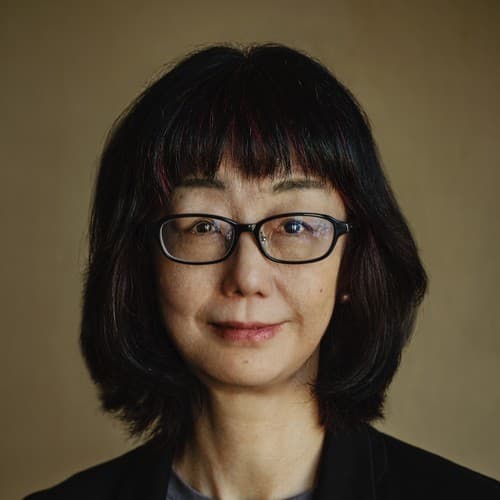
Hiromi Kawakami is a Japanese author known for her fiction, exploring themes of love and the complexities of human relationships. Her book "Parade" is among her notable works, reflecting her distinctive narrative style. Kawakami's writing often blends the ordinary with the extraordinary, earning her recognition in contemporary literature.
Similar books
- The Housekeeper and the Professor
Yoko Ogawa
4.0 (100k) average on GoodreadsFictionFeatures a gentle, contemplative tone and explores unique, quiet relationships with a touch of the extraordinary.
- Kafka on the Shore
Haruki Murakami
4.1 (306k) average on GoodreadsLiterary Fiction"Parade" offers a more open-ended, almost haiku-like quality with its surrealism, compelling active reader interpretation, whereas Murakami's "Kafka on the Shore," while rich in surrealism, often provides more concrete symbolic frameworks and explicit fantastical elements.
- The Old Man and the Sea
Ernest Hemingway
3.8 (831k) average on GoodreadsLiterary FictionA Cuban fisherman's long struggle with a giant marlin becomes a story of endurance and dignity, now retold for young adults with illustrations, phonetic guides, and writing prompts in Traditional Chinese.
- One Hundred Years of Solitude
Gabriel García Márquez
4.1 (753k) average on GoodreadsLiterary FictionThrough the multi-generational story of the Buendía family, a mythical town deals with the repeating patterns of time, love, and solitude, as the extraordinary mixes with the ordinary.
- The Goldfinch
Donna Tartt
3.9 (720k) average on GoodreadsLiterary FictionHaunted by a tragic explosion and clutching a stolen Dutch masterpiece, a young orphan navigates the opulent drawing rooms of New York and the gritty underbelly of the art world, desperately seeking connection and redemption amidst a life spiraling into crime and obsession.
- Little Fires Everywhere
Celeste Ng
4.1 (713k) average on GoodreadsLiterary FictionIn Shaker Heights, an artist and her daughter move in, and their free-spirited lives clash with a rule-bound matriarch, revealing hidden conflicts beneath a perfect surface.




Enjoyed the summary?
A summary gives you the shape of the book. The book itself has the detail, the examples and the voice.
Find Parade on AmazonAs an Amazon Associate, BookBrief earns from qualifying purchases. How we're funded