
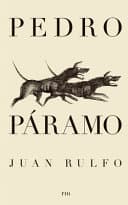
Synopsis
Covers the whole plot, including the ending.
- Difficulty
- Hard
- Pacing
- Slow
- Mood
- Atmospheric, Melancholy, Haunting, Surreal, Dark
- Read it if
- You enjoy surreal, atmospheric narratives that blend reality with the supernatural, exploring themes of memory, guilt, and the legacy of power in a unique, non-linear fashion.
- Skip it if
- You prefer straightforward plots, clear resolutions, and easily distinguishable characters, or dislike fragmented storytelling and ambiguous symbolism.
Pedro Páramo Plot Summary
Covers the whole plot, including the ending.
Juan Preciado's Journey to Comala
Juan Preciado promises his dying mother, Dolores Preciado, that he will go to Comala to find his father, Pedro Páramo, and demand what is theirs. His mother had often spoken of Comala as a beautiful, fertile place, but also resented Pedro Páramo for abandoning them. Juan sets out on his journey, filled with hope and trepidation. As he approaches Comala, he meets a mule driver named Abundio, who tells him that Pedro Páramo is dead and that Comala is a ghost town. Abundio also reveals that he is Pedro Páramo's son and offers to guide Juan into the desolate village, a place that now seems to exist solely in memory and echo.
Arrival in a Ghostly Comala
Upon entering Comala, Juan Preciado finds it completely deserted and eerily silent, a stark contrast to his mother's romanticized descriptions. He is overwhelmed by the heat and the oppressive stillness. He meets a woman named Eduviges Dyada, who seems to have been expecting him. She welcomes him into her home and begins to tell stories about Pedro Páramo, revealing his cruel and powerful nature. Eduviges speaks of her own past, her connections to Pedro Páramo, and the tragic fate of many who lived in Comala. Juan is disoriented by her fragmented stories and the sense that he is communicating with the dead, realizing that the Comala he sought no longer exists in the tangible world.
Voices from the Grave
As Juan Preciado stays in Eduviges's house, he begins to hear disembodied voices and whispers, the laments and memories of the deceased inhabitants of Comala. He realizes that Eduviges herself is a ghost. The spectral nature of the town becomes undeniable. He then meets another ghostly figure, Damiana Cisneros, who tells her own tragic history, including the death of her son, and her involvement with Pedro Páramo. Juan's grip on reality loosens as he is bombarded by these spectral stories, which often contradict and overlap, creating a fragmented mosaic of Comala's past. The oppressive heat and the constant presence of the dead eventually lead to his own demise, as he suffocates from the weight of their stories.
Juan's Burial and the Collective Memory
Overwhelmed by the heat, the constant whispers of the dead, and the realization that he is trapped among them, Juan Preciado dies in Comala. His body is found by Dorotea, a woman who had been a beggar and a prostitute. They are buried together in the same grave. From this point forward, the narrative largely shifts, continuing through the intertwined voices of the dead, including Juan and Dorotea themselves, who now tell the history of Comala and Pedro Páramo from their shared grave. Their conversations, along with those of other spirits, piece together the life and reign of Pedro Páramo, revealing his rise to power, his ruthlessness, and his ultimate downfall, all filtered through the fragmented memories of those he affected.
Pedro Páramo's Early Life and Rise to Power
The story goes into Pedro Páramo's past, revealing his humble and often brutal childhood. We learn of his early love for Susana San Juan, a love that would consume him throughout his life. After his father, Lucas Páramo, is killed, young Pedro inherits the dilapidated Media Luna hacienda. Driven by ambition and a desire for control, he begins a ruthless campaign to consolidate land and power. He uses violence, intimidation, and strategic marriages — including with Dolores Preciado for her land and money — to expand his empire. His actions lead to the impoverishment and subjugation of the people of Comala, transforming him into the feared cacique, or local strongman, of the region.
The Obsession with Susana San Juan
Pedro Páramo's most defining characteristic is his enduring, unrequited love for Susana San Juan. From childhood, he is captivated by her. After her father, Bartolomé San Juan, takes her away, Pedro schemes to bring her back to Comala. He arranges for Bartolomé's murder, ensuring Susana has no one else to turn to. Once she returns, Pedro keeps her isolated in the hacienda, trying to win her affection, but Susana is emotionally fragile, tormented by the memories of her deceased first husband, Florencio. Despite his power, Pedro cannot possess Susana's heart or mind. Her mental state deteriorates, and she lives in her own world of memories and madness, largely oblivious to Pedro's devotion and the world around her.
The Revolution and Comala's Decline
The Mexican Revolution arrives in Comala, bringing further chaos and violence. Pedro Páramo, ever the opportunist, shrewdly navigates the conflict. He initially supports the revolutionaries, even hosting them, to protect his interests and consolidate his power, often switching allegiances as it benefits him. However, the revolution also contributes to Comala's decline. Many men leave to fight, some never returning, others dying in battle. The land is neglected, and the community further disintegrates under the weight of conflict and Pedro's oppressive rule. The revolution, rather than bringing justice or change, only exacerbates the suffering and emptiness in the town.
Susana's Death and Pedro's Vengeance
Susana San Juan eventually dies, succumbing to her madness and illness. Her death plunges Pedro Páramo into inconsolable grief. He had dedicated his entire life, his power, and his being to her, and her loss shatters him. In his grief, he orders the church bells to ring, but the townspeople, more interested in a local fiesta, ignore his mourning. This perceived disrespect, coupled with his sorrow, ignites a final, destructive rage within him. He withdraws all support from Comala, allowing the town to wither and die. He stops paying wages, neglects the land, and effectively starves the community, ensuring that Comala itself dies with his love.
The End of Comala and Pedro Páramo's Demise
Following Susana's death and Pedro's vengeful abandonment, Comala rapidly declines into desolation. The remaining inhabitants leave, die, or become spectral echoes. The land becomes barren, and the once-fertile valley turns into a wasteland. Pedro Páramo, a broken man consumed by his grief and the emptiness of his power, becomes a recluse in his decaying hacienda. His reign, built on fear and exploitation, ends not with a grand battle, but with the quiet, lingering death of the town he once controlled. He is finally murdered by Abundio, his own son, who, in a moment of drunken desperation after his wife's death, stabs Pedro. Pedro Páramo crumbles like a pile of stones, symbolic of his own ruin and the ruin of Comala.
The Everlasting Echoes of the Dead
After Pedro Páramo's death, the narrative returns to the collective voices of the dead, including Juan Preciado and Dorotea in their shared grave. Comala is now truly a town of whispers, memories, and regrets. The fragmented stories continue to intertwine, revealing different perspectives on Pedro Páramo's life, the suffering he caused, and the unfulfilled desires of the town's inhabitants. The dead are trapped in a purgatorial state, unable to find peace, forever replaying their lives and grievances. The book ends with the enduring sense of a place where the past is eternally present, and the living and the dead merge into a single, sorrowful chorus of memory and loss.
Principal Figures
Juan Preciado
Protagonist
Son of Pedro Páramo, searching for his father and inheritance in Comala.
Juan Preciado is the primary narrator for the initial part of the novel. He journeys to Comala to fulfill his dying mother's wish to find his father, Pedro Páramo, and claim what he believes is his rightful inheritance. He is initially naive and hopeful, but quickly becomes disoriented and overwhelmed by the ghostly reality of Comala. He represents the living entering the realm of the dead, acting as a conduit through whom the reader experiences the spectral town and its fragmented histories. His quest for a tangible father and inheritance ultimately leads to his own death and absorption into the collective memory of Comala's deceased inhabitants.
Relationships: Dolores Preciado (Mother, who sent him to Comala); Pedro Páramo (Father, whom he searches for); Abundio (Half-brother, who guides him into Comala); Eduviges Dyada (Ghostly woman who hosts him)
Pedro Páramo
Antagonist/Central Figure
The ruthless and powerful cacique of Comala, obsessed with Susana San Juan.
Pedro Páramo is the central, albeit often absent, figure of the novel. He is a powerful and cruel landowner who consolidates his control over Comala through violence, manipulation, and strategic marriages. His life is driven by an insatiable hunger for land and power, but also by a lifelong, unrequited obsession with Susana San Juan. He is responsible for the suffering and desolation of Comala, ultimately allowing the town to die after Susana's death. His character embodies the corrupting influence of power and the destructive nature of obsessive love, leaving behind a legacy of fear and a town populated by the restless dead.
Relationships: Susana San Juan (Lifelong, obsessive love interest); Dolores Preciado (Wife (for land), mother of Juan Preciado); Fulgor Sedano (Loyal, ruthless henchman); Abundio (Son, who ultimately kills him)
Susana San Juan
Supporting/Catalyst
Pedro Páramo's lifelong obsession, a woman consumed by madness and memory.
Susana San Juan is the object of Pedro Páramo's enduring, unrequited love and obsession. She is a fragile and mentally unstable woman, tormented by the memories of her deceased first husband, Florencio, and a traumatic childhood experience in a mine. Her madness isolates her from reality, making her largely impervious to Pedro's attempts to win her affection. Her death is the catalyst for Pedro Páramo's final act of vengeance and the ultimate desolation of Comala. She represents the unattainable, a pure and uncorrupted spirit that even Pedro's immense power cannot possess, embodying themes of memory, loss, and the fragility of the human mind.
Relationships: Pedro Páramo (Object of his obsessive love); Florencio (Deceased first husband, whose memory haunts her); Bartolomé San Juan (Father)
Dolores Preciado
Supporting
Juan Preciado's mother, abandoned by Pedro Páramo.
Dolores Preciado is Juan Preciado's mother and one of Pedro Páramo's many wives. She marries Pedro for her land, only to be abandoned and left to raise Juan alone, filled with bitterness and resentment towards Pedro. On her deathbed, she makes Juan promise to seek out his father and claim what is theirs. Her memories of Comala, both fond and bitter, initiate Juan's journey. She represents the countless individuals exploited and discarded by Pedro Páramo, and her dying wish sets in motion the entire narrative.
Relationships: Juan Preciado (Son); Pedro Páramo (Husband, who abandoned her)
Abundio
Supporting
Mule driver, half-brother of Juan Preciado, and Pedro Páramo's son.
Abundio is the first living (or seemingly living) person Juan Preciado encounters on his way to Comala. He is a mule driver who reveals himself to be Pedro Páramo's son, making him Juan's half-brother. He guides Juan into the spectral town and warns him about its true nature. Later in the fragmented narrative, Abundio is revealed to be the one who ultimately murders Pedro Páramo in a drunken rage after his wife's death, seeking a small measure of revenge for his own suffering. He represents the common people of Comala, exploited and forgotten by Pedro Páramo, yet capable of a final, desperate act of defiance.
Relationships: Juan Preciado (Half-brother); Pedro Páramo (Father, whom he murders)
Eduviges Dyada
Supporting
One of the first ghosts Juan Preciado encounters, a kind woman with a tragic past.
Eduviges Dyada is one of the first spectral inhabitants Juan Preciado meets in Comala. She welcomes him into her home and provides him with initial, fragmented information about Pedro Páramo and the town's past. She is a kind and maternal figure, but also clearly a ghost, having committed suicide after a misunderstanding with Pedro Páramo. Her stories, filled with regret and longing, are among the first indications to Juan that he is in a town of the dead. She represents the collective suffering and unfulfilled lives of Comala's residents.
Relationships: Juan Preciado (Host to him in Comala); Pedro Páramo (Knew him intimately, affected by him)
Damiana Cisneros
Supporting
Another ghost in Comala, who worked for Pedro Páramo.
Damiana Cisneros is another ghostly figure Juan Preciado encounters. She was a servant or perhaps a manager for Pedro Páramo at the Media Luna hacienda. Her narrative provides further insights into Pedro's ruthless character and the daily life under his rule. She shares her own tragic story, including the death of her son, and her interactions with the powerful cacique. Like Eduviges, she confirms the spectral nature of Comala and helps to piece together the fragmented history of the town and its inhabitants from the perspective of the deceased.
Relationships: Juan Preciado (Interacts with him as a ghost); Pedro Páramo (Worked for him, affected by his actions)
Dorotea
Supporting
A beggar and prostitute who shares a grave with Juan Preciado.
Dorotea is a poor, often-ridiculed woman who, in life, was a beggar and prostitute in Comala. After Juan Preciado dies, she finds his body and they are buried together in the same grave. From this point, she becomes a significant narrative voice, conversing with Juan from their shared resting place. Her perspective is often cynical and grounded, offering a stark contrast to the more poetic laments of others. She provides a crucial, often pragmatic, commentary on Pedro Páramo's reign and the suffering of the common people. Her presence emphasizes the shared fate of Comala's inhabitants, regardless of their station in life.
Relationships: Juan Preciado (Shares a grave and conversations with him); Pedro Páramo (Lived under his rule, suffered from it)
Fulgor Sedano
Supporting
Pedro Páramo's loyal and ruthless foreman.
Fulgor Sedano is Pedro Páramo's right-hand man and foreman at the Media Luna hacienda. He is a pragmatic, often brutal, enforcer of Pedro's will, carrying out the more unsavory tasks, such as arranging marriages for land and eliminating rivals. He is fiercely loyal to Pedro and understands the mechanics of power and control in Comala. His character highlights the oppressive mechanisms Pedro Páramo employs to maintain his authority. Fulgor's actions are instrumental in Pedro's rise to power and his consolidation of land.
Relationships: Pedro Páramo (Loyal foreman and enforcer)
Themes & Insights
Death and the Afterlife
The most pervasive theme is the blurring of lines between life and death. Comala is not merely a deserted town, but a purgatorial space where the dead linger, unable to find peace. Juan Preciado's journey quickly transforms into an encounter with spirits, and he himself dies and joins them. The entire narrative is largely told through the fragmented voices of the deceased, trapped in an eternal state of memory and regret. This theme explores the idea that the past, and its unresolved conflicts, can haunt a place and its inhabitants indefinitely, making death not an end but a continuation of suffering.
“And the air was filled with old voices, the voices of the dead, whispering, murmuring, like a swarm of bees.”
Memory and the Past
Memory is not just a recollection but an active, living force that shapes Comala. The town exists primarily as a collection of fragmented memories, regrets, and stories of its dead inhabitants. Characters constantly recount their past experiences, often contradicting each other, creating a mosaic of history that is subjective and incomplete. Pedro Páramo himself is driven by his childhood memories of Susana San Juan. The novel suggests that the past is never truly gone; it persists, influencing the present and defining the identity of both individuals and places. The dead are literally trapped by their memories, unable to escape the cycles of their lives.
“Because they were voices of the dead. All the voices I had heard, all the voices I heard, were the voices of the dead.”
Power and Corruption
Pedro Páramo's rise and reign show the corrupting nature of absolute power. He uses violence, manipulation, and economic control to consolidate his land and subjugate the people of Comala. His actions lead to widespread suffering, poverty, and the moral decay of the town. The theme explores how unchecked power can destroy not only individuals but an entire community, turning a once-fertile land into a desolate wasteland. Pedro's power, however, ultimately proves hollow, unable to buy love or prevent his own ruin, demonstrating its limitations and destructive consequences.
“He took everything. He even took away our fear.”
Unrequited Love and Obsession
Pedro Páramo's lifelong obsession with Susana San Juan is a central driving force of the novel. His immense power and wealth are ultimately meaningless in his quest to possess her heart, as she remains lost in her own world of madness and memory. This theme explores the destructive nature of unrequited love, showing how it can consume an individual and lead to despair. Pedro's inability to attain Susana's love ultimately leads to his vengeful abandonment of Comala, demonstrating how personal emotional turmoil can have devastating societal consequences.
“He loved her, he loved her, he loved her. And he destroyed Comala for her.”
The Mexican Revolution and its Aftermath
While not a central focus, the Mexican Revolution is a backdrop, showing its impact on rural communities. The revolution, rather than bringing liberation, is depicted as another source of chaos and violence that further destabilizes Comala. Pedro Páramo manipulates the conflict to his advantage, showing the revolution's failure to truly empower the common people. The war contributes to the depopulation and desolation of the town, suggesting that for many, the revolution simply replaced one form of oppression with another, or merely exacerbated existing suffering without offering true progress or peace.
“The revolution came, and it was just another disaster.”
Plot Devices & Literary Techniques
Non-Linear Narrative / Fragmentation
The story is told out of chronological order, jumping between past and present, and different characters' perspectives.
The novel employs a highly fragmented and non-linear narrative structure. The story jumps back and forth in time, often without clear transitions, between Juan Preciado's present-day (but spectral) experiences in Comala and various episodes from Pedro Páramo's past. This fragmentation is further emphasized by the multiple, often overlapping and contradictory, voices of the dead. This device mirrors the disoriented state of the characters and the dream-like, purgatorial nature of Comala, forcing the reader to piece together the narrative like a puzzle. It blurs the distinction between past and present, making memory an active, living force.
Multiple Narrators / Polyphony
The story is told through the shifting perspectives of various characters, living and dead.
The narrative voice constantly shifts, moving from Juan Preciado's first-person perspective to an omniscient third-person, and then to the interwoven, disembodied voices of the dead characters (including Juan himself after his death). This polyphonic structure creates a chorus of collective memory and suffering. Each voice offers a partial, subjective truth about Pedro Páramo and Comala, highlighting the impossibility of a single, definitive history. This device enhances the ghostly atmosphere and reinforces the idea that Comala is a town where the dead continue to speak and recount their stories, trapped in an eternal echo chamber.
Magical Realism
Supernatural elements are presented as ordinary occurrences within a realistic setting.
Magical realism is a defining characteristic of 'Pedro Páramo.' The most prominent example is the entire town of Comala being populated by ghosts who interact with the seemingly living Juan Preciado, and later, among themselves. The dead whisper, lament, and recount their lives as if it were a natural state of being. The oppressive heat, the suffocating silence, and the crumbling landscape are imbued with a supernatural quality that reflects the spiritual decay of the town. This device normalizes the fantastic, blurring the boundaries between the real and the imagined, creating a unique, dream-like atmosphere that underscores the novel's themes of death, memory, and the lingering presence of the past.
Symbolism (Comala as Purgatory)
The town of Comala symbolizes a purgatorial state for its inhabitants.
Comala itself functions as a powerful symbol. Initially described as a fertile paradise, it is found by Juan Preciado to be a desolate, silent, and scorching hot wasteland populated solely by the restless dead. It symbolizes a purgatorial state, a place where souls are trapped by their earthly sins, unfulfilled desires, and unresolved grievances, unable to find peace or move on. The oppressive heat, the barren landscape, and the constant whispers of the dead all contribute to this symbolic representation of a spiritual wasteland, a consequence of Pedro Páramo's tyranny and the townspeople's complicity or suffering.
Foreshadowing / Pre-echoes
Early events and conversations hint at later revelations and Juan Preciado's fate.
From the very beginning of Juan Preciado's journey, there are subtle and overt hints about the true nature of Comala and his own impending fate. Abundio's statement that Pedro Páramo is dead, Eduviges's matter-of-fact acceptance of Juan's arrival, and the constant whispers and disembodied voices all foreshadow that Juan is entering a realm of the dead and will soon join them. This device builds a sense of dread and inevitability, preparing the reader for the spectral reality of the town and Juan's eventual death, making his demise feel less like a sudden twist and more like a natural progression within the story's established supernatural logic.
Pedro Páramo Quotes
“Vine a Comala porque me dijeron que acá vivía mi padre, un tal Pedro Páramo. Mi madre me lo dijo. Y yo le prometí que vendría a verlo en cuanto ella muriera.”
“El aire de Comala está lleno de suspiros. Suspiros que se quedan aquí en este pueblo. Las ánimas en pena, dicen, andan por ahí.”
“La gente de aquí está muerta. Y uno no sabe dónde empieza la vida y dónde acaba la muerte.”
“Se me reventaron los tambores de los oídos con tanto silencio.”
“Yo te llevo en mi corazón y no te suelto. No te voy a soltar nunca.”
“Y la vida de él se fue deshaciendo como si fuera un puñado de tierra.”
“No hay nada más triste que un pueblo desierto. Nada.”
“El rencor era como una bola de lumbre que le quemaba por dentro.”
“Y entonces comprendí que me había equivocado. Que Comala era un pueblo sin vida.”
“La culpa era de él, que había dejado que el pueblo se muriera de hambre.”
“Mi cabeza se llenó de ruidos, de voces, de murmullos. Y me di cuenta de que todos hablaban conmigo.”
“Había días en que el sol se quedaba prendido en el cielo, sin moverse, como si se hubiera olvidado de seguir su camino.”
“La tierra estaba suave, mullida, como si la hubieran regado con sueños.”
“Y así se fue, como una piedra que se desmorona.”
“El tiempo es una cosa que no perdona a nadie. Y él lo sabía.”
Quiz
10 questions on the plot and the characters. Each answer comes with a short explanation.
Question 1
Why does Juan Preciado travel to Comala?
- To escape the Mexican Revolution.
- To fulfill his mother's dying wish to find his father, Pedro Páramo.
- To search for hidden treasure rumored to be in the village.
- To start a new life and buy land in the fertile valleys.
Show answer
B. To fulfill his mother's dying wish to find his father, Pedro Páramo. Juan Preciado's journey to Comala is driven by a promise he made to his dying mother, Dolores Preciado, to find his father, Pedro Páramo, and claim what is rightfully theirs.
Question 2
What is the most striking characteristic of Comala when Juan Preciado arrives?
- It is a bustling, prosperous town.
- It is completely deserted and silent, except for the voices of the dead.
- It is under siege by revolutionary forces.
- It is a vibrant community preparing for a festival.
Show answer
B. It is completely deserted and silent, except for the voices of the dead. Upon his arrival, Juan Preciado finds Comala to be a ghost town, devoid of living inhabitants, where the past and the voices of the dead are more present than any living soul.
Question 3
Who is Abundio Martínez, the first person Juan Preciado encounters on his way to Comala?
- A wealthy landowner who offers him a job.
- A revolutionary leader hiding from the government.
- Juan's half-brother, who is also a ghost.
- The local priest of Comala.
Show answer
C. Juan's half-brother, who is also a ghost. Abundio Martínez is revealed to be Juan Preciado's half-brother and, like most of the 'people' Juan meets in Comala, is already dead, which subtly introduces the supernatural element of the novel.
Question 4
What is Pedro Páramo's primary motivation for accumulating wealth and power in Comala?
- To fund the Mexican Revolution.
- To impress and win the love of Susana San Juan.
- To build a modern, thriving city in the desert.
- To exact revenge on the people who wronged his family.
Show answer
B. To impress and win the love of Susana San Juan. Pedro Páramo's entire life, his ruthless acquisition of land and power, and his manipulation of the townspeople are ultimately driven by his obsessive and unrequited love for Susana San Juan.
Question 5
How does Pedro Páramo deal with Father Rentería, the local priest?
- He supports Father Rentería's charitable work with generous donations.
- He blackmails and controls Father Rentería, forcing him to absolve his sins.
- He ignores Father Rentería completely, having no interest in the church.
- He frequently debates theology with Father Rentería.
Show answer
B. He blackmails and controls Father Rentería, forcing him to absolve his sins. Pedro Páramo holds immense power over Father Rentería, often using threats and financial leverage to force the priest to grant absolution for his many crimes, despite the priest's moral objections.
Question 6
What is the ultimate fate of Comala, largely due to Pedro Páramo's actions?
- It becomes a prosperous agricultural center.
- It is destroyed by a natural disaster.
- It withers and dies, becoming a ghost town inhabited by the echoes of the past.
- It is taken over by the Mexican government.
Show answer
C. It withers and dies, becoming a ghost town inhabited by the echoes of the past. Pedro Páramo's tyranny and his eventual abandonment of the town (especially after Susana San Juan's death) lead to Comala's desolation, transforming it into the spectral place Juan Preciado finds.
Question 7
How does Susana San Juan's mental state contribute to the themes of the novel?
- Her unwavering faith represents hope amidst the desolation.
- Her descent into madness and her retreat into her own memories highlight the inescapable past and the subjective nature of reality.
- Her practicality and resilience allow her to survive the hardships of Comala.
- Her political activism inspires the townspeople to rebel against Pedro Páramo.
Show answer
B. Her descent into madness and her retreat into her own memories highlight the inescapable past and the subjective nature of reality. Susana San Juan's fragile mental state, her constant reliving of past traumas, and her inability to connect with the present mirror the novel's exploration of memory, the past's hold, and the blurred lines between life and death.
Question 8
What is the significance of the fragmented narrative structure in 'Pedro Páramo'?
- It provides a clear, chronological account of events.
- It reflects the fractured memories and non-linear experience of time in the afterlife, blurring the lines between past and present, and different characters' perspectives.
- It is a stylistic choice meant to confuse the reader without deeper meaning.
- It allows the author to hide the true identity of Pedro Páramo until the very end.
Show answer
B. It reflects the fractured memories and non-linear experience of time in the afterlife, blurring the lines between past and present, and different characters' perspectives. The non-linear, fragmented narrative, jumping between Juan Preciado's journey and flashbacks from various characters, effectively mimics the experience of memories and ghosts, where time is not linear and multiple voices intertwine.
Question 9
How does Pedro Páramo die?
- He succumbs to old age peacefully in his sleep.
- He is murdered by Abundio Martínez, his own son, in an act of revenge.
- He is killed during a battle with revolutionary forces.
- He commits suicide after Susana San Juan's death.
Show answer
B. He is murdered by Abundio Martínez, his own son, in an act of revenge. Pedro Páramo is stabbed and killed by Abundio Martínez, his son, who is drunk and seeking revenge for the death of his wife and the general misery inflicted by Pedro.
Question 10
What literary movement is 'Pedro Páramo' considered a foundational text of?
- Neorealism.
- Existentialism.
- Magical Realism.
- Modernism.
Show answer
C. Magical Realism. 'Pedro Páramo' is widely recognized as a seminal work of Magical Realism, blending the mundane with the fantastic, particularly through its depiction of a town inhabited by the dead who interact with the living.
Pedro Páramo FAQ
What is 'Pedro Páramo' about?
'Pedro Páramo' tells the story of Juan Preciado, who travels to his mother's hometown of Comala to find his father, Pedro Páramo, a promise he made on her deathbed. Upon arriving, he discovers Comala is a ghost town inhabited by the echoes of the past, where the dead recount their lives and connections to the tyrannical Pedro Páramo, a powerful cacique who dominated the region through force and manipulation.
Why should I read 'Pedro Páramo'?
You should read 'Pedro Páramo' for its groundbreaking narrative structure, which blurs the lines between the living and the dead, and its profound exploration of memory, guilt, and the legacy of tyranny. It's a foundational work of magical realism that offers a hauntingly poetic look at rural Mexico, its people, and the weight of history, all while delving into themes of unrequited love and the search for identity.
What is the background/setting of 'Pedro Páramo'?
The novel is set primarily in the fictional, deserted village of Comala, a once-lush but now desolate landscape in rural Mexico. The narrative frequently shifts between the present (Juan Preciado's arrival) and various past timelines, depicting Comala under the iron rule of Pedro Páramo, from his rise to power to the Mexican Revolution and its aftermath, all filtered through the fragmented memories of its ghostly inhabitants.
What are the most memorable quotes from 'Pedro Páramo'?
One memorable quote is, 'Vine a Comala porque me dijeron que acá vivía mi padre, un tal Pedro Páramo.' (I came to Comala because I was told my father, a man named Pedro Páramo, lived here.) Another impactful line is, 'El pueblo entero vivía de los Páramo, estaba bajo su dominio.' (The entire town lived off the Páramos, it was under their domain.), which encapsulates Pedro's absolute power.
What writing style does Juan Rulfo use in 'Pedro Páramo'?
Juan Rulfo employs a sparse, poetic, and dream-like prose that is a hallmark of magical realism. The narrative is highly fragmented, jumping between first and third-person perspectives, different timelines, and a chorus of ghostly voices. This non-linear structure creates an atmospheric, haunting quality where reality and the supernatural seamlessly intertwine, often leaving the reader to piece together the chronology and connections.
What minor details add significant meaning in 'Pedro Páramo'?
The recurring motif of the 'dryness' and 'dust' of Comala is more than just description; it symbolizes the spiritual and physical desolation caused by Pedro Páramo's tyranny and the town's abandonment. Also, the constant ringing of bells, often associated with funerals or the church, subtly reinforces the pervasive presence of death and the past throughout the narrative.
What are some subtle foreshadowing moments in 'Pedro Páramo'?
Juan Preciado's mother's dying words, describing Comala as a place 'where the air is sweet and soft, but where one also dies of pure sorrow,' subtly foreshadow the town's true nature as a place of the dead and the emotional desolation awaiting him. The initial difficulty Juan has in finding anyone truly alive also hints at the spectral nature of the town and its inhabitants.
What unexpected character connections exist in 'Pedro Páramo'?
An unexpected connection is between the many women Pedro Páramo exploits and the broader community, as their stories, often shared by their lingering spirits, collectively paint a full portrait of his cruelty and impact. Also, Father Rentería's complicity and moral dilemma in accepting Pedro's donations, despite knowing his sins, reveals a complex, intertwined relationship between religious authority and secular power in Comala.
What are unspoken character motivations in 'Pedro Páramo'?
Pedro Páramo's ultimate motivation, though often expressed through violence and land acquisition, is an unspoken, obsessive love for Susana San Juan. His tyranny and acquisition of wealth are driven by a desire to impress or control the world around him, perhaps hoping to create a reality where Susana could be his, even if she remains mentally distant. His actions after her death suggest his life lost its core purpose.
What psychological complexities do characters exhibit in 'Pedro Páramo'?
Susana San Juan exhibits profound psychological complexity, living in a world of her own memories and madness, haunted by past traumas, particularly the death of her father and her first love, Florencio. Her inability to fully engage with reality or reciprocate Pedro's affection, despite his power, highlights the impregnable nature of her inner world, making her an elusive figure even in death.
What are the major emotional turning points in 'Pedro Páramo'?
A major emotional turning point for Pedro Páramo is the death of Susana San Juan. Her passing sends him into a deep despair, leading him to abandon the pursuit of power and neglect Comala, allowing it to fall into ruin. For Juan Preciado, the realization that he is surrounded by the dead and that he himself has died in Comala is a critical, albeit terrifying, emotional and existential turning point.
How do relationship dynamics evolve in 'Pedro Páramo'?
Relationship dynamics in the novel primarily revolve around power and its abuse. Pedro Páramo's relationships with women, like Dolores Preciado and Ana Villegas, are transactional and coercive, evolving from strategic marriages to mere conquests. His relationship with Susana, however, is one of unrequited, obsessive love, where his power proves futile, showing a different dynamic where he is emotionally vulnerable, though still controlling.
Which parts of 'Pedro Páramo' remain ambiguous or open-ended?
The exact moment of Juan Preciado's death is ambiguous, blending seamlessly into his conversations with the dead, leaving readers to question when he truly transitioned from living seeker to another ghost. The full extent of Pedro Páramo's repentance or understanding of his actions also remains open-ended; his final moments are more about his physical collapse than explicit moral reckoning, leaving his ultimate fate to interpretation.
What are controversial scenes or decisions in 'Pedro Páramo'?
Pedro Páramo's decision to effectively let Comala die after Susana San Juan's death is a controversial aspect, as it represents a complete abandonment of his responsibilities and the community he once meticulously controlled, leading to the town's desolation. The passive acceptance of Father Rentería to Pedro's actions, despite his moral qualms, also highlights a controversial compromise of religious principles in the face of secular power.
'Pedro Páramo' ending explained: how it ends & what it means
The novel ends with Pedro Páramo's death, killed by his illegitimate son Abundio Martínez, who is driven by grief and alcohol. Pedro crumbles 'like a pile of stones,' a symbolic end to his tyrannical reign and physical decay. The ending signifies the ultimate futility of power and obsession, showing that even the most formidable figures eventually return to dust, and their legacies, though lingering, are ultimately subject to the judgment and memories of those they affected, living and dead.
About the author
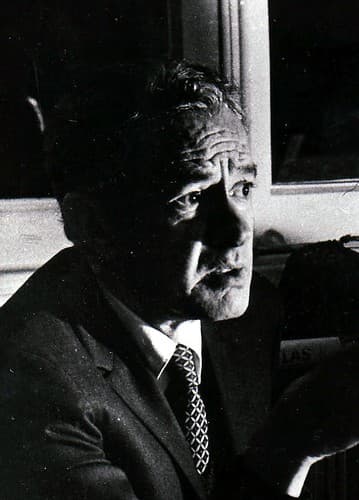
Juan Nepomuceno Carlos Pérez Rulfo Vizcaíno, best known as Juan Rulfo, was a Mexican writer, screenwriter, and photographer. He is best known for two literary works, the 1955 novel Pedro Páramo, and the collection of short stories El Llano en llamas (1953). This collection includes the popular tale "¡Diles que no me maten!".
Similar books
- One Hundred Years of Solitude
Gabriel García Márquez
4.1 (753k) average on GoodreadsLiterary FictionShares magical realism, a multi-generational saga, and a focus on a mythical town.
- As I Lay Dying
William Faulkner
3.7 (137k) average on GoodreadsLiterary FictionFeatures multiple narrators, fragmented perspectives, and a journey centered around a death wish.
- The House of the Spirits
Isabel Allende
4.2 (190k) average on GoodreadsFantasyExplores family sagas, political turmoil, and magical realism in a Latin American setting.
- Harry Potter and the Sorcerer's Stone
J.K. Rowling
4.5 (7M) average on GoodreadsFantasyRescued from a miserable life under the stairs, an orphaned boy discovers he's a wizard destined for a magical school, where he uncovers a dangerous secret tied to the dark wizard who murdered his parents.
- The Hunger Games
Suzanne Collins
4.3 (6.4M) average on GoodreadsFantasyIn a future where children fight to the death on live television, Katniss Everdeen volunteers for the arena, turning a death sentence into a fight for survival and a spark of rebellion.
- 1984
George Orwell
4.2 (3.1M) average on GoodreadsPoliticsIn a future where surveillance and thought control are absolute, a man's search for truth clashes with the Party, showing that hope can be a form of rebellion.





Enjoyed the summary?
A summary gives you the shape of the book. The book itself has the detail, the examples and the voice.
Find Pedro Páramo on AmazonAs an Amazon Associate, BookBrief earns from qualifying purchases. How we're funded