
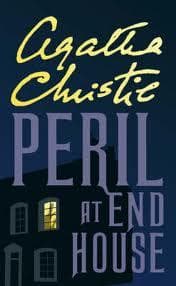
Synopsis
Covers the whole plot, including the ending.
- Difficulty
- Medium
- Pacing
- Moderate
- Mood
- Mysterious, Suspenseful, Classic
- Read it if
- You love classic whodunits with a clever detective, intricate plotting, and a satisfying reveal.
- Skip it if
- You prefer fast-paced thrillers over methodical investigations or dislike intricate family mysteries.
Peril at End House Plot Summary
Covers the whole plot, including the ending.
A Bullet Hole and a Chilling Realization
While vacationing in Cornwall with Captain Hastings, Hercule Poirot meets Miss Nick Buckley, the young mistress of End House. Poirot sees a bullet hole in Nick's hat, which she says is from a recent 'accident' while driving. This, with her casual talk of other close calls—a falling picture, a loose boulder, and bad brakes—makes Poirot interested. He believes these are not accidents but attempts on Nick's life. Poirot warns her, but Nick, used to 'bad luck,' is not very worried, though she agrees to be careful.
The Threat Intensifies and a Party is Planned
Poirot, with Hastings, quietly starts to investigate Nick's life. They learn Nick is the last of her family, inheriting End House and a small income, but she is not rich. She has no close family who would gain much from her death. Poirot talks to Nick's housekeeper, Ellen, and her visiting cousin Maggie Buckley. Nick, despite Poirot's warnings, plans a party at End House, inviting friends and relatives. This party, meant to be fun, becomes a focus for Poirot's suspicions, as he thinks the killer might try again during the event.
The First Murder: Maggie Buckley's Death
The party at End House begins, with guests including Nick's friends Freddie Rice and Jim Lazarus, her distant cousin Charles Vyse, and Maggie Buckley. Poirot and Hastings are also there. During fireworks, the lights go out. When they come back on, Maggie Buckley is found dead, shot in the head. The shock turns into a chilling understanding: Maggie was wearing Nick's shawl, and it is clear the killer meant to murder Nick, mistaking Maggie for her in the dark. This event confirms Poirot's belief that Nick is in danger and the killer is one of the guests.
Unraveling the Motives: Wills, Jewels, and Relationships
Poirot starts a careful investigation, asking questions of everyone at the party and looking deeper into Nick's business. He finds out Nick had recently made a will, leaving End House to Charles Vyse, and her other assets to Freddie Rice and Jim Lazarus. He also learns about a valuable diamond necklace, the 'Buckley necklace,' reported stolen years ago but possibly still hidden. Romantic relationships also appear: Freddie Rice loves Jim Lazarus, but there are hints of a past relationship between Freddie and Nick. Poirot thinks the motive is either Nick's inheritance or the hidden jewels, and he checks each suspect's alibis and money situations.
The Mystery of the Missing Will and the Drug Addiction
As Poirot continues, he learns that a more recent will, made by Nick just before the party, is missing. This new will would have changed the inheritance a lot. He also uncovers Freddie Rice's secret drug addiction to cocaine, which she has been hiding. This addiction gives a possible motive, as Freddie would need money for her habit, and Nick's death would give her an inheritance. Poirot also finds out Nick had been acting strangely in the days before the murder, seeming nervous and secretive, making the mystery of her life and the attempts on it deeper.
The Second Murder: Commander Challenger's Death
Poirot and Hastings talk to Commander Challenger, a former naval officer and friend of Nick's, staying at a nearby hotel. Challenger hints at having important information about Nick's family history or the house, but he is slow to say it all. Soon after their meeting, Challenger is found dead, having seemingly fallen from a cliff. While first called an accident or suicide, Poirot suspects murder, believing Challenger was killed because he knew too much. This second death shows the killer's cruelty and willingness to remove anyone who might expose them, making Poirot's investigation harder and raising the stakes.
The Identity of the Real Nick Buckley
After careful looking and connecting clues, Poirot brings all the suspects to End House for a big reveal. He explains that the woman everyone knows as Nick Buckley is not the real Nick. The real Nick Buckley, he says, died of a serious illness years ago. The woman living at End House and having the 'accidents' is, in fact, Maggie Buckley, who took on Nick's identity. This shocking news changes the whole case, as the reason for the murders and who the victim was meant to be are now different.
The True Motive and the Buckley Necklace
Poirot explains that the real Nick Buckley had inherited a lot of money from her grandfather, but only when she reached a certain age, and if she was alive. The 'accidents' and Maggie's murder (mistaken for the imposter Nick) were planned to kill the person thought to be the heiress. The killer's goal was for the money to pass to them. The long-lost Buckley diamond necklace, thought stolen, was also a key part of the plan, as its existence was tied to the family's wealth and finding it would strengthen the killer's claim.
The Killer Revealed: Eleanor 'Freddie' Rice
Poirot dramatically reveals that Eleanor 'Freddie' Rice is the murderer. Freddie, burdened by her drug addiction and needing money, planned the whole scheme. She knew about the real Nick's death and convinced Maggie Buckley to pretend to be Nick to claim the inheritance, promising Maggie a share. However, Freddie then decided to kill Maggie (the imposter Nick) to inherit all the money herself. She planned the 'accidents' and shot Maggie at the party, mistakenly thinking she was the imposter Nick, whom she meant to kill for the inheritance.
The Confession and the Resolution
When faced with Poirot's strong evidence, Freddie Rice breaks down and confesses to her crimes. She admits to manipulating Maggie, staging the 'accidents,' and murdering Maggie at the party. She also confesses to killing Commander Challenger because he had found out her plan. The truth about the real Nick Buckley's death and the deception is finally out. The Buckley fortune is safe, and justice is done for Maggie and Commander Challenger. The other characters deal with the shocking news, and End House, once a place of mystery and danger, is finally safe.
Peril at End House Characters
Hercule Poirot
Protagonist
Brilliant Belgian detective vacationing in Cornwall, drawn into a complex murder plot.
Hercule Poirot is a renowned Belgian detective, known for his meticulous methods, 'little grey cells,' and keen observation skills. While on holiday in Cornwall, he is immediately suspicious of the numerous 'accidents' befalling Nick Buckley, sensing a deliberate attempt on her life. His vanity is often played for comedic effect, but his intellect is unparalleled. He systematically interviews suspects, uncovers hidden motives, and ultimately unravels the intricate web of deception. His unwavering commitment to truth and justice drives the investigation.
Relationships: Captain Arthur Hastings (Long-time friend and confidant, often serves as his sounding board.)
Captain Arthur Hastings
Supporting
Poirot's loyal friend and companion, serving as the narrator and occasional assistant.
Captain Hastings is Poirot's faithful friend and chronicler, providing the narrative voice for the story. He is less astute than Poirot, often missing crucial details or misinterpreting events, which allows Poirot to explain his deductions. Hastings is kind-hearted but somewhat naive, often swayed by appearances and emotional appeals. He admires Poirot immensely and serves as a vital sounding board for the detective's theories, as well as a practical assistant in gathering information. His presence grounds Poirot's intellectual pursuits in a more human context.
Relationships: Hercule Poirot (Close friend and investigative partner.)
Nick Buckley (real name: Maggie Buckley)
Central Figure/Victim
The seemingly carefree mistress of End House, whose life is repeatedly threatened.
Initially presented as the young, vivacious, and somewhat reckless owner of End House, Nick Buckley appears to be the target of a series of 'accidents.' She is charming, independent, and often dismissive of the danger she is in. However, Poirot later reveals that the woman everyone knows as 'Nick Buckley' is actually Maggie Buckley, an imposter. The real Nick Buckley died years ago, and Maggie assumed her identity as part of a scheme to inherit a fortune. Maggie is ultimately murdered, mistaken for the imposter Nick, who was the intended target of the killer.
Relationships: Freddie Rice (Friend and co-conspirator (unknown to Maggie, Freddie is the killer).); Charles Vyse (Distant cousin and potential love interest.); Jim Lazarus (Friend and admirer.)
Maggie Buckley (real name: Nick Buckley)
Victim (posthumous)
The actual Nick Buckley, whose death years prior sets the stage for the entire deception.
The real Nick Buckley is a character who is already dead when the story begins, having succumbed to a serious illness years before. Her existence and subsequent death are crucial to the plot, as they form the foundation of the killer's scheme. She inherited a substantial fortune from her grandfather, contingent on her survival to a certain age. Her death was kept a secret, and her identity was assumed by her cousin, Maggie Buckley, to secure this inheritance. The entire plot revolves around the attempts to eliminate the person believed to be the heiress, who is actually Maggie.
Relationships: Freddie Rice (Childhood friend, who later manipulates her identity.)
Eleanor 'Freddie' Rice
Antagonist
Nick's glamorous and troubled friend, secretly driven by a desperate need for money.
Freddie Rice is a seemingly devoted friend of Nick Buckley, described as beautiful but with a nervous energy. She is secretly addicted to cocaine, which fuels her desperation for money. Freddie is cunning and manipulative, orchestrating the entire plot. She was aware of the real Nick Buckley's death and convinced Maggie to impersonate Nick. Her ultimate plan was to eliminate Maggie (the imposter Nick) to inherit the substantial Buckley fortune herself. She stages the 'accidents' and ultimately commits the murders, driven by greed and her addiction.
Relationships: Nick Buckley (Maggie) (Friend and victim of her manipulation.); Jim Lazarus (In love with him, but he is oblivious to her true nature.); Commander Challenger (Victim, whom she silences.)
Jim Lazarus
Supporting
An art dealer and friend of Nick, who is in love with Freddie Rice.
Jim Lazarus is a young and attractive art dealer, a friend of Nick Buckley, and is deeply in love with Freddie Rice. He is generally kind-hearted and appears genuinely concerned for Nick's safety. He is somewhat naive about Freddie's true nature and her drug addiction. Jim is a potential beneficiary in Nick's will, which places him under suspicion, but he is ultimately cleared by Poirot. His primary role is to provide a romantic entanglement for Freddie and to be a red herring in the investigation.
Relationships: Freddie Rice (In love with her.); Nick Buckley (Maggie) (Friend.)
Charles Vyse
Supporting
Nick's distant cousin and a solicitor, who is also a beneficiary in her will.
Charles Vyse is a distant cousin of Nick Buckley and a solicitor by profession. He is a rather formal and somewhat stiff character, but he genuinely cares for Nick. He is named as a beneficiary in Nick's will, inheriting End House, which places him under suspicion. Charles is meticulous and logical, often providing Poirot with legal insights. He is also suspected of having romantic feelings for Nick. Despite his initial suspicions, he proves to be innocent and helps Poirot in various aspects of the investigation, particularly regarding the wills.
Relationships: Nick Buckley (Maggie) (Distant cousin and potential love interest.)
Commander George Challenger
Supporting/Victim
A retired naval officer and friend of the Buckley family, who holds crucial information.
Commander Challenger is a retired naval officer and a long-standing friend of the Buckley family. He is a gruff but honorable man who knew the real Nick Buckley and her family history well. He is aware of certain discrepancies and secrets related to the family and End House. Poirot interviews him, and Challenger hints at possessing vital information that could unravel the case. However, before he can fully disclose what he knows, he is murdered by Freddie Rice, who pushes him from a cliff to silence him. His death is a significant turning point in the investigation.
Relationships: The Buckley Family (Long-time friend and acquaintance.)
Ellen
Supporting
The loyal and long-serving housekeeper at End House.
Ellen is the elderly and devoted housekeeper at End House, having served the Buckley family for many years. She is fiercely loyal to Nick (whom she believes to be the real Nick) and is deeply distressed by the 'accidents' and the subsequent murder. Ellen provides Poirot with valuable insights into the daily life at End House, the family history, and Nick's habits and temperament. Her observations, though sometimes seemingly trivial, contribute to Poirot's understanding of the household dynamics and the timeline of events.
Relationships: Nick Buckley (Maggie) (Loyal housekeeper and caretaker.)
Milly Crofte
Mentioned
A friend of Nick Buckley who introduces her to Poirot.
Milly Crofte is a minor character who introduces Nick Buckley to Hercule Poirot and Captain Hastings at the beginning of the novel. She is a social acquaintance of Nick's and is present during the initial conversation where Poirot notices the bullet hole in Nick's hat. Her role is primarily to facilitate the initial meeting between the detective and the central figure of the mystery, setting the plot in motion. She does not play a significant role in the investigation itself.
Relationships: Nick Buckley (Maggie) (Friend.)
Peril at End House Themes
Deception and Identity
The novel's main theme is the deception of identity, where Maggie Buckley pretends to be the real Nick Buckley. This theme is important because it drives the whole plot, from the 'accidents' to the murders. Poirot's investigation depends on finding this basic lie. The killer's motive is closely linked to who the 'real' heiress is, making identity very important. This deception shows how appearances can trick people and how a hidden truth can be behind a complex criminal plot.
“The truth, Mademoiselle, is a very curious thing. Sometimes it is very simple. Sometimes it is very complicated. But always, it is the truth.”
Greed and Desperation
Greed and desperation motivate the killer, Freddie Rice. Her cocaine addiction creates an urgent need for money, pushing her to make and carry out a ruthless plan to get the Buckley inheritance. The chance of a large fortune corrupts her, making her betray her friend, Maggie, and commit murders. This theme explores how needing money can make people go to extreme lengths, showing the destructive power of greed when mixed with addiction and a lack of morals.
“It is not enough to be rich. One must be able to enjoy one's riches.”
Appearances vs. Reality
Throughout the novel, what seems true is always questioned by the real situation. Nick Buckley's carefree outside hides a deadly secret—that she is an imposter. The 'accidents' seem like bad luck but are deliberate murder attempts. Freddie Rice seems like a loyal friend, but is actually the clever killer. Poirot always says one must look past surface appearances to find the truth. This theme shows that first impressions are not always reliable and that careful investigation is needed to understand the true nature of people and events.
“One must look for the small things, the little discrepancies, the things that do not fit.”
The Peril of End House
End House is more than just a setting; it shows the theme of danger and warning. Sitting on cliffs, it symbolizes the unstable nature of Nick's (Maggie's) life and the bad events happening inside its walls and around it. The house's isolated nature helps the killer's plans, and its history is tied to the family money and secrets. The 'peril' is not just a plot point but a feeling, suggesting that danger comes not only from outside but also from the hidden truths within the house itself.
“There is a feeling about this house, Hastings, a feeling of... peril.”
Plot Devices & Literary Techniques
The Imposter Identity
The central deception where one character assumes the identity of another.
The imposter identity of Maggie Buckley as Nick Buckley is the pivotal plot device that drives the entire mystery. It creates confusion about the true target of the 'accidents' and the murder, allowing the killer's motives to remain obscured for most of the novel. Poirot's eventual unraveling of this deception fundamentally shifts the entire understanding of the case, revealing the true victim and the killer's intricate plan. This device generates suspense and misdirection, making the reader question everything they initially believed about the characters and their relationships.
The Inherited Fortune
A hidden or conditional inheritance serving as the primary motive for murder.
The substantial fortune inherited by the real Nick Buckley, contingent on her surviving to a certain age, serves as the ultimate motive for the series of crimes. This financial incentive drives Freddie Rice's greed and her elaborate scheme to eliminate those who stand between her and the money. The details of the will and the conditions of the inheritance are slowly revealed by Poirot, providing the crucial 'why' behind the murders. It's a classic Christie device, where a large sum of money or property fuels the dark desires of a killer.
The Series of 'Accidents'
A sequence of near-fatal incidents disguised as misfortune.
The initial 'accidents' that befall Nick Buckley (the imposter Maggie) are a key plot device that immediately signals foul play to Poirot. These seemingly random events – a falling picture, a dislodged boulder, faulty brakes, and the bullet hole in her hat – are actually carefully staged attempts on her life. They serve to heighten the sense of danger, introduce the central conflict, and provide Poirot with the initial clues that someone is actively trying to kill 'Nick.' This device creates early suspense and establishes the killer's cunning and ruthlessness.
The Misdirection of the Shawl
A specific item of clothing used to mislead the killer about the victim's identity.
During the party at End House, Maggie Buckley wears Nick's distinctive shawl, a detail that proves fatal. This specific item of clothing is a crucial misdirection device, as it causes the killer, Freddie Rice, to mistake Maggie for the imposter Nick in the dark. The shawl directly leads to Maggie's murder, which was intended for 'Nick.' This device cleverly allows the killer to commit the crime while adding another layer of complexity to the investigation, as Poirot must deduce why the 'wrong' person was killed.
Peril at End House Quotes
“The young people, nowadays, are not content to live, they want to experience.”
“It is not the eye that sees, but the brain.”
“Everything is simple, if you have patience.”
“One must not jump to conclusions. One must allow the facts to arrange themselves.”
“There are times when a lie is not a lie, but merely a polite way of saying something that isn't true.”
“The human heart is an extraordinary thing, Hastings. It can hold so much, and yet sometimes, it holds nothing at all.”
“It is the small details, my friend, that are often the most important.”
“People are so afraid of being thought out of date.”
“It is not enough to be clever. One must also be wise.”
“There is nothing so dangerous as a half-truth.”
“The most unlikely people often commit the most unlikely crimes.”
“It is a mistake to think that because a thing is obvious, it is therefore true.”
“A man's past is like a shadow, it follows him wherever he goes.”
“The truth, my friend, is often stranger than fiction.”
Quiz
10 questions on the plot and the characters. Each answer comes with a short explanation.
Question 1
Where is Hercule Poirot vacationing when he first meets Nick Buckley?
- On the French Riviera
- On the Cornish coast
- In the Swiss Alps
- At a country estate in Devon
Show answer
B. On the Cornish coast The book explicitly states that Poirot is vacationing on the Cornish coast when he encounters Nick Buckley.
Question 2
What is the name of Nick Buckley's imposing residence?
- Cliffside Manor
- Seaview House
- End House
- St. Loo Priory
Show answer
C. End House Nick Buckley is described as the mistress of End House, which is perched on the rocky cliffs of St. Loo.
Question 3
What initially draws Poirot's attention to Nick Buckley?
- Her charming personality
- Her recent inheritance
- A series of narrow escapes from life-threatening accidents
- Her request for his detective services
Show answer
C. A series of narrow escapes from life-threatening accidents Poirot takes an interest in Nick because she has recently 'narrowly escaped a series of life-threatening accidents,' which he suspects are not coincidences.
Question 4
What is Poirot's initial suspicion regarding Nick's 'accidents'?
- She is extremely clumsy and accident-prone.
- She is staging the accidents for attention.
- Someone is deliberately trying to kill her.
- She has a rare medical condition causing her to faint unexpectedly.
Show answer
C. Someone is deliberately trying to kill her. Poirot believes 'these so-called accidents are more than just mere coincidences or a spate of bad luck' and suspects 'someone is trying to do away with poor Nick'.
Question 5
What characteristic is used to describe Nick Buckley in the provided text?
- Shy and reserved
- Young and reckless
- Elderly and frail
- Wealthy and philanthropic
Show answer
B. Young and reckless The text describes Nick Buckley as 'the young and reckless mistress of End House.'
Question 6
What is Hercule Poirot's nationality, as mentioned in the description?
- French
- English
- Belgian
- Swiss
Show answer
C. Belgian Poirot is referred to as 'the Belgian sleuth' in the description.
Question 7
As Poirot investigates, what does he become more certain of regarding the killer?
- The killer has left the country.
- The killer will soon strike again.
- The killer is acting randomly.
- The killer is targeting other residents of St. Loo.
Show answer
B. The killer will soon strike again. The description states, 'The deeper he gets into his investigation, the more certain he is that the killer will soon strike again.'
Question 8
What is the primary motive Poirot seeks to uncover in his investigation?
- Revenge for a past wrong
- To hide a secret about End House
- The 'who' and the 'motive' behind the attempts on Nick's life
- To protect Nick's inheritance
Show answer
C. The 'who' and the 'motive' behind the attempts on Nick's life The text explicitly states: 'It seems all too clear to him that someone is trying to do away with poor Nick, but who? And, what is the motive?'
Question 9
What must Poirot 'delve into' to find answers, according to the description?
- The local police records
- Nick's personal diary
- The dark history of End House
- The financial dealings of Nick's family
Show answer
C. The dark history of End House To find answers, Poirot 'must delve into the dark history of End House.'
Question 10
What is the ultimate danger Nick Buckley faces as Poirot's investigation progresses?
- Financial ruin
- Public scandal
- She may not escape with her life in the next attack.
- Being forced to sell End House.
Show answer
C. She may not escape with her life in the next attack. The description concludes with the warning: 'And, this time, Nick may not escape with her life.'
Peril at End House FAQ
What is Peril at End House about?
Peril at End House is a Hercule Poirot mystery where the famous detective, vacationing in Cornwall, encounters Nick Buckley, a young woman who has survived several suspicious 'accidents.' Poirot becomes convinced someone is trying to murder her and investigates the dark secrets surrounding End House and its eccentric inhabitants to uncover the would-be killer and their motive before they succeed.
Why should I read Peril at End House?
You should read Peril at End House for its classic Agatha Christie plotting, featuring Hercule Poirot at his deductive best. It offers a compelling mystery with a seemingly vulnerable victim, a secluded, atmospheric setting, and a series of misdirections that keep readers guessing until the very end, culminating in a truly unexpected twist.
What is the background/setting of Peril at End House?
The story is primarily set in End House, an old and imposing residence perched dramatically on the rocky cliffs of St. Loo, a coastal town in Cornwall, England. The isolated, somewhat decaying mansion itself plays a significant role, reflecting the hidden dangers and past secrets that Poirot uncovers.
What are the most memorable quotes?
While specific verbatim quotes aren't provided in the summary, memorable aspects often revolve around Poirot's pronouncements on human nature and his 'little grey cells' at work, as well as Nick's flippant remarks about her near-death experiences, which initially mask the true gravity of her situation.
What writing style does the author use?
Agatha Christie employs a classic, clear, and engaging third-person narrative style, characterized by meticulous plotting, clever misdirection, and a focus on dialogue and character interaction to slowly reveal clues. Her prose is direct, ensuring the mystery remains central and accessible to the reader.
What minor details add significant meaning?
Minor details, such as the exact nature of Nick's 'accidents' (e.g., a falling picture, a loose boulder, faulty brakes), are crucial. Poirot's initial observation of a bullet hole in Nick's hat, which she dismisses as a moth, immediately elevates the stakes from bad luck to attempted murder, setting the entire investigation in motion.
What are some subtle foreshadowing moments?
Subtle foreshadowing occurs early on with Nick's casual attitude towards her near-death experiences, which Poirot immediately recognizes as suspicious. Another is the frequent mention of Nick's various relatives and her financial situation, hinting at the underlying motive for the attempts on her life.
What unexpected character connections exist?
The most unexpected connection revolves around the true identity of the intended victim and the elaborate scheme involving a terminally ill cousin, Maggie Buckley. This intricate web reveals that the 'accidents' were not aimed at the person everyone believed, leading to a shocking revelation about the killer's target.
What are unspoken character motivations?
The killer's unspoken motivation is rooted deeply in greed and a desire to inherit Nick's fortune, which is contingent on her death. This powerful, underlying motive drives the elaborate and dangerous plot, even when outwardly the character appears to be a concerned friend or relative.
What psychological complexities do characters exhibit?
Nick Buckley exhibits a complex mix of recklessness, resilience, and a surprising naiveté, initially dismissing genuine threats to her life. The killer displays extreme duplicity and cold-blooded calculation, maintaining a facade of normalcy and concern while actively plotting murder, showcasing a chilling psychological detachment.
What are the major emotional turning points?
A major emotional turning point is when Maggie Buckley is murdered, confirming Poirot's suspicions that someone is indeed trying to kill 'Nick,' but also deepening the mystery as the wrong person has died. This event shifts the investigation's urgency and focus, forcing Poirot to re-evaluate his assumptions.
How do relationship dynamics evolve?
Relationship dynamics evolve from seemingly supportive friendships and familial connections into a web of suspicion and betrayal. Poirot's presence initially causes discomfort but eventually brings hidden resentments and true intentions to the surface, revealing the toxic undercurrents beneath the polite society of End House.
Which parts remain ambiguous or open-ended?
While the core mystery is resolved, the future of End House itself and the complete emotional aftermath for the surviving characters, beyond the immediate relief, are left somewhat to the reader's imagination. Christie focuses on the 'who' and 'why,' rather than lingering on long-term character arcs.
What are controversial scenes or decisions?
One controversial aspect, common in Christie's work, might be the elaborate and often convoluted nature of the killer's plot, requiring significant deception and manipulation of multiple individuals. The killer's cold-blooded decision to murder an innocent person (Maggie) to further their scheme is a particularly chilling and morally reprehensible act.
Peril at End House ending explained: how it ends & what it means
The ending reveals that the actual target was not Nick Buckley, but her terminally ill cousin, Maggie Buckley, who was mistaken for Nick. The killer, Eleanor Farrow (or Freda Stanton, depending on the edition), Nick's supposed friend, orchestrated the 'accidents' and the murder to inherit Nick's fortune, as Nick was presumed dead after Maggie's murder. The twist lies in the identity switch and the murderer's audacious plan to frame Nick, meaning the 'peril' was far more intricate and devious than initially perceived.
About the author
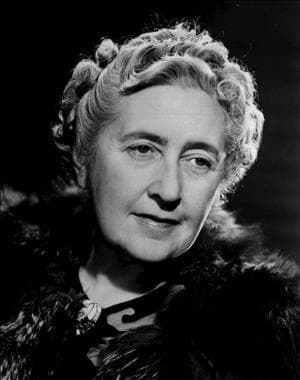
Dame Agatha Mary Clarissa Christie, Lady Mallowan, was an English writer known for her 66 detective novels and 14 short story collections, particularly those revolving around fictional detectives Hercule Poirot and Miss Marple. She also wrote the world's longest-running play, the murder mystery The Mousetrap, which has been performed in the West End since 1952. A writer during the "Golden Age of Detective Fiction", Christie has been called the "Queen of Crime". She also wrote six novels under the pseudonym Mary Westmacott. In 1971, she was made a Dame (DBE) by Queen Elizabeth II for her contributions to literature. Guinness World Records lists Christie as the best-selling fiction writer of all time, her novels having sold more than two billion copies.
Similar books
- And Then There Were None
Agatha Christie
4.3 (822k) average on GoodreadsThrillerFeatures a classic Christie mystery with a high body count and clever misdirection.
- THE MURDER OF ROGER ACKROYD
Agatha Christie
4.2 (153k) average on GoodreadsThrillerAnother Hercule Poirot mystery with a groundbreaking twist and intricate plotting.
- A Study in Scarlet
Arthur Conan Doyle
4.2 (324k) average on GoodreadsHistorical FictionEarly detective fiction featuring a brilliant sleuth solving a complex murder with a hidden motive.
- The Moonstone
Wilkie Collins
3.9 (79k) average on GoodreadsHistorical FictionWhile 'Peril at End House' is a classic Golden Age mystery, 'The Moonstone' (1868) by Wilkie Collins is often cited as one of the first and most influential detective novels. Collins' work is more expansive, featuring multiple narrators and a broader social commentary. 'Peril at End House' is more tightly focused on the puzzle element and the psychological manipulation of characters within a confined setting, whereas 'The Moonstone' explores themes of colonialism, class, and moral corruption through its characters' perspectives, offering a richer tapestry of Victorian society alongside its central mystery. Christie's novel is more streamlined and focused on the 'whodunit,' while Collins delves deeper into the 'howdunit' and the social ramifications.
- The Big Sleep
Raymond Chandler
4.0 (126k) average on GoodreadsThrillerRaymond Chandler's 'The Big Sleep' (1939) represents a stark contrast to Christie's 'Peril at End House,' epitomizing the hardboiled detective genre. While Christie focuses on intellectual puzzles and deductive reasoning in an upper-class English setting, Chandler's novel features the cynical, morally ambiguous private investigator Philip Marlowe navigating the gritty, corrupt underworld of Los Angeles. 'Peril at End House' relies on a carefully constructed, logical solution, whereas 'The Big Sleep' is characterized by its atmospheric prose, complex moral landscape, and a less clear-cut resolution, with the emphasis often on the journey through corruption rather than a neatly tied-up mystery. Christie's world is one of order restored; Chandler's is one where order is always precarious.
- Angels & Demons
Dan Brown
3.9 (2.7M) average on GoodreadsThrillerA Harvard symbologist races through Rome's ancient sites, deciphering cryptic clues to unmask the Illuminati and stop a vengeful plot to destroy the Vatican with a stolen antimatter weapon.


Enjoyed the summary?
A summary gives you the shape of the book. The book itself has the detail, the examples and the voice.
Find Peril at End House on AmazonAs an Amazon Associate, BookBrief earns from qualifying purchases. How we're funded