
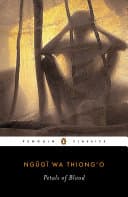
Synopsis
Covers the whole plot, including the ending.
- Difficulty
- Hard
- Pacing
- Variable
- Mood
- Dark, Thought-provoking, Incisive, Disillusioned
- Read it if
- You want a powerful, politically charged historical fiction that critiques post-colonialism and explores themes of betrayal, class struggle, and resistance in Kenya.
- Skip it if
- You prefer lighthearted reads or are not interested in dense, allegorical narratives with a strong anti-capitalist stance.
Petals of Blood Plot Summary
Covers the whole plot, including the ending.
The Arrests in Ilmorog
The novel begins with the arrest of four suspects—Munira, Abdulla, Wanja, and Karega—in the small, poor village of Ilmorog. They are accused of murdering three African directors of the foreign-owned Thembi Breweries: Chui, Mzigo, and Kimeria. The police, led by Inspector Godfrey, quickly declare the case solved, but the story soon shows that the truth is more complex. Munira, a disillusioned teacher; Abdulla, a one-legged shopkeeper and former Mau Mau fighter; Wanja, a resilient barmaid and prostitute; and Karega, a fiery young trade unionist, are brought to the police station for questioning. Their lives are connected by the past and the current tragedy in Ilmorog.
Munira's Past and the Ilmorog School
Munira, a failed intellectual and outsider, comes to Ilmorog seeking anonymity and purpose after leaving his studies. He takes a teaching job at the rundown Ilmorog Primary School, a symbol of the community's neglect. His early attempts to improve the school meet with apathy and resistance, reflecting his own internal struggles. He tries new teaching methods and discipline, but his idealism is weak. He watches the community decline and struggles with his own feelings of inadequacy, often feeling less important than the more charismatic and dedicated Karega.
Karega's Arrival and Growing Influence
Karega, a young, politically aware man, arrives in Ilmorog after being expelled from high school for leading a student strike. He is Munira's former student and quickly becomes a strong presence in the village. Karega is passionate about social justice and mobilizes villagers to demand better conditions, especially regarding water shortages and exploitation by wealthy landowners. His charisma and radical ideas contrast sharply with Munira's more passive approach, creating a rivalry, particularly over Wanja. Karega's presence awakens a sense of purpose within the community.
Wanja's Resilience and Entrepreneurship
Wanja, a woman with a difficult past marked by exploitation and loss, returns to Ilmorog. She is pragmatic and resilient. She first runs a small bar and later expands her businesses, including a brothel. She has complex relationships with Munira, Abdulla, and Karega, having been involved with all three at different times. Her business drive, though sometimes seen as progress, also shows the increasing commercialization and moral compromises within the community. Wanja's journey highlights the limited options for women in a patriarchal society, even as she tries for independence.
The Drought and the Long March
Ilmorog suffers a severe drought, leading to widespread famine. Local authorities offer no real help, making the villagers' desperation worse. Karega, inspired by past acts of resistance, organizes a large protest march to Nairobi. They demand aid and government attention. Munira, Abdulla, and Wanja join the march with the villagers. This difficult journey brings a sense of shared identity and resistance among the people. It also reveals the deep gap between the ruling elite and the poor. The march gains national attention and briefly brings hope.
The Arrival of the New Ilmorog
After the march, Ilmorog is suddenly 'discovered' and becomes a busy commercial center. This rapid development, however, does not benefit the original inhabitants. Large corporations, including Thembi Breweries, and wealthy individuals like Kimeria, Chui, and Mzigo, come to the village. They buy land and establish businesses. The traditional way of life is destroyed, and villagers are dispossessed and forced into low-paying jobs or prostitution. This 'progress' is a disguised form of neo-colonial exploitation, similar to earlier struggles against colonial powers, but now carried out by a new African elite.
The Disillusionment and Betrayal
The new Ilmorog brings more disappointment, not prosperity. The directors Chui, Mzigo, and Kimeria, once schoolmates with Munira and Abdulla, represent the corruption and greed of the post-independence elite. They exploit the land and labor of the villagers, turning Ilmorog into a place for their illegal activities, including Thembi Breweries. Wanja, out of economic need, becomes a successful prostitute and madam; her brothel symbolizes the moral decay. Munira becomes more withdrawn and religious, while Karega continues his work as a trade unionist, facing constant repression. Abdulla, a former freedom fighter, feels particularly betrayed by the new order.
The Thembi Breweries and Exploitation
The Thembi Breweries, owned by foreign capital but managed by African directors Chui, Mzigo, and Kimeria, becomes the main exploitative institution in the new Ilmorog. It buys local produce at unfair prices, employs villagers in dangerous, low-paying jobs, and floods the market with alcohol, adding to social problems. The brewery's success relies on the suffering of the local population. It symbolizes the new economic colonialism that has taken root in independent Kenya. Karega's attempts to organize workers are met with brutal force, showing the oppressive nature of the new regime.
The Incendiary Act
The novel's climax happens when Thembi Breweries is set on fire during a night of celebration. The fire destroys the factory, and in its ruins, the charred bodies of Chui, Mzigo, and Kimeria are found. This arson and murder leads to the novel's opening scene and the arrests of Munira, Abdulla, Wanja, and Karega. The story strongly suggests that the fire is not just an act of individual revenge, but a symbol of the collective anger and frustration of Ilmorog's oppressed people against the exploitative system and corrupt elite.
The Interrogations and Confessions
During their separate interrogations, the four suspects tell their personal stories and their connections to each other and to the murdered directors. Their accounts, though fragmented and sometimes conflicting, gradually reveal the complex changes in Ilmorog and the deep-seated grievances that led to the tragedy. Munira's resentment, Abdulla's feeling of betrayal, Wanja's hardened practicality, and Karega's revolutionary passion are all exposed. While the police focus on finding one culprit, the story shows that responsibility for the murders is spread across a system of oppression, not just one person.
The Unveiling of the True Culprit (and System)
As the interrogations end, Munira, driven by a mix of religious extremism, personal jealousy, and a twisted sense of justice, confesses to setting the fire. However, the novel implies that the act was not solely his, but the result of the people's collective anger and desperation. While Munira takes the blame, the story strongly criticizes the systemic corruption and exploitation represented by the dead directors and the government. Karega, despite his innocence in the specific act, is involved in the broader revolutionary struggle, and the novel ends with a sense of impending, larger social upheaval.
Principal Figures
Munira
Protagonist/Suspect
A disillusioned schoolteacher haunted by his past and struggling with his faith.
Munira is a complex and often pathetic figure, a failed intellectual who seeks refuge in Ilmorog after abandoning his studies. He is deeply insecure, envious of Karega's charisma, and harbors unrequited love for Wanja. Initially idealistic, he becomes increasingly withdrawn, finding solace in a rigid, fundamentalist interpretation of religion. His internal struggles reflect the broader disillusionment with post-independence Kenya, as he grapples with his own failures and the moral decay around him. He represents the educated elite who fail to truly connect with or uplift the common people.
Relationships: Karega (rivalry, intellectual and romantic competition); Wanja (unrequited love, obsession); Abdulla (acquaintance, shared past in Ilmorog); Chui (former schoolmate, now a symbol of corruption)
Karega
Protagonist/Suspect
A passionate and revolutionary trade unionist fighting for justice.
Karega is a vibrant and idealistic young man, expelled from school for his activism. He is a charismatic leader who inspires the villagers of Ilmorog to resist oppression and demand their rights. He believes in collective action and social change, embodying the spirit of revolutionary struggle against both colonial and neo-colonial exploitation. His intelligence and commitment make him a natural leader, constantly challenging the status quo and advocating for the downtrodden. He represents the hope for genuine liberation and social justice in Kenya.
Relationships: Munira (intellectual and romantic rival, former student-teacher); Wanja (love interest, complex romantic relationship); Abdulla (comrade in struggle, shared revolutionary ideals); The villagers of Ilmorog (leader and advocate)
Wanja
Protagonist/Suspect
A resilient and pragmatic woman who uses her body and business acumen to survive.
Wanja is a strong, independent, and fiercely pragmatic woman who has endured significant hardship and exploitation. She returns to Ilmorog and, out of necessity, becomes a successful businesswoman, first as a barmaid and later as a madam of a brothel. She is a survivor, adapting to the harsh realities of her world, but her choices often come with moral compromises. She has complex romantic relationships with Munira, Abdulla, and Karega, symbolizing the entangled fates of the characters. Her journey reflects the limited agency and exploitation faced by women in a patriarchal society, even as she strives for economic independence.
Relationships: Munira (object of unrequited affection, brief sexual encounter); Karega (love interest, deeply connected); Abdulla (former lover, shared history); Kimeria (exploitative client, abusive past)
Abdulla
Protagonist/Suspect
A former Mau Mau fighter, now a one-legged shopkeeper, disillusioned by independence.
Abdulla is a veteran of the Mau Mau uprising, having lost a leg fighting for Kenya's independence. He is a quiet, stoic figure who runs a small shop in Ilmorog. Deeply disillusioned by the post-independence era, he feels betrayed by the new African elite who have replaced the colonialists in exploiting the common people. He carries the weight of past sacrifices and the bitterness of unfulfilled promises. His physical disability is a metaphor for the broken promises of independence, and he represents the forgotten heroes whose struggles were co-opted and betrayed.
Relationships: Karega (comrade in spirit, shared revolutionary ideals); Wanja (former lover); Munira (acquaintance); Kimeria (enemy, symbol of betrayal)
Inspector Godfrey
Supporting
The diligent but ultimately superficial police inspector investigating the murders.
Inspector Godfrey is the police officer in charge of the murder investigation. He is methodical and focused on finding a clear-cut culprit, often overlooking the deeper social and political roots of the crime. He represents the state's apparatus of control and its inability or unwillingness to understand the complex realities of the people's suffering. His investigations are driven by procedure and a desire for a quick resolution, rather than a genuine pursuit of justice or understanding of the systemic issues at play. He is a symbol of the authoritarian government's superficial approach to deep-seated problems.
Relationships: Munira, Karega, Wanja, Abdulla (interrogator of suspects)
Kimeria
Antagonist
A wealthy, corrupt director of Thembi Breweries and a symbol of neo-colonial exploitation.
Kimeria is one of the three murdered directors of Thembi Breweries and a former schoolmate of Munira and Abdulla. He embodies the worst aspects of the new African elite: greedy, corrupt, exploitative, and morally bankrupt. He is involved in illicit land deals, sexual exploitation, and the general oppression of the villagers of Ilmorog. His past connection to Wanja, whom he exploited and abandoned, highlights his predatory nature. He represents the betrayal of the independence ideals and the perpetuation of colonial-era exploitation by African hands.
Relationships: Wanja (exploiter, former lover); Abdulla (enemy, betrayer); Chui, Mzigo (business partners, co-conspirators in exploitation)
Chui
Antagonist
Another corrupt director of Thembi Breweries, representing the educated elite's betrayal.
Chui is one of the murdered directors, a former headmaster and schoolmate of Munira. He represents the educated African elite who, instead of using their knowledge to uplift their people, have instead become complicit in their exploitation. He is a symbol of the intellectual betrayal of the independence movement, prioritizing personal wealth and power over social responsibility. His transformation from an educator to an exploiter underscores the novel's critique of the post-colonial leadership.
Relationships: Munira (former schoolmate, intellectual peer); Kimeria, Mzigo (business partners, co-conspirators in exploitation)
Mzigo
Antagonist
The third murdered director, representing the avaricious business class.
Mzigo is the third murdered director of Thembi Breweries, completing the trio of corrupt exploiters. He embodies the ruthless, avaricious business class that emerges in post-independence Kenya, prioritizing profit above all else. He is less developed as a character than Kimeria or Chui, serving primarily as a representation of the systemic economic exploitation that plagues Ilmorog. His involvement in the brewery underscores the destructive impact of unchecked capitalism and foreign influence on local communities.
Relationships: Kimeria, Chui (business partners, co-conspirators in exploitation)
Nganga
Supporting
An elder and traditional healer, representing the fading traditional values.
Nganga is an elder and traditional healer in Ilmorog, representing the spiritual and cultural heritage of the community that is slowly being eroded by modernization and corruption. He is a voice of wisdom and tradition, often lamenting the loss of cultural values and the rise of greed. He provides a counterpoint to the rapid and destructive changes occurring in Ilmorog, reminding the characters of their roots and the importance of community solidarity. His presence highlights the clash between traditional African ways and the imposed Westernized development model.
Relationships: The villagers of Ilmorog (respected elder, spiritual guide)
Themes & Insights
Disillusionment with Post-Independence Kenya
The main theme of 'Petals of Blood' is the deep disappointment with Kenya's promises of independence. The novel shows how the hopes for freedom and prosperity, sparked by the Mau Mau struggle, were betrayed by a new African elite. Characters like Abdulla, a former Mau Mau fighter, feel deeply let down. They see the same exploitation and oppression that existed under colonial rule, now done by their own countrymen. Ilmorog's change from a struggling village to a commercial center dominated by Thembi Breweries, where most people are dispossessed and poor, shows this betrayal. The novel argues that the new ruling class, represented by Kimeria, Chui, and Mzigo, simply replaced the white colonialists. They continued exploitation for personal gain, leaving common people poorer and more desperate.
“What has come of our independence? We fought for the land, for freedom, for dignity. But all we got was a change of faces at the top, while the bottom remained as rotten as ever.”
Class Struggle and Exploitation
'Petals of Blood' explores class struggle, showing the clear division between the wealthy, land-owning, politically connected elite and the poor, exploited masses. Thembi Breweries symbolizes this exploitation. Foreign money and local greed combine to take resources and labor from villagers, offering little in return but alcohol and despair. Karega's persistent efforts to organize workers and challenge the exploitative system highlight this ongoing conflict. The murder of the three directors, while seemingly personal, is presented as a symbolic outburst of simmering class resentment and the people's desperate fight against systemic economic oppression. The shift from communal land ownership to private property and the rise of a new African business class are central to this theme.
“There are only two kinds of people in this world: those who exploit and those who are exploited.”
The Nature of Revolution and Resistance
'Petals of Blood' examines the complexities of revolution, looking at both past events (like the Mau Mau uprising) and current forms of resistance. The novel asks what true liberation means, suggesting that political independence without economic and social justice is incomplete. Karega embodies ongoing resistance, advocating for collective action and challenging new forms of oppression. The Long March to Nairobi is a strong act of collective protest, temporarily uniting villagers and showing their power. The final act of arson and murder, though ambiguous in who did it, can be seen as a desperate, violent expression of the people's continued struggle against an oppressive system. It signals that the revolution is not over and may need more radical action.
“It is blood that nourishes the tree of freedom. But what kind of freedom is it that only blossoms for a few?”
Moral Decay and Corruption
The moral fabric of society unravels in 'Petals of Blood' as corruption affects every level, from individuals to state institutions. The directors, Kimeria, Chui, and Mzigo, show this decay through their greed, illegal dealings, and exploitation of women. Wanja's transformation into a madam, while a survival strategy, also reflects the widespread moral compromise driven by economic need. Munira's descent into religious extremism and his ultimate act of violence also stem from a deep sense of moral confusion and despair. The novel portrays a society where traditional values are lost, replaced by a ruthless pursuit of wealth and power, leading to widespread social problems like prostitution, alcoholism, and a breakdown of community.
“The money economy had come to Ilmorog, and with it, a new kind of blindness, a blindness to the human cost.”
The Role of Education and Intellectuals
The novel critically examines the role of education and intellectuals in post-colonial society. Munira, the educated but ineffective teacher, represents the failure of some intellectuals to connect with and empower the masses. His intellectualism leads to cynicism and detachment rather than active involvement. Chui, a former headmaster turned corrupt director, symbolizes the betrayal of educational ideals by those who use their learning for personal gain instead of societal improvement. In contrast, Karega, despite his expulsion, uses his intellect and education to mobilize and enlighten villagers, becoming a true leader. The state's control over education and its suppression of critical thought are also highlighted, suggesting that education can be either a tool of liberation or a means of maintaining oppression.
“Education, if it is to be true education, must be a tool for liberation, not for enslavement.”
Plot Devices & Literary Techniques
Frame Narrative
The story is framed by the murder investigation, which unfolds through flashbacks and interrogations.
The novel begins with the arrests of the four suspects and the murder investigation, which then serves as a framing device for the entire narrative. The central mystery of 'who killed the directors?' drives the plot, but the actual 'solution' is less important than the unfolding of the characters' intertwined pasts and the social history of Ilmorog. Through the interrogations and flashbacks, the reader gradually pieces together not just the events leading to the murders, but also the broader political and economic context of post-independence Kenya. This structure allows Ngugi to reveal the systemic causes of the crime, rather than focusing solely on individual culpability.
Symbolism
Objects, places, and characters carry deeper metaphorical meanings.
Ngugi employs rich symbolism throughout the novel. Ilmorog itself transforms from a traditional, neglected village into a symbol of neo-colonial exploitation, its 'development' revealing the rot beneath. The Thembi Breweries represents foreign capital, alcoholism, and the economic exploitation of the masses. 'Petals of Blood' in the title symbolizes both the beauty and sacrifice of the struggle for freedom (the blood of martyrs) and the destructive, corrupting nature of the new order (the 'petals' of money-making blooming from the 'blood' of exploitation). Characters also carry symbolic weight: Abdulla as the betrayed freedom fighter, Karega as the enduring revolutionary, and the three directors as the corrupt elite.
Flashbacks and Multiple Perspectives
The narrative frequently shifts in time and perspective to reveal the characters' histories and the evolution of Ilmorog.
The story is not told linearly but through extensive flashbacks that delve into the personal histories of Munira, Karega, Wanja, and Abdulla, as well as the historical transformation of Ilmorog. These flashbacks are often triggered by the interrogations, allowing each character to present their version of events and their motivations. This device creates a multi-layered narrative, presenting different perspectives on the same events and demonstrating how individual lives are shaped by larger historical and political forces. It also allows the author to build suspense and gradually reveal the complex web of relationships and grievances that lead to the tragic climax.
Allegory
The story of Ilmorog serves as an allegory for the struggles of post-colonial Kenya and Africa.
The transformation of Ilmorog, its initial neglect, the hope of the Long March, and its subsequent 'development' into a hub of exploitation, functions as an allegory for the broader trajectory of Kenya and many other post-colonial African nations. The characters' struggles and the systemic issues they face—corruption, class struggle, foreign exploitation, and the betrayal of independence ideals—mirror the challenges faced by these nations. The novel uses the specific events in Ilmorog to comment on universal themes of power, justice, and the ongoing struggle for true liberation in the Third World, making the story resonate beyond its immediate setting.
Petals of Blood Quotes
“The past was the past. The present was the present. And the future was the future. But the three were not separate. They were intertwined, like the roots of a tree.”
“They had been taught to sing hymns in praise of a God who had given them nothing but poverty and disease.”
“A man's worth was not in the amount of money he had, but in the amount of good he could do for his people.”
“Knowledge was power. But power without justice was tyranny.”
“The soil of our land is red with the blood of our ancestors. And it will be redder still with the blood of those who betray us.”
“The only way to build a new world was to destroy the old one first.”
“For true freedom was not merely the absence of chains, but the presence of justice.”
“The future was not a gift. It was a conquest.”
“They had exchanged one set of masters for another, black for white, but the chains remained.”
“The seeds of revolution are sown in the fields of despair.”
“The greatest betrayal is not to fight for what you believe in.”
“Silence was a weapon. But it could also be a shield, protecting the guilty.”
“The past was not dead. It was not even past. It was still alive, breathing down their necks.”
“Hope, like a flower, could grow even in the cracks of concrete.”
Quiz
10 questions on the plot and the characters. Each answer comes with a short explanation.
Question 1
Which three African directors of the foreign-owned brewery are murdered at the beginning of 'Petals of Blood'?
- Mugo, Wanja, and Karega
- Chui, Mzigo, and Kimeria
- Abdulla, Njuguna, and Nderi wa Riera
- Jeronimo, Godfrey, and Inspector Godfrey
Show answer
B. Chui, Mzigo, and Kimeria The novel opens with the murder of Chui, Mzigo, and Kimeria, the three African directors of the Theng'eta Brewery, setting the stage for the investigation.
Question 2
What is the name of the village where the main events of 'Petals of Blood' unfold?
- Limuru
- Ilmorog
- Thabai
- Nairobi
Show answer
B. Ilmorog The core narrative, including the lives of the four main suspects and the brewery's development, is centered in the drought-stricken village of Ilmorog.
Question 3
Who is the primary suspect initially arrested for the murders of the brewery directors?
- Karega
- Mugo
- Wanja
- Abdulla
Show answer
B. Mugo Mugo, a reclusive former freedom fighter and teacher, is the first and primary suspect interrogated by Inspector Godfrey regarding the triple murder.
Question 4
What significant event leads the villagers of Ilmorog to undertake a protest march to Nairobi?
- The opening of the Theng'eta Brewery
- A severe and prolonged drought devastating their crops
- The arrest of Mugo for the murders
- A government decree to seize their land
Show answer
B. A severe and prolonged drought devastating their crops Facing extreme drought and famine, the villagers of Ilmorog, led by Karega and others, organize a march to the capital to appeal for aid, highlighting their desperation and the government's neglect.
Question 5
What is the historical significance of the Theng'eta plant in the context of the novel's themes?
- It is a rare medicinal herb used to cure various ailments.
- It is a traditional plant with cultural importance, later exploited and commercialized by the brewery.
- It is a symbol of colonial oppression, brought by the British.
- It represents the only source of food for the villagers during the drought.
Show answer
B. It is a traditional plant with cultural importance, later exploited and commercialized by the brewery. Theng'eta is a traditional plant whose drink was historically used for communal rituals. Its commercialization by the brewery symbolizes the exploitation of local culture and resources for capitalist gain, a key theme of disillusionment.
Question 6
How does Wanja's character evolve throughout the novel, particularly in relation to her economic independence?
- She remains a simple village woman, unaffected by economic changes.
- She becomes a successful businesswoman, owning a bar and later a brothel, symbolizing both resilience and exploitation.
- She leaves Ilmorog to pursue education in Nairobi.
- She marries a wealthy businessman and lives a life of luxury.
Show answer
B. She becomes a successful businesswoman, owning a bar and later a brothel, symbolizing both resilience and exploitation. Wanja transforms from a young woman with a troubled past into a shrewd businesswoman, operating a bar and later a brothel. Her journey reflects both her fierce independence and the ways women are exploited in the new capitalist economy.
Question 7
What is Karega's primary role and ideological stance among the main characters?
- He is a wealthy landowner who benefits from the new economic order.
- He is a former teacher and union organizer, advocating for the rights of the workers and the poor.
- He is a religious leader who preaches spiritual salvation.
- He is a corrupt government official working with the foreign investors.
Show answer
B. He is a former teacher and union organizer, advocating for the rights of the workers and the poor. Karega, a former teacher expelled for his radical views, becomes a key organizer and advocate for the oppressed, articulating socialist ideas and challenging the post-independence elite.
Question 8
The novel critically examines the concept of 'independence' in Kenya. What is the central argument Ngugi puts forth regarding this theme?
- That independence brought immediate prosperity and equality for all Kenyans.
- That independence merely replaced foreign colonialists with a new African elite who continued to exploit the common people.
- That independence led to a complete return to traditional African values and governance.
- That the challenges faced post-independence were primarily due to natural disasters, not human corruption.
Show answer
B. That independence merely replaced foreign colonialists with a new African elite who continued to exploit the common people. 'Petals of Blood' strongly argues that the promise of independence was betrayed, as a new African elite, represented by characters like Chui and Kimeria, continued the exploitation patterns of the colonial era, leading to widespread disillusionment among the masses.
Question 9
What is the ultimate fate of Mugo, and what does it reveal about the novel's perspective on truth and justice?
- He is acquitted due to lack of evidence.
- He escapes justice and disappears from Ilmorog.
- He confesses his past betrayal and is lynched by the villagers, suggesting a form of popular justice.
- He is sentenced to a long prison term but later pardoned.
Show answer
C. He confesses his past betrayal and is lynched by the villagers, suggesting a form of popular justice. Mugo, initially seen as a hero, is revealed to have betrayed a Mau Mau leader during the struggle for independence. After his confession of this past and his role in the brewery fires, he is lynched by the enraged villagers, indicating a complex and often violent pursuit of justice outside formal legal systems.
Question 10
The structure of 'Petals of Blood' involves interwoven narratives and flashbacks. How does this narrative technique contribute to the overall thematic message of the novel?
- It simplifies the plot, making it easier for the reader to follow the mystery.
- It highlights the fragmented nature of post-colonial Kenyan society and the complex, often hidden, connections between past struggles and present corruption.
- It primarily serves to keep the identity of the murderer a secret until the very end.
- It allows the author to focus solely on the individual psychology of each character without broader social commentary.
Show answer
B. It highlights the fragmented nature of post-colonial Kenyan society and the complex, often hidden, connections between past struggles and present corruption. The non-linear structure, constantly shifting between the present murder investigation and the characters' pasts, effectively demonstrates how historical injustices, colonial legacies, and the betrayal of independence ideals have shaped the current state of exploitation and disillusionment in Kenya.
Petals of Blood FAQ
What is the central mystery driving the plot of 'Petals of Blood'?
The novel revolves around the perplexing murder of three African directors of the Theng'eta Brewery: Mzigo, Chui, and Kimeria. Their deaths ignite a police investigation in Ilmorog, leading to the arrest and interrogation of four main suspects, whose individual stories gradually unravel the complex social and political landscape of post-independence Kenya.
Who are the four main suspects interrogated for the murders, and what is their initial connection to the victims?
The four primary suspects are Munira, a disillusioned schoolteacher; Abdulla, a one-legged former Mau Mau fighter and shopkeeper; Wanja, a resilient barmaid and businesswoman; and Karega, a fiery young teacher and activist. Their lives become deeply intertwined in Ilmorog, and each has a complex, often antagonistic, history with the murdered directors, who represent the new elite.
How does the setting of Ilmorog evolve throughout the novel, and what does it symbolize?
Ilmorog transforms from a struggling, drought-stricken rural village to a site of burgeoning industrialization and exploitation with the arrival of the Theng'eta Brewery. It symbolizes the broader trajectory of independent Kenya, moving from hopeful beginnings to disillusionment, corruption, and the betrayal of revolutionary ideals by a new African capitalist class.
What role does the Theng'eta brew play in the narrative, beyond being a commercial product?
The Theng'eta brew, initially a traditional medicinal drink, is commercialized and exploited by the directors for profit, becoming a symbol of the corruption and commodification of indigenous culture. Its production and sale highlight the economic exploitation of the villagers and the moral decay of the ruling class, contributing to the social unrest.
What historical period in Kenya does the novel primarily cover, and how does it relate to the Mau Mau uprising?
The novel spans the period from the pre-independence Mau Mau uprising through the post-independence era, primarily focusing on the 1960s and early 1970s. Characters like Abdulla and Karega's father were involved in the Mau Mau, and their experiences critically inform the narrative, revealing how the promises of independence were largely unfulfilled for the common people.
What is the significance of the character Nding'uri and his relationship with Wanja?
Nding'uri is Wanja's son, whose paternity is ambiguous but strongly implied to be Kimeria's, one of the murdered directors. His existence ties Wanja directly to the corrupt elite and represents the personal consequences and compromises forced upon individuals by the exploitative system, adding a layer of personal tragedy to the broader political critique.
How do the character names, such as Kimeria, Chui, and Mzigo, subtly reflect their roles or personalities?
The names often carry symbolic weight in Gikuyu. 'Kimeria' can evoke betrayal or 'one who causes trouble,' fitting his exploitative nature. 'Chui' means 'leopard,' suggesting predatory power. 'Mzigo' means 'burden' or 'load,' perhaps hinting at the weight of his ill-gotten gains or the burden he places on others. These names subtly reinforce their characterizations.
What is the deeper connection between Munira, Abdulla, Wanja, and Karega that predates their arrival in Ilmorog?
Their lives are intricately linked by shared pasts and overlapping relationships, particularly in Limuru. Munira and Karega are brothers-in-law, Wanja had a past relationship with Karega and later with Kimeria (one of the victims), and Abdulla's history as a Mau Mau fighter connects him to the broader struggle that shaped all their lives, revealing a long history of intertwined destinies and betrayals.
What is the significance of the recurrent imagery of blood and petals in the novel's title and throughout the text?
The 'petals of blood' symbolize the sacrifices and bloodshed of the Mau Mau struggle and the common people, which were meant to blossom into a free and prosperous Kenya. However, these sacrifices are ultimately sullied and betrayed by the new African elite, whose actions turn the promised bloom into a continuation of exploitation and suffering, hence the 'blood' still clinging to the 'petals' of independence.
How does Munira's character embody the disillusionment and moral paralysis of a certain segment of the educated Kenyan population?
Munira, initially idealistic, becomes increasingly passive and detached, retreating into intellectualism and a failed relationship with Wanja. His inability to act decisively against injustice, despite recognizing it, reflects the moral paralysis of those who witnessed the betrayal of independence but lacked the will or courage to actively resist, ultimately leading to his complicity and despair.
Analyze Wanja's transformation from a young woman to a successful but hardened businesswoman. What does her journey represent?
Wanja transforms from a hopeful girl to a pragmatic survivor who uses her sexuality and business acumen to gain power and wealth in a patriarchal and corrupt society. Her journey symbolizes the difficult choices and moral compromises individuals, particularly women, are forced to make to survive and thrive within a system that exploits them, highlighting both her resilience and her eventual entanglement in the very system she initially resisted.
What psychological impact does the betrayal of independence have on characters like Abdulla, the former Mau Mau fighter?
Abdulla, a veteran of the Mau Mau struggle, experiences profound psychological trauma and disillusionment. His lost leg is a physical manifestation of his sacrifice, while his economic marginalization and the prosperity of former collaborators (like Kimeria) highlight the betrayal of the revolution. This leads to deep resentment and a sense of having fought for nothing, fueling his eventual violent actions.
How does Karega represent the spirit of revolutionary idealism and resistance in the face of post-independence corruption?
Karega embodies the enduring spirit of resistance and revolutionary idealism. He is a passionate advocate for the poor and exploited, organizing workers and challenging the corrupt elite. Despite facing repeated setbacks and repression, he remains committed to socialist ideals, representing the hope for a true, people-led revolution that can reclaim the promise of independence.
Is the ending of 'Petals of Blood' ultimately pessimistic or does it offer a glimmer of hope for Kenya's future?
The ending is complex. While the immediate outcome sees the main suspects arrested and the corrupt system seemingly entrenched, Karega's unyielding spirit and his belief in collective action, even from prison, offer a glimmer of hope. The novel suggests that while individual acts of violence may fail, the struggle for true liberation and social justice will continue through organized resistance, implying a long, ongoing fight rather than a definitive end.
How does the novel critique the concept of 'African socialism' as practiced by the post-independence government?
The novel critiques 'African socialism' as a facade for neocolonial exploitation and indigenous capitalism. Leaders like Kimeria, Chui, and Mzigo, despite using socialist rhetoric, actively collaborate with foreign capital, enrich themselves, and oppress their own people. This exposes 'African socialism' as a hollow promise that betrays the genuine revolutionary aspirations of the masses.
What is the significance of the recurrent droughts and the long march to Nairobi undertaken by the villagers?
The recurrent droughts symbolize the natural hardships compounded by governmental neglect and exploitation. The villagers' arduous march to Nairobi to demand aid highlights their desperation and their initial, naive belief that their leaders would listen. It's a powerful symbol of the people's suffering and their attempt to confront the detached and unresponsive ruling class, ultimately leading to further disillusionment.
How does the novel use the court trial and police interrogation structure to reveal the characters' backstories?
The court trial and police interrogation serve as a framing device, allowing the narrative to delve into the past through flashbacks and individual testimonies. Each suspect's story is meticulously unfolded, revealing their personal histories, their connections to the victims, and the broader socio-political forces that shaped their lives, gradually piecing together a comprehensive picture of the events leading to the murders and the state of the nation.
About the author
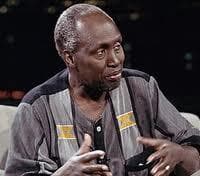
Ngũgĩ wa Thiong'o is a Kenyan author and academic who writes primarily in Gikuyu and who formerly wrote in English. He has been described as having been "considered East Africa's leading novelist". His work includes novels, plays, short stories, and essays, ranging from literary and social criticism to children's literature. He is the founder and editor of the Gikuyu-language journal Mũtĩiri. His short story The Upright Revolution: Or Why Humans Walk Upright, is translated into 100 languages from around the world.
Similar books
- Things Fall Apart
Chinua Achebe
3.7 (288k) average on GoodreadsHistorical FictionExplores the impact of colonialism and cultural clash in an African setting.
- Season of Migration to the North
Tayeb Salih
3.7 (20k) average on GoodreadsHistorical FictionExamines post-colonial identity and the complex relationship between Africa and the West.
- A Man of the People
Chinua Achebe
3.9 (4k) average on GoodreadsLiterary FictionWhile both novels critique post-independence corruption, Petals of Blood offers a more systemic and radical analysis of neo-colonialism and class exploitation, whereas Achebe's work often focuses more on individual moral failings and political satire. Ngũgĩ's narrative is also structurally more ambitious, weaving in extensive historical flashbacks.
- The Beautyful Ones are Not Yet Born
Ayi Kwei Armah
3.9 (3k) average on GoodreadsLiterary FictionBoth novels express profound disillusionment with post-independence African nations. However, Petals of Blood provides a broader historical scope and a more explicit call for collective, revolutionary action against systemic oppression, rather than just the individual's struggle against corruption depicted in Armah's novel.
- To Kill a Mockingbird
Harper Lee
4.3 (4.5M) average on GoodreadsHistorical FictionIn the 1930s Jim Crow South, Harper Lee writes about racial injustice, moral growth, and the quiet courage of a lawyer father, Atticus Finch, as seen through his young daughter's eyes.
- The Great Gatsby
F. Scott Fitzgerald
3.9 (3.8M) average on GoodreadsHistorical FictionIn the opulent Roaring Twenties, a mysterious millionaire's lavish parties hide his desperate, tragic pursuit of a lost love, exposing the emptiness within the American Dream.




Enjoyed the summary?
A summary gives you the shape of the book. The book itself has the detail, the examples and the voice.
Find Petals of Blood on AmazonAs an Amazon Associate, BookBrief earns from qualifying purchases. How we're funded