
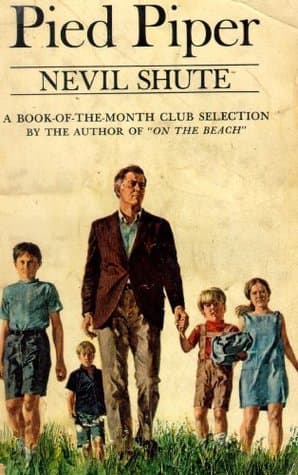
Synopsis
Covers the whole plot, including the ending.
- Difficulty
- Easy
- Pacing
- Moderate
- Mood
- Heartwarming, Resilient, Hopeful, Poignant
- Read it if
- You enjoy poignant historical fiction about ordinary people performing extraordinary acts of courage during wartime, with a focus on human resilience and the bond between generations.
- Skip it if
- You prefer fast-paced military thrillers or stories with minimal emotional depth.
Pied Piper Plot Summary
Covers the whole plot, including the ending.
The Start of the Journey
John Howard, a seventy-year-old Englishman on a fishing holiday in the Jura mountains of France in May 1940, decides to end his trip early as the war worsens. German forces advance, and in a small village, his host, Madame Perodeau, asks him to take her two grandchildren, eight-year-old Nicole and five-year-old Pierre, back to England. Howard, a widower and former diplomat, reluctantly agrees, despite not being comfortable with children. They start their journey by train, heading west towards the coast, unaware of the difficulties ahead.
A Growing Responsibility
As John Howard, Nicole, and Pierre travel by train, the war's chaos becomes clear. At a crowded station, they meet a Dutch family fleeing. The parents, overwhelmed, entrust their six-year-old son, Willem, to Howard, hoping to meet him in England. Howard, feeling a growing sense of duty, takes Willem. Train journeys are slow and delayed, packed with refugees, and often threatened by air raids. Howard starts to get used to his role as a guardian, finding ways to comfort and manage the children.
The German Boy
Further on, in a war-damaged village, John Howard finds a young German-Jewish boy named Otto. Otto's parents have been killed, and he is alone and scared. Despite the challenge of taking a German child to England during wartime, Howard's compassion wins out, and he takes Otto. The group now has five children. With trains becoming unreliable and roads full of refugees and military, Howard realizes they must find other ways to travel, often walking or relying on help from strangers.
The French Girl
As John Howard and his diverse group of children continue their slow, hard journey towards the coast, they find another child in trouble. In a largely abandoned and damaged village, they find a young French girl named Rose, about seven years old, who is traumatized and cannot speak. Her parents are gone, and Howard, unable to leave her, adds her to his group. Rose's quiet, scared presence adds another layer of responsibility for Howard, who now has six children of different backgrounds to care for while moving through a war zone.
Encountering the Enemy
While crossing the French countryside, John Howard and his six children meet a patrol of German soldiers. This is a moment of extreme tension, especially with Otto, the German-Jewish boy, in their care. Howard, using his past diplomatic experience, stays calm. He explains their situation, presenting himself as an old Englishman trying to get a group of children, including French and Dutch, to safety. The German officer, surprisingly, shows understanding and lets them pass. This shows Howard's quick thinking and the soldiers' brief humanity during the conflict.
Reaching the Coast
After weeks of walking, searching for food, and enduring constant hardship, John Howard and the children finally reach the French coast, near Brest. Their relief is short-lived, however, as they find not an organized evacuation but complete chaos. The port is full of refugees, soldiers, and damaged buildings. Rumors of German advances are common, and finding a way to England seems almost impossible. Howard faces the difficult task of securing passage across the Channel for himself and his six young, tired, and anxious charges.
A Desperate Search for Passage
At the chaotic French port, John Howard desperately searches for any boat to take them to England. He meets various people: cynical boat owners asking high prices, overwhelmed officials, and other refugees equally desperate. Howard tries to bargain and appeal to people's humanity, but the atmosphere is one of self-preservation and profiteering. He grows frustrated and disheartened by the lack of options, knowing time is running out as German forces get closer to the coast. The children, sensing his worry, become more restless.
The Fishing Boat
Against all odds, John Howard finally secures passage on a small, old fishing boat called the 'Joliette,' captained by a cynical but practical Frenchman named Monsieur Rougeron. The boat is barely seaworthy and already crowded with other refugees and a few British soldiers. Howard pays a significant sum, using his remaining money. The idea of crossing the English Channel in such a boat, especially with six young children, is daunting. The journey will be cold, dangerous, and uncomfortable, but it is their only hope of escaping the advancing German army.
The Channel Crossing
The crossing of the English Channel on the 'Joliette' is a hard experience. The small fishing boat is tossed by rough seas, and the children suffer from seasickness and fear. John Howard tirelessly cares for them, offering comfort and reassurance despite his own exhaustion and anxiety. They face the constant threat of German aircraft and naval patrols. The journey is long and uncomfortable, with limited food and water. Howard's determination is tested as he battles the elements and tries to keep the spirits of his young charges up, all while hoping to see the English coast.
Arrival in England
Miraculously, after a terrible journey, the 'Joliette' and its passengers finally reach the English coast, landing in Falmouth, Cornwall. John Howard is met by British authorities who are initially suspicious of his large, diverse group of children, especially Otto, the German boy. However, Howard's calm manner and the children's obvious distress soon convince them. The children receive medical checks, food, and warmth. Howard then begins the complex process of contacting agencies and embassies to find the parents or guardians of Nicole, Pierre, Willem, Otto, and Rose, fulfilling his promise.
Reunion and Farewell
In England, the search for the children's families begins. Nicole and Pierre are quickly reunited with their parents, who had also escaped France. Willem's parents, also in England, happily reclaim their son. Otto, the German-Jewish boy, is placed with a Jewish refugee organization that will care for him and look for any surviving relatives. Rose, the traumatized French girl, is taken in by a kind family who will help her recover. John Howard feels a mix of relief and sadness as each child leaves, leaving him alone, but with a deep sense of accomplishment.
Howard's Reflection
After ensuring all the children are settled, John Howard returns to his quiet life. However, he is changed. The journey, with its dangers and responsibilities, has given him a new sense of purpose and connection. He thinks about the bond he formed with each child, the moments of fear, laughter, and shared humanity. The experience has broken his previous complacency and isolation, leaving him with a deep appreciation for life and human strength. He realizes that in saving the children, he has, in a way, saved himself from a life of quiet solitude.
Pied Piper Characters
John Howard
Protagonist
A seventy-year-old English widower who unexpectedly becomes a guardian to six refugee children.
John Howard is a retired diplomat, a widower, and initially a somewhat reserved and solitary man. He embarks on a fishing holiday in France seeking quietude, but is thrust into an extraordinary act of kindness and courage. He is initially uncomfortable with children but possesses a deep sense of duty, resilience, and compassion. His past diplomatic experience proves useful in navigating difficult situations. Despite his age, he displays remarkable physical and mental fortitude throughout the arduous journey.
Relationships: Nicole (Adopted guardian, mentor); Pierre (Adopted guardian, protector); Willem (Adopted guardian, protector); Otto (Adopted guardian, protector); Rose (Adopted guardian, protector); Madame Perodeau (Initial host, entrusted her grandchildren to him)
Nicole
Supporting
The eldest of the French children, eight years old, who helps Howard with her younger brother.
Nicole is an intelligent and responsible eight-year-old French girl. She is the granddaughter of Madame Perodeau and is entrusted to Howard's care along with her younger brother, Pierre. Nicole quickly adapts to the difficult circumstances and often acts as a mini-guardian to Pierre and helps Howard communicate with the other children. She is observant and brave, showing a maturity beyond her years, and forms a strong bond of trust with Howard.
Relationships: John Howard (Guardian, father figure); Pierre (Younger brother, she protects him); Willem (Fellow refugee child, friend); Otto (Fellow refugee child, friend); Rose (Fellow refugee child, friend)
Pierre
Supporting
Nicole's five-year-old brother, who is initially fearful and dependent.
Pierre is Nicole's five-year-old brother, a typical young child who is initially more prone to fear, tears, and homesickness than the older children. He relies heavily on both Nicole and John Howard for comfort and reassurance. His vulnerability highlights the immense responsibility Howard has taken on. Over the course of the journey, he slowly begins to adapt and show moments of resilience, finding comfort in the routine and the presence of the group.
Relationships: John Howard (Guardian, father figure); Nicole (Older sister, protector); Willem (Fellow refugee child, friend); Otto (Fellow refugee child, friend); Rose (Fellow refugee child, friend)
Willem
Supporting
A six-year-old Dutch boy, handed over to Howard by his desperate parents.
Willem is a six-year-old Dutch boy whose parents, overwhelmed by the chaos of war, entrust him to John Howard with the hope of reuniting in England. He is a quiet and observant child, initially bewildered by his separation from his family but quickly attaches himself to Howard. Willem is generally well-behaved and resilient, adding to the group's dynamic without significant demands, demonstrating a quiet strength amidst the trauma.
Relationships: John Howard (Guardian, temporary father figure); Nicole (Fellow refugee child, friend); Pierre (Fellow refugee child, friend); Otto (Fellow refugee child, friend); Rose (Fellow refugee child, friend)
Otto
Supporting
A young German-Jewish boy, orphaned by the war, whom Howard takes in.
Otto is a young German-Jewish boy, perhaps seven or eight, whose parents have been killed during the invasion. He is found alone and deeply traumatized. His background makes his inclusion in the group particularly sensitive, given the wartime context. Otto is intelligent and resourceful, but also deeply scarred by his experiences. Howard's decision to take him in highlights his profound humanity. Otto's story embodies the tragic individual impact of the war.
Relationships: John Howard (Guardian, protector, savior); Nicole (Fellow refugee child, friend); Pierre (Fellow refugee child, friend); Willem (Fellow refugee child, friend); Rose (Fellow refugee child, friend)
Rose
Supporting
A traumatized French girl, rendered mute by her experiences, who joins Howard's group.
Rose is a young French girl, approximately seven years old, found by Howard in a war-torn village. She is mute due to trauma, unable or unwilling to speak about her experiences. Her silent presence is a constant reminder of the war's devastating impact on the innocent. Howard's decision to take her in, despite her inability to communicate, demonstrates his unwavering compassion. She slowly begins to respond to the kindness of Howard and the other children, a symbol of hope amidst despair.
Relationships: John Howard (Guardian, compassionate protector); Nicole (Fellow refugee child, friend); Pierre (Fellow refugee child, friend); Willem (Fellow refugee child, friend); Otto (Fellow refugee child, friend)
Monsieur Rougeron
Supporting
The cynical but ultimately helpful captain of the fishing boat 'Joliette.'
Monsieur Rougeron is the French captain of the fishing boat 'Joliette,' which eventually transports Howard and the children across the English Channel. He is portrayed as a pragmatic and somewhat cynical man, primarily motivated by money in the chaotic wartime environment. Despite his gruff exterior and initial reluctance, he ultimately provides the means of escape for Howard's group, demonstrating a hidden layer of decency or at least a professional commitment to his vessel and its passengers.
Relationships: John Howard (Client, reluctant ally)
Madame Perodeau
Mentioned
Howard's initial host in France, who entrusts her grandchildren to him.
Madame Perodeau is John Howard's initial host during his fishing holiday in the Jura mountains. She is a French villager who, facing the imminent German invasion, makes the agonizing decision to entrust her two grandchildren, Nicole and Pierre, to the care of a stranger, John Howard, hoping he can get them to safety in England. Her desperate act sets the entire story in motion, highlighting the impossible choices faced by civilians during wartime.
Relationships: John Howard (Host, entrusting guardian); Nicole (Granddaughter); Pierre (Grandson)
Pied Piper Themes
Humanity and Compassion Amidst War
The novel shows how kindness and compassion can appear even in the brutal conditions of war. John Howard, an elderly man with no experience with children, takes on the responsibility for six refugee children of different nationalities, including a German boy. His commitment to their safety, his ability to comfort them, and his refusal to leave any child, even at great personal risk, demonstrate the lasting power of human empathy. This is clear in his decision to protect Otto, a German-Jewish child, despite the danger, and his care for the traumatized Rose.
“He found himself wondering at the resilience of children, and at his own capacity for caring for them, a capacity he had not known he possessed.”
The Resilience of Children
A main theme is the remarkable strength of children caught in war. Despite seeing terrible things, losing families, and enduring hardship, the children – Nicole, Pierre, Willem, Otto, and Rose – adapt, find comfort in each other, and show incredible resilience. They endure long journeys, hunger, fear, and separation, yet still find time for play, laughter, and hope. Their ability to trust and form new bonds, especially with John Howard, highlights their capacity to survive and even do well despite difficulty, showing that war often fails to completely destroy innocence.
“Children, he thought, were like young saplings, bending with the storm but not breaking, always reaching for the light.”
Duty and Responsibility
The story explores the deep sense of duty and responsibility John Howard feels towards the children. What starts as a reluctant agreement to help two children quickly becomes a moral need to protect a growing group of six. Howard, an older man, finds new purpose in this unexpected role. His commitment to bringing them safely to England, despite huge obstacles and personal danger, becomes his main mission. This theme shows how individuals can meet extraordinary challenges when others need help, going beyond personal comfort and self-preservation.
“He had accepted a trust, and he would see it through, come what may.”
The Indiscriminate Nature of War
The novel clearly shows how war destroys lives indiscriminately, regardless of nationality, age, or social status. The children in Howard's care are French, Dutch, and German-Jewish, each losing family and home because of the conflict. The chaotic scenes of refugees, bombed villages, and desperate pleas for passage illustrate that war shatters lives across all borders. It removes the appearance of civilization, forcing ordinary people into extraordinary and often brutal situations, and highlights the widespread suffering civilians endure.
“War, he reflected, made no distinctions. It took the young and the old, the innocent and the guilty, and left only desolation.”
Plot Devices & Literary Techniques
The Expanding Group
Howard's party of children steadily grows, increasing his responsibility and the stakes.
This device involves the gradual accumulation of children under John Howard's care. Starting with two, his group expands to six, each child representing a new challenge and a deeper commitment. This escalating responsibility amplifies the narrative tension, highlights Howard's growing compassion, and underscores the widespread impact of the war on children. It also allows for a diverse representation of nationalities affected by the conflict, making the story more universal.
The Pied Piper Motif
Howard's role as a reluctant leader guiding children to safety, echoing the folk tale.
The title itself invokes the Pied Piper, a figure who leads children. In this story, John Howard becomes a modern, benevolent Pied Piper, not luring children away, but guiding them to safety from the dangers of war. This motif establishes Howard's unexpected role as a leader and protector of the innocent, framing his journey as a heroic, almost mythical undertaking against overwhelming odds. It adds a layer of symbolic depth to his actions and the children's reliance on him.
The Journey as Metaphor
The physical journey across France and the Channel symbolizes a passage through chaos and towards hope.
The arduous physical journey from the Jura mountains to the English coast serves as a powerful metaphor for the characters' passage through chaos, loss, and trauma towards safety and hope. Each stage of the journey—the failing trains, the crowded roads, the perilous sea crossing—represents a new challenge that must be overcome, reflecting the emotional and psychological journey of both Howard and the children as they confront the realities of war and forge new bonds.
The Age Gap
The stark contrast between Howard's age and the children's youth emphasizes vulnerability and unexpected bonds.
The significant age difference between the seventy-year-old John Howard and the young children (ranging from five to eight) is a key plot device. It highlights the vulnerability of the children and the unexpected nature of Howard's guardianship. This contrast underscores his selflessness and the profound, almost paternal, bond he forms with them. It also allows for moments of generational insight, as Howard reflects on his past life and the future these children represent, deepening his character arc.
Pied Piper Quotes
“Every man and woman in England has got to make up his or her mind to be killed sooner than give in. If they will do that, then we shall win. If they will not, then we shall lose.”
“There was a certain dignity about his age that made the younger people treat him with a respect that they would not normally have extended to a stranger.”
“He knew that the whole world was mad, and he was sane, and that was a very lonely position to be in.”
“It was impossible to imagine that such a thing as war could exist in such a beautiful place.”
“Children are not a commodity, to be bought and sold or left behind at will. They are a trust.”
“The only thing to do was to keep going, and not to think about it too much, because if you thought about it, you might stop.”
“He found himself wondering, as he often did, what the point of it all was, this endless struggle, this endless killing.”
“It was a strange feeling, to be responsible for so many lives, and yet to be so utterly alone.”
“The war had stripped away all the polite conventions, leaving only the bare bones of humanity.”
“There was a strength in numbers, even if the numbers were only children.”
“He had never thought of himself as a brave man, but he was doing brave things.”
“The future was a dark and uncertain place, but the present was here, and it demanded action.”
“Sometimes, he thought, the only way to deal with the overwhelming horror was to focus on the very small, very immediate things.”
“The sound of children laughing, even in the midst of war, was a sound of hope.”
Quiz
10 questions on the plot and the characters. Each answer comes with a short explanation.
Question 1
At the beginning of the novel, what is John Howard doing in France?
- Visiting relatives
- On a business trip
- Vacationing
- Working as a war correspondent
Show answer
C. Vacationing John Howard is introduced as a 70-year-old Englishman on a vacation in France when the war situation forces him to return home.
Question 2
What is John Howard's approximate age at the start of his journey?
- 60 years old
- 70 years old
- 80 years old
- 65 years old
Show answer
B. 70 years old The synopsis explicitly states John Howard is a '70-year-old Englishman'.
Question 3
What country is John Howard trying to reach with the children?
- France
- Germany
- England
- Switzerland
Show answer
C. England John Howard is an Englishman heading 'for home', which is England, to escape the advancing war in France.
Question 4
What historical event forms the backdrop of John Howard's journey?
- The Great Depression
- The Battle of Britain
- The Blitzkrieg and fall of France
- The D-Day landings
Show answer
C. The Blitzkrieg and fall of France The synopsis states it is 'the summer of 1940 and in Europe the time of Blitzkrieg', directly referencing the German invasion of France.
Question 5
Initially, how many children does John Howard agree to take with him?
- One child
- Two children
- Three children
- Four children
Show answer
B. Two children The synopsis explicitly states, 'He agrees to take two children with him.'
Question 6
What specific challenges does John Howard face on his journey that make progress difficult?
- Lack of food and water
- Hostile local populations
- Failed trains and clogged roads with refugees
- Attacks from enemy soldiers
Show answer
C. Failed trains and clogged roads with refugees The synopsis describes the difficulties: 'Trains fail, roads clog with refugees.'
Question 7
What happens to the number of children in John Howard's care as his journey progresses?
- It decreases as some children are reunited with their parents.
- It stays the same as he only committed to two.
- It increases as other children join his group.
- It decreases as some children get lost.
Show answer
C. It increases as other children join his group. The synopsis states, 'And if things were not difficult enough, other children join in Howard's little band.'
Question 8
Upon reaching the coast, what does John Howard find instead of immediate rescue?
- A waiting British naval ship
- A well-organized evacuation point
- Desperation and further challenges
- An abandoned port city
Show answer
C. Desperation and further challenges The synopsis says, 'At last they reach the coast and find not deliverance but desperation.'
Question 9
What is the primary theme suggested by John Howard's journey and increasing responsibility?
- The futility of resistance in wartime
- The unexpected heroism and moral duty of ordinary individuals amidst chaos
- The importance of military strategy in evacuation efforts
- The dangers of traveling alone during wartime
Show answer
B. The unexpected heroism and moral duty of ordinary individuals amidst chaos An elderly man taking on the responsibility of multiple children during a war-torn escape highlights themes of unexpected heroism, selflessness, and moral obligation.
Question 10
The title 'Pied Piper' likely alludes to what aspect of John Howard's journey?
- His musical talents used to entertain the children.
- His ability to charm and persuade authorities.
- His role in leading an increasing number of children through danger, much like the legendary Pied Piper.
- His colorful clothing that makes him stand out.
Show answer
C. His role in leading an increasing number of children through danger, much like the legendary Pied Piper. The Pied Piper of Hamelin famously led children away; similarly, John Howard is leading an ever-growing group of children away from danger, making the title a direct allegory for his role.
Pied Piper FAQ
What is the primary setting and historical context of 'Pied Piper'?
'Pied Piper' is set in France and England during the tumultuous summer of 1940, a period dominated by the German Blitzkrieg and the fall of France. This historical backdrop creates an urgent atmosphere of chaos and displacement as John Howard attempts to navigate the war-torn landscape.
Who is John Howard and what is his initial situation at the beginning of the novel?
John Howard is a 70-year-old English widower who was enjoying a peaceful fishing holiday in the Jura Mountains of France. His tranquility is abruptly shattered by news of the escalating war, prompting him to cut short his vacation and make his way back to England.
How does John Howard first come to be responsible for children?
Howard is initially asked by a fellow Englishman, Mr. Cavanagh, to escort his two children, Peter and Nicole, to safety. This initial act of kindness quickly expands as more children join his group, creating an ever-growing responsibility.
What are some of the major obstacles John Howard and the children face during their journey?
Their journey is plagued by numerous challenges, including unreliable trains, roads choked with refugees, food shortages, and the constant threat of German aerial attacks. The sheer logistical difficulty of caring for a diverse group of children under such circumstances is a recurring theme.
What is the significance of the 'Pied Piper' title in relation to John Howard's journey?
The title alludes to the German legend of the Pied Piper of Hamelin, reflecting Howard's unwitting role in leading a growing number of children through a dangerous landscape. Like the legendary figure, he gathers children, but his intent is to save them, not to lure them away permanently.
Are there any subtle indications of John Howard's past or personal losses that inform his dedication to the children?
While not explicitly stated early on, Howard's deep empathy and resilience hint at a past where he may have experienced loss. His gentle patience and unwavering commitment to the children, even when exhausted, suggest a man who understands suffering and seeks to protect innocence.
How does the character of Peter, one of the first children, evolve throughout the journey?
Peter, initially a somewhat reserved and proper English boy, gradually sheds some of his inhibitions. He learns to adapt to hardship, shows increasing courage, and takes on small responsibilities, maturing significantly under Howard's care and the pressure of their circumstances.
Is there a specific moment where Howard's resolve is most severely tested, perhaps hinting at a breaking point he overcomes?
Howard's resolve is severely tested multiple times, but a critical point occurs when they reach the coast and face the desperation of trying to secure passage to England. The sheer number of refugees and the apparent impossibility of their situation push him to his physical and emotional limits, forcing him to find inner strength.
What is the significance of the various nationalities and backgrounds of the children in Howard's group?
The diverse group of children, including French, English, and even a Dutch child, symbolizes the widespread impact of the war across Europe. Their different languages and customs highlight the universal need for safety and care, transcending national divides in the face of shared adversity.
How does John Howard's age contribute to his characterization and the challenges he faces?
Howard's age, 70, makes his arduous journey even more remarkable. It underscores his physical vulnerability and the immense strain he endures, yet it also highlights his wisdom, patience, and the quiet dignity of a man who has lived a full life and now dedicates his remaining strength to others.
Discuss the psychological impact of the constant threat of war on the children, particularly the younger ones.
The constant threat of war forces the children to mature quickly, developing resilience and adaptability. While they experience fear and uncertainty, Howard's calming presence and their shared camaraderie help mitigate the trauma, allowing them to find moments of childhood normalcy amidst the chaos.
How does the novel explore themes of responsibility and altruism through John Howard's actions?
The novel deeply explores responsibility as Howard continually accepts more children, never turning anyone away, even when it seems impossible. His altruism is a quiet, unassuming force, driven by a simple moral imperative to protect the vulnerable, even at great personal cost.
What psychological coping mechanisms do the children, as a group, develop to deal with their predicament?
The children develop several coping mechanisms, including mutual support, imaginative play, and finding comfort in routine, however rudimentary. Their dependence on Howard and each other fosters a sense of collective resilience, allowing them to endure hardships that might overwhelm individuals.
Is 'Pied Piper' ultimately an optimistic or pessimistic portrayal of humanity during wartime?
'Pied Piper' leans heavily towards an optimistic portrayal, demonstrating the enduring power of human kindness, resilience, and self-sacrifice even in the darkest of times. While it doesn't shy away from the horrors of war, it emphasizes the capacity for good within individuals like John Howard.
How does the novel use the setting of rural France and the refugee crisis to comment on societal breakdown?
The depiction of rural France, once peaceful, now overrun with refugees and chaotic, serves as a powerful commentary on societal breakdown. It shows how war can dismantle civil order, leaving individuals to rely on their own ingenuity and the kindness of strangers for survival.
To what extent is John Howard a heroic figure, and what kind of heroism does he represent?
John Howard is undoubtedly a heroic figure, representing a quiet, understated heroism. His heroism isn't about grand gestures or military prowess, but about unwavering perseverance, profound empathy, and the simple, yet powerful, act of caring for others in a time of immense danger.
What is the lasting message or moral lesson that 'Pied Piper' conveys to its readers?
The lasting message of 'Pied Piper' is the enduring importance of human compassion and resilience in the face of adversity. It reminds readers that even in the most chaotic and dangerous circumstances, the simple act of helping others can create profound hope and preserve humanity.
How does the novel balance the harsh realities of war with moments of tenderness or beauty?
The novel skillfully balances the harsh realities of war—like bombings and starvation—with poignant moments of tenderness, such as Howard comforting a frightened child, or the children finding joy in a simple meal. These contrasting elements highlight the resilience of the human spirit and the enduring capacity for connection amidst suffering.
About the author
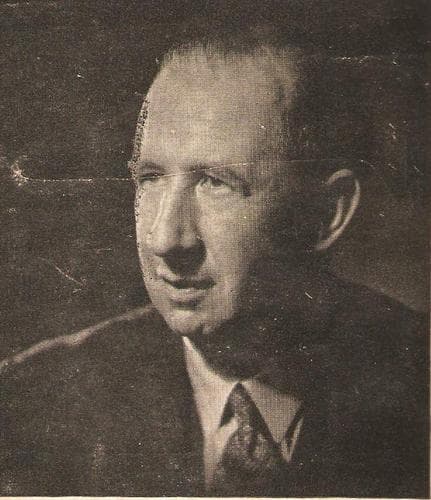
Nevil Shute Norway was an English novelist and aeronautical engineer who spent his later years in Australia. He used his full name in his engineering career and Nevil Shute as his pen name, in order to protect his engineering career from inferences by his employers (Vickers) or from fellow engineers that he was '"not a serious person" or from potentially adverse publicity in connection with his novels, which included On the Beach and A Town Like Alice.
Similar books
- All the Light We Cannot See
Anthony Doerr
4.3 (1M) average on GoodreadsHistorical FictionFeatures children navigating the dangers of WWII in occupied France and Germany.
- The Guns of Navarone
Alistair MacLean
4.1 (16k) average on GoodreadsThrillerMacLean's book is a high-octane commando adventure with a focus on grand military operations and intricate action plots. Shute's Pied Piper eschews such military exploits for the desperate, ground-level struggle of civilians, prioritizing psychological depth and the quiet heroism of ordinary people.
- To Kill a Mockingbird
Harper Lee
4.3 (4.5M) average on GoodreadsHistorical FictionIn the 1930s Jim Crow South, Harper Lee writes about racial injustice, moral growth, and the quiet courage of a lawyer father, Atticus Finch, as seen through his young daughter's eyes.
- The Great Gatsby
F. Scott Fitzgerald
3.9 (3.8M) average on GoodreadsHistorical FictionIn the opulent Roaring Twenties, a mysterious millionaire's lavish parties hide his desperate, tragic pursuit of a lost love, exposing the emptiness within the American Dream.
- Pride and Prejudice
Jane Austen
4.3 (3M) average on GoodreadsHistorical FictionIn a society focused on status and money, Elizabeth Bennet navigates love and pride, challenging Mr. Darcy and social expectations to find true affection.
- Angels & Demons
Dan Brown
3.9 (2.7M) average on GoodreadsThrillerA Harvard symbologist races through Rome's ancient sites, deciphering cryptic clues to unmask the Illuminati and stop a vengeful plot to destroy the Vatican with a stolen antimatter weapon.






Enjoyed the summary?
A summary gives you the shape of the book. The book itself has the detail, the examples and the voice.
Find Pied Piper on AmazonAs an Amazon Associate, BookBrief earns from qualifying purchases. How we're funded