
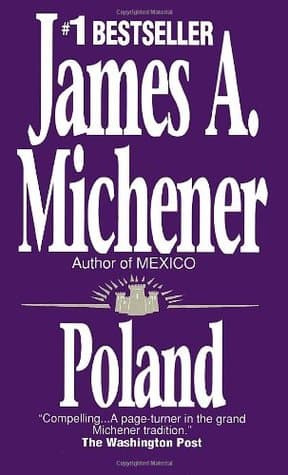
Synopsis
Covers the whole plot, including the ending.
- Difficulty
- Medium
- Pacing
- Moderate
- Mood
- Epic, Historical, Resilient, Informative, Somber
- Read it if
- You enjoy sweeping historical sagas that span centuries and explore the full history of a nation through multiple generations of fictional families.
- Skip it if
- You prefer character-driven plots over historical exposition, or you're not interested in detailed accounts of European history, particularly the often tragic history of Poland.
Poland Plot Summary
Covers the whole plot, including the ending.
The Arrival of the Tatar Horde
In 1241, the Polish village of Bukowo is destroyed by the Tatar horde. The villagers, led by Father Marcin and farmer Janko, try a desperate defense. The invaders, commanded by General Tsubadai, are relentless, burning homes, killing people, and enslaving survivors. Janko's family suffers greatly, with his wife and children killed or taken. This event starts the long struggle for survival and identity that will define Poland and the descendants of Bukowo's people for centuries. The invasion's brutality leaves a lasting mark on the land and its survivors, forcing them to rebuild.
The Rise of the Magnates
After the Tatar invasions, the descendants of Bukowo's survivors begin to establish themselves in Poland. The novel follows three families: the Bukowskis, who rise from peasantry to gentry; the Lubonskis, who become powerful magnates with large landholdings; and the Buks, who stay closer to their peasant roots but show lasting resilience. Through stories spanning centuries, Michener shows how these families navigate Poland's social and political systems. Their connections, rivalries, and alliances reflect the broader struggles of the Polish nation as they gain influence and deal with the responsibilities of their status.
The Golden Age and the Sejm
During Poland's 'Golden Age,' the Lubonski family plays a role in the Polish-Lithuanian Commonwealth's political life. Count Lubonski is a figure in the Sejm, the Polish parliament, where the 'liberum veto' allows individual nobles to block laws, often causing parliamentary inaction. The novel shows the alliances, betrayals, and debates that define the Sejm, highlighting both the democratic ideals and the weaknesses of the Polish political system. The Lubonskis, with their wealth, often find themselves at the center of power struggles, trying to protect their interests and the Commonwealth's amidst growing external pressures and internal disagreements.
The Deluge and Swedish Invasions
The mid-17th century brings 'The Deluge,' a time of Swedish invasions that devastate Poland. The novel shows the widespread destruction, famine, and loss of life. Both the Bukowski and Lubonski families are deeply affected, their estates ruined, and their people suffering. Characters like Colonel Bukowski defend their homeland, joining the fight against the Swedish forces. Michener emphasizes the resilience of the Polish people as they resist foreign occupation, often through guerrilla warfare and desperate last stands. This period of suffering strengthens a shared national identity and a desire for independence.
The Partitions of Poland
The late 18th century sees the Partitions of Poland, as Russia, Prussia, and Austria divide the country. The Lubonski and Bukowski families experience the loss of sovereignty. Count Lubonski, a patriot, tries to rally support and prevent the final partition, but his efforts fail against the imperial powers. The novel shows the heartbreak of a nation being erased from the map, and Poles' efforts to maintain their culture under foreign rule. This era creates a sense of injustice and fuels future generations' hopes for national rebirth.
Life Under Foreign Rule
Under the partitioning powers, Poles from all social classes, including the Bukowskis, Lubonskis, and Buks, work to preserve their national identity. The novel shows different approaches to occupation: harsh Russification and Germanization policies, and milder Austrian rule in Galicia. Characters engage in various forms of resistance, from secret education to armed uprisings, often with tragic results. The landed gentry, like the Bukowskis, try to maintain their estates and influence, while peasants like the Buks endure economic hardship and cultural suppression. The story highlights the enduring spirit of the Polish people, who hold onto their language, religion, and traditions despite pressure.
The January Uprising and Its Aftermath
The novel recounts the January Uprising of 1863 against Russian rule. Young patriots, including members of the Bukowski family, join the rebellion, often with poor training and weapons. Michener details the brutal suppression of the uprising by Russian forces, leading to arrests, executions, and deportations to Siberia. The aftermath brings harsher repressive measures, tightening the grip of the partitioning powers and solidifying Poland's image as a land of suffering. The personal cost of this failed rebellion is immense, leaving a legacy of martyrdom and a longing for freedom that inspires future generations.
World War I and Polish Independence
World War I offers hope for Polish independence, as the partitioning powers (Germany, Austria-Hungary, and Russia) are on opposing sides. The novel shows Poles fighting in all three armies, often against their own countrymen, a tragic result of the partitions. Figures like Jozef Pilsudski emerge as leaders, uniting factions for a sovereign Poland. The Bukowskis and Lubonskis contribute to the independence movement, some through military service, others through political action. The collapse of the empires leads to the rebirth of the Polish state in 1918, a moment of national triumph, though nation-building challenges remain.
The Interwar Years and the Rise of Fascism
The interwar period (1918-1939) sees Poland struggling to become a stable, independent nation. The novel explores the political complexities of the Second Polish Republic, including border disputes, economic challenges, and rising authoritarian tendencies. The Bukowskis and Lubonskis adapt to the new political landscape, some embracing democracy, others leaning towards nationalism or conservatism. However, the shadow of rising fascism in Germany and communism in the Soviet Union looms. The threat of another major war, coupled with internal divisions, creates a sense of dread, as Poland is again caught between powerful neighbors.
World War II and the Holocaust
World War II brings devastation to Poland. The novel shows the September 1939 invasion by Nazi Germany and the Soviet Union, the brutal occupation, and the extermination of Polish Jews in the Holocaust. Characters from the Bukowski, Lubonski, and Buk families experience the war's horrors: forced labor, resistance, and the constant threat of death. The narrative shows the atrocities committed, including concentration camps on Polish soil. This period is the darkest chapter in Polish history, a time of suffering, but also of bravery and resistance against evil.
Communist Poland and the Cold War
After World War II, Poland falls under Soviet rule, becoming a satellite state. The novel shows the imposition of communist rule, the nationalization of land and industry, and the suppression of dissent. The landed estates of families like the Lubonskis are confiscated, and their former owners face persecution or forced adaptation. The Bukowskis and Buks navigate life under the new regime, some collaborating, others resisting through underground movements. The narrative explores daily life challenges, the secret police, and the struggle for freedom and truth during the Cold War, as Poland remains a pawn in a larger geopolitical game.
Solidarity and the End of Communism
The late 20th century brings the Solidarity trade union movement, led by Lech Walesa, challenging Poland's communist regime. The novel shows the growing unrest, the strikes in Gdansk shipyards, and popular support for change. Characters, including younger generations of the Bukowski and Buk families, participate in the movement, risking their lives for freedom. The narrative highlights the resilience of the Polish people and the Catholic Church's moral authority, especially Pope John Paul II, in inspiring the movement. Ultimately, Solidarity's persistence and the Soviet Union's weakening lead to communism's peaceful collapse in Poland, marking a new era of self-determination.
A New Poland
The novel's final sections show Poland's transition to democracy and a market economy after communism. The challenges are large, including economic restructuring, political instability, and dealing with the past. The descendants of the Bukowski, Lubonski, and Buk families, now in a free Poland, navigate these changes. Some try to reclaim ancestral lands or rebuild family fortunes, while others take new opportunities. The story ends with cautious optimism, acknowledging the difficult journey ahead but celebrating the Polish people's enduring spirit and hard-won freedom, leaving the future open but hopeful.
Principal Figures
Janko Buk
Protagonist (ancestor of the Buk family)
A resilient peasant who survives the Tatar invasion and embodies the enduring Polish spirit.
Janko Buk is introduced in 1241 as a simple farmer from Bukowo. He is a man of the land, deeply connected to his village and family. After the devastating Tatar invasion, he embodies resilience, resourcefulness, and an unwavering will to survive and rebuild. His experiences set the foundation for the peasant class, who, despite constant hardship, remain the backbone of Polish society. Janko's determination to reclaim his life and his land reflects the foundational struggle of the Polish people.
Relationships: Father Marcin (spiritual guide/community leader); His family (devoted husband and father, though much of his family is lost)
Father Marcin
Supporting (ancestor of the Bukowski family)
The wise and courageous village priest of Bukowo.
Father Marcin is the spiritual leader of Bukowo during the Tatar invasion. He is a man of faith, courage, and practical wisdom, who attempts to organize the villagers' defense and provides comfort in the face of unspeakable horror. His lineage is implied to be the foundation for the Bukowski family, representing the intertwining of religious faith and national identity in Poland. He symbolizes the moral fortitude and community leadership often provided by the clergy in Polish history.
Relationships: Janko Buk (parishioner and fellow survivor); Villagers of Bukowo (spiritual shepherd)
Count Lubonski
Protagonist (ancestor of the Lubonski family)
A powerful magnate representing the Polish nobility and its struggles.
Count Lubonski (representing various individuals across centuries bearing the name) is a prominent figure in the Polish nobility, a magnate with vast landholdings and significant political influence. He embodies the strengths and weaknesses of the Polish gentry: fiercely independent, patriotic, but also prone to infighting and self-serving actions. He navigates the complex political landscape of the Sejm, attempts to defend Polish sovereignty, and later grapples with the loss of national independence during the partitions. His character highlights the often-tragic fate of the Polish aristocracy.
Relationships: Other Magnates (rivals and allies in political maneuvering); His Peasants (landowner and lord)
Colonel Bukowski
Supporting (ancestor of the Bukowski family)
A military leader and patriot during times of invasion.
Colonel Bukowski (representing various military figures across centuries) is a member of the gentry, distinguished by his military prowess and unwavering patriotism. He often appears during periods of foreign invasion, such as 'The Deluge' or the January Uprising, leading Polish forces in defense of their homeland. He embodies the martial spirit and sacrificial courage of the Polish military tradition. His character often faces difficult choices between honor, duty, and the grim realities of overwhelming enemy forces, reflecting the frequent need for Poles to defend their nation against powerful aggressors.
Relationships: His Soldiers (commander and leader); Count Lubonski (social peer, sometimes political ally)
Zofia Bukowska
Supporting (a Bukowski descendant)
A strong-willed woman who champions education and cultural preservation.
Zofia Bukowska (representing various female figures throughout the centuries) is a determined and intelligent woman from the gentry, often focused on education, cultural preservation, and social reform, particularly during periods of foreign occupation. She works to maintain Polish language and traditions, sometimes through clandestine schools or literary efforts. She embodies the vital role women played in maintaining national identity when the state itself was suppressed. Her character often shows resilience and a quiet strength, contrasting with the more overt military actions of male characters.
Relationships: Her Family (matriarch and educator); Local Community (social leader and cultural guardian)
Jan Buk
Supporting (a Buk descendant)
A peasant who experiences the hardships of foreign rule and social change.
Jan Buk (representing various peasant figures across centuries) is a descendant of Janko Buk, rooted in the land and facing the continuous struggles of the peasant class. He experiences the oppression of serfdom, the hardships of foreign occupation, and later the challenges of industrialization and communist collectivization. He embodies the resilience and endurance of the common Pole, whose labor sustains the nation through all its trials. His perspective often provides a ground-level view of the major historical events, highlighting their impact on everyday life.
Relationships: His Family (provider and patriarch); Local Landowners (tenant or worker)
Lech Walesa
Mentioned
The leader of the Solidarity movement.
Lech Walesa is mentioned as the iconic leader of the Solidarity trade union movement in the late 20th century. He symbolizes the triumph of the Polish people against communist oppression. While not a central character in the multi-generational family sagas, his historical importance as a catalyst for change is acknowledged, representing the culmination of centuries of Polish struggle for freedom.
Relationships: Polish Workers (leader of the Solidarity movement)
Jozef Pilsudski
Mentioned
A key figure in Polish independence after WWI.
Jozef Pilsudski is mentioned as one of the principal architects of Polish independence after World War I. He represents the military and political leadership that emerged to unite a fractured nation and establish the Second Polish Republic. His inclusion underscores the crucial moment when Poland regained its sovereignty after more than a century of partitions, a pivotal point in the nation's long history of struggle.
Relationships: Polish Legions (commander-in-chief)
Themes & Insights
The Enduring Spirit of Poland
This theme runs through the entire novel, showing the Polish people's resilience in the face of centuries of invasion, occupation, and political turmoil. From Janko Buk surviving the Tatar horde to the Solidarity movement resisting communism, the story consistently emphasizes the will to survive, rebuild, and maintain national identity. Despite attempts by foreign powers to erase Poland, its people, culture, and language persist, often through secret efforts and quiet defiance. The constant struggle for freedom is a sign of this lasting spirit, which becomes the nation's defining characteristic.
“For eight hundred years they had been ravaged, but they had always risen. They would rise again.”
The Burden of History and Geography
Poland's geographical position, situated on the European plain between powerful empires (Germany/Prussia, Russia, Austria), is a central theme. The novel shows how this location has subjected Poland to invasions, partitions, and foreign rule. The characters constantly deal with the consequences of these historical burdens, from the Tatar attacks to the Nazi and Soviet occupations. The narrative reveals how geographical vulnerability has shaped Polish identity, creating both fierce patriotism and a deep sense of historical grievance, making the struggle for national existence a constant challenge. This theme is clear in every major conflict depicted.
“To be Polish was to live on a plain, open to all winds, all invasions, all sorrows.”
The Intertwined Fate of Classes
Michener explores the complex relationships and often different, yet connected, fates of Poland's social classes: the peasants (Buks), the gentry (Bukowskis), and the magnates (Lubonskis). While their immediate interests often conflict, especially regarding land ownership and political power, the novel shows how their destinies are linked during national crises. During invasions or occupations, all classes suffer, and their combined efforts, however different, are necessary for survival and the preservation of Polish identity. The novel shows how the peasants' resilience, the gentry's patriotism, and the magnates' political maneuvering all contribute to the larger national story.
“The peasant tilled the soil, the gentry defended it, and the magnate governed it, but when the invaders came, all bled the same color.”
Faith and National Identity
The Catholic Church plays a role in maintaining Polish national identity, especially during foreign rule when the state was absent or suppressed. The theme highlights how Catholicism became a stronghold of Polish culture, language, and moral resistance. Characters like Father Marcin show the clergy's role in providing spiritual guidance and fostering community and national unity. From fighting Tatars to resisting communism, the Church is a sanctuary and a rallying point, symbolizing the Polish people's enduring spirit. Pope John Paul II's election further shows the connection between faith and nationhood.
“When the kings failed, and the armies fled, and the nation was divided, only the Church remained, a beacon in the darkness.”
The Paradox of Freedom and Anarchy
The novel explores the paradox of Polish political culture, especially during the Polish-Lithuanian Commonwealth. The 'Golden Liberty' and the 'liberum veto' gave immense freedom to the nobility, allowing any single noble to block laws in the Sejm. While meant to protect individual liberties, this system often led to political inaction, making the Commonwealth vulnerable to external manipulation and internal weakness. The theme explores how too much individual freedom, without enough central authority or a strong sense of collective responsibility, could lead to national subjugation. The Lubonski family's involvement in the Sejm clearly shows this tension.
“Their liberty was their glory and their curse, a sword that cut both ways, forging a nation and then carving it into pieces.”
Plot Devices & Literary Techniques
Multi-Generational Saga
Traces the lives of several families across centuries.
This device allows Michener to cover vast swathes of Polish history by following the descendants of three primary families—the Buks (peasants), Bukowskis (gentry), and Lubonskis (magnates). By showing how each generation experiences and reacts to historical events, the novel illustrates the long-term impact of political and social changes on different strata of Polish society. It provides both continuity and diverse perspectives, ensuring that the historical narrative feels deeply personal and grounded through the experiences of recurring family lines.
Episodic Structure
Each major historical period is presented as a distinct, self-contained narrative.
The novel is structured as a series of distinct episodes, each focusing on a significant period or event in Polish history, such as the Tatar invasion, the Partitions, or World War II. While linked by the overarching family sagas, each episode functions almost like a short story, introducing new specific characters (often descendants of the main families) and detailing the events of that era. This allows Michener to delve deeply into particular moments without being constrained by a single continuous plot, providing a comprehensive historical overview.
Omniscient Narrator
A knowledgeable, guiding voice provides historical context and commentary.
The novel employs an omniscient narrator who not only recounts the events but also provides extensive historical background, geographical context, and cultural insights. This narrative voice acts as a historian, educating the reader on the complexities of Polish history, politics, and society. It often offers commentary on the long-term implications of events and the enduring characteristics of the Polish people, ensuring that the reader understands the broader significance of the individual stories and battles depicted.
Symbolic Landscapes and Locations
Specific places represent enduring aspects of Poland.
Michener frequently uses specific locations, such as the village of Bukowo, the vast plains, or the marshes, as symbolic backdrops for the historical narrative. Bukowo, for instance, represents the enduring Polish heartland, repeatedly destroyed but always rising again. The open plains symbolize Poland's vulnerability, while the ancient forests and marshes represent its resilience and hiding places. These landscapes are not merely settings but active participants in the story, reflecting the nation's character and its perpetual struggle against external forces and the elements.
Poland Quotes
“The Poles, with their long history of suffering and resilience, have learned to find joy in the smallest things, and to celebrate life even in its darkest moments.”
“Freedom is not given; it is taken. And once taken, it must be guarded with eternal vigilance.”
“A nation that forgets its past is condemned to repeat it. But a nation that dwells only on its past cannot move forward.”
“The land itself, the deep soil of Poland, holds the memories of generations, of triumphs and tragedies, of love and war.”
“There are some things worth dying for, and the right to worship God in one's own way is certainly one of them.”
“To be Polish is to understand the bittersweet taste of hope: hope that is often dashed, but never entirely extinguished.”
“The strength of a people is not measured by the size of its armies, but by the unwavering spirit of its citizens.”
“Even in the darkest times, music and art found a way to flourish, a testament to the indomitable human spirit.”
“The forest, deep and ancient, has always been both a sanctuary and a battleground for the Polish people.”
“Love, in Poland, often came intertwined with duty, a quiet, enduring flame that burned brightest in adversity.”
“The greatest tragedy is not to die, but to live without ever having truly lived, without fighting for what you believe in.”
“Generations come and go, empires rise and fall, but the heart of Poland beats on, strong and defiant.”
“There is a stubbornness to the Polish soul, a refusal to be defeated, even when all seems lost.”
“The taste of rye bread, the smell of the pine forests, these are the anchors that bind a Pole to their home, no matter how far they wander.”
Quiz
10 questions on the plot and the characters. Each answer comes with a short explanation.
Question 1
Which of the following noble families is NOT one of the primary families whose multi-generational story is told in 'Poland'?
- The Lubonski family
- The Bukowski family
- The Zamoyski family
- The Gryk family
Show answer
C. The Zamoyski family The primary families chronicled throughout the book are the Lubonskis (nobility), the Bukowskis (gentry/military), and the Gryks (peasants). The Zamoyski family, while historically significant in Poland, is not one of the three core fictional families Michener focuses on.
Question 2
What significant historical event marks the beginning of the novel's narrative, specifically concerning the Tartar invasion?
- The Battle of Grunwald (Tannenberg)
- The Mongol invasion culminating in the Battle of Legnica
- The Deluge (Swedish invasion)
- The Partitions of Poland
Show answer
B. The Mongol invasion culminating in the Battle of Legnica The novel opens with the Mongol (often referred to as Tartar in the context of the time) invasion of Poland in the 13th century, specifically detailing the lead-up to and aftermath of the Battle of Legnica in 1241, which profoundly impacted early Polish history and the characters' ancestors.
Question 3
Which agricultural product is a recurring theme and source of wealth (or hardship) for the Gryk peasant family throughout centuries?
- Grapes for wine
- Potatoes
- Wheat and rye for grain
- Sugar beets
Show answer
C. Wheat and rye for grain Grain, primarily wheat and rye, is central to the Gryk family's existence, their connection to the land, and their economic struggles and occasional successes as serfs and later as independent farmers. It represents the foundation of the Polish agricultural economy for centuries.
Question 4
What is the primary motivation behind Jan Lubonski's decision to travel to America in the 19th century?
- To escape political persecution after a failed uprising against Russia
- To seek fortune in the gold rush
- To establish new trade routes for Polish goods
- To study new agricultural techniques
Show answer
A. To escape political persecution after a failed uprising against Russia Jan Lubonski, a member of the Polish nobility, is forced to flee Poland due to his involvement in one of the many Polish uprisings against Russian rule in the 19th century. His exile to America highlights the constant struggle for Polish independence.
Question 5
How does Michener portray the concept of the 'Golden Liberty' (szlachta democracy) in the context of Polish history?
- As a period of unparalleled economic prosperity for all classes.
- As a system that ultimately weakened Poland by empowering too many nobles and paralyzing government.
- As a progressive form of democracy that inspired Western Europe.
- As a brief, failed experiment quickly replaced by absolute monarchy.
Show answer
B. As a system that ultimately weakened Poland by empowering too many nobles and paralyzing government. Michener depicts the Golden Liberty, with its liberum veto and elective monarchy, as a system that, while seemingly democratic for the nobility, led to significant governmental paralysis, internal divisions, and ultimately contributed to Poland's vulnerability and the Partitions.
Question 6
What role do the Cossacks frequently play in the historical conflicts depicted in the book, particularly concerning the eastern borders of Poland?
- They are consistently loyal allies of the Polish-Lithuanian Commonwealth.
- They serve primarily as trading partners with Polish merchants.
- They are often rebellious forces, shifting alliances between Poland, Russia, and the Ottoman Empire, seeking autonomy.
- They are depicted as peaceful nomadic tribes with no political ambitions.
Show answer
C. They are often rebellious forces, shifting alliances between Poland, Russia, and the Ottoman Empire, seeking autonomy. The Cossacks are a volatile and frequently rebellious force on Poland's eastern frontier, often exploited by neighboring powers. Their struggle for autonomy and religious freedom frequently puts them at odds with the Polish Commonwealth, leading to major uprisings and wars.
Question 7
Which character represents the intellectual and artistic spirit of Poland, often struggling with censorship and political oppression in the 20th century?
- Count Jacek Bukowski
- Professor Zygmunt Gryk
- Piotr Bukowski
- Katarzyna Lubonska
Show answer
C. Piotr Bukowski Piotr Bukowski, a descendant of the military family, becomes a prominent writer and intellectual in the 20th century. He grapples with the challenges of artistic freedom and expression under both Nazi and Soviet occupation, embodying the resilience of Polish culture.
Question 8
How does the novel portray the impact of the Holocaust on the Jewish population of Poland, particularly in the fictional town of Bukowo?
- It focuses on the stories of a few Jewish families who managed to escape early.
- It describes the gradual marginalization and eventual systematic extermination of the Jewish community.
- It primarily highlights instances of widespread Polish resistance and protection of Jews.
- It suggests the Jewish population was largely unaffected due to their isolation.
Show answer
B. It describes the gradual marginalization and eventual systematic extermination of the Jewish community. Michener starkly depicts the tragic fate of Poland's Jewish community, including those in Bukowo. The narrative illustrates their gradual isolation, forced relocation to ghettos, and ultimate systematic extermination by the Nazis, highlighting the profound loss to Polish society.
Question 9
The final chapters of the book deal with Poland under Soviet influence after World War II. What is a key challenge faced by the characters during this period?
- The return of the old landed gentry and their attempts to reclaim their estates.
- The struggle between the Catholic Church and the Communist Party for societal influence.
- Massive economic emigration to Western Europe due to famine.
- A renewed threat of invasion from a resurgent Germany.
Show answer
B. The struggle between the Catholic Church and the Communist Party for societal influence. A central conflict in post-WWII Poland under Soviet influence is the ideological and moral struggle between the Communist Party, which sought to impose atheism and state control, and the deeply rooted Catholic Church, which remained a symbol of Polish identity and resistance.
Question 10
What is the overarching symbolic significance of the fictional village of Bukowo (and its associated estates) throughout the novel?
- It represents a forgotten corner of Poland, untouched by major historical events.
- It serves as a microcosm of Poland itself, enduring invasions, changing political systems, and the cyclical struggles of its people.
- It symbolizes the only place in Poland where different social classes consistently lived in harmony.
- It is primarily a setting for romantic escapades and personal dramas, detached from national history.
Show answer
B. It serves as a microcosm of Poland itself, enduring invasions, changing political systems, and the cyclical struggles of its people. Bukowo, with its manor house, village, and surrounding lands, functions as a microcosm for Poland. Through its continuous existence and the experiences of the Lubonski, Bukowski, and Gryk families tied to it, Michener illustrates the enduring spirit of the nation through centuries of change, conflict, and resilience.
Poland FAQ
What is the overarching premise of James A. Michener's 'Poland'?
'Poland' chronicles eight centuries of Polish history through the intertwined destinies of three fictional noble families: the Lubonski, Bukowski, and Bukowiecki clans. It explores their struggles, triumphs, and enduring spirit against a backdrop of invasions, partitions, and cultural shifts, illustrating how their personal lives reflect the nation's tumultuous journey.
Which historical periods does the book cover, and what is its temporal scope?
The narrative begins in the 13th century, specifically around the time of the Mongol invasions, and extends to the early 1980s, culminating with the rise of the Solidarity movement and martial law. Michener meticulously portrays key historical events such as the Teutonic Knights' conflicts, the Polish-Lithuanian Commonwealth, and World War II.
Who are the primary fictional families, and how do their fates intertwine across generations?
The Lubonski family represents the landed gentry, often clinging to tradition; the Bukowski family, initially peasants, rises through hard work and intellect; and the Bukowiecki family, often associated with the church or intellectual pursuits, provides a different perspective. Their paths frequently cross through marriage, conflict, and shared national struggles, demonstrating the diverse fabric of Polish society.
What role does the fictional village of Bukowo play in the narrative?
Bukowo serves as a central, recurring setting, symbolizing the enduring heartland of Poland and its people. Many key events unfold there, from early skirmishes to modern-day political struggles, grounding the vast historical scope in a tangible, evolving community.
How does the book portray the impact of foreign invasions and occupations on Polish identity?
The novel vividly illustrates how centuries of invasions by Mongols, Teutonic Knights, Swedes, Russians, Prussians, Austrians, and Germans forged a resilient, often defiant, Polish identity. It emphasizes the constant struggle for sovereignty and the deep cultural memory of foreign domination, shaping the characters' motivations and the nation's psyche.
Are there any real historical figures integrated into the narrative, or is it purely fictional?
While the main characters are fictional, Michener masterfully weaves them into the fabric of actual historical events, often having them interact with or be directly impacted by real historical figures and movements. The book provides a sense of authenticity by grounding its fictional drama in well-researched historical contexts and figures.
What is the significance of the recurring theme of 'land' throughout the novel?
The land itself, particularly the fertile plains of Poland, is almost a character, representing both a source of life and a constant target for invaders. Its ownership, defense, and cultivation drive much of the economic and social conflict, reflecting the deep connection Poles have traditionally felt to their soil and their nation's agricultural heritage.
How does Michener subtly introduce the origins of modern Polish political movements, like Solidarity?
Michener lays the groundwork for Solidarity by showcasing centuries of peasant uprisings, workers' struggles, and intellectual dissent against oppression, whether from feudal lords or foreign powers. The cumulative effect of these historical grievances and the resilient spirit of characters like the Bukowskis provide a clear lineage for the later mass movements.
What is the psychological impact of repeated national trauma on the characters across generations?
The characters often exhibit a deep-seated resilience and patriotism, but also a lingering sense of fatalism or suspicion, born from centuries of betrayal and loss. This collective trauma manifests in their cautious optimism, their fierce defense of culture, and their willingness to sacrifice for national independence, even when hope seems dim.
How do individual characters like the ambitious peasant Jan Bukowski or the intellectual Zygmunt Bukowiecki embody national psychological traits?
Jan Bukowski embodies the Polish drive for upward mobility through sheer determination and the desire for land, reflecting a national aspiration for self-sufficiency and dignity. Zygmunt Bukowiecki often represents the intellectual class, grappling with national identity, moral dilemmas, and the role of culture in preserving the nation's spirit, highlighting Poland's rich intellectual tradition.
Discuss the psychological toll of religious persecution or the struggle to maintain Catholicism in the face of various occupations.
The unwavering adherence to Catholicism becomes a central pillar of Polish identity, often serving as a source of solace and resistance against Protestant, Orthodox, or atheist regimes. Characters often find psychological strength and communal solidarity in their faith, even as it sometimes becomes a target for oppressors, reinforcing a deep-seated spiritual resilience.
How does the novel explore the concept of 'heroism' in the context of Polish history?
Heroism in 'Poland' is not always about grand battles but often about quiet endurance, the preservation of culture, or small acts of defiance. It shows heroes emerging from all social strata, from peasants resisting oppression to intellectuals maintaining the Polish language, redefining heroism as a continuous, collective struggle for survival and identity.
To what extent does Michener present a romanticized view of Polish history, and where does he acknowledge its darker aspects?
While Michener celebrates Polish resilience and spirit, he doesn't shy away from depicting internal conflicts, class struggles, and the mistakes made by Polish leaders, such as the flaws in the liberum veto system or the treatment of minorities. He balances romanticism with a stark portrayal of historical realities, including the suffering caused by both external and internal forces.
What message does the ending, particularly with the Solidarity movement, convey about Poland's future?
The ending, with the rise of Solidarity and the imposition of martial law, conveys a message of enduring struggle but also persistent hope. It suggests that despite centuries of oppression, the Polish spirit for freedom and self-determination remains unbroken, hinting at the eventual triumph over Soviet domination and the possibility of a brighter future.
How does Michener's narrative structure, with its generational scope, contribute to the book's overall themes?
The generational structure allows Michener to demonstrate the cyclical nature of history—the recurrence of conflicts and the enduring human spirit—while also showing progress and adaptation. It emphasizes that national identity is built over centuries, through the cumulative experiences of countless individuals, making the historical sweep deeply personal.
What is the significance of the recurring 'eagle' motif found throughout the book?
The eagle, the national symbol of Poland, frequently appears as a powerful motif, representing national pride, sovereignty, and the enduring spirit of the Polish people. Its presence often marks moments of national triumph, struggle, or defiant resistance against foreign domination, symbolizing the nation's aspirations for freedom and its historical legacy.
How does the author portray the complex relationship between the Polish nobility and their serfs?
Michener depicts the often-strained and exploitative relationship between the nobility (like the Lubonskis) and their serfs (like the early Bukowskis) with historical accuracy. He shows the gradual emancipation of peasants, highlighting their long struggle for land ownership and social mobility, which forms a crucial undercurrent of class tension throughout the narrative.
In what ways does 'Poland' serve as a cautionary tale?
'Poland' serves as a cautionary tale about the dangers of internal divisions, the cost of political weakness, and the devastating impact of foreign aggression. It underscores the importance of national unity and strong leadership in preserving sovereignty, while also warning against the cyclical nature of historical conflicts if lessons are not learned.
About the author
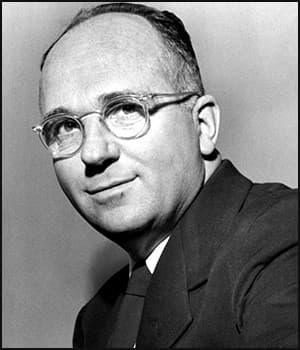
James A. Michener was an American author known for his historical fiction. His notable works include Hawaii, Chesapeake, Alaska, The Source, Poland, and Space, which often explore the history and culture of specific regions. Michener's storytelling is characterized by extensive research and a focus on the human experience within historical contexts.
Similar books
- Hawaii
James A. Michener
4.2 (72k) average on GoodreadsLifestyleAnother Michener saga, exploring the multi-generational history and culture of a specific place.
- The Source
James A. Michener
4.0 (11k) average on GoodreadsFantasyExplores the history of Israel through an archaeological dig and the stories of its people over thousands of years, similar in scope and style.
- Eat, Pray, Love
Elizabeth Gilbert
3.6 (1.5M) average on GoodreadsLifestyleA heartbroken writer leaves her conventional life for a year-long global search for pleasure in Italy, spiritual devotion in India, and unexpected love and balance in Bali.
- Wild: From Lost to Found on the Pacific Crest Trail
Cheryl Strayed
4.0 (615k) average on GoodreadsLifestyleAfter losing her mother and her marriage, a young woman impulsively hikes over a thousand miles of the Pacific Crest Trail alone, finding strength and healing in the unforgiving wilderness.
- Into Thin Air: A Personal Account of the Mount Everest Disaster
Jon Krakauer
4.2 (395k) average on GoodreadsLifestyleOn May 10, 1996, ambition and a sudden, violent storm turned Mount Everest into a deadly trap, leaving Jon Krakauer to tell the harrowing story of a disaster that took lives and shattered climbers' dreams.
- On The Road
Jack Kerouac
3.6 (349k) average on GoodreadsLifestyleDean Moriarty and Sal Paradise go on a wild, cross-country trip with jazz, drugs, and a desperate search for meaning on America's post-war roads.




Enjoyed the summary?
A summary gives you the shape of the book. The book itself has the detail, the examples and the voice.
Find Poland on AmazonAs an Amazon Associate, BookBrief earns from qualifying purchases. How we're funded