
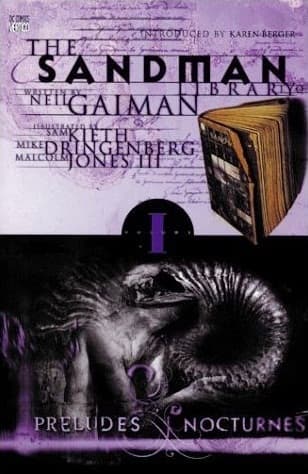
Synopsis
Covers the whole plot, including the ending.
- Difficulty
- Medium
- Pacing
- Moderate
- Mood
- Dark, Mythological, Philosophical, Melancholy, Introspective
- Read it if
- You enjoy dark fantasy, mythological retellings, and character-driven stories with philosophical undertones, especially if you're new to 'The Sandman' series.
- Skip it if
- You prefer lighthearted fantasy or stories with a very straightforward, action-oriented plot without much introspection or mythological depth.
Preludes & Nocturnes Plot Summary
Covers the whole plot, including the ending.
A Sleep of the Just
In 1916, Roderick Burgess, the 'Magus' of the Order of Ancient Mysteries, tries to capture Death for immortality. Instead, he catches Dream (Morpheus), who was weakened and outside his realm. Burgess takes Dream's ruby, helm, and sand pouch. Dream is held in a magical glass sphere in the Order's manor, his power slowly draining and his realm falling apart. Over decades, Burgess grows old and bitter, failing to get any wishes from Dream. His son, Alex Burgess, takes over the watch. In 1988, an elderly Alex becomes careless, and Dream, seizing a moment of weakness, escapes his prison, leaving the manor in ruins.
Imperfection in All Things
After his escape, Dream returns to the Dreaming, his realm, to find it in decay. His castle is crumbling, his librarian Lucien is a wreck, and many subjects, including the nightmares Brute and Glob, have left their posts, leaving human dreams in chaos. He discovers that his three tools—his ruby, helm, and sand pouch—are gone, scattered across the waking world. Without these artifacts, his power is diminished, and he cannot fully restore his realm or fulfill his duties. He consults the Fates (or Hecate), who confirm where his stolen items are, starting him on a dangerous journey.
Dream a Little Dream of Me
Dream's search for his sand pouch leads him to London, where he enlists the help of Johanna Constantine, a cynical occult detective. Johanna, at first unwilling, reveals she gave the sand pouch to her former lover, Rachel, who has since become a severe heroin addict, using the sand for hallucinations. Dream confronts Rachel, whose mind is a chaotic mess of dreams and nightmares, and retrieves his pouch. However, the sand pouch is now sentient and corrupted by Rachel's addiction. Dream must then confront Choronzon, a powerful demon who claims ownership of the pouch, defeating him in a battle of wits and identity in Hell.
A Hope in Hell
Following the Fates' guidance, Dream journeys to Hell, believing his helm is there. He travels the desolate landscape, encountering various damned souls and demons, including Etrigan. He learns that his helm is now with Choronzon, a demon he previously outwitted. To reclaim it, Dream must engage in a 'challenge'—a duel of wits and imagination—against Choronzon, with the demon as his champion. Dream defeats Choronzon by creating a concept that negates all of Choronzon's terrifying forms: 'Hope.' This victory angers Lucifer Morningstar, the ruler of Hell, who feels humiliated by Dream's success on his own turf, but Lucifer reluctantly allows Dream to leave with his helm.
Patiently Waiting for Delivery
After retrieving his helm, Dream focuses on finding his ruby. He learns that Alex Burgess sold it to Ethel Cripps, Roderick Burgess's former mistress, who then gave it to her son, John Dee. John Dee, a former supervillain known as Doctor Destiny, used the ruby's power to manipulate dreams, eventually becoming completely insane and incarcerated in Arkham Asylum. The ruby, still powerful, has been warped by Dee's madness, making it a dangerous and unpredictable artifact. Dream begins to track Dee, knowing that retrieving the ruby will be a difficult and potentially catastrophic task, given Dee's mental state and the ruby's corrupted power.
24 Hours
John Dee escapes Arkham Asylum and seeks refuge in a small, isolated diner. He uses the Dreamstone (Dream's ruby), which he has shaped into a more potent form, to torment the diner's patrons and staff. Over 24 hours, Dee manipulates their dreams and desires, stripping away their inhibitions and forcing them to act out their darkest impulses, leading to escalating violence, sexual depravity, and eventually, murder. The diner becomes a microcosm of human depravity, a living nightmare where reality is twisted by Dee's madness and the ruby's power. Dream arrives outside, unable to directly intervene due to the ruby's barrier.
Sound and Fury
Dream enters the diner to confront John Dee. Dee, now powerful with the ruby, engages Dream in a direct conflict, using the ruby to bend reality and attack Dream with his own nightmares. Dee believes he can destroy Dream by shattering the ruby, which he thinks is the source of Dream's power. However, the ruby is merely a focus for Dream's power, and when Dee shatters it, the raw power returns directly to Dream, restoring him to his full strength. Dee is left a broken, powerless man. Dream, now fully empowered, returns Dee to Arkham Asylum, leaving him in a state of perpetual dreaming, a mercy compared to his previous madness.
The Sound of Her Wings
After reclaiming his power and restoring his realm, Dream feels a deep sense of melancholy and purposelessness. He is visited by his older sister, Death, a cheerful, pragmatic, and upbeat goth girl. She takes him on her daily rounds, collecting the souls of the recently deceased. Through their conversations and observations, Death reminds Dream of the importance of his role and the beauty and fragility of human life and dreams. She helps him to see that his purpose is not merely to exist but to interact with and shape the dreams of humanity. Her presence offers him a much-needed sense of perspective and solace, lifting his spirits and helping him to understand his place in the universe.
Principal Figures
Dream (Morpheus)
Protagonist
The personification of all dreams and stories, Lord of the Dreaming.
Morpheus is one of the seven Endless, a primordial entity representing dreams, stories, and reality. He is tall, gaunt, with wild black hair and eyes like distant stars. He is often melancholic, brooding, and takes his responsibilities very seriously, almost to a fault. His long imprisonment has left him weakened and emotionally vulnerable, but also determined to reclaim his power and restore his realm. He is slow to forgive, prone to brooding, and possesses an ancient, almost alien perspective on existence.
Relationships: Death (Older sister, confidante, offers perspective); Roderick Burgess (Captor, tormentor); Lucifer Morningstar (Rival, ruler of Hell); Johanna Constantine (Reluctant ally, occult detective); John Dee (Antagonist, wields his ruby)
Death
Supporting
Dream's older sister, the cheerful personification of Death.
Death is the second oldest of the Endless, appearing as a perky, pragmatic, and surprisingly cheerful young woman with a goth aesthetic. Unlike her somber brother, she approaches her duties with an easygoing grace and empathy, often offering kind words to those she collects. She is wise, understanding, and serves as a vital emotional anchor and confidante for Dream, providing him with perspective and comfort when he needs it most. She is the opposite of what one might expect from the embodiment of the end of life.
Relationships: Dream (Younger brother, she offers him guidance and solace)
Roderick Burgess
Antagonist (initial)
The occultist who captures Dream, seeking immortality.
Burgess, known as the 'Magus', is a pompous and ambitious occultist who leads the Order of Ancient Mysteries. He attempts to capture Death for immortality but mistakenly imprisons Dream. He is ruthless, arrogant, and ultimately pathetic, failing to bend Dream to his will despite decades of imprisonment. His pursuit of power leads to his own bitter decline and the fracturing of his family.
Relationships: Dream (Captor and prisoner); Alex Burgess (Son, successor to his watch over Dream); Ethel Cripps (Mistress, mother of John Dee)
John Dee (Doctor Destiny)
Antagonist
A deranged supervillain who wields Dream's powerful ruby.
John Dee is the son of Ethel Cripps and Roderick Burgess, though he is unaware of his true parentage. He is a former supervillain known as Doctor Destiny, who used Dream's ruby to manipulate the dreams of others, eventually driving himself insane. He is utterly corrupted by the ruby's power, his mind a twisted landscape of nightmares and perverse desires. He seeks to use the ruby to destroy the waking world by revealing humanity's darkest truths, believing it to be a mercy.
Relationships: Dream (Antagonist, wields his ruby); Ethel Cripps (Mother, gave him the ruby)
Johanna Constantine
Supporting
A cynical and jaded occult detective who aids Dream.
Johanna Constantine is a descendant of John Constantine and an occult detective based in London. She is cynical, pragmatic, and has a history of dealing with the supernatural, often getting herself into dangerous situations. She is initially reluctant to help Dream, but her sense of duty and a past debt compel her. She is street-smart and resourceful, providing a grounded, human perspective amidst the fantastical elements of Dream's quest.
Relationships: Dream (Ally, helps him retrieve his sand pouch)
Lucifer Morningstar
Supporting/Antagonist
The ruler of Hell, who begrudgingly allows Dream to leave his realm.
Lucifer Morningstar is the majestic and formidable ruler of Hell, a fallen angel who retains much of his angelic beauty and power. He is immensely proud and resentful of his imprisonment in Hell. He views Dream's presence in his realm as a challenge to his authority and is angered by Dream's victory over Choronzon. Despite his immense power, he is bound by ancient rules and ultimately allows Dream to depart, though with clear disdain.
Relationships: Dream (Rival, ruler of Hell)
Lucien
Supporting
The diligent, nervous librarian of the Dreaming.
Lucien is the loyal and highly intelligent librarian of Dream's castle, responsible for cataloging every book that has ever been dreamed. He is meticulous, anxious, and deeply devoted to Dream. During Dream's imprisonment, Lucien maintains the library and the castle as best he can, despite the decay, becoming a nervous wreck due to the absence of his master and the chaos in the Dreaming. He serves as Dream's primary source of information upon his return.
Relationships: Dream (Loyal servant, librarian)
Themes & Insights
The Nature of Dreams and Reality
The series explores the basic connection between dreams and waking reality. Dream's imprisonment directly affects the waking world, causing sleeping sicknesses and the spread of nightmares. John Dee's use of the Dreamstone in '24 Hours' shows how dreams, when twisted, can shatter reality and expose humanity's darkest impulses. The story suggests that dreams are not just escapism but a vital part of existence, influencing consciousness and shaping the world.
“I am the King of Dreams, Morpheus, Lord of the Dreaming. You are in my power.”
Responsibility and Consequence
Dream's long absence has catastrophic results for both the Dreaming and the waking world. His quest to reclaim his tools comes from a deep sense of responsibility to restore balance. Roderick Burgess's irresponsible act of capturing Dream leads to decades of suffering, not just for Dream but for his own family and the world. John Dee's misuse of the ruby in '24 Hours' highlights the dire results of unchecked power and madness, showing how one individual's actions can cause widespread torment.
“I will tell you what your power is, Dream of the Endless. You are a dream. Nothing more. You are a story.”
The Burden of Immortality and Purpose
Dream, as an immortal entity, grapples with the weight of his eternal existence and his role. His initial melancholy after regaining his power in 'The Sound of Her Wings' comes from a momentary loss of purpose, questioning the meaning of his endless duties. Death, his sister, provides a crucial counterpoint, showing him that even for the Endless, purpose is found in connection and engagement with the cycle of life and death, and that even the most ancient beings must find meaning in their existence. This theme explores the existential challenges faced by beings who transcend mortal concerns.
“You are the Lord of Dreams. You are the King of Nightmares. You are the Shaper. You are Morpheus. And you are needed.”
Identity and Self-Discovery
Dream's journey is not just about retrieving physical objects but about rediscovering himself after his long imprisonment. The confrontation with Choronzon in Hell, where Dream must define himself against the demon's shifting forms, is a literal battle of identity. His interactions with other characters, especially Death, force him to reflect on who he is and what his role truly means. He starts as a weakened and vengeance-driven entity, but by the end, he has reclaimed his power and gained a deeper understanding of his own nature and the importance of his connections.
“I am hope.”
Plot Devices & Literary Techniques
The Sigils of Office (Ruby, Helm, Sand Pouch)
Three artifacts that serve as extensions and foci of Dream's power.
These three items are not merely tools; they are externalized aspects of Dream's being and power. Their loss weakens him significantly, both physically and metaphysically. The quest to retrieve them forms the central narrative drive of 'Preludes & Nocturnes'. Each sigil, when misused (like the sand pouch by Rachel or the ruby by John Dee), demonstrates the chaotic and dangerous potential of Dream's power when untethered from his control, highlighting their importance in maintaining order in the Dreaming and the waking world.
The Dreaming
Dream's personal realm, a reflection of his state and the collective unconscious.
The Dreaming is both a physical place (Dream's castle, library, and landscapes) and a metaphysical concept, the source and repository of all dreams, nightmares, and stories. Its dilapidated state upon Dream's return mirrors his own weakened condition and the chaos that has spilled into the waking world. As Dream regains his power, the Dreaming slowly begins to heal, symbolizing his restoration and the reassertion of order in the universe. It functions as a barometer for Dream's health and influence.
The Endless
Seven anthropomorphic personifications of fundamental forces of the universe.
The Endless are primordial beings who embody fundamental concepts like Dream, Death, Destiny, Despair, Desire, Delirium, and Destruction. While only Dream and Death are central to this volume, the introduction of the concept establishes a grander cosmic hierarchy and mythology. Their existence highlights the idea that these forces are eternal, powerful, and interconnected, shaping the fabric of reality. Their familial relationships add a human element to these otherwise abstract concepts, making them relatable despite their immense power.
Preludes & Nocturnes Quotes
“I am the Dream King, I can make you a world, or unmake you a world.”
“You get what anybody gets - you get a lifetime.”
“Dreams and nightmares are important, too, you know. They're as important as anything.”
“It's a dream, after all. What can it hurt?”
“The price of getting what you want is getting what you once wanted.”
“I find myself wondering, for the first time, what it would be like to be human.”
“The Endless are merely names and functions. We exist because we are needed.”
“What power would hell have if those imprisoned here would not be able to dream of heaven?”
“To absent friends, lost loves, old gods, and the season of mists; and may each and every one of us always find our way back home.”
“There are no easy answers. Only choices.”
“Sometimes you wake up. Sometimes the fall kills you. And sometimes, when you fall, you fly.”
“Dreams are not a luxury, but a necessity.”
“The waking world is not as solid as it thinks it is.”
“Every person has a dream, a nightmare, and a hope.”
Quiz
10 questions on the plot and the characters. Each answer comes with a short explanation.
Question 1
What entity was Roderick Burgess originally attempting to capture when he mistakenly trapped Dream?
- Destiny
- Death
- Despair
- Delirium
Show answer
B. Death Roderick Burgess intended to capture Death to gain immortality, but accidentally snared her younger brother, Dream, instead.
Question 2
How long was Dream imprisoned by Roderick Burgess and the Order of Ancient Mysteries?
- 100 years
- 50 years
- 70 years
- 20 years
Show answer
C. 70 years Dream was held captive by Roderick Burgess for 70 years, during which time his realm crumbled.
Question 3
Which of Dream's objects of power does he first seek out after escaping his imprisonment?
- His helm
- His pouch of dream sand
- His ruby
- His raven, Matthew
Show answer
B. His pouch of dream sand After returning to the Dreaming, Dream's first priority is to recover his pouch of dream sand, which he needs to restore his strength and realm.
Question 4
Which DC Comics character does Dream encounter while searching for his pouch of dream sand?
- Batman
- Superman
- John Constantine
- Zatanna
Show answer
C. John Constantine Dream seeks out John Constantine, who had previously come into possession of his pouch of dream sand, though Constantine no longer has it when they meet.
Question 5
What is the name of the 'all-powerful madman' who possesses Dream's ruby?
- Dr. Destiny
- The Corinthian
- Rose Walker
- Despair
Show answer
A. Dr. Destiny Dr. Destiny, also known as John Dee, wields Dream's ruby, distorting its power and causing chaos in the waking world.
Question 6
What significant event occurs due to Dr. Destiny's misuse of Dream's ruby in the '24 Hours' diner story?
- All the diners fall into an eternal sleep
- The diners are forced to reveal their deepest, darkest secrets and act on their desires, leading to their demise
- The diners are transported to the Dreaming
- The diners gain the ability to control reality
Show answer
B. The diners are forced to reveal their deepest, darkest secrets and act on their desires, leading to their demise Dr. Destiny uses the ruby to manipulate the dreams and realities of the patrons in a diner for 24 hours, driving them to horrific acts.
Question 7
In 'The Sound of Her Wings,' what is Dream's emotional state when he encounters his sister, Death?
- He is triumphant and arrogant
- He is filled with despair and a sense of purposelessness
- He is angry and resentful towards her
- He is indifferent and aloof
Show answer
B. He is filled with despair and a sense of purposelessness After recovering his tools, Dream feels a profound sense of emptiness and questions his purpose, which Death helps him to overcome.
Question 8
What is the primary theme explored in the story 'The Sound of Her Wings' through Death's character?
- The inevitability of war and conflict
- The importance of dreams and imagination
- The acceptance of mortality and the cycle of life and death
- The corrupting influence of power
Show answer
C. The acceptance of mortality and the cycle of life and death Death's pragmatic and cheerful demeanor, as she guides souls, emphasizes the natural and inevitable aspect of mortality, encouraging acceptance rather than fear.
Question 9
When Dream journeys to Hell to reclaim his helm, what challenge does he face from a demon?
- A physical combat challenge
- A riddle contest
- A duel of conceptual reality, where they must out-create and out-destroy each other's ideas
- A test of endurance against torture
Show answer
C. A duel of conceptual reality, where they must out-create and out-destroy each other's ideas Dream engages in a 'battle of wits' or 'reality duel' with the demon Choronzon, where they each conjure and counter conceptual entities until Dream declares himself 'hope,' which is eternal.
Question 10
What is Lucifer's reaction to Dream's presence and his reclaiming of his helm from Hell?
- Lucifer is enraged and attempts to imprison Dream
- Lucifer is amused and indifferent, allowing Dream to leave without interference
- Lucifer attempts to bargain with Dream for his helm
- Lucifer offers Dream an alliance against other Endless
Show answer
B. Lucifer is amused and indifferent, allowing Dream to leave without interference Lucifer, having grown weary of ruling Hell, is largely indifferent to Dream's quest and permits him to leave, seemingly unconcerned with the helm's recovery.
Preludes & Nocturnes FAQ
What is the central premise of 'Preludes & Nocturnes'?
The central premise revolves around Dream, also known as Morpheus, the personification of dreams and stories, being accidentally captured and imprisoned for 70 years by an occult ritual intended for his sister, Death. Upon his escape, he embarks on a quest to recover his three lost tools of power: his ruby, his helm, and his pouch of dream sand, which are essential for restoring his realm and his full strength.
Who is Roderick Burgess and what was his original intention?
Roderick Burgess, the self-proclaimed 'Magus' and leader of the Order of Ancient Mysteries, is the occultist responsible for capturing Dream. His original intention was to trap Death herself, believing he could bargain with her for eternal life and power, but a miscalculation in his ritual led to Dream's imprisonment instead.
What are Dream's three sigils of office and why are they important?
Dream's three sigils are his ruby, his helm, and his pouch of dream sand. These objects are not merely tools but extensions of his power and identity; their loss severely weakens him and prevents him from fully restoring the Dreaming. Recovering them is crucial for him to mend his broken realm and regain his full authority.
How does Dream's imprisonment affect the waking world and the Dreaming?
Dream's 70-year imprisonment causes widespread 'sleepy sickness' in the waking world, where people fall into eternal sleep or suffer from nightmares and insomnia. In the Dreaming, his realm begins to decay and crumble, its inhabitants scatter or go mad, and its very fabric unravels due to the absence of its lord.
Who is John Dee and what role does he play in the story?
John Dee is a deranged supervillain who acquires Dream's ruby, which he then corrupts with his own madness, transforming it into the 'M' ruby. He uses its power to manipulate reality and torment humanity, leading to the horrifying events at the diner where he forces people to reveal their darkest truths and destroy each other.
What is the significance of the Dream vortex and its connection to Rose Walker?
The Dream vortex is a rare and dangerous phenomenon where a mortal becomes a nexus for all dreams, threatening to unravel the fabric of the Dreaming and the waking world if not stopped. While Rose Walker is not introduced until later volumes, the concept of a vortex is a hidden detail that foreshadows future events and the inherent dangers within the Dreaming.
How does the encounter with Lucifer Morningstar in Hell differ from what Dream might have expected?
Dream's encounter with Lucifer in Hell is unexpected because Lucifer, rather than directly fighting him, challenges him to a battle of wills and wits, a 'game of old.' Dream ultimately wins by asserting that he represents hope, a concept Lucifer, as the lord of Hell, cannot truly encompass or deny, forcing Lucifer to return his helm.
What is the true nature of the 'Kindly Ones' and their subtle presence in this volume?
The 'Kindly Ones,' or the Furies, are not explicitly named or shown in this volume, but their presence is subtly hinted at through the themes of vengeance and consequence that begin to gather around Dream. His actions, particularly those involving Gault and the Corinthian, lay the groundwork for their eventual appearance as agents of retribution in later stories.
How does the character of Death contrast with Dream, and what does this reveal about their family dynamic?
Death is portrayed as pragmatic, cheerful, and empathetic, a stark contrast to Dream's often brooding and detached demeanor. Her gentle guidance and playful teasing reveal a deep, if sometimes strained, familial bond, suggesting that despite their immense power, they are still siblings with distinct personalities and approaches to their duties.
Analyze the psychological impact of Dream's imprisonment on his character.
Dream's 70-year imprisonment deeply impacts his character, making him more withdrawn, melancholic, and initially weaker. It forces him to confront his vulnerability and the consequences of his rigid adherence to rules, subtly beginning a process of introspection and change that will continue throughout the series, pushing him to re-evaluate his identity and responsibilities.
How does John Dee's use of the ruby reflect his own psychological state and humanity's darker impulses?
John Dee's use of the ruby reflects his profound psychological torment and sadism, as he twists its power not for grand schemes, but to expose and exploit the ugliness in human nature. His actions at the diner become a horrifying microcosm of humanity's capacity for cruelty, self-destruction, and the desire to escape truth, amplified by the ruby's distorted influence.
What psychological vulnerabilities does Dream exhibit during his quest for his tools?
During his quest, Dream exhibits vulnerabilities such as pride, a tendency towards melancholic introspection, and a rigid adherence to his ancient duties and rules, often at the expense of understanding mortal perspectives. He struggles with adapting to the modern world and interacting with humans, revealing his isolation and the emotional distance he maintains.
Is Dream's initial quest truly about regaining power, or is there a deeper, more existential motivation?
While ostensibly about regaining his power and tools, Dream's quest is also deeply existential. It's about restoring his identity, his purpose, and the very fabric of his existence, which has been shattered by his imprisonment. His journey is a search for meaning and a reassertion of his place in the cosmic order, transcending mere physical power.
How does 'Preludes & Nocturnes' establish the thematic foundations for the entire Sandman series?
'Preludes & Nocturnes' establishes key themes like the power of stories, the nature of reality, the inevitability of change, and the responsibilities of cosmic beings. It introduces the Endless, the concept of dreams as a fundamental force, and the intricate connections between mythology, history, and the human psyche, setting the stage for a sprawling narrative.
What is the philosophical significance of Dream leaving John Dee alive after retrieving his ruby?
Dream leaving John Dee alive after retrieving the ruby carries significant philosophical weight. It suggests that Dream, despite his power, does not act purely out of vengeance, and perhaps recognizes that Dee's madness is its own form of punishment. It also highlights Dream's role as an observer and maintainer of order, rather than a direct dispenser of justice, reflecting the complex morality of the Endless.
Could Roderick Burgess have succeeded in capturing Death, or was his failure inevitable?
Roderick Burgess's failure to capture Death was likely inevitable. Death is described as the most powerful and compassionate of the Endless, moving freely and always present. His hubris and misunderstanding of cosmic forces, combined with the sheer impossibility of binding Death, suggest his ritual was doomed to misfire or fail entirely, regardless of his preparations.
What is the ultimate message conveyed by the 'Sound of Her Wings' story, featuring Death?
The 'Sound of Her Wings' conveys a profound message about the acceptance of mortality and the gentle, inevitable nature of death. It portrays Death not as a terrifying reaper, but as a kind, understanding figure who helps mortals transition, suggesting that death is a natural and even peaceful conclusion to life, rather than something to be feared.
About the author
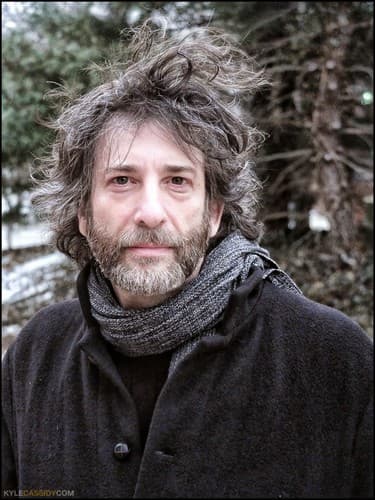
Neil Richard MacKinnon Gaiman is an English author of short fiction, novels, comic books, graphic novels, audio theatre, and a screenwriter. His works include the comic book series The Sandman and the novels Good Omens, Stardust, Anansi Boys, American Gods, Coraline, and The Graveyard Book. He has won numerous awards, including the Hugo, Nebula, and Bram Stoker awards, as well as the Newbery and Carnegie medals. He is the first author to win both the Newbery and the Carnegie medals for the same work, The Graveyard Book (2008). In 2013, The Ocean at the End of the Lane was voted Book of the Year in the British National Book Awards. It was later adapted into a critically acclaimed stage play at the Royal National Theatre in London.
Similar books
- American Gods
Neil Gaiman
4.1 (758k) average on GoodreadsFantasyExplores mythology and personified concepts within a modern setting, with a similar dark fantasy tone.
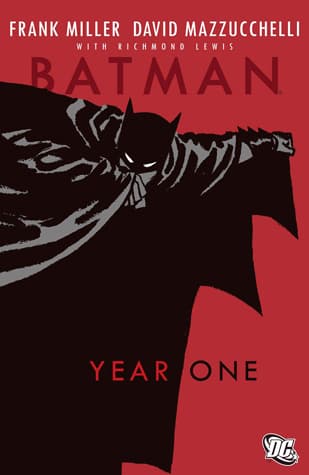
- Batman: Year One
Frank Miller
4.2 (206k) average on GoodreadsFantasyMiller's Year One is a masterclass in deconstructing a superhero origin within a gritty, realistic urban setting. Gaiman's Preludes & Nocturnes, in contrast, immediately plunges into a fantastical, cosmic realm, focusing on the literal embodiment of abstract concepts and the restoration of a mythological order, rather than the grounded origins of a vigilante.
- Harry Potter and the Sorcerer's Stone
J.K. Rowling
4.5 (7M) average on GoodreadsFantasyRescued from a miserable life under the stairs, an orphaned boy discovers he's a wizard destined for a magical school, where he uncovers a dangerous secret tied to the dark wizard who murdered his parents.
- The Hunger Games
Suzanne Collins
4.3 (6.4M) average on GoodreadsFantasyIn a future where children fight to the death on live television, Katniss Everdeen volunteers for the arena, turning a death sentence into a fight for survival and a spark of rebellion.
- 1984
George Orwell
4.2 (3.1M) average on GoodreadsPoliticsIn a future where surveillance and thought control are absolute, a man's search for truth clashes with the Party, showing that hope can be a form of rebellion.
- Divergent
Veronica Roth
4.2 (2.9M) average on GoodreadsFantasyIn a society divided by virtues, a sixteen-year-old's difference from the norm starts a rebellion that threatens her world.





Enjoyed the summary?
A summary gives you the shape of the book. The book itself has the detail, the examples and the voice.
Find Preludes & Nocturnes on AmazonAs an Amazon Associate, BookBrief earns from qualifying purchases. How we're funded