
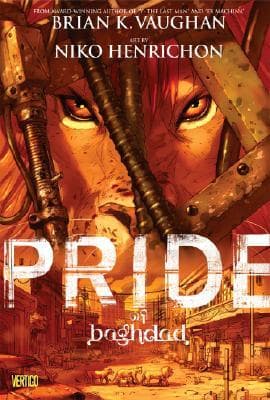
Synopsis
Covers the whole plot, including the ending.
- Difficulty
- Easy
- Pacing
- Moderate
- Mood
- Somber, Reflective, Tragic, Poignant
- Read it if
- You enjoy thought-provoking allegories about war, freedom, and the natural world, or are looking for a unique historical fiction told from an animal's perspective.
- Skip it if
- You prefer lighthearted stories, are sensitive to animal death, or dislike narratives that end ambiguously.
Pride of Baghdad Plot Summary
Covers the whole plot, including the ending.
The Escape and Initial Freedom
In spring 2003, during the American invasion of Iraq, four lions are in the Baghdad Zoo: Zill, the old male; Safa, his mate; Ali, their cub; and Noor, the young lioness. A bombing raid breaks their enclosure, letting them escape. Zill, born in captivity, is overwhelmed by the outside world. Safa, who remembers the wild, feels fear and excitement. Ali is curious and playful, while Noor is careful and practical. They move through the immediate chaos, seeing bombed buildings and hearing distant war sounds. Their first freedom is marked by confusion and a need for food.
First Encounters and Philosophical Differences
As the lions move through the city, they see various animals, some dead, some terrified. They find a turtle, which Noor quickly kills for food. Zill is uncomfortable, as he has never hunted. Safa tries to teach Ali about the city's dangers, warning him about humans and their weapons. The lions start to have different views: Zill wonders if their freedom is real or just a different cage. Safa accepts her wild instincts. Ali sees it as an adventure, and Noor focuses on survival and food. Their talk shows the book's main ideas about freedom.
The Gazelle and the Scavengers
Hungry, the lions successfully hunt a gazelle near a river. But their win is short-lived. A group of wild dogs, city survivors, immediately challenge them for the kill. The lions are large but less experienced at defending territory and hunting. Zill, at first unsure, has to assert himself, but the meeting is tense and almost leads to a fight. This incident shows their weakness and the hard learning they face in their 'free' state. It shows that leaving a cage does not automatically give them the skills to survive in a harsh environment.
A Moment of Peace and Human Presence
The lions find a temporary safe place in a bombed garden, a small green area among the destruction. Here, Ali finds an abandoned kitten and tries to befriend it, showing his innocent nature. The other lions are wary of the kitten, seeing it as a possible threat or prey. This brief peaceful moment is soon broken by nearby human prayer sounds and distant tank rumbling. The lions watch a small group of Iraqi civilians, including children, living their lives among the ruins. This reminds them that the human conflict is still active around them, and their freedom is connected to this larger war.
The Golden Lion of the Palace
The lions find a large, golden lion statue, likely from Saddam Hussein's time. Zill is at first impressed, thinking it is a powerful, old ancestor. Safa, however, quickly calls it an empty symbol, a 'false god' made by humans to show their power. She reminds Zill that real strength comes from inside and from nature, not from man-made idols. This meeting comments on authority, propaganda, and the superficiality of man-made symbols compared to the raw reality of nature.
Noor's Decision and the Orphaned Boy
Feeling held back by Zill's hesitation to hunt and his thoughts, Noor decides to hunt alone, prioritizing her survival. She finds an orphaned Iraqi boy, alone and crying in the rubble. She first thinks of him as prey but is struck by his weakness and their shared experience of loss. She leaves him unharmed, a moment of unexpected kindness. Meanwhile, Zill, Safa, and Ali continue their journey, seeing more human suffering around them, the destructive effects of war on civilians.
The Zoo Bear and the Philosophical Debate Intensifies
The remaining lions meet a traumatized bear from the zoo, hiding in the ruins, broken by his experiences. The bear tells of the bombings and his fear of the outside world, missing his comfortable cage. His despair sharply contrasts with Safa's acceptance of freedom. Zill tries to comfort him, but the bear's fear is absolute. This meeting increases the philosophical conflict within the pride: Safa insists that even harsh freedom is better than a gilded cage, while Zill struggles with the difficult realities of their liberation and the pain it brings.
The Human Soldiers and the Final Stand
As morning comes, the lions, tired and weak, are in an open area. A group of American soldiers on patrol sees them. The soldiers, surprised and fearing danger, open fire. Safa, driven to protect her cub, charges the soldiers, hoping to scare them. Zill, despite his earlier doubts, joins her, roaring. Ali, caught in the shooting, is terrified. The soldiers, seeing the lions as a direct threat, continue to shoot. This leads to a tragic and unavoidable fight.
The Death of the Pride
In the ensuing chaos, Zill, Safa, and Ali are all shot and killed by the American soldiers. The soldiers, relieved at first, express sadness about killing the animals. The scene is shown as tragically unavoidable, showing the unintended harm of war and nature's inability to survive human conflict. Their brief journey of freedom ends violently, raising a question about whether their freedom was worth the cost.
Noor's Fate and the Unanswered Question
The story returns to Noor, shown alone, having survived the night away from the pride. She is seen walking through the desolate area. Her future is unclear, but she is clearly alone. The story ends without saying what happens to her. Her survival, separate from the rest of the pride's tragic end, highlights the book's main, unanswered question: Was their escape and brief taste of freedom true liberation, or just a different, harsher confinement leading to death? Noor's uncertain future makes the reader think about freedom and survival in a war-torn world.
Pride of Baghdad Characters
Zill
Protagonist
The pride's patriarchal leader, grappling with the meaning of freedom after a life in captivity.
Zill is the oldest male lion and the patriarch of the pride. Having been born and raised entirely within the confines of the Baghdad Zoo, he is profoundly unequipped for the realities of the wild. He struggles with the concept of freedom, often viewing it as a terrifying, chaotic state rather than a liberating one. He is philosophical and hesitant to hunt, clinging to the safety and familiarity of his past. His internal conflict between responsibility to his pride and his fear of the unknown drives much of the narrative's exploration of what it means to be truly free.
Relationships: Safa (Mate and partner in leadership); Ali (Son, whom he tries to protect); Noor (Younger lioness, whom he struggles to understand)
Safa
Protagonist
Zill's mate, who remembers the wild and embraces their liberation with ferocity and pragmatism.
Safa is Zill's mate and a fierce, pragmatic lioness who remembers a time before captivity. Unlike Zill, she embraces their escape as a true liberation, driven by her primal instincts for survival and her desire to teach her son, Ali, the ways of the wild. She is often frustrated by Zill's philosophical musings and hesitations, believing that action and survival are paramount. Her strength and conviction provide a contrast to Zill's introspection, representing the raw, untamed spirit of freedom, even in the face of danger.
Relationships: Zill (Mate and philosophical foil); Ali (Son, whom she fiercely protects and tries to educate); Noor (Younger lioness, with whom she shares a pragmatic approach)
Ali
Protagonist
The innocent cub, who sees the outside world as an adventure, oblivious to its dangers.
Ali is Zill and Safa's young cub, full of innocent curiosity and playfulness. He perceives their escape from the zoo not as a terrifying liberation or a struggle for survival, but as a grand adventure. He is naive to the dangers of the war-torn city and the harsh realities of the wild, often distracted by small wonders or attempting to befriend other creatures, like the abandoned kitten. His innocence highlights the profound impact of war on even the most untouched beings and serves as a poignant symbol of lost youth.
Relationships: Zill (Father, whom he looks up to); Safa (Mother, his primary protector); Kitten (Brief, innocent companion)
Noor
Supporting
A young, independent lioness whose pragmatism and desire for self-preservation drive her actions.
Noor is a younger lioness in the pride, characterized by her pragmatism, independence, and strong survival instincts. She is less concerned with philosophical debates about freedom and more focused on the immediate need for food and safety. She is the first to hunt and kill in the wild, demonstrating a natural aptitude for survival that Zill lacks. Her decision to leave the pride to hunt alone underscores her self-reliance. Her ambiguous fate at the end of the story leaves a lingering question about the possibility of individual survival amidst chaos.
Relationships: Zill (Pride leader, whose hesitations she finds frustrating); Safa (Fellow lioness, with whom she shares a pragmatic outlook); Ali (Cub of the pride, whose innocence she observes)
The Orphaned Boy
Mentioned
A silent symbol of human suffering and vulnerability in the war-torn city.
The orphaned boy is a minor, silent character that Noor encounters after leaving the pride. He is depicted alone amidst the rubble, crying, a stark image of human vulnerability and the devastating impact of war on civilians, particularly children. His presence serves as a moment of unexpected empathy for Noor and highlights the shared experience of being lost and exposed in a world turned upside down. He is a silent witness to the human cost of the conflict, mirroring the lions' own displacement.
Relationships: Noor (Encountered by, but not directly interacting with)
The Zoo Bear
Supporting
A traumatized animal who yearns for the safety of his cage, embodying the fear of freedom.
The Zoo Bear is a traumatized survivor of the bombing, encountered by Zill, Safa, and Ali. Utterly broken by his experiences, he expresses a profound fear of the outside world and a longing for the perceived safety and comfort of his cage. He represents the antithesis of Safa's embrace of freedom, embodying the idea that for some, the unknown dangers of liberation are worse than the familiar confines of captivity. His despair deepens the philosophical debate within the pride about the true nature of freedom.
Relationships: Zill (Receives comfort from, but cannot be swayed by); Safa (Philosophical foil, whose views on freedom starkly contrast his own)
The Wild Dogs
Supporting
A pack of hardened scavengers representing the brutal reality of survival in the urban wild.
The wild dogs are a pack of feral canines that challenge the lions for their gazelle kill. They are depicted as lean, aggressive, and experienced survivors of the war-torn city, contrasting sharply with the zoo-bred lions' inexperience in hunting and defending territory. They represent the harsh, competitive reality of the 'wild' that the lions now inhabit, highlighting that freedom from a cage does not equate to mastery of a new, dangerous environment. Their encounter forces the lions to confront their vulnerability.
Relationships: The Pride (Competitors for food and territory)
American Soldiers
Antagonist
The ultimate arbiters of the lions' fate, representing the overwhelming force of human conflict.
The American soldiers are the human characters responsible for the tragic demise of Zill, Safa, and Ali. They are not depicted as inherently malicious but as figures operating within the chaos and fear of a warzone. Their actions are a tragic consequence of misunderstanding and the 'shoot first' mentality often necessitated by combat. They represent the overwhelming, impersonal force of human conflict that ultimately dictates the fate of the natural world caught in its crosshairs, serving as the tragic end point of the lions' journey.
Relationships: The Pride (Unwitting destroyers of)
Pride of Baghdad Themes
The Nature of Freedom and Captivity
This is the main theme, seen through the different views of the lions. Zill wonders if their escape is true freedom or just a trade for a harsher cage. Safa fully accepts the wild. The traumatized bear prefers his old cage, showing that 'freedom' can be scary. The book consistently asks if freedom is a state, a choice, or a burden, especially when it involves violence and responsibility. It questions the idea of 'given' freedom versus 'earned' self-determination.
“What good is freedom if we don't know what to do with it?”
The Collateral Damage of War
The story shows how the Iraq War affects animals as well as humans. The bombed zoo, lack of food, constant war sounds, and the lions' deaths by soldiers all show that war's destruction goes beyond its intended targets. The lions' fight to survive in ruined Baghdad acts as a strong symbol for innocent lives caught in human conflict, showing the universal suffering caused by violence.
“The humans are fighting their war, but we animals are the ones paying the price.”
Instinct vs. Intellect/Experience
The characters show this theme. Safa uses her basic instincts and old memories of the wild, while Zill, born in captivity, overthinks and struggles with basic survival skills. Ali is guided by innocent curiosity, and Noor by practical self-preservation. The lions' early struggles to hunt and move, compared to the experienced wild dogs, show that instinct and learned experience are key for survival. Captivity can dull these vital skills, making 'freedom' dangerous.
“You can't think your way through the wild, Zill. You have to feel it.”
The Illusion of Power and False Idols
This theme is directly addressed when the lions see the golden lion statue. Zill is impressed by its size, seeing it as a symbol of old strength. Safa, however, calls it an empty, man-made 'false god' made to show human authority and control. This comments on the superficiality of power symbols, especially those from oppressive governments, and contrasts them with the true, often brutal, power of nature and self-determination.
“That's not a lion, Zill. That's a human's idea of a lion. A false god.”
Survival and Adaptation
The lions' whole journey is a fight for survival. They must learn to hunt, find shelter, and move through a dangerous, unknown city. Their success varies: Noor quickly learns to hunt, Safa uses memory, while Zill struggles. The fight with the wild dogs shows their lack of adaptation. The theme questions if adaptation is possible for creatures so far from their natural state, and if the cost of adapting (losing innocence, facing violence) is too high.
“We're not in a cage anymore. We have to learn to hunt, or we die.”
Plot Devices & Literary Techniques
Anthropomorphism
Attributing human thoughts and speech to the animal characters.
The story uses anthropomorphism extensively, allowing the lions to speak, reason, and engage in philosophical debates about freedom, captivity, and their place in the world. This device enables the authors to explore complex human themes through the lens of animal experiences, making the abstract concepts of war and liberation more accessible and emotionally resonant. It allows the reader to empathize with the animals' plight and understand their differing perspectives on their newfound 'freedom' without losing sight of their animalistic instincts and behaviors.
Allegory
The lions' journey as a symbolic representation of the Iraqi people's experience of 'liberation'.
The entire narrative functions as an allegory for the 2003 invasion of Iraq and its aftermath. The lions' escape from the zoo symbolizes the 'liberation' of the Iraqi people from Saddam Hussein's regime. Their subsequent struggle, confusion, and ultimate demise at the hands of the 'liberators' (American soldiers) allegorically question the true meaning and cost of that liberation. The different lions represent various viewpoints within a population grappling with sudden, imposed freedom and the violence that often accompanies it.
Symbolism of the Golden Lion Statue
A physical object representing false power and human constructs.
The golden lion statue encountered by the pride serves as a potent symbol. It represents the artificial, often oppressive, power structures created by humans (like Saddam Hussein's regime). Zill's initial awe and Safa's dismissive reaction highlight the contrast between perceived, man-made power and the raw, natural power of the wild. It underscores the theme that true strength and freedom are not found in gilded idols or imposed authority, but in self-determination and the natural order, however harsh it may be.
Tragic Irony
The lions' 'freedom' leading directly to their violent deaths.
The narrative is steeped in tragic irony. The lions escape their cages, believing they are finally free, only for this freedom to expose them to greater dangers and ultimately lead to their deaths at the hands of the very forces that 'liberated' them. The irony lies in the fact that their 'liberation' was not a path to a better life but a direct route to their demise, questioning whether it was truly better to die free than to live in captivity, and highlighting the devastating, unintended consequences of intervention.
Framing Device (Based on a True Story)
Using a factual event as the foundation for a fictional narrative.
The graphic novel is explicitly framed as being 'based on a true story' – the real-life escape of lions from the Baghdad Zoo during the 2003 invasion. This framing device lends a layer of gravitas and realism to the fantastical elements of anthropomorphism. It grounds the allegorical narrative in a historical event, making the themes of war, liberation, and animal suffering more poignant and impactful for the reader, encouraging reflection on the real-world consequences beyond the fictionalized animal perspectives.
Pride of Baghdad Quotes
“The Americans are here. Can't you smell them?”
“Freedom. It's a funny thing. You spend your whole life dreaming of it, and then when you finally get it, you don't know what to do with it.”
“Humans. They build these elaborate cages, and then they wonder why we don't appreciate their 'gifts.'”
“We're not just animals, Zill. We're symbols. We're the pride of Baghdad.”
“What's the point of being free if you're just going to starve?”
“The world outside is a beautiful, terrible place.”
“Sometimes, the greatest cage is the one you build for yourself.”
“We were safe. We were fed. We were loved. And we hated every minute of it.”
“It's not about what they did to us, it's about what we do now.”
“This isn't freedom. This is chaos.”
“They say every animal has a purpose. What's ours?”
“The scent of fear is stronger than any perfume.”
“Some things are worth fighting for, even if you know you'll lose.”
“Home isn't a place. It's the ones you're with.”
Quiz
10 questions on the plot and the characters. Each answer comes with a short explanation.
Question 1
Which real-world event inspired Brian K. Vaughan to write 'Pride of Baghdad'?
- The bombing of the Baghdad National Museum
- The escape of a pride of lions from the Baghdad Zoo during an American bombing raid
- The looting of the Baghdad Zoo by civilians
- A specific incident of animal cruelty reported during the war
Show answer
B. The escape of a pride of lions from the Baghdad Zoo during an American bombing raid The graphic novel is explicitly based on the true story of a pride of lions that escaped from the Baghdad Zoo in 2003 amidst an American bombing raid, as stated in the book's description.
Question 2
Who are the four main lion characters that escape from the Baghdad Zoo?
- Noor, Zill, Safa, and Ali
- Sarif, Layla, Karim, and Omar
- Musa, Zara, Hakim, and Faris
- Rami, Aisha, Bilal, and Nadia
Show answer
A. Noor, Zill, Safa, and Ali The main characters of the pride are Noor (the mother), Zill (the father), Safa (the elderly blind lioness), and Ali (the cub).
Question 3
What is the primary philosophical question 'Pride of Baghdad' raises regarding the lions' escape?
- Whether animals can truly understand human conflict.
- The ethical implications of keeping wild animals in captivity.
- Can liberation be given, or is it earned only through self-determination and sacrifice, and is it better to die free than live in captivity?
- The immediate impact of war on urban animal populations.
Show answer
C. Can liberation be given, or is it earned only through self-determination and sacrifice, and is it better to die free than live in captivity? The book explicitly states it 'raises questions about the true meaning of liberation – can it be given or is it earned only through self-determination and sacrifice? And in the end, is it truly better to die free than to live life in captivity?'
Question 4
What is the initial reaction of the lions, particularly Zill, upon realizing they are free?
- Immediate fear and a desire to return to the zoo.
- Confusion and a sense of awe at the vastness of the outside world, mixed with hunger.
- Excitement and a clear plan to hunt and establish new territory.
- Anger towards their former captors and a desire for revenge.
Show answer
B. Confusion and a sense of awe at the vastness of the outside world, mixed with hunger. While there's a sense of freedom, the lions are initially disoriented and overwhelmed by the chaos of war-torn Baghdad, struggling to comprehend their new reality and the immediate need for food.
Question 5
Why does Safa, the blind lioness, initially resist the idea of freedom and express nostalgia for captivity?
- She fears the unknown dangers of the outside world more than the security of the zoo.
- She believes humans are inherently benevolent and will eventually rescue them.
- She had a special bond with a specific zookeeper she misses.
- She is too old and weak to survive in the wild.
Show answer
A. She fears the unknown dangers of the outside world more than the security of the zoo. Safa, having lived her entire life in captivity and being blind, finds the chaos and uncertainty of freedom terrifying. She remembers the zoo as a place of predictable food and safety, despite its limitations.
Question 6
What significant event occurs when the lions encounter a group of human looters?
- The looters offer the lions food, showing unexpected kindness.
- The lions successfully hunt and kill one of the looters, marking their first kill outside the zoo.
- The looters trap the lions, but they manage to escape.
- The lions are frightened by the humans and flee without interaction.
Show answer
B. The lions successfully hunt and kill one of the looters, marking their first kill outside the zoo. In a pivotal moment, the hungry lions encounter looters, and the pride, led by Zill, successfully hunts and kills one of them, signifying their transition to survival in the wild.
Question 7
What does the interaction between the lions and a stray housecat named Saffiya reveal about the human-animal dynamic in wartime Baghdad?
- That domestic animals are thriving in the chaos.
- That even small, domestic animals are struggling to survive and adapting to a new, dangerous reality, mirroring the human struggle.
- That the lions have a natural empathy for smaller creatures.
- That Saffiya is trying to lead the lions to a safe haven.
Show answer
B. That even small, domestic animals are struggling to survive and adapting to a new, dangerous reality, mirroring the human struggle. Saffiya represents the plight of all creatures, including humans, trying to survive in the war-torn city. She offers a cynical, yet pragmatic, perspective on survival, highlighting the shared struggle and loss of innocence.
Question 8
What is the ultimate fate of the pride of lions?
- They are eventually recaptured by zookeepers and returned to a rebuilt zoo.
- They successfully escape the city and find a new habitat in the wilderness.
- They are all killed by American soldiers, mistaken for a threat.
- They die of starvation and injuries sustained during the bombings.
Show answer
C. They are all killed by American soldiers, mistaken for a threat. Based on the true story, the lions are tragically killed by American soldiers, who perceive them as a dangerous threat in the chaotic environment of war-torn Baghdad. This ending underscores the themes of the cost of freedom and the collateral damage of war.
Question 9
How does the graphic novel format, with art by Niko Henrichon, enhance the storytelling of 'Pride of Baghdad'?
- It simplifies the complex political messages, making them more accessible to younger readers.
- It allows for a vivid, visceral depiction of the war's devastation, the animals' emotions, and the stark beauty amid the destruction that prose alone might struggle to convey.
- It provides a clear, documentary-style account of the true events, avoiding any metaphorical interpretations.
- It primarily focuses on action sequences, downplaying character development and thematic depth.
Show answer
B. It allows for a vivid, visceral depiction of the war's devastation, the animals' emotions, and the stark beauty amid the destruction that prose alone might struggle to convey. The description highlights that Vaughan and Henrichon 'have created a unique and heartbreaking window into the nature of life during wartime, illuminating this struggle as only the graphic novel can.' The visual medium is crucial for conveying the emotional depth, the destroyed landscape, and the animal perspectives.
Question 10
What is the primary internal conflict experienced by Noor, the mother lioness, throughout their journey?
- Her struggle to accept Zill's leadership and hunting decisions.
- Her debate with Safa about the merits of freedom versus security.
- Her desperate need to protect her cub, Ali, while grappling with the harsh realities of their new, dangerous freedom and the moral compromises it demands.
- Her longing to return to the zoo and the comfort of human care.
Show answer
C. Her desperate need to protect her cub, Ali, while grappling with the harsh realities of their new, dangerous freedom and the moral compromises it demands. Noor is constantly torn between protecting Ali and navigating the brutal demands of survival in the wild. Her maternal instincts are central to her character arc, often clashing with the harsh realities of their 'liberation.'
Pride of Baghdad FAQ
What is 'Pride of Baghdad' about?
'Pride of Baghdad' tells the story of a pride of four lions – Zill, Safa, Noor, and Ali – who escape from the Baghdad Zoo during an American bombing raid in 2003. Lost and disoriented in the war-torn city, they grapple with newfound freedom, hunger, and the harsh realities of survival outside their enclosures, while debating the true meaning of liberation.
Why should I read 'Pride of Baghdad'?
You should read 'Pride of Baghdad' for its powerful and unique perspective on the Iraq War, viewed through the eyes of animals. It's a thought-provoking graphic novel that explores profound themes of freedom, captivity, morality, and the impact of conflict on all living beings, presented with stunning art and compelling character dynamics.
What is the background/setting of 'Pride of Baghdad'?
The story is set in Baghdad, Iraq, during the initial stages of the 2003 American invasion. The city is under bombardment, and the zoo has been damaged, allowing the lions to escape into the devastated urban landscape, which is now a chaotic and dangerous environment for both humans and animals.
What are the most memorable quotes?
One memorable quote is Zill's declaration, 'Better to die free than live life in captivity,' which encapsulates the central theme. Another is Safa's cynical 'Freedom is just another word for nothing left to lose,' reflecting her jaded view after years of enclosure and the trauma of war.
What writing style does the author use?
Brian K. Vaughan employs a poignant and philosophical writing style, using the animals' dialogue to explore complex moral and political questions. The narrative is concise yet impactful, juxtaposing the animals' natural instincts with their anthropomorphized debates, complemented by Niko Henrichon's evocative and often brutal artwork.
What minor details add significant meaning?
The presence of other escaped animals, like the injured gazelle or the starving bear, serves as a stark reminder of the widespread devastation beyond just the lions. Additionally, the brief encounters with human soldiers and civilians highlight the indifference of war to individual suffering, whether animal or human.
What are some subtle foreshadowing moments?
Safa's repeated warnings about the dangers of the outside world and the inherent cruelty of humans subtly foreshadow the pride's ultimate tragic fate. Also, the debate among the lions about the true meaning of 'freedom' hints that their liberation might not lead to a happy ending, but rather a different form of struggle.
What unexpected character connections exist?
The most poignant unexpected connection is the bond between the young lion cub, Ali, and his mother, Noor, contrasted with the older lions, Zill and Safa. Ali's innocence and curiosity for the outside world highlight the stark differences in their experiences and perspectives on freedom and survival, creating a generational divide within the pride.
What are unspoken character motivations?
Zill, the male lion, is driven by an unspoken desire to prove himself as a capable leader and protector, perhaps compensating for years of perceived inadequacy in captivity. Safa, the old, blind lioness, is motivated by a deep-seated cynicism and a desire to spare the others from the harsh realities she believes are inevitable, stemming from her traumatic past.
What psychological complexities do characters exhibit?
Noor struggles with the psychological burden of protecting her cub, Ali, while simultaneously yearning for a freedom she never truly knew. Safa exhibits post-traumatic stress from her past and deep-seated nihilism, while Zill grapples with the weight of leadership and the moral dilemmas of killing for survival versus the pride's 'natural' order.
What are the major emotional turning points?
A major emotional turning point is when the pride first experiences true hunger and Zill is forced to hunt, confronting the brutal reality of their freedom. Another is when they encounter the starving bear, forcing them to confront the suffering of other creatures, and the tragic confrontation with human soldiers marks their ultimate emotional and physical climax.
How do relationship dynamics evolve?
The relationship between Zill and Safa evolves from initial antagonism, with Zill dismissing Safa's wisdom, to a grudging respect as they face shared dangers. Noor's bond with Ali intensifies as she becomes fiercely protective, while the entire pride's dynamic shifts from a captive unit to a struggling, sometimes fractured, family unit trying to navigate their perilous new world.
Which parts remain ambiguous or open-ended?
The ultimate fate of some of the other escaped animals remains ambiguous. More broadly, the graphic novel leaves the reader to ponder the deeper philosophical question of whether the lions' final moments, though tragic, constituted true liberation or merely a different form of suffering, without providing a definitive answer.
What are controversial scenes or decisions?
One controversial decision is Zill's insistence on hunting a specific animal for food, despite Safa's warnings, leading to a dangerous confrontation. The depiction of the lions' final encounter with human soldiers, and the ambiguity of the soldiers' motivations, can also be seen as controversial, prompting debate about blame and responsibility.
'Pride of Baghdad' ending explained: how it ends & what it means
The story ends with the pride being tragically killed by American soldiers, who mistake them for a threat in the darkness. This ending signifies the devastating reality that true liberation often comes with immense sacrifice, and that in the chaos of war, freedom can be fleeting and fatal. It leaves readers questioning whether their brief taste of freedom was worth the ultimate price.
About the author

Brian K. Vaughan is a critically acclaimed American comic book writer, celebrated for his work on the Eisner Award-winning "Saga," the Hugo Award-winning "Y: The Last Man," and the acclaimed "Pride of Baghdad." His writing is known for its ambitious storytelling, complex characters, and genre-bending narratives, earning him a significant reputation in the comic book industry.
Similar books
- Animal Farm
George Orwell
4.0 (2.7M) average on GoodreadsPoliticsExplores political themes and human nature through an animal allegory.
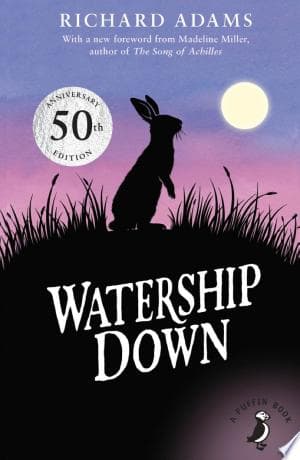
- Watership Down
Richard Adams
4.1 (434k) average on GoodreadsFantasyFollows a group of animals on a perilous journey, exploring themes of survival, freedom, and leadership.
- Harry Potter and the Sorcerer's Stone
J.K. Rowling
4.5 (7M) average on GoodreadsFantasyRescued from a miserable life under the stairs, an orphaned boy discovers he's a wizard destined for a magical school, where he uncovers a dangerous secret tied to the dark wizard who murdered his parents.
- The Hunger Games
Suzanne Collins
4.3 (6.4M) average on GoodreadsFantasyIn a future where children fight to the death on live television, Katniss Everdeen volunteers for the arena, turning a death sentence into a fight for survival and a spark of rebellion.
- 1984
George Orwell
4.2 (3.1M) average on GoodreadsPoliticsIn a future where surveillance and thought control are absolute, a man's search for truth clashes with the Party, showing that hope can be a form of rebellion.
- Divergent
Veronica Roth
4.2 (2.9M) average on GoodreadsFantasyIn a society divided by virtues, a sixteen-year-old's difference from the norm starts a rebellion that threatens her world.





Enjoyed the summary?
A summary gives you the shape of the book. The book itself has the detail, the examples and the voice.
Find Pride of Baghdad on AmazonAs an Amazon Associate, BookBrief earns from qualifying purchases. How we're funded