
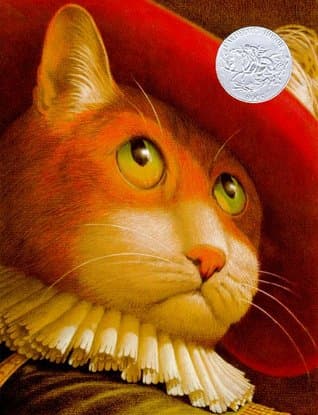
Synopsis
Covers the whole plot, including the ending.
- Difficulty
- Easy
- Pacing
- Fast
- Mood
- Whimsical, Clever, Amusing, Lighthearted
- Read it if
- You enjoy classic fairy tales with clever protagonists, themes of wit over wealth, and a touch of humorous deception.
- Skip it if
- You prefer morally unambiguous characters or stories where good fortune is earned through traditional hard work rather than trickery.
Puss in Boots Plot Summary
Covers the whole plot, including the ending.
The Miller's Inheritance
When a miller dies, his three sons divide his small estate. The oldest son gets the mill, the middle son gets the donkey, and the youngest, very upset, is left with only the cat. The youngest son complains about his situation, thinking he will starve after eating the cat and making a drum from its skin, while his brothers can live off their inheritances. The cat, though, hears his master's despair and, surprisingly, speaks, promising to make his master rich if given a bag and a pair of boots.
Puss's First Hunt and Royal Gift
The youngest son, curious and with nothing to lose, gives the cat the requested items: a bag and a pair of boots. Puss, now nicely dressed, goes to a rabbit warren, puts bran and sow-thistle in his bag, and lies down as if dead. A young, unaware rabbit falls for the trap and is caught. Puss then proudly takes the rabbit to the King's palace, presents it as a gift from his 'master, the Marquis of Carabas,' and earns the King's favor, repeating this act over several months with different game.
The King's Outing and the False Drowning
One day, Puss learns that the King and his beautiful daughter will be driving along the riverbank. Puss tells his master, the miller's son, to bathe in a certain spot in the river. As the royal carriage approaches, Puss hides his master's clothes and then shouts loudly that the Marquis of Carabas is drowning. The King, recognizing Puss from his gifts, orders his guards to save the 'Marquis.' Puss then says that thieves stole his master's clothes while he was bathing.
A New Wardrobe and Royal Introduction
The King feels bad for the supposed Marquis of Carabas and orders his best clothes from his own wardrobe for the miller's son. Dressed in the rich clothing, the miller's son looks noble and handsome. The King is impressed, and his daughter, the Princess, finds him agreeable. The King invites the 'Marquis' to join them in their carriage, and the miller's son accepts, enjoying the Princess's company.
Puss Prepares the Way: The Mowers
While the miller's son rides with the King, Puss runs ahead of the carriage. He sees some mowers working in a field and sternly warns them that if they do not tell the King the fields belong to the Marquis of Carabas, they will be cut into mincemeat. Scared, the mowers agree. When the King asks the mowers whose fields they are, they say they belong to 'my Lord Marquis of Carabas,' which increases the King's admiration for the 'Marquis's' wealth.
Puss Prepares the Way: The Reapers
Puss continues his run, arriving at another large field where reapers are harvesting grain. He uses the same method, threatening them with bad consequences if they do not say the land is the property of the Marquis of Carabas. The reapers, just as scared as the mowers, promise to obey. As the King's carriage passes, the King asks about the owner of these rich lands, and the reapers confirm, as instructed, that they belong to the Marquis of Carabas, further solidifying the King's belief in the 'Marquis's' great fortune.
Encounter with the Ogre
Finally, Puss arrives at a grand castle, which belongs to a powerful and rich Ogre. Puss learns about the Ogre's magic, specifically his power to change into any creature. Puss, always planning, decides this castle would be the perfect home for his master, the Marquis of Carabas. He plans to use the Ogre's own pride and powers against him to get the property before the King and his master arrive.
Puss Tricks the Ogre: Lion Form
Puss asks to see the Ogre, pretending to be curious about his famous transformation abilities. He politely asks the Ogre if it is true that he can change into any animal, no matter how big. The Ogre, flattered and wanting to show his power, immediately changes into a scary lion. Puss, pretending to be very scared, quickly climbs onto the roof, barely escaping the lion's jaws, but secretly happy that the Ogre has shown his ability.
Puss Tricks the Ogre: Mouse Form
After the Ogre changes back to his human form, Puss comes down from the roof and suggests that, while changing into a large animal is impressive, changing into a very small one would be an even greater, and perhaps harder, feat. He specifically challenges the Ogre to change into a mouse. The Ogre, proud and confident in his magic, instantly changes into a tiny mouse. Puss, quick and smart, pounces on the mouse and eats him, getting rid of the castle's true owner.
The Grand Arrival and Royal Marriage
Just as Puss finishes his meal, the King's carriage arrives at the castle. Puss rushes out to greet them, saying, 'Welcome, Your Majesty, to the castle of my Lord Marquis of Carabas!' The King, surprised by the castle's size, is sure of the Marquis's great wealth and power. Impressed by the 'Marquis's' lands, his apparent bravery, and the beauty of his 'castle,' the King offers his daughter's hand in marriage. The miller's son, now a true Marquis, accepts, and they marry. Puss becomes a great lord who only hunts for fun.
Puss in Boots Characters
Puss in Boots
Protagonist
The cunning, anthropomorphic cat who orchestrates his master's fortune.
Puss in Boots is the central figure, a highly intelligent and manipulative cat. He is characterized by his quick wit, strategic thinking, and ability to speak and reason like a human. His primary motivation is to elevate his master from poverty, not out of altruism but through a desire for a comfortable life for himself. He uses deception, intimidation, and flattery to achieve his goals, demonstrating an impressive capacity for planning and execution. He is proud, resourceful, and utterly fearless in the face of authority or danger, as shown in his interactions with the King and the Ogre.
Relationships: The Miller's Youngest Son (Master and servant (Puss manipulates him for mutual benefit)); The King (Deceived benefactor, recipient of gifts); The Ogre (Victim of Puss's cunning)
The Miller's Youngest Son (Marquis of Carabas)
Protagonist
The initially poor and despairing master of Puss, elevated to nobility.
The youngest son of the miller is initially presented as a figure of despair and low self-esteem, lamenting his meager inheritance of only a cat. He is passive and easily manipulated by Puss, following the cat's instructions without fully understanding the grand scheme. Despite his initial lack of ambition or cleverness, he is handsome and, once dressed in fine clothes and given a noble title, appears convincing enough to charm the Princess and the King. He benefits entirely from Puss's machinations, becoming a wealthy Marquis and marrying the Princess without having to exert much effort or wit himself.
Relationships: Puss in Boots (Master and servant (Puss serves him while orchestrating his life)); The King (Father-in-law (after marriage), deceived royal); The Princess (Wife (after marriage), romantic interest); His Brothers (Family members (implied to be better off initially))
The King
Supporting
The benevolent but easily impressed monarch who is fooled by Puss.
The King is portrayed as a kind and somewhat naive ruler, easily swayed by appearances and flattery. He is impressed by the 'gifts' from the supposed Marquis of Carabas and readily offers assistance when he believes the Marquis is in distress. His primary motivation is to find a suitable, wealthy husband for his beautiful daughter. He values wealth, noble appearance, and apparent generosity, making him an ideal target for Puss's elaborate deception. He is ultimately pleased with the match between his daughter and the 'Marquis,' believing he has secured a powerful and rich son-in-law.
Relationships: Puss in Boots (Recipient of gifts, deceived subject); The Miller's Youngest Son (Prospective son-in-law, later son-in-law); The Princess (Daughter)
The Princess
Supporting
The beautiful daughter of the King, who falls for the 'Marquis of Carabas.'
The Princess is depicted as beautiful and agreeable, a prize for any noble suitor. She is attracted to the miller's son when he is dressed in fine clothes and presented as the Marquis of Carabas. Her role is primarily to be the object of the 'Marquis's' affection and the ultimate reward for Puss's successful scheme. She represents the social elevation and romantic success that Puss aims to achieve for his master, and her acceptance of the 'Marquis' solidifies his newfound status.
Relationships: The Miller's Youngest Son (Romantic interest, later husband); The King (Father)
The Ogre
Antagonist
A powerful, wealthy, but vain and easily tricked magical being.
The Ogre is the owner of the magnificent castle and vast lands that Puss covets for his master. He is immensely powerful, possessing the ability to transform into any creature, but his greatest weakness is his overwhelming vanity and pride. He is easily manipulated by Puss's flattery and challenges, eager to demonstrate his magical prowess. His overconfidence and desire to show off his abilities lead directly to his downfall, making him a formidable but ultimately foolish adversary for the cunning Puss.
Relationships: Puss in Boots (Deceiver and victimizer)
The Miller
Mentioned
The deceased father whose will sets the plot in motion.
The Miller is mentioned only at the beginning of the story as the father who dies and leaves his meager estate to his three sons. His death and the subsequent inheritance distribution are the catalyst for the entire plot, as his youngest son's dire situation with only a cat prompts Puss to act. He represents the humble origins from which the 'Marquis' rises.
Relationships: The Miller's Youngest Son (Father); The Eldest Son (Son); The Middle Son (Son)
The Mowers and Reapers
Supporting
Farm laborers intimidated by Puss into lying about land ownership.
These are the groups of workers Puss encounters in the fields ahead of the King's carriage. They are common laborers, easily intimidated by Puss's threats of violence. Their role is to serve as unwitting accomplices in Puss's deception, confirming to the King that the vast lands belong to the 'Marquis of Carabas.' They highlight Puss's ruthless efficiency and ability to control situations through fear.
Relationships: Puss in Boots (Intimidator); The King (Deceived informant)
Puss in Boots Themes
Cunning and Deception as Tools for Advancement
The story of Puss in Boots shows that cleverness and planned deception can lead to great social and economic advancement. Puss, an animal, skillfully tricks every character and situation to help his master. He invents gifts for the King, plans a 'drowning,' frightens workers, and tricks the Ogre, using lies, disguise, and psychological games to reach his goals. This theme suggests that wit can be more powerful than inherited wealth or noble birth in finding success, questioning traditional social structures.
“You need not trouble yourself, Master, you have only to give me a bag, and have a pair of boots made for me, that I may go through the dirt and brambles, and you shall see that you are not so ill off as you imagine.”
The Power of Appearance and Illusion
This theme looks at how outward appearances and made-up identities can greatly affect how people are seen and their social standing. The miller's son, poor and ordinary at first, becomes a 'Marquis' just by wearing fine clothes from the King and following Puss's story. The King and Princess are completely fooled by the illusion of wealth, nobility, and power that Puss carefully builds. The story shows that in society, what one seems to be can be more important than what one truly is, pointing out how superficial judgments based only on looks can be.
“The King found him very handsome, and the King's daughter fell in love with him, for he was very agreeable.”
Social Mobility and Class Transformation
Puss in Boots is a story about big social change. The miller's youngest son, born into the lowest social class, becomes a wealthy Marquis who marries a Princess. This change is not earned through hard work, natural talent, or noble family, but entirely through his cat's bold plans. The theme questions fixed class structures, suggesting that with enough cunning and chance, even the most humble person can rise to the top of society, though through unusual and dishonest ways.
“The King, charmed with the good qualities of the Marquis of Carabas, and seeing the vast estates he possessed, said to him, after drinking five or six glasses, 'It will be your fault, my Lord, if you do not become my son-in-law.'”
Vanity as a Weakness
The Ogre's downfall shows how vanity can be a fatal flaw. Despite his great magic and wealth, the Ogre is so full of pride and a wish to show off his abilities that he falls for Puss's simple challenge. Puss uses the Ogre's vanity by first challenging him to become a large, impressive animal, then subtly suggesting that changing into something small would be an even greater feat. The Ogre's inability to resist proving himself, even in a small way, directly leads to his death, showing how pride can blind even the most powerful to danger.
“The Ogre, who was very proud of his power, changed himself immediately into a lion, and Puss was so frightened that he immediately climbed up to the gutters, not without great pain and difficulty.”
Plot Devices & Literary Techniques
Anthropomorphism
Giving human characteristics and abilities to an animal.
The most prominent plot device is the anthropomorphic nature of Puss in Boots. Puss is not merely a cat; he walks upright, wears clothes, speaks fluently, strategizes, manipulates, and plans elaborate schemes. This human-like intelligence and agency are essential to the plot, as it is Puss's unique abilities that drive the entire narrative and enable the miller's son's social ascent. Without Puss's human intellect, the story could not unfold.
Deus ex machina (in a meta sense)
An unexpected power that solves a seemingly unsolvable problem.
While not a traditional 'god from the machine,' Puss functions similarly for the miller's son. The son faces an unsolvable problem of poverty and social stagnation. Puss, a seemingly insignificant inheritance, unexpectedly appears with the intelligence and will to solve all his master's problems, almost magically transforming his fate. Puss's sudden offer to make his master's fortune and his subsequent successful execution of the plan serve as an improbable, yet convenient, resolution to the initial predicament.
Trickster Archetype
A character who uses cunning and deceit to outwit others.
Puss embodies the classic trickster archetype. He is a clever, mischievous figure who uses his intelligence and deceit to subvert established order and achieve his goals. He lies to the King, intimidates laborers, and outsmarts a powerful Ogre, all through cunning rather than brute force or honest means. His actions are morally ambiguous but lead to a positive outcome for his master, highlighting the trickster's role in challenging norms and creating new possibilities.
Foil
The Ogre serves as a contrasting character to Puss.
The Ogre acts as a foil to Puss. Both possess extraordinary abilities (Puss's cunning, the Ogre's magic), but their approaches and ultimate fates differ dramatically. The Ogre relies on raw power and vanity, making him predictable and vulnerable. Puss, in contrast, relies on wit, strategy, and understanding human (and ogre) psychology. The Ogre's physical strength and magical prowess are ultimately no match for Puss's intellectual superiority, emphasizing the story's theme that intelligence can triumph over brute force.
Puss in Boots Quotes
“My Lord Marquis of Carabas is drowning! Help!”
“Do not be afraid, master. Only give me a pair of boots and a bag, and you shall see that you are not so badly off as you imagine.”
“Good reapers, if you do not tell the king that this meadow belongs to the Marquis of Carabas, you shall be chopped as fine as mincemeat.”
“The Marquis of Carabas has been robbed of his clothes while bathing, and thieves have carried them off.”
“You have only to go and bathe in the river at the place I shall show you, and leave the rest to me.”
“This meadow belongs to my lord, the Marquis of Carabas.”
“Help! Help! The Marquis of Carabas is drowning!”
“If you will follow my advice your fortune is made.”
“The cat, who had gone on before, met with some countrymen who were mowing a meadow.”
“He ran to the palace of the king and said, 'My lord the Marquis of Carabas is coming.'”
“The king ordered the officers of his wardrobe to go and select one of his best suits for the Marquis of Carabas.”
“Puss in Boots became a great lord, and never again ran after mice, except for amusement.”
“The cat, who heard this, said to his master, 'Do as I tell you, and you shall be a rich man.'”
Quiz
10 questions on the plot and the characters. Each answer comes with a short explanation.
Question 1
What is the main reason the miller's youngest son initially feels hopeless about his inheritance?
- He inherits only a cat, while his brothers get the mill and donkey
- He inherits a broken mill that cannot function
- His father leaves him no inheritance at all
- He inherits the cat but it is old and sick
Show answer
A. He inherits only a cat, while his brothers get the mill and donkey In the story, the miller's three sons receive different inheritances: the eldest gets the mill, the second gets the donkey, and the youngest only gets the cat, making him initially despair about his prospects.
Question 2
What clever strategy does Puss use to make the miller's son appear wealthy to the king?
- He steals gold from the ogre's castle
- He has the son pretend to drown so the king will rescue him
- He presents gifts of game to the king in the son's name
- He spreads rumors in the kingdom about the son's fortune
Show answer
C. He presents gifts of game to the king in the son's name Puss catches rabbits and other game in the forest, then presents them to the king as gifts from his master, the 'Marquis of Carabas,' creating the impression that the miller's son is a generous nobleman.
Question 3
How does Puss ultimately defeat the ogre and claim his castle?
- He challenges the ogre to a duel and wins
- He tricks the ogre into transforming into a mouse and eats him
- He convinces the ogre to leave the castle peacefully
- He uses magic boots given to him by a fairy
Show answer
B. He tricks the ogre into transforming into a mouse and eats him Puss uses flattery to get the ogre to demonstrate his magical ability to transform into animals. When the ogre turns into a mouse, Puss pounces and eats him, eliminating the owner of the castle.
Question 4
What title does Puss invent for the miller's son when presenting him to the king?
- Duke of Normandy
- Count of Provence
- Marquis of Carabas
- Baron of Brittany
Show answer
C. Marquis of Carabas Puss creates the fictional noble title 'Marquis of Carabas' for the miller's son to elevate his social status and make him appear suitable for marrying the princess.
Question 5
Why does Puss instruct the miller's son to bathe in the river when the king's carriage approaches?
- To cool off on a hot day
- To create a scenario where his clothes are stolen, prompting the king to provide royal garments
- To hide from the ogre who is chasing them
- To wash off dirt from working in the mill
Show answer
B. To create a scenario where his clothes are stolen, prompting the king to provide royal garments This is part of Puss's elaborate plan. He hides the son's poor clothes, then tells the king they were stolen, leading the king to provide fine clothing that makes the son look like a nobleman.
Question 6
What key theme in 'Puss in Boots' is demonstrated by the cat's use of wit and deception to improve his master's social standing?
- The importance of honesty in all situations
- The value of cleverness and resourcefulness over inherited wealth
- The dangers of trusting animals with important tasks
- The superiority of magical powers to human effort
Show answer
B. The value of cleverness and resourcefulness over inherited wealth The story celebrates intelligence and cunning as tools for social mobility. Despite starting with only a cat, the miller's son rises to nobility through Puss's clever schemes rather than through inheritance or brute force.
Question 7
In Fred Marcellino's illustrated edition mentioned in the description, what aspect of his background contributes to the book's visual appeal?
- He was previously a famous children's book author
- He was renowned as a preeminent designer of book jackets in America
- He was a close friend of Charles Perrault
- He specialized in black-and-white sketches for classic tales
Show answer
B. He was renowned as a preeminent designer of book jackets in America The description notes that Marcellino was 'Long regarded as the preeminent designer of book jackets in America,' and his first full-color picture book for 'Puss in Boots' features lavish, sumptuous illustrations that enhance the classic tale.
Question 8
What specific transformation does the ogre perform first when Puss challenges him to show his magical powers?
- Into a roaring lion
- Into a tiny ant
- Into a flying eagle
- Into a fierce dragon
Show answer
A. Into a roaring lion When Puss expresses doubt about the ogre's abilities, the ogre first transforms into a lion to prove his power, before later turning into a mouse at Puss's suggestion.
Question 9
How does the story resolve the miller's son's relationship with the king's daughter?
- The son reveals his true identity and is banished from the kingdom
- The princess falls in love with Puss instead and marries him
- The son marries the princess and becomes the heir to the kingdom
- The king discovers the deception and arranges a marriage to a different noble
Show answer
C. The son marries the princess and becomes the heir to the kingdom Through Puss's schemes, the miller's son gains the ogre's castle and wealth, impresses the king, and ultimately marries the princess, securing a royal future without the deception being exposed.
Question 10
Considering the historical context of Perrault's tale, what social commentary might be inferred from Puss's successful elevation of a commoner to nobility?
- It criticizes the French aristocracy as easily fooled by simple tricks
- It suggests that intelligence and cunning can overcome rigid class barriers
- It advocates for animal rights and their role in human society
- It promotes the idea that magic is necessary for social advancement
Show answer
B. It suggests that intelligence and cunning can overcome rigid class barriers Written in 17th-century France with strict social hierarchies, the story can be read as a subversive fantasy where cleverness (represented by Puss) enables a poor miller's son to bypass traditional class constraints and achieve nobility through wit rather than birthright.
Puss in Boots FAQ
What is 'Puss in Boots' by Charles Perrault about?
The story follows a clever cat who uses trickery and wit to transform his poor master, the miller's youngest son, into a wealthy nobleman. Puss creates elaborate deceptions, including presenting gifts to the king and fabricating a false identity for his master as the 'Marquis of Carabas,' ultimately securing marriage to a princess.
Why should I read 'Puss in Boots'?
This classic French fairy tale offers timeless themes of cleverness overcoming poverty, with Puss's resourceful schemes providing both humor and moral lessons. Fred Marcellino's illustrated edition enhances the experience with lavish, expressive artwork that captures the story's grandeur and sly comedy.
What is the background/setting of 'Puss in Boots'?
Set in a fantastical version of 17th-century France, the story unfolds in rural areas and royal courts, reflecting the social hierarchies of the time. The miller's son starts with nothing but a cat, and through Puss's adventures, they navigate landscapes ranging from humble fields to opulent palaces.
What are the most memorable quotes from 'Puss in Boots'?
Key quotes include Puss's cunning lines like 'Do not worry, master, just give me a bag and a pair of boots,' showcasing his confidence. The phrase 'Marquis of Carabas' becomes iconic as Puss invents this noble title to elevate his master's status through deception.
What writing style does Charles Perrault use in 'Puss in Boots'?
Perrault employs a straightforward, narrative style typical of classic fairy tales, with clear moral undertones and episodic adventures. The translation in this edition preserves the authentic text, emphasizing Puss's witty dialogue and the story's playful yet instructive tone.
What minor details add significant meaning to 'Puss in Boots'?
The request for 'a bag and a pair of boots' is crucial, as these simple items symbolize Puss's transformation from an ordinary cat into a cunning agent of change. The cat's ability to speak and strategize highlights the fairy tale's blend of fantasy and social commentary on upward mobility.
What are some subtle foreshadowing moments in 'Puss in Boots'?
Early on, Puss's immediate plan-making after receiving the boots foreshadows his master's rise from poverty. His confident promises to the miller's son hint at the elaborate deceptions to come, such as the false identity and royal encounters that drive the plot.
What unexpected character connections exist in 'Puss in Boots'?
The connection between the miller's son and the king is entirely fabricated by Puss, who manipulates their meeting through gifts and lies. This artificial relationship underscores the theme of appearances versus reality, as the son gains favor without any genuine noble lineage.
What are unspoken character motivations in 'Puss in Boots'?
Puss's motivation extends beyond loyalty; he seeks to prove his worth and intelligence, using the miller's son as a vehicle for his own cleverness. The miller's son passively accepts Puss's schemes, driven by a desire for wealth and status without active effort.
What psychological complexities do characters exhibit in 'Puss in Boots'?
Puss displays manipulative intelligence, balancing trickery with charm to achieve his goals. The miller's son shows naivety and dependency, relying entirely on Puss, while the king's gullibility reflects the era's trust in appearances and social climbing.
What are the major emotional turning points in 'Puss in Boots'?
Key moments include the miller's son's initial despair upon inheriting only a cat, Puss's first successful deception with the king, and the climax where Puss outwits the ogre to secure the castle. These shifts build from hopelessness to triumph through cleverness.
How do relationship dynamics evolve in 'Puss in Boots'?
The dynamic starts with Puss as a mere pet but quickly shifts to him as the mastermind, with the miller's son becoming a passive beneficiary. Their partnership grows based on mutual gain, culminating in shared success as Puss's schemes elevate both their statuses.
Which parts of 'Puss in Boots' remain ambiguous or open-ended?
The story leaves ambiguous whether Puss's actions are purely altruistic or self-serving, and it doesn't explore the long-term consequences of the deception on the marriage. The ogre's defeat is swift, with little reflection on the morality of tricking him out of his property.
What are controversial scenes or decisions in 'Puss in Boots'?
Puss's deception of the king and theft of the ogre's castle through trickery raise ethical questions about justifying means for ends. Some interpretations critique the story for promoting dishonesty as a path to success, especially in a children's tale.
'Puss in Boots' ending explained: how it ends & what it means
The story ends with the miller's son marrying the princess and inheriting the ogre's castle, while Puss becomes a lord. This conclusion emphasizes themes of cleverness rewarding poverty, but it also invites debate on whether success through deception carries moral weight in fairy tale logic.
About the author
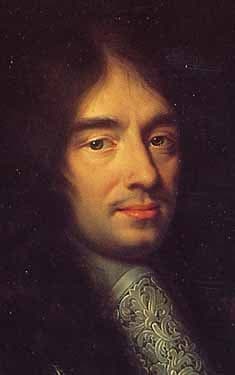
Charles Perrault was a 17th-century French writer and poet, best known for his collection of fairy tales, "Histoires ou contes du temps passé". This collection introduced classic stories like "Puss in Boots", "Cinderella", and "Sleeping Beauty" to a wider audience. Perrault's work established many of the narrative conventions still associated with these fairy tales today.
Similar books
- Harry Potter and the Sorcerer's Stone
J.K. Rowling
4.5 (7M) average on GoodreadsFantasyRescued from a miserable life under the stairs, an orphaned boy discovers he's a wizard destined for a magical school, where he uncovers a dangerous secret tied to the dark wizard who murdered his parents.
- The Hunger Games
Suzanne Collins
4.3 (6.4M) average on GoodreadsFantasyIn a future where children fight to the death on live television, Katniss Everdeen volunteers for the arena, turning a death sentence into a fight for survival and a spark of rebellion.
- 1984
George Orwell
4.2 (3.1M) average on GoodreadsPoliticsIn a future where surveillance and thought control are absolute, a man's search for truth clashes with the Party, showing that hope can be a form of rebellion.
- Divergent
Veronica Roth
4.2 (2.9M) average on GoodreadsFantasyIn a society divided by virtues, a sixteen-year-old's difference from the norm starts a rebellion that threatens her world.
- The Hobbit, or There and Back Again
J.R.R. Tolkien
4.3 (2.9M) average on GoodreadsFantasyA comfort-loving hobbit named Bilbo Baggins is whisked away by a mischievous wizard and a band of dwarves on an unexpected journey to reclaim stolen treasure from a fearsome dragon, discovering courage and a magical ring along the way.
- Animal Farm
George Orwell
4.0 (2.7M) average on GoodreadsPoliticsA farm animals' rebellion against humans turns into a pig-led dictatorship, showing how power corrupts and revolutionary ideals are betrayed.






Enjoyed the summary?
A summary gives you the shape of the book. The book itself has the detail, the examples and the voice.
Find Puss in Boots on AmazonAs an Amazon Associate, BookBrief earns from qualifying purchases. How we're funded