
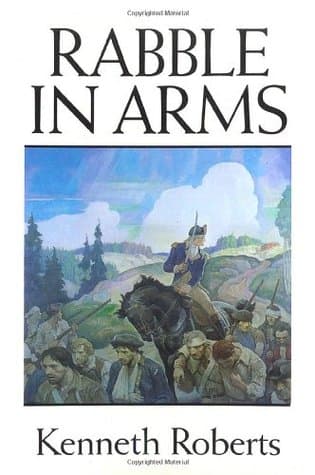
Synopsis
Covers the whole plot, including the ending.
- Difficulty
- Medium
- Pacing
- Moderate
- Mood
- Epic, immersive, historical, dramatic, reflective
Rabble in Arms Plot Summary
Covers the whole plot, including the ending.
The Road to Quebec
The story opens with Peter Merrill, a young man from Arundel, Maine, caught up in the American Revolution. He joins Benedict Arnold's expedition to Quebec, a difficult journey through the Maine wilderness. Peter is initially driven by patriotism and a desire for adventure, leaving his family and home behind. The early march is brutal, with starvation, disease, and constant threats of desertion. Peter quickly learns the harsh realities of war and leadership, seeing both the strength and weakness of his fellow soldiers. He bonds with Cap Huff, a seasoned frontiersman, and admires Arnold's determination despite the troops' hardships.
The Siege of Quebec
Upon reaching Quebec, the American forces, weakened and exhausted, try to besiege the fortified city. Peter Merrill takes part in the failed assault on December 31, 1775. The attack is a disaster; General Montgomery is killed, and Benedict Arnold is wounded. Peter sees firsthand the British defenses' effectiveness and the severe losses the Americans suffer. He faces the grim reality of combat and random death. Despite the defeat, the remaining Americans, led by Arnold, maintain a loose blockade of Quebec through the winter, enduring extreme cold, smallpox, and dwindling supplies. Peter experiences the demoralizing effect of long inactivity and the constant threat of British attacks.
Retreat from Canada
With British reinforcements arriving in the spring, the American position in Canada becomes impossible to hold. Peter Merrill participates in the long retreat from Quebec, a desperate withdrawal marked by disease, starvation, and constant harassment from pursuing British forces. He sees the complete collapse of the American invasion, as soldiers die from smallpox and dysentery, and morale plummets. The retreat shows a strong will to survive, with Peter and his comrades pushing through immense suffering. During this time, Peter's admiration for Arnold grows as he watches Arnold's relentless efforts to save his men and salvage what he can from the disastrous campaign, often against the incompetence and betrayal of other American officers.
Building a Fleet on Lake Champlain
After the retreat from Canada, the story moves to Lake Champlain, the waterway connecting Canada and the American colonies. Peter Merrill is involved in Benedict Arnold's effort to build a fleet of warships from scratch at Skenesborough (now Whitehall, New York) to counter the expected British invasion. This period shows Arnold's resourcefulness and leadership, as he turns raw timber into a fighting navy in months. Peter helps with the construction, learning about naval warfare and the strategic importance of controlling the lake. The urgency of the task is clear, as the Americans know that if the British control Lake Champlain, they will have a clear path to invade New York and potentially divide the colonies.
The Battle of Valcour Island
Peter Merrill participates in the Battle of Valcour Island, a naval engagement on Lake Champlain where Benedict Arnold's hastily built fleet confronts a stronger British force. Despite being outgunned and outnumbered, Arnold uses clever tactics to damage the British and, more importantly, delay their advance. Peter experiences the chaos and terror of naval combat, seeing the bravery of his comrades and the power of cannon fire. Though the American fleet is destroyed, Arnold's actions buy time for the Continental Army to prepare defenses farther south, stopping a British invasion down Lake Champlain in 1776. Peter survives the battle and the subsequent escape of the American remnants.
Fort Ticonderoga and the Northern Department
After the naval campaign, Peter Merrill is at Fort Ticonderoga, a key defensive position. The story then shifts to the deteriorating state of the Northern Department under General Philip Schuyler, and later, General Horatio Gates. Peter observes the political disputes, lack of supplies, and general disarray in the American forces. He witnesses the stunning fall of Fort Ticonderoga to General Burgoyne's advancing British army, a defeat that shocks the American colonies. Peter experiences the despair and confusion among the troops, who are ill-equipped and poorly led. His admiration for Arnold remains, as Arnold is often the most active and capable officer among the general incompetence.
The Road to Saratoga
Following Ticonderoga's fall, Peter Merrill is part of the retreating American army trying to slow Burgoyne's advance through upstate New York. He sees General Schuyler's strategic skill in hindering British progress by felling trees, destroying bridges, and creating obstacles. As American forces regroup and grow with militia arrivals, Peter senses a shift in morale. The story highlights the growing tension between General Gates and Benedict Arnold, with Arnold frustrated by Gates's caution and his lack of recognition. Peter observes Arnold's restless energy and his desire to fight the enemy, contrasting sharply with Gates's more passive approach.
The First Battle of Saratoga (Freeman's Farm)
Peter Merrill participates in the First Battle of Saratoga, specifically the engagement at Freeman's Farm. He fights under Benedict Arnold, who, despite being nominally under General Gates, takes initiative and leads a fierce attack against the British lines. Peter experiences the brutal, close-quarters fighting, seeing the bravery and determination of the American soldiers. Arnold's aggressive tactics inflict heavy casualties on the British and prevent them from breaking American defenses. However, General Gates, driven by jealousy and a desire for sole credit, fails to reinforce Arnold and later tries to diminish Arnold's role in the victory, leading to a major conflict between the two generals. Peter knows the injustice done to Arnold.
Arnold's Disgrace and the Second Battle of Saratoga (Bemis Heights)
After the First Battle, the conflict between Gates and Arnold grows, ending with Gates relieving Arnold of his command. Peter Merrill observes Arnold's frustration and humiliation. Despite being without an official command, during the Second Battle of Saratoga (Bemis Heights), Arnold, driven by patriotism and military skill, rides onto the battlefield and rallies the American troops at a critical moment. Peter witnesses Arnold's bravery as he leads a decisive charge against the Hessian redoubt, despite being severely wounded in the leg. This heroic act breaks the British lines and secures the American victory, forcing Burgoyne's surrender. Peter sees Arnold's uncredited, but undeniable, role in the triumph.
Aftermath and Reflection
Immediately after Burgoyne's surrender at Saratoga, Peter Merrill witnesses the elation and relief among the American troops. He reflects on his journey, from the march to Quebec to the decisive victory at Saratoga. The personal cost of the war, and the sacrifices of many individuals, weigh heavily on him. He observes the political maneuvering that deprives Arnold of his credit for the victory, foreshadowing Arnold's later tragic path. Peter, with Cap Huff, looks to the future, understanding that while a major victory has been achieved, the war for independence is far from over. He carries with him the lasting experiences of hardship, courage, and complex heroism.
Rabble in Arms Characters
Peter Merrill
Protagonist
A young, idealistic soldier who experiences the brutal realities of war.
Peter Merrill is a young man from Arundel, Maine, who enlists in the American cause, initially driven by idealism and a thirst for adventure. Throughout the novel, he serves as the primary perspective character, experiencing the hardships of Arnold's Quebec expedition, the siege of Quebec, the retreat from Canada, the naval battles on Lake Champlain, and the Saratoga campaign. He is observant, courageous, and develops a deep loyalty to Benedict Arnold, recognizing Arnold's brilliance and selflessness despite the political machinations against him. Peter matures significantly over the course of the war, losing some of his youthful innocence but gaining a profound understanding of leadership, sacrifice, and the true cost of liberty.
Relationships: Cap Huff (Mentor and close friend); Benedict Arnold (Admired commander and role model); Henry Merrill (Brother)
Benedict Arnold
Supporting (central figure)
A brilliant, courageous, and often unappreciated American general.
Benedict Arnold is portrayed as a military genius, possessing incredible courage, resourcefulness, and an unwavering commitment to the American cause. He is the driving force behind the Quebec expedition, the construction of the Lake Champlain fleet, and the decisive actions at Saratoga. Despite his brilliance, he is constantly undermined by political enemies, jealous rivals like Horatio Gates, and a lack of recognition from Congress. He is a man of action, often rash, but always dedicated to achieving victory. The novel highlights his immense contributions and the injustices he suffered, laying the groundwork for his later tragic turn, though the book ends before his treason.
Relationships: Peter Merrill (Admired commander); Cap Huff (Loyal subordinate); Horatio Gates (Bitter rival and antagonist); George Washington (Supportive superior (off-screen))
Cap Huff
Supporting
A pragmatic, experienced frontiersman and Peter's mentor.
Cap Huff is a grizzled, no-nonsense frontiersman and soldier who serves as Peter Merrill's mentor and constant companion throughout the campaigns. He is a pragmatic realist, often cynical about human nature and military politics, but fiercely loyal to his friends and to Benedict Arnold. Huff provides comic relief with his dry wit and colorful language, but also offers invaluable wisdom and practical skills for survival in the wilderness and on the battlefield. He is a seasoned veteran who understands the true nature of war and leadership, and his unwavering support for Arnold stands in stark contrast to the fickleness of others.
Relationships: Peter Merrill (Friend and mentee); Benedict Arnold (Loyal subordinate)
Henry Merrill
Supporting
Peter's younger brother, who also enlists in the cause.
Henry Merrill is Peter's younger brother, initially depicted as more naive and less experienced than Peter. He joins the army later, participating in some of the later campaigns. His presence serves to highlight Peter's own growth and maturity, as Peter takes on a protective and guiding role towards Henry. Henry represents the younger generation drawn into the war, learning its harsh lessons alongside his elder brother. His experiences reflect the broader impact of the conflict on ordinary families and the gradual hardening of innocence that war inevitably brings.
Relationships: Peter Merrill (Brother)
General Horatio Gates
Antagonist
An ambitious and jealous American general who undermines Arnold.
General Horatio Gates is portrayed as an ambitious, politically astute, but militarily less capable general. He is a primary antagonist to Benedict Arnold, driven by jealousy and a desire to claim sole credit for victories. Gates's character embodies the political infighting and incompetence that often plagued the Continental Army. His actions, particularly his attempts to sideline Arnold at Saratoga, highlight the theme of unrewarded merit and the destructive nature of ego in leadership. He is depicted as cautious to a fault, often preferring to avoid direct engagement, and takes credit for the hard-won successes of others.
Relationships: Benedict Arnold (Bitter rival and antagonist)
General Richard Montgomery
Supporting
The brave American general killed during the Quebec assault.
General Richard Montgomery is a courageous and respected American general who leads the other prong of the American invasion of Canada, eventually joining forces with Arnold outside Quebec. He is depicted as a capable and honorable officer who pushes his men to their limits in the desperate attempt to take Quebec. His death during the assault is a significant blow to the American cause and a moment of profound loss for Peter and his comrades. Montgomery's character represents the high cost of the war and the sacrifices made by dedicated leaders.
Relationships: Benedict Arnold (Co-commander)
General Philip Schuyler
Supporting
The maligned but strategically astute commander of the Northern Department.
General Philip Schuyler is presented as a capable and strategically insightful commander of the Northern Department, though often unfairly criticized and undermined by political rivals (including Gates). He is responsible for the crucial actions that delayed Burgoyne's advance after the fall of Ticonderoga, such as felling trees and destroying bridges. Schuyler's character highlights the difficulties faced by competent officers who must contend with both the enemy and political machinations within their own ranks. He is a steady, if sometimes unappreciated, hand in the defense of New York.
Relationships: Benedict Arnold (Subordinate commander); Horatio Gates (Political rival)
General John Burgoyne
Antagonist
The overconfident British general leading the Saratoga campaign.
General John Burgoyne is the British commander leading the invasion from Canada, aiming to split the American colonies. He is depicted as somewhat arrogant and overconfident, underestimating the resilience of the American forces and the difficulty of campaigning in the American wilderness. While a professional soldier, his adherence to traditional European warfare tactics ultimately proves ill-suited to the American landscape and the determined, unconventional tactics of the rebels. His eventual surrender at Saratoga is a turning point in the war, a direct result of his strategic miscalculations and Arnold's brilliance.
Relationships: Benedict Arnold (Opposing commander)
Rabble in Arms Themes
The True Nature of Heroism
The novel explores the idea that true heroism often goes unrewarded and unrecognized, contrasting it with the pursuit of glory and political ambition. Benedict Arnold embodies this theme, performing acts of bravery and strategic skill that are repeatedly undermined or credited to others. Peter Merrill, as an observer, learns that heroism is found in perseverance, self-sacrifice, and commitment to a cause, rather than in accolades or public recognition. The theme challenges romanticized notions of war, showing that the most impactful deeds are often done by those who simply do what is necessary, regardless of personal cost.
“For the first time I understood that the glory of battle was a thing of the past, and that the only glory was in keeping alive and doing your duty, however hard it was, and in spite of all the odds.”
The Cost of War
Roberts details the human cost of the American Revolution, both physical and psychological. The novel depicts the horrors of starvation, disease (especially smallpox), extreme cold, and the reality of combat. Characters suffer amputations, see comrades die, and endure long periods of despair and demoralization. The story shows that the fight for independence was not a glorious adventure but a struggle marked by suffering and sacrifice, affecting not only soldiers but also civilians through scarcity and displacement. This theme grounds the historical narrative in a human experience.
“We'd learned to live like animals, to sleep in the snow, to eat anything, to fight with anything, and to die without a whimper.”
Leadership and Incompetence
The novel portrays the contrast between effective and ineffective leadership during the Revolution. Benedict Arnold is a brilliant, decisive, and courageous commander, capable of inspiring his men and achieving the impossible. In contrast, figures like Horatio Gates represent the dangers of ambition, jealousy, and political maneuvering over military competence. The story demonstrates how armies' fates and campaigns' success often depended on their leaders' character and abilities. Poor leadership led to unnecessary suffering and defeat, while inspiring leadership could turn the tide against overwhelming odds. Peter Merrill's experiences highlight the soldier's view of these varied leaders.
“There were men who could lead, and men who could talk, and the talkers often got the credit for what the leaders did.”
Resilience and Perseverance
Despite the odds, setbacks, and suffering, the American soldiers in the novel show remarkable resilience and perseverance. From the march to Quebec to the retreat from Canada and the battles of Saratoga, the troops, though often dispirited, find the strength to continue fighting for their cause. This theme celebrates the human spirit and the power of collective will in adversity. It shows that the Revolution's ultimate victory was not just a result of strategic skill, but also the stubbornness and determination of ordinary men refusing to give up.
“It seemed impossible that men could suffer so much and still have the will to stand up and fight. But we did.”
Plot Devices & Literary Techniques
First-Person Narration (Peter Merrill)
Provides an intimate, ground-level perspective of the war.
The story is told through the eyes of Peter Merrill, a young soldier. This first-person perspective allows the reader to experience the war directly and intimately, from the grueling marches and the terror of battle to the daily struggles of hunger and disease. It provides a personal and emotional connection to the historical events, making the grand sweep of the Revolution relatable through the lens of one individual's experiences. Peter's observations and reflections also serve to highlight the character and actions of Benedict Arnold, fostering a deep understanding of Arnold's brilliance and the injustices he faced.
Historical Accuracy and Detail
Immersive historical detail grounds the fiction in reality.
Kenneth Roberts was renowned for his meticulous historical research, and this device is central to 'Rabble in Arms.' The novel incorporates extensive details about military tactics, daily life of soldiers, uniforms, weaponry, and the specific geographic and environmental challenges of the campaigns. This rich historical detail creates an immersive and authentic experience, making the reader feel transported to the late 18th century. It lends credibility to the narrative and reinforces the author's intent to portray the American Revolution with as much realism as possible, often correcting popular misconceptions.
Foreshadowing (Benedict Arnold's Treason)
Hints at Arnold's future betrayal through his current frustrations.
While the novel concludes before Benedict Arnold's infamous treason, it masterfully employs foreshadowing through Arnold's character arc and the injustices he endures. The repeated instances of his brilliance being unrewarded, his sacrifices unappreciated, and his authority undermined by jealous rivals like Gates, subtly hint at the psychological toll these experiences take on him. The reader is given a profound understanding of the frustration and resentment that could eventually lead such a dedicated patriot down a path of betrayal, making his later actions, though not depicted, more comprehensible within the narrative's context.
The Mentor Figure (Cap Huff)
Provides guidance, comic relief, and a grounded perspective.
Cap Huff serves as a classic mentor figure to the young protagonist, Peter Merrill. He is an experienced, pragmatic, and often cynical frontiersman who imparts practical wisdom, survival skills, and a dose of reality to Peter. Huff's colorful language and dry humor offer moments of comic relief amidst the grim realities of war. More importantly, he acts as a moral compass and a voice of reason, constantly highlighting the true nature of leadership and the often-unseen sacrifices of ordinary soldiers, reinforcing the themes of heroism and resilience through his unwavering loyalty and clear-sightedness.
Quiz
10 questions on the plot and the characters. Each answer comes with a short explanation.
Question 1
What is the primary historical setting of the novel 'Rabble in Arms'?
- The Civil War
- The American Revolution
- World War I
- The French and Indian War
Show answer
B. The American Revolution 'Rabble in Arms' is the second novel in Kenneth Roberts's series about the American Revolution.
Question 2
Who is the author of 'Rabble in Arms'?
- James Fenimore Cooper
- Walter Scott
- Kenneth Roberts
- Bernard Cornwell
Show answer
C. Kenneth Roberts The provided text explicitly states that 'Rabble in Arms' is by Kenneth Roberts.
Question 3
When was 'Rabble in Arms' published?
- 1901
- 1933
- 1945
- 1898
Show answer
B. 1933 The text mentions that the novel was hailed by critics 'upon its publication in 1933'.
Question 4
What literary genre does 'Rabble in Arms' belong to?
- Science Fiction
- Mystery
- Romance
- Historical Fiction
Show answer
D. Historical Fiction The provided description clearly labels the book as 'Historical Fiction'.
Question 5
Which of the following is NOT listed as a motivation for the characters in the novel?
- Love
- Ambition
- Fear
- Idealism
Show answer
C. Fear The text mentions 'Love, treachery, ambition, and idealism' as motivations. Fear is not listed.
Question 6
What was the critical reception of 'Rabble in Arms' upon its publication?
- It was largely ignored.
- It was criticized for historical inaccuracies.
- It was hailed as the greatest historical novel written about America.
- It was considered a minor work by the author.
Show answer
C. It was hailed as the greatest historical novel written about America. The text states, 'Rabble in Arms was hailed by one critic as the greatest historical novel written about America upon its publication in 1933.'
Question 7
The novel is described as renowned for the beauty and horror of its story, and also for its:
- Psychological depth
- Historical accuracy
- Humorous tone
- Fantastical elements
Show answer
B. Historical accuracy The text explicitly states the novel is renowned 'for its historical accuracy'.
Question 8
'Rabble in Arms' is described as the second of Roberts's epic novels concerning which major historical period?
- The War of 1812
- The Civil War
- The American Revolution
- The Colonial Era
Show answer
C. The American Revolution The text identifies it as 'the second of Roberts's epic novels of the American Revolution'.
Question 9
The description of 'Rabble in Arms' emphasizes a blend of powerful emotions. Which of the following is NOT explicitly mentioned as a character motivation?
- Betrayal
- Enlightenment
- Conviction
- Desire
Show answer
B. Enlightenment The text lists 'Love, treachery, ambition, and idealism'. 'Treachery' implies betrayal, 'ambition' implies desire, and 'idealism' implies conviction. 'Enlightenment' is not mentioned.
Question 10
Considering the novel's publication date and its critical acclaim, what can be inferred about its impact?
- It likely influenced subsequent historical fiction about the American Revolution.
- It was quickly forgotten due to its controversial themes.
- It was primarily read by academic historians rather than the general public.
- It failed to capture the public imagination despite positive reviews.
Show answer
A. It likely influenced subsequent historical fiction about the American Revolution. Being hailed as the 'greatest historical novel written about America' upon publication in 1933 suggests it had a significant impact and likely influenced later works in the genre.
Rabble in Arms FAQ
What is Rabble in Arms about?
Rabble in Arms is a historical fiction novel set during the American Revolution. It follows the experiences of an unforgettable cast of characters, exploring themes of love, treachery, ambition, and idealism against a backdrop of historical accuracy.
Who wrote Rabble in Arms?
Rabble in Arms was written by Kenneth Roberts. It is the second novel in his series about the American Revolution.
When was Rabble in Arms published?
Rabble in Arms was first published in 1933.
What makes Rabble in Arms historically accurate?
Kenneth Roberts was known for his meticulous research, and Rabble in Arms is renowned for its historical accuracy. The novel aims to portray the events and atmosphere of the American Revolution faithfully.
Is Rabble in Arms part of a series?
Yes, Rabble in Arms is the second novel in Kenneth Roberts's epic series chronicling the American Revolution.
What are the main themes in Rabble in Arms?
The novel delves into themes such as love, treachery, ambition, and idealism. These motivations drive the actions of the diverse characters within the narrative.
How was Rabble in Arms received upon publication?
Upon its publication in 1933, Rabble in Arms was highly acclaimed. One critic even hailed it as the greatest historical novel written about America.
Is Rabble in Arms similar to other historical fiction about the Revolution?
While there are many historical fiction novels about the American Revolution, Rabble in Arms stands out for its epic scope, character depth, and celebrated historical accuracy, making it a significant work in the genre.
What kind of characters can I expect in Rabble in Arms?
You can expect an unforgettable cast of characters whose actions are motivated by a complex mix of love, treachery, ambition, and idealism. Roberts brings these individuals to life within the tumultuous setting of the Revolution.
Does Rabble in Arms focus on battles or the personal lives of soldiers?
The novel is renowned for both the beauty and horror of its story, suggesting it covers a broad spectrum of experiences, likely including both the grand events of the war and the personal lives and motivations of the soldiers involved.
About the author

Kenneth Roberts was an American author known for his historical novels set in early American history. His notable work, "Rabble in Arms," explores the complexities of the American Revolution through the experiences of its characters. Roberts' fiction often reflects his interest in the historical events and figures of his time.
Similar books
- To Kill a Mockingbird
Harper Lee
4.3 (4.5M) average on GoodreadsHistorical FictionIn the 1930s Jim Crow South, Harper Lee writes about racial injustice, moral growth, and the quiet courage of a lawyer father, Atticus Finch, as seen through his young daughter's eyes.
- The Great Gatsby
F. Scott Fitzgerald
3.9 (3.8M) average on GoodreadsHistorical FictionIn the opulent Roaring Twenties, a mysterious millionaire's lavish parties hide his desperate, tragic pursuit of a lost love, exposing the emptiness within the American Dream.
- Pride and Prejudice
Jane Austen
4.3 (3M) average on GoodreadsHistorical FictionIn a society focused on status and money, Elizabeth Bennet navigates love and pride, challenging Mr. Darcy and social expectations to find true affection.
- Angels & Demons
Dan Brown
3.9 (2.7M) average on GoodreadsThrillerA Harvard symbologist races through Rome's ancient sites, deciphering cryptic clues to unmask the Illuminati and stop a vengeful plot to destroy the Vatican with a stolen antimatter weapon.
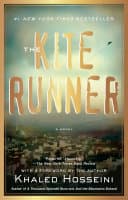
- The Kite Runner
Khaled Hosseini
4.3 (2.4M) average on GoodreadsHistorical FictionIn pre-Taliban Afghanistan, a wealthy boy's betrayal of his servant's son during a kite-running tournament starts a lifelong journey for amends as his country collapses.
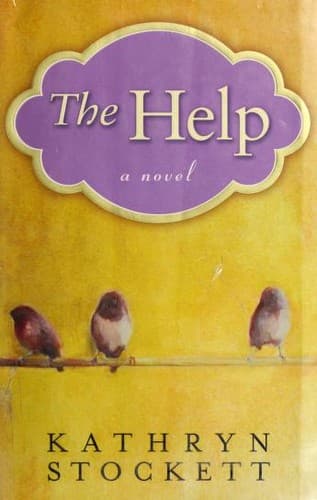
- The Help
Kathryn Stockett
4.5 (2.2M) average on GoodreadsHistorical FictionIn 1960s Mississippi, an aspiring writer and two Black maids risk everything to expose the harsh realities of their lives, defying societal norms with stories that start a quiet revolution.

Enjoyed the summary?
A summary gives you the shape of the book. The book itself has the detail, the examples and the voice.
Find Rabble in Arms on AmazonAs an Amazon Associate, BookBrief earns from qualifying purchases. How we're funded