

Synopsis
Covers the whole plot, including the ending.
- Difficulty
- Medium
- Pacing
- Fast
- Mood
- Gritty, Suspenseful, Desperate, Action-packed
- Read it if
- You enjoy classic zombie apocalypse stories with a focus on survival, military response, and human drama amidst societal collapse.
- Skip it if
- You are looking for a zombie story that deviates significantly from established tropes or prefer less intense, action-oriented narratives.
Rain Plot Summary
Covers the whole plot, including the ending.
The Return and the Outbreak
Dr. Aris Thorne, a microbiologist, returns to the United States from a research trip in the remote mountains of India, unknowingly carrying a deadly, airborne pathogen. Almost immediately, people around him show strange symptoms: fever, aggression, and an insatiable hunger. The virus, later called 'The Great Rain,' spreads quickly through major cities. Initial reports are dismissed as a new flu strain, but the growing violence and reanimation of the dead soon reveal the outbreak's true, horrifying nature. Society begins to fall apart as hospitals are overwhelmed and authorities struggle to contain the pandemic.
The Hike Interrupted
Alex Harley, a resourceful young man, is on a hiking trip in a remote national park with his three friends: Sarah, his girlfriend; Ben, a loud but loyal friend; and Chloe, Ben's artistic girlfriend. Their trip ends abruptly when all radio and cell signals die. Eventually, their portable radio picks up a garbled Emergency Broadcast System message, warning civilians to stay indoors due to a fast-spreading contagion and civil unrest. Cut off from civilization and information, the four friends realize the seriousness of the situation. They decide their best chance for survival is to head back towards more populated areas, despite the warnings.
First Encounters and Desperate Measures
As Alex and his friends descend from the mountains, they see the first signs of the apocalypse: abandoned cars, ransacked stores, and eventually, the infected. Their first encounters are brutal and shocking, forcing them to quickly adapt to a world where the dead walk. Ben, initially skeptical, is traumatized after a close call. They scavenge for food, water, and weapons, realizing their survival depends on their ability to fight and outsmart the zombie hordes. Alex, with his natural leadership and practical skills, begins to take charge, making difficult decisions for the group's safety.
The Military's Response and Survivor Camps
The United States military, under General Thorne (a distant relative of Dr. Aris Thorne), starts a drastic plan to fight the pandemic. Fortified 'Survivor Camps' are set up across the country to separate the uninfected from the infected. Broadcasts promise safety and resources within these camps, urging survivors to seek refuge. However, these camps are much grimmer than advertised, with strict martial law, scarce resources, and the constant threat of infection from within. The military's methods become increasingly authoritarian, blurring the lines between protection and oppression.
Journey to the City
Driven by low supplies and the hope of finding a more permanent safe place, Alex, Sarah, Ben, and Chloe decide to go to a nearby city, rumored to have a functioning military-run survivor camp. Their journey through the city is full of danger. They see the full extent of the collapse: burning buildings, deserted streets with bodies, and hordes of the infected. They learn to navigate the city's abandoned infrastructure, using rooftops and sewers to avoid direct confrontation. They also encounter other desperate survivors, some of whom are more dangerous than the zombies.
Arrival at Camp Hope
After a harrowing journey, Alex and his friends arrive at 'Camp Hope,' one of the military's designated survivor zones. They are initially relieved to find shelter, food, and medical attention. However, their relief is short-lived. They quickly discover that Camp Hope is run with an iron fist by General Thorne's forces. Soldiers, often power-crazed and paranoid, enforce strict rules, and any disagreement is met with harsh punishment. Resources are tightly controlled, and the promise of safety comes at the cost of personal freedom. The friends realize their fight for survival is far from over, and a new enemy has emerged: the authorities themselves.
The UN Intervention
News of the American military's controversial methods and the dire situation reaches the international community. A United Nations rescue and relief mission, led by seasoned humanitarian workers and peacekeepers, is sent to the United States. Their arrival at Camp Hope creates immediate tension with General Thorne's forces, who resent the perceived interference. The UN mission aims to evacuate uninfected civilians to international safe zones and provide humanitarian aid. This directly challenges the military's absolute control and offers a glimmer of hope to the camp's residents, including Alex and his friends.
Internal Conflict and Escape Plans
Within Camp Hope, Alex and his friends see the growing abuse of power by General Thorne's soldiers. They also learn of Dr. Aris Thorne's role in the virus's origin and the military's desperate attempts to find a cure, often through unethical means. Disillusioned and fearing for their lives, the group, along with a few trusted allies they've made in the camp, begins to plan an escape. Their goal is to reach the UN forces, who they believe offer a legitimate path to safety and freedom from both the infected and the tyrannical military.
The Final Stand at Camp Hope
Their escape plan begins during a chaotic mix of events. A massive horde of infected breaks Camp Hope's defenses, overwhelming the military. In the chaos, Alex and his group fight their way through both zombies and rogue soldiers. They confront General Thorne, who appears increasingly unstable, believing his extreme measures are the only way to save humanity. Chloe is gravely injured in the chaos. The UN forces, caught in the crossfire, struggle to maintain order and evacuate survivors, creating a desperate, multi-front battle for survival.
The Drastic Measure and a Glimmer of Hope
As the situation at Camp Hope becomes impossible, General Thorne, in a final act of desperation, starts 'Project Cleansing' – a plan to indiscriminately eliminate large areas of the infected, along with any remaining survivors, using a powerful, unrevealed weapon. Alex, Sarah, Ben, and the rest of their group, aided by the UN, manage to escape the camp just as the cleansing begins. Chloe, unfortunately, dies from her injuries. They are airlifted to a UN safe zone, leaving behind a world irrevocably changed but carrying the hope of rebuilding and a new understanding of human resilience.
Principal Figures
Alex Harley
Protagonist
A resourceful and pragmatic young man forced to lead his friends through the apocalypse.
Alex is initially a typical young adult enjoying a hiking trip, but the outbreak quickly forces him to mature. He possesses strong leadership qualities, a practical mind, and a deep sense of responsibility for his friends. He is not a natural fighter but learns quickly, prioritizing strategy and evasion over brute force. His moral compass remains relatively stable throughout the chaos, making difficult decisions but always striving to protect those he cares about.
Relationships: Sarah (Girlfriend, strong emotional bond and mutual support.); Ben (Close friend, often clashes with Ben's impulsiveness but values his loyalty.); Chloe (Friend, protective and sympathetic towards her artistic nature.)
Sarah
Supporting
Alex's girlfriend, providing emotional support and a grounding presence.
Sarah is Alex's girlfriend, and her primary role is to provide emotional anchor and support to Alex and the group. She is intelligent and compassionate, often the voice of reason when fear or anger threatens to overwhelm others. While not as physically dominant as Alex, she contributes through her observational skills and ability to maintain morale. She struggles with the harsh realities of the apocalypse but finds strength in her love for Alex and her desire to survive.
Relationships: Alex Harley (Boyfriend, deep romantic and supportive relationship.); Ben (Friend, often mediates between Ben and Alex.); Chloe (Close friend, shares a bond of mutual understanding.)
Ben
Supporting
A loudmouthed but loyal friend whose bravado often masks his fear.
Ben is Alex's boisterous and sometimes impulsive friend. He often acts as the comic relief, but his bravado hides a deep-seated fear and insecurity. He is fiercely loyal to his friends and willing to fight, though his methods can be reckless. Ben struggles with the psychological toll of the apocalypse, often reacting with anger or despair. His journey is one of confronting his own limitations and finding true courage beyond his bluster.
Relationships: Chloe (Girlfriend, deeply protective and loving.); Alex Harley (Close friend, competitive but ultimately loyal.); Sarah (Friend, generally good-natured teasing.)
Chloe
Supporting
Ben's artistic girlfriend, sensitive and often overwhelmed by the brutality of the new world.
Chloe is Ben's girlfriend, an artist by nature, and the most sensitive of the group. She struggles profoundly with the violence and despair of the apocalypse, often finding solace in small acts of beauty or memory. Her vulnerability makes her a target for the group's protective instincts, but she also possesses a quiet strength and resilience. She represents the loss of innocence and the toll the new world takes on the human spirit, ultimately making the ultimate sacrifice.
Relationships: Ben (Boyfriend, deeply loved and protected by him.); Alex Harley (Friend, looks to him for guidance and protection.); Sarah (Close friend, mutual support and understanding.)
Dr. Aris Thorne
Antagonist/Mentioned
The microbiologist who inadvertently unleashed 'The Great Rain' upon the world.
Dr. Aris Thorne is a brilliant but perhaps overly ambitious microbiologist. While not intentionally malicious, his research in remote India and his subsequent return to the Western world are the catalyst for the entire apocalypse. He represents the unintended consequences of scientific exploration and the fragility of global ecosystems. His actions, though stemming from a place of scientific curiosity, lead to unimaginable devastation. He is largely a background figure, the source of the plague, rather than an active antagonist.
Relationships: General Thorne (Distant relative; his work is later exploited by the military.)
General Thorne
Antagonist
The ruthless military leader who establishes oppressive 'Survivor Camps' and believes in extreme measures.
General Thorne is the stern and increasingly tyrannical military commander responsible for establishing and overseeing the 'Survivor Camps.' He believes that extreme measures, including martial law and the sacrifice of individual liberties, are necessary for humanity's survival. His methods become progressively more brutal and authoritarian, blurring the line between protecting the uninfected and oppressing them. He is driven by a desperate desire to eradicate the virus, even if it means becoming a monster himself. He represents the danger of unchecked power in a crisis.
Relationships: Dr. Aris Thorne (Distant relative; uses his research to justify his extreme actions.)
The Infected (Zombies)
Antagonist
The reanimated corpses of the dead, driven by an insatiable hunger for the living.
The Infected, commonly referred to as zombies, are the primary physical threat in the story. They are mindless, aggressive, and relentless, embodying the raw, primal fear of death and contagion. Their sheer numbers and the speed of the virus's spread make them an overwhelming force that swiftly collapses society. They are not characters in the traditional sense but rather a force of nature, a constant, existential threat that forces humanity to confront its own mortality and morality.
Themes & Insights
The Collapse of Civilization and the Breakdown of Order
The novel shows how societal structures quickly fall apart after the outbreak. From initial confusion and overwhelmed hospitals to authoritarian military camps and lawless urban areas, the story explores what happens when civilization breaks down. This theme appears in the abandoned cities Alex and his friends travel through, their desperate search for supplies, and the military's shift from protection to oppression at Camp Hope, showing how quickly order can turn into chaos and tyranny.
“The broadcasts had stopped, the signals had died, and in the silence, the world had begun to scream.”
Survival vs. Humanity
A main conflict of the story is the struggle to survive without losing one's humanity. Alex and his friends constantly face moral choices, from deciding whether to help strangers to confronting the brutal actions of other survivors and the military. General Thorne's turn to tyranny, believing extreme measures are necessary for survival, contrasts with Alex's attempts to protect his group while keeping their moral compass. The theme questions the cost of survival and what it means to be human in a monstrous world.
“We're not just fighting the dead anymore. We're fighting what the living are becoming.”
The Nature of Authority and Power
The novel looks at how authority figures respond to a global crisis and how unchecked power can corrupt. General Thorne's military, initially meant to protect survivors, quickly becomes an oppressive force within the 'Survivor Camps.' The arbitrary rules, harsh punishments, and the general's growing paranoia show the dangers of power concentrated in desperate times. The arrival of UN forces, challenging the military's absolute control, further explores the complexities of global governance and intervention during a catastrophe.
“They promised safety, but all they delivered was a different kind of prison.”
Loss and Resilience
Throughout the story, characters experience deep loss – of loved ones, of their past lives, and of hope itself. Chloe's death is a clear example of the personal cost of the apocalypse. However, the story also highlights human resilience. Alex, Sarah, and Ben, despite their grief and trauma, continue to fight, adapt, and find reasons to move forward. This theme shows humanity's ability to endure great suffering and find strength in connection, even amid overwhelming despair, suggesting that even when destruction is complete, the human spirit can last.
“Every day was a goodbye, but every sunrise was a reason to keep fighting.”
Plot Devices & Literary Techniques
The Emergency Broadcast System
A crucial, yet unreliable, source of information and a harbinger of doom.
The EBS serves as the initial, cryptic warning system for Alex and his friends, isolating them from the full scope of the disaster while simultaneously confirming their worst fears. Its intermittent and often garbled messages underscore the collapse of reliable communication and the government's struggle to control information. Later, it becomes a tool for the military to disseminate propaganda about 'Survivor Camps,' highlighting the manipulation of information in a crisis. Its eventual silence symbolizes the complete breakdown of official channels and the descent into anarchy.
The Survivor Camps
Ostensibly safe havens that become oppressive military-controlled prisons.
The Survivor Camps are a significant plot device, initially presented as a beacon of hope and safety for the uninfected. However, their true nature as heavily fortified, authoritarian zones under General Thorne's control quickly becomes apparent. They serve to highlight the theme of power and control, demonstrating how a supposed sanctuary can become a new form of captivity. The camps also act as a microcosm of the larger societal collapse, showcasing the internal conflicts, desperation, and moral compromises that arise when resources are scarce and freedom is restricted.
The Virus ('The Great Rain')
The catalyst for the apocalypse and a constant, evolving threat.
The virus, 'The Great Rain,' is not just a disease but the central inciting incident and driving force of the plot. Its rapid spread and horrifying symptoms (reanimation of the dead) create the apocalyptic setting. It serves as a constant external threat, forcing characters to make impossible choices. The mystery surrounding its origin (Dr. Aris Thorne's research) and the military's desperate attempts to find a cure add layers of scientific and ethical conflict, making the virus a multi-faceted plot device that propels both the action and the thematic exploration of the story.
The Remote Wilderness Setting
Initial isolation that delays awareness but offers a temporary reprieve.
The story begins with Alex and his friends isolated in a remote wilderness during their hiking trip. This setting serves as a device to initially shield them from the immediate chaos of the outbreak, delaying their awareness of the apocalypse. This delay allows for a build-up of tension as they slowly piece together what's happening. The wilderness also provides them with initial survival skills and a temporary, albeit false, sense of security, before they are forced to confront the full horror of the collapsed world, highlighting the contrast between nature's tranquility and humanity's destruction.
Rain Quotes
“The sky was not falling; it had already fallen, and we were just now learning to swim in the aftermath.”
“Hope is a strange currency in a world where the sun is a memory.”
“We built our cities on the promise of tomorrow, never realizing tomorrow might be a different kind of day entirely.”
“The silence wasn't empty; it was full of what we had lost.”
“Survival isn't about strength, it's about stubbornness. About refusing to let the world win.”
“Every drop of rain was a whisper of the past, a reminder of what once was and would never be again.”
“We traded the stars for a ceiling of perpetual cloud, and in doing so, found new constellations in each other's eyes.”
“The greatest lie we ever told ourselves was that we were in control.”
“Even in the eternal twilight, there were shadows that danced, and in those dances, we found a fleeting joy.”
“The archives were not just records; they were ghosts, whispering forgotten names and lost dreams.”
“You don't truly know what light is until you've lived without it for a generation.”
“The new world didn't ask for permission; it simply arrived, uninvited and undeniable.”
“We learned to measure time not by the sun's arc, but by the rhythm of the drops, each one a second in our new, unending day.”
“What is a monster, if not a reflection of our own fear, amplified by the unknown?”
Quiz
10 questions on the plot and the characters. Each answer comes with a short explanation.
Question 1
Which character is responsible for unknowingly bringing the deadly virus to the western world?
- Alex Harley
- One of Alex's hiking friends
- A doctor returning from the mountains of India
- A power-crazed soldier
Show answer
C. A doctor returning from the mountains of India The synopsis states that 'A doctor returning from the mountains of India unknowingly brings a deadly virus to the western world.'
Question 2
What activity were Alex Harley and his friends engaged in when the Emergency Broadcast began?
- Camping by a lake
- Hiking in an isolated area
- Driving home from a trip
- Watching television at home
Show answer
B. Hiking in an isolated area The text explicitly states, 'Alex Harley is hiking with three friends when all media channels shut down to be replaced with the Emergency Broadcast.'
Question 3
What is the primary purpose of the Survivor Camps set up by the military?
- To train civilians for combat against zombies
- To develop a cure for the virus
- To separate the infected from the uninfected
- To provide a safe haven for military personnel only
Show answer
C. To separate the infected from the uninfected The synopsis mentions, 'The military sets up Survivor Camps to separate the infected from the uninfected.'
Question 4
Besides the undead, what other significant threat do Alex and his friends face?
- Extreme weather conditions
- Lack of food and water
- Power-crazed soldiers
- Mutated animals
Show answer
C. Power-crazed soldiers The text states, 'Alex and his friends must deal with the undead and power-crazed soldiers.'
Question 5
What organization is putting a rescue mission into operation to save survivors from the zombies?
- The local police department
- The U.N.
- The national guard
- A private mercenary group
Show answer
B. The U.N. The synopsis specifies, 'As a U.N. rescue mission is put into operation to save survivors from the clutches of the zombies.'
Question 6
What is the initial reaction of the authorities to the widespread infection, as communicated through the Emergency Broadcast?
- Civilians are advised to evacuate immediately.
- Civilians are warned to stay in their homes.
- Civilians are instructed to report to designated safe zones.
- Civilians are asked to volunteer for medical testing.
Show answer
B. Civilians are warned to stay in their homes. The synopsis states, 'Civilians are warned to stay in their homes,' after the Emergency Broadcast.
Question 7
What drastic measures are the authorities considering to 'rid the world of monsters'?
- Developing a widespread vaccine for the virus.
- Deploying a new type of advanced weaponry.
- The specific measures are not detailed, only that 'authorities consider drastic measures'.
- Negotiating a truce with the uninfected.
Show answer
C. The specific measures are not detailed, only that 'authorities consider drastic measures'. The synopsis mentions, 'But while they fight to survive, the authorities consider drastic measures to rid the world of monsters...' without specifying what those measures are.
Question 8
What is the overarching theme suggested by the phrase 'The end of the world is here...' in the context of the story?
- The triumph of medical science over disease.
- The fragility of civilization and the struggle for survival.
- The exploration of new frontiers in a post-apocalyptic landscape.
- The rise of a new world order under military rule.
Show answer
B. The fragility of civilization and the struggle for survival. The phrase 'The end of the world is here...' coupled with 'Society crumbles...' strongly points to themes of societal collapse and the desperate fight for survival.
Question 9
Given the initial circumstances of Alex and his friends, what primary challenge arises from their isolation when the Emergency Broadcast begins?
- Difficulty finding suitable shelter in the wilderness.
- Lack of immediate information and resources, leading to fear and uncertainty.
- The sudden appearance of zombies in their remote location.
- Internal conflict and distrust among the group.
Show answer
B. Lack of immediate information and resources, leading to fear and uncertainty. The synopsis states, 'Isolated and afraid, the four friends begin a fight for survival,' implying that their isolation from communication channels (all media shut down) is a key challenge, leading to fear and lack of information.
Question 10
How does the introduction of 'power-crazed soldiers' complicate the central conflict of survival against the undead?
- They provide a new, unexpected ally against the zombies.
- They represent an additional, human threat, making survival more complex than just fighting zombies.
- They are a direct cause of the virus's spread.
- Their presence indicates the imminent arrival of a cure.
Show answer
B. They represent an additional, human threat, making survival more complex than just fighting zombies. The phrase 'power-crazed soldiers' suggests they are not benevolent forces, but rather an additional hostile element, turning the struggle into a multi-faceted fight against both the undead and corrupt human authority.
Rain FAQ
What is the primary catalyst for the apocalypse in 'Rain'?
The apocalypse in 'Rain' is triggered by a deadly virus, inadvertently brought to the Western world by a doctor returning from the mountains of India. This virus causes the dead to reanimate, transforming them into zombies and initiating the global collapse.
Who are the main protagonists at the beginning of the story?
The story initially follows Alex Harley and his three friends. They are introduced while hiking, experiencing the sudden onset of the apocalypse firsthand as media channels are replaced by the Emergency Broadcast, forcing them into an immediate fight for survival.
What immediate challenges do Alex and his friends face after the Emergency Broadcast?
Isolated in the wilderness, Alex and his friends are immediately confronted with the breakdown of society, the threat of the undead, and the lack of information. They must quickly adapt to a world without communication or authority, relying on their wits to survive the initial chaos.
How does the military respond to the zombie outbreak?
The military establishes Survivor Camps to segregate the uninfected from the infected, attempting to contain the spread and maintain order. A U.N. rescue mission is also launched to save survivors, but these efforts often bring their own set of dangers, including encountering power-crazed soldiers.
What 'drastic measures' are the authorities considering to end the outbreak?
While Alex and his friends battle for survival, the authorities behind the scenes are contemplating extreme actions to eradicate the zombie threat. These measures are hinted to be highly controversial and potentially devastating, suggesting a willingness to sacrifice many to save humanity.
Is there any significance to the doctor returning from India, or is it merely a plot device for the virus's origin?
The specific detail of the doctor returning from the mountains of India suggests a potential deeper lore regarding the virus's ancient or exotic origins. While initially a plot device for the outbreak, it could hint at cultural or environmental factors that made the region a unique breeding ground for such a pathogen.
Are there any clues early on about the nature of the 'power-crazed soldiers' encountered by Alex?
The mention of 'power-crazed soldiers' suggests that the breakdown of society extends beyond just the undead, indicating a rapid erosion of discipline and morality within the military. This foreshadows human antagonists who exploit the chaos, driven by fear or opportunism rather than duty, making them as dangerous as the zombies.
Does the book ever explain *why* the dead are rising, or is the virus's mechanism left ambiguous?
The synopsis focuses on the effects of the virus, causing the dead to rise, but it doesn't explicitly state whether the mechanism is deeply explored. It's possible the story prioritizes the survival narrative over a scientific explanation, leaving the 'why' of reanimation a terrifying, unexplained phenomenon.
How does Alex's initial isolation with friends impact their group dynamics as the apocalypse progresses?
Starting in isolation with friends likely strengthens their initial bond, but the prolonged stress and exposure to horrors will inevitably test it. The synopsis suggests they face not only zombies but also 'power-crazed soldiers,' implying their relationships will be pushed to the breaking point by external and internal pressures.
What psychological toll does witnessing society's collapse take on the survivors, particularly Alex?
Witnessing the complete breakdown of society, from media silence to military tyranny, would inflict severe psychological trauma. Alex and his friends would likely experience profound grief, paranoia, and a loss of trust in authority, forcing them to confront their own moral boundaries in a world without rules.
How do the 'drastic measures' considered by authorities reflect the psychological state of those in power?
The consideration of 'drastic measures' by the authorities reveals a desperate, utilitarian mindset, likely born from overwhelming fear and a perceived lack of alternatives. It suggests they are willing to sacrifice individual lives on a massive scale for the 'greater good,' highlighting the moral corruption that can occur under extreme pressure.
Is the 'Rain' in the title a literal meteorological event, or a metaphor for something else?
The title 'Rain' is likely a metaphor, possibly symbolizing the pervasive, inescapable nature of the virus and the ensuing chaos, washing over the world and bringing destruction. It could also hint at a cleansing, or a final, devastating event, tying into the 'drastic measures' considered by authorities.
Does the book lean more towards a traditional zombie narrative or explore unique aspects of the apocalypse?
While featuring traditional zombies and societal collapse, the inclusion of 'power-crazed soldiers' and hints of 'drastic measures' by authorities suggests a departure from pure zombie horror. It seems to delve into the darker aspects of human nature under duress, exploring the complexities of survival beyond just fighting the undead.
What philosophical questions might 'Rain' provoke regarding humanity's capacity for survival and morality?
'Rain' likely prompts questions about whether humanity truly deserves to survive when faced with its own capacity for cruelty, as evidenced by 'power-crazed soldiers' and 'drastic measures.' It forces readers to ponder the line between preserving life and sacrificing it, and what defines humanity in its darkest hour.
Could the 'U.N. rescue mission' be a red herring, or does it genuinely offer hope for the protagonists?
The U.N. rescue mission, while seemingly a beacon of hope, is juxtaposed with the threat of 'power-crazed soldiers,' suggesting it may not be a straightforward salvation. It could be a trap, a poorly executed operation, or simply another dangerous facet of the collapsing world, challenging the very notion of 'rescue.'
Are there any hints that the virus has a unique characteristic beyond reanimating the dead?
The synopsis focuses on the reanimation aspect, but the phrase 'rid the world of monsters' could imply the zombies possess more than just mindless aggression. Perhaps they evolve, exhibit a form of intelligence, or have an infectious quality that makes them particularly difficult to eliminate, elevating them beyond typical undead threats.
How might Alex's personal background or skills as a hiker contribute to his survival?
Alex's experience as a hiker suggests he possesses valuable survival skills, such as navigation, wilderness knowledge, and physical endurance, which would be crucial in a world without infrastructure. This background could give him and his friends an initial advantage in avoiding the immediate urban chaos and finding resources.
What message about governmental power and control might 'Rain' convey?
'Rain' appears to critique governmental power by showcasing its rapid disintegration and the potential for abuse even in crisis, as seen with 'power-crazed soldiers' and 'drastic measures.' It suggests that in the face of collapse, authority can become a greater threat than the initial disaster itself, highlighting the dangers of unchecked power.
Similar books
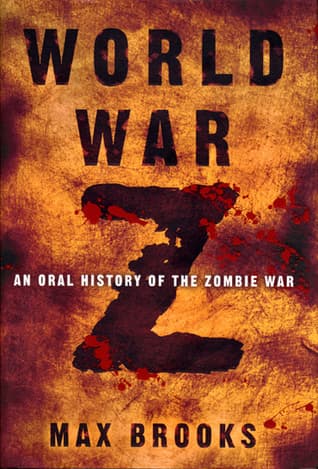
- World War Z: An Oral History of the Zombie War
Max Brooks
4.0 (440k) average on GoodreadsFantasyExplores global societal collapse and military response to a zombie pandemic.
- Patient Zero
Jonathan Maberry
4.0 (28k) average on GoodreadsThrillerFeatures a fast-paced zombie outbreak, military involvement, and a race against time.
- The Road
Cormac McCarthy
4.0 (716k) average on GoodreadsScience Fiction"Rain" is more action-oriented and plot-driven, focusing on societal collapse and external threats, whereas "The Road" offers a minimalist, deeply psychological exploration of a father-son bond amidst desolation, prioritizing existential dread and moral degradation.
- Station Eleven
Emily St. John Mandel
4.0 (322k) average on GoodreadsLiterary Fiction"Rain" is a more direct, event-driven narrative focused on immediate survival and crisis resolution. "Station Eleven" uses the apocalypse as a backdrop for a more contemplative, character-driven exploration of art, memory, and human connection across multiple timelines, offering a different kind of hope.
- The Hunger Games
Suzanne Collins
4.3 (6.4M) average on GoodreadsFantasyIn a future where children fight to the death on live television, Katniss Everdeen volunteers for the arena, turning a death sentence into a fight for survival and a spark of rebellion.
- 1984
George Orwell
4.2 (3.1M) average on GoodreadsPoliticsIn a future where surveillance and thought control are absolute, a man's search for truth clashes with the Party, showing that hope can be a form of rebellion.





Enjoyed the summary?
A summary gives you the shape of the book. The book itself has the detail, the examples and the voice.
Find Rain on AmazonAs an Amazon Associate, BookBrief earns from qualifying purchases. How we're funded