
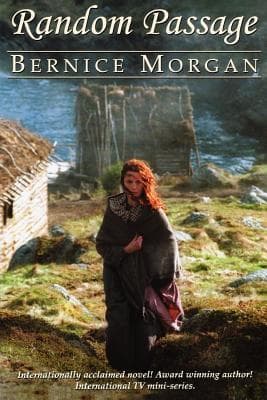
Synopsis
Covers the whole plot, including the ending.
- Difficulty
- Medium
- Pacing
- Moderate
- Mood
- Atmospheric, Resilient, Historical, Gripping
- Read it if
- You enjoy detailed historical sagas about pioneer life and the struggles of early settlers, with a focus on character-driven narratives.
- Skip it if
- You prefer fast-paced plots or lighthearted stories, as this book deals with significant hardship and a challenging environment.
Random Passage Plot Summary
Covers the whole plot, including the ending.
The Andrews Family's Flight to Newfoundland
In 1800, the Andrews family, consisting of parents Sarah and Ned, and their children Lavinia, Ned Jr., and Emma, are forced to leave their home in Dorset, England. Ned Sr. has been caught stealing a silver watch from a wealthy landowner, a crime that could have led to transportation or worse. To escape this fate and the social ruin it brings, they board a ship bound for Newfoundland, a distant and largely unsettled British colony. Seventeen-year-old Lavinia, accustomed to a relatively comfortable life, is devastated to leave behind everything she knows. The journey is long and arduous, marked by cramped conditions, poor food, and the uncertainty of their future. Upon arrival, they are met with a desolate landscape and the stark realities of pioneer life, a far cry from the fresh start they had envisioned.
Arrival in Cape Random and First Impressions
The Andrews family arrives in St. John's, Newfoundland, and from there takes another boat to the remote outport of Cape Random. The village is small, comprised of a few scattered houses and fishing stages, surrounded by dense forests and the unforgiving Atlantic. Lavinia is disappointed by the primitive conditions and the isolation. They are initially taken in by a distant relative, the Bundles, a family already established in the fishing trade. Mary Bundle, the matriarch, is a formidable and somewhat acquisitive woman, who quickly asserts her dominance. The Andrews must learn to adapt to a life of hard labor, scarce resources, and the constant struggle against nature, a stark contrast to their previous existence in England. Lavinia begins to keep a journal, documenting her observations and feelings about their new, harsh reality.
The Struggle for Survival and Community Dynamics
Life in Cape Random is a constant battle for survival. The men, including Ned Sr. and Ned Jr., immediately join the cod fishery, a dangerous and physically demanding occupation. Sarah Andrews and the girls, Lavinia and Emma, learn to manage a household with limited supplies, relying on ingenuity and the help of their neighbors. The community of Cape Random is small and interconnected, but also prone to gossip, feuds, and a rigid social hierarchy. Lavinia observes the various personalities, including the eccentric Ida and the enigmatic Thomas Hutchings, a man of uncertain origins who is both respected and feared. Her journal becomes a repository for these observations, capturing the daily struggles, small triumphs, and the complex relationships within the isolated settlement.
Lavinia's Journal and Growing Pains
Lavinia's journal becomes her most treasured possession and a vital outlet for her thoughts and emotions. Through its pages, she expresses her longing for England, her frustration with the primitive conditions, and her developing understanding of the people around her. As she matures, she begins to see beyond the initial hardships, observing the resilience and resourcefulness of the Cape Random residents. She documents the cycles of the fishing season, the births, deaths, and marriages, and the superstitions and traditions that govern their lives. Her writing also reflects her own personal growth, as she grapples with her identity, her family's past, and the prospects of her future in this remote land, slowly shedding her earlier naiveté.
Thomas Hutchings and the Mystery of His Past
Thomas Hutchings is a central and enigmatic figure in Cape Random. He is a skilled fisherman and a respected, if somewhat aloof, member of the community. However, his refined mannerisms, education, and occasional outbursts of cryptic knowledge suggest a past far more complex than that of a simple outport fisherman. Rumors circulate about his origins – some believe him to be an aristocrat, others a holy man, or even a murderer fleeing justice. Lavinia, through her observations and interactions, becomes increasingly fascinated by him. His presence adds a layer of intrigue and unease to the otherwise straightforward lives of the villagers, and he plays a significant, if often understated, role in the lives of several characters, particularly Lavinia and Ida.
Ida's Madness and the Community's Response
Ida, a resident of Cape Random, suffers from what is clearly a severe mental illness, manifesting in erratic behavior, periods of lucidity, and distress. In a time and place without understanding or treatment for such conditions, she is often misunderstood, feared, and sometimes cruelly treated. Some villagers believe her to be possessed or a witch, while others show her a grudging kindness. Lavinia's journal documents Ida's struggles, offering a poignant insight into the lack of resources and compassion for those with mental health issues in the isolated community. Ida's story is a stark reminder of the harsh realities and prevailing superstitions of early 19th-century Newfoundland, and the deep challenges faced by its inhabitants.
Love, Loss, and Family Dynamics
Life in Cape Random is not without its moments of joy and connection, even amidst the constant struggle. Lavinia experiences her first stirrings of romance and friendship, navigating the complexities of young love in a confined community. However, the harsh environment also brings its share of tragedies, including deaths from illness, accidents at sea, and the sheer unforgiving nature of the land. The Andrews family, despite their initial displacement and Ned Sr.'s past transgressions, grows closer, finding strength in their shared hardships. Sarah Andrews, in particular, displays immense resilience and resourcefulness, becoming the steadfast anchor of the family. These experiences of love and loss further shape Lavinia's perspective and are faithfully recorded in her journal.
The Passing of Generations and Enduring Legacies
As the story progresses, time passes, marked by the cyclical nature of the fishing season and the slow but steady growth of Cape Random. Children are born, grow up, and begin to form their own families, including Lavinia's siblings. The Andrews family, once strangers to this land, gradually becomes an integral part of the community, their lives intertwined with those of the Bundles, the Hutchings, and others. Lavinia continues to write, her journal evolving from a record of a displaced girl's lament to a comprehensive chronicle of an entire community's history. The initial hardships give way to a sense of belonging, albeit one forged through immense struggle and sacrifice. The legacy of their journey from England and their adaptation to Newfoundland begins to take shape.
Lavinia's Evolving Role and Perspective
Lavinia, once a reluctant exile, grows into a perceptive and resilient woman. Her journal, initially a private refuge, transforms into a valuable historical document, capturing not just her personal experiences but the collective memory of Cape Random. She records the changing seasons, the arrival of new settlers, the evolving customs, and the enduring spirit of the people. Her perspective deepens, moving beyond simple observation to a deeper understanding of human nature, the complexities of relationships, and the unbreakable bond between the people and the land. She becomes, in essence, the unofficial historian of her community, ensuring that the 'random passage' of these lives is not forgotten.
The Enduring Spirit of Cape Random
The novel concludes by emphasizing the enduring spirit of Cape Random and its inhabitants. Despite the unforgiving environment, the isolation, and the constant struggle for survival, the community persists. The lives documented in Lavinia's journal, with all their joys and sorrows, form a rich tapestry of human experience. The initial 'random passage' of the Andrews family and others has resulted in the establishment of a unique culture, defined by resilience, resourcefulness, and a deep connection to the sea and land. Lavinia's journal preserves these lives, ensuring their stories are kept for future generations, offering a raw and honest account of Newfoundland's pioneering past.
Random Passage Characters
Lavinia Andrews
Protagonist
The observant diarist who chronicles life in Cape Random.
Seventeen-year-old Lavinia is initially a sensitive and somewhat sheltered girl, forced to emigrate from England. She is an avid observer, finding solace and expression in her journal, which becomes the narrative backbone of the story. Intelligent and introspective, she struggles with the harsh realities of Newfoundland but gradually develops resilience and a deep understanding of human nature. Her initial longing for her old life evolves into a profound connection to her new home and its people.
Relationships: Ned Andrews Sr. (Her father, whose crime forces their exile.); Sarah Andrews (Her resilient and resourceful mother.); Ned Andrews Jr. (Her younger brother, who adapts to fishing life.); Emma Andrews (Her younger sister.); Thomas Hutchings (A mysterious figure who intrigues and influences her.); Mary Bundle (A formidable matriarch in the community whom Lavinia observes closely.)
Ned Andrews Sr.
Supporting
Lavinia's father, whose thievery leads to the family's exile.
Ned Sr. is a man whose impulsive act of theft in England uproots his entire family. He is somewhat charming but also prone to weakness and poor judgment. In Newfoundland, he struggles to adapt to the rigorous demands of fishing and the lack of social standing he once held. While he loves his family, his past actions cast a long shadow, and he often relies on the strength and resilience of his wife, Sarah, to navigate their new life.
Relationships: Sarah Andrews (His steadfast and long-suffering wife.); Lavinia Andrews (His eldest daughter, whom he loves but often disappoints.)
Sarah Andrews
Supporting
Lavinia's strong and resourceful mother, the family's anchor.
Sarah Andrews is the pragmatic and resilient matriarch of the Andrews family. Despite the shame and hardship brought on by her husband's actions, she faces their new life in Newfoundland with unwavering determination. She is resourceful, hardworking, and fiercely protective of her children, often being the practical force that keeps the family together. Her strength and adaptability are crucial for their survival in the harsh environment of Cape Random.
Relationships: Ned Andrews Sr. (Her husband, whom she supports despite his flaws.); Lavinia Andrews (Her daughter, whom she nurtures and guides.)
Mary Bundle
Supporting
The acquisitive and formidable matriarch of the Bundle family.
Mary Bundle is a strong-willed, opinionated, and highly acquisitive woman who is a prominent figure in Cape Random. She is a shrewd businesswoman within the fishing community, always looking out for her family's interests, sometimes to the detriment of others. She embodies the tough, resilient spirit required for survival in the outports, but also represents the more gossipy and judgmental aspects of a small, isolated community. She is a powerful force that the Andrews family must contend with upon their arrival.
Relationships: Lavinia Andrews (A figure of authority and observation for Lavinia.); Bundle family members (Matriarch of a large, interconnected family.)
Thomas Hutchings
Supporting
A mysterious and educated man with an uncertain past.
Thomas Hutchings is an enigmatic figure in Cape Random, whose refined speech, education, and occasional, unsettling pronouncements set him apart from the other fishermen. His past is shrouded in mystery, leading to various rumors about his origins – whether he is an aristocrat, a holy man, or someone fleeing a dark past. He is respected for his knowledge and skill but also viewed with a degree of suspicion and awe. He has a profound, if indirect, impact on Lavinia and others in the community.
Relationships: Lavinia Andrews (A source of fascination and intrigue for Lavinia.)
Ida
Supporting
A mentally ill woman who suffers due to lack of understanding.
Ida is a tragic figure in Cape Random, suffering from severe mental illness in a time and place where such conditions are neither understood nor treated. Her erratic behavior, periods of lucidity, and profound distress make her an object of both fear and pity within the community. Her story highlights the harsh realities of life in the outports and the limited compassion available for those who deviate from the norm, often being subjected to superstition and mistreatment.
Relationships: Community members (Often misunderstood, feared, and sometimes cared for by various villagers.)
Ned Andrews Jr.
Supporting
Lavinia's younger brother, who embraces the fishing life.
Ned Jr. is Lavinia's younger brother, who, unlike his sister, adapts more readily to the physical demands and culture of Cape Random. He quickly integrates into the fishing community, learning the trade and embracing the rugged lifestyle. He represents the generation that truly puts down roots in Newfoundland, finding his identity and purpose in the traditional ways of the outport.
Relationships: Lavinia Andrews (His sister, with whom he shares a bond but takes a different path.); Ned Andrews Sr. (His father, from whom he learns the fishing trade.)
Emma Andrews
Supporting
Lavinia's younger sister.
Emma is the youngest of the Andrews children. While her story is less central than Lavinia's or Ned Jr.'s, she represents the next generation growing up entirely within the Newfoundland context. She learns the domestic skills necessary for outport life and forms relationships within the community, embodying the family's eventual integration into their new home.
Relationships: Lavinia Andrews (Her older sister, who records her life.)
Random Passage Themes
Survival and Resilience
The novel powerfully illustrates the will to survive and the remarkable resilience of the human spirit in the face of extreme hardship. The Andrews family, along with the entire community of Cape Random, constantly battles against the unforgiving natural environment, scarcity of resources, and the isolation of their lives. Scenes of fishing in treacherous waters, making do with meager provisions, and enduring harsh winters exemplify this theme. Sarah Andrews, in particular, embodies resilience, consistently finding ways to keep her family fed and sheltered despite overwhelming odds.
“It was a hard life, but they were hardy people, and they made their own way.”
Displacement and Belonging
The theme of displacement is central, as the Andrews family is forcibly uprooted from their familiar English home and thrust into a starkly different world. Lavinia's initial entries in her journal are filled with longing for England and a deep sense of not belonging. Over time, however, the family, and especially Lavinia, gradually forge a new sense of belonging in Cape Random. This transition highlights the complex process of adapting to a new culture, finding identity in a new landscape, and the eventual creation of a home out of unfamiliarity. The journey from exile to rootedness is a core element of the narrative.
“We were exiles, but the sea, it seemed, was our only true home now.”
The Power of Storytelling and Memory
Lavinia's journal is the primary vehicle for this theme, emphasizing the importance of recording personal and communal history. Her detailed observations ensure that the lives and struggles of the Cape Random residents are not forgotten. The journal moves beyond simple facts, capturing the emotions, superstitions, and nuances of daily life that formal histories often omit. It highlights how individual stories contribute to a collective memory and shape an understanding of the past, preserving the 'random passages' of ordinary people for future generations.
“I write so that no one will forget what it was like, the truth and the lies of it all.”
Isolation and Community
Cape Random's extreme isolation shapes the lives of its inhabitants, creating both deep interdependence and intense social scrutiny. The community relies on each other for survival, sharing resources and labor, especially during crises. However, this isolation also breeds gossip, suspicion, and a rigid social structure, as seen in the community's response to Ida's illness or the rumors surrounding Thomas Hutchings. The novel explores the delicate balance between the necessity of communal bonds for survival and the stifling effects of living under constant observation in a small, closed-off world.
“In a place like Cape Random, everyone knew your business, and if they didn't, they made it up.”
Plot Devices & Literary Techniques
The Journal/Epistolary Format
Lavinia's journal provides an intimate, first-person account of events.
Lavinia's personal journal serves as the primary narrative device, structuring the entire novel as a series of dated entries. This epistolary format offers an intimate, subjective, and immediate perspective on the events, characters, and environment of Cape Random. It allows for direct access to Lavinia's thoughts, feelings, and evolving understanding, making her a reliable, if sometimes biased, narrator. The journal also functions as a historical document within the story, emphasizing the theme of memory and the importance of recording personal experiences to preserve a communal past.
Foreshadowing through Rumors and Superstitions
Local gossip and beliefs hint at future events or hidden truths.
The isolated community of Cape Random is rife with rumors, local legends, and superstitions, which often subtly foreshadow events or reveal deeper truths about characters. The mysterious past of Thomas Hutchings is constantly hinted at through whispers and speculative stories. Similarly, the community's beliefs about Ida's 'madness' reflect a lack of understanding that foreshadows her tragic fate. This device builds suspense, adds to the atmospheric realism of the outport culture, and provides insight into the values and fears of the inhabitants, often revealing more than direct exposition could.
The Harsh Landscape as a Character
The unforgiving Newfoundland environment actively shapes the characters and plot.
The rugged and unforgiving landscape of Newfoundland, particularly the sea and the wilderness surrounding Cape Random, acts as a powerful, almost sentient, character in the novel. It dictates the rhythm of life, demands immense resilience from the inhabitants, and constantly poses threats to their survival. The treacherous waters, the harsh winters, and the sheer isolation are not merely settings but active forces that test the characters' limits, forge their identities, and drive much of the plot's conflict. It symbolizes both the challenges and the unique beauty that shapes the lives of the Andrews family and their neighbors.
Random Passage Quotes
“The sea, she thought, was like a great beast, always hungry, always waiting.”
“There was no going back, only forward, into whatever lay ahead.”
“Poverty was a shroud that covered everything, even hope.”
“Life had a way of shrinking you, cutting you down to the size it wanted you to be.”
“The wind was a constant companion, a voice that never stopped whispering secrets of the land and sea.”
“They built their lives with their hands, and every mark was a testament to their struggle.”
“Memory was a strange thing, a patchwork quilt of what was and what might have been.”
“Love, she learned, was not always a gentle thing; sometimes it was fierce, demanding, and born of necessity.”
“The silence of the woods could be more terrifying than any storm.”
“Every generation had its own passage, its own journey into the unknown.”
“Hope was a stubborn thing, even when it had no right to be.”
“The past was not a country you could ever truly leave behind.”
“They were all castaways, in a way, washed up on the shores of a new life.”
“The smell of salt and pine, the taste of berries and fish, these were the flavors of her new world.”
Quiz
10 questions on the plot and the characters. Each answer comes with a short explanation.
Question 1
Why did the Andrews family originally flee England and book passage to Newfoundland?
- They were seeking better economic opportunities after a famine.
- Ned Andrews committed an act of thievery, forcing their exile.
- Lavinia was involved in a scandal and needed to escape.
- They were part of a religious group seeking freedom from persecution.
Show answer
B. Ned Andrews committed an act of thievery, forcing their exile. The book description explicitly states that charming Ned Andrews' thievery turned his family into exiles, forcing them to flee England.
Question 2
What is the primary way seventeen-year-old Lavinia copes with her new, desolate life in Newfoundland?
- She dedicates herself to farming the land.
- She finds solace in a new romantic relationship.
- She begins writing in a journal.
- She frequently attempts to return to England.
Show answer
C. She begins writing in a journal. The synopsis states that 'Driven by loneliness she begins a journal,' which becomes her way of recording the events and people around her.
Question 3
Which character is described as 'acquisitive' and focused on gaining possessions or wealth?
- Lavinia
- Ned Andrews
- Mary Bundle
- Thomas Hutchings
Show answer
C. Mary Bundle The description specifically names 'acquisitive Mary Bundle' as one of the key individuals in the saga.
Question 4
What is Lavinia's initial perception of Newfoundland upon her arrival?
- A land of vast opportunity and promise.
- A beautiful and welcoming natural paradise.
- A barren, inhospitable land, a fate worse than what they left.
- A challenging but ultimately rewarding environment.
Show answer
C. A barren, inhospitable land, a fate worse than what they left. The text states, 'To seventeen-year-old Lavinia, uprooted from everything familiar, it seems a fate worse than the one they left behind' when describing the 'barren, inhospitable land.'
Question 5
What is the significance of Lavinia's journal within the narrative of 'Random Passage'?
- It serves as a private record that is never shared or discovered.
- It is the source of 'the truth and lies' about the people and events.
- It is primarily a collection of poems and fictional stories.
- It is lost early in the story, causing her great distress.
Show answer
B. It is the source of 'the truth and lies' about the people and events. The description highlights Lavinia '—who wrote down the truth and lies about them all' in her journal, indicating its crucial role in providing the narrative's perspective.
Question 6
Which of the following describes the ambiguous nature of the character Thomas Hutchings?
- He is clearly identified as a wealthy merchant from St. John's.
- He is definitively known to be a former military officer.
- He might be an aristocrat, a holy man, or a murderer.
- He is a simple, straightforward fisherman with no hidden past.
Show answer
C. He might be an aristocrat, a holy man, or a murderer. The synopsis directly states that Thomas Hutchings is a character 'who might be an aristocrat, a holy man, or a murderer,' emphasizing his mysterious and multifaceted identity.
Question 7
The novel 'Random Passage' aims to provide what kind of details about Newfoundland ancestors that history books often miss?
- Economic statistics and trade routes.
- The real story of their daily lives and personal experiences.
- Architectural blueprints of early settlements.
- Detailed maps of land ownership.
Show answer
B. The real story of their daily lives and personal experiences. The text states 'Random Passage satisfies the craving for those details that headstones and history books can never give: the real story of our Newfoundland ancestors.'
Question 8
What does the title 'Random Passage' most directly imply about the journey and settlement of the characters?
- Their journey was meticulously planned and executed.
- Their arrival in Newfoundland was largely accidental or unplanned by fate.
- They frequently moved between different settlements in Newfoundland.
- The passage refers to a specific, well-known shipping route.
Show answer
B. Their arrival in Newfoundland was largely accidental or unplanned by fate. The phrase 'Random Passage' suggests an unplanned or fated journey. The description also mentions 'how time and chance brought them to the forbidding shores,' reinforcing the idea of randomness rather than precise planning.
Question 9
How does the book portray the initial experience of the Andrews family in Newfoundland, contrasting it with their expectations or previous life?
- It was immediately a land of great opportunity, fulfilling their hopes.
- It was a difficult but quickly overcome challenge, leading to prosperity.
- It was a barren, inhospitable land, a 'fate worse than the one they left behind'.
- It was largely similar to their life in England, just with different scenery.
Show answer
C. It was a barren, inhospitable land, a 'fate worse than the one they left behind'. The text explicitly states the family discovered 'a barren, inhospitable land at the end of their crossing' and that for Lavinia, it seemed 'a fate worse than the one they left behind,' highlighting the stark contrast with any hopes they might have had.
Question 10
The character of 'mad Ida' is mentioned alongside other key figures. What does her inclusion suggest about the community or themes of the novel?
- It implies a focus on the treatment of mental illness in early medical practices.
- It suggests the presence of diverse, possibly marginalized, individuals within the community.
- It indicates a specific subplot involving a supernatural element.
- It is a metaphor for the untamed wilderness of Newfoundland.
Show answer
B. It suggests the presence of diverse, possibly marginalized, individuals within the community. Including 'mad Ida' among the 'families and of individuals' suggests that the community is not homogenous and embraces or contends with diverse characters, including those who might be considered outsiders or marginalized, adding to the realism of the historical setting.
Random Passage FAQ
What is the central premise of 'Random Passage' and who are the main characters?
'Random Passage' follows the Andrews family, exiled from England due to Ned Andrews' thievery, as they attempt to start anew in thefoundland. The narrative is primarily framed through the journal entries of seventeen-year-old Lavinia Andrews, who documents the harsh realities of their new life and the lives of those around them, including her family and other settlers.
What prompts the Andrews family's move from England to Newfoundland?
The Andrews family is forced to flee England because of Ned Andrews' criminal activities, specifically his thievery. This act of desperation leads them to seek passage to a distant land, hoping to escape the consequences and forge a new, albeit challenging, existence away from their past.
How does Lavinia Andrews' journal contribute to the story?
Lavinia's journal serves as the primary narrative device, offering an intimate and often unfiltered account of the settlers' struggles, relationships, and the unforgiving Newfoundland environment. It captures both the 'truth and lies' about the characters, providing a personal perspective that official records would omit and allowing readers insight into the community's inner workings.
Who is Mary Bundle and what is her role in the community?
Mary Bundle is a prominent character known for her acquisitive nature and strong will. She is a resourceful and often formidable woman who plays a significant role in the community's economic and social dynamics, frequently clashing with others but also proving essential for survival in the harsh environment.
What is the significance of Thomas Hutchings' mysterious background?
Thomas Hutchings is an enigmatic figure whose past is shrouded in mystery, with speculation that he might be an aristocrat, a holy man, or even a murderer. This ambiguity adds intrigue to the narrative and raises questions about his true identity and intentions, influencing how other characters perceive and interact with him.
Are there any subtle clues about Thomas Hutchings' true identity embedded in the early chapters?
Yes, there are subtle hints, often through his educated speech, refined manners, and occasional allusions to a life of privilege or a darker past, that suggest Thomas Hutchings is more than he appears. These details, noted by Lavinia and other observant characters, fuel speculation about whether he is a disgraced aristocrat, a former clergyman, or someone with a violent history.
How does the 'madness' of Ida foreshadow or reflect the harshness of the environment?
Ida's descent into 'madness' can be seen as a direct reflection and a tragic consequence of the isolation, extreme hardship, and psychological toll exacted by the Newfoundland wilderness. Her mental state underscores the fragility of human resilience against such an unforgiving backdrop, highlighting the environment's capacity to break even the strongest spirits.
Are there any specific objects or heirlooms that carry symbolic weight throughout the story?
While not explicitly detailed, certain personal effects or small comforts that the settlers manage to bring from England, or objects they craft, often carry significant symbolic weight. These items represent a connection to their past, a sense of identity, or a desperate hope for a better future, contrasting sharply with the barrenness of their new surroundings.
How does Lavinia's perspective evolve throughout her journal, and what causes these shifts?
Lavinia's perspective evolves from initial despair and homesickness to a more nuanced, resilient, and sometimes cynical understanding of her new reality and the people around her. These shifts are driven by her direct experiences with hardship, loss, and the complex relationships within the community, forcing her to mature rapidly and confront harsh truths.
Analyze Ned Andrews' character arc. Does he find redemption or remain a flawed figure?
Ned Andrews remains a deeply flawed figure throughout the narrative, struggling with his past actions and their consequences. While he attempts to adapt to the new environment, his inherent weaknesses and past tendencies often resurface, suggesting that redemption is not a straightforward path and that some character traits are difficult to overcome.
How does the isolation of Newfoundland affect the psychological well-being of the settlers collectively?
The extreme isolation of Newfoundland profoundly impacts the settlers' collective psychological well-being, fostering both deep bonds of interdependence and intense conflicts. It exacerbates existing tensions, fuels paranoia, and contributes to mental distress, as characters grapple with loneliness, lack of external support, and the constant struggle for survival.
Discuss Mary Bundle's motivations. Is her acquisitiveness purely selfish, or is there a deeper psychological drive?
Mary Bundle's acquisitiveness, while appearing selfish, is rooted in a deeper psychological drive for security and survival in a precarious world. Her desire to accumulate resources stems from a pragmatic understanding of the harsh realities of their existence, viewing possessions as a buffer against destitution and a means to exert control in an uncontrollable environment.
To what extent is Lavinia an unreliable narrator, and how does this affect our understanding of the other characters?
Lavinia is an inherently unreliable narrator to some extent, as her journal reflects her personal biases, emotional states, and limited understanding of complex adult motivations. This unreliability means that our perception of characters like Mary Bundle or Thomas Hutchings is filtered through Lavinia's subjective lens, prompting readers to interpret events and personalities critically.
The title 'Random Passage' suggests chance and unpredictability. How central is the theme of fate versus free will in the novel?
The theme of fate versus free will is central to 'Random Passage,' as characters are constantly confronted with circumstances beyond their control, from forced exile to the whims of nature. While they make choices, the overwhelming force of their environment and the consequences of past actions often dictate their paths, suggesting a strong element of predetermined fate in their struggles.
How does the novel challenge or confirm traditional notions of pioneering and settlement?
The novel challenges romanticized notions of pioneering by vividly depicting the brutal realities, extreme hardship, and moral compromises inherent in settlement. It confirms the resilience and resourcefulness required but strips away any idealized veneer, presenting a raw and unflinching account of the human cost of forging a new life in an unforgiving land.
What is the ultimate message or enduring legacy of the Newfoundland settlers as depicted in the book?
The ultimate message is one of enduring human resilience, the complex interplay of good and evil within communities, and the profound impact of environment on character. The settlers' legacy is not just one of survival, but also of the sacrifices, moral ambiguities, and sheer will required to carve out an existence against overwhelming odds, forming the bedrock of a new culture.
How does the book's ending provide closure, or does it leave certain questions unanswered?
The book's ending provides a sense of cyclical continuity rather than definitive closure, reflecting the ongoing nature of life and struggle in Newfoundland. While some character arcs reach a point of resolution, many questions about the long-term fate of the community and the enduring impact of their choices remain open, emphasizing the persistent challenges of their existence.
Similar books
- The Shipping News
Annie Proulx
3.9 (130k) average on GoodreadsLiterary FictionExplores the harsh beauty and unique culture of Newfoundland with vivid character portrayals.
- Alias Grace
Margaret Atwood
4.0 (111k) average on GoodreadsLiterary FictionFeatures a historical Canadian setting and a narrative voice that documents life's harsh realities.
- Lark Rise to Candleford
Flora Thompson
4.0 (3k) average on GoodreadsHistorical FictionDepicts the daily life and struggles of a rural community in a historical setting.
- No Great Mischief
Alistair MacLeod
4.0 (10k) average on GoodreadsLiterary FictionWhile both novels delve into Canadian maritime history and family sagas, "Random Passage" is intensely concentrated on a single, isolated community and its immediate struggles. MacLeod's work has a broader scope, tracing a family's journey across multiple generations and geographies, offering a more expansive historical narrative compared to Morgan's focused micro-history.
- To Kill a Mockingbird
Harper Lee
4.3 (4.5M) average on GoodreadsHistorical FictionIn the 1930s Jim Crow South, Harper Lee writes about racial injustice, moral growth, and the quiet courage of a lawyer father, Atticus Finch, as seen through his young daughter's eyes.
- The Great Gatsby
F. Scott Fitzgerald
3.9 (3.8M) average on GoodreadsHistorical FictionIn the opulent Roaring Twenties, a mysterious millionaire's lavish parties hide his desperate, tragic pursuit of a lost love, exposing the emptiness within the American Dream.



Enjoyed the summary?
A summary gives you the shape of the book. The book itself has the detail, the examples and the voice.
Find Random Passage on AmazonAs an Amazon Associate, BookBrief earns from qualifying purchases. How we're funded