

Synopsis
Covers the whole plot, including the ending.
- Difficulty
- Medium
- Pacing
- Moderate
- Mood
- Introspective, Thought-provoking, Melancholy, Hopeful
- Read it if
- You enjoy thought-provoking science fiction exploring identity, the human condition, and societal reactions to the unknown.
- Skip it if
- You prefer fast-paced action over introspective character drama and societal commentary.
Rewind Plot Summary
Covers the whole plot, including the ending.
The Arrival and the Museum
In the early years of the third millennium, a colossal alien spacecraft, belonging to a race known as the Holn, makes a peaceful landing in the New Mexico desert. Initially, the world is gripped by fear and fascination, but the Holn prove to be benign, silent observers. Their ship is eventually transformed into a global museum and research center, attracting millions of curious humans. For six years, the 'Holn Ship' becomes a symbol of humanity's encounter with the unknown, a place where people from all walks of life can marvel at the alien technology and ponder the mysteries of the universe, all under the watchful, yet inscrutable, presence of the Holn themselves.
The Departure and the Change
The peaceful coexistence abruptly ends one morning when the Holn ship, without warning or explanation, lifts off and vanishes into space. Its departure leaves behind a mystery and a significant consequence: 17 individuals who had entered the ship as adults emerge as teenagers. These 'rewound' individuals retain all their memories, experiences, and knowledge from their former adult lives, now trapped in adolescent bodies. The world is stunned, and the incident immediately becomes a subject of intense scientific and public scrutiny, forever altering the lives of those affected and sparking countless theories about the Holn's true intentions.
The Initial Aftermath and Public Scrutiny
The 17 rewound individuals are thrust into an unprecedented situation. They are immediately isolated by government agencies for study and protection, becoming global celebrities overnight. Media attention is relentless, and their personal stories, now radically altered, become fodder for news cycles. Dr. Sarah Jenson, a former astrophysicist now rewound to a 16-year-old, struggles with the loss of her professional standing and the indignity of being treated like a child. David Miller, a former police officer now 17, grapples with the physical limitations of his new body while still possessing the instincts and memories of a seasoned adult. The scientific community is baffled, unable to explain the phenomenon, and the rewound are left to navigate a world that sees them as both miracles and anomalies.
Forming a Community
As the initial chaos subsides, the rewound individuals begin to form a unique community, finding solace and understanding only amongst themselves. They are housed together in a secure facility, undergoing various tests and psychological evaluations. Within this group, friendships and rivalries emerge. Sarah Jenson, with her scientific mind, attempts to understand the mechanics of their transformation. David Miller, ever the protector, tries to maintain order and provide emotional support. They share stories of their past adult lives, the careers they lost, the families they left behind, and the strange challenges of relearning adolescence with adult minds. This shared trauma and extraordinary circumstance forge an unbreakable bond between them, creating a support system unlike any other.
The Challenge of Reintegration
Reintegrating into society proves to be immensely challenging for the rewound. Many attempt to reconnect with their former families or resume their careers, only to be met with skepticism, fear, or profound awkwardness. Sarah Jenson finds it impossible to return to her former university; her colleagues are unable to accept her as a child prodigy rather than their peer. David Miller struggles with the idea of being a teenager again, unable to perform the duties of a police officer. Some parents are overjoyed to have their 'children' back, albeit in a younger form, while others are deeply disturbed. The rewound are forced to confront the harsh reality that their past lives are largely irrecoverable, and they must forge new paths while carrying the burden of their adult memories.
The Search for Answers
Driven by their scientific curiosity and a desperate need for closure, some of the rewound, led by Sarah Jenson, begin to actively investigate the Holn and the mechanism of their transformation. They pore over data collected during the Holn's six-year stay, searching for any clues left behind. Sarah believes the Holn's actions were not random but had a specific purpose, even if it remains inscrutable to humans. They speculate about the nature of Holn technology, the possibility of other alien encounters, and the deeper implications of their 'gift.' This quest for understanding becomes a central driving force for many of the rewound, offering a sense of purpose beyond simply existing in their new bodies.
Emotional Turmoil and Identity Crisis
The psychological toll of being rewound is immense. Many experience identity crises, struggling to reconcile their adult minds with their adolescent bodies and the expectations that come with them. Relationships become complicated. Some rewound, like David Miller, find themselves attracted to individuals they knew as adults, now seeing them through the lens of their younger selves, creating awkward and ethically complex situations. Depression, anger, and frustration are common. They miss their independence, their professional achievements, and the simple dignity of adulthood. The constant internal conflict between who they were and who they now appear to be makes every interaction a challenge, highlighting the painful disjunction of their existence.
The Gift or the Curse?
As time passes, the rewound individuals begin to debate the true nature of their transformation. Is it a gift, offering a second chance at life, a renewed youth with the benefit of hindsight and wisdom? Or is it a curse, stripping them of their autonomy, their established identities, and forcing them to relive a period of life they had already navigated? Some, like the younger, more optimistic rewound, try to embrace their new youth, seeing opportunities for different choices. Others, like Sarah and David, struggle more with the loss, viewing it as a violation. This ongoing internal and group debate forms a core philosophical conflict within the story, exploring themes of free will, identity, and the meaning of time itself.
Exploitation and Public Perception
The unique status of the rewound individuals leads to various forms of exploitation and public reaction. Some see them as scientific marvels, others as freaks. Corporations attempt to capitalize on their unique experiences, offering book deals and media appearances. Governments try to control their narrative and potential. Religious groups interpret their transformation as divine intervention or a demonic act. The rewound must navigate this complex public landscape, often feeling like specimens rather than individuals. This external pressure further complicates their already difficult internal struggles, forcing them to become wary and protective of their privacy and their shared secret: the full extent of their adult memories.
A Glimmer of Hope and a New Purpose
Despite the hardships, some of the rewound begin to find a new sense of purpose. Their adult wisdom combined with youthful energy and a fresh perspective on life offers unique opportunities. Sarah Jenson, unable to be an astrophysicist, starts exploring new scientific fields, using her advanced knowledge to accelerate her learning. David Miller, though no longer a cop, finds ways to apply his investigative skills and understanding of human nature in a different context, perhaps mentoring younger individuals or using his insights to prevent future conflicts. They realize that while their old lives are gone, their experiences and wisdom remain, offering them a unique vantage point to impact the world in unexpected ways, potentially even understanding the Holn's greater design.
Rewind Characters
Dr. Sarah Jenson
Protagonist
A brilliant astrophysicist rewound to a 16-year-old.
Before being rewound, Sarah Jenson was a highly respected astrophysicist, deeply passionate about the cosmos and scientific inquiry. After the Holn's departure, she finds herself trapped in the body of a 16-year-old, retaining all her adult memories and intellect. She struggles profoundly with the loss of her professional identity and the indignity of being treated as a child, yet her scientific curiosity remains undimmed. She is analytical, driven, and often the voice of reason among the rewound, constantly seeking explanations for their transformation and the Holn's motives. Her internal conflict between her youthful appearance and her mature mind is a central aspect of her character.
Relationships: David Miller (Close confidante and intellectual partner, often debating the nature of their transformation.); The Holn (The enigmatic cause of her transformation, fueling her scientific quest for answers.)
David Miller
Protagonist
A pragmatic police officer rewound to a 17-year-old.
David Miller was a seasoned and dedicated police officer, characterized by his pragmatism, strong sense of duty, and protective instincts. Rewound to a 17-year-old, he finds it incredibly difficult to reconcile his adult experience and physical limitations. He grapples with the loss of his ability to protect and serve in his former capacity, often feeling frustrated and powerless. David becomes a grounding force for many of the rewound, offering emotional support and a sense of stability. He is more concerned with immediate survival and adaptation than abstract scientific inquiry, often clashing with Sarah's more theoretical approach, but deeply respects her intellect.
Relationships: Dr. Sarah Jenson (Close confidante and intellectual partner, often debating the nature of their transformation.); Various Rewound (Acts as a protector and informal leader, offering practical advice and emotional support.)
The Holn
Antagonistic Force / Mysterious Entity
The enigmatic alien race responsible for the 'rewinding' phenomenon.
The Holn are a mysterious, peaceful, yet ultimately inscrutable alien life form. They arrive without fanfare, coexist silently with humanity for six years, and then depart just as suddenly, leaving behind the 17 rewound adults. Their motivations are entirely unknown, and their technology is beyond human comprehension. They serve as a catalyst for the entire plot, representing the ultimate 'other' and the profound unknown. While their actions are central to the story, their presence is largely felt through their absence and the consequences of their departure. They are not malevolent, but their impact is undeniably disruptive and life-altering for the rewound.
Relationships: Humanity (Initially observed, then profoundly impacted through the rewinding event.); The Rewound (The direct recipients of their inexplicable intervention, forever linked to their mystery.)
Dr. Evelyn Reed
Supporting
A government scientist studying the rewound.
Dr. Evelyn Reed is a lead government scientist tasked with studying the rewound individuals. She represents the scientific establishment's attempt to understand and categorize the inexplicable. While genuinely curious and driven by a desire for knowledge, she often views the rewound as subjects rather than individuals, leading to friction. She struggles to bridge the gap between her scientific methodology and the unprecedented human element of the phenomenon. Her interactions with Sarah Jenson often highlight the ethical dilemmas of their situation and the limitations of human understanding when faced with alien intervention.
Relationships: Dr. Sarah Jenson (Professional and intellectual sparring partners, often clashing over methodology and ethics.); The Rewound (Their primary scientific observer and sometimes their advocate within the government.)
Mark Johnson
Supporting
A rewound individual who embraces his new youth.
Mark Johnson, formerly a middle-aged businessman, is rewound to a 15-year-old. Unlike many of the other rewound, Mark quickly embraces his new youth, seeing it as a second chance to live life without the burdens and regrets of his past. He is often the most optimistic and carefree of the group, sometimes frustrating the more serious members like Sarah and David. His perspective highlights the 'gift' aspect of the rewinding, but his youthful exuberance can also lead to naive decisions, reminding the others of the dangers of forgetting their past experiences.
Relationships: The Rewound (A source of youthful energy and a contrasting perspective on their situation.)
Michael Chen
Supporting
A rewound individual who struggles with depression.
Michael Chen, previously a celebrated artist, is rewound to a 14-year-old. He struggles deeply with the loss of his artistic identity and the physical limitations of his new body to create art as he once did. He often falls into bouts of depression and withdrawal, representing the profound 'curse' aspect of the rewinding. His character highlights the emotional and psychological devastation caused by the transformation, and he relies heavily on the support of the other rewound, particularly David, to cope with his new reality. His internal battle reflects the loss of purpose and passion.
Relationships: David Miller (Receives emotional support and guidance, finding a protector and friend.); The Rewound (A quiet member of the group, often needing their support and understanding.)
General Thompson
Supporting
The military officer overseeing the rewound's containment.
General Thompson is a high-ranking military officer responsible for the security and containment of the rewound individuals. He is pragmatic, cautious, and primarily concerned with national security and public order. He views the rewound as a potential threat or asset, and his interactions are often driven by protocol and strategic considerations rather than empathy. While not malicious, his rigid adherence to military procedure often puts him at odds with the rewound's desire for autonomy and understanding. He represents the government's initial fear-based reaction to the unknown.
Relationships: Dr. Evelyn Reed (Collaborates on the scientific and security aspects of the rewound project.); The Rewound (Their overseer and the face of governmental control.)
Rewind Themes
Identity and Self-Perception
The core theme is the struggle of the rewound individuals to reconcile their adult memories and identities with their adolescent bodies and the societal expectations that come with them. Characters like Sarah Jenson lose their professional standing and dignity, while David Miller grapples with his inability to perform his former duties. The internal conflict of knowing who you are but being perceived as someone else creates psychological distress and forces them to redefine their sense of self. This theme is evident in Michael Chen's depression over his lost artistic ability and Mark Johnson's differing embrace of his new youth.
“I know who I am, but the mirror shows me a stranger. How can I be myself when the world insists I am someone else entirely?”
The Nature of Time and Second Chances
The novel explores the philosophical implications of time reversal and the concept of a 'second chance' at life. The rewound individuals possess a unique perspective, having lived a full life and now being given the opportunity to revisit their youth with all their past wisdom. This raises questions about free will, destiny, and the choices one would make differently. Some, like Mark Johnson, see it as a gift, an opportunity to avoid past mistakes. Others, like Sarah and David, view it as a curse, a violation of their natural progression and a forced regression. The narrative constantly weighs the benefits of hindsight against the burden of lost experience.
“They say youth is wasted on the young. What then, is wisdom wasted on the youthful?”
Adaptation and Resilience
A significant theme is the human capacity for adaptation and resilience in the face of unimaginable change. The rewound individuals are forced to adapt not only to new bodies but to a radically altered social and personal landscape. They must learn to navigate adolescence again, attend school, and deal with parental authority, all while possessing the minds of adults. Their ability to form a supportive community, to search for answers, and to find new purposes in life, despite the immense psychological and emotional challenges, shows the strength of the human spirit. This is particularly evident in Sarah's relentless pursuit of understanding and David's protective instincts.
“We are not merely older souls in younger bodies; we are a new species of existence, forced to learn how to bloom again in barren soil.”
The Unknown and Humanity's Response
The Holn and their inexplicable actions represent the unknown and humanity's varied responses to it. The initial landing sparks fascination, but their departure and the rewinding event trigger fear, scientific inquiry, and exploitation. The government's attempts to contain and study the rewound, Dr. Reed's scientific curiosity, and the public's sensationalism all reflect different facets of humanity grappling with something beyond its comprehension. The Holn remain an enigma, forcing humanity and especially the rewound to confront the limits of their knowledge and control, and to question their place in the universe.
“The universe whispers secrets, but sometimes it shouts, and we are left to interpret the echoes of a language we do not speak.”
Plot Devices & Literary Techniques
The Rewind Phenomenon
The central mystery of adults reverting to adolescence with full memories.
This is the primary plot device, serving as the inciting incident and the continuous source of conflict and character development. It creates an inherent paradox: adult minds in adolescent bodies, which drives both internal struggles and external societal reactions. The phenomenon allows for exploration of themes like identity, time, and second chances. Its unexplained nature by the Holn fuels the characters' quest for answers and the scientific community's baffled attempts at understanding.
The Holn Ship
The alien spacecraft that acts as a catalyst for the story.
Initially a symbol of humanity's encounter with extraterrestrial life and later a museum, the Holn Ship is the physical location where the rewinding event occurs. Its peaceful presence for six years sets up the unexpected and dramatic departure, making the rewinding even more shocking. The ship's advanced, incomprehensible technology and the Holn's silent nature contribute to the overarching mystery, making it a powerful symbol of the unknown and the catalyst for profound change.
Memory Retention
The crucial element of the rewound individuals retaining all adult memories.
This plot device is vital for creating the central conflict and unique perspective of the rewound. Without their memories, they would simply be children. The retention of adult knowledge, experiences, and emotions in adolescent bodies creates the 'gift and curse' dynamic. It allows for rich internal monologues, complex relationships (e.g., with former families), and the ability to critically analyze their situation, driving their quest for understanding and their struggle with identity.
Rewind Quotes
“The past is a stubborn thing. It resists change, even when you're literally trying to rewrite it.”
“Every ripple has its own wave, and every wave has the potential to become a tsunami.”
“We were given the power to correct, but not the wisdom to know what truly needed correcting.”
“The future isn't fixed; it's a tapestry woven from a million present choices.”
“Sometimes the greatest change isn't in what you do, but in what you choose not to do.”
“Memory, even perfect memory, can be a prison if you can't escape the 'what ifs'.”
“The further back you go, the more fragile everything becomes. History isn't just facts; it's a delicate balance.”
“We built a machine to fix time, but all it did was show us how broken we truly were.”
“The most dangerous paradox isn't about killing your grandfather; it's about changing a moment you never knew existed.”
“Hope is a powerful motivator, even when you're staring at an infinite number of failed timelines.”
“You can't erase a mistake; you can only try to build a better future on top of it.”
“The greatest discovery wasn't time travel itself, but the realization that time doesn't want to be traveled.”
“Every 'rewind' is a confession, an admission that we got it wrong the first time.”
“To truly understand a moment, you must experience it, not just observe it through a temporal lens.”
Quiz
10 questions on the plot and the characters. Each answer comes with a short explanation.
Question 1
Where does the Holn spaceship initially land when it arrives on Earth?
- The Australian Outback
- The Sahara Desert
- The New Mexico desert
- The Siberian tundra
Show answer
C. The New Mexico desert The book states that the alien ship lands in the New Mexico desert in the early years of the third millennium.
Question 2
What is the name of the alien species that lands on Earth?
- The K'tharr
- The Holn
- The Zylos
- The G'nar
Show answer
B. The Holn The alien life form is specifically identified as the Holn in the book's description.
Question 3
How long do the Holn stay on Earth before their sudden departure?
- Three years
- Ten years
- Six years
- One year
Show answer
C. Six years The Holn remain on Earth for a period of six years, during which their spacecraft becomes a museum.
Question 4
What happens to the 17 individuals who were inside the Holn spacecraft on the morning of their departure?
- They are transported to the Holn homeworld.
- They are transformed into their teenage selves with adult memories.
- They lose all their memories and become amnesiacs.
- They gain superhuman abilities.
Show answer
B. They are transformed into their teenage selves with adult memories. The Holn leave behind 17 teens who had been adults until that morning, now with complete memories of their former adult lives.
Question 5
What is the primary internal conflict faced by the 17 'rewound' individuals?
- Struggling to adapt to a new alien language.
- Coming to terms with their unasked-for 'gift' of youth and adult memories.
- Dealing with the loss of their physical strength.
- Fighting against a new alien invasion.
Show answer
B. Coming to terms with their unasked-for 'gift' of youth and adult memories. The book explicitly states they 'struggle to come to terms with this unasked-for "gift"', referring to their transformation.
Question 6
How is the Holn spaceship described during its stay on Earth?
- As a military base.
- As a research laboratory.
- As a spacecraft-turned-museum.
- As a refugee camp.
Show answer
C. As a spacecraft-turned-museum. Thousands of curious humans flocked to visit the 'spacecraft-turned-museum' during the Holn's six-year stay.
Question 7
Which of these best describes the nature of the Holn aliens?
- Aggressive and conquering.
- Mysterious, yet peaceful.
- Highly communicative and open.
- Hostile and destructive.
Show answer
B. Mysterious, yet peaceful. The Holn are described as a 'mysterious, yet peaceful, life form'.
Question 8
What specific detail about the 'rewound' individuals' memories is emphasized?
- They only remember their childhoods.
- They have fragmented and incomplete memories.
- They possess complete memories of their former adult lives.
- They have no memories of their lives before the transformation.
Show answer
C. They possess complete memories of their former adult lives. The text explicitly states they return 'with complete memories of their former adult lives'.
Question 9
The 'rewind' event primarily explores themes related to:
- Interstellar warfare and galactic politics.
- The psychological and social impact of an unexpected biological alteration and a second chance at youth.
- Environmental collapse and humanity's fight for survival.
- The ethics of artificial intelligence and robotics.
Show answer
B. The psychological and social impact of an unexpected biological alteration and a second chance at youth. The core of the story revolves around the 17 individuals struggling with being teens with adult memories, implying a deep dive into the psychological and social ramifications of this 'gift'.
Question 10
In what chronological period does the Holn ship's arrival occur?
- The late 20th century.
- The early years of the third millennium.
- The mid-22nd century.
- An unspecified distant future.
Show answer
B. The early years of the third millennium. The book explicitly states the alien ship lands 'In the early years of the third millennium'.
Rewind FAQ
What is the core premise of 'Rewind' and how do the Holn fit into it?
'Rewind' centers on 17 adults who are inexplicably reverted to their teenage selves with all their adult memories intact, after visiting an alien ship. The Holn are the mysterious, peaceful alien species who landed in New Mexico, remained for six years, and then departed, leaving behind this profound transformation as their only discernible act of intervention.
Where and when does the story primarily take place, following the Holn's departure?
The story begins in the early years of the third millennium, following the Holn's six-year presence. After the transformation, the 17 'rewound' individuals, now teenagers, scatter, but much of the narrative focuses on their individual struggles and eventual attempts to reconnect and understand what happened, often returning to the symbolic site of the Holn ship or other significant locations.
Who are some of the key 'rewound' characters introduced early in the novel, and what were their former adult lives like?
While the book features 17, prominent characters include Dr. Aris Thorne, a renowned astrophysicist; Sarah Chen, a successful corporate lawyer; and Michael Vance, a struggling artist. Aris grapples with the loss of his intellectual standing, Sarah struggles with the implications for her established career, and Michael faces the irony of being a 'youthful' artist again, but with a lifetime of experience.
What immediate challenges do the 'rewound' teens face in their daily lives?
They face immense social and practical challenges, such as re-enrolling in high school, dealing with their bewildered or deceased parents, and managing finances they once controlled. Their adult minds are trapped in adolescent bodies, creating a profound disconnect between their internal experience and external reality, leading to awkward and often heartbreaking situations.
How do the Holn's actions, or lack thereof, contribute to the central mystery of the book?
The Holn's peaceful, almost passive, six-year stay, followed by their sudden departure and the singular, unexplained act of 'rewinding' 17 individuals, is the core enigma. Their lack of communication and clear motive forces the characters and readers to interpret their intentions, making them catalysts for the human drama rather than direct antagonists.
Is there any subtle hint or clue about the Holn's true nature or intentions prior to their departure?
The book subtly hints at the Holn's advanced understanding of time or biology through their ship's internal environment, which visitors often describe as having a 'timeless' or 'rejuvenating' quality. Some characters recall vague feelings of enhanced vitality while inside, which in retrospect, might have been a precursor to the more dramatic 'rewind' effect.
Do the 17 'rewound' individuals share any common traits or experiences that might explain why they, specifically, were chosen?
It is revealed that all 17 individuals were present in a specific chamber of the Holn ship at the exact moment of departure. Furthermore, a deeper analysis by Aris Thorne suggests they all shared a certain 'temporal signature' or were at a critical juncture in their adult lives, making them uniquely susceptible or suitable for the Holn's mysterious experiment.
Are there any inconsistencies or 'glitches' in the rewound memories, or are they perfectly preserved?
While the memories are largely perfectly preserved, some characters report brief, disorienting 'temporal echoes' or phantom sensations from their adult bodies. More significantly, the emotional impact of their new teenage physiology can sometimes override or recontextualize their adult memories, leading to new interpretations of past events.
What is the psychological impact of having an adult mind in a teenage body, particularly regarding romantic relationships?
The psychological impact is profound, leading to deep identity crises and existential dread. For romantic relationships, it's particularly fraught; an adult mind might be attracted to another adult, but their physical form is that of a teenager, creating ethical dilemmas and social taboos, as seen in Sarah Chen's struggle with her former partner.
How do the 'rewound' individuals cope with the loss of their established adult identities and social roles?
Coping mechanisms vary widely. Some, like Aris Thorne, initially retreat into isolation, trying to intellectually dissect their predicament. Others, like Michael Vance, attempt to embrace their 'second chance' with varying degrees of success. Many struggle with severe depression and anxiety, feeling like ghosts of their former selves.
What kind of internal conflicts arise when adult wisdom clashes with adolescent impulses or societal expectations for teens?
Internal conflicts are constant. An adult's desire for independence and sophisticated conversation clashes with the reality of high school cliques and parental authority. The characters often feel a profound sense of alienation, unable to truly connect with their teenage peers or fully revert to their former adult social circles, leading to intense frustration and loneliness.
How does the experience of 'rewinding' affect the characters' perception of aging and mortality?
The experience profoundly alters their perception of aging and mortality. They have effectively 'died' and been reborn, facing a second life with the knowledge of their first. This leads some to a renewed appreciation for life, while others are haunted by the unfairness of their lost years and the inevitable march towards an 'ending' they've already experienced.
What are the most compelling theories presented by the characters or implied by the narrative regarding the Holn's purpose in 'rewinding' the 17 individuals?
Theories range from the Holn performing a scientific experiment to them offering a 'gift' of a second chance, or even a form of cosmic punishment. Aris Thorne eventually posits it might be a subtle act of 'seeding' humanity with experienced minds in younger bodies, perhaps to guide future generations or to observe human societal evolution under unique conditions.
Is the 'rewind' truly a gift or a curse, and how do different characters perceive it?
This is a central debate. For some, like Sarah Chen, it is initially a devastating curse, as she loses her career and established life. For others, like a character who might have been terminally ill, it could be perceived as a miraculous second chance. Most characters fluctuate between seeing it as both, depending on their current struggles and breakthroughs.
Does the book offer a definitive explanation for the Holn's actions, or does it leave room for ambiguity?
The book ultimately leans towards ambiguity, providing compelling theories and character interpretations rather than a single, definitive answer from the Holn themselves. This allows the reader to ponder the philosophical implications of the 'rewind' and the nature of alien intervention, making the human struggle the true focus.
How does the novel explore themes of identity and self-discovery through the 'rewound' characters?
The novel deeply explores identity by forcing characters to reconstruct who they are when their past, present, and future are fractured. They must reconcile their adult self with their teenage appearance, often discovering new aspects of their personality or rediscovering forgotten passions, leading to a profound journey of self-discovery that transcends their first lives.
What societal reactions do the 'rewound' individuals face, and how does the world at large respond to their existence?
The 'rewound' individuals face a mix of fascination, fear, and scientific scrutiny. They become a global phenomenon, subject to media frenzies, ethical debates, and even exploitation. Society struggles to categorize them, leading to legislative challenges and a re-evaluation of age, consent, and personal identity in the face of such an unprecedented event.
About the author

Terry England is a fiction author known for their work "Rewind." Their writing often explores themes of time and memory, engaging readers with intricate narratives. England's contributions to contemporary literature reflect a unique storytelling style.
Similar books
- The Chrysalids
John Wyndham
3.9 (43k) average on GoodreadsFantasyExplores a group of 'different' individuals struggling for acceptance in a changed world.
- Flowers for Algernon
Daniel Keyes
4.1 (478k) average on GoodreadsPsychologyDeals with profound intellectual and emotional transformation and its impact on identity.
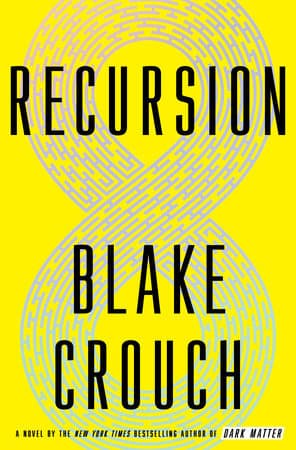
- Recursion
Blake Crouch
4.2 (109k) average on GoodreadsThrillerCrouch's 'Recursion' also involves memory and temporal anomalies, but its premise revolves around a 'False Memory Syndrome' that creates alternate timelines and existential threats on a global scale. 'Rewind' is more contained, focusing on a specific group's backward temporal shift and their struggle to adapt to a past they already lived. 'Recursion' is a high-stakes thriller with a more complex, interwoven plot involving technology and its misuse, while 'Rewind' is a more character-centric drama exploring the social and psychological fallout of a singular, inexplicable event.
- The Hunger Games
Suzanne Collins
4.3 (6.4M) average on GoodreadsFantasyIn a future where children fight to the death on live television, Katniss Everdeen volunteers for the arena, turning a death sentence into a fight for survival and a spark of rebellion.
- 1984
George Orwell
4.2 (3.1M) average on GoodreadsPoliticsIn a future where surveillance and thought control are absolute, a man's search for truth clashes with the Party, showing that hope can be a form of rebellion.
- Divergent
Veronica Roth
4.2 (2.9M) average on GoodreadsFantasyIn a society divided by virtues, a sixteen-year-old's difference from the norm starts a rebellion that threatens her world.





Enjoyed the summary?
A summary gives you the shape of the book. The book itself has the detail, the examples and the voice.
Find Rewind on AmazonAs an Amazon Associate, BookBrief earns from qualifying purchases. How we're funded