
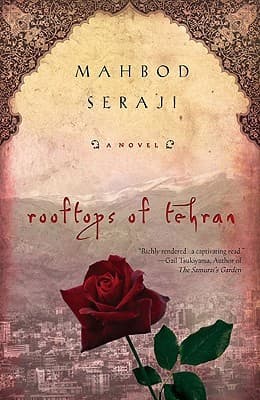
Synopsis
Covers the whole plot, including the ending.
- Difficulty
- Medium
- Pacing
- Moderate
- Mood
- Poignant, Emotional, Culturally Rich, Reflective
- Read it if
- You enjoy historical fiction set in unique cultural contexts, stories of forbidden love, and coming-of-age narratives against a backdrop of political upheaval.
- Skip it if
- You prefer fast-paced thrillers or stories without significant political themes.
Rooftops of Tehran Plot Summary
Covers the whole plot, including the ending.
Rooftop Rendezvous and Forbidden Love
In the summer of 1973, seventeen-year-old Pasha Shahed and his best friend Ahmed spend their days on the rooftop of Pasha's Tehran home. They discuss everything from philosophy to girls. Pasha loves his neighbor, Zari, who lives across the alley. Zari is beautiful, intelligent, and kind, but she is betrothed to her cousin, Ghorban, a wealthy and influential man. This fact shadows Pasha's feelings. Despite this, Pasha and Zari share a deep unspoken connection. They exchange glances and shy smiles, and occasionally find moments to talk alone. This fuels Pasha's secret hope that their love might overcome societal constraints.
A Revolutionary Act and its Consequences
One day, a charismatic university student named Ramin, known for his anti-Shah sentiments, seeks refuge in Pasha's neighborhood. He escaped the SAVAK, the Shah's secret police. Pasha, driven by a naive idealism and a desire to impress Zari, agrees to help Ramin. He signals Ramin's safety to others using a flashlight from his rooftop. However, a neighbor observes Pasha's actions, and the SAVAK soon raids the area. Ramin is captured, and Pasha is brutally interrogated. This introduces him to the harsh realities of political oppression under the Shah's regime. The event shatters Pasha's innocence and forces him to confront a dangerous world beyond his youthful dreams.
Zari's Sacrifice and Pasha's Despair
Following Ramin's capture and Pasha's interrogation, the SAVAK continues to monitor Pasha's family. They threaten their safety and future. In a desperate attempt to protect Pasha and his family from further persecution and to ensure his education, Zari makes a shocking decision. She agrees to marry Ghorban immediately. She believes her connection to a powerful family will shield Pasha from the SAVAK. Pasha is devastated by Zari's choice. He sees it as a betrayal, unaware of the true depth of her sacrifice. He feels abandoned, and his world crumbles, leaving him with a profound sense of loss and injustice.
Life in America and Lingering Guilt
After Zari's marriage, Pasha's parents, fearing for his safety and future, arrange for him to study in America. He leaves Iran with a heavy heart, carrying his unresolved feelings for Zari and guilt over Ramin's capture. In America, Pasha focuses on his studies, earning a degree and building a new life. However, despite his outward success, he remains emotionally distant. He is haunted by the events of that summer. Memories of Zari, Ramin, and the oppressive regime in Iran continue to shape his perspective. They prevent him from fully embracing his new life and forming deep connections.
A Return to Tehran and Unveiling Truths
Years later, after the Iranian Revolution, Pasha returns to Tehran. The city he once knew has changed, and the political landscape is different. Driven by an urge to understand the past and find closure, Pasha seeks out Zari. He learns that Zari has been living a difficult life with Ghorban, marked by her husband's increasing cruelty and the challenges of the new regime. Pasha also begins to uncover the full extent of Zari's sacrifice and the true reasons behind her marriage. He realizes his youthful interpretation of her actions was flawed and incomplete.
Reconciliation and Shared Grief
Pasha and Zari finally speak candidly about their past. Zari reveals the immense pressure she was under and her desperate hope to protect Pasha. Pasha expresses his regret for misunderstanding her actions and the years of sorrow he carried. Their reunion is bittersweet, filled with the weight of lost opportunities and the enduring pain of their separation. They acknowledge the profound love they once shared and the tragic circumstances that tore them apart. They find understanding and forgiveness, but also confront the irreversible changes that time and political upheaval have brought to their lives.
The Fate of Ramin and Political Awakening
During his return, Pasha also investigates Ramin's fate. He learns that Ramin was imprisoned, tortured, and eventually executed by the SAVAK. This was a common fate for many political dissidents under the Shah. This revelation deeply affects Pasha. It forces him to grasp the brutal consequences of his youthful involvement and the sacrifices made by those who fought for change. It solidifies his understanding of the political climate of 1973 and the courage and danger faced by individuals like Ramin. This further cements his own political awakening that began with his interrogation.
Ahmed's Perspective and Enduring Friendship
Pasha reconnects with his childhood best friend, Ahmed, who has remained in Iran. Ahmed, now a family man, provides Pasha with another perspective on the events of that summer. He shares his own memories and observations, filling in gaps in Pasha's understanding. He offers a grounding presence amidst Pasha's emotional turmoil. Their enduring friendship reminds Pasha of the innocence they once shared and the different paths their lives took. It also highlights the unbreakable bond forged in their youth, providing Pasha with a sense of continuity and belonging amidst the changes.
Ghorban's Downfall and Zari's Resilience
Pasha observes the significant shift in Ghorban's status and power after the Iranian Revolution. Ghorban, once influential and wealthy under the Shah, has lost much of his standing and faces new challenges in revolutionary Iran. This reversal of fortune offers a subtle form of justice for Pasha, witnessing the downfall of the man who married his beloved. More importantly, Pasha sees Zari's quiet resilience and strength in navigating her difficult life with Ghorban and adapting to new societal norms. This deepens his admiration and understanding of her character and the sacrifices she has made.
A New Chapter, A Lingering Shadow
Pasha, having confronted his past, understood Zari's sacrifice, and mourned Ramin, finds a fragile sense of peace. He recognizes that while he cannot undo the past, he can learn from it and honor the memories of those he loved. He eventually returns to America, but with a changed perspective. His youth and his return to Iran have shaped him. He leaves with a deep understanding of love, loss, political oppression, and resilience. He moves forward, carrying the weight of his history, but also a newfound wisdom and a quiet determination to live a meaningful life.
Rooftops of Tehran Characters
Pasha Shahed
Protagonist
A naive teenager who matures through political awakening and lost love.
Pasha is a seventeen-year-old Iranian boy, intelligent and sensitive, living in Tehran in the summer of 1973. Initially idealistic and somewhat naive, he is deeply in love with his neighbor, Zari. He possesses a strong sense of justice and a desire to do good, which leads him to help Ramin. Pasha is a keen observer of the world around him, but his youthful innocence blinds him to the full dangers of political dissent. He carries a significant burden of guilt and unresolved love throughout his life.
Relationships: Zari (Childhood love, forbidden romance, unrequited for years); Ahmed (Best friend, confidant); Ramin (Revolutionary he aids, mentor figure); Ghorban (Rival for Zari's affection, later her husband)
Zari
Love Interest / Supporting
Pasha's intelligent and compassionate neighbor, forced into a difficult marriage.
Zari is Pasha's beautiful and kind neighbor, equally intelligent and empathetic. She shares a deep, unspoken connection with Pasha, but is bound by a childhood betrothal to her wealthy cousin, Ghorban. Zari is strong-willed and resourceful, making immense personal sacrifices to protect those she loves. Her actions are driven by a deep sense of loyalty and a pragmatic understanding of the harsh realities of her society, often at great personal cost.
Relationships: Pasha Shahed (Childhood love, unfulfilled romance); Ghorban (Betrothed husband, a source of hardship)
Ahmed
Supporting
Pasha's loyal and pragmatic best friend.
Ahmed is Pasha's best friend and confidant. He is more grounded and pragmatic than Pasha, often offering a realistic perspective to Pasha's idealism. Ahmed provides comic relief and unwavering support, but also witnesses and experiences the same political turmoil as Pasha, though perhaps with a slightly less direct involvement. He represents the enduring power of friendship and the ordinary lives lived amidst extraordinary circumstances.
Relationships: Pasha Shahed (Best friend, childhood companion)
Ramin
Supporting / Catalyst
A charismatic university student and revolutionary.
Ramin is a university student and an ardent opponent of the Shah's regime. He is charismatic, intelligent, and deeply committed to his political ideals, representing the growing revolutionary fervor in Iran. His presence in Pasha's neighborhood and his subsequent capture serve as a catalyst for Pasha's political awakening and the tragic events that follow. Ramin embodies the courage and danger of dissent under an oppressive regime, inspiring Pasha even as his fate serves as a stark warning.
Relationships: Pasha Shahed (Brief mentor figure, recipient of help); SAVAK (Antagonistic, hunted by them)
Ghorban
Antagonist / Supporting
Zari's wealthy and influential cousin, to whom she is betrothed.
Ghorban is Zari's cousin and her betrothed husband. He is a wealthy and influential man, representing the traditional power structures and expectations of Iranian society. While initially presented as a somewhat distant figure, his marriage to Zari and his subsequent treatment of her reveal a darker, often cruel side. He embodies the societal forces that separate Pasha and Zari, and his eventual downfall after the revolution highlights the shifting political landscape.
Relationships: Zari (Betrothed husband, later her cruel husband); Pasha Shahed (Rival for Zari's affection)
Pasha's Father
Supporting
A protective and traditional father figure.
Pasha's father is a loving but stern patriarch who prioritizes his family's safety and well-being above all else. He is deeply concerned about Pasha's involvement in political activities and ultimately arranges for Pasha to leave Iran to ensure his future. He represents the older generation's pragmatism and their attempts to navigate a dangerous political climate while protecting their children, often making difficult decisions for their perceived good.
Relationships: Pasha Shahed (Father and son relationship, protective)
Pasha's Mother
Supporting
A caring and anxious mother figure.
Pasha's mother is a caring and anxious figure, deeply worried about her son's safety and happiness. She supports her husband's decision to send Pasha abroad, driven by a mother's instinct to protect her child from harm. She represents the emotional heart of the family, bearing the anxieties and hopes for her children's future in a turbulent country.
Relationships: Pasha Shahed (Mother and son relationship, loving and anxious)
SAVAK Agents
Antagonist
The Shah's brutal secret police.
The SAVAK agents represent the oppressive and brutal arm of the Shah's regime. They are depicted as ruthless, interrogating Pasha with violence and instilling fear in the community. They are a constant threat to anyone suspected of dissent, and their actions directly lead to Ramin's capture and Zari's desperate sacrifice. They embody the systemic injustice and lack of freedom under the Shah's rule, serving as a powerful external antagonist.
Relationships: Ramin (Hunters and captors); Pasha Shahed (Interrogators and intimidators)
Rooftops of Tehran Themes
Loss of Innocence
The novel portrays Pasha's transition from an innocent, idealistic teenager to a young man confronted with the harsh realities of political oppression and personal sacrifice. His initial naive involvement with Ramin and the subsequent brutal interrogation by the SAVAK shatter his youthful worldview. This theme is most evident when Pasha realizes the true cost of his actions and the irreversible changes brought by Zari's sacrifice. This marks the end of his idyllic childhood on the rooftops of Tehran.
“The world I had known, the world of rooftops and dreams, had vanished, replaced by a brutal reality I was only just beginning to comprehend.”
Forbidden Love and Sacrifice
The central romance between Pasha and Zari is deeply intertwined with forbidden love. It is constrained by societal expectations and a pre-arranged marriage. Zari's decision to marry Ghorban, not out of desire but as a selfless act to protect Pasha and his family, highlights the profound sacrifices individuals make for love and loyalty. This sacrifice defines their relationship, leaving a lasting impact on both characters. It underscores the tragic nature of their unfulfilled love, as seen in their bittersweet reunion years later.
“I chose to marry Ghorban, Pasha, because I knew it was the only way to keep you safe. To give you a future.”
Political Oppression and Resistance
The backdrop of 1973 Iran, under the Shah's autocratic rule and the threat of the SAVAK, is central to the narrative. The novel explores the suffocating atmosphere of fear, censorship, and the brutal consequences of dissent. Ramin's character embodies active resistance, while Pasha's family represents those trying to navigate and survive within the system. The interrogation scenes and the descriptions of Ramin's fate illustrate the harsh realities of living under a despot. They show the courage required to challenge it, shaping the characters' lives irrevocably.
“In Iran, the walls had ears, and the shadows had eyes. Freedom was a whisper, quickly silenced.”
The Weight of the Past and Memory
Pasha's journey is heavily influenced by his inability to escape the events of his youth. His years in America are marked by lingering guilt over Ramin's capture and sadness over his separation from Zari. The novel emphasizes how past choices and unresolved emotions shape an individual's present and future. His return to Tehran is an attempt to reconcile with these memories, understand what happened, and find closure. This shows the enduring power of memory and its role in healing.
“Even across an ocean, the rooftops of Tehran, and the memories they held, cast a long shadow over my life.”
Plot Devices & Literary Techniques
The Rooftop
A symbolic space for innocence, freedom, and observation.
The rooftop serves as a crucial setting and a powerful symbol throughout the novel. Initially, it represents a sanctuary of innocence, freedom, and youthful dreams where Pasha and Ahmed share their thoughts and Pasha secretly pines for Zari. It's a space removed from the strictures of the ground-level world. However, it also becomes the site of Pasha's fateful act of signaling Ramin, transforming it into a place where innocence is lost and political reality intrudes, marking the irreversible shift in Pasha's life.
The Flashlight Signal
A catalyst for the plot and a symbol of naive political action.
Pasha's use of a flashlight to signal Ramin's safety is a critical plot device. It is a seemingly innocent act, born of youthful idealism and a desire to help, yet it has devastating, unforeseen consequences. This action directly leads to Ramin's capture and Pasha's interrogation, serving as the catalyst that shatters Pasha's innocence and forces Zari's hand in her sacrificial marriage. It symbolizes how even small, well-intentioned actions can have profound and dangerous repercussions under an oppressive regime.
The Betrothal
A traditional societal constraint driving the central conflict.
Zari's childhood betrothal to Ghorban is a key plot device that establishes the primary obstacle to Pasha and Zari's love. It represents the powerful influence of tradition, family honor, and societal expectations in Iranian culture. This pre-arranged marriage creates an insurmountable barrier for the young lovers, forcing Zari into a life she did not choose and directly leading to her heartbreaking sacrifice, highlighting the personal costs of such societal norms and driving much of the novel's tragic romantic conflict.
The Iranian Revolution (as a backdrop)
A historical event providing context and shaping the characters' later lives.
While the primary events of the novel occur before the Iranian Revolution, the revolution itself serves as a crucial backdrop and narrative device. It provides the context for Pasha's return to Iran years later, allowing for the unveiling of truths and the reconciliation with the past. The revolution also highlights the dramatic shifts in power and societal structure, impacting characters like Ghorban and providing a sense of historical consequence and change that frames the personal stories within a larger political narrative.
Rooftops of Tehran Quotes
“It was a time when the scent of jasmine and the sound of laughter filled the air, but also a time when the whispers of revolution grew louder with each passing day.”
“Love, I learned, was not a gentle river but a surging current that could sweep you away, whether you were ready or not.”
“Every rooftop in Tehran held a story, a secret whispered to the stars, a dream born and sometimes broken under the vast, watchful sky.”
“Hope is a dangerous thing, my friend, especially when it blinds you to the storm gathering on the horizon.”
“We were young, foolish, and believed that our love could conquer anything, even the iron fist of a dying regime.”
“The hardest part of leaving is not saying goodbye to the place, but to the person you were in that place.”
“Sometimes, the greatest acts of rebellion are the quietest ones, the refusal to let your spirit be broken, even when everything else is crumbling around you.”
“The scent of saffron and rosewater, the taste of freshly baked bread – these were the anchors that tethered me to a home that was slipping away.”
“There are wounds that time can never fully heal, only cover with a thin, translucent skin.”
“We danced on the edge of a precipice, unaware of how close we were to falling, intoxicated by the music and the moment.”
“A revolution, I discovered, devours its own children, leaving behind a trail of broken promises and shattered lives.”
“Even in the darkest of times, there were moments of unexpected beauty, like a single bloom pushing through cracked pavement.”
“To love someone in a time of war is to gamble with your heart, knowing the odds are stacked against you.”
“The past is a stubborn ghost, always lingering, always whispering its stories, whether you want to hear them or not.”
Quiz
10 questions on the plot and the characters. Each answer comes with a short explanation.
Question 1
In what year does the main story of 'Rooftops of Tehran' primarily take place, according to the provided description?
- 1968
- 1973
- 1979
- 1983
Show answer
B. 1973 The description explicitly states that Pasha spends the summer of 1973 on his rooftop.
Question 2
What is the name of Pasha's best friend, with whom he spends time on the rooftop?
- Mahbod
- Ahmed
- Shahid
- Reza
Show answer
B. Ahmed The description states Pasha spends the summer with his best friend Ahmed.
Question 3
What is the name of Pasha's secret love interest?
- Zari
- Leila
- Shirin
- Parisa
Show answer
A. Zari Pasha harbors a secret love for his beautiful neighbor Zari.
Question 4
What is the primary obstacle to Pasha and Zari's relationship at the beginning of the story?
- Their families are feuding.
- Zari is betrothed since birth to another man.
- Pasha is planning to leave Iran for studies abroad.
- They come from different social classes.
Show answer
B. Zari is betrothed since birth to another man. The description highlights that Zari 'has been betrothed since birth to another man,' making this the initial major impediment.
Question 5
How does Pasha inadvertently contribute to the disruption of his and Zari's 'bliss'?
- He accidentally reveals their secret to Zari's fiancé.
- He unwittingly acts as a beacon for the Shah's secret police.
- He gets involved in a street protest that leads to their discovery.
- He writes a rebellious poem that is intercepted by authorities.
Show answer
B. He unwittingly acts as a beacon for the Shah's secret police. The description states that 'Pasha unwittingly acts as a beacon for the Shah's secret police,' which shatters their stolen time together.
Question 6
What is the political context described in the novel's setting?
- A period of democratic transition.
- An Iran headed toward revolution and living under a powerful despot.
- A post-revolutionary era of reconstruction.
- A time of cultural revival and international isolation.
Show answer
B. An Iran headed toward revolution and living under a powerful despot. The description mentions 'an Iran headed toward revolution' and 'living under a powerful despot,' referring to the Shah's rule.
Question 7
What is the ultimate consequence of Pasha's unwitting action, as described?
- He is forced to leave Tehran immediately.
- It leads to violent consequences and awakens him to political reality, prompting Zari to make a shocking choice.
- It results in Zari's immediate marriage to her betrothed.
- His family is exiled from the country.
Show answer
B. It leads to violent consequences and awakens him to political reality, prompting Zari to make a shocking choice. The text explains, 'The violent consequences awaken him to the reality of living under a powerful despot, and lead Zari to make a shocking choice.'
Question 8
What cultural aspect does the novel aim to lay bare, alongside the brutality?
- The ancient traditions of the Iranian monarchy.
- The beauty of the centuries-old Persian culture.
- The influence of Westernization on Iranian youth.
- The internal conflicts within religious sects.
Show answer
B. The beauty of the centuries-old Persian culture. The description states Mahbod Seraji 'lays bare the beauty and brutality of the centuries-old Persian culture.'
Question 9
What universal aspect of human experience does the novel reaffirm, according to the description?
- The inevitability of political upheaval.
- The human experiences we all share.
- The struggle for individual freedom.
- The enduring power of family loyalty.
Show answer
B. The human experiences we all share. The description concludes by stating the novel 'reaffirming the human experiences we all share.'
Question 10
The setting of the story is described as a 'middle-class neighborhood' in which city?
- Isfahan
- Shiraz
- Tehran
- Mashhad
Show answer
C. Tehran The title of the book is 'Rooftops of Tehran' and the description mentions 'Iran's sprawling capital city,' which is Tehran.
Rooftops of Tehran FAQ
What is the central conflict that Pasha faces in the summer of 1973?
Pasha, a 17-year-old, is deeply in love with his neighbor Zari, who is betrothed to another man, a doctor named Saeed. This secret love forms the core of his personal conflict, further complicated by the political tensions simmering in Iran under the Shah's rule.
How does Pasha's innocent act lead to severe political repercussions?
Pasha, while trying to communicate with Zari using a mirror to reflect light, inadvertently creates a signal that is interpreted by the Shah's secret police, SAVAK. This misunderstanding leads to their detection and the subsequent violent crackdown on his friends and community.
Who is Ahmed, and what is his role in Pasha's life?
Ahmed is Pasha's best friend, with whom he spends much of his time on the rooftops discussing life and joking. Ahmed represents Pasha's confidant and a symbol of their carefree youth, before political realities brutally intrude upon their lives.
What shocking choice does Zari make following the incident with SAVAK?
After the violent consequences of Pasha's actions and the political turmoil, Zari makes the shocking choice to marry Saeed, her betrothed, earlier than planned. This decision is driven by a complex mix of duty, protection for her family, and perhaps a desire to shield Pasha from further harm.
What is the broader historical context of the novel, and how does it influence the characters' lives?
The novel is set in Iran in 1973, a period leading up to the 1979 Iranian Revolution, under the oppressive rule of the Shah. This political climate, marked by the presence of SAVAK and suppression of dissent, directly impacts Pasha's community, turning an innocent act into a political tragedy and forcing characters to confront the realities of their society.
Beyond the mirror incident, are there other subtle hints of the impending revolution or political unrest?
Yes, the novel subtly includes discussions among Pasha and Ahmed about social injustices and the Shah's repressive policies, along with the hushed fears of adults regarding SAVAK. These conversations and underlying anxieties foreshadow the larger political upheaval that would eventually lead to the revolution.
How does the traditional betrothal system affect Zari's agency and choices?
Zari's betrothal to Saeed since birth significantly limits her agency, forcing her to consider duty and family honor above her personal desires, including her feelings for Pasha. Her ultimate decision to marry Saeed is a direct consequence of this entrenched cultural tradition and the new political pressures.
Is there any symbolism in the 'rooftops' setting of the novel?
The rooftops symbolize a space of freedom, intimacy, and youthful innocence for Pasha and Ahmed, a place where they can escape the confines of their homes and the watchful eyes of society. It's also where Pasha and Zari share their stolen moments, making its eventual violation by political forces even more poignant.
How does Pasha's experience with SAVAK affect his coming-of-age journey?
The violent encounter with SAVAK and its aftermath brutally shatters Pasha's youthful innocence, forcing him to confront the harsh realities of political oppression and personal responsibility. This experience marks a significant turning point in his coming-of-age, transforming him from a carefree teenager into someone acutely aware of his world's dangers.
What psychological impact does Zari's 'shocking choice' have on Pasha?
Zari's decision to marry Saeed deeply wounds Pasha, causing him immense heartbreak and a sense of betrayal. Psychologically, it forces him to grapple with loss, the limitations of his power, and the complex motivations behind the choices people make under duress, further shaping his emotional maturity.
How does the novel explore themes of guilt and responsibility through Pasha's character?
Pasha carries a heavy burden of guilt, believing his actions with the mirror directly led to the violence and Zari's sacrifice. The novel explores how he processes this responsibility, grappling with the unintended consequences of his desires and his growing understanding of how individual actions can have far-reaching societal impacts.
What role does 'fate' or 'destiny' play in the characters' lives, particularly for Zari?
Fate plays a significant role, particularly for Zari, who is betrothed since birth, implying a predetermined path. While she makes choices, they are often within the confines of what society and 'destiny' dictate, raising questions about free will versus cultural and political forces that shape individual lives.
Is Zari's decision to marry Saeed an act of self-sacrifice, pragmatism, or a combination?
Zari's decision is likely a complex blend of self-sacrifice and pragmatism. She may be sacrificing her love for Pasha to protect her family and him from further political reprisal, while also making a pragmatic choice for security and stability in a volatile environment. It's open to interpretation regarding her exact motivations.
How does the novel portray the clash between traditional Persian culture and modern aspirations?
The novel subtly portrays this clash through Zari's situation, where her modern aspirations for love and personal choice are constrained by the traditional betrothal system. It also shows how the repressive political regime under the Shah, though seemingly modernizing, stifled individual freedoms inherent in traditional Persian society.
Does the ending offer any hope or is it purely tragic for Pasha and Zari?
While the immediate outcome is tragic for Pasha and Zari's romance, the novel's focus on Pasha's growth and awakening to political realities suggests a different kind of 'hope' — the hope for change and understanding. The ending, while poignant, implies a future for Pasha shaped by his experiences, rather than pure despair.
How does the author use the setting of Tehran to enhance the narrative?
Tehran, particularly its rooftops and middle-class neighborhoods, serves as a vibrant backdrop that contrasts with the underlying political tension. The familiarity of everyday life in Tehran makes the intrusion of SAVAK and the political violence even more jarring and impactful, highlighting the fragility of peace.
What is the significance of the 'Shah's secret police' (SAVAK) in the story?
SAVAK represents the brutal, omnipresent arm of the Shah's authoritarian rule, instilling fear and suppressing dissent. Their intervention in Pasha's innocent act transforms a personal drama into a political tragedy, highlighting the harsh realities of living under a powerful despot and the lack of individual freedom.
How does Pasha's relationship with Ahmed evolve throughout the story?
Pasha and Ahmed's relationship evolves from a carefree friendship marked by youthful banter to one that is tested and deepened by shared trauma and political awakening. While their innocence is lost, their bond likely strengthens through the ordeal, as they both witness and endure the consequences of their world's harsh realities.
About the author

Mahbod Seraji is an author known for his fiction, particularly his novel "Rooftops of Tehran," which explores themes of love and loss against the backdrop of political turmoil in Iran. His writing often reflects his Iranian heritage and the complexities of cultural identity.
Similar books
- The Kite Runner
Khaled Hosseini
4.3 (2.4M) average on GoodreadsHistorical FictionExplores friendship, guilt, and historical/political events in a Middle Eastern setting.
- A Thousand Splendid Suns
Khaled Hosseini
4.4 (1.2M) average on GoodreadsHistorical FictionFeatures strong female characters, forbidden love, and life under oppressive regimes in the region.
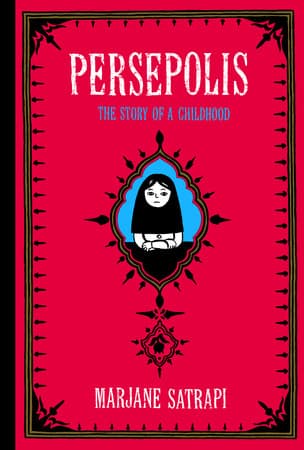
- Persepolis: The Story of a Childhood
Marjane Satrapi
4.3 (158k) average on GoodreadsBiographyA coming-of-age story in Iran during the revolution, offering a personal perspective on political change.
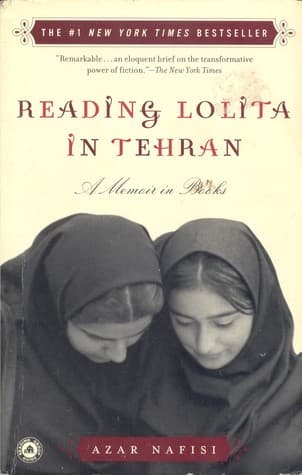
- Reading Lolita in Tehran: A Memoir in Books
Azar Nafisi
3.6 (118k) average on GoodreadsBiographyNafisi's Reading Lolita in Tehran is a non-fiction memoir that uses classic Western literature as a lens to analyze the cultural and political repression in post-revolutionary Iran. In contrast, Seraji's Rooftops of Tehran is a fictional narrative, allowing for greater emotional embellishment and a focus on a specific, deeply personal love story set before and during the revolution's immediate aftermath. While both works explore themes of freedom and resistance against a backdrop of Iranian society, Seraji's approach is more character-driven and romantic, whereas Nafisi's is intellectual and analytical, using literature as a framework for socio-political commentary.
- To Kill a Mockingbird
Harper Lee
4.3 (4.5M) average on GoodreadsHistorical FictionIn the 1930s Jim Crow South, Harper Lee writes about racial injustice, moral growth, and the quiet courage of a lawyer father, Atticus Finch, as seen through his young daughter's eyes.
- The Great Gatsby
F. Scott Fitzgerald
3.9 (3.8M) average on GoodreadsHistorical FictionIn the opulent Roaring Twenties, a mysterious millionaire's lavish parties hide his desperate, tragic pursuit of a lost love, exposing the emptiness within the American Dream.




Enjoyed the summary?
A summary gives you the shape of the book. The book itself has the detail, the examples and the voice.
Find Rooftops of Tehran on AmazonAs an Amazon Associate, BookBrief earns from qualifying purchases. How we're funded