
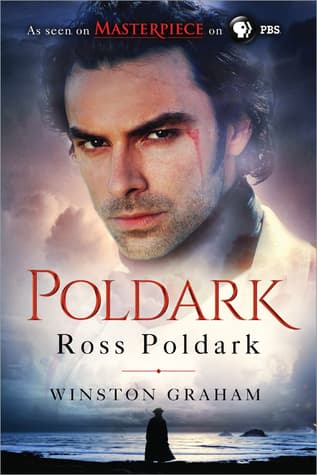
Synopsis
Covers the whole plot, including the ending.
- Difficulty
- Medium
- Pacing
- Moderate
- Mood
- Atmospheric, Resilient, Romantic, Melancholy
- Read it if
- You enjoy sweeping historical sagas with strong character development, intricate family dynamics, and a focus on social class and economic struggles in a vivid setting.
- Skip it if
- You prefer fast-paced thrillers or stories without significant periods of hardship and emotional intensity.
Ross Poldark Plot Summary
Covers the whole plot, including the ending.
Ross's Return and Shattered Hopes
Ross Poldark returns to Cornwall in 1783 after three years fighting in the American Revolutionary War. Many people thought he had died. He finds his family home, Nampara, in bad shape, managed by his two lazy and often drunken servants, Jud and Prudie Paynter. The copper mine on his land, Wheal Leisure, is flooded and not working. Worse, his childhood sweetheart, Elizabeth Chynoweth, is engaged to his cousin, Francis Poldark, because everyone believed Ross had died. Ross goes to the engagement ball, a painful event where he sees Elizabeth's new life and feels his family's pity and his own loss. This makes him determined to rebuild his life on his own.
Rebuilding Nampara and a Chance Encounter
Sad but determined, Ross begins the hard work of fixing Nampara. He works with his tenants, clearing land, repairing buildings, and trying to revive the neglected farm. During a trip to Redruth market, he steps into a brutal dogfight and saves a young, hungry girl named Demelza Carne from her abusive father and a violent crowd. On impulse, he offers her a job as a scullery maid at Nampara. Despite her rough background and messy appearance, Ross sees a spark of spirit in her. He brings her back to his damaged estate, surprising and upsetting his servants and the local gentry.
Demelza's Transformation and Growing Affection
Under Ross's care, Demelza slowly changes. He teaches her to read and write, and she learns how Nampara works, becoming an important part of his home. Her initial shyness turns into a lively personality, and her appearance gets much better, showing a striking beauty. Demelza becomes very loyal and develops a deep, unspoken love for Ross. Meanwhile, Ross, though still hurt by Elizabeth's marriage to Francis, starts to value Demelza's company and lively spirit, finding comfort and real affection in her presence, even as he struggles with the class differences and social rules that separate them.
The Wheal Leisure Venture and Social Strife
Wanting to provide for his tenants and challenge the established gentry, Ross decides to reopen his old mine, Wheal Leisure. He forms a company, offering shares to local people and even some of his tenants. This is a radical move that earns him both respect and suspicion. The venture involves financial risk, needing significant investment and hard work. Ross dedicates himself to the mine, actively working in its operations and showing real concern for his miners' well-being. This decision makes him a leader for the working class, setting him apart from his more traditional Poldark relatives and the powerful Warleggan family.
Francis's Downfall and Elizabeth's Unhappiness
Francis Poldark, Ross's cousin and Elizabeth's husband, is a weak man who is easily influenced. He gambles, drinks too much, and falls for the manipulative friendship of George Warleggan, which leads to big financial losses. His poor management of his own mine, Grambler, and his increasing debts strain his marriage to Elizabeth. Elizabeth, though happy at first, finds herself more and more alone and unhappy with Francis's behavior and their declining money. Ross watches their struggles, his pity for Elizabeth often clashing with his resentment towards Francis.
A Developing Relationship and Social Outrage
As Christmas gets closer, the unspoken affection between Ross and Demelza reaches a turning point. After a particularly difficult day, made worse by Ross's sadness over Elizabeth, Demelza tries to comfort him. Their shared vulnerability and deep emotional connection lead to a night of intimacy. Recognizing his responsibility and his real feelings for her, Ross makes the unusual decision to marry Demelza, despite her low social standing and the scandal it will cause. The news shocks Cornish society, especially the Poldark family and the gentry, who see it as a bad match.
Demelza's Introduction to Society
Demelza's move into the role of Mrs. Ross Poldark is hard. She faces immediate snobbery and disrespect from the local gentry, including Ross's aunt, Agatha, and even some of his well-meaning friends like Verity Poldark. Despite her natural grace and intelligence, Demelza knows she lacks formal education and refined manners. Ross, very protective, helps her navigate these social situations. With time, and especially after a good appearance at a local assembly where she charms many with her singing, Demelza starts to find her place, showing her strong character and winning over some of her critics.
The Birth of Julia and Growing Happiness
Despite the initial social disapproval, Ross and Demelza's marriage is strong and loving. Demelza becomes pregnant, and their happiness grows with the thought of their child. The birth of their daughter, Julia, brings great joy to Nampara and strengthens their bond. Ross, who once thought happiness was lost to him, finds deep contentment and love in his life with Demelza and their child. Their happy home life contrasts with the growing unhappiness and financial problems of Francis and Elizabeth at Trenwith, showing the success of Ross's choice.
Verity's Romance and Family Conflict
Ross supports his cousin Verity Poldark's long-delayed romance with Captain Andrew Blamey, a man her family deems unsuitable because of a past scandal. Despite the Poldark family's strong objections, especially from Francis and Charles, Ross helps them reunite and encourages Verity to follow her heart. This leads to Verity's elopement with Captain Blamey, a decision that further separates Ross from the Trenwith Poldarks, particularly Francis, who feels betrayed and shamed by Ross's involvement. The event shows Ross's independent spirit and his willingness to go against social rules for true affection.
The Illness and a Tragic Loss
A severe epidemic of putrid throat (diphtheria) spreads through Cornwall, devastating many families. Ross, with his usual compassion, visits his sick tenants and neighbors, offering help. Tragically, the illness reaches Nampara, striking down first Demelza, who gets it while nursing a sick child, and then their infant daughter, Julia. Despite Ross's desperate efforts and the doctor's best attempts, Julia dies from the illness. This devastating loss puts Ross and Demelza into deep grief, testing their bond and leaving a deep scar on their lives. The novel ends on a somber, but strong, note.
Principal Figures
Ross Poldark
Protagonist
A principled and rebellious landowner, striving to rebuild his life and challenge social injustices.
Ross Poldark is a complex and honorable man who returns from the American Revolutionary War hardened but determined. He is fiercely independent, often defying societal expectations and the rigid class structure of 18th-century Cornwall. His initial heartbreak over Elizabeth's marriage fuels his drive to restore Nampara and reopen Wheal Leisure. He possesses a strong sense of justice and compassion, particularly for the working class, often putting their welfare above his own financial gain. Despite his sometimes brooding nature, he is capable of deep love and loyalty, as evidenced by his unconventional marriage to Demelza and his unwavering support for Verity. He is a man of action and integrity, often clashing with his more conventional relatives and the powerful Warleggan family.
Relationships: Elizabeth Chynoweth (Childhood sweetheart, later unrequited love); Demelza Carne Poldark (Scullery maid, later wife and beloved companion); Francis Poldark (Cousin and rival); Verity Poldark (Cousin and confidante); George Warleggan (Business rival and antagonist)
Demelza Carne Poldark
Protagonist/Love Interest
A spirited and loyal young woman who rises from poverty to become Ross Poldark's devoted wife.
Demelza is introduced as a neglected, half-starved girl from a mining family, rescued by Ross. Initially shy and unkempt, she blossoms under Ross's care, revealing a sharp wit, a kind heart, and a vibrant spirit. She is fiercely loyal, deeply loving, and possesses a natural grace and strength that allows her to adapt to her new life as Mrs. Poldark, despite facing snobbery from society. Her singing voice is enchanting, and her practical nature and unwavering support become the bedrock of Ross's happiness. She embodies resilience and an authentic connection to the Cornish working class, bringing warmth and joy to Nampara.
Relationships: Ross Poldark (Master, later husband and devoted partner); Julia Poldark (Daughter)
Elizabeth Chynoweth Poldark
Supporting
Ross's former sweetheart, now married to his cousin Francis, embodying conventional beauty and societal expectations.
Elizabeth is the epitome of conventional beauty and refinement, the woman Ross initially believed he would marry. She chose to marry Francis Poldark, believing Ross to be dead, and represents the established gentry and social order. While she is not malicious, she is often constrained by societal expectations and her own anxieties. Her marriage to Francis becomes increasingly unhappy due to his weaknesses and financial troubles. She carries a quiet dignity and a lingering affection for Ross, though she never acts upon it, making her a symbol of the 'what-if' for Ross.
Relationships: Ross Poldark (Former sweetheart, object of his lingering affection); Francis Poldark (Husband); Geoffrey Charles Poldark (Son)
Francis Poldark
Supporting
Ross's cousin and rival, a weak and easily influenced man who struggles with gambling and poor decisions.
Francis is Ross's cousin and the man who marries Elizabeth. He is portrayed as a pleasant but weak-willed individual, prone to jealousy, gambling, and poor judgment. He is easily swayed by the manipulative George Warleggan, leading to the financial ruin of his mine, Grambler, and considerable debt. His insecurities and inability to manage his affairs lead to a strained and unhappy marriage with Elizabeth. He represents the less admirable aspects of the gentry, clinging to status while failing to uphold his responsibilities.
Relationships: Ross Poldark (Cousin and rival); Elizabeth Poldark (Wife); George Warleggan (Manipulative friend/associate)
Verity Poldark
Supporting
Ross's kind and loyal cousin, trapped by family disapproval in a long-stalled romance.
Verity is Ross's older cousin, a kind, gentle, and intelligent woman who has been denied happiness for years due to her family's disapproval of her chosen suitor, Captain Andrew Blamey. She is often overlooked by her immediate family but finds a close confidante and ally in Ross. Her quiet strength and longing for love make her a sympathetic character. Ross's intervention in her romance allows her to finally break free from her family's constraints and pursue her own happiness, highlighting Ross's progressive views on love and marriage.
Relationships: Ross Poldark (Cousin and confidante); Captain Andrew Blamey (Love interest, later husband)
George Warleggan
Antagonist
A shrewd and ambitious banker, representing the rising industrial class and a rival to the Poldarks.
George Warleggan is a central antagonist in the series, a member of a wealthy and ambitious banking family. He is shrewd, calculating, and driven by a desire for power and social advancement. He despises Ross Poldark, seeing him as a threat to his family's growing influence and a symbol of the old gentry he seeks to displace. George manipulates Francis Poldark for his own gain and consistently seeks to undermine Ross's ventures. He represents the new industrial wealth challenging the established landed gentry, and his rivalry with Ross is a significant driving force in the narrative.
Relationships: Ross Poldark (Arch-rival); Francis Poldark (Associate, manipulated by George)
Jud Paynter
Supporting
Ross's long-serving, often drunken and lazy, but ultimately loyal servant.
Jud Paynter is one of Ross's long-serving tenants and servants at Nampara. He is characterized by his laziness, his love of drink, and his often-grumbling nature. Despite his faults and his initial neglect of Nampara, he harbors a deep, albeit gruff, loyalty to Ross. He provides comic relief and a connection to the rougher, working-class side of Cornish life. His relationship with his wife, Prudie, is often contentious but enduring.
Relationships: Ross Poldark (Master); Prudie Paynter (Wife)
Prudie Paynter
Supporting
Jud's wife and Ross's housekeeper, a gossipy but good-hearted woman.
Prudie Paynter is Jud's wife and the housekeeper at Nampara. Like Jud, she is fond of drink and prone to gossip, but she is also hardworking and possesses a good heart. She initially views Demelza with suspicion but grows to love and protect her. Prudie provides a maternal figure for Demelza and is fiercely loyal to Ross, despite her complaints. She is a source of both humor and practical support in the Poldark household.
Relationships: Ross Poldark (Master); Jud Paynter (Husband); Demelza Poldark (Friend and mistress)
Aunt Agatha Poldark
Supporting
Ross's ancient, sharp-witted great-aunt, a repository of family history and sharp observations.
Aunt Agatha is a very elderly, eccentric, and sharp-witted relative who resides at Trenwith. She is a repository of Poldark family history and local gossip, offering pithy and often cynical observations on life and society. Despite her age and sometimes frail appearance, she possesses a keen mind and an independent spirit. She is often critical of Francis but holds a soft spot for Ross, recognizing his strength of character. Her presence provides a link to the past and a unique perspective on the unfolding events.
Relationships: Ross Poldark (Great-nephew); Francis Poldark (Great-nephew)
Captain Andrew Blamey
Supporting
Verity Poldark's long-lost love, a sea captain with a troubled past.
Captain Andrew Blamey is a sea captain who fell in love with Verity Poldark years before the novel begins. He carries the stigma of a past scandal involving the death of his first wife, which led to the Poldark family forbidding his union with Verity. He is a man of honor and deep affection for Verity, willing to wait years for her. Ross's intervention allows him to reunite with Verity and finally marry her, proving his enduring love and breaking the societal barriers that separated them.
Relationships: Verity Poldark (Love interest, later wife); Ross Poldark (Ally and friend)
Themes & Insights
Social Class and Injustice
The novel clearly shows the strict class structure of 18th-century Cornwall and the unfairness faced by the working class. Ross Poldark often challenges these norms, especially by marrying Demelza and working to provide fair wages and shares for his miners. The clear difference between the poor miners and the wealthy gentry (like the Warleggans) is a central part, showing issues of exploitation, poverty, and the fight for respect. Ross's actions and compassion often put him against the established order, making him a supporter of the less fortunate.
“'He had learned that to be poor was to be without a voice, without a choice, and without hope.”
Love, Loyalty, and Redemption
Love appears in various forms in the novel, from Ross's first idealized love for Elizabeth to the deep, unusual, and ultimately more satisfying love he finds with Demelza. Loyalty is a strong element, shown in Demelza's steady devotion to Ross, Verity's faithfulness for Captain Blamey, and even Jud and Prudie's gruff loyalty to Ross. Ross himself seeks a form of healing after his war experiences and the loss of Elizabeth, finding it in rebuilding his life, his estate, and ultimately in his marriage and family. The novel explores how love can go against social expectations and bring deep change and healing.
“'He had come home to a ghost, and found a living woman.”
Change vs. Tradition
The story is set against a changing society in Cornwall, with new industrial wealth (represented by the Warleggans) challenging the old landed gentry (the Poldarks). Ross himself combines tradition (his attachment to Nampara and his family name) and a forward-thinking spirit (his mining ventures, his marriage, his treatment of his tenants). He is willing to innovate and defy old conventions, while others, like Francis, hold onto tradition to their harm. This tension between keeping the past and embracing the future drives much of the conflict and character development.
“'There was a new order coming, and the old ways were dying, whether men willed it or no.”
Resilience and Perseverance
Ross Poldark's journey shows resilience. He returns from war scarred and finds his life in ruins, yet he continues to rebuild Nampara, reopen his mine, and create a new path. Demelza's own story shows incredible resilience, overcoming abuse and poverty to succeed. Even when facing great personal tragedy, such as the loss of Julia, the characters show an ability to endure and find strength. This theme highlights the lasting human spirit when facing hardship, both personal and societal, showing the harsh realities of life in 18th-century Cornwall.
“'Life was a battle, and one must fight, even if the odds were stacked against you.”
Plot Devices & Literary Techniques
The Ruined Estate (Nampara)
Symbolizes Ross's initial broken state and his journey of rebuilding.
Nampara, Ross's ancestral home, is in a state of disrepair upon his return. This ruined estate serves as a powerful symbol for Ross's own internal state—broken, neglected, and needing to be rebuilt. His physical labor and dedication to restoring Nampara mirror his psychological and emotional journey of healing and finding purpose after the war and the loss of Elizabeth. As Nampara is brought back to life, so too is Ross's spirit, culminating in the creation of a loving home with Demelza and Julia. It acts as a tangible representation of his progress and his rootedness in Cornwall.
The Mines (Wheal Leisure, Grambler)
Represent economic struggle, social class, and the Poldarks' differing approaches to progress.
The copper mines are central to the economic and social fabric of Cornwall and the narrative. Wheal Leisure, Ross's mine, represents his progressive spirit and his commitment to his community, as he invests in it and provides employment, often defying conventional business practices. In contrast, Grambler, Francis's mine, symbolizes his poor judgment and the decline of the traditional gentry, as it fails due to his mismanagement. The mines highlight the dangerous and arduous lives of the working class and serve as a battleground for the economic and social rivalries between the Poldarks and the Warleggans.
The Social Snobbery/Gentry Balls
Highlights class divisions and Demelza's struggle for acceptance.
The social gatherings, balls, and assemblies of the Cornish gentry serve as a recurring plot device to emphasize the rigid class structure and the challenges Demelza faces after marrying Ross. These events are initially daunting for Demelza, exposing her to the condescension and judgment of society. They highlight Ross's defiance of convention and Demelza's journey of self-discovery and growing confidence. Her eventual triumph in these settings, particularly through her singing, symbolizes her acceptance into a world that initially rejected her, albeit on her own terms.
The American Revolutionary War
Catalyst for Ross's transformation and the initial state of the plot.
The American Revolutionary War, though largely in the past as the novel begins, serves as the critical inciting incident. Ross's participation in the war and his presumed death during it are the reasons for his absence, the neglect of Nampara, and Elizabeth's marriage to Francis. The war has hardened Ross, making him more cynical yet also more resolute and independent. It is the catalyst that sets the entire plot in motion, shaping Ross's character and the circumstances he returns to, forcing him to rebuild his life from scratch.
Ross Poldark Quotes
“There's a time for everything, Ross, and a season for every activity under the heavens. A time to be born and a time to die, a time to plant and a time to uproot, a time to kill and a time to heal, a time to tear down and a time to build, a time to weep and a time to laugh, a time to mourn and a time to dance...”
“It was one thing to be generous, another to be foolish.”
“You can't live your life by other people's rules.”
“There is nothing so constant as change.”
“For good or ill, we're tied together, you and I.”
“Sometimes you have to break the law to do what's right.”
“The sea never gives up its dead willingly.”
“It isn't what you have, it's what you are.”
“Hope is a good breakfast but a bad supper.”
“He knew that one cannot change the world, but one can make a small difference in one's own corner of it.”
“There was a wildness in her, a spirit that refused to be tamed, and it was this that had first drawn him.”
“The past is a foreign country; they do things differently there.”
“One day you will understand that to be happy is not to have a life without problems, but to have the strength to overcome them.”
“Better to be hated for what you are than loved for what you are not.”
Quiz
10 questions on the plot and the characters. Each answer comes with a short explanation.
Question 1
Upon returning from the American Revolutionary War, what devastating news does Ross Poldark immediately discover regarding his fiancée, Elizabeth?
- She has left Cornwall to pursue a career in London.
- She is about to marry another man.
- She has fallen ill and is bedridden.
- She has sold Nampara, his ancestral home.
Show answer
B. She is about to marry another man. Ross returns home expecting to reunite with Elizabeth, only to find out on the very evening of his arrival that she is about to marry someone else, largely due to rumors of his death.
Question 2
What is the primary condition of Ross Poldark's ancestral home, Nampara, when he returns?
- It has been meticulously maintained by his family.
- It is in a state of complete abandonment and disrepair.
- It has been modernized and expanded.
- It is being rented out to tenants.
Show answer
B. It is in a state of complete abandonment and disrepair. The text explicitly states that Nampara, the ancestral home, is in a state of abandonment, partly due to the neglect of the old, albeit loyal, servants.
Question 3
What significant change has occurred in Ross Poldark's character after his experiences in the American Revolutionary War?
- He has become more reckless and extravagant.
- He has become more avventato and estroverso, as he was before.
- He is now a mature man, no longer the impetuous and outgoing boy he once was.
- He has lost all ambition and desires only a quiet life.
Show answer
C. He is now a mature man, no longer the impetuous and outgoing boy he once was. The description states he is 'ora è un uomo maturo, non più l’avventato ed estroverso ragazzo che aveva dovuto abbandonare l’Inghilterra per problemi con la legge,' indicating a significant maturation.
Question 4
Beyond restoring Nampara, what major business venture does Ross decide to undertake to rebuild his fortunes?
- Investing in shipping and trade.
- Opening a new mine.
- Establishing a new agricultural estate.
- Becoming a lawyer to address his past legal issues.
Show answer
B. Opening a new mine. After deciding to put Nampara back in order, Ross focuses on his father's neglected affairs, 'tornando a coltivare le terre e lanciandosi nell’apertura di una nuova miniera.'
Question 5
What is the social and economic context of Cornwall described in the book, beyond the Poldark family's personal struggles?
- A prosperous region experiencing an industrial boom and social harmony.
- A land characterized by new religious sects, social conflicts, and the harsh life of miners.
- A quiet, idyllic rural area untouched by modern changes.
- A region dominated by political unrest and rebellion.
Show answer
B. A land characterized by new religious sects, social conflicts, and the harsh life of miners. The text describes Cornwall as 'aspra quanto la vita dei suoi minatori, percorsa dai fremiti di nuove sette religiose e afflitta da contrasti sociali,' indicating a challenging social and economic environment.
Question 6
What role do the 'vecchi servi, fedeli ma ubriaconi' play in the initial state of Nampara?
- They have diligently maintained the property in Ross's absence.
- They are the primary reason for Nampara's state of abandonment.
- Their loyalty is unquestionable, but their drinking habits have contributed to the neglect of the house.
- They have left Nampara entirely, leaving it unguarded.
Show answer
C. Their loyalty is unquestionable, but their drinking habits have contributed to the neglect of the house. The text states that Nampara's abandonment 'cui ha contribuito anche una coppia di vecchi servi, fedeli ma ubriaconi,' highlighting their loyalty but also their role in the neglect.
Question 7
Why did Ross Poldark initially have to leave England before the events of the book?
- To seek his fortune abroad.
- To escape a forced marriage.
- Due to problems with the law.
- To join the navy voluntarily.
Show answer
C. Due to problems with the law. The description mentions Ross was 'il ragazzo che aveva dovuto abbandonare l’Inghilterra per problemi con la legge,' indicating a past legal issue as the reason for his departure.
Question 8
What is Demelza's primary goal by the end of the provided synopsis?
- To leave Cornwall and seek a better life elsewhere.
- To become a successful businesswoman in her own right.
- To conquer the heart of the man who changed her life (Ross).
- To reconcile the Poldark family with their rivals.
Show answer
C. To conquer the heart of the man who changed her life (Ross). The text states that Demelza, 'diventata una bellissima donna, è determinata a conquistare il cuore dell’uomo che le ha cambiato la vita,' clearly identifying her romantic ambition towards Ross.
Question 9
How does Ross Poldark's father's management of his affairs impact Ross's return?
- His father's shrewd investments have left Ross a wealthy man.
- His father's neglect of business means Ross must rebuild from scratch, including cultivating lands and starting a mine.
- His father's will dictates that Ross must sell Nampara.
- His father's affairs are well-managed, allowing Ross to focus solely on Elizabeth.
Show answer
B. His father's neglect of business means Ross must rebuild from scratch, including cultivating lands and starting a mine. Ross decides to 'concentrarsi sugli affari che il padre ha lasciato andare a rotoli,' implying his father's poor management requires Ross to take significant action to restore their fortunes.
Question 10
What is the primary emotional state Ross experiences immediately after discovering Elizabeth's impending marriage?
- Anger towards Elizabeth for her perceived betrayal.
- Relief that he is free from his previous engagement.
- Devastation due to the loss of his great love.
- Indifference, as he has changed significantly.
Show answer
C. Devastation due to the loss of his great love. The text states, 'Devastato dalla perdita del suo grande amore, Ross decide di rimettere in sesto Nampara,' clearly indicating his devastation as the immediate emotional response.
Ross Poldark FAQ
What is "Ross Poldark" about?
"Ross Poldark" is about a young Cornish gentleman, Ross Poldark, who returns home in 1783 after fighting in the American Revolution to find his estate, Nampara, in ruins and his beloved fiancée, Elizabeth, engaged to his cousin, Francis Poldark. Devastated, Ross endeavors to rebuild his life, restore his family's fortunes through mining and farming, and navigate the complex social landscape of 18th-century Cornwall, all while an unexpected relationship with his scullery maid, Demelza, begins to blossom.
Why should I read "Ross Poldark"?
You should read "Ross Poldark" for its rich historical detail, compelling character development, and dramatic portrayal of social class struggles in 18th-century Cornwall. The novel offers a nuanced look at resilience, love, and the challenges of rebuilding one's life against a backdrop of economic hardship and societal expectations, making Ross's journey both relatable and inspiring.
What is the background/setting of "Ross Poldark"?
The background of "Ross Poldark" is Cornwall, England, in 1783, following the American Revolution. The setting is characterized by its rugged, windswept landscapes, the burgeoning but harsh mining industry, and a society marked by stark class divisions, religious fervor, and a close-knit community where family reputation and social standing hold significant weight.
What are the most memorable quotes?
While the prompt doesn't provide specific quotes, a memorable aspect of the book often revolves around Ross's internal monologues concerning justice, duty, and love, or Demelza's simple yet profound observations on life and human nature. The narrative frequently captures the stark realities and emotional depth of its characters through their direct dialogue and introspections.
What writing style does the author use?
Winston Graham employs a descriptive and immersive writing style, rich with historical detail and vivid imagery that brings 18th-century Cornwall to life. His prose is straightforward yet elegant, allowing for deep character introspection while also moving the plot forward with a strong sense of place and atmosphere, effectively capturing both the external challenges and internal turmoil of his characters.
What minor details add significant meaning?
Ross's immediate decision to take in Demelza, a ragged street urchin, initially seems like an act of charity but subtly hints at his inherent compassion and rebellious spirit, setting the stage for his later unconventional choices. The dilapidated state of Nampara upon his return not only reflects his family's decline but also symbolizes Ross's own broken spirit and the monumental task he faces in rebuilding his life and identity.
What are some subtle foreshadowing moments?
The initial, almost accidental encounters between Ross and Demelza, marked by her fierce independence despite her desperate circumstances, subtly foreshadow the unconventional and deep bond that will develop between them, challenging societal norms. Also, the frequent mentions of the Poldark family's financial struggles and reliance on mining subtly hint at the precariousness of their future and the dramatic turns their fortunes might take.
What unexpected character connections exist?
The most unexpected connection is the profound emotional bond that develops between Ross and Demelza, given her initial status as a scullery maid and his as a gentleman. This connection transcends their social divide and the expectations of the time, becoming the emotional core of the novel, especially after Ross's initial heartbreak over Elizabeth.
What are unspoken character motivations?
Ross's intense drive to reopen the mine and restore Nampara is not solely for financial gain; it's also an unspoken attempt to reclaim his identity, prove his worth after the war and Elizabeth's rejection, and defy the expectations of his wealthier, more conventional relatives. Elizabeth's decision to marry Francis, despite her lingering feelings for Ross, is driven by a deep-seated fear of social instability and a desire for security, a common unspoken motivation for women of her era.
What psychological complexities do characters exhibit?
Ross exhibits complex psychological traits, including a deep-seated melancholia from his wartime experiences and Elizabeth's betrayal, coupled with a fierce independence and a strong sense of justice that often puts him at odds with society. Demelza, initially timid, develops a remarkable inner strength and resilience, showing a complex emotional journey from a fearful child to a confident woman capable of challenging Ross and navigating social intricacies.
What are the major emotional turning points?
A major emotional turning point is Ross's decision to marry Demelza, which signifies his letting go of Elizabeth and embracing a future based on genuine affection and partnership rather than societal expectation. Another is Demelza's transformation from a rough, uneducated girl into a poised woman, capable of holding her own in society, which marks a significant shift in her self-perception and her relationship with Ross.
How do relationship dynamics evolve?
The relationship dynamic between Ross and Elizabeth evolves from passionate young love to a complex mix of lingering affection, regret, and societal obligation after she marries Francis. The most significant evolution is seen in Ross and Demelza's relationship, which transforms from master-servant to a deep, loving partnership, built on mutual respect and understanding, challenging the rigid class structures of their time.
Which parts remain ambiguous or open-ended?
The full extent of Elizabeth's lingering feelings for Ross, even after her marriage to Francis, remains somewhat ambiguous, leaving readers to interpret her true emotional state. The long-term success of Ross's mining ventures and his ongoing battles with the powerful Warleggan family are also left open-ended, hinting at future conflicts and challenges for the Poldark family.
What are controversial scenes or decisions?
Ross's decision to marry Demelza, a scullery maid, is highly controversial within the social context of 18th-century Cornwall, shocking his family and the local gentry. His rebellious actions and willingness to defy societal norms, particularly in his business dealings and his treatment of the poor, often stir debate and resentment among the more conservative elements of the community.
"Ross Poldark" ending explained: how it ends & what it means
The first book, "Ross Poldark," ends with Ross and Demelza firmly established in their marriage, navigating the early challenges of their unconventional union and the complexities of their social standing. Ross has made progress in rebuilding his estate and mining interests, but the ending signifies that their journey is far from over, with hints of continued struggles against societal judgment and economic hardship, setting the stage for subsequent novels in the series.
About the author
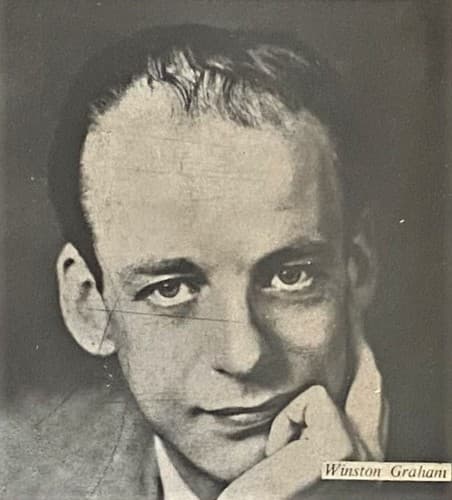
Winston Graham was a British author known for his historical fiction, particularly the Poldark series. His notable works include "Ross Poldark," "The Angry Tide," "The Stranger from the Sea," and "Bella Poldark," which explore themes of love, conflict, and social change in 18th-century Cornwall. The Poldark series has gained significant popularity and has been adapted into television dramas.
Similar books
- Jamaica Inn
Daphne du Maurier
3.9 (32k) average on GoodreadsThrillerShares a similar Cornish setting and atmospheric historical backdrop with elements of struggle and romance.
- North and South
Elizabeth Gaskell
4.2 (57k) average on GoodreadsHistorical FictionExplores class divides, industrialization, and a complex romance between characters from different social strata in a historical setting.
- Far from the Madding Crowd
Thomas Hardy
3.9 (129k) average on GoodreadsHistorical FictionFeatures strong, independent characters navigating love and social challenges in a rural 19th-century setting.
- Outlander
Diana Gabaldon
4.2 (824k) average on GoodreadsFantasyWhile both Ross Poldark and Gabaldon's Outlander series are epic historical romances, Graham's work is generally more grounded in historical realism and social commentary. Outlander embraces more explicit fantasy elements (time travel) and often prioritizes the passionate romance between its protagonists, Jamie and Claire, over the detailed exploration of socio-economic historical conditions. Graham's prose is arguably more restrained and focused on the internal struggles and societal pressures of its characters, whereas Gabaldon's is often more expansive and adventurous, with a greater emphasis on plot twists and high-stakes drama. Graham's historical detail feels less like a backdrop for romance and more like an integral character in the narrative, shaping the lives and decisions of the Poldarks in a way that is less overtly fantastical than the world of Outlander.
- Pride and Prejudice
Jane Austen
4.3 (3M) average on GoodreadsHistorical FictionComparing Ross Poldark to Austen's Pride and Prejudice highlights the different approaches to romance within historical settings. Austen's novel is a quintessential Regency-era romance, meticulously dissecting social conventions, courtship rituals, and class distinctions through witty dialogue and keen observation. While both deal with class, Graham's portrayal is far grittier, focusing on the harsh realities of poverty, labor, and industry rather than the drawing-room dramas of the landed gentry. The romance in Poldark is often born out of shared hardship and mutual respect forged in difficult circumstances, contrasting with the intellectual sparring and societal pressures that drive the relationships in Austen's work. Graham's scope is broader, encompassing a wider social spectrum and more explicit political and economic struggles, whereas Austen's genius lies in her precise, intimate focus on domestic life and personal relationships within a specific social stratum. As literary scholar [cite an Austen scholar, e.g., 'Mary Evans'] might argue, Austen perfects the novel of manners, while Graham leans into a more expansive historical novel with a strong social conscience.
- To Kill a Mockingbird
Harper Lee
4.3 (4.5M) average on GoodreadsHistorical FictionIn the 1930s Jim Crow South, Harper Lee writes about racial injustice, moral growth, and the quiet courage of a lawyer father, Atticus Finch, as seen through his young daughter's eyes.


Enjoyed the summary?
A summary gives you the shape of the book. The book itself has the detail, the examples and the voice.
Find Ross Poldark on AmazonAs an Amazon Associate, BookBrief earns from qualifying purchases. How we're funded