
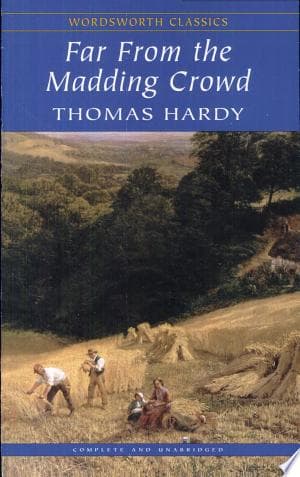
Synopsis
Covers the whole plot, including the ending.
- Difficulty
- Medium
- Pacing
- Moderate
- Mood
- Pastoral, Romantic, Tragic, Reflective
- Read it if
- You enjoy classic Victorian literature, stories about strong female protagonists navigating complex romantic choices, and rich descriptions of rural life.
- Skip it if
- You prefer fast-paced plots, lighthearted romance, or find detailed prose and tragic elements in historical fiction unappealing.
Far from the Madding Crowd Plot Summary
Covers the whole plot, including the ending.
Gabriel Oak's Humble Beginnings and First Encounter
Gabriel Oak, a hardworking young shepherd, tries to establish his own farm. He meets Bathsheba Everdene, a beautiful and spirited young woman new to Weatherbury. He is immediately drawn to her independent nature. After seeing her handle a horse and observing her unconventional behavior, Gabriel proposes marriage. Bathsheba, valuing her independence, rejects him, saying she does not want to be anyone's property. Soon after, an accident destroys Gabriel's flock, leaving him ruined and forcing him to find new work.
Bathsheba Inherits a Farm and Gabriel's Timely Aid
After her aunt's death, Bathsheba Everdene inherits Weatherbury Farm, a large property. She arrives to manage it herself, a rare act for a woman at that time. Gabriel Oak, now a penniless wanderer, arrives in Weatherbury seeking work. He sees a dangerous fire threatening Bathsheba's haystacks. Without hesitation, he takes charge, expertly directing the farmhands to put out the blaze. Impressed by his skill and bravery, and unaware of his past proposal, Bathsheba hires him as her new bailiff, recognizing his agricultural knowledge and steady character. She keeps a professional distance from him.
Boldwood's Unlikely Infatuation
Bathsheba, in a moment of youthful boredom, sends a valentine to her wealthy neighbor, Farmer William Boldwood, a reserved man who has been a bachelor for a long time. The card, meant as a joke, says only 'Marry Me.' Boldwood, unused to such attention, misinterprets the gesture. He becomes intensely infatuated with Bathsheba, his quiet life consumed by thoughts of her. He pursues her with relentless devotion, proposing marriage multiple times. Bathsheba, realizing the seriousness of her prank, feels guilt and unease, struggling to manage his fervent affections and community pressure.
Sergeant Troy's Dashing Arrival
While visiting Bath, Bathsheba meets Sergeant Francis Troy, a handsome, charming cavalryman. Troy, with his captivating looks and confident manner, quickly catches Bathsheba's attention. He shows his sword-fighting skill, dazzling her with a display that leaves her charmed. Despite Gabriel Oak's warnings about Troy's character, Bathsheba is swept away by his romantic declarations. Troy offers an exciting contrast to Gabriel's reliability and Boldwood's steady devotion. Bathsheba, drawn to the thrill he offers, falls deeply in love with him, ignoring the warning signs and advice from those who care for her.
A Hasty Marriage and Growing Disillusionment
Against the advice of her friends and Gabriel's silent disapproval, Bathsheba elopes with Sergeant Troy, marrying him in Bath without telling her neighbors or farmhands. Upon their return to Weatherbury, Troy quickly establishes himself as the farm's master, but his true character soon appears. He is irresponsible, gambling away Bathsheba's money, neglecting farm duties, and showing little respect for her or her property. Bathsheba's initial infatuation quickly turns to disillusionment as she realizes she has married a man who cares more for pleasure than for her or their future. Her happiness is replaced by regret and a growing sense of entrapment.
Fanny Robin's Tragic Return
Troy's past catches up to him and Bathsheba when Fanny Robin, a young woman from the village who was once a servant on Bathsheba's farm, reappears. Fanny is pregnant and poor, abandoned by Troy. It is revealed that Troy had promised to marry Fanny, but a misunderstanding about their meeting place led him to leave her at the altar. Fanny eventually goes to the Casterbridge workhouse, where she dies in childbirth. Her body, along with her deceased infant, is sent back to Weatherbury for burial. The coffin arrives at Bathsheba's farm, and a curious farmhand opens it, revealing Fanny and her baby, exposing Troy's devastating secret to Bathsheba and the community.
Troy's Disappearance and Boldwood's Renewed Hope
Fanny Robin's death and her child, along with Troy's callous reaction, shatter Bathsheba's world. After a confrontation with Bathsheba, Troy disappears, presumed drowned after his clothes are found by the sea. Believing herself a widow, Bathsheba enters a period of deep mourning. Farmer Boldwood, who never gave up hope, sees an opportunity to renew his suit. He presses Bathsheba for a promise of marriage, his obsession growing. Bathsheba, exhausted and vulnerable, eventually gives him a conditional promise, agreeing to marry him in six years if Troy does not return. This decision comes from weary resignation, not love.
Troy's Return and the Tragic Christmas Feast
Years pass, and the community prepares for the Christmas party at Farmer Boldwood's house, where he plans to celebrate his upcoming marriage to Bathsheba. Unknown to them, Troy, who did not drown but lived under an assumed name as a traveling showman, returns to Weatherbury. He sneaks into Boldwood's party, intending to reclaim Bathsheba. He confronts her, demanding money and asserting his marital rights. In a fit of jealous rage, Boldwood, witnessing Troy's cruel treatment of Bathsheba, shoots Troy dead with a fowling-piece he had received as a gift. The festive atmosphere instantly becomes one of horror.
Boldwood's Fate and Bathsheba's Solitude
Following Troy's murder, Farmer Boldwood is arrested. Despite his remorse and the mitigating circumstances of his extreme mental anguish, he is initially sentenced to death. However, due to his good character and evidence of temporary insanity, his sentence is changed to penal servitude for life, removing him from Bathsheba's life. Bathsheba, deeply traumatized by the events and the deaths of both Troy and Boldwood, withdraws into grief and solitude. She dedicates herself to managing her farm, finding solace in hard work and avoiding social interaction, reflecting on her past choices and their devastating consequences.
Gabriel's Steadfast Devotion and Final Proposal
Throughout Bathsheba's challenges, Gabriel Oak remains her loyal bailiff, offering unwavering support, wise counsel, and quiet devotion without pressing his own suit. He consistently puts her welfare and the farm's prosperity before his own feelings. After years of Bathsheba's solitude, Gabriel decides to leave Weatherbury, believing his presence might make her uncomfortable. This decision finally makes Bathsheba realize the depth of her feelings for him and the immense value of his steady character. She confronts him, confessing her affection and respect. Gabriel proposes once more, and this time, Bathsheba, having matured and learned from her experiences, accepts, recognizing that true love means lasting loyalty and genuine partnership.
A Quiet Union
Bathsheba Everdene and Gabriel Oak marry quietly, without fanfare. Their union shows enduring love, loyalty, and wisdom gained through hardship. Bathsheba, no longer the impulsive girl, has grown into a mature woman who values substance over superficial charm. Gabriel, ever patient and principled, finally achieves his long-held desire. Their marriage is based on mutual respect, understanding, and a shared commitment to their life and farm. The novel ends with a sense of peaceful contentment for the couple, marking Bathsheba's journey from naive independence to a fulfilling partnership with the man who truly understood and supported her.
Principal Figures
Bathsheba Everdene
Protagonist
An independent, beautiful, and headstrong young woman who inherits a farm.
Bathsheba is a complex and captivating protagonist. Initially driven by a strong desire for independence and a reluctance to be tied down, she is also prone to impulsiveness, vanity, and a certain naivete in matters of the heart. Her beauty and spirited nature attract three very different men, and her choices, often made on a whim or out of a search for excitement, lead to significant suffering. She possesses a strong work ethic and a good mind for business, proving herself capable of running her farm, but her emotional immaturity often overshadows these strengths. She yearns for love but struggles to discern true affection from superficial charm.
Relationships: Gabriel Oak (Initially employer/employee, later love interest and husband. Gabriel is her most loyal and enduring admirer.); Sergeant Frank Troy (Husband. Their relationship is one of infatuation quickly turning to disillusionment and regret.); Farmer William Boldwood (Suitor. His obsessive love for her is ignited by her prank, leading to tragedy.)
Gabriel Oak
Protagonist/Love Interest
A principled, patient, and loyal shepherd whose steadfast love endures.
Gabriel Oak embodies the virtues of honesty, loyalty, and unwavering devotion. He is a skilled shepherd and farmer, deeply connected to the land and its rhythms. From his first encounter with Bathsheba, he is captivated by her, but his love is constant and selfless, always prioritizing her well-being and the farm's prosperity even when his own feelings are unrequited. He is a man of few words but profound integrity, always offering wise counsel and practical help. His patience and steadfastness stand in stark contrast to the impulsiveness of Bathsheba and the volatile passions of her other suitors.
Relationships: Bathsheba Everdene (Long-suffering admirer, loyal employee, and eventually, husband. His love for her is a constant throughout the story.); Farmer William Boldwood (Acquaintance and fellow suitor, though they are rivals for Bathsheba's affection, Gabriel maintains respect.)
Sergeant Frank Troy
Antagonist/Love Interest
A handsome, charming, and irresponsible cavalryman who sweeps Bathsheba off her feet.
Sergeant Troy is the embodiment of superficial charm and dangerous impulsiveness. He is physically attractive and possesses a captivating charisma, particularly his sword-fighting skills, which dazzle Bathsheba. However, beneath this polished exterior lies a deeply flawed character: he is selfish, irresponsible, a gambler, and emotionally manipulative. He values pleasure and self-gratification above all else, having no real respect for women or commitment. His actions, particularly his abandonment of Fanny Robin and his treatment of Bathsheba, bring chaos and tragedy into the lives of those around him. He represents the allure of passion without substance.
Relationships: Bathsheba Everdene (Husband. Their relationship is based on initial infatuation, quickly dissolving into regret and conflict.); Fanny Robin (Former lover and fiancée, whom he abandoned, leading to her tragic death.)
Farmer William Boldwood
Antagonist/Love Interest
A wealthy, reclusive farmer whose quiet life is shattered by an obsessive love for Bathsheba.
Farmer Boldwood is a respectable, wealthy, and generally reserved bachelor whose life is dramatically altered by Bathsheba's playful valentine. Prior to this, he was known for his quiet, orderly existence and his disinterest in women. Once his affections are stirred, however, they become intense, possessive, and ultimately obsessive. He lacks the emotional flexibility to cope with rejection or uncertainty, and his love for Bathsheba transforms into a dangerous monomania. He is a man of deep, if misguided, feelings, and his inability to control these passions leads him to commit a desperate, tragic act.
Relationships: Bathsheba Everdene (Suitor. His obsessive love for her, sparked by a prank, becomes the driving force of his tragic downfall.); Gabriel Oak (Acquaintance, and rival for Bathsheba's affection, though their rivalry is often understated.)
Fanny Robin
Supporting/Catalyst
A former servant and Troy's abandoned lover, whose tragic fate exposes his true character.
Fanny Robin is a minor character whose fate serves as a crucial plot device and a stark illustration of Sergeant Troy's callousness. She is a young, vulnerable woman who falls in love with Troy and is promised marriage, only to be cruelly abandoned due to a misunderstanding and Troy's lack of commitment. Her subsequent decline into poverty, her pregnancy, and her eventual death in the workhouse, along with her infant, expose Troy's true, irresponsible nature to Bathsheba and the community. Her tragic story highlights the vulnerability of women in that era and the devastating consequences of male deceit.
Relationships: Sergeant Frank Troy (Former lover and fiancée, whom he betrayed and abandoned.); Bathsheba Everdene (Former servant; her death indirectly causes a major turning point in Bathsheba's life.)
Liddy Smallbury
Supporting
Bathsheba's loyal and talkative maid, confidante, and friend.
Liddy Smallbury serves as Bathsheba's closest companion and confidante among her household staff. She is a good-hearted and loyal woman, though sometimes prone to gossip and a bit naive. Liddy offers Bathsheba emotional support and a sounding board for her thoughts and feelings, often providing a practical, if sometimes limited, perspective. While she doesn't always understand Bathsheba's more complex emotional struggles, her presence provides a sense of continuity and domestic warmth amidst Bathsheba's turbulent romantic life. She represents the steadfast, simpler life of the rural community.
Relationships: Bathsheba Everdene (Maid, confidante, and close friend.)
Jan Coggan
Supporting
A farmhand and member of the Weatherbury community, known for his good nature.
Jan Coggan is one of Bathsheba's loyal farmhands and a prominent member of the Weatherbury community. He represents the common, honest, and hardworking folk of rural Wessex. Coggan is often part of the chorus of opinion and observation among the farm laborers, providing comic relief and grounding the story in the everyday life of the agricultural world. He is a good-natured and reliable man, contributing to the sense of community and tradition within the novel. His discussions with other farmhands often provide commentary on the main characters' actions.
Relationships: Bathsheba Everdene (Employer/employee.); Gabriel Oak (Friend and fellow farm worker.)
Joseph Poorgrass
Supporting
A timid and often confused farmhand, known for his moralizing and slow wit.
Joseph Poorgrass is another of Bathsheba's farmhands, characterized by his extreme timidity, his propensity for moralizing, and his often-confused understanding of events. He is a source of humor in the novel, with his literal interpretations and fumbling attempts at wisdom. Despite his slowness, he is a well-meaning and religious man, embodying the rustic simplicity and sometimes superstitious nature of the rural community. His presence highlights the contrast between the dramatic events of Bathsheba's life and the more mundane, if colorful, lives of her employees.
Relationships: Bathsheba Everdene (Employer/employee.); Gabriel Oak (Fellow farm worker.)
Themes & Insights
The Nature of Love and Marriage
The novel explores various kinds of love: Gabriel's selfless devotion, Boldwood's obsessive passion, and Troy's superficial charm. Bathsheba, initially valuing independence, learns that true love and a fulfilling marriage are built on respect, loyalty, and partnership, not fleeting infatuation. Her journey shows the error of choosing based on outward appearances and the lasting value of inner character. This is clearest in her regret over her hasty marriage to Troy and her eventual recognition of Gabriel's worth.
“'It is difficult for a woman to be a heroine in a love affair, when she is the hero of her own story.'”
Independence vs. Interdependence
Bathsheba begins the novel fiercely independent, determined to run her own farm and live life on her own terms, rejecting Gabriel's initial proposal to maintain her freedom. However, her experiences with Troy and Boldwood show the limits and loneliness of extreme independence, especially for a woman in her society. The novel suggests that true fulfillment comes not from absolute solitude but from balanced interdependence, where individuality is respected within a loving partnership. Her marriage to Gabriel symbolizes her embrace of a mature, shared life.
“'She was of the stuff of which great matrons are made. She was not a woman who could be content to be a mere wife.'”
Fate, Chance, and Coincidence
Hardy's Wessex novels often highlight how random events and coincidences shape human lives. Gabriel's loss of his flock, Bathsheba's accidental valentine, Fanny Robin's mistaken church, and Troy's unexpected return are all important moments not entirely within the characters' control. These events often lead to tragic outcomes, showing how fragile human plans are and how powerful external forces can be. The story suggests that while characters make choices, they are also affected by a series of unfortunate, almost fated, occurrences.
“'The great difference between the man and the woman was, that she had a heart, and he had none.'”
The Rural Landscape and Social Class
The Wessex landscape is more than a setting; it is an active force, influencing characters' lives and providing a sense of rootedness. The rhythms of the farming year drive much of the plot, from sheep-shearing to harvest. The novel also explores social class differences within the rural community, from farm owner Bathsheba, to skilled bailiff Gabriel, and the farmhands. While social mobility is limited, characters' worth often comes from their character and competence rather than strict birthright, as seen in Gabriel's rise.
“'The only love which is not a delusion is the love of a good woman for a good man, and a good man for a good woman.'”
Consequences of Impulsiveness and Vanity
Bathsheba's initial impulsiveness and vanity drive the plot's tragic turns. Her sending the valentine to Boldwood out of boredom and a desire for attention starts his destructive obsession. Her hasty marriage to Troy, driven by infatuation and disregard for warnings, leads to unhappiness and murder. The novel is a cautionary tale about acting without forethought or considering the long-term effects of one's actions, especially when dealing with others' emotions. Her growth involves learning to temper these traits.
“'It is the most miserable thing to be a woman, and to have a heart that can be pierced, and have no shield.'”
Plot Devices & Literary Techniques
The Valentine
A seemingly innocent prank that ignites a devastating chain of events.
Bathsheba's decision to send a valentine to Farmer Boldwood, inscribed with 'Marry Me,' is a pivotal plot device. Intended as a casual joke, it dramatically shifts the narrative by igniting Boldwood's intense, obsessive love. This single, impulsive act sets in motion a chain of events that leads to his tragic downfall and profoundly impacts Bathsheba's life, demonstrating how small, thoughtless actions can have monumental and unforeseen consequences. It serves as a catalyst for much of the subsequent romantic entanglement and tragedy.
Gabriel's Steadfastness
The unwavering loyalty and presence of Gabriel Oak as a constant counterpoint to chaos.
Gabriel Oak's consistent character and unwavering presence serve as a crucial plot device. He is the moral compass and stable anchor amidst Bathsheba's tumultuous romantic life. His steadfastness highlights the impulsiveness of Bathsheba, the volatility of Troy, and the obsessive nature of Boldwood. His continued employment on the farm provides a constant, reliable presence, allowing him to witness events, offer quiet support, and ultimately be there for Bathsheba when she is ready to recognize true love. His unchanging nature allows Bathsheba's development to be clearly observed against a fixed point.
Fanny Robin's Coffin
A grim revelation that exposes Troy's past and shatters Bathsheba's illusions.
The arrival and accidental opening of Fanny Robin's coffin, revealing her and her deceased infant, is a powerful and shocking plot device. It serves as the ultimate exposure of Sergeant Troy's deceit and callousness, directly confronting Bathsheba with the devastating truth of his past betrayal. This moment shatters Bathsheba's remaining illusions about her husband and acts as a major turning point, initiating her period of deep despair and Troy's subsequent disappearance. It is a stark, visceral moment of truth that propels the narrative towards its tragic climax.
The Sword Exercise
A display of superficial charm that seduces Bathsheba.
Sergeant Troy's dazzling sword exercise, where he expertly wields his weapon around Bathsheba without touching her, is a symbolic plot device. It represents his superficial charm, his ability to captivate and thrill, and his dangerous allure. This display mesmerizes Bathsheba, drawing her into his orbit and blinding her to his deeper flaws. It symbolizes the excitement and danger he offers, directly contrasting with the steady, grounded nature of Gabriel. This moment is crucial in explaining Bathsheba's initial infatuation and her subsequent poor judgment in marrying him.
Far from the Madding Crowd Quotes
“It is difficult for a woman to be a heroine in anything but a love-story.”
“The great difference between the two young men was that an emotional pleasure to Boldwood was a sensual pleasure to Troy.”
“She was at the brightest period of a woman's life, for her beauty and energy were both in full flower.”
“He had been held to her by a slight thread which was more attenuated than any cobweb. She had snapped it.”
“A man's body is a citadel, and must be held as such.”
“When a strong emotion accompanies a every-day act, the act itself is made extraordinary.”
“The only way to look at a woman is to look at her as if she were a flower, and then to leave her alone.”
“It is not the pain for the present that is most unbearable, but the pain for the future.”
“To be loved to madness—such was her great desire.”
“But a blaze may be a good thing, a useful thing, and yet, on the whole, a destructive thing.”
“He was a man of reserved character, and his feelings, if he had any, were kept in his own breast.”
“It was nearly three o'clock. The day was at its meridian, and Bathsheba's emotions were at theirs.”
“He had been her lover in the old days, and he was her protector now.”
“The most prosaic matter was touched with an ideal light by her presence.”
Quiz
10 questions on the plot and the characters. Each answer comes with a short explanation.
Question 1
What is the name of the farm Bathsheba Everdene inherits and manages?
- Flintcombe-Ash Farm
- Weatherbury Farm
- Norcombe Hill Farm
- Casterbridge Farm
Show answer
B. Weatherbury Farm Bathsheba Everdene inherits and takes over the management of Weatherbury Farm from her uncle.
Question 2
Which of Bathsheba's suitors is a wealthy, middle-aged bachelor who proposes to her multiple times?
- Gabriel Oak
- Sergeant Frank Troy
- William Boldwood
- Joseph Poorgrass
Show answer
C. William Boldwood William Boldwood is the wealthy, respectable farmer who becomes infatuated with Bathsheba and proposes to her repeatedly.
Question 3
What skill is Gabriel Oak particularly renowned for among the farmers in the region?
- His ability to shear sheep quickly and efficiently
- His talent for horse training
- His knowledge of crop rotation
- His skill in negotiating land deals
Show answer
A. His ability to shear sheep quickly and efficiently Gabriel Oak is highly regarded for his exceptional sheep-shearing skills, which helps him secure employment at Bathsheba's farm.
Question 4
What significant event causes Gabriel Oak to lose his own farm and become a shepherd for Bathsheba?
- A fire destroys his farmhouse
- His sheep are driven over a cliff by his inexperienced dog
- He makes a series of bad investments
- He is forced to sell due to mounting debts
Show answer
B. His sheep are driven over a cliff by his inexperienced dog Gabriel's flock of sheep is accidentally driven off a cliff by his new, untrained sheepdog, leading to his financial ruin.
Question 5
What is the primary reason Fanny Robin is abandoned by Sergeant Troy on their wedding day?
- She arrives at the wrong church
- Troy discovers she is pregnant with another man's child
- He decides he no longer loves her
- Her family disapproves of the marriage
Show answer
A. She arrives at the wrong church Fanny mistakenly goes to the wrong church, St. Mary's instead of St. Gabriel's, causing Troy to believe she has stood him up.
Question 6
Which of Bathsheba's character traits is most evident in her decision to send Boldwood the Valentine's card with the 'Marry me' seal?
- Prudence and foresight
- Thoughtlessness and vanity
- Deep affection and respect
- A desire for social advancement
Show answer
B. Thoughtlessness and vanity Bathsheba's impulsive and somewhat vain act of sending the 'Marry me' seal without serious intent demonstrates her thoughtlessness regarding the feelings of others.
Question 7
What does Sergeant Troy famously demonstrate to Bathsheba using his sword, showcasing his military background?
- A series of complex fencing moves
- A dazzling display of sword exercise, cutting strands of hair from her head
- How to defend oneself in close combat
- The proper way to clean and maintain a military weapon
Show answer
B. A dazzling display of sword exercise, cutting strands of hair from her head Troy impresses Bathsheba with a show of his swordmanship, where he deftly cuts hair and buttons from her clothes without harming her.
Question 8
What is the ultimate fate of William Boldwood after Sergeant Troy's return?
- He leaves Weatherbury and starts a new life abroad.
- He commits suicide out of despair.
- He shoots and kills Sergeant Troy and is subsequently imprisoned.
- He reconciles with Bathsheba and becomes a trusted friend.
Show answer
C. He shoots and kills Sergeant Troy and is subsequently imprisoned. Driven to madness by Troy's return and taunts, Boldwood shoots and kills Troy at a Christmas party, leading to his imprisonment and eventual commuted sentence.
Question 9
The novel explores the theme of social class and its impact on relationships. Which character best exemplifies the struggle against the limitations of their social standing to achieve personal happiness?
- Bathsheba Everdene, who inherits a farm and manages it successfully.
- William Boldwood, a wealthy and respected landowner.
- Gabriel Oak, who loses his farm and works his way back to respectability.
- Sergeant Frank Troy, a charismatic but irresponsible soldier.
Show answer
C. Gabriel Oak, who loses his farm and works his way back to respectability. Gabriel Oak, despite losing his own farm and being reduced to a shepherd and bailiff, steadily works his way up through diligence and loyalty, eventually achieving a stable and respected position.
Question 10
How does Bathsheba finally come to realize her true feelings for Gabriel Oak?
- She overhears him confessing his love to another woman.
- She realizes his unwavering loyalty and competence are more valuable than superficial charm, especially after the hardships she endures.
- He saves her from a dangerous accident, proving his heroism.
- Her friends and family constantly encourage her to marry him.
Show answer
B. She realizes his unwavering loyalty and competence are more valuable than superficial charm, especially after the hardships she endures. After the tumultuous events with Troy and Boldwood, Bathsheba gradually comes to appreciate Gabriel's steadfastness, reliability, and quiet devotion, recognizing his true worth in contrast to her previous romantic choices.
Far from the Madding Crowd FAQ
What is the central premise of 'Far from the Madding Crowd'?
The novel centers on Bathsheba Everdene, an independent and headstrong woman who inherits a farm in rural Wessex. Her journey involves navigating the challenges of farm management and choosing among three very different suitors: the steadfast Gabriel Oak, the dashing but reckless Sergeant Troy, and the wealthy but reserved Boldwood.
Who are Bathsheba Everdene's three main suitors and what does each represent?
Her suitors are Gabriel Oak, representing loyalty, honesty, and enduring love; Sergeant Troy, embodying passion, superficiality, and ultimately deceit; and Farmer Boldwood, symbolizing obsessive devotion, wealth, and a tragic possessiveness. Each man offers a distinct path and challenge to Bathsheba's independence and understanding of love.
What significant event leads to Bathsheba's initial prosperity and independence?
Bathsheba inherits her uncle's farm after his sudden death, thrusting her into the role of a mistress of a large estate. This inheritance grants her financial independence and social standing, allowing her to make her own decisions, which was unusual for women in the 1840s.
How does Gabriel Oak first encounter Bathsheba, and what is their initial relationship?
Gabriel Oak first encounters Bathsheba when she is admiring herself in a mirror on a wagon, and he is immediately smitten. He proposes marriage early on, but she rejects him, seeing him as too familiar and not exciting enough, leading to a professional relationship when he later becomes her shepherd.
What role does Fanny Robin play in the tragic events involving Sergeant Troy?
Fanny Robin is Sergeant Troy's former lover, whom he promised to marry but abandoned due to a misunderstanding at the church. Her subsequent destitution, death in the workhouse, and the arrival of her coffin at Bathsheba's farm expose Troy's true character and lead to significant emotional turmoil and public scandal for Bathsheba.
How does the storm scene involving Gabriel Oak demonstrate his character and importance to Bathsheba?
During a severe storm, Gabriel single-handedly saves Bathsheba's harvested ricks from ruin, preventing financial disaster. This selfless act, performed while Bathsheba and Troy are distracted by their passion, highlights Gabriel's unwavering loyalty, competence, and practical wisdom, proving his invaluable presence on the farm.
What is the significance of the watch chain that Sergeant Troy gives to Bathsheba?
The watch chain, a seemingly trivial gift, becomes a symbol of Troy's superficial charm and his ability to manipulate Bathsheba. It represents the fleeting nature of their passionate but ultimately hollow relationship, contrasting with the more substantial gifts and affections of Gabriel and Boldwood.
Are there any subtle foreshadowing elements regarding Troy's true nature or fate?
Yes, Troy's initial showiness, his disregard for Gabriel's advice, and his casual confession of a past 'muddle' with a woman subtly hint at his irresponsible and deceitful character. His dramatic sword exercise, while impressive, also foreshadows his capacity for dangerous and unpredictable actions.
What is the implied significance of Bathsheba's initial rejection of Gabriel Oak's proposal?
Her rejection implies a youthful desire for excitement and a lack of understanding of true substance over superficial charm. It also reflects her independent spirit, as she doesn't want to be 'owned' too easily, but ultimately leads her down a path of regret and suffering before she can appreciate Gabriel.
How does Bathsheba's pride influence her decisions and relationships throughout the novel?
Bathsheba's strong pride often leads her to make impulsive decisions, such as sending the Valentine to Boldwood or marrying Troy out of defiance and passion. It initially prevents her from admitting her feelings for Gabriel and makes her vulnerable to Troy's flattery, complicating her emotional growth.
Discuss the psychological impact of Fanny Robin's death and funeral on Bathsheba.
Fanny's death, particularly the discovery of her and her child in the coffin, shatters Bathsheba's illusions about Troy and forces her to confront his past betrayal and her own complicity. It plunges her into deep shame, grief, and a profound realization of Troy's cruelty, marking a turning point in her emotional maturity.
How does Farmer Boldwood's unrequited love for Bathsheba evolve into an obsession, and what are its consequences?
Boldwood's love, initially sparked by a thoughtless Valentine, grows into an all-consuming obsession fueled by Bathsheba's beauty and his own isolated nature. This obsession leads him to desperate proposals, a possessive fury over Troy, and ultimately to murder, showcasing the destructive power of unfulfilled desire.
Is Bathsheba Everdene a truly independent woman, or is her independence ultimately limited by societal expectations?
While Bathsheba possesses remarkable independence in managing her farm and initially rejecting suitors, her choices are still shaped by societal pressures concerning marriage and reputation. Her eventual marriage to Gabriel, though loving, can be interpreted as a compromise to societal norms, suggesting a nuanced view of her independence.
How does Hardy use the rural Wessex landscape to reflect the characters' inner states or the novel's themes?
The Wessex landscape, with its changing seasons, powerful storms, and agricultural cycles, serves as a mirror to the characters' emotional journeys and the novel's themes. The harshness of winter reflects despair, while the fertility of spring symbolizes hope and renewal, often contrasting with human folly or resilience.
What is the novel's stance on passion versus steadfast love, as exemplified by Bathsheba's choices?
The novel strongly suggests that while passion (represented by Troy) can be intoxicating, it is ultimately fleeting and destructive. Steadfast, enduring love and loyalty (embodied by Gabriel) are presented as the true foundations for happiness and stability, a lesson Bathsheba learns through profound suffering.
Could Bathsheba have avoided her suffering if she had married Gabriel Oak earlier?
Many argue that Bathsheba's suffering could have been mitigated had she accepted Gabriel earlier, as his wisdom and stability would have protected her. However, her journey through hardship with Troy and Boldwood is crucial for her personal growth and for her to truly appreciate Gabriel's worth, suggesting it was a necessary, albeit painful, path.
How does the ending, with Bathsheba and Gabriel's marriage, resolve the novel's central conflicts?
The ending resolves Bathsheba's romantic conflicts by uniting her with Gabriel, the suitor who consistently demonstrated true love and support. It signifies her maturity and recognition of genuine worth, bringing stability to her personal life and securing the future of the farm under their combined wisdom, embodying a quiet, earned happiness.
Does the novel present a feminist perspective for its time, or is Bathsheba ultimately constrained by her era?
Bathsheba's initial independence and farm management certainly offer a proto-feminist perspective for the 1840s. However, her reliance on marriage for social acceptance and her ultimate dependence on a male partner (Gabriel) suggest she is still largely constrained by the patriarchal structures of her time, offering a complex view of female agency.
About the author
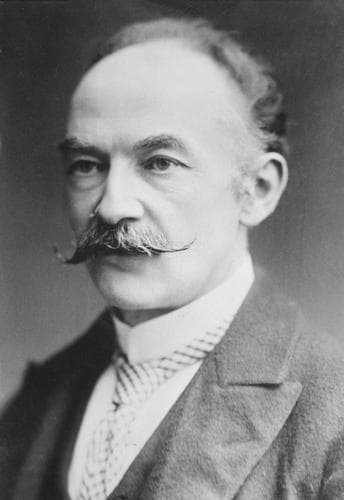
Thomas Hardy was an English novelist and poet. A Victorian realist in the tradition of George Eliot, he was influenced both in his novels and in his poetry by Romanticism, including the poetry of William Wordsworth. He was highly critical of much in Victorian society, especially on the declining status of rural people in Britain, such as those from his native South West England.
Similar books
- Tess of the D'Urbervilles
Thomas Hardy
3.8 (238k) average on GoodreadsHistorical FictionExplores similar themes of fate, social class, and the struggles of women in Victorian Wessex.
- Pride and Prejudice
Jane Austen
4.3 (3M) average on GoodreadsHistorical FictionFeatures a strong, independent heroine making complex romantic choices among varied suitors.
- Wuthering Heights
Emily Brontë
3.9 (1.3M) average on GoodreadsHistorical FictionOffers a classic, intense romance with a focus on character and setting, though with a darker tone.
- To Kill a Mockingbird
Harper Lee
4.3 (4.5M) average on GoodreadsHistorical FictionIn the 1930s Jim Crow South, Harper Lee writes about racial injustice, moral growth, and the quiet courage of a lawyer father, Atticus Finch, as seen through his young daughter's eyes.
- The Great Gatsby
F. Scott Fitzgerald
3.9 (3.8M) average on GoodreadsHistorical FictionIn the opulent Roaring Twenties, a mysterious millionaire's lavish parties hide his desperate, tragic pursuit of a lost love, exposing the emptiness within the American Dream.
- Angels & Demons
Dan Brown
3.9 (2.7M) average on GoodreadsThrillerA Harvard symbologist races through Rome's ancient sites, deciphering cryptic clues to unmask the Illuminati and stop a vengeful plot to destroy the Vatican with a stolen antimatter weapon.





Enjoyed the summary?
A summary gives you the shape of the book. The book itself has the detail, the examples and the voice.
Find Far from the Madding Crowd on AmazonAs an Amazon Associate, BookBrief earns from qualifying purchases. How we're funded