
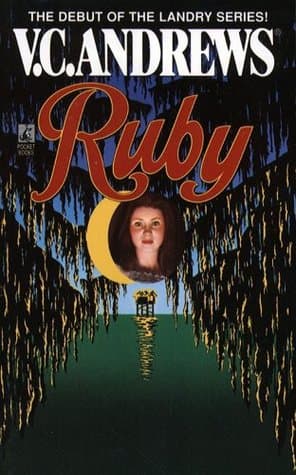
Synopsis
Covers the whole plot, including the ending.
- Difficulty
- Medium
- Pacing
- Moderate
- Mood
- Melodramatic, Tragic, Suspenseful, Romantic, Gothic
- Read it if
- You enjoy melodramatic family sagas with forbidden romance, dark secrets, and a resilient heroine overcoming immense adversity.
- Skip it if
- You prefer realistic narratives, dislike explicit themes of incest and abuse (implied or direct), or find highly dramatic and often tragic plotlines unappealing.
Ruby Plot Summary
Covers the whole plot, including the ending.
Bayou Beginnings and Forbidden Love
Ruby Landry grows up in the Louisiana bayou, raised by her spiritual healer Grandmère Catherine and her often-drunk Grandpère Jack. She attends a small school and dreams of becoming an artist. Ruby develops a deep, innocent love for Paul Tate, a handsome boy from a wealthy, prominent family in the nearby town of Houma. Their relationship is kept secret due to the social divide between the poor Landry family and the affluent Tates, who would never approve of Paul associating with a bayou girl. Grandmère Catherine, seeing Ruby's artistic talent and a future beyond the bayou, encourages her dreams, often speaking of a time when Ruby will live in a grand house in New Orleans, surrounded by riches.
A Father's Secret and Grandmère's Prophecy
One day, while exploring Grandmère Catherine's belongings, Ruby finds a hidden photograph of a handsome man and learns a shocking truth: this man, Beau Andreas, is her biological father, not Grandpère Jack. Grandmère reveals that Ruby's mother, Gabrielle, was seduced by Beau, who was already married to Daphne, a wealthy socialite. To protect Gabrielle and Ruby from scandal, Beau arranged for Gabrielle to live in the bayou, financially supporting her and later Ruby, while Grandpère Jack was paid to act as Ruby's father. Grandmère Catherine says Ruby must eventually go to New Orleans to claim her rightful place, hinting at a larger destiny and the secrets surrounding her birth.
Tragedy Strikes and a New Path Emerges
Tragedy strikes when Grandmère Catherine suddenly falls ill and dies. Her death leaves Ruby heartbroken and vulnerable, as Grandpère Jack is too lost in his alcoholism to provide any real support. Before her death, Grandmère Catherine repeats her wish for Ruby to leave the bayou and seek out her father, Beau Andreas, in New Orleans, believing it is where Ruby belongs and where she will find her true destiny. Following Grandmère's instructions and with no other options, Ruby makes the difficult decision to leave her beloved bayou home, her memories of Paul, and the only life she's ever known, to embark on a journey to New Orleans.
Arrival at the Andreas Mansion
Upon arriving in New Orleans, Ruby finds the grand Andreas mansion. She is met with a cold reception from her father, Beau, who is shocked by her sudden appearance and the exposure of his long-kept secret. Beau's wife, Daphne, is immediately hostile and resentful, seeing Ruby as a scandalous intrusion and a threat to her family's reputation and wealth. Despite the tension, Beau, perhaps out of guilt or a sense of duty, allows Ruby to stay in the mansion, but she is relegated to the attic, treated more as a servant than a daughter, and constantly reminded of her illegitimate status by Daphne and her spiteful children, Gisselle and Pierre.
Life as an Outcast in a Golden Cage
Life in the Andreas mansion is a torment for Ruby. Daphne, Gisselle, and Pierre subject her to constant verbal abuse, belittling her bayou origins and treating her as an unwelcome outsider. She is isolated, forbidden from interacting with the family's social circle, and her artistic talents are dismissed. Ruby finds solace in her attic room, where she secretly paints and dreams of Paul Tate, their shared love becoming her only source of strength and hope amidst the cruelty. She often feels like a prisoner in a golden cage, surrounded by luxury but starved of affection and acceptance.
Paul's Reappearance and Renewed Hope
Just as Ruby feels her spirit breaking under the weight of her new life, Paul Tate unexpectedly reappears in New Orleans. He has come to the city for college and, through a twist of fate, discovers Ruby's whereabouts. Their reunion is a powerful moment, rekindling their deep love and providing Ruby with a much-needed ray of hope. Paul is shocked by Ruby's living conditions and the treatment she receives from the Andreas family. He vows to help her escape her predicament, and their secret meetings become Ruby's lifeline, giving her the strength to endure the daily torment.
Daphne's Schemes and Ruby's Despair
Daphne Andreas, ever watchful and malicious, eventually discovers Ruby's secret meetings with Paul. Enraged by the thought of Ruby bringing further scandal to her family, and perhaps jealous of the affection Paul shows Ruby, Daphne devises a cruel plan. She arranges for Paul to be sent away, possibly even blackmailing his wealthy parents to facilitate his transfer to a distant university. At the same time, she intensifies her abuse of Ruby, making her life even more unbearable and ensuring Ruby feels utterly alone and hopeless, effectively cutting off her only connection to happiness and the outside world.
The Shocking Revelation of Blackmail
Driven by desperation, Ruby begins to piece together fragments of conversations and information she overhears. She eventually discovers the full extent of the blackmail scheme that has plagued her family for years. It is revealed that Grandpère Jack, or perhaps another relative, had been extorting money from Beau Andreas, threatening to expose his affair with Gabrielle and the existence of Ruby if he didn't provide financial support. This blackmail was also the reason Beau reluctantly allowed Ruby into the mansion, fearing the scandal would ruin his political ambitions and social standing. The revelation paints a darker picture of her family's past and her father's motivations.
A Glimmer of Escape and a New Hope
Amidst her despair, an unexpected ally emerges in the household – perhaps a sympathetic servant or even Beau himself, who occasionally shows fleeting moments of paternal concern. This individual helps Ruby by providing resources or information, enabling her to formulate a plan for escape. Ruby, drawing on her inner strength and the lessons of resilience learned from Grandmère Catherine, decides she can no longer endure the abuse and the lies. She secretly prepares to leave the mansion, determined to forge her own path and escape the toxic environment, holding onto the hope of finding Paul again.
The Escape and an Uncertain Future
With careful planning, Ruby successfully escapes the oppressive Andreas mansion, leaving behind the wealth and the torment. She is now alone in New Orleans, with little money but a newfound sense of freedom and determination. She plans to use her artistic talent to support herself, remembering Grandmère Catherine's encouragement. While her future is uncertain, Ruby carries with her the unwavering hope of one day reuniting with Paul Tate. She understands that she must first establish herself and find her own independence before she can truly build a future with him, which is the end of the first chapter of her life and the beginning of a journey towards self-discovery and true love.
Principal Figures
Ruby Landry
Protagonist
A talented artist from the bayou, seeking love and her true identity.
Ruby is a kind-hearted and resilient young woman, raised in the Louisiana bayou. She possesses an innate artistic talent and a deep capacity for love, particularly for Paul Tate. Despite her humble beginnings, she carries a natural grace and inner strength. Throughout her ordeal in the Andreas mansion, she maintains her integrity and dreams, holding onto the hope of a better future. Her journey is one of self-discovery, resilience against adversity, and the pursuit of love and acceptance.
Relationships: Grandmère Catherine (Loving, spiritual guardian and mentor); Grandpère Jack (Distant, alcoholic guardian); Paul Tate (First and true love); Beau Andreas (Biological father, conflicted and distant); Daphne Andreas (Cruel stepmother); Gisselle Andreas (Spiteful stepsister); Pierre Andreas (Cruel stepbrother)
Paul Tate
Supporting
Ruby's wealthy, forbidden love interest, offering hope and devotion.
Paul is a handsome and kind young man from a prominent, wealthy family. He genuinely loves Ruby, despite the social barriers and his family's disapproval. His devotion to Ruby is a constant source of strength for her, and he actively tries to help her escape her dire circumstances. He represents the hope and true affection that Ruby longs for, standing in stark contrast to the coldness of the Andreas family. He is willing to defy his family for Ruby, showcasing his strong character.
Relationships: Ruby Landry (Deep and true love interest); Tate Family (Wealthy, disapproving parents)
Grandmère Catherine
Supporting
Ruby's spiritual, loving guardian and mentor.
Grandmère Catherine is Ruby's wise and loving guardian, a Cajun spiritual healer and herbalist. She provides Ruby with unconditional love, teaches her about their bayou heritage, and nurtures her artistic talent. She possesses a mystical foresight, predicting Ruby's future in New Orleans and her eventual rise to prominence. Her death is a pivotal moment, forcing Ruby to embark on her journey, but her wisdom and love continue to guide Ruby from beyond the grave.
Relationships: Ruby Landry (Loving guardian, mentor, and grandmother figure); Grandpère Jack (Husband)
Grandpère Jack
Supporting
Ruby's nominal grandfather, an alcoholic and distant figure.
Grandpère Jack is Ruby's nominal grandfather, a man consumed by alcoholism and bitterness. He is distant and often unkind to Ruby, failing to provide the emotional support she needs, especially after Grandmère Catherine's death. He was paid to act as Ruby's father to hide the scandal of her birth. His character highlights the poverty and hardships of Ruby's early life and the secrets that surround her origins.
Relationships: Ruby Landry (Nominal grandfather, distant and neglectful); Grandmère Catherine (Wife)
Beau Andreas
Supporting
Ruby's biological father, a wealthy and conflicted New Orleans socialite.
Beau Andreas is Ruby's biological father, a prominent and wealthy man in New Orleans society. He is conflicted, torn between his desire to maintain his reputation and a nascent sense of paternal guilt. He initially allows Ruby into his home out of fear of scandal and blackmail, but struggles to acknowledge her as his daughter due to his cruel wife, Daphne. He is a weak figure, easily manipulated by Daphne and focused on his social standing, but occasionally shows glimpses of remorse or affection for Ruby.
Relationships: Ruby Landry (Biological father, conflicted); Daphne Andreas (Wife); Gabrielle Landry (Ruby's deceased mother, former lover); Gisselle Andreas (Daughter); Pierre Andreas (Son)
Daphne Andreas
Antagonist
Beau's cruel and manipulative wife, Ruby's primary tormentor.
Daphne Andreas is Beau's wealthy and vindictive wife, and Ruby's primary antagonist. She is obsessed with social status and reputation, viewing Ruby as a scandalous intrusion and a threat to her family's standing. Daphne is relentlessly cruel, verbally and emotionally abusing Ruby, and actively scheming to make her life miserable and separate her from Paul. She embodies the harsh, unforgiving nature of New Orleans high society and the prejudices Ruby faces.
Relationships: Ruby Landry (Cruel stepmother, antagonist); Beau Andreas (Husband); Gisselle Andreas (Daughter); Pierre Andreas (Son)
Gisselle Andreas
Supporting
Ruby's spoiled and spiteful stepsister.
Gisselle is Daphne and Beau's daughter, and Ruby's stepsister. She is spoiled, arrogant, and takes pleasure in tormenting Ruby. She mirrors her mother's cruelty and prejudice, constantly reminding Ruby of her illegitimate status and humble origins. Gisselle represents the snobbery and mean-spiritedness of the privileged world Ruby is forced into.
Relationships: Ruby Landry (Spiteful stepsister); Daphne Andreas (Mother); Beau Andreas (Father); Pierre Andreas (Brother)
Pierre Andreas
Supporting
Ruby's cruel and arrogant stepbrother.
Pierre is Daphne and Beau's son, and Ruby's stepbrother. Like his sister, he is arrogant and participates in the family's cruel treatment of Ruby. He often mocks her bayou upbringing and contributes to her isolation within the mansion. His character reinforces the hostile environment Ruby endures.
Relationships: Ruby Landry (Cruel stepbrother); Daphne Andreas (Mother); Beau Andreas (Father); Gisselle Andreas (Sister)
Gabrielle Landry
Mentioned
Ruby's deceased mother, whose past affair sets the plot in motion.
Gabrielle is Ruby's deceased biological mother, whose affair with Beau Andreas and subsequent death are central to the plot's initiation. Her story, revealed through Grandmère Catherine, explains Ruby's origins and the reasons for her secret existence in the bayou. Though never seen alive, her memory and the scandal surrounding her choices profoundly impact Ruby's life and journey.
Relationships: Ruby Landry (Mother); Beau Andreas (Former lover, Ruby's father); Grandmère Catherine (Mother)
Themes & Insights
Identity and Self-Discovery
Ruby's journey is about discovering who she is, both in terms of her parentage and her own inner strength. She grapples with her dual identity as a bayou girl and the illegitimate daughter of a wealthy New Orleans family. Her artistic talent is a key part of her self-expression and ultimately her path to independence. The constant belittling by the Andreas family forces her to look inward and define herself beyond their cruel perceptions, ultimately choosing her own path away from their control.
“Grandmère always said I had a special gift, a way of seeing the world that others couldn't. Maybe that's why I always felt like an outsider, even in the bayou.”
Social Class and Prejudice
The contrast between the impoverished bayou and the opulent New Orleans society highlights the theme of social class. Ruby faces prejudice from the wealthy Tate and Andreas families due to her humble origins and illegitimate birth. Paul's parents forbid his association with her, and Daphne Andreas uses Ruby's background as a weapon of abuse. The novel shows how class distinctions can dictate acceptance, love, and opportunities, forcing Ruby to fight against ingrained societal biases to find her place.
“They looked at me as if I were something the bayou mud had dragged in, not a human being.”
Forbidden Love and Resilience
The love between Ruby and Paul Tate is a central forbidden romance, challenged by social class, family disapproval, and Daphne's interference. Despite the overwhelming obstacles and their forced separation, their love remains a powerful force, sustaining Ruby through her darkest times. This theme emphasizes the power of true affection and Ruby's resilience in holding onto that hope, even when faced with despair and manipulation designed to break her spirit.
“Even when I thought I couldn't bear another day, the memory of Paul's smile, his touch, was enough to keep a tiny spark of hope alive.”
Family Secrets and Betrayal
The entire plot is driven by family secrets: Beau Andreas's affair with Gabrielle, Ruby's true parentage, and the long-standing blackmail scheme. These secrets create a foundation of deceit and betrayal that impacts Ruby's life. The revelation of her father's identity and the blackmail shatters her understanding of her past and her family, forcing her to confront uncomfortable truths about the people she thought she knew and the motivations behind their actions.
“The truth about my father, about the blackmail, it felt like a poison seeping into every memory I had.”
The Power of Art and Dreams
Ruby's artistic talent is not merely a hobby but a vital part of her identity and a source of solace and hope. Grandmère Catherine encourages her to pursue her painting, recognizing it as her true calling and a path to a better future. In the oppressive Andreas mansion, her art becomes a secret refuge and a means of self-expression, allowing her to escape the cruelty of her surroundings and maintain her spirit. It symbolizes her potential for independence and her unique way of seeing the world.
“My paints were my escape, my secret world where no one could hurt me, where I could be truly free.”
Plot Devices & Literary Techniques
The Hidden Photograph
A physical object that reveals a crucial family secret.
The hidden photograph of Beau Andreas serves as the catalyst for Ruby's journey and the unraveling of her family's secrets. It is a tangible piece of evidence that shatters Ruby's perception of her past and reveals her true parentage. This device is crucial for initiating the plot, transitioning Ruby from her innocent bayou life to the harsh realities of her father's world in New Orleans, and exposing the long-held lies that define her existence.
Grandmère Catherine's Prophecies
Foreshadowing and spiritual guidance from a wise elder.
Grandmère Catherine's mystical prophecies about Ruby's future in New Orleans, her artistic success, and her eventual wealth serve as a powerful form of foreshadowing. They provide Ruby with a sense of destiny and hope, even amidst her suffering. This device not only guides Ruby's decisions but also imbues the narrative with a sense of preordained fate, suggesting that despite all obstacles, Ruby is meant for a life beyond the bayou and the Andreas mansion.
The Andreas Mansion
A symbolic setting representing entrapment and social hierarchy.
The opulent Andreas mansion functions as more than just a setting; it is a symbol of Ruby's entrapment, the coldness of high society, and the stark contrast between wealth and emotional poverty. Its grandeur hides a cruel and deceitful interior, mirroring the false pretenses of its inhabitants. Ruby's confinement to the attic further emphasizes her marginalized status, making the mansion a 'golden cage' that represents her suffering and isolation within a world that rejects her.
The Bayou vs. New Orleans
Juxtaposition of two distinct settings to highlight themes.
The contrast between the natural, simple, and loving environment of the bayou and the artificial, cruel, and complex society of New Orleans is a significant plot device. The bayou represents Ruby's innocence, genuine love, and spiritual connection, while New Orleans embodies the harsh realities of social class, prejudice, and deceit. This juxtaposition emphasizes Ruby's loss of innocence, the challenges she faces, and her longing for the purity of her past, while also highlighting her growth and resilience in adapting to a hostile world.
Ruby Quotes
“I was a stranger in a strange land, and I had to learn the language of the heart.”
“Secrets are like shadows; they follow you everywhere, even in the brightest light.”
“In the garden of my memories, the flowers of yesterday still bloom with the colors of today.”
“Love is not a gentle breeze; it is a storm that can uproot the strongest trees.”
“The walls of this house are not made of stone, but of whispers and lies.”
“Sometimes, the heart knows what the mind refuses to see.”
“I am a puzzle with missing pieces, and I must find them in the echoes of my past.”
“In the silence between words, the truth often speaks the loudest.”
“The road to love is paved with thorns, but the roses at the end are worth the pain.”
“We are all actors on a stage, but some of us forget our lines and must improvise.”
“The past is a ghost that haunts the present, and I must learn to live with its whispers.”
“In the mirror of my soul, I see reflections of those who came before me.”
“Love and fear are two sides of the same coin, and I have spent both in abundance.”
“The stars may guide us, but it is our choices that light the path.”
Quiz
10 questions on the plot and the characters. Each answer comes with a short explanation.
Question 1
Where does Ruby Landry live at the beginning of the book?
- New Orleans
- The bayou
- A plantation mansion
- A city boarding house
Show answer
B. The bayou Ruby lives a simple life in the bayou with her grandparents at the start of the story, which establishes her humble origins before her journey to New Orleans.
Question 2
What is Ruby's primary artistic talent that Grandmère Catherine encourages?
- Singing
- Dancing
- Painting
- Writing poetry
Show answer
C. Painting Grandmère Catherine urges Ruby to follow her dream of becoming a great painter, foreseeing a future where this talent might lead her to riches in New Orleans.
Question 3
Why do Paul Tate's parents forbid him from associating with Ruby?
- Because she is a spiritual healer
- Because she is poor and from the Landry family
- Because she is rumored to be cursed
- Because she plans to leave the bayou
Show answer
B. Because she is poor and from the Landry family Paul's wealthy parents look down on Ruby's poor background and the Landry family's low social status, creating a central conflict in their romance.
Question 4
How does Ruby first learn about her father?
- Through a letter he sends her
- From a confession by Grandpère Jack
- By finding a faded photograph
- Through a dream vision
Show answer
C. By finding a faded photograph Ruby glimpses her father's image for the first time in a faded photograph, which triggers revelations about deception and blackmail in her family history.
Question 5
What event forces Ruby to seek out her father in New Orleans?
- Paul Tate breaks up with her
- Grandmère Catherine's death
- She inherits a fortune
- A hurricane destroys her home
Show answer
B. Grandmère Catherine's death After being stunned by revelations about her father and devastated by Grandmère's death, Ruby is left with no choice but to seek out her father in his New Orleans mansion.
Question 6
What is Grandmère Catherine's role in the bayou community?
- A school teacher
- A store owner
- A Cajun spiritual healer
- A midwife
Show answer
C. A Cajun spiritual healer Grandmère Catherine is described as a Cajun spiritual healer, which reflects the book's bayou setting and adds to the mystical elements of Ruby's upbringing.
Question 7
Which theme is most prominently explored through Ruby's move from the bayou to New Orleans?
- The importance of formal education
- The conflict between innocence and corruption
- The benefits of technological progress
- The value of political power
Show answer
B. The conflict between innocence and corruption Ruby's journey from her simple, innocent life in the bayou to the deceptive, corrupt environment of her father's mansion highlights the theme of innocence confronting corruption.
Question 8
What does Ruby cling to for emotional survival in her father's mansion?
- Her painting supplies
- Memories of her life in the bayou
- Her grandmother's spiritual teachings
- Memories of her love for Paul Tate
Show answer
D. Memories of her love for Paul Tate In the house of lies, madness, and cruel torment, Ruby specifically clings to her memories of Paul to keep her heart alive, emphasizing love as her salvation.
Question 9
What is revealed about Ruby's family history through the photograph discovery?
- That her mother is actually alive
- A shameful deception and scheme of blackmail
- That she has a twin sister
- That her grandparents are not biologically related to her
Show answer
B. A shameful deception and scheme of blackmail The photograph leads Ruby to learn of a shameful deception and shocking blackmail scheme, uncovering dark secrets that drive the plot forward.
Question 10
How does the book characterize Grandpère Jack?
- As a wealthy businessman
- As a loving and supportive guardian
- As a drunken outcast
- As a strict disciplinarian
Show answer
C. As a drunken outcast Grandpère Jack is explicitly described as a drunken outcast, contrasting with Grandmère Catherine's loving nature and adding to Ruby's difficult family dynamics.
Ruby FAQ
What is 'Ruby' by V.C. Andrews about?
The novel follows Ruby Landry, a poor Cajun girl raised by her grandparents in the Louisiana bayou, who discovers shocking secrets about her family after her grandmother's death. She learns her father is a wealthy New Orleans man, moves to his mansion, and endures psychological torment while clinging to her love for Paul Tate, a wealthy local boy forbidden from seeing her.
Why should I read 'Ruby'?
It's a compelling gothic-tinged family drama with themes of class conflict, forbidden romance, and dark family secrets. The atmospheric bayou setting, Ruby's journey from innocence to resilience, and the shocking twists in the New Orleans mansion create an addictive, emotional read typical of V.C. Andrews' style.
What is the background/setting of 'Ruby'?
The story begins in the impoverished Cajun bayou of Louisiana, where Ruby lives in a simple shack with her spiritual healer grandmother and alcoholic grandfather. Later, it shifts to the opulent but oppressive mansion of her father in New Orleans, highlighting stark contrasts between rural poverty and urban wealth.
What are the most memorable quotes from 'Ruby'?
Key quotes include Grandmère Catherine's warning, 'Innocence can't last forever,' and Ruby's reflection, 'I clung to my memories of Paul to keep my heart alive.' These capture the novel's themes of lost innocence and enduring love amidst betrayal.
What writing style does V.C. Andrews use in 'Ruby'?
Andrews employs a first-person narrative from Ruby's perspective, blending gothic melodrama with vivid sensory descriptions of the bayou and New Orleans. The prose is emotional and atmospheric, emphasizing Ruby's inner turmoil and the stark contrasts between her two worlds.
What minor details add significant meaning in 'Ruby'?
The faded photograph of Ruby's father symbolizes hidden truths and her disrupted identity. Grandmère Catherine's spiritual healing practices foreshadow Ruby's need for inner strength, while the Spanish moss in the bayou mirrors the clinging, suffocating secrets of the family.
What are some subtle foreshadowing moments in 'Ruby'?
Grandmère's urging Ruby to become a painter in New Orleans hints at her future move and the 'riches' that come with torment. Paul's parents forbidding their relationship foreshadows the class barriers Ruby will face, and Grandmère's death shortly after revealing secrets suggests Ruby's impending isolation.
What unexpected character connections exist in 'Ruby'?
Ruby's father, who she believed dead, is revealed to be a wealthy New Orleans man with a hidden past tied to her mother. This connection exposes a web of deception, including blackmail schemes that link the bayou's poverty to the city's elite, forcing Ruby into a cruel family dynamic she never anticipated.
What are unspoken character motivations in 'Ruby'?
Ruby's father likely hides her existence to protect his social status, driven by shame and greed. Grandmère Catherine's secrecy about Ruby's parents stems from a desire to shield her from pain, while Paul's defiance of his parents shows a deeper commitment to love over societal expectations.
What psychological complexities do characters exhibit in 'Ruby'?
Ruby grapples with identity loss and resilience as she transitions from naive bayou girl to a survivor in a hostile mansion. Her father displays narcissism and cruelty, masking insecurities about his past. Grandpère Jack's alcoholism reflects his guilt and marginalization, adding layers of familial dysfunction.
What are the major emotional turning points in 'Ruby'?
Key moments include Ruby discovering the photograph and learning her father's identity, Grandmère's death which leaves her vulnerable, moving to New Orleans and facing torment, and her reliance on memories of Paul for emotional survival. Each event strips away her innocence and tests her strength.
How do relationship dynamics evolve in 'Ruby'?
Ruby's bond with Paul shifts from innocent attraction to a forbidden lifeline as class conflicts intensify. Her relationship with her grandparents changes from dependency to loss, while her connection with her father devolves from curiosity to fear and resistance, highlighting themes of betrayal and endurance.
Which parts of 'Ruby' remain ambiguous or open-ended?
The full extent of the blackmail scheme involving Ruby's parents is left somewhat vague, as are the precise reasons for her father's cruelty. The novel's ending leaves Ruby's future uncertain, focusing on her emotional survival rather than a resolved conclusion, inviting speculation about her next steps.
What are controversial scenes or decisions in 'Ruby'?
Ruby's father's psychological torment and the family's deception spark debate about parental abandonment and abuse. Some readers may find the class-based forbiddance of Ruby and Paul's relationship controversial, as it highlights societal prejudices that drive much of the conflict.
'Ruby' ending explained: how it ends & what it means
The novel ends with Ruby enduring her father's mansion, clinging to memories of Paul for hope. It signifies her unresolved struggle between her past innocence and present suffering, emphasizing themes of resilience and the enduring power of love in the face of betrayal and hardship.
About the author
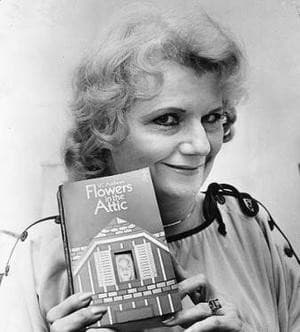
V.C. Andrews was an American author known for her gothic and family saga novels. She gained popularity with works such as "Flowers in the Attic," "Petals on the Wind," "If There Be Thorns," "Seeds of Yesterday," "Garden of Shadows," and "My Sweet Audrina," which often explore themes of betrayal, family secrets, and psychological drama. Her writing has captivated readers since the late 20th century.
Similar books
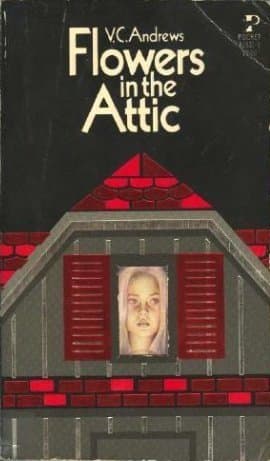
- Flowers in the Attic
V.C. Andrews
3.8 (161k) average on GoodreadsThrillerShares the author's signature style of dark family secrets, forbidden love, and gothic atmosphere.
- The Thorn Birds
Colleen McCullough
4.2 (314k) average on GoodreadsHistorical FictionFeatures a sweeping saga of forbidden love, family secrets, and a strong female protagonist facing societal constraints.
- We Were Liars
E. Lockhart
3.8 (465k) average on GoodreadsThrillerCompared to 'We Were Liars', 'Ruby' lacks the literary craftsmanship and psychological depth. Lockhart's novel masterfully integrates mystery with complex character psychology and a sophisticated narrative structure, offering a more nuanced exploration of memory, truth, and family secrets, whereas 'Ruby' often prioritizes sensationalism over subtlety and psychological realism.
- The Secret History
Donna Tartt
3.9 (2k) average on GoodreadsPoliticsWhile both feature elements of mystery and dark secrets, 'Ruby' appears simplistic when contrasted with 'The Secret History'. Tartt's novel delves into morally ambiguous characters, philosophical inquiry, and intricate psychological insight with profound literary prose, making 'Ruby' seem formulaic and less ambitious in its thematic scope and execution.
- Angels & Demons
Dan Brown
3.9 (2.7M) average on GoodreadsThrillerA Harvard symbologist races through Rome's ancient sites, deciphering cryptic clues to unmask the Illuminati and stop a vengeful plot to destroy the Vatican with a stolen antimatter weapon.
- Gone Girl
Gillian Flynn
4.1 (2.3M) average on GoodreadsThrillerA wife's sudden disappearance on her fifth anniversary reveals a web of lies and psychological warfare, exposing the secrets within a seemingly perfect marriage.



Enjoyed the summary?
A summary gives you the shape of the book. The book itself has the detail, the examples and the voice.
Find Ruby on AmazonAs an Amazon Associate, BookBrief earns from qualifying purchases. How we're funded