
Synopsis
Covers the whole plot, including the ending.
- Difficulty
- Medium
- Pacing
- Slow
- Mood
- Epic, Immersive, Historical, Adventurous, Reflective
- Read it if
- You are fascinated by the Lewis and Clark expedition and want a deeply immersive, detailed, and character-driven historical account from a Native American woman's perspective, even if it means a very long read.
- Skip it if
- You prefer fast-paced narratives, are not interested in extensive historical detail, or find very lengthy books daunting.
Sacajawea Plot Summary
Covers the whole plot, including the ending.
Childhood and Capture
The novel opens with Sacajawea, then known as Boinaiv, growing up among her Shoshoni people in the Lemhi Valley, near the Three Forks of the Missouri. She experiences a happy, free childhood, learning the ways of her tribe and forming a close bond with her older brother, Cameahwait. However, her life changes when, around the age of twelve, her village is attacked by a raiding party of Hidatsa warriors. During the skirmish, Sacajawea is captured along with several other girls and forcibly taken from her homeland. This traumatic event marks the end of her childhood and the beginning of her life among a different nation, far from her familiar mountains and people.
Life Among the Hidatsa and Toussaint Charbonneau
After her capture, Sacajawea is taken to the Hidatsa villages along the Knife River, near present-day Stanton, North Dakota. She is adopted into a Hidatsa family and learns their language and customs, though she never forgets her Shoshoni heritage. While living there, she encounters Toussaint Charbonneau, a French-Canadian trapper and interpreter who has multiple Native American wives. Charbonneau eventually purchases Sacajawea, making her one of his wives, alongside another young Shoshoni woman named Otter Woman. Sacajawea’s life with Charbonneau is often difficult, marked by his crude nature and occasional abuse. Through this union, she becomes pregnant with her first child, Pomp.
Lewis and Clark's Arrival
In the winter of 1804, Meriwether Lewis and William Clark arrive at the Hidatsa-Mandan villages, establishing Fort Mandan nearby. They are on their expedition to explore the Louisiana Purchase and find a water route to the Pacific Ocean. The captains realize they will need interpreters who can communicate with the various tribes they expect to encounter, especially the Shoshoni, who have horses crucial for crossing the Rocky Mountains. They learn of Toussaint Charbonneau and his Shoshoni wives, recognizing Sacajawea's unique value as a translator, particularly as she speaks Shoshoni. Despite Charbonneau's initial reluctance and demands, the captains hire him, making Sacajawea an indispensable, if unofficial, member of the Corps of Discovery.
Joining the Expedition and Birth of Pomp
Sacajawea, heavily pregnant, joins Lewis and Clark's expedition as they depart Fort Mandan in April 1805. Her presence, along with her infant son Jean Baptiste Charbonneau (nicknamed Pomp), is unusual for such a strenuous military-style journey. She proves valuable almost immediately. She gives birth to Pomp during the early stages of the journey, with Captain Lewis assisting in her difficult labor. Her resilience and knowledge of the land, plants, and Native American customs quickly become clear, making her more than just an interpreter. She is a symbol of peace to many tribes and a critical resource for the expedition's survival.
The Shoshoni Reunion
As the expedition pushes westward, facing starvation and challenging terrain, Sacajawea's role becomes central. She recognizes landmarks from her childhood, guiding the Corps through the mountains towards the lands of her birth. The journey's climax occurs when the expedition finally encounters a band of Shoshoni warriors. Sacajawea, acting as interpreter, realizes that the chief of this band is her brother, Cameahwait, whom she had not seen since her capture. The emotional reunion is a key moment, allowing Lewis and Clark to successfully negotiate for the horses they desperately need to cross the formidable Rocky Mountains, a feat that would have been impossible without Sacajawea's connection.
Crossing the Rockies and Journey to the Pacific
With the Shoshoni horses and Sacajawea's guidance, the Corps of Discovery undertakes the arduous crossing of the Bitterroot Mountains, a journey filled with extreme cold, hunger, and exhaustion. Sacajawea, with Pomp on her back, shows incredible endurance and resourcefulness, pointing out edible plants and helping to maintain morale. After weeks of suffering, they emerge from the mountains and continue their journey down the Clearwater, Snake, and Columbia Rivers, eventually reaching the Pacific Ocean in November 1805. Sacajawea experiences the ocean, a sight new to her, and participates in the decision-making for establishing Fort Clatsop for the winter.
The Return Journey and Fort Mandan
The expedition spends a difficult winter at Fort Clatsop before beginning the long journey back eastward in March 1806. Sacajawea continues to be a valuable asset, providing guidance, foraging for food, and maintaining peaceful relations with various tribes. Upon reaching the Mandan-Hidatsa villages in August 1806, the Corps of Discovery's mission is largely complete. Sacajawea faces a critical decision: whether to remain with Charbonneau and her son or to return to her Shoshoni people. Despite the offer to return to her family, she chooses to stay with Charbonneau, primarily for Pomp's sake, as Captain Clark offers to provide for Pomp's education. This marks her departure from the main expedition members.
Life After the Expedition
After the expedition, Sacajawea, Charbonneau, and Pomp remain near the Mandan villages. Charbonneau struggles to find consistent work, and their life is often unstable. Captain Clark, true to his word, eventually takes Pomp to St. Louis to be educated. Sacajawea later travels to St. Louis with Charbonneau and Pomp, living for a time near Clark, who becomes a guardian figure for Pomp and shows kindness to Sacajawea. While in St. Louis, Sacajawea gives birth to a daughter, Lizette. Her time there provides a glimpse into the white man's world, but she never fully adjusts to it, often longing for the freedom of her native lands.
Return to the West and Final Years
Sacajawea eventually returns to the West, leaving St. Louis and Charbonneau. The exact details of her later life are subject to historical debate, but the novel portrays her returning to live among her Shoshoni people, finding a sense of belonging she had missed for so long. She lives out her remaining years in the Wind River Reservation in Wyoming, revered by her people for her journey and resilience. The novel depicts her as an elder, sharing her stories and wisdom. Her death is portrayed as a peaceful passing among her kin, a return to the land and people she loved, having completed a life of adventure and personal loss and triumph.
Legacy and Remembrance
Sacajawea's story concludes with a reflection on her lasting legacy. Though her contributions were largely overlooked in her lifetime and for many years after, she gradually became recognized as a key figure in American history. Her intelligence, courage, and diplomatic skills were instrumental to the success of the Lewis and Clark Expedition, opening the American West. For her Shoshoni people, she remains a symbol of resilience and connection to their heritage. The novel emphasizes how her journey bridged cultures and demonstrated the strength and spirit of Native American women, ensuring her place as an iconic figure in the narrative of the American frontier.
Sacajawea Characters
Sacajawea (Boinaiv/Janey)
Protagonist
The Shoshoni woman who guided Lewis and Clark, a symbol of resilience and cultural bridge.
Sacajawea is a Shoshoni woman, born Boinaiv, who endures capture, forced marriage, and an epic journey. She is intelligent, resourceful, and possesses an innate understanding of the land and its peoples. Despite the hardships, she maintains a deep connection to her Shoshoni heritage and a powerful inner strength. She is driven by survival, a yearning for belonging, and an unwavering love for her son, Pomp. Her experiences make her a unique bridge between Native American cultures and the encroaching white world, embodying both the tragedy and resilience of her people.
Relationships: Toussaint Charbonneau (Husband, often abusive and opportunistic); Jean Baptiste 'Pomp' Charbonneau (Son, her primary motivation and source of joy); Meriwether Lewis (Employer, respectful but formal leader); William Clark (Employer/Guardian, develops a deep respect and paternal affection for her and Pomp); Cameahwait (Brother, her long-lost Shoshoni chief and family connection)
William Clark
Supporting
Co-leader of the Corps of Discovery, developing a protective bond with Sacajawea.
William Clark is one of the co-captains of the Lewis and Clark Expedition. He is depicted as a pragmatic, compassionate, and observant leader, often more approachable than Lewis. He develops a particular fondness and respect for Sacajawea and her son, Pomp, recognizing her invaluable contributions. His sense of duty is strong, but he also possesses a deep humanity that allows him to form genuine connections with the indigenous people they encounter, especially Sacajawea, whose well-being he genuinely cares about even after the expedition.
Relationships: Sacajawea (Employer/Guardian, develops a paternal and protective bond); Jean Baptiste 'Pomp' Charbonneau (Godfather/Guardian, takes responsibility for his education); Meriwether Lewis (Co-leader, close friend and colleague)
Meriwether Lewis
Supporting
Co-leader of the Corps of Discovery, a scholarly and often melancholic figure.
Meriwether Lewis is the other co-captain of the Corps of Discovery. He is portrayed as more intellectual, introspective, and at times, moody, driven by scientific inquiry and the weight of presidential expectations. While he recognizes Sacajawea's utility and competence, his interactions with her are generally more formal and less personal than Clark's. He is a meticulous record-keeper and a dedicated explorer, but struggles with the isolation and immense responsibility of the expedition, often battling his inner demons.
Relationships: Sacajawea (Employer, respects her abilities as a guide and interpreter); William Clark (Co-leader, close friend and colleague)
Toussaint Charbonneau
Supporting
French-Canadian trapper and interpreter, Sacajawea's husband.
Charbonneau is a French-Canadian trapper and interpreter, crude, opportunistic, and often abusive. He is Sacajawea's husband, having purchased her from the Hidatsa. He is primarily motivated by personal gain and comfort, often proving to be more of a hindrance than a help to the expedition. Despite his flaws, he serves as the necessary linguistic link between the Corps and Sacajawea. His relationship with Sacajawea is complex, marked by a lack of genuine affection on his part, but he is the father of her children.
Relationships: Sacajawea (Husband, often abusive and opportunistic); Jean Baptiste 'Pomp' Charbonneau (Son); Meriwether Lewis (Employer, often frustrated by Charbonneau's demands); William Clark (Employer, often frustrated by Charbonneau's demands)
Jean Baptiste 'Pomp' Charbonneau
Supporting
Sacajawea's infant son, a symbol of hope and peace.
Pomp is Sacajawea's infant son, born during the expedition. His presence is a constant challenge and comfort for Sacajawea, and he becomes a symbol of peace and innocence to many of the Native American tribes the Corps encounters. His existence softens the harshness of the journey and elicits a paternal affection from Captain Clark, who takes on the responsibility for his education. Pomp represents the future and the blending of cultures, a living testament to the expedition's unique composition.
Relationships: Sacajawea (Mother, deeply loved and protected); Toussaint Charbonneau (Father); William Clark (Godfather/Guardian, takes responsibility for his education)
Cameahwait
Supporting
Sacajawea's brother and chief of the Shoshoni.
Cameahwait is Sacajawea's older brother and, by the time of the expedition, the chief of a prominent Shoshoni band. He is a strong and respected leader, deeply concerned with the welfare of his people. His emotional reunion with Sacajawea after many years is a powerful moment, highlighting the deep bonds of family and tribe. His willingness to trade horses with Lewis and Clark, influenced by his sister's presence, is critical to the expedition's success, demonstrating the power of personal connection over tribal mistrust.
Relationships: Sacajawea (Brother, shares a deep familial bond); Meriwether Lewis (Negotiator for horses); William Clark (Negotiator for horses)
Otter Woman
Supporting
Another Shoshoni wife of Charbonneau and Sacajawea's companion.
Otter Woman is another young Shoshoni woman who is also a wife of Toussaint Charbonneau and a companion to Sacajawea. She shares a similar background of being captured and living among the Hidatsa. While her role is less prominent, she provides Sacajawea with a sense of shared experience and sisterhood, particularly during their time under Charbonneau's roof. Her presence highlights the common plight of Native American women in this era and offers a contrast to Sacajawea's unique destiny.
Relationships: Sacajawea (Co-wife and companion, shares a bond of shared experience); Toussaint Charbonneau (Husband)
Sacajawea Themes
Resilience and Survival
Sacajawea's life shows extraordinary resilience. From her capture as a child to enduring life with Charbonneau and the grueling Lewis and Clark expedition, she constantly adapts and survives. Her ability to navigate treacherous landscapes, provide for her child, and maintain her spirit despite hardship is central. For instance, her composure during Pomp's difficult birth on the trail, or her steadfastness during the brutal Rocky Mountain crossing, show her unbreakable will to live and overcome.
“She walked with her people's memory in her heart, and the future of her son on her back, across a land that demanded everything.”
The Clash and Blending of Cultures
The novel explores the complex interactions between Native American tribes (Shoshoni, Hidatsa, Mandan) and the encroaching Euro-American explorers. Sacajawea is a cultural bridge, speaking multiple languages and understanding diverse customs. Her presence with Lewis and Clark often is a symbol of peace, facilitating interactions that might otherwise have turned violent. The narrative shows both the beauty of cultural exchange, such as sharing knowledge of plants and routes, and the tragic consequences of cultural clash, particularly through Sacajawea's initial capture and the eventual displacement of Native peoples.
“She stood between two worlds, a translator not just of words, but of intentions, of understanding, of a future yet unwritten.”
The Search for Belonging and Home
A longing for home and belonging drives Sacajawea throughout her life. Captured from her Shoshoni people, she spends years among the Hidatsa, then embarks on a journey with strangers. Her emotional reunion with her brother, Cameahwait, at the Three Forks, is a powerful moment of finding her lost family. Even after the expedition, she struggles to find a stable home, eventually returning to her Shoshoni people in her later years, finally achieving the peace and belonging she craved. This illustrates the human need for roots and connection.
“The wind always whispered of home, of the mountains where her heart had first learned to beat free.”
Motherhood and Sacrifice
Sacajawea's role as a mother, particularly to Pomp, is a central force in her life. She endures hardships while carrying and caring for her infant son on the arduous expedition, often prioritizing his safety and well-being above her own. Her decision to stay with Charbonneau initially, and later to allow Pomp to be educated by Clark, are acts of sacrifice motivated by her desire for a better future for her child. Her motherhood provides her with purpose and strength, making her an enduring symbol of maternal devotion in the face of adversity.
“Every step she took, every hardship she bore, was a prayer whispered for the small life bundled on her back.”
Plot Devices & Literary Techniques
The Journey as Metaphor
The physical expedition mirrors Sacajawea's internal and personal journey.
The Lewis and Clark expedition serves as more than just a historical event; it is a powerful metaphor for Sacajawea's entire life. The geographic journey across the continent mirrors her personal journey from a captured child to an invaluable guide, from an enslaved woman to a figure of legend. Each physical obstacle, from river rapids to mountain passes, reflects the emotional and societal hurdles she overcomes. Her return to her Shoshoni people at the end of her life symbolizes a completion of her own personal quest for belonging and identity, having traversed not just a continent, but a lifetime of transformation.
Foreshadowing through Dreams and Omens
Sacajawea's vivid dreams and interpretations of omens hint at future events and spiritual connections.
Throughout the narrative, Sacajawea experiences vivid dreams and interprets natural phenomena as omens, a common element in Native American storytelling. These moments often foreshadow significant events, such as her reunion with her brother or dangers the expedition will face. For example, a dream of her childhood valley might precede the Corps encountering her Shoshoni people. This device not only adds a layer of spiritual depth and cultural authenticity to her character but also builds suspense and reinforces her deep connection to the land and its spiritual energies, suggesting a destiny guided by forces beyond the purely rational.
The Language Barrier
The challenge of communication highlights Sacajawea's unique value and the cultural divide.
The language barrier is a critical plot device that underscores Sacajawea's indispensable role. The expedition's reliance on a chain of interpreters (English to French, French to Hidatsa, Hidatsa to Shoshoni via Sacajawea) highlights the immense difficulty of cross-cultural communication. This device not only generates tension and occasional misunderstandings but also emphasizes Sacajawea's unique position as the only link to the Shoshoni, the tribe possessing the crucial horses. Her ability to bridge this linguistic gap makes her literally the 'key' to the success of the expedition, showcasing her intelligence and the power of language in shaping destiny.
Sacajawea Quotes
“My father took me on a hunting trip once, when I was very small. I remember the smell of pine needles, the way the sun felt on my face. He told me then that the land was our mother, and we must always honor her.”
“A woman's strength is not in her muscles, but in her spirit. In her ability to endure, to nurture, to bring new life into the world.”
“The river flows ever onward, and so must we. We cannot dwell on what is past, only look to what is to come.”
“Sometimes the greatest courage is to simply keep walking, even when your heart aches and your feet are weary.”
“He spoke of a great chief named Jefferson, who lived far to the east and wanted to know what lay beyond the mountains. He spoke of new lands, new peoples.”
“The white men had many strange customs, and many strange words. But they were men, and they had hunger and fear and joy, just like us.”
“A baby is a gift from the Great Spirit, a new star in the sky. And a baby born on a journey, that baby will know many paths.”
“I often wondered if they truly saw me, or only what I could do for them. A guide. A translator. A woman with a baby.”
“The mountains were like giants, sleeping under blankets of snow. And we were but tiny ants, crawling across their vast bodies.”
“To be truly free, one must first be free in one's own mind. To choose one's own path, even when others try to choose it for you.”
“There are many kinds of riches. Not just the shiny metals the white men sought, but the warmth of a fire, the taste of fresh meat, the laughter of a child.”
“The wind carries stories, if you only listen. Stories of those who came before, and those who will come after.”
“Even a small bird can guide a great journey, if it knows the way.”
“My heart recognized my brother's voice, even after so many seasons. It was like the return of a lost song.”
“The greatest map is not drawn on paper, but carried in the mind and heart. The knowledge of the land, the rivers, the people.”
Quiz
10 questions on the plot and the characters. Each answer comes with a short explanation.
Question 1
What was Sacajawea's tribal origin?
- Mandan
- Shoshoni
- Hidatsa
- Nez Perce
Show answer
B. Shoshoni The book description explicitly states Sacajawea was a 'child of a Shoshoni chief,' indicating her tribal origin.
Question 2
Which historical expedition was Sacajawea a key part of, according to the book's description?
- Pike Expedition
- Fremont Expedition
- Lewis and Clark's historic trek
- Oregon Trail migration
Show answer
C. Lewis and Clark's historic trek The text clearly states Sacajawea was the 'lone woman on Lewis and Clark‘s historic trek,' making this the correct expedition.
Question 3
What type of clothing is Sacajawea described as wearing at the beginning of the book's synopsis?
- Woven blanket
- Cotton dress
- Doeskin
- Wool tunic
Show answer
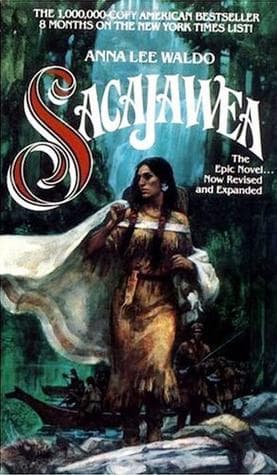
C. Doeskin The opening line of the synopsis describes her as 'Clad in a doeskin,' directly answering the question.
Question 4
What is the primary geographical scope of Sacajawea's journey as depicted in the book?
- From the Great Lakes to the Mississippi River
- From the Atlantic Coast to the Appalachian Mountains
- From the whispering prairies, across the Great Divide to the crystal-capped Rockies and on to the emerald promise of the Pacific Northwest
- From the deserts of the Southwest to the California coast
Show answer
C. From the whispering prairies, across the Great Divide to the crystal-capped Rockies and on to the emerald promise of the Pacific Northwest The book description explicitly outlines her journey: 'From the whispering prairies, across the Great Divide to the crystal-capped Rockies and on to the emerald promise of the Pacific Northwest.'
Question 5
What 'eternal longing' is mentioned as a central theme for Sacajawea throughout her life?
- To become a respected tribal leader
- To discover new species of plants and animals
- To always yearn for one great passion
- To establish peaceful treaties with all tribes
Show answer
C. To always yearn for one great passion The final sentence of the synopsis states she 'captures the eternal longings of a woman who always yearned for one great passion-and always it lay beyond the next mountain.'
Question 6
How long did it take Anna Lee Waldo to write the novel 'Sacajawea'?
- Five years
- Ten years
- Fifteen years
- Twenty years
Show answer
B. Ten years The text explicitly states, 'Ten years In the Writing, SACAJAWEA unfolds an immense canvas of people and events.'
Question 7
The book describes Sacajawea as a 'beautiful spear of a dying nation.' What does this metaphor primarily convey about her role or identity?
- Her skill in hunting and warfare
- Her status as a weapon against the American forces
- Her significance as a strong, vital, yet perhaps ultimately symbolic, figure representing her diminishing people amidst the 'onrushing Forces of America’s destiny'
- Her role in forging new alliances with other tribes
Show answer
C. Her significance as a strong, vital, yet perhaps ultimately symbolic, figure representing her diminishing people amidst the 'onrushing Forces of America’s destiny' The phrase 'spear of a dying nation' in the context of 'onrushing Forces of America’s destiny' suggests she is a potent, yet ultimately fragile, symbol of her people facing historical change.
Question 8
What aspect of Sacajawea's personal life is highlighted by the phrase 'She knew many men, walked many miles'?
- Her extensive knowledge of geography and diverse male acquaintances
- Her numerous romantic relationships and extensive travels
- Her leadership of various male-dominated expeditions
- Her ability to navigate and communicate with many different male tribal leaders
Show answer
B. Her numerous romantic relationships and extensive travels Given the 'eternal longings of a woman who always yearned for one great passion' and the historical context of her multiple marriages/partnerships, 'knew many men' implies romantic relationships, while 'walked many miles' refers to her travels.
Question 9
The book emphasizes that Sacajawea stood 'alone and unafraid' before the 'onrushing Forces of America’s destiny.' What does this suggest about her character in the face of immense historical change?
- She was oblivious to the historical significance of the expedition.
- She possessed remarkable resilience and courage, confronting the inevitable expansion of American influence with personal strength.
- She actively sought to halt the progress of American expansion.
- She was isolated from her own people and lacked support.
Show answer
B. She possessed remarkable resilience and courage, confronting the inevitable expansion of American influence with personal strength. The phrases 'alone and unafraid' and 'before the onrushing Forces of America’s destiny' highlight her individual strength and bravery in the face of monumental, unstoppable historical shifts.
Question 10
The synopsis mentions that Sacajawea's story 'overflows with emotion and action ripped from the bursting fabric of a raw new land.' What literary characteristic does this phrase primarily suggest about the novel's style and content?
- It is a dry, academic historical account.
- It is a slow-paced, introspective character study.
- It is a vivid, dramatic narrative filled with intense feelings and events, set against a backdrop of a wild, developing frontier.
- It focuses solely on the political maneuvering of the time.
Show answer
C. It is a vivid, dramatic narrative filled with intense feelings and events, set against a backdrop of a wild, developing frontier. Phrases like 'overflows with emotion and action' and 'ripped from the bursting fabric of a raw new land' strongly suggest a dynamic, dramatic, and emotionally charged narrative style, typical of historical fiction focused on a wild frontier.
Sacajawea FAQ
What is the central premise of Anna Lee Waldo's 'Sacajawea'?
The novel 'Sacajawea' by Anna Lee Waldo chronicles the life of Sacajawea, focusing on her journey as the lone woman with the Lewis and Clark expedition. It delves into her Shoshoni heritage, her experiences with various men, and her emotional quest for a 'great passion' amidst the vast, untamed American wilderness, from the prairies to the Pacific.
How does the book portray Sacajawea's role in the Lewis and Clark expedition?
Sacajawea is depicted as an essential, 'lone woman' member of the expedition, contributing not only as a guide and interpreter but also as a symbol of peace and a vital presence for the Corps of Discovery. Her knowledge of the land and its people, particularly her Shoshoni kin, is crucial for the expedition's survival and success in navigating the unknown territories.
What emotional journey does Sacajawea undertake throughout the narrative?
Sacajawea's emotional journey is deeply personal, driven by an enduring yearning for 'one great passion' that consistently eludes her, symbolized by 'the next mountain.' This quest for love and belonging intertwines with her physical travels across the continent, shaping her interactions and her internal landscape as she navigates a rapidly changing world.
Who are some of the significant men in Sacajawea's life as depicted in the book?
The book mentions Sacajawea 'knew many men,' implying relationships that shaped her life. While Charbonneau, her husband, is a prominent figure, the narrative explores her complex interactions with others, including potentially Captain Lewis and Captain Clark, and various individuals she encounters on her extensive travels, each leaving an imprint on her journey and emotional state.
How does the novel use geography to reflect Sacajawea's inner world?
The vast geography, from 'whispering prairies' to 'crystal-capped Rockies' and the 'emerald promise of the Pacific Northwest,' serves as more than just a backdrop. It mirrors Sacajawea's expansive, often lonely, emotional landscape and her relentless pursuit of a personal destiny, with each new vista representing a hope or a challenge in her quest for passion and belonging.
Are there any subtle foreshadowings of Sacajawea's later life or fate within the early chapters?
The narrative subtly hints at Sacajawea's resilience and capacity for enduring hardship from a young age, suggesting her future ability to withstand the rigors of the expedition and personal losses. Her early experiences as a 'child of a Shoshoni chief' and her initial encounters with different cultures may foreshadow her role as a bridge between worlds and her eventual renown.
How does the book connect Sacajawea's personal yearnings with the broader 'onrushing Forces of America's destiny'?
Sacajawea's individual quest for passion is subtly interwoven with the monumental historical shifts occurring around her. Her personal journey becomes a microcosm of the larger American narrative of exploration and expansion, highlighting how individual lives, especially those of Indigenous peoples, were profoundly impacted by and integral to the nation's unfolding destiny.
Does the novel suggest any deeper meaning behind Sacajawea being a 'beautiful spear of a dying nation'?
This phrase suggests Sacajawea embodies the strength and dignity of her Shoshoni people, but also the tragic reality of their diminishing influence in the face of American expansion. Her 'spear' quality symbolizes her resilience and connection to her heritage, even as she witnesses the inevitable changes impacting Indigenous cultures across the continent.
Are there specific instances where Sacajawea's 'unafraid' nature is challenged or tested, revealing deeper vulnerabilities?
While initially presented as 'unafraid,' the narrative likely explores moments where Sacajawea faces profound fear, doubt, or heartbreak, perhaps during harrowing moments of the expedition or personal betrayals. These challenges would serve to humanize her, showcasing her strength not as an absence of fear, but as the ability to persevere despite it.
How does Sacajawea's experience as the 'lone woman' impact her psychological state during the expedition?
Being the 'lone woman' among many men likely instilled in Sacajawea a unique blend of isolation and empowerment. Psychologically, this position could have fostered immense self-reliance and observation skills, but also periods of profound loneliness or a heightened sense of responsibility, knowing her presence often served as a marker of peaceful intent.
What psychological complexities arise from Sacajawea's desire for 'one great passion' that 'always it lay beyond the next mountain'?
This recurring motif suggests a deep-seated longing for an idealized love that remains perpetually out of reach, potentially leading to cycles of hope and disappointment. Psychologically, it could reflect a profound inner romanticism, a subconscious defense mechanism against attachment, or a commentary on the inherent difficulty of finding true fulfillment amidst a life of constant movement and change.
How does the trauma of being 'ripped from the bursting fabric of a raw new land' influence Sacajawea's identity?
The phrase 'ripped from the bursting fabric' implies an experience of profound upheaval and perhaps cultural displacement. This trauma would deeply influence Sacajawea's identity, forcing her to adapt and integrate elements from different cultures while holding onto her Shoshoni roots, creating a complex, multifaceted sense of self that is constantly negotiating its place in a changing world.
Does Sacajawea exhibit signs of resilience or post-traumatic growth despite her challenging life?
Absolutely. Despite facing immense personal and cultural challenges, Sacajawea's enduring journey and her active participation in such a pivotal historical event demonstrate profound resilience. Her continued quest for passion and her ability to adapt to diverse circumstances suggest a capacity for growth and an unwavering spirit in the face of adversity.
To what extent does the novel romanticize or realistically portray Sacajawea's historical figure?
The description 'beautiful spear' and the focus on 'eternal longings' suggest a degree of romanticization of Sacajawea's character, emphasizing her emotional depth and iconic status. However, by also detailing her 'many miles' and 'many men' and the 'raw new land,' the novel likely attempts to ground her story in the harsh realities of historical experience, striving for a balance between myth and realism.
How does the book's portrayal of 'America’s destiny' align with or challenge contemporary understandings of manifest destiny?
The phrase 'onrushing Forces of America’s destiny' suggests an inevitable, perhaps divinely ordained, expansionist narrative. However, by framing Sacajawea as a 'spear of a dying nation,' the novel subtly introduces a critical counter-narrative, showing the human cost and indigenous perspective on this 'destiny,' potentially challenging simplistic celebratory views of manifest destiny.
Is Sacajawea's pursuit of a 'great passion' anachronistic, or does it reflect universal human desires?
While the specific language 'great passion' might sound modern, the underlying human desire for profound love and connection is universal across time and cultures. The novel likely interprets Sacajawea's internal life through this lens, allowing contemporary readers to connect with her emotional journey, regardless of the historical context.
How does the 'immense canvas of people and events' contribute to the book's overall message about American history?
By presenting an 'immense canvas,' the book aims to offer a multifaceted view of early American history, moving beyond a singular narrative. It suggests that the nation's formation was a complex interplay of diverse individuals, cultures, and profound personal experiences, highlighting the often-overlooked contributions and sacrifices of Indigenous peoples like Sacajawea.
What is the significance of the book being 'Ten years In the Writing' for its depth and scope?
The 'Ten years In the Writing' suggests a meticulous research process and a deep commitment to crafting a comprehensive and detailed narrative. This extensive period would allow for a broad 'canvas' of historical events and characters, aiming for a rich, immersive experience that explores the nuances of Sacajawea's life and the era in great detail, enhancing its historical and emotional authenticity.
Similar books
- Lonesome Dove
Larry McMurtry
4.5 (149k) average on GoodreadsHistorical FictionExpansive Western epic with a focus on a monumental journey, vivid characters, and the harsh realities of the frontier.
- To Kill a Mockingbird
Harper Lee
4.3 (4.5M) average on GoodreadsHistorical FictionIn the 1930s Jim Crow South, Harper Lee writes about racial injustice, moral growth, and the quiet courage of a lawyer father, Atticus Finch, as seen through his young daughter's eyes.
- The Great Gatsby
F. Scott Fitzgerald
3.9 (3.8M) average on GoodreadsHistorical FictionIn the opulent Roaring Twenties, a mysterious millionaire's lavish parties hide his desperate, tragic pursuit of a lost love, exposing the emptiness within the American Dream.
- Pride and Prejudice
Jane Austen
4.3 (3M) average on GoodreadsHistorical FictionIn a society focused on status and money, Elizabeth Bennet navigates love and pride, challenging Mr. Darcy and social expectations to find true affection.
- Angels & Demons
Dan Brown
3.9 (2.7M) average on GoodreadsThrillerA Harvard symbologist races through Rome's ancient sites, deciphering cryptic clues to unmask the Illuminati and stop a vengeful plot to destroy the Vatican with a stolen antimatter weapon.
- The Kite Runner
Khaled Hosseini
4.3 (2.4M) average on GoodreadsHistorical FictionIn pre-Taliban Afghanistan, a wealthy boy's betrayal of his servant's son during a kite-running tournament starts a lifelong journey for amends as his country collapses.






Enjoyed the summary?
A summary gives you the shape of the book. The book itself has the detail, the examples and the voice.
Find Sacajawea on AmazonAs an Amazon Associate, BookBrief earns from qualifying purchases. How we're funded