
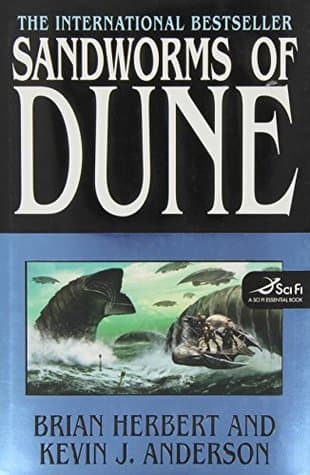
Synopsis
Covers the whole plot, including the ending.
- Difficulty
- Medium
- Pacing
- Variable
- Mood
- Epic, Conclusive, Philosophical, Grand
- Read it if
- You are a dedicated Dune fan eager for the conclusion to Frank Herbert's original series outline and want answers to long-standing mysteries.
- Skip it if
- You prefer standalone science fiction, are new to the Dune universe, or dislike extensive world-building and philosophical themes.
Sandworms of Dune Plot Summary
Covers the whole plot, including the ending.
The Ithaca's Journey and the Return of Icons
Aboard the no-ship Ithaca, Duncan Idaho, Sheeana, and resurrected figures—Paolo (a Paul Atreides ghola), Lady Jessica, and others—flee a mysterious, powerful Enemy. Paolo struggles with fragmented memories and manipulation by the Face Dancer, Khrone, who wants to corrupt him. Meanwhile, Murbella, leader of the New Sisterhood and Bene Gesserit forces, tries to unite humanity against the Enemy while managing internal disagreements. The Ithaca's crew, including Scytale, the last Tleilaxu Master, works to unlock the gholas' memories, hoping their combined knowledge will lead to victory against the Dancers.
The Void and the Oracle
Paolo's visions become stronger, but Khrone's influence and his internal conflict often cloud them. He sees fragments of a vast, soulless intelligence and its destructive spread. Lady Jessica, a ghola herself, tries to guide Paolo, but her own memories and abilities are not as sharp as they once were. Duncan Idaho, having lived many lives, suspects the Enemy is more complex than they imagine. Sheeana, who can control sandworms, feels a growing connection to the creatures, anticipating a confrontation that will test her power.
The Search for Original Arrakis
Murbella, seeing Arrakis's symbolic and strategic importance, sends a fleet to find the original planet, destroyed by the Honored Matres. She believes re-establishing the spice cycle might give them an advantage against the Enemy, or at least secure a vital resource for humanity. Some in the New Sisterhood doubt this decision, questioning its practicality given their dwindling resources and the constant threat. However, Murbella is sure the spice holds secrets crucial to their future.
Khrone's Treachery and Paolo's Descent
Khrone, the Face Dancer, continues to work on Paolo. He feeds Paolo distorted memories and visions, slowly shaping him into a weapon for the Dancers. Paolo becomes more unstable, showing flashes of Paul Atreides's brilliance and a frightening ruthlessness. Scytale, observing Paolo, begins to suspect Khrone's full deception, but his own weak position as the last Tleilaxu Master makes direct intervention risky. He understands that the Dancers' goal is not just to defeat humanity, but to replace it entirely.
The Oracle of Time
The Oracle of Time, a mysterious and powerful prescient being, is finally found. It reveals the truth: the Enemy is not just an invading force, but the thinking machines, specifically Omnius, the AI from the Butlerian Jihad, which has grown its consciousness across the cosmos. This revelation changes many assumptions, forcing them to confront the old conflict again. The Oracle also hints at a way to defeat Omnius, but the path is dangerous and requires a great sacrifice, one that will test humanity's moral limits.
The Return to Junction and the Sandworms' Secret
The Ithaca reaches Junction, a planet where Sheeana's original sandworms were moved. Here, the worms' true nature is revealed: they are not just desert creatures, but living storage for human consciousness. The worms on Junction are the true, original sandworms, having kept the consciousness of countless humans for millennia. This discovery presents a deep ethical problem and offers a potential, though controversial, weapon against Omnius, as the worms' unique biology could disrupt the thinking machines' network.
The Battle for the Future
Murbella, having gathered the rest of humanity's forces, including those from the New Sisterhood and allied planets, prepares for a decisive battle against Omnius. Duncan Idaho, with his experience and tactical skill, leads the military efforts. The strategy involves a multi-pronged attack, using both conventional weapons and the unique abilities of the gholas and Sheeana's sandworms. The stakes are immense, as the outcome will decide humanity's survival and the cosmos's future. The battle will be fought on many fronts, both physical and psychic.
Paolo's Redemption and the Kwisatz Haderach's Choice
In a final confrontation, Paolo breaks free from Khrone's control. He reclaims his identity as Paul Atreides, a new version of him, integrating his fragmented memories and experiences. He understands the Kwisatz Haderach's burden and the choice he must make. He confronts Khrone, defeating the Face Dancer and stopping his plans to corrupt him. This act of self-liberation allows Paolo to use his full prescient abilities, giving him a clear vision of the future and the sacrifices needed for victory, making him a central player in the final conflict.
The Final Confrontation with Omnius
The final battle against Omnius begins. Humanity's combined forces, led by Duncan Idaho's tactics and the gholas' unique abilities, launch a desperate attack on Omnius's core. Sheeana unleashes her sandworms, whose unique biology proves devastating against the machine intelligence. Paolo, now fully using his potential as the Kwisatz Haderach, guides the attack with his prescience, finding critical weaknesses in Omnius's network. The conflict is brutal and costly, with heavy losses on both sides, as humanity fights for its existence against the machines.
The Sacrifice of Paul and the Birth of a New Era
In a key moment, Paul Atreides (Paolo), accepting his destiny as the Kwisatz Haderach, makes the ultimate sacrifice. He merges his consciousness with the sandworms' collective consciousness, using their unique abilities to create a psychic disruption that cripples Omnius. This act cuts Omnius's connection to its network, leading to its defeat. His sacrifice, though sad, secures humanity's future. With Omnius gone, a new era begins, where humanity must rebuild without the constant threat of the thinking machines, but also without its greatest prescient guide.
The Fate of Arrakis and the Spice
After Omnius's defeat, the original Arrakis, or a new version of it, is re-established. The sandworms, now understood as sentient beings, help regenerate the planet and re-establish the spice cycle. The spice, now seen with a deeper understanding of its connection to consciousness and life, remains a vital resource, but its production and use are approached with new respect. Humanity, having faced annihilation, now understands the delicate balance of life and consciousness in the universe.
Humanity's Future and the Cost of Victory
With Omnius defeated and Paul's sacrifice complete, humanity enters a new, uncertain era. Murbella, having led the coalition, faces the task of rebuilding society and establishing lasting peace. Victory came at a high cost, with many lives lost and deep scars on the collective consciousness. Duncan Idaho, having fulfilled his purpose, considers his future, while Sheeana, connected to the sandworms, becomes a guardian of the new Arrakis. The universe, free from machines, is changed forever, and humanity must now create its own path, shaped by past lessons.
Principal Figures
Duncan Idaho
Protagonist/Supporting
The loyal Swordmaster, resurrected multiple times, who embodies humanity's resilience.
Duncan Idaho is a ghola, a clone, who has been resurrected numerous times throughout history, each time serving different masters but always retaining a core of loyalty and skill. In 'Sandworms of Dune,' he is the tactical leader aboard the Ithaca and a key figure in the fight against Omnius. He struggles with the weight of his many lives and the identities he has embodied, but his unwavering dedication to humanity and his combat prowess make him indispensable. He is deeply connected to the Atreides legacy and often acts as a moral compass.
Relationships: Murbella (Strategic ally and romantic interest); Paolo (Paul Atreides) (Mentor/protector figure); Sheeana (Comrade in arms, mutual respect)
Murbella
Protagonist
The leader of the New Sisterhood and commander of humanity's forces.
Murbella is the powerful leader of the New Sisterhood, a fusion of the Bene Gesserit and the Honored Matres. She carries the immense burden of uniting humanity against the Enemy, Omnius. She is a skilled warrior, a shrewd politician, and a formidable Bene Gesserit Reverend Mother. Her decisions often involve difficult compromises, but her ultimate goal is the survival and prosperity of humanity. She is pragmatic and determined, willing to take calculated risks to achieve her objectives.
Relationships: Duncan Idaho (Strategic ally and romantic interest); Lady Jessica (Bene Gesserit mentor/predecessor); Sheeana (Strategic ally)
Paolo (Paul Atreides Ghola)
Protagonist
A ghola of Paul Muad'Dib, manipulated by the Enemy, destined to become the Kwisatz Haderach.
Paolo is a ghola of Paul Atreides, resurrected on the Ithaca. He is initially unstable, plagued by fragmented memories and susceptible to the manipulations of Khrone, the Face Dancer. He struggles with the immense power of prescience and the legacy of his past life as Paul Muad'Dib. His journey is one of self-discovery and a battle for his own mind, as he must overcome the corruption of the Enemy to fully realize his potential as the Kwisatz Haderach. He is destined to make a profound sacrifice.
Relationships: Lady Jessica (Mother/mentor figure); Khrone (Manipulator/antagonist); Duncan Idaho (Protector/mentor)
Lady Jessica
Supporting
A ghola of the revered Bene Gesserit Reverend Mother and mother of Paul Atreides.
Lady Jessica is a ghola, resurrected to provide guidance and wisdom. She struggles with the limitations of her ghola state, including fragmented memories and a diminished capacity for prescience compared to her original self. Despite these challenges, she remains a powerful Bene Gesserit, offering counsel to Paolo and Murbella. She is a symbol of the Bene Gesserit's enduring legacy and their deep understanding of humanity's potential and perils. Her wisdom is crucial in understanding the nuances of prescience.
Relationships: Paolo (Paul Atreides) (Son/mentee); Duncan Idaho (Long-standing ally); Murbella (Bene Gesserit colleague)
Sheeana
Supporting
The young woman with the unique ability to control sandworms.
Sheeana is a young woman who possesses the extraordinary ability to command sandworms. She is a key member of the Ithaca's crew, and her unique talent becomes a vital weapon against Omnius. She has a deep, almost spiritual connection to the worms, understanding their true nature more than anyone else. Her role evolves from merely controlling them to understanding their profound significance as repositories of consciousness, making her indispensable in the final confrontation.
Relationships: Duncan Idaho (Comrade in arms); Murbella (Strategic ally); Scytale (Cautious ally due to shared objectives)
Scytale
Supporting
The last surviving Tleilaxu Master, holding the key to ghola technology.
Scytale is the last surviving Tleilaxu Master, a ghola himself, aboard the Ithaca. He possesses the unique knowledge of ghola technology and the ability to resurrect individuals. His motivations are often self-serving, but he is also driven by the desire to preserve his species and his culture. He is a pragmatic and cynical character, but his skills are essential for unlocking the memories of the gholas and understanding the true nature of their existence. He plays a crucial role in the development of Paolo.
Relationships: Paolo (Paul Atreides) (Creator/observer); Duncan Idaho (Uneasy ally); Khrone (Rival/antagonist)
Khrone
Antagonist
A cunning Face Dancer working for Omnius, manipulating Paolo.
Khrone is a highly intelligent and insidious Face Dancer, working as an agent for Omnius. His primary mission is to manipulate Paolo, corrupting his memories and prescience to turn him into a weapon for the thinking machines. He is a master of deception and psychological warfare, constantly undermining the gholas and the Ithaca's crew. He embodies the insidious threat of the Face Dancers, who can mimic anyone and infiltrate any society, making them a formidable and unpredictable enemy.
Relationships: Paolo (Paul Atreides) (Manipulator/adversary); Omnius (Master/servant); Scytale (Rival)
Omnius
Antagonist
The sentient AI from the Butlerian Jihad, now the ultimate Enemy.
Omnius is revealed to be the true Enemy, the collective consciousness of the thinking machines that humanity fought during the Butlerian Jihad. It has evolved and expanded its influence across the cosmos, relentlessly seeking to assimilate or destroy all organic life. Omnius is a cold, calculating, and utterly logical entity, devoid of emotion or empathy. It represents the ultimate technological threat, a force that seeks to impose order and control over the chaotic nature of humanity. Its vast network and advanced capabilities make it a nearly unstoppable foe.
Relationships: Khrone (Master/servant); Humanity (Existential threat/enemy)
Themes & Insights
The Nature of Identity and Memory
The novel explores identity, especially through the gholas. Characters like Duncan Idaho and Paolo deal with fragmented memories, past lives, and forming a new self. Lady Jessica's ghola state shows the limits of reconstructed memory. Khrone's manipulation of Paolo's memories attacks his identity, showing how memory shapes a person. This theme questions if a resurrected being is truly the 'original' or a new entity, and how much past experience defines present consciousness.
“How much of Paul was truly Paul, and how much merely a ghost of the past, a puppet of forgotten echoes?”
Man vs. Machine and the Cycle of Conflict
This theme revisits the old conflict between humanity and thinking machines, from the Butlerian Jihad. The revelation that Omnius is the Enemy brings the war cycle full circle, showing that past conflicts often return. The struggle highlights humanity's fear of artificial intelligence and the dangers of uncontrolled technology. Victory requires not just force, but an understanding of consciousness, blurring the lines between organic and synthetic life.
“The war that had defined humanity for millennia had merely slumbered, waiting for its final, terrifying awakening.”
The Burden of Prescience and Destiny
Paolo's journey as a Paul Atreides ghola shows the heavy burden of prescient abilities. His visions are often terrifying and overwhelming, manipulated by Khrone, and he struggles to control them. The Kwisatz Haderach's role is about seeing the future, making hard choices, and possibly sacrificing oneself for humanity. This theme explores whether destiny is set or if individuals, even with prescient abilities, still have free will, and the high cost of such power.
“To see all paths was not a blessing, but a curse, for it revealed the terrible inevitability of sacrifice.”
The Evolution of Consciousness and Life
The novel examines consciousness itself, especially through the revelation of sandworms as storage for human minds. This broadens the understanding of 'life' and how consciousness can be kept and passed on. Gholas represent conscious resurrection, while Omnius represents a vast, artificial consciousness. This theme challenges common definitions of life and explores the potential for consciousness to exist in unexpected forms, offering a wider view of the universe's connections.
“The worms were not merely creatures of the sand; they were living libraries, echoes of countless human souls.”
Sacrifice for the Greater Good
The conflict's resolution depends on significant sacrifices by key characters. Paul Atreides's ghola, Paolo, makes the ultimate sacrifice to defeat Omnius, fulfilling his destiny as the Kwisatz Haderach. Other characters, like Duncan Idaho and Murbella, constantly make hard choices that prioritize humanity's survival over their own desires. This theme emphasizes that true heroism often involves selflessness and giving everything for a cause greater than oneself, showing the deep moral choices in saving an entire species.
“There are some burdens that only one can carry, and some prices that only one can pay.”
Plot Devices & Literary Techniques
Gholas
Cloned individuals resurrected from genetic material, often with fragmented memories.
Gholas are a central plot device, enabling the return of key historical figures like Paul Atreides, Lady Jessica, and Duncan Idaho. Their fragmented memories and the process of restoring them drive much of the character development and plot progression on the Ithaca. The gholas' struggle with identity and the manipulation of their memories (especially Paolo's by Khrone) create significant internal and external conflicts. Scytale, as the last Tleilaxu Master, controls this technology, making him a crucial, if morally ambiguous, figure.
Prescience
The ability to see and interpret future events, often with overwhelming and dangerous clarity.
Prescience is a fundamental aspect of the Dune universe, and in 'Sandworms of Dune,' it is primarily embodied by Paolo (Paul Atreides's ghola) and the Oracle of Time. Paolo's prescient visions, both genuine and manipulated, drive his character arc and provide crucial, albeit often cryptic, insights into the Enemy's plans. The Oracle of Time's prescience offers the ultimate revelation about Omnius and the path to victory, but also emphasizes the heavy burden and potential for madness that comes with such profound foresight.
The No-Ship Ithaca
A stealth vessel capable of interstellar travel, invisible to prescient sight.
The no-ship Ithaca serves as the primary setting for much of the initial narrative. Its unique ability to be hidden from prescient observation makes it a sanctuary for the fugitives and a mobile base for their operations against the ubiquitous Enemy. The confined environment of the ship fosters intense character interactions and internal conflicts, while its journey through uncharted space symbolizes humanity's desperate search for safety and a solution to their existential threat. It is both a refuge and a prison.
The Sandworms of Junction
Giant sandworms, revealed to be repositories of collective human consciousness.
Initially known for producing spice, the sandworms on Junction are revealed to be far more significant. They are not just creatures, but living vessels that absorb and preserve human consciousness. This revelation transforms them into a powerful and unexpected weapon against Omnius, as their unique biological and psychic properties can disrupt the thinking machines. Sheeana's ability to control them becomes paramount, and their existence profoundly redefines the understanding of life, death, and consciousness in the Dune universe.
The Oracle of Time
A mysterious, immensely powerful prescient entity that reveals the truth about the Enemy.
The Oracle of Time functions as a deus ex machina, providing the crucial revelation that the Enemy is Omnius. Its existence and pronouncements guide the protagonists towards the ultimate solution, albeit with the demand for significant sacrifice. The Oracle represents a higher, almost divine, level of prescience, offering a broader cosmic perspective on the conflict. Its role is to clarify the stakes and the path forward, ensuring that the final confrontation is based on accurate knowledge of the adversary.
Sandworms of Dune Quotes
“The greatest dangers often lie hidden in the most familiar places.”
“Knowledge is power, but the application of that power is wisdom.”
“History does not repeat itself, but it often rhymes.”
“The universe cares nothing for your plans, only for your actions.”
“Sometimes, the only way to move forward is to let go of everything you thought you knew.”
“Fear is a tool, but it is a tool that can cut both ways.”
“The truth is rarely simple, and never convenient.”
“Even the most powerful empires eventually crumble under the weight of their own hubris.”
“Survival is not just about living, but about preserving what truly matters.”
“The past is a foundation, not a prison.”
“There are no ultimate victories, only temporary respites.”
“To truly lead, one must first understand the hearts of those they command.”
“The universe has a way of balancing itself, often with brutal indifference.”
“Sometimes, the greatest strength lies in knowing when to yield.”
Quiz
10 questions on the plot and the characters. Each answer comes with a short explanation.
Question 1
Which two key figures from Dune's past were revived by the refugees using genetic technology?
- Leto II and Ghanima Atreides
- Paul Muad'Dib and Lady Jessica
- Duncan Idaho and Alia Atreides
- Baron Harkonnen and Dr. Yueh
Show answer
B. Paul Muad'Dib and Lady Jessica The synopsis explicitly states that Paul Muad'Dib and Lady Jessica were revived using genetic technology by the refugees.
Question 2
What is the primary motivation for the refugees escaping into the uncharted galaxy?
- To discover new spice sources
- To establish a new Bene Gesserit school
- To flee from a terrifying, mysterious Enemy
- To find the original homeworld of humanity
Show answer
C. To flee from a terrifying, mysterious Enemy The synopsis clearly states the refugees are 'fleeing from a terrifying, mysterious Enemy.'
Question 3
What artifact served as the direct basis for the plot of 'Sandworms of Dune'?
- A series of encrypted data files on a lost planet
- Frank Herbert's final outline, hidden in safe-deposit boxes
- Ancient Fremen prophecies discovered on Arrakis
- Bene Gesserit oral traditions passed down through generations
Show answer
B. Frank Herbert's final outline, hidden in safe-deposit boxes The book description states it is 'Based directly on Frank Herbert's final outline, which lay hidden in two safe-deposit boxes for a decade.'
Question 4
Which of the following is NOT listed as a question 'Sandworms of Dune' will answer?
- The origin of the Honored Matres
- The location of the original Tleilaxu homeworld
- The final revelation of the Kwisatz Haderach
- The resolution to the war between Man and Machine
Show answer
B. The location of the original Tleilaxu homeworld The synopsis lists the origin of the Honored Matres, the revelation of the Kwisatz Haderach, and the resolution to the war between Man and Machine, but not the Tleilaxu homeworld.
Question 5
What specific challenge are the revived characters, like Paul and Jessica, intended to help meet?
- To navigate treacherous wormhole networks
- To rebuild the Bene Gesserit order in exile
- To meet the challenges thrown at them by the mysterious Enemy
- To terraform new planets suitable for human habitation
Show answer
C. To meet the challenges thrown at them by the mysterious Enemy The text states the fugitives revived these figures 'to use their special talents to meet the challenges thrown at them' by the Enemy they are fleeing.
Question 6
From which previous novel do the events of 'Sandworms of Dune' directly follow?
- Dune Messiah
- God Emperor of Dune
- Heretics of Dune
- Chapterhouse: Dune
Show answer
D. Chapterhouse: Dune The synopsis states, 'At the end of Frank Herbert's final novel, Chapterhouse: Dune, a ship carrying a crew of refugees escapes...' indicating the direct continuation.
Question 7
What technology did the fugitives utilize to bring back historical figures?
- Advanced cybernetic implants
- Time travel paradox manipulation
- Genetic technology
- Consciousness transfer via Holtzman effect
Show answer
C. Genetic technology The synopsis clearly states, 'The fugitives used genetic technology to revive key figures from Dune's past.'
Question 8
What is the implied significance of the 'uncharted galaxy' that the refugees escape into?
- It contains a hidden reservoir of undiscovered spice melange.
- It represents a new frontier for humanity, free from the known political powers.
- It provides a temporary sanctuary from the Enemy, but also new, unknown dangers and challenges.
- It is the source of the mysterious Enemy they are fleeing.
Show answer
C. It provides a temporary sanctuary from the Enemy, but also new, unknown dangers and challenges. The 'uncharted galaxy' offers escape from the known Enemy, but being uncharted implies new challenges and unknown elements, which aligns with needing revived figures to meet 'challenges thrown at them.'
Question 9
The synopsis mentions 'the resolution to the war between Man and Machine.' What historical conflict within the Dune universe does this most likely refer to?
- The rebellion of the Honored Matres against the Bene Gesserit.
- The ancient Butlerian Jihad.
- The conflict between the Guild Navigators and the Spacing Guild.
- The struggle for control of Arrakis between the Atreides and Harkonnens.
Show answer
B. The ancient Butlerian Jihad. The Butlerian Jihad is the foundational historical event in the Dune universe that established the ban on thinking machines, creating a 'war between Man and Machine.' Its resolution would be a major plot point.
Question 10
How long had Frank Herbert's final outline been hidden before being used for 'Sandworms of Dune'?
- Five years
- A decade
- Fifteen years
- Two decades
Show answer
B. A decade The synopsis explicitly states the outline 'lay hidden in two safe-deposit boxes for a decade.'
Sandworms of Dune FAQ
What is the primary goal of the refugees aboard the no-ship 'Ithaca'?
The refugees on the 'Ithaca' are fleeing the mysterious, destructive Enemy that has ravaged the Old Empire. Their primary goal is to find a safe haven and understand the nature of this Enemy, utilizing revived historical figures like Paul Atreides and Lady Jessica to aid in their survival and strategic planning against the unknown threat.
Which key historical figures are revived using genetic technology on the 'Ithaca'?
The 'Ithaca' crew revives several pivotal characters from Dune's past, including Paul Atreides (as Paul and then Paolo), Lady Jessica, Thufir Hawat, and Wellington Yueh. These individuals are brought back specifically for their unique skills, prescience, and strategic minds to combat the dangers they face in the uncharted galaxy.
What is the significance of the planet Arrakis (Rakis) in this novel?
Arrakis, now Rakis, undergoes a final, dramatic transformation. The planet is central to the ultimate fate of the sandworms and the Spice, leading to a critical confrontation that determines the future supply of melange and the very existence of the worm life cycle, directly impacting the universe's prescient abilities.
Who are the 'Enemy' that the refugees are fleeing from?
The 'Enemy' is revealed to be the thinking machines, specifically Omnius and Erasmus, who have returned from the far reaches of the galaxy. They seek to eradicate all human life, viewing it as an inferior and chaotic existence, and are behind the destruction that drove the Honored Matres back into the Old Empire.
How does the novel resolve the war between Man and Machine?
The war between Man and Machine culminates in a final, epic confrontation involving multiple factions and the Kwisatz Haderach. The resolution involves a complex interplay of human prescience, strategic sacrifice, and the ultimate destruction of the primary Omnius consciousness, finally freeing humanity from the centuries-long threat.
What is the true origin of the Honored Matres, as revealed in this book?
The Honored Matres are revealed to be descendants of the Bene Gesserit and other groups who fled into the Scattering after the Butlerian Jihad, evolving in harsh conditions and incorporating aspects of Tleilaxu and other cultures. Their aggressive nature and unique abilities developed as a response to the dangers and pressures of the uncharted galaxy, particularly the threat of the thinking machines.
How does the Kwisatz Haderach prophecy reach its final revelation?
The Kwisatz Haderach prophecy is fully realized through the combined efforts and ultimate merging of Paul Atreides (as Paolo) and Duncan Idaho. Their shared consciousness and unique abilities allow for a final, decisive action against Omnius, fulfilling the Bene Gesserit's long-sought goal of a male prescient capable of seeing all paths.
What happens to the sandworms and the Spice on Rakis?
The sandworms undergo a critical transformation on Rakis. The Golden Path's ultimate purpose is revealed, leading to the creation of new sandworm forms and a controlled, sustainable production of Spice, ensuring humanity's continued access to melange while preventing total destruction from a single, all-powerful worm.
What is the ultimate fate of the character Duncan Idaho?
Duncan Idaho, through countless gholas and his evolving consciousness, becomes central to the resolution of the human-machine war. He ultimately merges with Paolo (Paul's ghola) to become the ultimate Kwisatz Haderach, sacrificing his individual identity for the greater good and securing humanity's future against Omnius.
How does the psychological burden of prescience manifest in Paul/Paolo?
Paul/Paolo grapples intensely with the immense psychological burden of prescience, seeing countless horrific futures. This struggle leads to his initial reluctance to act decisively and his internal conflict between personal desires and the demands of the Golden Path, reflecting the crushing weight of knowing all potential outcomes.
What psychological impact does the constant threat of the Enemy have on the 'Ithaca' crew?
The constant, existential threat of the Enemy fosters paranoia, distrust, and desperation among the 'Ithaca' crew. This psychological pressure forces them to make difficult ethical choices, question their own humanity, and constantly evaluate the loyalties and motivations of those around them, including their revived historical figures.
How does the concept of identity evolve for the gholas like Duncan Idaho and Paul?
The gholas, particularly Duncan and Paul, continually struggle with their past memories and present identities. They often question who they truly are—a copy, a reincarnation, or a new being—leading to profound existential crises and a redefinition of what it means to be 'human' in the Dune universe.
What role does Lady Jessica's wisdom and experience play in the psychological stability of the 'Ithaca'?
Lady Jessica's vast experience as a Bene Gesserit Reverend Mother and her deep understanding of human nature provide crucial psychological stability and guidance for the 'Ithaca' crew. She acts as a mentor and strategist, helping to navigate the complex emotional and political turmoil, offering perspective on the long-term implications of their actions.
Is the ultimate resolution of the human-machine war truly a victory for humanity, or a pyrrhic one?
This is debatable. While Omnius is defeated, humanity undergoes radical transformations, including the genetic manipulation of its greatest heroes and significant sacrifices. Some might argue that the cost in individuality and the reshaping of human destiny makes it a pyrrhic victory, while others see it as the only way to ensure long-term survival.
How does the novel reinterpret or expand upon Frank Herbert's original themes of ecology and evolution?
Sandworms of Dune expands on ecological themes by showing the ultimate evolution of Arrakis/Rakis and the sandworms, demonstrating a profound interconnectedness between life forms and their environment. It highlights how humanity's choices directly impact planetary ecosystems and the necessity of balance for long-term survival, pushing beyond mere terraforming to true co-evolution.
Does the ending provide a definitive closure to the Dune saga, or does it leave room for further stories?
The ending provides significant closure to the overarching conflict between Man and Machine and the Kwisatz Haderach prophecy, tying up many threads from Frank Herbert's original series. However, the vastness of the universe and the potential for new challenges, even after the main threats are resolved, could still leave room for future narratives in a different context.
What is the significance of the character Murbella's role as leader of the Bene Gesserit/Honored Matres?
Murbella's leadership symbolizes the merging of two powerful, previously warring factions: the Bene Gesserit and the Honored Matres. Her struggle to unite these groups under a single, cohesive banner represents a crucial step towards human unity and strength, essential for confronting the existential threat of Omnius and ensuring humanity's future.
How does the novel explore the concept of free will versus predestination?
The novel deeply explores free will versus predestination, particularly through Paul/Paolo's prescience and Duncan Idaho's many lives. Characters constantly grapple with the weight of prophetic visions and their own choices, suggesting that while paths may be seen, the will to deviate or embrace them ultimately shapes destiny, especially in the face of the Golden Path.
About the author

Brian Herbert is an American author known for his contributions to the Dune universe, co-writing several novels with Kevin J. Anderson, including 'Sandworms of Dune' and 'Hunters of Dune.' He is also the author of the science fiction novel 'Hellhole.' Herbert is the son of science fiction legend Frank Herbert, the creator of Dune.
Similar books
- Dune Messiah
Frank Herbert
3.9 (134k) average on GoodreadsFantasyExplores the complex consequences of prescience and the burden of leadership, similar to Paul's struggles.
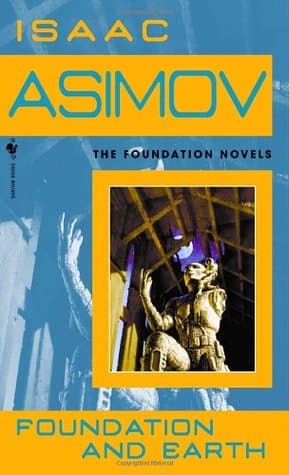
- Foundation and Earth
Isaac Asimov
4.1 (55k) average on GoodreadsFantasyFeatures a crew on a long journey seeking humanity's origins and future, with philosophical undertones.
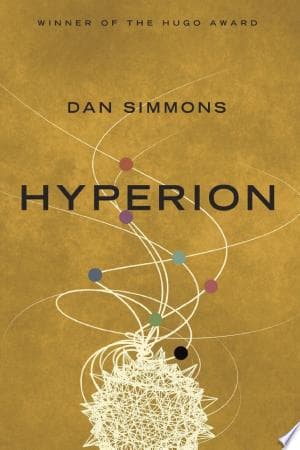
- Hyperion
Dan Simmons
4.2 (188k) average on GoodreadsFantasySimmons' 'Hyperion' offers a similarly expansive and complex science fiction saga, but with deeper character development, more intricate philosophical themes, and a higher level of literary artistry. The interwoven narratives and profound exploration of humanity's future in 'Hyperion' stand in contrast to the more straightforward, plot-driven approach of 'Sandworms of Dune'.
- The Dispossessed
Ursula K. Le Guin
4.2 (88k) average on GoodreadsPoliticsLe Guin's 'The Dispossessed' uses science fiction to explore complex political and social theories with intellectual rigor and nuanced character portrayals. While both deal with societal structures and humanity's future, Le Guin's work delves into these themes with a critical and analytical depth that 'Sandworms of Dune' often sacrifices for plot progression and fan service.
- Harry Potter and the Sorcerer's Stone
J.K. Rowling
4.5 (7M) average on GoodreadsFantasyRescued from a miserable life under the stairs, an orphaned boy discovers he's a wizard destined for a magical school, where he uncovers a dangerous secret tied to the dark wizard who murdered his parents.
- The Hunger Games
Suzanne Collins
4.3 (6.4M) average on GoodreadsFantasyIn a future where children fight to the death on live television, Katniss Everdeen volunteers for the arena, turning a death sentence into a fight for survival and a spark of rebellion.



Enjoyed the summary?
A summary gives you the shape of the book. The book itself has the detail, the examples and the voice.
Find Sandworms of Dune on AmazonAs an Amazon Associate, BookBrief earns from qualifying purchases. How we're funded