

Synopsis
Covers the whole plot, including the ending.
- Difficulty
- Medium
- Read it if
- You appreciate literary short stories that offer deep psychological insights, explore societal critiques through personal narratives, and are drawn to lyrical prose with a philosophical bent. Ideal for those interested in classic Indian literature and the complexities of human emotion.
- Skip it if
- You prefer fast-paced plot-driven narratives, have an aversion to stories that often end with ambiguity or a sense of melancholy, or are looking for a strictly academic philosophical text rather than philosophical themes embedded in fiction.
Selected Short Stories Quotes
“The small wisdom is like water in a glass: clear, transparent, pure. The large wisdom is like the water in the sea: dark, mysterious, impenetrable.”
“Faith is the bird that feels the light and sings when the dawn is still dark.”
“You can't cross the sea merely by standing and staring at the water.”
“Clouds come floating into my life, no longer to carry rain or usher storm, but to add color to my sunset sky.”
“The flower which is single need not envy the thorns that are numerous.”
“Depth of affection is a dangerous thing. It brings with it a burden of care, a weight of responsibility.”
“Emancipation from the bondage of the soil is no freedom for the tree.”
“The one who plants trees, knowing that he will never sit in their shade, has at least started to understand the meaning of life.”
“Love is an endless mystery, for it has nothing else to explain it.”
“Bigotry tries to keep truth safe in its hand with a grip that kills it.”
“Let your life lightly dance on the edges of time like dew on the tip of a leaf.”
“The greatest truths are the simplest, and so are the greatest men.”
“A mind all alive in a body all alive—that is the ideal state of man.”
“The night opens wide to the Light, for the Light is its own child.”
“Sleep is a god who gives you back to yourself.”
Quiz
10 questions on the plot and the characters. Each answer comes with a short explanation.
Question 1
In 'The Postmaster,' what is the postmaster's primary reason for wanting to leave the village of Ulapur?
- He misses his family in Kolkata.
- He finds the village lonely and isolated.
- He is offered a better-paying job elsewhere.
- He dislikes the local villagers.
Show answer
B. He finds the village lonely and isolated. The postmaster, a Calcutta boy, feels deeply isolated in the remote village of Ulapur, often writing poetry to express his loneliness, which is his main motivation for seeking a transfer.
Question 2
What philosophical concept is often explored in Tagore's stories, particularly visible in 'The Home-coming' through Phatik's longing?
- The conflict between materialism and spiritualism.
- The universal human yearning for a sense of belonging and freedom.
- The inevitable decline of traditional family structures.
- The superiority of urban life over rural existence.
Show answer
B. The universal human yearning for a sense of belonging and freedom. Phatik's misery and eventual death stem from his inability to find a place where he truly belongs and feels free, highlighting the deep human need for connection and autonomy, a recurring theme in Tagore.
Question 3
In 'The Postmaster,' what does Ratan offer the postmaster before he leaves, which he declines?
- A small sum of money she had saved.
- To accompany him to Calcutta.
- A handmade gift.
- A promise to write to him regularly.
Show answer
A. A small sum of money she had saved. Ratan, in her innocent devotion, offers her meager savings to the postmaster as he prepares to depart, a gesture he gently refuses, further emphasizing the poignant imbalance of their relationship.
Question 4
Which of the following best describes the typical setting for many of Tagore's short stories?
- Bustling colonial cities like Mumbai or Delhi.
- Remote, often rural, Bengali villages or small towns.
- Princely courts and grand palaces.
- Industrial factories and labor camps.
Show answer
B. Remote, often rural, Bengali villages or small towns. Tagore frequently used the backdrop of rural Bengal, with its rivers, fields, and simple village life, to explore the inner lives and social dynamics of his characters.
Question 5
What is the central irony in 'The Postmaster' regarding the postmaster's view of Ratan?
- He sees her as a surrogate daughter, while she views him as a romantic interest.
- He considers their relationship insignificant, while for her, it is the most meaningful connection she has.
- He believes he is teaching her, but she is actually teaching him about resilience.
- He thinks she is uneducated, but she possesses profound wisdom.
Show answer
B. He considers their relationship insignificant, while for her, it is the most meaningful connection she has. The postmaster, caught in his own melancholy, largely overlooks the depth of Ratan's devotion and the profound impact he has on her life, treating their bond as a temporary convenience, while for Ratan, it's a source of immense joy and sorrow.
Question 6
How does Tagore often portray the role of women in his short stories?
- Exclusively as traditional, submissive figures with no agency.
- As complex individuals often constrained by societal norms but possessing inner strength and emotional depth.
- Primarily as symbols of divine beauty and spiritual enlightenment.
- As rebellious figures actively challenging patriarchal structures through direct action.
Show answer
B. As complex individuals often constrained by societal norms but possessing inner strength and emotional depth. Tagore's female characters, like Ratan or the wife in 'The Home-coming,' often navigate restrictive social environments with quiet resilience, deep emotional lives, and a nuanced understanding of their circumstances, rather than overt rebellion.
Question 7
In 'The Home-coming,' what is Phatik's greatest desire upon being taken to Calcutta by his uncle?
- To excel in his studies and make his uncle proud.
- To return to his village and the freedom of his old life.
- To explore the city and its new experiences.
- To make new friends among his cousins.
Show answer
B. To return to his village and the freedom of his old life. Phatik, accustomed to the open spaces and unsupervised play of his village, finds the confines of city life and strict schooling unbearable, constantly yearning for the freedom and familiarity of his home.
Question 8
What is a recurring philosophical implication of Tagore's portrayal of human relationships, as seen in stories like 'The Postmaster' and 'The Home-coming'?
- All human connections are inherently fleeting and ultimately meaningless.
- True understanding and empathy between individuals are rare and often unreciprocated, leading to profound loneliness.
- Social class is the sole determinant of the quality and longevity of relationships.
- Love and affection always conquer all obstacles, regardless of circumstances.
Show answer
B. True understanding and empathy between individuals are rare and often unreciprocated, leading to profound loneliness. Tagore often depicts relationships where one party's deep affection or need goes unnoticed or unfulfilled by the other, highlighting the inherent isolation within human connection and the difficulty of true empathy across differing perspectives and social statuses.
Question 9
How does Sukanta Chaudhuri's editing of 'The Oxford Tagore' contribute to the reader's experience?
- By providing literal word-for-word translations that prioritize fidelity over readability.
- By ensuring the translations are authoritative and readable, bridging the original text with contemporary English.
- By adding extensive personal interpretations and commentaries within the stories.
- By exclusively selecting stories that have never been translated before.
Show answer
B. By ensuring the translations are authoritative and readable, bridging the original text with contemporary English. The description explicitly states that the translations, edited by Sukanta Chaudhuri, are 'authoritative and readable,' indicating an effort to maintain accuracy while making the text accessible to English readers.
Question 10
What is a common critique or observation regarding the endings of many of Tagore's short stories?
- They often feature dramatic, unexpected plot twists that resolve all conflicts.
- They frequently conclude with a clear moral lesson or happy resolution.
- They tend to be melancholic, open-ended, or leave a sense of unfulfilled longing and quiet tragedy.
- They are typically action-packed, focusing on external events rather than internal states.
Show answer
C. They tend to be melancholic, open-ended, or leave a sense of unfulfilled longing and quiet tragedy. Many of Tagore's stories, including 'The Postmaster' and 'The Home-coming,' end not with grand resolutions, but with a lingering sense of loss, unexpressed emotion, or the quiet continuation of life's inherent sorrows, reflecting a philosophical realism.
Selected Short Stories FAQ
What is the primary focus of Rabindranath Tagore's 'Selected Short Stories'?
This collection delves into various facets of human experience, often exploring themes of rural life, social injustices, the complexities of relationships, and spiritual yearning within Bengali society. Tagore's stories provide a window into early 20th-century India, reflecting its cultural nuances and societal challenges.
Does reading these stories require prior knowledge of Indian culture or history?
While some familiarity might enrich the experience, it is not strictly necessary. The universal human themes and the quality of Tagore's storytelling, combined with authoritative translations, make these stories accessible to a global audience regardless of their background knowledge.
What is the significance of 'The Oxford Tagore' series?
This series represents a major scholarly effort to publish comprehensive and authoritative English translations of Tagore's vast body of work, including poetry, prose, and fiction. It aims to make his complete oeuvre more accessible to a global readership through meticulously edited and readable translations.
How do these short stories differ from his more famous works like 'Gitanjali'?
While 'Gitanjali' is primarily a collection of lyrical poems often imbued with spiritual and devotional themes, the 'Selected Short Stories' offer narrative prose exploring social realism, psychological depth, and character-driven plots. Both showcase Tagore's profound insights but through distinct literary forms.
Who is Sukanta Chaudhuri, and what is his role in this edition?
Sukanta Chaudhuri is a renowned scholar and translator, celebrated for his expertise in Bengali literature. He serves as the editor for 'The Oxford Tagore' series, ensuring the translations are both authoritative and highly readable, thereby preserving the essence and beauty of Tagore's original works.
What kind of philosophical ideas are explored in Tagore's short stories?
Tagore's stories often touch upon humanism, the search for truth, the nature of freedom, the impact of tradition versus modernity, and the inherent dignity of individuals, even those marginalized by society. His philosophy emphasizes empathy, spiritual connection, and a holistic view of existence.
Are these stories suitable for readers new to Rabindranath Tagore's work?
Absolutely. This collection serves as an excellent introduction to Tagore's narrative genius, offering a diverse range of stories that highlight his literary skill and thematic depth. The quality of the new translations ensures a smooth and engaging reading experience for newcomers.
Does Tagore's writing style in these stories still resonate with contemporary readers?
Yes, despite being written in the early 20th century, Tagore's profound understanding of human nature, his nuanced character portrayals, and his timeless themes of love, loss, justice, and spiritual longing continue to resonate deeply with modern audiences worldwide.
About the author

Rabindranath Tagore was a Bengali poet, writer, playwright, composer, philosopher, social reformer and painter. He reshaped Bengali literature and music as well as Indian art with Contextual Modernism in the late 19th and early 20th centuries. Author of the "profoundly sensitive, fresh and beautiful" poetry of Gitanjali, he became in 1913 the first non-European and the first lyricist to win the Nobel Prize in Literature. Tagore's poetic songs were viewed as spiritual and mercurial; however, his "elegant prose and magical poetry" remain largely unknown outside Bengal. He was a fellow of the Royal Asiatic Society. Referred to as "the Bard of Bengal", Tagore was known by sobriquets: Gurudeb, Kobiguru, Biswokobi.
Similar books
- Dubliners
James Joyce
3.9 (123k) average on GoodreadsLiterary FictionCollection of short stories depicting everyday lives in a specific cultural setting, focusing on moments of epiphany and the human condition.
- A House for Mr Biswas
V. S. Naipaul
3.8 (18k) average on GoodreadsLiterary FictionWhile both Tagore and Naipaul explore ordinary lives and societal pressures, Tagore's philosophical approach is more overtly spiritual and poetic, often seeking universal truths through individual experiences. Naipaul, in contrast, offers a more cynical and satirical critique of post-colonial society, focusing on the individual's struggle for identity and belonging within a crumbling social structure, with less emphasis on the 'unseen depths' and more on the observable absurdities and frustrations of life. Tagore's narratives often conclude with a sense of poignant reflection or spiritual uplift, whereas Naipaul's tend to leave the reader with a feeling of existential futility or the harsh realities of progress.
- Brave New World
Aldous Huxley
4.0 (1.4M) average on GoodreadsFantasyIn a future where happiness comes from chemicals and individuality is gone, one man's desire for real experience threatens the calm, controlled society.
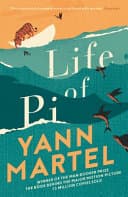
- Life of Pi
Yann Martel
3.9 (1.3M) average on GoodreadsFantasyStranded in the vast Pacific, a young Indian boy forms an unlikely bond with a Bengal tiger, questioning belief and survival.
- The Picture of Dorian Gray
Oscar Wilde
4.1 (966k) average on GoodreadsFantasyA beautiful young man's soul decays within a cursed portrait, mirroring the grotesque cost of his hedonistic pursuit of eternal youth and illicit pleasure.
- Tuesdays with Morrie
Mitch Albom
4.1 (782k) average on GoodreadsBiographyA dying professor's weekly lessons from his bedside change a former student, giving him ideas on life, love, and letting go.





Enjoyed the summary?
A summary gives you the shape of the book. The book itself has the detail, the examples and the voice.
Find Selected Short Stories on AmazonAs an Amazon Associate, BookBrief earns from qualifying purchases. How we're funded