
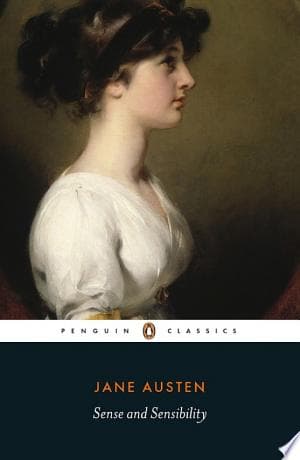
Synopsis
Covers the whole plot, including the ending.
- Difficulty
- Medium
- Pacing
- Moderate
- Mood
- Romantic, Reflective, Witty, Poignant
- Read it if
- You enjoy classic romance novels with a focus on social commentary, character development, and nuanced emotional journeys, or if you appreciate stories where prudence and passion clash.
- Skip it if
- You prefer fast-paced plots with high action, or if you dislike elaborate prose and detailed descriptions of societal manners.
Sense and Sensibility Plot Summary
Covers the whole plot, including the ending.
The Dashwood's Ruin and New Beginnings
When Mr. Henry Dashwood dies, his estate, Norland Park, goes to his son from his first marriage, John Dashwood. John had promised his dying father he would provide for his stepmother, Mrs. Dashwood, and half-sisters, Elinor, Marianne, and Margaret. However, his greedy wife, Fanny, quickly convinces him not to. The Dashwood women are left with only 500 pounds a year and must find a cheaper home. Mrs. Dashwood's rich cousin, Sir John Middleton, offers them Barton Cottage in Devonshire. This is a big change from their comfortable life at Norland.
Elinor's Prudence and Edward's Reserved Nature
While still at Norland, Elinor Dashwood, the oldest and most sensible sister, quietly grows fond of Edward Ferrars, Fanny Dashwood's brother. Edward is kind and smart, but also very quiet and seems sad. Elinor, always careful, watches him and feels a growing connection. However, his silence about his future and Fanny's clear disapproval (because the Dashwoods have less money) make her worried. She struggles with not knowing his feelings and plans, which is very different from her sister Marianne's open and strong way of loving.
Marianne's Romantic Encounter and Willoughby's Charm
Soon after they arrive at Barton Cottage, Marianne Dashwood, known for being passionate and impulsive, falls during a walk in the rain. The charming and handsome John Willoughby rescues her. He quickly wins Marianne over with their shared love of poetry, music, and romantic ideas. Their public displays of affection lead everyone, including the Dashwood family and their neighbors, to think they will marry. Marianne is completely in love and openly shows her feelings, ignoring social rules and Elinor's careful warnings about Willoughby's money problems and unclear intentions.
Willoughby's Abrupt Departure and Marianne's Despair
Just when Marianne thinks she will be happy with Willoughby, he suddenly says he must go to London for urgent business. His reasons are vague, and his manner, though seemingly sorry, is evasive. He does not promise to return soon or write, leaving Marianne devastated and confused. She becomes very sad and upset, refusing to believe anything but a real, though unexplained, need could have made him leave. Elinor, while feeling for her sister's pain, finds Willoughby's behavior troubling and dishonorable. She suspects a worse reason for his sudden departure.
Colonel Brandon's Steadfast Affection
While Marianne is in love with Willoughby, Colonel Brandon, a rich, older single man and friend of Sir John Middleton, quietly loves Marianne. He is an honest and reserved man, very different from Willoughby's showy charm. Brandon watches Marianne's sadness with concern and offers her kindness and help. However, Marianne mostly ignores or dismisses his attention, as she is completely focused on her romantic ideas and her sadness over Willoughby. His past, which includes a sad love story, is slowly revealed. This explains his melancholic nature and helps Elinor understand him better.
The London Season and Cruel Realizations
The Dashwood sisters go to London for the social season, hoping to cheer up Marianne and, for Marianne, to see Willoughby again. But Willoughby cruelly ignores Marianne at a party, barely speaking to her. He later sends a cold letter saying he is engaged to a rich woman, Miss Grey, and denying he ever had romantic feelings for Marianne. This public shame and clear rejection crush Marianne. At the same time, Elinor learns the shocking news that Edward Ferrars has been secretly engaged for years to Lucy Steele, a clever and somewhat rude young woman. This news destroys Elinor's quiet hopes for a future with him.
Scandal and Financial Ruin
Lucy's sister, Anne, accidentally reveals Edward Ferrars' secret engagement to Lucy Steele to Mrs. John Dashwood (Fanny). Fanny is very angry that her brother would think of marrying a woman without money or connections. Because of this, Edward's wealthy mother, Mrs. Ferrars, disinherits him. She had wanted him to marry a rich and high-status woman. Edward, wanting to keep his word, refuses to break his promise to Lucy, even if it means losing his money and future. This act of honesty, though painful for Elinor, makes her respect his character, even as she quietly suffers her own heartbreak.
Marianne's Illness and Willoughby's Confession
During their stay at Cleveland, the Palmer's estate, Marianne becomes very ill with a fever. Her health is greatly weakened by her emotional distress. Her life is in danger, which causes Elinor and Colonel Brandon, who devotedly cares for her, great worry. During this time, Willoughby unexpectedly arrives, asking about Marianne. He tells Elinor he truly loved Marianne but left her for Miss Grey because of growing debts and the threat of being disinherited by his rich aunt. His aunt had found out he seduced and abandoned Colonel Brandon's ward, Eliza. His confession, though self-serving, helps Elinor understand his character better.
Lucy's Deception and Edward's Freedom
After Marianne recovers, the Dashwoods return to Barton Cottage. A surprising event happens: they learn that Lucy Steele has married, but not Edward Ferrars. Instead, she cleverly married Edward's younger brother, Robert Ferrars, who is even more vain and silly than Fanny. This unexpected marriage frees Edward from his long and difficult engagement to Lucy. Edward, now disinherited but free, immediately goes to Barton Cottage to explain what happened to Elinor and to propose marriage to her. She happily accepts.
Happy Endings and Enduring Love
Elinor and Edward marry and live in a modest parsonage given to them by Colonel Brandon, who has secured the living of Delaford for Edward. They find true happiness in their stable and loving marriage. Marianne, having learned from her past mistakes and matured after her illness and disappointment with Willoughby, slowly starts to appreciate Colonel Brandon's steady devotion, kindness, and deep understanding. Though she first struggled to let go of her romantic ideals, she eventually sees his true worth and accepts his proposal. They marry, and Marianne finds a quiet, deep happiness, learning that true love is not always the most dramatic or passionate, but often the most lasting and sensible.
Sense and Sensibility Characters
Elinor Dashwood
Protagonist
The sensible and reserved eldest sister, who prioritizes propriety and duty.
Elinor is the embodiment of 'sense.' She is prudent, rational, and exercises remarkable self-control, especially in matters of the heart. She deeply loves her family and constantly strives to protect them, often at the expense of her own feelings. Throughout the novel, she endures private heartbreak with stoicism, observing the world and her sister's impulsiveness with quiet understanding and occasional frustration. Her inner strength and moral integrity are her defining characteristics, making her a pillar of calm amidst emotional turmoil. She values consistency and genuine affection over superficial charm.
Relationships: Marianne Dashwood (Sisterly, often contrasting in temperament); Edward Ferrars (Love interest, later husband); Mrs. Dashwood (Daughter, confidante); Fanny Dashwood (Sister-in-law, antagonist)
Marianne Dashwood
Protagonist
The passionate and impulsive middle sister, who lives by feeling and romantic ideals.
Marianne represents 'sensibility' in its purest form. She is highly emotional, romantic, and expressive, openly displaying her joys and sorrows. She believes wholeheartedly in love at first sight, poetic passion, and the superiority of feeling over reason. Her infatuation with Willoughby blinds her to his flaws and leads her to profound despair when he betrays her. Her journey is one of learning to temper her overwhelming emotions with a degree of prudence and to appreciate quiet, steadfast affection over dramatic passion. She is initially disdainful of social conventions and moderation.
Relationships: Elinor Dashwood (Sisterly, often clashing in temperament); John Willoughby (Initial love interest, betrayer); Colonel Brandon (Steadfast admirer, later husband); Mrs. Dashwood (Daughter, emotionally similar)
Edward Ferrars
Love Interest
Elinor's love interest, a kind and honorable man bound by an early, ill-advised engagement.
Edward is a gentle, intelligent, and honorable young man. He is initially reserved and seemingly melancholic, due to a secret engagement made in his youth to Lucy Steele, which he feels honor-bound to uphold despite his lack of affection for her and his growing love for Elinor. He is disinherited by his mother for refusing to break this engagement. His integrity and quiet strength are key to Elinor's affection for him. He values genuine connection and domestic tranquility over societal expectations or wealth, making him a fitting partner for Elinor.
Relationships: Elinor Dashwood (Love interest, later husband); Lucy Steele (Secretly engaged to, later broken); Fanny Dashwood (Sister); Mrs. Ferrars (Mother, disinherits him)
Colonel Brandon
Love Interest
A wealthy, older bachelor with a tragic past who is devoted to Marianne.
Colonel Brandon is a man of quiet dignity, integrity, and deep, though reserved, affection. He is significantly older than Marianne and carries the weight of a tragic past involving a lost love and a ward, Eliza, whom Willoughby seduced and abandoned. He is a steadfast friend to the Dashwoods and consistently offers support and kindness, especially to Marianne, for whom he harbors a deep love. His calm demeanor and honorable actions stand in stark contrast to Willoughby's superficial charm, and he represents true, enduring affection.
Relationships: Marianne Dashwood (Love interest, later husband); Eliza Williams (Ward, tragic past connection to Willoughby); Sir John Middleton (Close friend)
John Willoughby
Antagonist/Love Interest
A charming but ultimately selfish and unprincipled young man who captivates Marianne.
Willoughby is initially presented as a dashing, charismatic, and seemingly romantic hero who perfectly embodies Marianne's ideals. He shares her passions for poetry and nature, and his charm is almost irresistible. However, beneath his appealing exterior lies a selfish and morally weak character. He seduces and abandons Colonel Brandon's ward, Eliza, and later cruelly jilts Marianne for a wealthy heiress, Miss Grey, due to his dire financial situation. He represents superficial charm and passion devoid of true principle or integrity. He eventually confesses his true feelings for Marianne to Elinor, but too late to redeem himself.
Relationships: Marianne Dashwood (Object of his initial affection, later jilted); Miss Grey (Wealthy fiancée, later wife); Eliza Williams (Seduces and abandons)
Lucy Steele
Supporting/Antagonist
A manipulative and deceitful young woman secretly engaged to Edward Ferrars.
Lucy Steele is a young woman of limited fortune and education but possesses a sharp mind and a cunning nature. She is secretly engaged to Edward Ferrars for several years, a secret she guards carefully while subtly trying to secure her social standing. Her primary motivation is financial security and social advancement. She is manipulative, often feigning sweetness and innocence while actively undermining Elinor's chances with Edward. Her lack of genuine affection for Edward is evident in her ultimate decision to marry his wealthier, albeit more foolish, brother, Robert.
Relationships: Edward Ferrars (Secretly engaged to); Robert Ferrars (Marries); Elinor Dashwood (Rival for Edward's affection)
Mrs. Dashwood
Supporting
The sentimental and kind mother of Elinor, Marianne, and Margaret.
Mrs. Dashwood is the widowed mother of the three Dashwood sisters. Like Marianne, she is highly sentimental, warm-hearted, and prone to romantic ideals and impulsive decisions. She often encourages Marianne's passionate displays and shares her emotional outlook, sometimes to the detriment of practicality. Despite her emotional nature, she is a loving and supportive mother, though her lack of 'sense' often means she relies on Elinor for practical guidance and emotional stability. She is generous and kind, but lacks the prudence necessary for their reduced circumstances.
Relationships: Elinor Dashwood (Daughter, often relies on her prudence); Marianne Dashwood (Daughter, shares emotional similarities); Margaret Dashwood (Youngest daughter); John Dashwood (Step-son)
Fanny Dashwood
Antagonist
John Dashwood's avaricious and snobbish wife, who mistreats the Dashwood women.
Fanny Dashwood is the epitome of selfishness, snobbery, and avarice. She is the wife of John Dashwood and sister to Edward and Robert Ferrars. She actively discourages her husband from providing for his stepmother and half-sisters, driven by her own greed and social ambition. She is highly critical of anyone without wealth or connections and is openly disdainful of the Dashwood women. Her manipulative nature and social climbing are a constant source of frustration and hardship for Elinor and her family.
Relationships: John Dashwood (Husband, easily manipulated); Elinor Dashwood (Sister-in-law, antagonist); Edward Ferrars (Brother, disapproves of his choices)
Sir John Middleton
Supporting
A kind-hearted but rather boisterous and gossipy cousin of Mrs. Dashwood.
Sir John Middleton is a distant cousin of Mrs. Dashwood and the owner of Barton Park, who offers Barton Cottage to the Dashwood women. He is a jovial, good-natured, and hospitable man, though somewhat lacking in refinement and discretion. He enjoys company, gossip, and hunting, and is generally well-meaning but often insensitive to the Dashwoods' more refined sensibilities. He is a loyal friend to Colonel Brandon and provides much of the social activity in their new Devonshire community.
Relationships: Mrs. Dashwood (Cousin, landlord); Colonel Brandon (Close friend); Lady Middleton (Wife)
Robert Ferrars
Mentioned/Supporting
Edward Ferrars' younger brother, a vain and frivolous dandy.
Robert Ferrars is Edward's younger brother, a fashionable, vain, and rather foolish young man primarily concerned with appearances, social status, and his own sartorial elegance. He is initially seen as a potential suitor for Lucy Steele, but his superficiality is clear. In a surprising twist, he ends up marrying Lucy Steele, demonstrating his lack of judgment and confirming her manipulative prowess. His character serves to highlight the contrast between genuine worth (Edward) and superficiality.
Relationships: Edward Ferrars (Brother); Lucy Steele (Marries); Fanny Dashwood (Sister)
Sense and Sensibility Themes
Sense vs. Sensibility
This is the main theme, shown through Elinor and Marianne Dashwood. 'Sense' means being careful, reasonable, self-controlled, and following social rules, which Elinor shows. 'Sensibility' means being passionate, emotional, impulsive, and having romantic ideals, which Marianne shows. The novel argues for a balance between these two. It shows how too much emotion (Marianne's love for Willoughby) causes pain, while too much reason (Elinor hiding her feelings for Edward) also causes pain. Both sisters find happiness by mixing their main traits with parts of the other.
“Elinor, for her part, was not without her hopes. But she felt the difference between the two cases too strongly to be able to suppose that Marianne's heart was no more wounded than her own.”
Love and Marriage
The novel explores different kinds of love and reasons for marriage: strong passion (Marianne and Willoughby), lasting, quiet affection (Elinor and Edward, and later Marianne and Brandon), and marriages for money (Willoughby and Miss Grey, Lucy Steele and Robert Ferrars). It criticizes the social pressure to marry for financial security, which often leads to unhappiness or dishonesty. The story ultimately supports marriages built on mutual respect, understanding, and real affection, rather than quick passion or money, as seen in Elinor and Edward's and Marianne and Colonel Brandon's stable marriages.
“It is not time or opportunity that is to determine intimacy; – it is disposition alone. Seven years would be insufficient to make some people acquainted with each other, and seven days are more than enough for others.”
Social Class and Financial Security
The Dashwood women's lack of money after Mr. Dashwood's death drives much of the plot. Their lower income greatly affects their chances of marriage and social standing. The novel shows how vulnerable women are in a society where men mostly control wealth and property, often through inheritance laws (like entailment). Characters like Fanny Dashwood and Lucy Steele show society's focus on wealth. Edward Ferrars' disinheritance for choosing honor over money highlights strict class expectations. The happy marriages at the end provide not only emotional fulfillment but also needed financial stability.
“To wish was to hope, and to hope was to expect.”
Appearance vs. Reality
This theme is clearly shown through Willoughby and Colonel Brandon. Willoughby's charming looks and romantic appeal first hide his true selfish and dishonest nature from Marianne and many others. In contrast, Colonel Brandon, with his quiet manner and older age, is often overlooked or misjudged, despite his honesty and real kindness. Similarly, Lucy Steele's sweet appearance hides a clever and manipulative personality. The novel constantly challenges characters and readers to look past how people seem to find their real character and worth.
“I have been a selfish being all my life, in practice, though not in principle.”
Duty and Obligation
Duty is important, especially for Edward Ferrars. He stays in his long, secret engagement to Lucy Steele, even though he does not love her, because of his strong sense of honor and duty. He does this even when it costs him his inheritance and happiness. Elinor also often puts duty and proper behavior before her own desires, especially when managing her family's affairs and hiding her feelings. The novel explores the tension between personal desires and social or moral obligations. It suggests that while duty is good, it should ideally match real affection and respect.
“It was a great thing to be a man, and a still greater to be a gentleman.”
Plot Devices & Literary Techniques
Entailment
A legal restriction on property inheritance, dictating who can inherit.
The entailment of Norland Park to John Dashwood, rather than to the female line or Mrs. Dashwood, is the catalyst for the entire plot. It forces Mrs. Dashwood and her daughters into reduced circumstances, initiating their move to Barton Cottage and setting in motion all subsequent events. This legal device highlights the precarious economic position of women in the 19th century, whose financial security was often entirely dependent on male relatives and inheritance laws. It underscores the societal pressures and limitations faced by the Dashwood sisters.
Epistolary Elements (Letters)
Letters used to reveal plot points, character, and advance the narrative.
Letters serve as crucial plot devices in 'Sense and Sensibility.' Willoughby's cold letter to Marianne definitively ends their implied engagement and reveals his true intentions. Later, Colonel Brandon's letter to Elinor details Willoughby's past misconduct with Eliza, exposing his character. Lucy Steele's letter, announcing her marriage to Robert Ferrars, is the pivotal turning point that frees Edward to propose to Elinor. These letters efficiently convey information, create dramatic tension, and reveal character motivations, often from a distance, without requiring direct confrontation.
Dramatic Irony
The audience knows more than certain characters, creating tension and suspense.
Dramatic irony is frequently employed, particularly concerning Marianne's relationship with Willoughby and Elinor's knowledge of Edward's engagement. The reader quickly perceives Willoughby's superficiality and unreliability long before Marianne does, making her subsequent heartbreak more poignant. Similarly, the reader is aware of Edward's secret engagement to Lucy Steele before many of the characters, creating tension as Elinor struggles with her feelings and the uncertainty of Edward's intentions. This device allows Austen to comment on characters' naivety and the dangers of misjudgment.
Foil Characters
Characters who highlight each other's contrasting traits.
The entire premise of 'Sense and Sensibility' relies on the use of foil characters. Elinor and Marianne are primary foils, representing the contrasting traits of 'sense' and 'sensibility.' Their differences drive much of the narrative and thematic exploration. Similarly, Willoughby and Colonel Brandon serve as foils for each other: Willoughby, the charming but unprincipled cad, highlights Brandon's quiet integrity and steadfast devotion. These pairings emphasize the novel's central themes and allow Austen to explore the nuances of human nature and moral conduct.
Social Commentary through Dialogue
Characters' conversations reveal societal norms, prejudices, and values.
Austen uses character dialogue not just to advance the plot but also to subtly critique and comment on Georgian society. Conversations about money, marriage, social standing, and propriety expose the prejudices and values of the time. Fanny Dashwood's and Mrs. Ferrars' dialogues reveal their snobbery and avarice. Marianne's passionate pronouncements highlight the romantic ideals of the era, while Elinor's measured responses show a more rational perspective. The often gossipy conversations of characters like the Middletons and Mrs. Jennings provide both comic relief and a snapshot of social interactions and judgments.
Sense and Sensibility Quotes
“It is not time or opportunity that is to determine intimacy;—it is disposition alone. Seven years would be insufficient to make some people acquainted with each other, and seven days are more than enough for others.”
“Know your own happiness. You want nothing but to know it.”
“To wish was to hope, and to hope was to expect.”
“I come here, my dear, to tell you that I am just engaged to Mr. Ferrars.”
“Elinor, for her part, was not much more at her ease, when she found herself thus addressed by Mr. Willoughby.”
“The more I know of the world, the more am I convinced that I shall never see a man whom I can really love.”
“It is not every one who has a taste for a country life like myself.”
“Her judgment was good, her taste excellent, her understanding superior.”
“I have not wanted to love you, Edward.”
“She was without any thing beyond common abilities, and her mind was wholly uninformed.”
“Barton Park was a large, handsome, stone house, well fitted up and standing in a fine park.”
“I wish as well as every body else to be perfectly happy; but, like every body else, it must be in my own way.”
“Elinor was then to be the comforter of others, and to allay the fears of her mother and sisters.”
“For a woman, especially, like Marianne, to be seriously attached to a man, and to be deceived in him;—this is an unhappiness which no other can equal.”
Quiz
10 questions on the plot and the characters. Each answer comes with a short explanation.
Question 1
What is the primary reason the Dashwood sisters and their mother are forced to leave Norland Park?
- They were evicted due to unpaid debts.
- John Dashwood inherited the estate and his wife, Fanny, insisted on their departure.
- Mrs. Dashwood decided to move closer to her distant relatives.
- Elinor received a marriage proposal that required them to relocate.
Show answer
B. John Dashwood inherited the estate and his wife, Fanny, insisted on their departure. After the death of Mr. Dashwood, Norland Park passed to his son, John Dashwood, by his first marriage. John's wife, Fanny, was very selfish and quickly persuaded him to do very little for his stepmother and half-sisters, effectively forcing them to find a new home.
Question 2
Which character is known for embodying 'sense' through her prudence, self-control, and rational judgment?
- Marianne Dashwood
- Mrs. Jennings
- Elinor Dashwood
- Lucy Steele
Show answer
C. Elinor Dashwood Elinor Dashwood consistently displays 'sense' throughout the novel, demonstrating practicality, discretion, and the ability to control her emotions, even in times of great personal distress. She prioritizes duty and propriety.
Question 3
What is the initial source of Marianne Dashwood's profound sorrow and illness?
- The death of her father.
- Colonel Brandon's unsolicited proposal.
- Willoughby's betrayal and public engagement to Miss Grey.
- Elinor's engagement to Edward Ferrars.
Show answer
C. Willoughby's betrayal and public engagement to Miss Grey. Marianne falls deeply in love with John Willoughby, believing his affections to be genuine. Her subsequent discovery of his engagement to the wealthy Miss Grey, due to his need for money, plunges her into despair and contributes to her severe illness.
Question 4
Who is secretly engaged to Edward Ferrars at the beginning of the novel?
- Miss Morton
- Lucy Steele
- Harriet Smith
- Fanny Dashwood
Show answer
B. Lucy Steele Edward Ferrars had a secret engagement to Lucy Steele, formed years prior when he was younger and less discerning. This engagement causes significant distress for Elinor, who loves Edward but respects his commitment.
Question 5
What is the primary theme explored through Marianne Dashwood's character arc?
- The importance of social status and wealth.
- The dangers of unchecked sensibility and the necessity of moderation.
- The triumph of love over societal expectations.
- The virtue of maintaining family honor above all else.
Show answer
B. The dangers of unchecked sensibility and the necessity of moderation. Marianne's journey illustrates the consequences of allowing extreme emotions and romantic ideals to govern one's life. Her suffering after Willoughby's betrayal and subsequent recovery teach her the value of 'sense' and moderation, moving her towards a more balanced perspective.
Question 6
Why does Edward Ferrars initially refuse to break his engagement to Lucy Steele, despite his growing affection for Elinor?
- He genuinely loves Lucy and intends to marry her.
- He fears his mother will disinherit him if he does.
- He feels bound by honor and duty, having given his word to Lucy.
- He is waiting for Lucy to break off the engagement first.
Show answer
C. He feels bound by honor and duty, having given his word to Lucy. Edward Ferrars, despite recognizing his mistake in becoming engaged to Lucy Steele, feels a strong moral obligation to uphold his promise. His sense of honor and duty prevents him from breaking the engagement, even at great personal cost and distress.
Question 7
What significant event leads to Edward Ferrars finally being free to propose to Elinor?
- His mother's approval of Elinor.
- Lucy Steele elopes with Robert Ferrars.
- Colonel Brandon pays off Lucy Steele to release Edward.
- Elinor inherits a fortune, making her an eligible match.
Show answer
B. Lucy Steele elopes with Robert Ferrars. The surprising elopement of Lucy Steele with Edward's younger brother, Robert Ferrars, is the pivotal event that frees Edward from his long-standing and burdensome engagement. This allows him to pursue Elinor without dishonor.
Question 8
How does Willoughby's confession to Elinor about his past actions towards Marianne alter Elinor's perception of him?
- It makes her despise him even more for his cruelty.
- It confirms her initial judgment that he was always an unprincipled cad.
- It reveals a glimmer of remorse and regret, complicating her view of him.
- It convinces her that he truly loved Marianne but was forced into his actions.
Show answer
C. It reveals a glimmer of remorse and regret, complicating her view of him. During his visit to Elinor, Willoughby confesses his regrets and the circumstances that led to his abandonment of Marianne, including his financial ruin and subsequent marriage for money. While it doesn't excuse his actions, it shows Elinor that he possessed some capacity for remorse and wasn't entirely heartless, adding a layer of complexity to his character.
Question 9
What is the symbolic significance of the contrasting personalities of Elinor and Marianne Dashwood in the novel's title?
- It highlights the conflict between rural and urban life.
- It represents the societal divide between the wealthy and the poor.
- It explores the balance between rational judgment ('sense') and emotional passion ('sensibility').
- It symbolizes the difference between true love and infatuation.
Show answer
C. It explores the balance between rational judgment ('sense') and emotional passion ('sensibility'). The title 'Sense and Sensibility' directly refers to the two sisters. Elinor embodies 'sense' through her discretion and rationality, while Marianne represents 'sensibility' with her intense emotions and romantic idealism. The novel explores the virtues and pitfalls of both extremes, ultimately advocating for a balance between them.
Question 10
Why does Colonel Brandon, despite his age and reserved nature, ultimately prove to be a suitable partner for Marianne?
- He is the wealthiest suitor available to her.
- He provides stability, genuine affection, and quiet devotion that helps temper her romantic excess.
- He is a passionate and dramatic individual, matching Marianne's own temperament.
- He reminds her strongly of Willoughby, allowing her to relive her first love.
Show answer
B. He provides stability, genuine affection, and quiet devotion that helps temper her romantic excess. Colonel Brandon offers Marianne a steadfast and devoted love, stability, and a mature affection that contrasts with Willoughby's superficial charm. His quiet strength and genuine care provide the grounding influence Marianne needs to balance her passionate nature, ultimately leading to a happy and stable marriage.
Sense and Sensibility FAQ
What is Sense and Sensibility about?
Sense and Sensibility follows the Dashwood sisters, Elinor and Marianne, as they navigate love, loss, and societal pressures after their father's death leaves them in reduced circumstances. Elinor, governed by sense, prudently conceals her affections for Edward Ferrars, while Marianne, ruled by sensibility, openly expresses her passionate love for John Willoughby, leading to heartbreak and eventual maturity.
Why should I read Sense and Sensibility?
You should read Sense and Sensibility for its timeless exploration of the tension between reason and emotion, its sharp social commentary on Georgian-era England, and its engaging portrayal of sisterly love and personal growth. Austen's wit and character development make it a compelling study of human nature and societal expectations, offering both entertainment and thoughtful reflection.
What is the background/setting of Sense and Sensibility?
The novel is set in late 18th-century England, primarily in rural Devonshire at Norland Park and Barton Cottage, and later in London and Cleveland. It depicts the gentry class, focusing on the limited opportunities for women, particularly those without fortunes, and the intricate social codes governing courtship, marriage, and financial security.
What are the most memorable quotes?
Memorable quotes include Marianne's passionate declaration, 'I could not be happy with a man whose taste did not in every point coincide with my own,' and Elinor's more measured observation, 'I wish as well as everybody else to be perfectly happy; but, like everybody else, it must be in my own way.' These highlight the sisters' contrasting philosophies and the novel's central theme.
What writing style does the author use?
Jane Austen employs a distinct writing style characterized by free indirect discourse, allowing the reader access to characters' thoughts and feelings while maintaining an omniscient narrator. Her prose is elegant, witty, and often ironic, using detailed descriptions and sharp dialogue to reveal character and critique societal norms.
What minor details add significant meaning?
The seemingly minor detail of Mrs. Ferrars's preference for Lucy Steele, despite her lack of fortune or connections, over Elinor, highlights the superficiality and snobbery of some upper-class circles. It underscores that family name and perceived social climbing often trump genuine character or affection in their eyes.
What are some subtle foreshadowing moments?
Early in the novel, Willoughby's sudden departures and the vague explanations for his absences subtly foreshadow his eventual betrayal of Marianne and his mercenary nature. Additionally, Elinor's quiet observations of Edward's discomfort and evasiveness hint at his prior engagement to Lucy Steele long before it is explicitly revealed.
What unexpected character connections exist?
An unexpected connection is the prior engagement between Edward Ferrars and Lucy Steele, kept secret due to his family's disapproval and her desire for his inheritance. This clandestine relationship creates significant tension and directly impacts Elinor's emotional state, revealing the hidden complexities beneath polite society.
What are unspoken character motivations?
Colonel Brandon's unspoken motivation for his deep affection for Marianne is rooted in her resemblance to Eliza, the woman he loved in his youth who suffered greatly. This past tragedy fuels his protective instincts and unwavering devotion to Marianne, though he rarely articulates it directly.
What psychological complexities do characters exhibit?
Elinor exhibits psychological complexity through her profound emotional restraint; she experiences deep sorrow and anxiety over Edward but suppresses her feelings to maintain composure and support her family. This internal conflict between her emotions and her sense of duty showcases the psychological toll of societal expectations.
What are the major emotional turning points?
A major emotional turning point for Marianne is her severe illness after Willoughby's rejection and subsequent marriage. This period of near-death forces her to reflect on her excessive sensibility and leads to a profound realization of her own imprudence and the quiet strength of Elinor's 'sense,' initiating her journey towards maturity.
How do relationship dynamics evolve?
The relationship between Elinor and Marianne evolves from one where Marianne often dismisses Elinor's advice as cold, to one of mutual respect and understanding. After Marianne's heartbreak and illness, she comes to appreciate Elinor's steadfastness and wisdom, leading to a stronger, more balanced sisterly bond built on shared experience and mature affection.
Which parts remain ambiguous or open-ended?
The depth of Edward Ferrars's feelings for Lucy Steele during their long engagement remains somewhat ambiguous. While he feels bound by honor, the novel doesn't fully delve into whether he ever truly loved her or if his commitment was solely a matter of duty, leaving readers to interpret his past affections.
What are controversial scenes or decisions?
Marianne's decision to openly mourn Willoughby and refuse to hide her despair, even when it causes social embarrassment and distress to her family, can be seen as controversial. While it highlights her 'sensibility,' it also challenges the era's norms of female decorum and emotional restraint, prompting debate about the appropriateness of her actions.
Sense and Sensibility ending explained: how it ends & what it means
The novel concludes with Elinor marrying Edward Ferrars after Lucy Steele abandons him for his wealthier brother Robert. Marianne, having matured, accepts Colonel Brandon's proposal, finding happiness in his steadfast affection and a connection that transcends initial passion. The ending signifies the triumph of 'sense' and 'sensibility' finding balance, with both sisters achieving contentment through different paths and learning the value of both rational judgment and genuine affection.
About the author

Jane Austen was an English novelist known primarily for her six major novels, which implicitly interpret, critique, and comment upon the British landed gentry at the end of the 18th century. Austen's plots often explore the dependence of women on marriage for the pursuit of favourable social standing and economic security. Her works are an implicit critique of the novels of sensibility of the second half of the 18th century and are part of the transition to 19th-century literary realism. Her deft use of social commentary, realism and biting irony have earned her acclaim among critics and scholars.
Similar books
- Pride and Prejudice
Jane Austen
4.3 (3M) average on GoodreadsHistorical FictionExplores similar themes of class, marriage, and societal expectations through witty dialogue and strong female characters.
- Emma
Jane Austen
3.2 (13k) average on GoodreadsRomanceAnother Austen novel focusing on matchmaking, misunderstandings, and personal growth within a Regency-era setting.
- Persuasion
Jane Austen
4.1 (524k) average on GoodreadsHistorical FictionFeatures a strong, sensible heroine who navigates lost love and societal pressures, eventually finding a second chance at happiness.
- To Kill a Mockingbird
Harper Lee
4.3 (4.5M) average on GoodreadsHistorical FictionIn the 1930s Jim Crow South, Harper Lee writes about racial injustice, moral growth, and the quiet courage of a lawyer father, Atticus Finch, as seen through his young daughter's eyes.
- The Great Gatsby
F. Scott Fitzgerald
3.9 (3.8M) average on GoodreadsHistorical FictionIn the opulent Roaring Twenties, a mysterious millionaire's lavish parties hide his desperate, tragic pursuit of a lost love, exposing the emptiness within the American Dream.
- Angels & Demons
Dan Brown
3.9 (2.7M) average on GoodreadsThrillerA Harvard symbologist races through Rome's ancient sites, deciphering cryptic clues to unmask the Illuminati and stop a vengeful plot to destroy the Vatican with a stolen antimatter weapon.




Enjoyed the summary?
A summary gives you the shape of the book. The book itself has the detail, the examples and the voice.
Find Sense and Sensibility on AmazonAs an Amazon Associate, BookBrief earns from qualifying purchases. How we're funded