
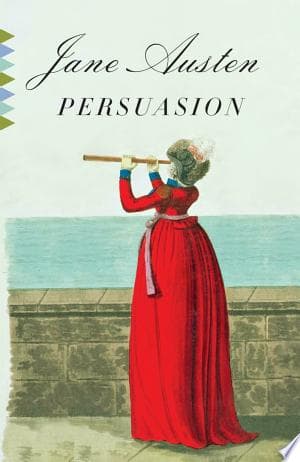
Synopsis
Covers the whole plot, including the ending.
- Difficulty
- Medium
- Pacing
- Moderate
- Mood
- Reflective, Romantic, Melancholy, Hopeful
- Read it if
- You enjoy classic romance with a focus on second chances, emotional depth, and societal commentary, particularly if you appreciate a mature heroine.
- Skip it if
- You prefer fast-paced plots with overt declarations of love, or find detailed descriptions of social etiquette and internal monologue tedious.
Persuasion Plot Summary
Covers the whole plot, including the ending.
The Elliot Family's Financial Straits
The novel opens by introducing Sir Walter Elliot, a vain baronet, and his eldest daughter, Elizabeth, who share a strong desire for social status and luxury. Their lavish spending at Kellynch Hall, their ancestral estate in Somersetshire, has led to significant debt. Mr. Shepherd, the family lawyer, and Lady Russell, Anne Elliot's godmother and a close family friend, advise Sir Walter to cut expenses. Despite Anne's more sensible suggestions for economical living, Sir Walter and Elizabeth insist on a plan that involves renting out Kellynch Hall and moving to a more fashionable, but still expensive, address in Bath. This decision shows the family's superficiality and their disregard for financial prudence.
The Crofts Lease Kellynch Hall
To ease their financial burdens, Kellynch Hall is put up for rent. The new tenants are Admiral Croft and his wife, Sophia, who is Captain Frederick Wentworth's sister. This news immediately stirs Anne Elliot's emotions, as Captain Wentworth was the man she was persuaded to reject eight years before. The Crofts' arrival signals Captain Wentworth's return to Anne's social circle, setting the stage for their renewed acquaintance and the revisiting of past regrets and unresolved feelings. The connection between the Crofts and Wentworth brings the estranged lovers back into proximity.
Anne's Past Regret
Eight years before the novel's opening, a young Anne Elliot, then nineteen, fell deeply in love with Frederick Wentworth, a promising but then-penniless naval officer. Lady Russell, concerned for Anne's future and influenced by societal expectations regarding wealth and status, convinced Anne that a marriage to Wentworth would be unwise and beneath her station. Reluctantly, Anne broke off the engagement, a decision she has regretted ever since. This past persuasion is the central conflict of the story, shaping Anne's character and her current quiet melancholy. Her lasting love for Wentworth, despite his perceived flaws, remains constant in her life.
Meeting Again at Uppercross
Anne goes to stay with her younger sister, Mary Musgrove, at Uppercross Cottage. Mary, married to Charles Musgrove, constantly complains and seeks attention. It is at Uppercross that Anne has her first direct encounter with Captain Wentworth since their separation. He is now a wealthy and respected naval captain, having achieved significant success in the intervening years. Their reunion is awkward and strained; Wentworth seems indifferent to Anne and pays significant attention to Louisa and Henrietta Musgrove, Charles's younger sisters. Anne observes his interactions with a heavy heart, convinced that his affections have shifted, and she is merely a ghost of the past.
The Lyme Accident
The Musgrove family, accompanied by Captain Wentworth and Anne, travels to Lyme Regis. During a walk along the Cobb, a stone pier, Louisa Musgrove, trying to prove her strength and determination to Captain Wentworth, insists on jumping down a set of steps, despite warnings. She falls and sustains a severe head injury, rendering her unconscious. This dramatic event causes chaos. Captain Wentworth shows his leadership and composure during the crisis, while Anne remains calm and practical, offering sensible advice and comfort. The accident highlights Louisa's impulsive nature and Wentworth's admirable qualities, and it also subtly shifts his attention towards Anne's quiet strength.
Louisa's Recovery and Engagement
After the accident, Louisa Musgrove recovers slowly at the home of Captain Harville and his family in Lyme. Captain Wentworth, feeling responsible, remains by her side for a period. During her recovery, Louisa develops a close bond with Captain James Benwick, a melancholic naval officer staying with the Harvilles, who is mourning his deceased fiancée. Much to the surprise of many, especially Anne, Louisa and Captain Benwick become engaged. This development frees Captain Wentworth from any perceived obligation towards Louisa and removes her as a romantic rival for Anne, allowing for a potential rekindling of his feelings for Anne.
The Move to Bath
Sir Walter and Elizabeth Elliot move to Bath, a fashionable resort city, where they hope to improve their social standing. Anne eventually joins them. Lady Russell also takes lodgings in Bath. The city becomes a hub for many of the novel's characters, including Captain Wentworth, the Musgroves, and the newly introduced Mr. William Elliot, Sir Walter's heir. The confined social setting of Bath intensifies the interactions between the characters, creating opportunities for both misunderstandings and eventual reconciliations. The city's social dynamics, with its emphasis on appearances and status, serve as a backdrop for the unfolding romantic drama.
Mr. Elliot's Intentions
Mr. William Elliot, Sir Walter's estranged cousin and heir, appears in Bath and begins to form a close relationship with Sir Walter and Elizabeth. He is charming and seemingly amiable, impressing many, including Lady Russell. However, Anne soon sees his true character: he is cunning, self-serving, and primarily interested in securing his inheritance and maintaining social decorum. He shows particular interest in Anne, perhaps viewing her as a suitable, respectable wife who would not interfere with his plans. His presence adds intrigue and subtle threat, as Anne must navigate his attentions while still harboring feelings for Captain Wentworth.
Misunderstandings and Jealousy
In Bath, the social interactions between Anne and Captain Wentworth are fraught with unspoken emotions and misunderstandings. Wentworth observes Anne's seemingly polite interactions with Mr. Elliot and mistakenly believes she might be developing feelings for him. Anne, in turn, is still convinced that Wentworth is indifferent to her and has moved on. Their pride and past hurt prevent them from openly communicating their true feelings. A scene occurs when Anne overhears a conversation between Captain Harville and Captain Wentworth about the constancy of men's and women's love, where Anne eloquently argues for women's lasting affections, unknowingly influencing Wentworth.
Captain Wentworth's Letter
After overhearing Anne's heartfelt defense of women's constancy in love and witnessing her genuine character, Captain Wentworth realizes the depth of his continued affection for her. He swiftly writes a passionate letter, expressing his enduring love and regret for his past pride and misjudgment. He delivers the letter to Anne at the White Hart Inn, where she is attending a social gathering. This direct and heartfelt confession is a turning point, removing all ambiguity and finally allowing Anne to understand his true feelings. The letter is a powerful declaration that sweeps away years of unspoken longing and misunderstanding.
Reconciliation and Re-engagement
Overwhelmed with emotion and relief after reading Captain Wentworth's letter, Anne soon finds him again. They have a private conversation where they openly confess their love and their past regrets. Anne explains the circumstances of Lady Russell's persuasion, and Wentworth acknowledges his own pride and hurt that prevented him from seeing Anne's true worth sooner. They reconcile completely, forgiving past hurts and reaffirming their deep affection for each other. They decide to marry, finally overcoming the societal obstacles and personal pride that kept them apart for so long. Their engagement shows enduring love and second chances.
Family Reactions and Future
The news of Anne and Captain Wentworth's engagement brings varied reactions. Sir Walter and Elizabeth are initially dismayed by Wentworth's lack of noble lineage, but his considerable wealth and established reputation eventually win them over, though reluctantly. Lady Russell, realizing Anne's deep happiness, acknowledges her past error in judgment and gives her blessing. Anne is finally free from her family's snobbery and her own past regrets. She marries Captain Wentworth, finding true happiness and a loving, supportive partner who values her for her intrinsic worth, not her social connections or fortune. Their future promises contentment and mutual respect.
Principal Figures
Anne Elliot
Protagonist
A gentle, intelligent, and quietly perceptive woman haunted by a past decision.
Anne Elliot is the second daughter of Sir Walter Elliot. She is intelligent, kind, sensitive, and possesses a strong moral compass. Unlike her vain father and elder sister, she is unconcerned with social status and appearance, valuing genuine connection and integrity. She lives a life of quiet resignation after being persuaded to break off her engagement to Captain Wentworth eight years prior, a decision she deeply regrets. Her quiet nature often leads her to be overlooked by her family, but she is highly valued by those who truly know her, like Lady Russell and the Musgroves.
Relationships: Captain Frederick Wentworth (Estranged lover, then husband.); Lady Russell (Godmother and close family friend, who influenced her past decision.); Sir Walter Elliot (Vain and neglectful father.); Elizabeth Elliot (Vain and self-absorbed elder sister.); Mary Musgrove (Whiny and self-centered younger sister.); Mr. William Elliot (Cousin and unwanted admirer.)
Captain Frederick Wentworth
Protagonist
A self-made naval officer, initially proud and resentful, but ultimately loving.
Captain Frederick Wentworth is a successful and wealthy naval officer who was once rejected by Anne Elliot. He is intelligent, decisive, and possesses strong principles. Initially, he is proud and somewhat resentful of Anne's past rejection, leading him to feign indifference and pursue other women. However, beneath his pride lies a deep capacity for love and a keen eye for genuine character. His naval career has instilled in him a sense of purpose and self-reliance, making him a respected figure in society, despite his lack of inherited aristocratic status.
Relationships: Anne Elliot (Estranged lover, then husband.); Admiral Croft (Brother-in-law and close friend.); Mrs. Croft (Sister.); Louisa Musgrove (Brief object of flirtation and potential suitor.)
Lady Russell
Supporting
Anne's well-meaning but class-conscious godmother and advisor.
Lady Russell is a wealthy widow and Anne Elliot's closest friend and godmother. She is kind, intelligent, and genuinely cares for Anne's welfare. However, she is also deeply ingrained with the societal prejudices of her time, particularly regarding social status and financial security. Her persuasion of Anne to break off her engagement to Captain Wentworth stems from her belief that it was for Anne's good, prioritizing worldly advantages over love. While her intentions are good, her judgment is sometimes flawed by her adherence to conventional social hierarchies.
Relationships: Anne Elliot (Godmother and close friend.); Sir Walter Elliot (Friend and neighbor.); Elizabeth Elliot (Acquaintance.)
Sir Walter Elliot
Antagonist/Supporting
A vain, pompous, and financially irresponsible baronet.
Sir Walter Elliot is the father of Anne, Elizabeth, and Mary. He is incredibly vain, obsessed with his appearance, his baronetcy, and social rank. He is financially irresponsible, having squandered much of his fortune through extravagant living. He judges people solely on their lineage and social standing, often overlooking the true worth of individuals like Anne and Captain Wentworth. His self-absorption and superficiality are a constant source of embarrassment and frustration for Anne, and his actions drive much of the initial plot.
Relationships: Anne Elliot (Daughter, often ignored or undervalued.); Elizabeth Elliot (Favorite daughter, sharing his vanity.); Mr. William Elliot (Estranged cousin, later reconciled for his own benefit.)
Elizabeth Elliot
Supporting
Sir Walter's eldest daughter, as vain and class-conscious as her father.
Elizabeth Elliot is the eldest and most favored daughter of Sir Walter. She shares her father's vanity, snobbery, and obsession with social status. She is self-important, cold, and largely indifferent to the feelings of others, particularly Anne, whom she often dismisses. Her primary concern is maintaining her social standing and finding a suitable, wealthy husband. She is often seen as a mirror of her father's worst qualities, contributing to the dysfunctional atmosphere of the Elliot household.
Relationships: Sir Walter Elliot (Father, with whom she shares a close, superficial bond.); Anne Elliot (Sister, often neglected or disdained.); Mr. William Elliot (Cousin, whom she hopes to marry.)
Mr. William Elliot
Antagonist/Supporting
Sir Walter's heir, a charming but manipulative and self-serving opportunist.
Mr. William Elliot is Sir Walter's cousin and heir presumptive. He is handsome, intelligent, and possesses a polished charm that initially impresses many, including Lady Russell. However, Anne quickly discerns his true character: he is cunning, manipulative, and entirely self-serving. He seeks to secure his inheritance and maintain a respectable public image, even if it means behaving dishonestly. He flirts with Anne, seeing her as a suitable, non-interfering wife, but his true motivations are always rooted in self-interest.
Relationships: Anne Elliot (Unwanted admirer.); Sir Walter Elliot (Cousin, whom he seeks to impress.); Elizabeth Elliot (Cousin, whom he initially considers marrying for convenience.)
Mary Musgrove (née Elliot)
Supporting
Anne's younger sister, a perpetually complaining and self-pitying woman.
Mary Musgrove is Anne's younger sister, married to Charles Musgrove. She is a constant source of exasperation due to her hypochondria, self-pity, and incessant complaints. She constantly demands attention and believes herself to be ill-used, often using her perceived ailments to manipulate those around her. Despite her flaws, she is not malicious, merely self-absorbed and immature. Her marriage to Charles Musgrove, while respectable, lacks the intellectual and emotional depth that Anne desires.
Relationships: Anne Elliot (Sister, often used as a confidante for her complaints.); Charles Musgrove (Husband.); Louisa Musgrove (Sister-in-law.); Henrietta Musgrove (Sister-in-law.)
Admiral Croft
Supporting
A kind, jovial, and sensible naval officer.
Admiral Croft is Captain Wentworth's brother-in-law and the tenant of Kellynch Hall. He is a warm, good-natured, and sensible man, representing the positive aspects of the naval profession. He is practical, unpretentious, and devoted to his wife. His presence provides a stark contrast to the snobbery of the Elliots and embodies the virtues of hard work and honest living. He serves as a mentor figure for Wentworth and a source of comfort for Anne.
Relationships: Mrs. Croft (Wife.); Captain Frederick Wentworth (Brother-in-law and friend.)
Mrs. Croft
Supporting
Captain Wentworth's sensible and independent sister.
Mrs. Croft is Captain Wentworth's sister and Admiral Croft's wife. She is a strong, independent woman who has traveled extensively with her husband during his naval career. She is sensible, kind, and possesses a sharp wit. She is observant and discerning, quickly recognizing Anne's true worth. Her unconventional lifestyle, traveling with her husband, challenges the traditional expectations for women of her era and highlights the positive aspects of a marriage based on companionship and mutual respect.
Relationships: Admiral Croft (Husband.); Captain Frederick Wentworth (Brother.)
Themes & Insights
The Power of Persuasion vs. True Conviction
This theme is central to the novel, explored through Anne's initial decision to reject Captain Wentworth. Lady Russell, driven by societal norms and a desire for Anne's financial security, persuades Anne against her heart. This act leads to eight years of regret and quiet suffering for Anne. The novel contrasts this external persuasion with the internal conviction of true love, which ultimately proves more enduring and powerful. Anne's journey is about learning to trust her own judgment and feelings over the well-meaning but ultimately misguided advice of others, as seen when she finally allows herself to accept Wentworth's renewed affections.
“She was persuaded to believe the engagement a wrong thing, indiscreet, improper, in short, what his friends must lament and her's deplore.”
Social Class and Mobility
Austen critiques the rigid social hierarchy of the early 19th century through the contrast between the established gentry (the Elliots) and the 'new money' of the naval officers (Captain Wentworth, Admiral Croft). The Elliots, despite their financial ruin, cling desperately to their aristocratic status and disdain those without noble lineage. Captain Wentworth, though self-made and wealthy, is initially deemed unsuitable for Anne because he lacks an inherited title. The novel ultimately champions the meritocracy of the navy, where character and achievement are valued over birthright, showing that true worth and happiness can be found outside traditional social structures.
“He had been proud, she knew, at the time, and indignant, but that was all over. His feelings, she was sure, were now entirely changed. It was a new object; and the new object was not herself.”
Second Chances and Redemption
The novel is a story of a second chance at love and happiness. After eight years of separation and regret, Anne and Captain Wentworth have an opportunity to rekindle their romance. This theme extends beyond their relationship to individual character arcs, particularly Wentworth's redemption from his initial wounded pride and Anne's liberation from her quiet resignation. The narrative suggests that mistakes can be overcome, and deep love can endure time and circumstance, leading to a more mature and deeply satisfying union than might have been possible in their youth. The 'persuasion' itself is redeemed by the eventual happy ending.
“You pierce my soul. I am half agony, half hope. Tell me not that I am too late, that such precious feelings are gone for ever.”
The Nature of Love and Constancy
This theme explores the differences in how men and women express and maintain love, particularly in the famous debate between Captain Harville, Captain Wentworth, and Anne. Harville argues for men's superior constancy in love, while Anne eloquently defends women's capacity for enduring affection, often in silence and solitude. The novel ultimately affirms Anne's perspective, as her love for Wentworth remains unwavering throughout their separation. It also shows that true love is not fleeting or easily swayed by superficial attractions, but rather a deep, abiding connection based on mutual respect and understanding, which can grow stronger with time and adversity.
“All the privilege I claim for my own sex (it is not a very enviable one, you need not covet it) is that of loving longest, when existence or when hope is gone.”
Vanity and Self-Delusion
The Elliot family, particularly Sir Walter and Elizabeth, show the destructive nature of vanity and self-delusion. They are so preoccupied with their own appearance, status, and perceived importance that they are blind to their financial ruin, their own character flaws, and the true worth of those around them. Their vanity leads them to make poor decisions, alienate others, and prioritize superficiality over genuine connection. The novel contrasts their self-absorption with Anne's humility and self-awareness, highlighting how vanity can lead to isolation and unhappiness, while introspection fosters growth and genuine relationships.
“Vanity was the beginning and the end of Sir Walter Elliot's character; vanity of person and of situation.”
Plot Devices & Literary Techniques
The Letter
A written confession of enduring love that resolves years of misunderstanding.
Captain Wentworth's letter to Anne is a pivotal plot device. It serves as a direct and unambiguous declaration of his continued love, cutting through the years of unspoken feelings, pride, and misunderstanding that have kept them apart. Unlike their previous indirect interactions, the letter provides a clear, undeniable statement of his intentions, allowing Anne to finally understand the depth of his affection. It is a moment of pure emotional honesty that propels the narrative towards its resolution, circumventing the social awkwardness and external pressures that had previously hindered their communication.
The Uppercross/Lyme Excursion
A series of social gatherings and an accident that brings characters together and reveals their true natures.
The extended period Anne spends with the Musgroves at Uppercross and the subsequent trip to Lyme Regis serve several crucial functions. It allows Captain Wentworth and Anne to be in close proximity, observing each other's interactions with others. The Lyme accident, particularly Louisa Musgrove's fall, is a dramatic catalyst. It highlights Wentworth's admirable qualities under pressure and Anne's calm competence. More importantly, Louisa's subsequent recovery and engagement to Captain Benwick removes her as a romantic rival for Wentworth, clearing the path for his renewed focus on Anne. These events are instrumental in advancing the plot and shifting character dynamics.
Lady Russell's Persuasion
The initial act of well-intentioned but misguided advice that separates the lovers.
Lady Russell's persuasion of Anne to break off her engagement to Captain Wentworth eight years prior is the inciting incident and central conflict of the entire novel. It establishes the theme of external influence versus personal conviction. This past event casts a long shadow over Anne's life, shaping her character as a woman of quiet regret. It also creates the initial resentment in Captain Wentworth, driving his subsequent aloofness. The entire narrative is a journey to undo the consequences of this initial persuasion, ultimately affirming the power of true love over societal pressures.
The Contrast of Bath Society
The fashionable city setting that highlights social snobbery and provides a stage for renewed encounters.
Bath, as the setting for the latter half of the novel, acts as a crucible for the characters' interactions. It is a place of superficiality, gossip, and social climbing, epitomized by Sir Walter and Elizabeth Elliot's desperate attempts to maintain appearances. The confined social circles of Bath force Anne, Captain Wentworth, Mr. Elliot, and others into constant encounters, intensifying the romantic tension and creating opportunities for both misunderstandings and eventual clarity. The city's emphasis on status and appearances contrasts sharply with the genuine emotions and moral integrity that Austen ultimately champions.
Persuasion Quotes
“I hate to hear you talk about all women as if they were fine ladies instead of rational creatures. None of us wants to be in calm waters all our lives.”
“All the privilege I claim for my sex (it is not a very enviable one, you need not covet it) is that of loving longest, when existence or when hope is gone.”
“You pierce my soul. I am half agony, half hope. Tell me not that I am too late, that such precious feelings are gone for ever.”
“A man does not recover from such a devotion of the heart as mine was. He does not love again.”
“She was a woman of strong understanding, and excellent feelings, possessed of a most amiable temper, and only wanting a little more self-possession.”
“There is no saying what an ungentleman-like man will not do.”
“My first wish for you, and for myself, is that we should be of use to Captain Wentworth, rather than that he should be of use to us.”
“Vanity was the beginning and the end of Sir Walter Elliot's character; vanity of person and of rank.”
“A sweet, a most interesting creature, but excessively delicate.”
“She had been forced into prudence in her youth, she learned romance as she grew older: the natural sequel of an unnatural beginning.”
“Time, whether it advances for the better or worse, must, in some degree, prepare us for the change.”
“How quick come the reasons for approving what we like!”
“It is not the eye that sees, but the heart that feels.”
“There are qualities in the female sex, a tenderness, a constancy, an unrepining, self-devotion, which are not to be found, I fear, in the same perfection in the male.”
Quiz
10 questions on the plot and the characters. Each answer comes with a short explanation.
Question 1
At the beginning of the novel, why did Anne Elliot break off her engagement to Captain Wentworth eight years prior?
- Captain Wentworth was unfaithful to her.
- Her father, Sir Walter Elliot, disapproved of him due to his low social standing.
- Lady Russell persuaded Anne that Wentworth's lack of fortune and connections made him an unsuitable match.
- Anne herself decided she did not truly love Captain Wentworth.
Show answer
C. Lady Russell persuaded Anne that Wentworth's lack of fortune and connections made him an unsuitable match. Lady Russell, Anne's trusted friend and surrogate mother, convinced Anne that Captain Wentworth's lack of fortune and connections made him an imprudent match, leading Anne to break off their engagement.
Question 2
What is the primary reason Sir Walter Elliot and Elizabeth Elliot are forced to retrench and let out Kellynch Hall?
- Sir Walter's gambling debts.
- Their extravagant spending and poor financial management.
- A series of bad investments by Sir Walter.
- A sudden drop in agricultural rents.
Show answer
B. Their extravagant spending and poor financial management. Sir Walter and Elizabeth's vanity and love of ostentation led to immense debts and financial distress, forcing them to lease out Kellynch Hall and move to Bath.
Question 3
Who eventually becomes the tenant of Kellynch Hall?
- Mr. Elliot, Sir Walter's heir.
- Admiral Croft and his wife, Sophia, who is Captain Wentworth's sister.
- The Musgrove family.
- Lady Russell.
Show answer
B. Admiral Croft and his wife, Sophia, who is Captain Wentworth's sister. Admiral Croft and his wife, Sophia, who is Captain Wentworth's sister, lease Kellynch Hall from Sir Walter Elliot.
Question 4
What significant event occurs during the walk to Winthrop, which leads to Captain Wentworth's admiration for Anne's quick thinking and composure?
- Louisa Musgrove falls and injures herself.
- Charles Musgrove's son, Walter, falls and is rescued by Anne.
- Anne gets lost in the fog and Wentworth helps her find her way.
- They encounter a group of highwaymen.
Show answer
B. Charles Musgrove's son, Walter, falls and is rescued by Anne. During the walk, Charles Musgrove's son, Walter, falls and is hurt. Anne calmly and competently attends to him, impressing Captain Wentworth with her presence of mind and practical skills.
Question 5
What is the primary social commentary Jane Austen makes through the character of Sir Walter Elliot?
- The importance of true friendship over family ties.
- The dangers of excessive pride, vanity, and superficiality in the gentry.
- The necessity of marrying for financial security.
- The value of a good education for women.
Show answer
B. The dangers of excessive pride, vanity, and superficiality in the gentry. Sir Walter Elliot embodies the superficiality and vanity of a segment of the gentry, whose worth is based solely on birth and appearance rather than character or merit, a theme Austen critiques throughout the novel.
Question 6
Why does Louisa Musgrove's fall at Lyme Regis become a pivotal moment in the novel?
- It proves Captain Wentworth's indifference to Louisa's feelings.
- It highlights Anne's superior composure and quick thinking compared to others present.
- It leads to Louisa's immediate engagement to Captain Wentworth.
- It causes Captain Wentworth to leave Lyme immediately.
Show answer
B. It highlights Anne's superior composure and quick thinking compared to others present. When Louisa falls and is severely injured, Anne remains calm and gives clear, sensible instructions, while others are paralyzed by shock. This demonstrates Anne's practical competence and further draws Captain Wentworth's admiration, making him reflect on his past misjudgment of her.
Question 7
What is Mr. Elliot's initial motivation for cultivating a relationship with the Elliot family upon their arrival in Bath?
- He genuinely wishes to reconcile with his estranged relatives.
- He is interested in Anne Elliot's fortune.
- He wants to ensure Sir Walter does not remarry and produce a male heir, thus securing his own inheritance of Kellynch Hall.
- He hopes to gain social connections through Sir Walter's status.
Show answer
C. He wants to ensure Sir Walter does not remarry and produce a male heir, thus securing his own inheritance of Kellynch Hall. Mr. Elliot's primary motivation is self-interest; he wants to maintain his position as heir presumptive to Kellynch Hall and fears Sir Walter might remarry and have a son, which would disinherit him. He strategically cultivates the family's favor to prevent this.
Question 8
How does Anne Elliot ultimately learn of Mr. Elliot's true, manipulative character?
- She overhears him speaking ill of her to Elizabeth Elliot.
- Captain Wentworth warns her about his deceptive nature.
- Mrs. Smith, Anne's old school friend, reveals Mr. Elliot's past ill-treatment of her and his selfish motives.
- She finds incriminating letters in his possession.
Show answer
C. Mrs. Smith, Anne's old school friend, reveals Mr. Elliot's past ill-treatment of her and his selfish motives. Mrs. Smith, an old school friend of Anne's who is now impoverished, reveals Mr. Elliot's true character, detailing his past neglect of her and his calculating, self-serving nature, particularly regarding his pursuit of Sir Walter's inheritance.
Question 9
What is the significance of Captain Wentworth's letter to Anne in the White Hart Inn?
- It is an apology for his past coldness towards her.
- It formally proposes marriage to Anne, confessing his enduring love and regret.
- It informs her of his engagement to Louisa Musgrove.
- It seeks her advice on a naval career decision.
Show answer
B. It formally proposes marriage to Anne, confessing his enduring love and regret. The letter, written in the midst of a conversation with Anne at the White Hart, is Captain Wentworth's passionate and direct declaration of his unchanging love for Anne, his regret for their separation, and a proposal of marriage. It is the climax of their renewed courtship.
Question 10
Which of the following best describes the theme of 'persuasion' as explored in the novel?
- The positive influence of wise counsel on young women's decisions.
- The dangers of allowing external influence and social pressure to override one's own judgment and heart.
- The importance of strict adherence to social conventions.
- The inevitability of societal expectations shaping individual choices.
Show answer
B. The dangers of allowing external influence and social pressure to override one's own judgment and heart. The novel critiques the negative effects of persuasion, particularly Lady Russell's influence on Anne, which led to eight years of unhappiness. It emphasizes the importance of trusting one's own judgment and feelings over external pressures, especially in matters of the heart.
Persuasion FAQ
What is the central conflict preventing Anne Elliot and Captain Wentworth's initial union?
The central conflict stems from Captain Wentworth's lack of fortune and family connections when he first proposed to Anne. Lady Russell, Anne's trusted mentor, persuaded Anne to reject him, believing the match to be imprudent and beneath the Elliot family's social standing, despite their own financial precarity.
How much time has passed between Anne and Wentworth's first engagement and their reunion?
Eight years have elapsed since Anne Elliot, at Lady Russell's urging, broke off her engagement to Captain Wentworth. During this time, Wentworth has risen significantly in the Royal Navy, accumulating both wealth and status through prize money and successful commands, while the Elliot family's fortunes have declined.
What prompts the Elliot family to lease Kellynch Hall and move to Bath?
Sir Walter Elliot and Elizabeth Elliot's extravagant spending habits have plunged the family into severe debt. To retrench and restore some financial order, they are forced to lease their ancestral estate, Kellynch Hall, to Admiral and Mrs. Croft, and relocate to the more affordable and fashionable city of Bath.
Who is Mr. Elliot and what is his relationship to the main characters?
Mr. Elliot is Sir Walter Elliot's heir presumptive and a distant cousin to Anne. He is a charming and intelligent man who initially seeks to marry Anne for her connections to Lady Russell and to maintain influence over Sir Walter, aiming to secure his inheritance and avoid any rival claims from Mrs. Clay.
What is the significance of the Musgrove family in the story?
The Musgroves are a lively, prosperous country family who are neighbors to Anne and Lady Russell, and later become related to Captain Wentworth through his sister, Mrs. Croft. They provide a contrast to the Elliot's pride and serve as a setting for Anne and Wentworth's early, awkward reunions and the development of new affections, particularly between Wentworth and Louisa Musgrove.
What specific incident at Lyme Regis highlights Anne's quick thinking and Captain Wentworth's admiration?
At Lyme Regis, Louisa Musgrove suffers a severe fall from the Cobb while insisting on being jumped down by Captain Wentworth. Anne, despite her own emotional turmoil, immediately takes charge, providing clear instructions for first aid and summoning help, demonstrating her composure and practical competence, which deeply impresses Wentworth and others present.
How does the letter from Captain Harville to Captain Wentworth, and Wentworth's subsequent letter to Anne, reveal a shift in their understanding of love and constancy?
Captain Harville's discussion with Anne about the comparative constancy of men and women leads Wentworth to write his famous letter, declaring his unwavering love and devotion to Anne. This exchange reveals Wentworth's realization that Anne's 'persuasion' was not a weakness but a sacrifice, and that her constancy in affection, even in separation, surpassed his initial bitterness.
What is the implied fate of Mrs. Clay and Mr. Elliot?
It is strongly implied that Mrs. Clay, Sir Walter's companion, and Mr. Elliot, the heir, will eventually form a liaison. Mr. Elliot is shown to be cultivating Mrs. Clay to prevent her from marrying Sir Walter and having children who would displace him as heir, while Mrs. Clay harbors ambitions of marrying into the aristocracy, potentially with Mr. Elliot himself.
How does Anne Elliot's quiet suffering and resilience contribute to her character's depth?
Anne's quiet suffering, endured for eight years after rejecting Wentworth, showcases her profound capacity for self-sacrifice and emotional depth. Despite her inner turmoil and regret, she consistently acts with kindness and duty towards her unappreciative family, demonstrating a resilience that quietly earns the respect and admiration of those who truly see her.
Analyze Captain Wentworth's initial bitterness and how it evolves throughout the novel.
Captain Wentworth initially harbors significant bitterness and resentment towards Anne for her 'weakness' in being persuaded to break their engagement. This manifests as a coldness and a deliberate pursuit of Louisa Musgrove. However, witnessing Anne's unwavering character, her kindness, and her competence, particularly during the Lyme accident, gradually melts his resentment, allowing his deep-seated love and admiration for her to resurface.
How does Lady Russell's role as a mentor impact Anne's psychological development and choices?
Lady Russell, while well-intentioned, exerts a strong influence on Anne, leading her to make the painful decision to reject Wentworth. This act of 'persuasion' creates a deep sense of regret and loneliness for Anne, yet it also forces her to develop a strong inner moral compass and resilience, ultimately allowing her to choose her own happiness when given a second chance, independent of external pressures.
Discuss the psychological impact of social class and financial insecurity on the characters' decisions.
Social class and financial insecurity heavily dictate character choices. Sir Walter's pride in his baronetcy blinds him to his financial ruin, while Lady Russell's fear of a 'poor match' for Anne reflects societal pressures. Anne's initial rejection of Wentworth is a direct consequence of his lack of fortune, and his later success is crucial for their reunion, highlighting how economic status profoundly shapes romantic and social prospects in their world.
Is Lady Russell ultimately redeemed for her role in Anne's initial heartbreak?
Lady Russell's redemption is debatable. While she undoubtedly caused Anne immense pain, her intentions were always rooted in what she perceived as Anne's best interest according to societal norms. She eventually recognizes Wentworth's worth and expresses joy at Anne's happiness, but the years of suffering Anne endured due to her 'prudent' advice remain a significant stain on her judgment.
How does 'Persuasion' critique the societal emphasis on rank and fortune over genuine affection?
'Persuasion' sharply critiques the prevailing societal values that prioritize rank and fortune above all else. Anne's initial rejection of Wentworth is a direct result of these values, leading to eight years of unhappiness. The novel ultimately champions genuine affection, constancy, and intrinsic worth as superior to superficial social standing, as evidenced by Wentworth's self-made success and Anne's unwavering character.
What is the significance of the novel's title, 'Persuasion,' and who is ultimately 'persuaded'?
The title 'Persuasion' refers to Anne's initial yielding to Lady Russell's advice to break off her engagement, a decision she deeply regrets. However, the novel also shows Captain Wentworth being 'persuaded' to re-evaluate Anne's character and the depth of her love, overcoming his bitterness. Ultimately, Anne herself is 'persuaded' to trust her own heart and accept Wentworth's renewed proposal, no longer swayed by others' opinions.
Could Anne and Wentworth's relationship have worked if they had eloped in the first place?
An elopement, while offering immediate union, would have likely led to significant hardship and social ostracism for Anne and Wentworth. Wentworth's naval career was just beginning, without the wealth and status he later achieved. Such a move would have alienated Anne from her family and Lady Russell, potentially making their early married life a struggle and casting a shadow over their future, as they would lack the financial security and social acceptance crucial for their happiness.
How does Anne Elliot's 'bloom' or lack thereof symbolize her inner state throughout the novel?
Anne's 'bloom' is directly linked to her happiness and emotional well-being. In her youth, when engaged to Wentworth, she possessed a vibrant beauty. After their separation and years of quiet suffering, she is described as faded and plain. As Captain Wentworth's affection rekindles and her hopes for happiness revive, her 'bloom' gradually returns, symbolizing her inner resurgence and renewed vitality.
What is the subtle irony in Sir Walter Elliot's admiration for Captain Wentworth?
The subtle irony lies in Sir Walter's eventual admiration for Captain Wentworth, not for his intrinsic character, but for his acquired wealth and status as a 'self-made man.' Sir Walter, obsessed with rank and appearance, initially scorned Wentworth's lack of fortune. However, once Wentworth achieves financial success and social standing, Sir Walter is quick to claim him as a desirable connection, entirely overlooking his previous dismissal and the pain he caused Anne.
About the author

Jane Austen was an English novelist known primarily for her six major novels, which implicitly interpret, critique, and comment upon the British landed gentry at the end of the 18th century. Austen's plots often explore the dependence of women on marriage for the pursuit of favourable social standing and economic security. Her works are an implicit critique of the novels of sensibility of the second half of the 18th century and are part of the transition to 19th-century literary realism. Her deft use of social commentary, realism and biting irony have earned her acclaim among critics and scholars.
Similar books
- Sense and Sensibility
Jane Austen
4.1 (958k) average on GoodreadsHistorical FictionExplores themes of societal pressure, financial constraints, and enduring love among sisters.
- North and South
Elizabeth Gaskell
4.2 (57k) average on GoodreadsHistorical FictionFeatures a strong heroine navigating social class differences and a slow-burn romance with a seemingly unsuitable man.
- Jane Eyre
Charlotte Brontë
4.1 (1.6M) average on GoodreadsHistorical FictionA classic romance with a resilient heroine, societal challenges, and a focus on personal growth.
- To Kill a Mockingbird
Harper Lee
4.3 (4.5M) average on GoodreadsHistorical FictionIn the 1930s Jim Crow South, Harper Lee writes about racial injustice, moral growth, and the quiet courage of a lawyer father, Atticus Finch, as seen through his young daughter's eyes.
- The Great Gatsby
F. Scott Fitzgerald
3.9 (3.8M) average on GoodreadsHistorical FictionIn the opulent Roaring Twenties, a mysterious millionaire's lavish parties hide his desperate, tragic pursuit of a lost love, exposing the emptiness within the American Dream.
- Pride and Prejudice
Jane Austen
4.3 (3M) average on GoodreadsHistorical FictionIn a society focused on status and money, Elizabeth Bennet navigates love and pride, challenging Mr. Darcy and social expectations to find true affection.




Enjoyed the summary?
A summary gives you the shape of the book. The book itself has the detail, the examples and the voice.
Find Persuasion on AmazonAs an Amazon Associate, BookBrief earns from qualifying purchases. How we're funded