

Synopsis
Covers the whole plot, including the ending.
- Difficulty
- Hard
- Pacing
- Slow
- Mood
- Melancholy, Reflective, Satirical, Disillusioned
- Read it if
- You enjoy deep psychological studies of character, historical fiction set in 19th-century Paris, and intricate explorations of unrequited love and societal disillusionment.
- Skip it if
- You prefer fast-paced plots, clear-cut resolutions, or protagonists who achieve their goals and find happiness.
Sentimental Education Plot Summary
Covers the whole plot, including the ending.
A Fateful Encounter on the Ville de Montereau
In September 1840, Frédéric Moreau, returning to Nogent-sur-Seine after finishing his baccalaureate, boards the steamboat 'Ville de Montereau' for Paris. Among the passengers, he sees Madame Arnoux with her husband, Jacques Arnoux, and their daughter. Frédéric is immediately struck by her beauty, grace, and maternal tenderness. He spends the rest of the journey watching her, falling deeply in love. This meeting changes his life, shaping his future hopes and romantic pursuits. He learns that Monsieur Arnoux publishes art magazines, a detail that will later help him try to re-enter Madame Arnoux's life.
Parisian Aspirations and Disappointments
Frédéric moves to Paris to study law but is distracted by his feelings for Madame Arnoux and the appeal of Parisian society. He befriends Deslauriers, a more practical and ambitious law student. Frédéric neglects his studies, spending his time dreaming of Madame Arnoux and trying to find her. His initial attempts to join the Arnoux's social circle fail. He attends lectures and social gatherings, but his lack of discipline and money prevent him from making progress in his legal career or romantic quest. His Parisian life is a mix of unfulfilled longing and idle spending.
Inheritance and Social Ascent
Frédéric returns to Nogent-sur-Seine, feeling sad about his future. However, his luck changes when his uncle dies, leaving him a large inheritance. This new wealth allows Frédéric to return to Paris with more confidence and the means to pursue his social and romantic goals. He rents a fashionable apartment and starts going to artistic and literary gatherings, finally gaining access to the Arnoux's salon. He forms a friendship with Monsieur Arnoux, hoping this closeness will bring him nearer to Madame Arnoux, though he struggles with his unspoken love.
Entanglements and Diversions
While devoted to Madame Arnoux, Frédéric gets involved in other relationships. He befriends Rosanette Bron, a courtesan and Monsieur Arnoux's mistress, and later has an affair with her. He also becomes involved with Madame Dambreuse, the wife of a rich banker, drawn by her social standing and influence. These relationships offer temporary distractions and social benefits but do not satisfy him. His heart remains fixed on Madame Arnoux, and he constantly compares other women to her, finding them all lacking compared to his idealized image.
Political Turmoil and Personal Indecision
The political situation in France becomes unstable, leading to the 1848 Revolution. Frédéric, with his friends, watches and sometimes joins in the revolutionary events, experiencing the excitement and chaos. However, his involvement is mostly superficial, driven more by curiosity and a desire to belong than by strong belief. He remains indecisive and passive, unable to commit to any political cause, much like his inability to fully commit to any single romantic pursuit. The revolution serves as a background to his personal struggles, reflecting the internal turmoil and lack of direction in his own life.
The Decline of Arnoux's Fortunes
Monsieur Arnoux's publishing business starts to fail due to his poor financial management and lavish lifestyle. His infidelities, especially with Rosanette, become more obvious, causing Madame Arnoux distress. Frédéric sees the decline of the Arnoux family's wealth and is torn between wanting to help Madame Arnoux and his own complicated feelings. He sees her suffering and feels a renewed sense of protective love, but also struggles with the moral aspects of his desires and his entanglement with Rosanette, who is now pregnant with Arnoux's child.
A Brief Affair with Rosanette
Frédéric's affair with Rosanette deepens, and they live together for a time in a cottage. Rosanette gives birth to a child, but the baby dies shortly after. Rosanette herself falls ill and eventually dies, leaving Frédéric to face the temporary nature of their relationship and the tragedy of her life. This experience contrasts sharply with his idealized love for Madame Arnoux, showing the harsher realities of passion and loss. The affair, though intense, leaves him feeling unfulfilled and further highlights the gap between his romantic ideals and the messy realities of life.
A Near Confession and Separation
There are times when Frédéric is about to tell Madame Arnoux his true feelings, especially during her husband's financial troubles. However, his own indecision, along with the arrival of her mother and other interruptions, always stops him. Madame Arnoux, aware of his unspoken affection, keeps her composure and distance. Eventually, the Arnoux family leaves Paris due to their financial ruin, and Frédéric loses contact with Madame Arnoux. This separation is a significant moment, as he must live without her constant presence, leading to a period of thought and continued aimlessness.
Marriage and Disillusionment
Frédéric briefly considers marrying Louise Roque, a young woman from his hometown who has loved him for years. His mother and the practical benefits of Louise's inherited wealth largely influence this idea. However, Frédéric's heart is not in it, and he breaks off the engagement, unable to commit to a marriage based on convenience rather than genuine affection. This episode further shows his romantic indecisiveness and his inability to find lasting satisfaction outside of his idealized love for Madame Arnoux, even with a seemingly stable alternative.
The Last Meeting
Many years later, when Frédéric is an older, disillusioned man, Madame Arnoux unexpectedly visits him. She is aged but still beautiful. They share a moving conversation, recalling their past and the unspoken love that defined Frédéric's life. Madame Arnoux reveals that she had always known of his affection and, in a symbolic gesture, gives him a lock of her white hair. This meeting is a bittersweet end to his lifelong obsession, a moment of intimacy that also emphasizes the irreversible passage of time and the impossibility of their love ever being fully realized. They part ways, knowing it is their final encounter.
A Life of Regret and Reflection
In their old age, Frédéric and Deslauriers, both largely unsuccessful and disillusioned, meet to talk about their youth. They discuss their past goals, their failures in love and career, and the political changes they saw. Frédéric recounts his lasting love for Madame Arnoux, which, though never fulfilled, remained the central passion of his life. They conclude that their youth was a time of unfulfilled promises and wasted chances. Frédéric's sentimental education ultimately leaves him with regret and the realization that his greatest happiness was a moment of youthful innocence spent trying to enter a brothel, which highlights the ironic and often pointless nature of human desires.
Principal Figures
Frédéric Moreau
Protagonist
A young, impressionable man whose life is defined by an unrequited love and a lack of decisive action.
Frédéric Moreau is a young man of modest provincial origins, initially ambitious but ultimately characterized by his passivity, indecision, and a profound sentimental attachment to Madame Arnoux. He lacks the conviction to pursue any single goal consistently, drifting through law studies, social circles, and various romantic entanglements. His actions are often driven by fleeting desires, social climbing, or a desperate attempt to find an echo of his idealized love. He is a keen observer of society but a poor participant in his own life, often paralyzed by an excess of emotion and a deficit of will.
Relationships: Madame Arnoux (Lifelong, unrequited idealized love); Deslauriers (Childhood friend, rival, and confidant); Rosanette Bron (Mistress, temporary passionate affair); Madame Dambreuse (Mistress, affair of convenience and social ambition); Louise Roque (Briefly engaged, childhood admirer)
Madame Arnoux (Marie)
Object of Protagonist's Affection
The virtuous and beautiful wife of Jacques Arnoux, who becomes Frédéric's lifelong idealized love.
Madame Arnoux is the embodiment of grace, beauty, and maternal tenderness for Frédéric. She is depicted as a virtuous and dignified woman, often enduring her husband's infidelities and financial mismanagement with quiet strength. While seemingly aware of Frédéric's affection, she maintains a proper distance, representing an unattainable ideal for him. Her character is less about her own internal life and more about her profound impact on Frédéric's psyche and his 'sentimental education.' She remains a constant, pure image in his mind, unsullied by the vulgarities of the world.
Relationships: Frédéric Moreau (Object of his idealized love); Jacques Arnoux (Husband)
Jacques Arnoux
Supporting
A charismatic but financially irresponsible art publisher and husband of Madame Arnoux.
Jacques Arnoux is a charming, jovial, and somewhat bohemian art publisher. He is a man of fluctuating fortunes, driven by enthusiasm and impulse rather than sound business sense. He is a serial philanderer, openly maintaining mistresses like Rosanette, which causes distress to his wife. Frédéric initially cultivates a friendship with him to gain access to Madame Arnoux, but Arnoux's eventual financial ruin and moral laxity highlight the superficiality and corruption of certain Parisian circles. He embodies a certain type of artistic entrepreneurship that often blurs the lines between art, commerce, and personal indulgence.
Relationships: Madame Arnoux (Wife); Frédéric Moreau (Friend, business associate); Rosanette Bron (Mistress)
Deslauriers
Supporting
Frédéric's ambitious and pragmatic childhood friend, who serves as a foil and occasional rival.
Deslauriers is Frédéric's childhood friend and intellectual sparring partner. He is ambitious, intelligent, and driven by a desire for social and political advancement, contrasting sharply with Frédéric's passivity. He often offers Frédéric pragmatic advice, though his own attempts to achieve success are frequently thwarted. He is a more cynical and calculating character, at times resentful of Frédéric's inherited wealth and opportunities. Their friendship is complex, marked by genuine affection but also by envy and rivalry, particularly in their shared pursuit of women and success.
Relationships: Frédéric Moreau (Childhood friend, rival); Louise Roque (Briefly married)
Rosanette Bron
Supporting
A beautiful and vivacious courtesan, mistress to Monsieur Arnoux and later Frédéric.
Rosanette, also known as 'La Maréchale,' is a prominent courtesan in Parisian society. She is beautiful, spirited, and embodies a certain carefree sensuality. She is Monsieur Arnoux's mistress for a significant period and later becomes Frédéric's lover. Her life, despite its apparent glamour, is marked by precarity and ultimately tragedy, with the death of her child and her own early demise. She represents the more earthy, physical aspects of love and desire, contrasting with Frédéric's ethereal idealization of Madame Arnoux.
Relationships: Jacques Arnoux (Long-term mistress); Frédéric Moreau (Mistress)
Madame Dambreuse
Supporting
The elegant and sophisticated wife of a wealthy banker, who engages in an affair with Frédéric.
Madame Dambreuse is a woman of high social standing, known for her elegance, intelligence, and calculating nature. She is the wife of a powerful and wealthy banker. Frédéric pursues an affair with her primarily for social advancement and financial security, seeing her as a means to penetrate the upper echelons of Parisian society. Her character represents the more pragmatic, transactional side of relationships in the novel, driven by ambition and convenience rather than genuine affection. She is a figure of worldly experience and social manipulation.
Relationships: Frédéric Moreau (Mistress); Monsieur Dambreuse (Husband)
Louise Roque
Supporting
A young, innocent girl from Frédéric's hometown who is deeply in love with him.
Louise Roque is the daughter of Frédéric's neighbor in Nogent. She is portrayed as a pure, devoted, and somewhat naive young woman who has loved Frédéric since childhood. She inherits a substantial fortune, making her an attractive marriage prospect. Frédéric briefly considers marrying her for convenience but ultimately breaks off the engagement, unable to reciprocate her genuine affection. Her character serves to highlight Frédéric's romantic indecision and his inability to appreciate a simple, devoted love, constantly overshadowed by his idealized vision of Madame Arnoux.
Relationships: Frédéric Moreau (Childhood admirer, briefly engaged); Deslauriers (Wife)
Sénécal
Supporting
A rigid and dogmatic republican, symbolizing the intellectual fervor and ultimate failure of revolutionary ideals.
Sénécal is a mathematics tutor and a fervent republican. He is characterized by his rigid ideological convictions, his austere lifestyle, and his unwavering belief in the principles of social justice and revolution. He represents the intellectual and political ferment of the era, but also the dogmatism and impracticality that often accompanied it. His character is a stark contrast to Frédéric's indecision and serves to illustrate the various political factions and their ultimately disappointing outcomes during the 1848 Revolution.
Relationships: Frédéric Moreau (Acquaintance, political associate)
Themes & Insights
The Failure of Idealism and Ambition
The novel carefully shows the decline of youthful idealism and the consistent failure of ambitions, both personal and political. Frédéric's grand dreams of love, artistic success, and social standing never come true. Similarly, the revolutionary fervor of 1848, initially full of hope, ends in chaos and disappointment, giving way to the Second Empire. Flaubert suggests that individuals' lack of conviction and flaws in society combine to crush aspirations, leaving only regret and wasted potential. This is clear in Frédéric's inability to commit to law, art, or any woman other than his unattainable ideal, leading to a life of mediocrity.
“He traveled. He knew the melancholy of steamboats, the chill of early mornings, the weariness of travel. He returned. He lived in Paris. He loved a woman. He made a friend. He went to a ball. He learned life. And he found it all sad and empty.”
Unrequited Love and Idealization
The novel's main theme is Frédéric's lifelong, unrequited love for Madame Arnoux. This love is less about a real woman and more about an idealized, unattainable image he projects onto her. His obsession stops him from forming meaningful, lasting relationships with other women, as he constantly compares them to an impossible standard. This idealization paralyzes him, keeping him in a state of constant longing and preventing him from fully engaging with the realities of love and life. The final meeting with Madame Arnoux, years later, highlights the lasting power of this idealized memory, even as it shows its ultimate pointlessness and the passage of time.
“It was as if an aurora had risen within him. He felt as if he had just discovered the true meaning of life, and his destiny was now bound to this woman.”
Social and Political Disillusionment
Flaubert skillfully portrays the political and social unrest of mid-19th century France, especially the 1848 Revolution and its aftermath. The novel captures the initial excitement and diverse ideas of the revolutionaries—republicans, socialists, monarchists—only to show their eventual failure and the quick return to authoritarianism. Frédéric and his friends' shallow involvement in politics reflects a wider societal apathy and lack of true belief. The revolution itself is shown as chaotic, often farcical, revealing the fragility of ideals and the cynical use of power, leading to widespread disappointment among all classes.
“The people were so tired of shouting 'Long live the Republic!' that they had no strength left to resist the Empire.”
The Passage of Time and Memory
The novel spans several decades of Frédéric's life, emphasizing the relentless march of time and its effect on individuals and society. Flaubert uses the passage of time to highlight how fleeting youth, beauty, and ambition are. Characters age, their fortunes change, and the political landscape transforms. The final chapters, where Frédéric and Deslauriers remember their youth, are filled with sadness and regret for lost chances and the irreversible changes time brings. Memory itself becomes a bittersweet store of unfulfilled desires and the ghost of what might have been, especially in Frédéric's lasting memory of Madame Arnoux.
“They had missed their youth, their lives, everything. They had been too weak for anything.”
The Corruption of Society and Human Nature
Through Frédéric's interactions with various social classes, Flaubert shows the widespread corruption, hypocrisy, and self-interest in Parisian society. From the financial manipulations of Monsieur Dambreuse to the moral laxity of Jacques Arnoux and the cynical opportunism of many political figures, the novel paints a bleak picture of human nature driven by greed, lust, and social climbing. Even Frédéric, despite his 'sentimental' nature, is not immune, often seeking relationships for personal gain or convenience. This theme highlights the sharp contrast between romantic ideals and the harsh realities of a society where principles are often sacrificed for profit or power, ultimately leading to a sense of moral decay.
“Money was a god, but a god of mud.”
Plot Devices & Literary Techniques
The Bildungsroman (or Anti-Bildungsroman)
A novel of education and development, subverted by the protagonist's lack of growth.
Sentimental Education is often considered an 'anti-Bildungsroman.' While it traces Frédéric Moreau's development from youth to old age, his 'education' is primarily one of disillusionment. He fails to mature, learn from his mistakes, or achieve any significant personal or professional growth. Instead, he remains largely passive, indecisive, and fixated on an unattainable ideal. This subversion highlights Flaubert's critique of romanticism and the futility of human ambition in the face of societal forces and individual weakness, ultimately leading to a protagonist who is 'educated' only in the bitter realities of life's failures.
Symbolism of Paris
Paris as a character representing both opportunity and moral decay.
Paris functions as more than just a setting; it is a dynamic character in the novel. It represents the vibrant center of French culture, politics, and social life, offering Frédéric a world of opportunity and temptation. However, it also symbolizes the city's moral corruption, superficiality, and the crushing of ideals. The various districts, salons, and political arenas reflect different facets of society. As Frédéric drifts through its streets and social circles, Paris mirrors his own internal journey of aspiration and eventual disillusionment, becoming a backdrop against which his personal failures and the societal upheavals are played out.
The Unreliable Narrator (Subtle)
While largely omniscient, the narrator's ironic distance reveals the characters' self-deception.
While the narration is primarily omniscient, Flaubert employs a subtle form of unreliability through his ironic distance and detached observation. The narrator rarely explicitly judges Frédéric but presents his actions and thoughts in such a way that his self-deception, romantic delusions, and general ineffectiveness are laid bare for the reader. This creates a gap between Frédéric's perception of himself and the reality portrayed, inviting the reader to critically evaluate his 'sentimental education.' This technique amplifies the novel's satirical edge and underscores the theme of widespread human folly and the failure of idealism.
Parallelism and Contrasting Foils
Characters and events mirror or contrast each other to highlight themes.
Flaubert frequently uses parallelism and contrasting foils to develop his themes. Frédéric's character is constantly juxtaposed with his friends, such as the ambitious Deslauriers and the dogmatic Sénécal, highlighting his unique blend of passivity and romanticism. His various love interests (Madame Arnoux, Rosanette, Madame Dambreuse, Louise Roque) serve as foils, representing different facets of love, desire, and social aspiration. The intertwining fates of the characters and the recurring patterns of unfulfilled ambition and fleeting happiness underscore the novel's cyclical view of life and the pervasive nature of human failure.
Sentimental Education Quotes
“The future was a dark corridor, and the past was a closed door.”
“He traveled. He knew the melancholy of the steamboat, the cold awakening under canvas, the boredom of landscapes, and of the conversations that repeat themselves.”
“What a fool I was! What an imbecile! How well I deserved all that happened to me!”
“He felt that he had done nothing, that he had been nothing.”
“Love is a game, a gamble, a fight, a hunting party, a business transaction, anything you like, except what it should be: a union of souls.”
“The greatest pleasures are born of the greatest pains.”
“They talked about everything, about nothing, with that charming abandon that belongs to the early stages of intimacy.”
“The most beautiful things are those that madness dictates and reason writes.”
“He would have liked to be a great man, but he was only a weak one.”
“Life, for him, had been a long series of frustrated desires.”
“All was vanity and vexation of spirit.”
“He promised himself to be firm, inflexible, and always to think of Madame Arnoux.”
“The bourgeois is a man who thinks meanly.”
“Happiness is a chimera whose pursuit makes us lose our reason.”
Quiz
10 questions on the plot and the characters. Each answer comes with a short explanation.
Question 1
What is the name of the main protagonist in 'Sentimental Education'?
- Charles Bovary
- Frédéric Moreau
- Monsieur Homais
- Jacques Arnoux
Show answer
B. Frédéric Moreau The main protagonist whose 'sentimental education' is chronicled throughout the novel is Frédéric Moreau.
Question 2
Which historical event serves as a significant backdrop for the novel's plot?
- The French Revolution of 1789
- The Franco-Prussian War
- The Revolution of 1848 and the founding of the Second French Empire
- The Napoleonic Wars
Show answer
C. The Revolution of 1848 and the founding of the Second French Empire The novel vividly portrays Parisian society during the tumultuous period of the 1848 Revolution and its aftermath.
Question 3
Who is the older, married woman with whom Frédéric Moreau is infatuated?
- Madame Dambreuse
- Rosanette Bron
- Madame Arnoux
- Louise Roque
Show answer
C. Madame Arnoux Frédéric's enduring, unrequited love is for Madame Arnoux, the wife of his acquaintance Jacques Arnoux.
Question 4
What is Frédéric Moreau's initial ambition upon arriving in Paris?
- To become a successful businessman
- To study law and pursue a career in politics
- To marry into a wealthy family
- To become a celebrated artist
Show answer
B. To study law and pursue a career in politics Frédéric initially arrives in Paris to study law, though his focus often drifts due to social engagements and romantic pursuits.
Question 5
Which character represents the cynical, disillusioned intellectual who influences Frédéric?
- Deslauriers
- Sénécal
- Pellerin
- Hussonnet
Show answer
. While several characters represent different facets of Parisian society, no single character perfectly fits this description as a direct influence on Frédéric's cynicism. However, Deslauriers, his childhood friend, often encourages Frédéric's more ambitious and sometimes cynical impulses regarding wealth and power, but the question asks about a specific character representing this. Let's re-evaluate. The question is a bit tricky as Flaubert uses multiple characters to show different aspects of the society. Let's rephrase or re-answer. The character of Deslauriers, Frédéric's childhood friend, is often portrayed as pragmatic, ambitious, and at times cynical about social mobility and success, contrasting with Frédéric's more sentimental nature.
Question 6
What is the ultimate outcome of Frédéric's numerous romantic pursuits and ambitions by the end of the novel?
- He achieves great wealth and political power.
- He marries Madame Arnoux and lives happily ever after.
- He settles down with a respectable wife and a stable career.
- He ends up with a sense of disillusionment and unfulfilled potential.
Show answer
D. He ends up with a sense of disillusionment and unfulfilled potential. The novel concludes with Frédéric and Deslauriers reflecting on their lives, acknowledging their failures and the 'sentimental education' that led to disillusionment rather than fulfillment.
Question 7
Which of the following best describes the novel's perspective on the political upheavals of 1848?
- It presents them as a glorious and successful triumph of the common people.
- It largely ignores the political events to focus solely on personal relationships.
- It portrays them with a sense of chaotic futility and the failure of revolutionary ideals.
- It champions a specific political ideology as the solution to France's problems.
Show answer
C. It portrays them with a sense of chaotic futility and the failure of revolutionary ideals. Flaubert depicts the Revolution of 1848 not as a heroic struggle but as a series of confused, often absurd events, leading to a general sense of disillusionment about political progress.
Question 8
At one point, Frédéric inherits a significant sum of money. From whom does this inheritance come?
- His father
- His uncle
- His mother's brother
- A distant relative he never met
Show answer
C. His mother's brother Frédéric receives a substantial inheritance from his mother's brother, which allows him to live more freely and pursue his Parisian ambitions.
Question 9
What is the significance of the final scene where Frédéric and Deslauriers recall their visit to the brothel in their youth?
- It highlights their enduring friendship and shared youthful adventures.
- It serves as a moment of profound regret for their past mistakes.
- It suggests that this early failure was the 'best thing' that ever happened to them, preserving their illusions by preventing their complete degradation.
- It foreshadows a future reconciliation with women from their past.
Show answer
C. It suggests that this early failure was the 'best thing' that ever happened to them, preserving their illusions by preventing their complete degradation. The memory of their aborted visit to the brothel is paradoxically deemed 'the best thing in our lives' because it was a pure, uncorrupted moment of youthful anticipation, untainted by the disillusionment that followed their later experiences.
Question 10
Which character serves as a foil to Frédéric, embodying a more pragmatic, ambitious, and often cynical pursuit of wealth and social standing?
- Pellerin, the painter
- Sénécal, the fervent republican
- Deslauriers, his childhood friend
- Dussardier, the simple clerk
Show answer
C. Deslauriers, his childhood friend Deslauriers, Frédéric's childhood friend, constantly pushes for material success and political influence, often contrasting sharply with Frédéric's dreamy, indecisive nature and sentimental attachments.
Sentimental Education FAQ
What is the central premise of 'Sentimental Education' and who is its protagonist?
'Sentimental Education' chronicles the life of Frédéric Moreau, a young man from Nogent-sur-Seine, as he attempts to navigate Parisian society, pursue a career, and find love. The novel primarily focuses on his unrequited, lifelong infatuation with Madame Arnoux, the wife of his acquaintance Jacques Arnoux.
How does the political turmoil of 1848 influence Frédéric Moreau's personal journey?
The revolution of 1848 and the subsequent political changes serve as a backdrop to Frédéric's personal dramas, often mirroring his own internal instability and lack of commitment. While he occasionally participates in political discussions and witnesses significant events like the storming of the Tuileries, his involvement is largely superficial, reflecting his overall aimlessness rather than deep conviction.
Who are some of the key secondary characters and what roles do they play in Frédéric's life?
Besides Madame Arnoux, key characters include Jacques Arnoux, the opportunistic art dealer; Rosanette Bron, a courtesan with whom Frédéric has an affair; Louise Roque, a wealthy provincial girl who loves Frédéric; and his friends Deslauriers, a cynical lawyer, and Hussonnet, a journalist. These characters represent various social strata and offer Frédéric different paths and temptations, ultimately highlighting his indecisiveness.
What is the nature of Frédéric's relationship with Madame Arnoux and why is it so central to the narrative?
Frédéric's love for Madame Arnoux is an idealized, almost spiritual passion that he carries throughout his adult life, despite their limited interactions. It represents an unattainable ideal, contrasting sharply with his more physical and fleeting affairs, and serves as the constant, melancholic thread defining his romantic aspirations and failures.
How does the novel conclude for Frédéric Moreau, and what is the significance of his final reflections?
The novel concludes with Frédéric, now an older man, reflecting on his life with his friend Deslauriers, realizing the futility of his ambitions and loves. His final assessment of his youthful visit to the brothel as the 'best time' of their lives underscores the profound sense of disillusionment and wasted potential that defines his existence.
What is the symbolic significance of the various women in Frédéric's life beyond Madame Arnoux?
Rosanette Bron symbolizes sensual pleasure and material indulgence, representing Frédéric's lower, more earthly desires. Louise Roque, with her wealth and genuine affection, embodies a path to stability and conventional happiness that Frédéric ultimately rejects, highlighting his inability to settle for practical realities over his idealized romantic fantasies.
How does Flaubert use the recurring motif of 'waiting' throughout the novel?
The motif of waiting is pervasive, with Frédéric constantly waiting for Madame Arnoux, for political opportunities, or for his financial situation to improve. This perpetual state of anticipation, often unfulfilled, underscores his passivity and inability to seize the moment, contributing to his ultimate failure and the novel's pervasive sense of ennui.
Are there any subtle parallels between Frédéric's personal failures and the broader political failures depicted?
Yes, Flaubert subtly draws parallels between Frédéric's personal indecisiveness and the chaotic, ultimately failed revolutionary movements. Just as Frédéric cannot commit to a woman or a career, the various political factions struggle with inconsistency and corruption, leading to instability and a return to authoritarian rule, suggesting a national character of aimlessness.
What is the unstated significance of the 'Chinese vase' incident in relation to Frédéric's character?
During a moment with Rosanette, Frédéric accidentally breaks a valuable Chinese vase, a detail that subtly symbolizes his destructive carelessness and inability to preserve beauty or value in his life. It foreshadows how he will metaphorically 'break' his opportunities and relationships through neglect and indecision.
How does Frédéric Moreau's upbringing and social class influence his psychological development?
Frédéric, coming from a comfortable but not aristocratic background, possesses enough leisure to indulge in idleness but lacks the inherent drive or social connections to truly succeed without effort. This middle-class comfort fosters a sense of entitlement and a lack of urgency, contributing to his chronic procrastination and emotional immaturity.
Analyze Frédéric's capacity for genuine love versus self-absorption.
Frédéric's 'love' for Madame Arnoux is arguably more about his own idealized self-image and romantic fantasies than a genuine understanding or concern for her. His other relationships are largely driven by physical desire, social climbing, or fleeting infatuation, suggesting a deep-seated self-absorption that prevents him from forming truly reciprocal emotional bonds.
How does Flaubert portray the psychological impact of unfulfilled desire on Frédéric?
The constant state of unfulfilled desire leaves Frédéric in a perpetual state of melancholic yearning and dissatisfaction. This psychological burden prevents him from finding contentment in any of his actual relationships or pursuits, leading to a profound sense of anomie and a life marked by regret and missed opportunities.
What role does ennui play in shaping Frédéric's decisions and personality?
Ennui, or profound boredom and listlessness, is a fundamental aspect of Frédéric's psychological makeup. It prevents him from sustained effort in his studies, career, or relationships, making him susceptible to fleeting distractions and ultimately leading to a life characterized by a lack of accomplishment and deep personal dissatisfaction.
Is 'Sentimental Education' a critique of romanticism, or a melancholic celebration of it?
The novel is largely seen as a critique of romanticism, particularly its more naive and self-indulgent aspects. Frédéric's romantic ideals are consistently undermined by reality, leading to disillusionment. However, the novel's elegiac tone and the enduring power of Frédéric's idealized love for Madame Arnoux also imbue it with a melancholic resonance that some might interpret as a bittersweet acknowledgment of romantic longing.
How does Flaubert's use of free indirect discourse contribute to the novel's critical perspective?
Flaubert masterfully employs free indirect discourse, blurring the lines between the narrator's voice and Frédéric's thoughts. This technique allows Flaubert to present Frédéric's often naive or self-deluding perspectives while simultaneously subtly critiquing them, creating an ironic distance that highlights the protagonist's flaws without explicit authorial judgment.
Can Frédéric Moreau be considered a tragic hero, or merely a pathetic figure?
This is debatable. Some argue Frédéric is a tragic figure, a victim of his own temperament and the societal forces of his time, destined for unfulfillment. Others view him as pathetic, a weak-willed and self-absorbed individual who squanders every opportunity, making his fate a consequence of his own character rather than true tragedy.
What is the enduring relevance of 'Sentimental Education' in understanding the human condition?
The novel remains relevant for its incisive portrayal of unfulfilled aspirations, the challenges of youth, and the disillusionment that can accompany the search for meaning in a rapidly changing world. It speaks to the universal experience of longing, the gap between ideal and reality, and the psychological toll of indecision and self-deception.
How does Flaubert's detailed depiction of 19th-century Parisian society serve a larger thematic purpose?
Flaubert's meticulous detailing of Parisian society – its salons, political factions, and social climbing – is not merely historical backdrop but integral to the novel's themes. This vibrant, often chaotic setting reflects the instability and superficiality that both distract Frédéric and prevent him from finding genuine purpose, suggesting that the external world mirrors his internal disarray.
About the author
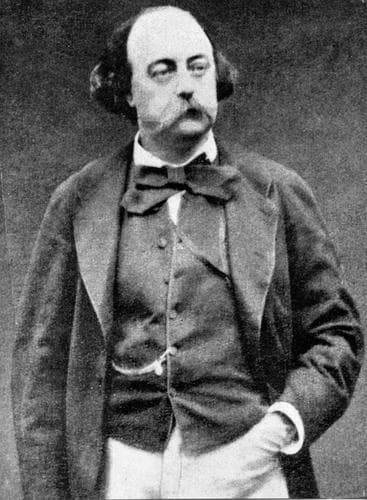
Gustave Flaubert was a French novelist. He has been considered the leading exponent of literary realism in his country and abroad. According to the literary theorist Kornelije Kvas, "in Flaubert, realism strives for formal perfection, so the presentation of reality tends to be neutral, emphasizing the values and importance of style as an objective method of presenting reality". He is known especially for his debut novel Madame Bovary (1857), his Correspondence, and his scrupulous devotion to his style and aesthetics. The celebrated short story writer Guy de Maupassant was a protégé of Flaubert.
Similar books
- Anna Karenina
Leo Tolstoy
4.0 (682k) average on GoodreadsHistorical FictionExplores complex social dynamics and tragic romance in 19th-century society.
- The Red and the Black
Stendhal
3.9 (57k) average on GoodreadsHistorical FictionFeatures a young, ambitious protagonist navigating social climbing and romantic entanglements in post-Napoleonic France.
- Middlemarch
George Eliot
4.0 (136k) average on GoodreadsHistorical FictionOffers a panoramic view of a particular society with multiple intertwined plots and a focus on realism and character psychology.
- The Old Man and the Sea
Ernest Hemingway
3.8 (831k) average on GoodreadsLiterary FictionA Cuban fisherman's long struggle with a giant marlin becomes a story of endurance and dignity, now retold for young adults with illustrations, phonetic guides, and writing prompts in Traditional Chinese.
- One Hundred Years of Solitude
Gabriel García Márquez
4.1 (753k) average on GoodreadsLiterary FictionThrough the multi-generational story of the Buendía family, a mythical town deals with the repeating patterns of time, love, and solitude, as the extraordinary mixes with the ordinary.
- The Goldfinch
Donna Tartt
3.9 (720k) average on GoodreadsLiterary FictionHaunted by a tragic explosion and clutching a stolen Dutch masterpiece, a young orphan navigates the opulent drawing rooms of New York and the gritty underbelly of the art world, desperately seeking connection and redemption amidst a life spiraling into crime and obsession.





Enjoyed the summary?
A summary gives you the shape of the book. The book itself has the detail, the examples and the voice.
Find Sentimental Education on AmazonAs an Amazon Associate, BookBrief earns from qualifying purchases. How we're funded