
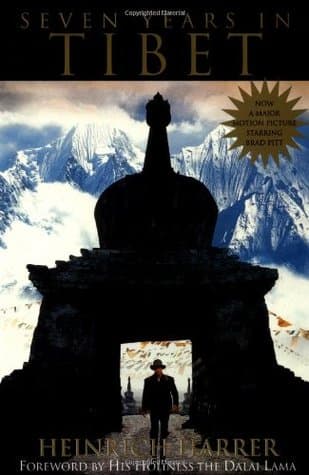
Core Idea
- Difficulty
- Medium
- Read it if
- You are fascinated by historical accounts of remote cultures, enjoy memoirs of extraordinary personal journeys, or wish to understand pre-invasion Tibetan society and the early life of the Dalai Lama.
- Skip it if
- You prefer fast-paced adventure narratives over introspective cultural observations, or are not interested in detailed historical and anthropological descriptions of a specific, isolated society.
Key Takeaways from Seven Years in Tibet
The Allure of the Forbidden Kingdom
Tibet, before its invasion, represented a unique, isolated civilization.
Harrer's journey offers a rare look into a Tibet that no longer exists—a secluded, independent nation rooted in its Buddhist traditions and governed by a theocracy. His narrative shows the cultural differences between the Western world and this ancient civilization. The book details the customs, social structure, and religious practices that defined Tibetan life, from the highest lamas to the lowest peasants. Harrer's initial view of Tibet as just an escape route changes into a deep appreciation for its unique identity, showing the tragedy of its eventual annexation and the loss of such a distinct cultural entity.
“Tibet was a land where time seemed to stand still, a society largely untouched by the outside world, preserving ancient traditions and a profound spiritual way of life.”
In the book: Harrer's extensive descriptions of Lhasa, its monasteries, and the daily lives of its inhabitants, including the intricate rituals and ceremonies he witnessed, such as the New Year festivities and the Dalai Lama's public appearances.
Try this: Reflect on how isolation can foster unique cultural development and the importance of preserving distinct cultural identities in an increasingly globalized world. Consider the value of firsthand observation in understanding unfamiliar cultures.
Related ideas: cultural-preservation, isolation, theocracy
From Prisoner to Confidante
Harrer's transformation from an escaped prisoner to a trusted advisor of the Dalai Lama.
Harrer's personal journey is perhaps the most compelling part of the memoir. His initial reason to escape a British internment camp in India was purely for survival and a return to the Western world. However, his gradual acceptance into Tibetan society, ending with his role as tutor and friend to the young 14th Dalai Lama, shows his adaptability and the Tibetans' openness. This unlikely friendship gave Harrer access to the highest levels of Tibetan power and spirituality. It shows how trust, built over time and through real engagement, can bridge cultural and experiential divides, offering a human view of a seemingly impenetrable society.
“My friendship with the Dalai Lama became the most significant and unexpected outcome of my seven years in Tibet. It transcended cultural barriers and offered a unique perspective into the mind of a spiritual leader.”
In the book: Harrer's detailed accounts of his interactions with the Dalai Lama, teaching him about the outside world, constructing a cinema, and providing insights into Western science and geography.
Try this: Embrace opportunities for cross-cultural exchange and understand that genuine human connection can transcend political or social barriers. Seek to build trust through patience and respect when engaging with different communities.
Related ideas: cross-cultural-exchange, mentorship, adaptability
The Rigidity of Tradition
Tibetan society, while spiritual, was also deeply hierarchical and slow to change.
Harrer's observations show a society deeply tied to ancient traditions and a rigid class structure. While this helped Tibet preserve its unique culture, it also made the nation slow to adapt to outside threats and modern advances. He notes times when practical improvements were resisted due to superstition or respect for established customs. This adherence, while charming in many ways, ultimately left Tibet vulnerable. The book implicitly critiques the problems of extreme traditionalism when faced with a rapidly changing geopolitical situation, showing how even a spiritual society can be hindered by its own inflexibility.
“The strict adherence to tradition, while preserving their unique culture, also created a society resistant to change, even when such change might have offered practical benefits.”
In the book: Harrer's attempts to introduce practical inventions like a cinema or modern mapping techniques, and the initial resistance he faced from conservative elements of Tibetan society and clergy.
Try this: Recognize the double-edged sword of tradition: while it provides stability and identity, excessive rigidity can impede necessary progress. Seek a balance between honoring heritage and embracing beneficial innovation.
Related ideas: traditionalism, social-structure, resistance-to-change
Spiritualism as a Way of Life
Buddhism permeated every aspect of Tibetan existence, shaping daily life and governance.
One of Harrer's most striking observations is the widespread influence of Tibetan Buddhism on all parts of life. From the highest government officials (who were often lamas) to the simplest farmers, religious rituals, superstitions, and moral codes dictated behavior, law, and even the daily schedule. Monasteries were not just places of worship but centers of learning, power, and economic activity. Harrer paints a clear picture of a society where the spiritual and temporal were linked, offering a contrast to the secularizing trends of the West. This deep spiritual integration provides both stability and, as noted, some resistance to outside pressures and modern thought.
“Religion was not merely a belief system; it was the very fabric of Tibetan life, dictating customs, laws, and the rhythm of existence for every individual.”
In the book: Descriptions of the numerous monasteries, the daily prayers, the omnipresence of prayer flags and mani stones, and the significant role of lamas in government and social life.
Try this: Consider how deeply held beliefs, whether religious or philosophical, shape individual and collective behavior. Reflect on the potential strengths and weaknesses of a society where spirituality is the dominant organizing principle.
Related ideas: buddhism, theocracy, spiritual-life
The Human Cost of Isolation
While preserving culture, isolation also fostered naivete and vulnerability.
Harrer's narrative, especially in its later chapters, shows the tragic results of Tibet's extreme isolation. While it allowed a unique culture to grow, it also led to a lack of knowledge about international politics and military realities. The Tibetans, with their peaceful and spiritual worldview, were unprepared to understand or defend against Communist China's expansionist goals. Harrer's attempts to warn them of the danger often went unheard, showing how a lack of engagement with the outside world can be a fatal flaw for a nation, leaving it vulnerable to more pragmatic and aggressive powers. It is a sobering lesson in geopolitical realities.
“Their isolation, while preserving their unique world, also left them tragically unprepared for the harsh realities of modern geopolitics and the aggressive intentions of their powerful neighbor.”
In the book: Harrer's accounts of the Tibetan government's slow and often inadequate response to the growing Chinese threat, their underestimation of Chinese military capabilities, and their reliance on traditional, non-military solutions.
Try this: Understand that isolation, while sometimes preserving, can also lead to vulnerability and a lack of preparedness for external threats. Advocate for informed engagement with global affairs, even for seemingly remote communities.
Related ideas: geopolitics, vulnerability, isolationism
The Impermanence of All Things
Harrer's memoir is a poignant record of a lost world.
The book shows the Buddhist idea of impermanence. Harrer arrived in Tibet when it was still a sovereign, untouched kingdom, and he left just as the Chinese invasion began to change its landscape and culture. His detailed observations become a historical document of a world that, in many ways, stopped existing shortly after he left. The memoir has a sense of nostalgic sadness, recognizing that the unique mix of spirituality, tradition, and isolation he experienced was fragile and not sustainable against modern power dynamics. It is a reminder that even the most ancient cultures change and are lost.
“I had witnessed the twilight of an ancient world, a civilization on the brink of being irrevocably altered, if not destroyed, by the forces of the modern age.”
In the book: The concluding chapters of the book, detailing the increasing Chinese presence, the growing anxiety in Lhasa, and Harrer's eventual departure as the invasion became imminent.
Try this: Appreciate the transient nature of cultures and societies. Support efforts to document and preserve historical and cultural heritage before it is lost. Understand that change is inevitable, even for deeply rooted traditions.
Related ideas: impermanence, cultural-loss, historical-documentation
The Power of Human Ingenuity and Perseverance
Harrer's escape and survival highlight remarkable human resilience.
Beyond the cultural insights, Harrer's personal story is a narrative of survival and perseverance. His escape from a British internment camp in India, followed by a dangerous journey across the Himalayas with limited resources, shows great physical and mental strength. His ability to adapt to a different culture, learn a new language, and integrate into a suspicious society shows remarkable cleverness. This part of the book shows the human ability to overcome obstacles, not just through strength, but also through resourcefulness, social intelligence, and a will to survive and make a new life, even in unlikely situations.
“The human spirit, when pushed to its limits, can achieve extraordinary feats of endurance and adaptation, finding a way to survive and even thrive in the most challenging environments.”
In the book: The detailed accounts of his multiple escape attempts, the arduous trek across the Himalayas, and his continuous efforts to learn Tibetan language and customs to gain acceptance.
Try this: Cultivate resilience and adaptability in the face of adversity. Recognize the power of perseverance and resourcefulness in achieving difficult goals, even when the odds seem insurmountable.
Related ideas: resilience, survival, adaptability
A Mirror for the West
Tibet's unique society offered a profound contrast to Western values and priorities.
Harrer's time in Tibetan culture provides an accidental mirror for Western society. His initial ethnocentric views slowly disappear as he sees a different way of life, one that values spiritual well-being, community, and ancient traditions over material wealth, rapid progress, and individualistic pursuits. The book invites readers to question their own societal norms and values. Is the constant drive for technological advancement always good? Does material comfort truly mean happiness? Harrer's journey encourages a re-evaluation of what makes a 'civilized' or 'advanced' society, suggesting there are many paths to human flourishing, some of which our modern world has overlooked.
“Observing Tibetan life allowed me to see my own Western world from a new perspective, questioning the values and priorities we often take for granted.”
In the book: Harrer's internal reflections on the simplicity of Tibetan life versus the complexities of the West, his observations on their communal spirit compared to Western individualism, and their spiritual focus versus Western materialism.
Try this: Engage in critical self-reflection about personal and societal values. Seek out diverse perspectives to challenge assumptions and broaden understanding of what constitutes a meaningful life.
Related ideas: cultural-relativism, western-values, self-reflection
Seven Years in Tibet Quotes
“I had left my wife and a small son to whom I had never properly said goodbye.”
“Where we had come from, it was considered a sign of good breeding to be punctual, but here in Tibet it was a proof of wisdom to be late.”
“I am not a religious man, but I was deeply moved by the sight of this young boy's devotion.”
“In the West, we have a saying: 'Time is money.' Here, they say: 'Time is nothing.'”
“I often think of my earlier life as a series of fortunate escapes.”
“The people of Tibet are not merely primitive, but possess a profound wisdom that we in the West have lost.”
“I was struck by the Dalai Lama's profound curiosity about the outside world.”
“The feeling of being utterly alone in a vast, unknown country was both terrifying and exhilarating.”
“It was impossible not to be impressed by the sheer scale of devotion that permeated every aspect of Tibetan life.”
“The Dalai Lama was not just a spiritual leader, but a head of state, a living god, and a very human boy.”
“I learned that the greatest riches are not material possessions, but peace of mind and freedom.”
“A country can remain free only as long as its people are prepared to defend it.”
“My greatest sorrow was to witness the end of an ancient world.”
“I had come to Tibet as a prisoner, but I left as a free man, enriched by its wisdom.”
Quiz
10 questions on the main ideas. Each answer comes with a short explanation.
Question 1
Which country was Heinrich Harrer originally from, and what was his profession before his internment?
- Germany; Geologist
- Austria; Mountaineer
- Switzerland; Journalist
- Italy; Explorer
Show answer
B. Austria; Mountaineer Heinrich Harrer was an Austrian mountaineer, part of an expedition to Nanga Parbat when World War II broke out, leading to his internment by the British.
Question 2
Where was Heinrich Harrer interned by the British before his escape?
- A camp in Ceylon (Sri Lanka)
- A prison in Calcutta, India
- A camp in Dehra Dun, India
- A fortress in Peshawar, British India
Show answer
C. A camp in Dehra Dun, India Harrer and his companions were interned in a British camp at Dehra Dun in India, from which he made several escape attempts before finally succeeding.
Question 3
Who was Heinrich Harrer's primary companion during his journey to Tibet and initial time there?
- Peter Aufschnaiter
- Rolf Magener
- Hans Kopp
- Bruno Treipel
Show answer
A. Peter Aufschnaiter Peter Aufschnaiter was Harrer's fellow escapee and companion throughout much of his journey into Tibet and his initial years in Lhasa, sharing many hardships and experiences.
Question 4
What significant role did Heinrich Harrer eventually take on for the young Dalai Lama?
- Political Advisor
- Religious Tutor
- English Teacher and World Affairs Tutor
- Architectural Consultant
Show answer
C. English Teacher and World Affairs Tutor Harrer became a close friend and tutor to the young 14th Dalai Lama, teaching him about the outside world, geography, and helping him with practical projects like building a cinema and a projection room.
Question 5
Which of these cultural practices or observations in Tibet particularly struck Harrer and is detailed in the book?
- The widespread practice of human sacrifice.
- The unique sky burial rituals.
- The absence of any form of government or law.
- The common use of advanced Western technology.
Show answer
B. The unique sky burial rituals. Harrer vividly describes the Tibetan practice of sky burial, where bodies are dismembered and left for vultures, reflecting their beliefs about the impermanence of the body and the cycle of rebirth.
Question 6
What was the primary reason Harrer and Aufschnaiter were initially allowed into Lhasa, a city traditionally closed to foreigners?
- They possessed special diplomatic passports.
- Their skills as engineers and builders were urgently needed.
- They were mistaken for holy men by the local populace.
- They entered secretly and gradually gained acceptance through their humble demeanor and useful skills.
Show answer
D. They entered secretly and gradually gained acceptance through their humble demeanor and useful skills. Harrer and Aufschnaiter entered Lhasa without official permission, relying on their ability to blend in and eventually offering their practical skills (like surveying and gardening) to gain the trust and tolerance of the local officials and populace.
Question 7
The book serves as a historical record of Tibet just before what major geopolitical event?
- The British invasion of Tibet in 1904.
- The Chinese invasion and annexation of Tibet in 1950.
- The establishment of the Silk Road trade routes.
- The end of the Second World War.
Show answer
B. The Chinese invasion and annexation of Tibet in 1950. Harrer's time in Tibet (1944-1951) ended just as the People's Republic of China invaded and subsequently annexed Tibet, making his memoir a valuable eyewitness account of an ancient culture on the cusp of dramatic change.
Question 8
How did Harrer's initial perception of the Tibetans, particularly their cleanliness and customs, evolve during his seven years there?
- He maintained his initial judgment that they were primitive and unsanitary.
- He grew to understand and appreciate their practical reasons for certain customs, like not washing frequently in the cold climate.
- He found that they adopted many European customs after his arrival.
- He became indifferent to their customs, focusing solely on his escape plans.
Show answer
B. He grew to understand and appreciate their practical reasons for certain customs, like not washing frequently in the cold climate. Harrer initially held some Western biases, but over time, he gained a deep understanding and respect for Tibetan culture, recognizing the practical wisdom behind practices like infrequent washing in a harsh, cold environment.
Question 9
What was the significance of the Potala Palace to Harrer during his time in Lhasa?
- It was the only place he felt truly safe from detection.
- It represented the spiritual and political heart of Tibet, and he eventually gained unprecedented access to it.
- He was forbidden from ever approaching it, making it a symbol of his foreign status.
- He helped design and build a new extension to the palace.
Show answer
B. It represented the spiritual and political heart of Tibet, and he eventually gained unprecedented access to it. The Potala Palace was the traditional winter residence of the Dalai Lamas and the seat of Tibetan government. Harrer's unique position as tutor to the Dalai Lama granted him extraordinary access to its inner workings and secrets, a privilege rarely afforded to foreigners.
Question 10
How did the news of the approaching Chinese army impact Harrer's relationship with the Dalai Lama and his decision to leave Tibet?
- The Dalai Lama asked Harrer to stay and lead the Tibetan resistance.
- The impending invasion forced the Dalai Lama to flee, and Harrer felt it was his duty to accompany him for as long as possible before departing.
- Harrer saw it as an opportunity to finally return to Austria with an escort.
- The Dalai Lama dismissed Harrer, fearing his foreign presence would provoke the Chinese further.
Show answer
B. The impending invasion forced the Dalai Lama to flee, and Harrer felt it was his duty to accompany him for as long as possible before departing. The Chinese invasion forced the young Dalai Lama to flee Lhasa. Harrer, deeply attached to his student and to Tibet, accompanied the Dalai Lama for part of his journey south before ultimately deciding it was time for him to leave Tibet, recognizing the end of an era.
Seven Years in Tibet FAQ
What is Seven Years in Tibet about?
Seven Years in Tibet is a memoir by Austrian mountaineer Heinrich Harrer, detailing his escape from a British internment camp in India during World War II and his subsequent journey to and life in Tibet. He spent seven years there, from 1944 to 1951, becoming a tutor and friend to the young 14th Dalai Lama and observing the unique Tibetan culture and society before the Chinese invasion.
Does Heinrich Harrer's account of Tibet work as a reliable historical source?
While Harrer's book provides a unique first-hand account of pre-invasion Tibet and its culture, it is important to remember it's a personal memoir written from his perspective as an outsider. Historians generally value it for its cultural observations and insights into the Dalai Lama's early life, but also cross-reference it with other sources for a comprehensive historical understanding.
What is the significance of the Dalai Lama in Seven Years in Tibet?
The young 14th Dalai Lama becomes a central figure in Harrer's later years in Tibet. Harrer serves as his tutor in Western subjects like geography and science, forming a close bond that offers a rare glimpse into the spiritual leader's formative years and the secluded life of the Tibetan government.
How does Seven Years in Tibet differ from other travelogues or historical accounts of Tibet?
Unlike many travelogues, Harrer's book offers an immersive, long-term perspective from someone who lived within Tibetan society for years, rather than just passing through. It also provides an intimate, personal look at the Dalai Lama, which is rare in historical accounts of that period.
What kind of lifestyle did Heinrich Harrer experience in Tibet?
Harrer initially lived a challenging existence as a fugitive, but eventually settled into a privileged position in Lhasa. He observed a deeply spiritual and hierarchical society, experiencing both the simple life of the common people and the elaborate rituals and politics of the Tibetan government and aristocracy.
Is Seven Years in Tibet a true story?
Yes, Seven Years in Tibet is a non-fiction memoir based on Heinrich Harrer's real-life experiences. While some details have been subject to historical scrutiny regarding his past, the core narrative of his escape, journey, and time in Tibet is widely accepted as factual.
What spiritual themes are explored in Seven Years in Tibet?
The book deeply explores Tibetan Buddhism, its rituals, and its profound influence on daily life, government, and the spiritual leadership of the Dalai Lama. Harrer, initially an atheist, gradually gains an understanding and appreciation for the deeply spiritual worldview of the Tibetan people.
How did Harrer manage to escape and survive his journey to Tibet?
Harrer, a skilled mountaineer, escaped from a British internment camp in India multiple times before successfully breaking free for good. His journey to Tibet was arduous, involving crossing treacherous Himalayan terrain on foot, relying on his survival skills, and occasionally on the kindness of strangers.
About the author

Heinrich Harrer was an Austrian mountaineer, explorer, and author, best known for his non-fiction work "Seven Years in Tibet," which recounts his experiences in Tibet during the 1940s. His writings often reflect his adventures and encounters with different cultures, contributing to his reputation as a significant figure in travel literature.
Similar books
- Lost Horizon
James Hilton
3.9 (18k) average on GoodreadsLifestyleExplores the allure of a hidden, utopian Asian society, much like Harrer's initial perception of Tibet.
- Eat, Pray, Love
Elizabeth Gilbert
3.6 (1.5M) average on GoodreadsLifestyleA heartbroken writer leaves her conventional life for a year-long global search for pleasure in Italy, spiritual devotion in India, and unexpected love and balance in Bali.
- Wild: From Lost to Found on the Pacific Crest Trail
Cheryl Strayed
4.0 (615k) average on GoodreadsLifestyleAfter losing her mother and her marriage, a young woman impulsively hikes over a thousand miles of the Pacific Crest Trail alone, finding strength and healing in the unforgiving wilderness.
- Into Thin Air: A Personal Account of the Mount Everest Disaster
Jon Krakauer
4.2 (395k) average on GoodreadsLifestyleOn May 10, 1996, ambition and a sudden, violent storm turned Mount Everest into a deadly trap, leaving Jon Krakauer to tell the harrowing story of a disaster that took lives and shattered climbers' dreams.
- On The Road
Jack Kerouac
3.6 (349k) average on GoodreadsLifestyleDean Moriarty and Sal Paradise go on a wild, cross-country trip with jazz, drugs, and a desperate search for meaning on America's post-war roads.
- A Walk in the Woods: Rediscovering America on the Appalachian Trail
Bill Bryson
4.1 (346k) average on GoodreadsLifestyleBill Bryson humorously describes his ill-prepared yet insightful attempt to hike the Appalachian Trail, meeting unique characters and the raw beauty of the wilderness.






Enjoyed the summary?
A summary gives you the shape of the book. The book itself has the detail, the examples and the voice.
Find Seven Years in Tibet on AmazonAs an Amazon Associate, BookBrief earns from qualifying purchases. How we're funded